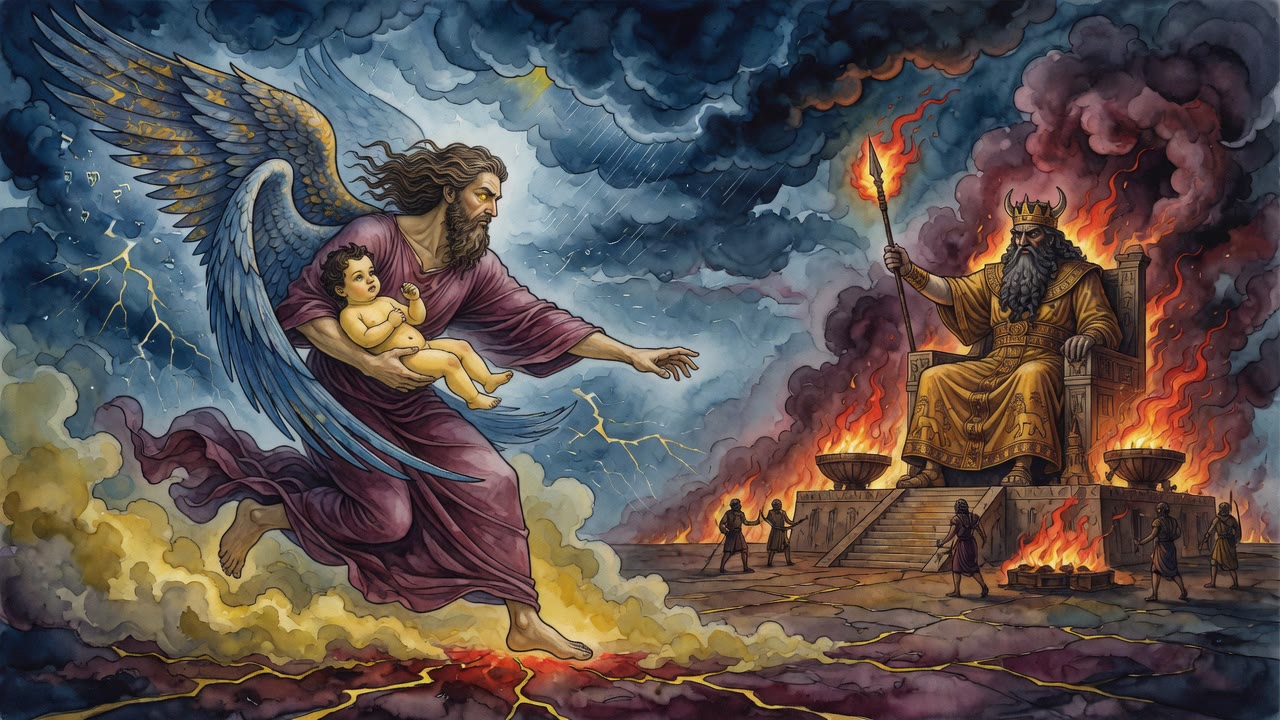
Akiva Walked Ashore on a Plank From the Wreck
Gamliel mourned Akiva until the drowned man walked up the beach on one plank. A poor boy quieted another storm while merchants clutched idols that did nothing.
Table of Contents
Rabbi Akiva came out of the Mediterranean with salt in his beard and a single plank under his arm. On the sand Rabbi Gamliel had already begun the work of mourning him, arranging words for a man he believed the sea had kept.
 Click for full size
The Ship That Went Down
They had been sailing the same water on separate vessels when the storm hit without the courtesy of a slow build. Akiva's ship broke. Gamliel's held. From the surviving deck Gamliel watched the water take his friend and counted him among the dead, the way a careful man counts losses before hope can lie to him. When he reached shore he started arrangements for a memorial, because love without procedure still needs procedure when the body is gone.
Then a soaked figure walked toward him along the tide line. "Akiva! How?"
"I found a plank in the wreckage," Akiva said. "I held on. Every wave that came, I bowed my head with it. I did not argue with the sea."
"One plank?"
"One plank."
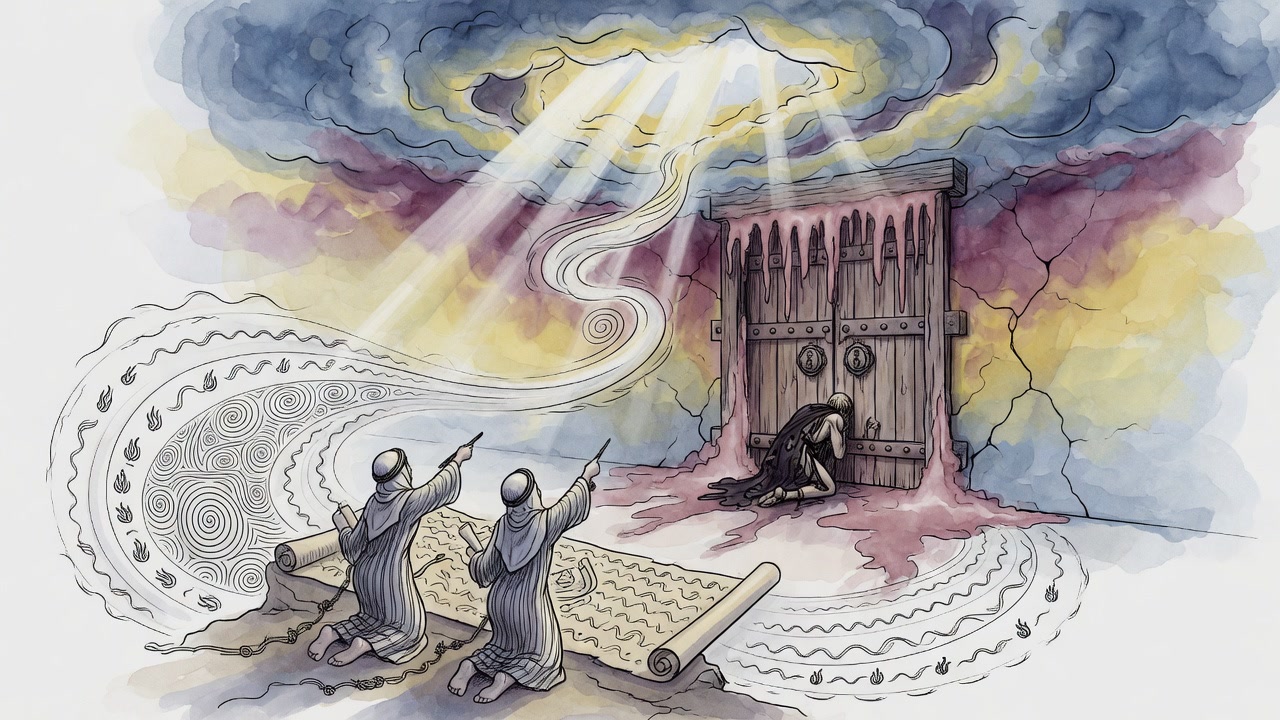
The rabbis later turned the image toward the house of study. When winds of controversy rise and rulings crash against rulings, one clear tradition, one trusted chain of transmission, can keep a student afloat. You do not need a whole ship of opinions. You need wood that will not lie. Akiva would tell students at Yavneh to build the plank before the storm. When the water arrives, there is no time to carpenter, no time to invent a mishnah while the deck is tilting.
The Boy Who Slept Through Panic
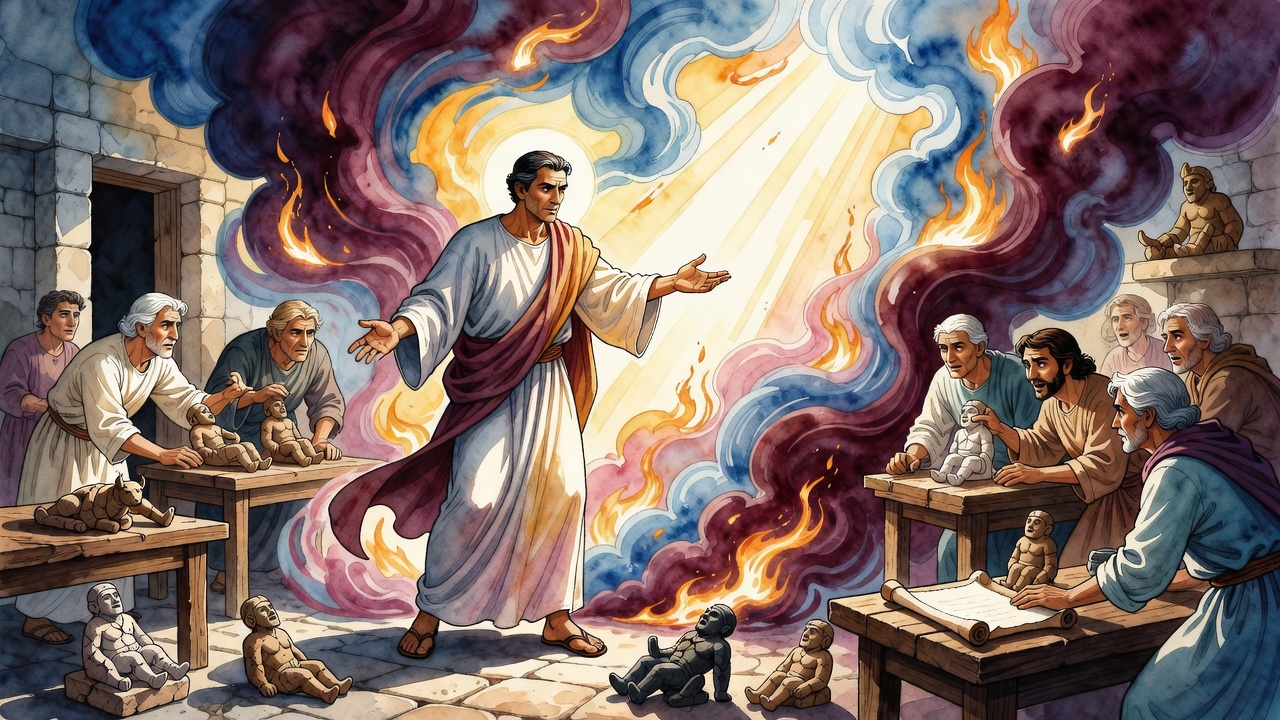
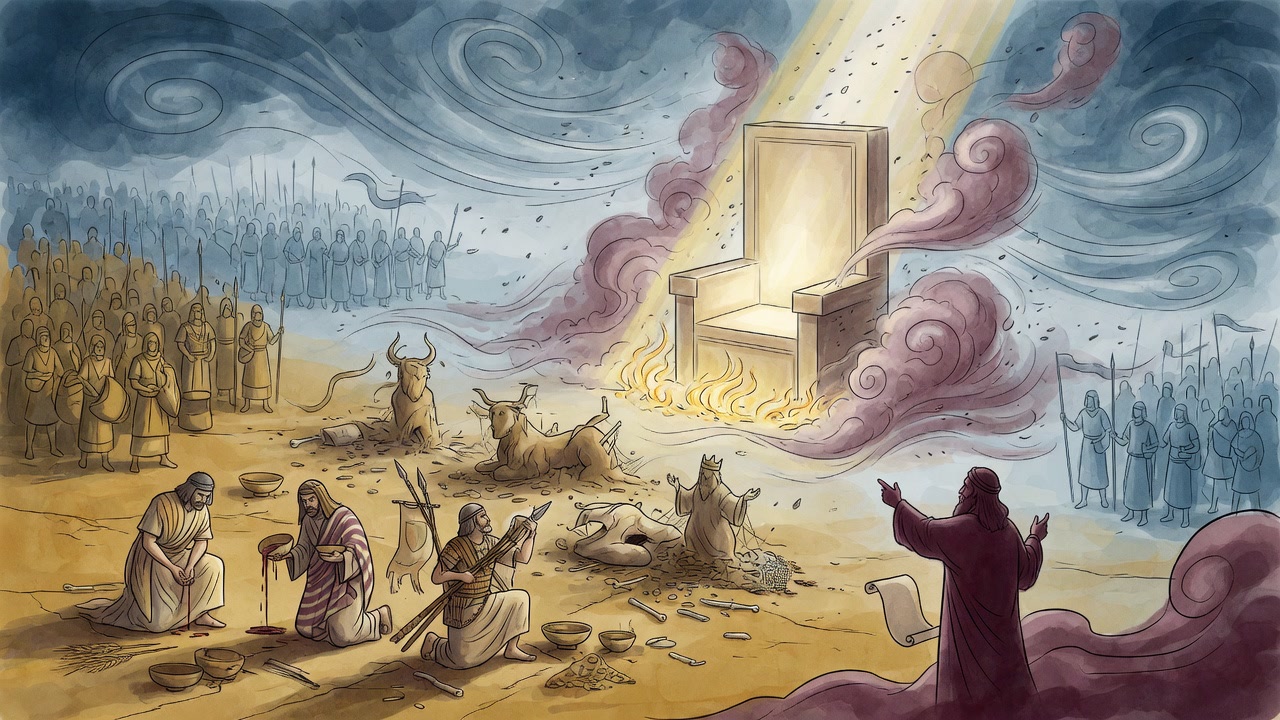
On another voyage a boy too poor for jewelry watched wealthy merchants claw idols from their bags as the sea climbed the rails. Bone, silver, ivory. They pressed the figures to their chests and shouted names that had never once quieted weather. The wind did not care. The boy lay down on the deck and slept, not from arrogance, but from the strange calm of someone who has nothing to clutch and therefore nothing to bargain with wrongly.
They woke him in terror. "We are all going to die! Pray to your god too!"
He stood, closed his eyes, and prayed to the God of Israel. The sea went flat as if a hand had smoothed a sheet. At port the merchants went ashore to buy food. The boy stayed aboard. He had no money for the market. Still shaken, they said, "Your God is with you everywhere. You cannot be truly poor."
He answered them without cruelty. "Your god hangs on your neck, close to your body and far from power. My God seems distant and is always near."
Several of them, the story says, turned their mouths toward the same God before they left the pier, because a calmed sea is a hard argument to ignore.
The Island Midway Through the Voyage
A third sea parable maps five ways travelers treat a beautiful island between departure and arrival. The first will not disembark, so afraid of missing the ship that they never touch the flowers God planted. The second enjoy the groves in measure and return with time to spare and provisions packed. The third race back as the lines cast off, climbing without dignity. The fourth grab the rail half drowned, bruised by their own delay. The fifth forget the ship entirely, feast until the sail is a speck on the horizon, and fall to the island's wild animals and poisons one by one.
The ship is the sum of good deeds carrying a soul toward the world to come. The island is this world's pleasure. Refuse it utterly and you miss what the Creator set in the middle of the journey. Cling to it and you miss the voyage that was always the point. The middle path walks the trees, tastes the fruit, and keeps one eye on the gangway and the hour.
What Holds in Deep Water
Akiva's plank is trust under impact. The boy's prayer is trust without props. The island parable is trust with a clock. All three refuse the fantasy that you can master the sea by clutching what fits in a hand. The merchants held gods and nearly drowned. The boy held nothing and slept until he was needed. Akiva held one piece of wood and bowed instead of fighting every crest as if pride could outswim a wave.
On the beach Gamliel stared at a living friend he had already eulogized in his mind. The memorial papers could wait. The lesson could not. Build the plank early. Keep the God who does not hang on a string. Enjoy the island without missing the ship. When the storm finishes its work, the people who survive are rarely the ones who shouted loudest at the water.
Gamliel did not finish the memorial. He tore the draft in his mind and watched Akiva wring seawater from his sleeve like a man returning from ordinary work. The plank lay between them on the sand, raw and unimpressive. Survival sometimes looks like that. Not a speech. A piece of wood and a neck willing to bow.
← All myths