Zechariah Named Two Staves Amiable and Destroyer
Rabbi Oshaia pressed two names onto wood in a prophet's hands. One hall yielded for honor. One broke arguments until bone showed.
Table of Contents
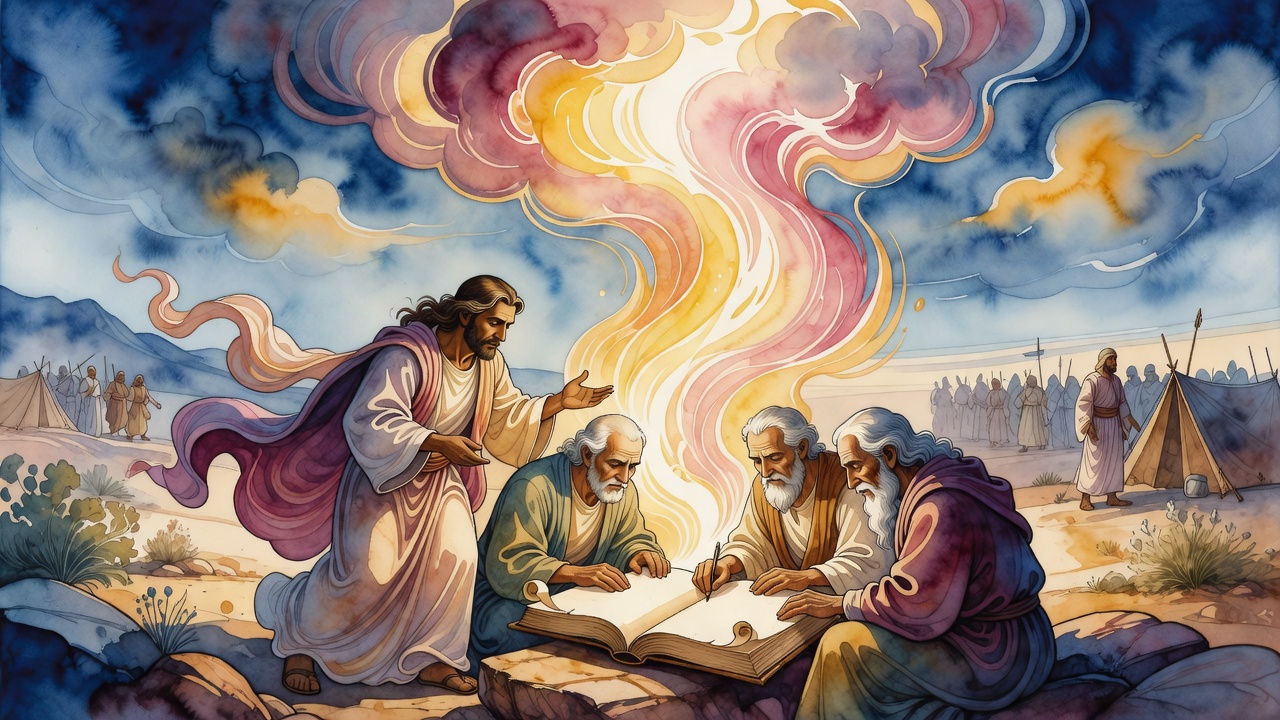
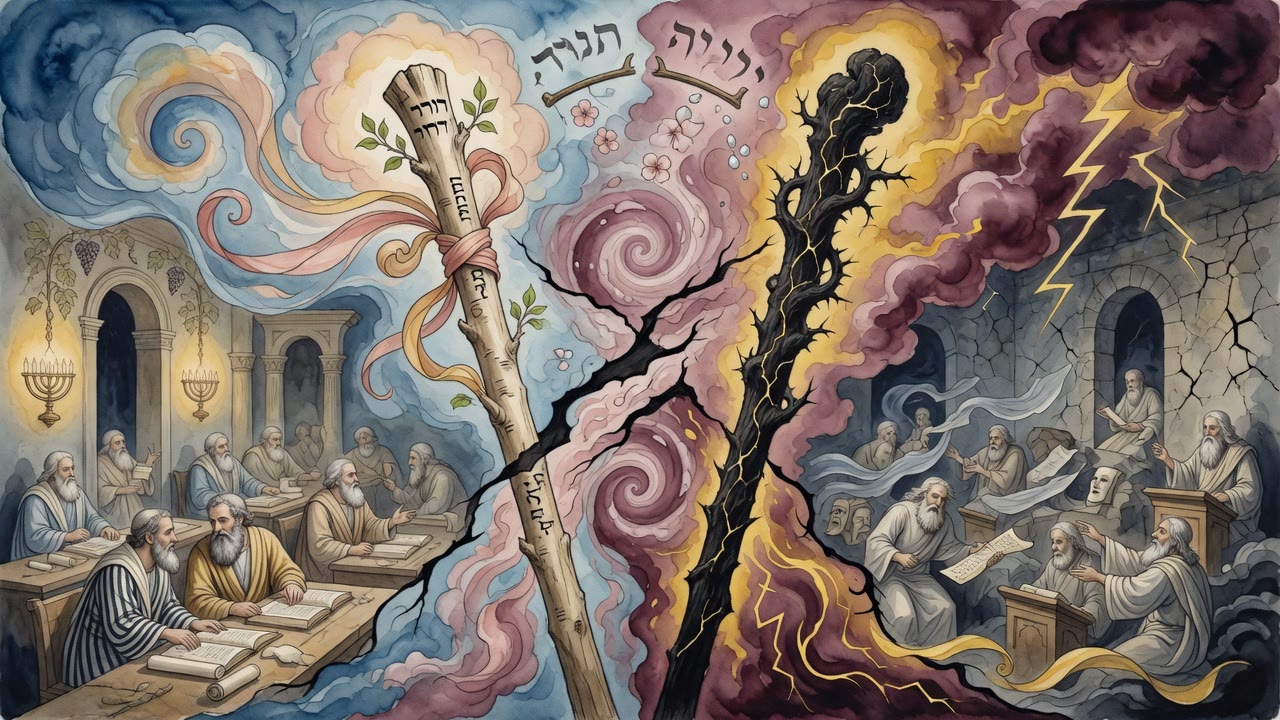
Rabbi Oshaia pressed two names onto wood that was already in a prophet's hands. "I took unto me two staves; the one I called Amiable and the other Destroyer" (Zechariah 11:7). The staff called Amiable was the disciples of the wise in the Land of Israel, gentle in debate, careful with one another's honor. The staff called Destroyer was the disciples of the wise in Babylonia, sharp, battering, ready to break an argument open until the truth showed its bone.
 Click for full size
Both staves sat in the same prophetic hand. Both were tools of shepherding. One softened. One cut. A study hall that only smiles can hide error. A study hall that only destroys can forget that the opponent is a brother.
Two Staves in One Hand
Zechariah's image is a shepherd's kit, not a civil war. The danger begins when a school mistakes its favorite staff for the whole will of Heaven. Rabbi Oshaia did not crown only one temper. He named both and let the tension stand.
A disciple in the Land of Israel might yield a moment to keep the fabric of the group. A disciple in Babylonia might refuse that yield and demand the source. Torah grew in the friction. It also tore people.
Babylon Broke What Israel Softened
In Pumbedita a voice rose until a sugya, a Talmud passage, nearly tore. A disciple refused to yield a source. His fellow's face went hot. They were not enemies. They were Destroyer staff, doing the work that staff was cut for. Rabbi Yochanan once said Babel means confused in Bible, confused in Mishnah, confused in Talmud. The dark of that confusion was the price of the battering.
In a courtyard in Tiberias the same verse turned with patience. A disciple yielded a moment. Honor stayed intact. Error can hide in that yield. Truth can hide in the other hall's bruise.
Night in Sura sounded like a storm. Night in the Galilee sounded like a low argument that never quite became a shout. Both rooms claimed Zechariah's wood. Both rooms could fail the claim.
Scholars Called Holy
A teacher in that stream looked up from Proverbs and called the scholars holy, like the ministering angels. He named four mighty ones in one breath: the Holy One, Israel, the waters, and Egypt. "Let the Mighty One use a mighty people, and mighty water, against a mighty Egypt," he said. Force is not the scandal. Force without holiness is.
Holiness in the study house is not perfume. It is the refusal to sell a ruling for comfort. It is the willingness to be Amiable when peace builds Torah and Destroyer when flattery would rot it. Call them holy and the stakes rise. A harsh word from a holy mouth still wounds. A gentle word from a holy mouth can still be wrong.
Mighty ones without holiness crush. Holy ones without courage leave the flock unguarded. The staves are names for risk as much as for virtue.
David Used Every Bone
David learned righteousness from the inside of judgment. He praised God with his head, his eyes, his mouth, his tongue. He called until his throat went dry. His lips sang. His heart and flesh tried to keep up. All his bones said, "Lord, who is like You?" His soul blessed. His spirit praised. Then he stopped, spent, and still could not finish the depth.
"My mouth shall tell of Your righteousness," he said, and the sentence was a confession of shortage. Kingship and failure stood in the same room. God's righteousness is not a soft light over a favorite. It is a plumb line that does not bend for a crown.
The Amiable staff without judgment becomes flattery. The Destroyer staff without mercy becomes cruelty. David's God held both, and the king felt the pressure of that double grip. A king who only wanted Amiable company would never have written the psalms of confession. A king who only wanted Destroyer company would never have written the psalms of trust.
When the Staves Cross
When the staves cross in one debate, the room can feel like a storm. That storm is sometimes the only weather in which a hidden law becomes clear. The cost is real. The alternative is a quiet hall that never risks a true ruling.
Scholars called holy still break things. Destroyers still build when the break is clean. Amiable teachers still protect error if they fear conflict more than falsehood. The only safety is the plumb line David met: God's righteousness, not the school's pride.
Israel is still shepherded by argument. A generation takes up Amiable when a soul needs room to grow, and Destroyer when a lie needs to end. No school should pretend the staff in its hand is the only one God cut from the tree. A generation that keeps only one staff will either smother its students or scatter them.
The prophet took two staves. The schools inherited both. The flock is still watching which one rises first.
← All myths