5 min read

Clouds of Glory Walked Israel Out of Egypt

Israel left Succoth under more than weather. Rabbi Akiva heard booths of glory while Rabbi Elazar named five conditions of redemption.

Curated by Arthur · Told by Maggid ·
Table of Contents
  1. Shelter That Is Glory
  2. Five Keys That Opened the Door
  3. Walking Between Conditions and Cloud
  4. Song Still Ahead

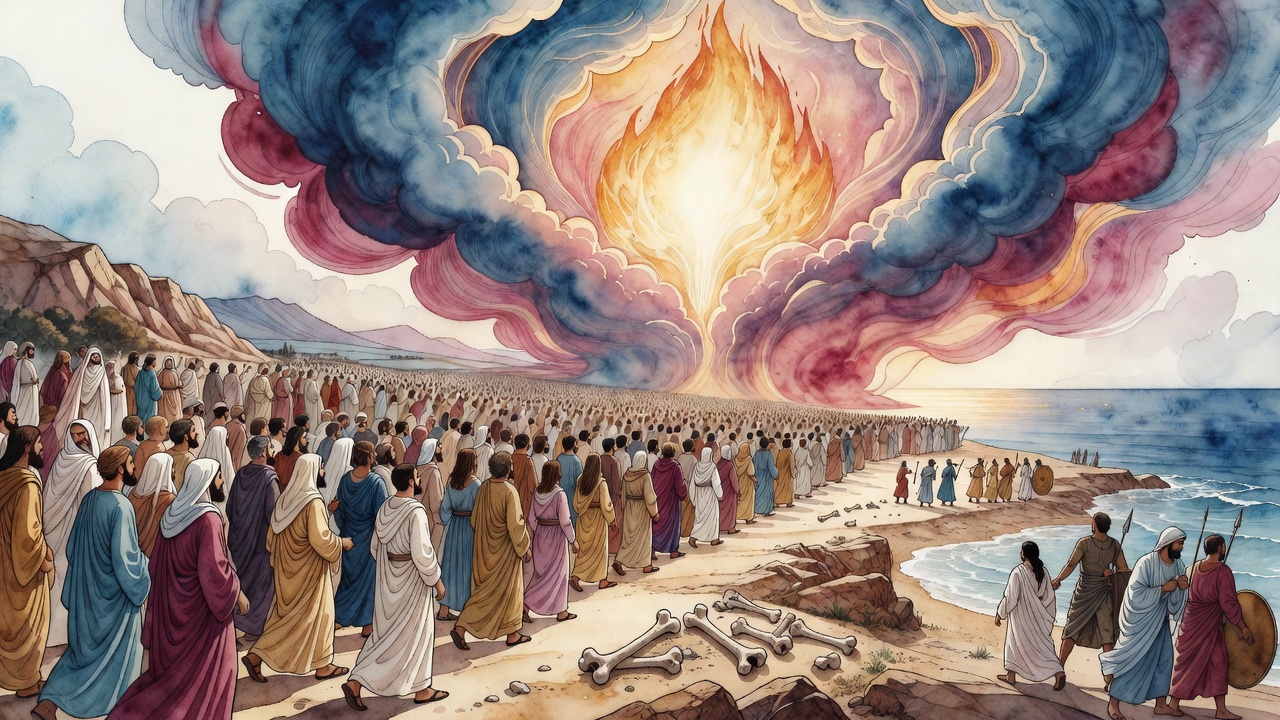
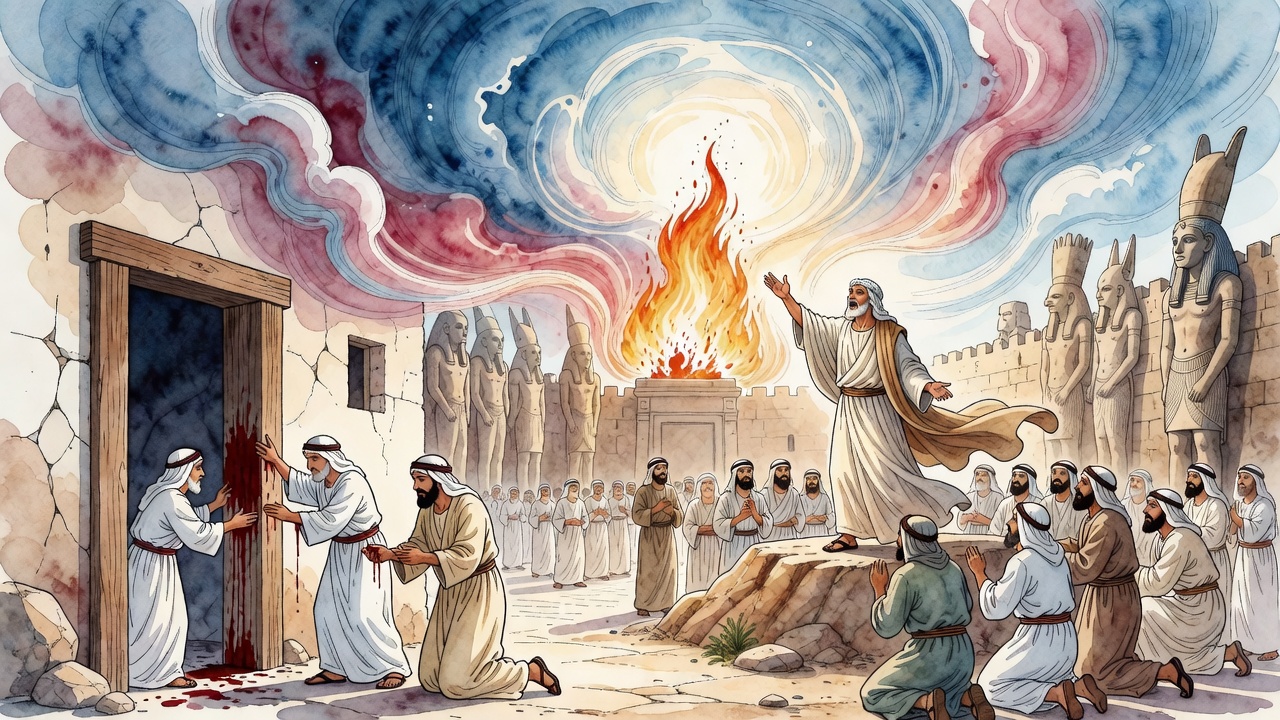
Dust rose behind a nation on foot. Children clung to parents. Dough that would not wait for leaven rode on their shoulders. The verse says they journeyed from Succoth and encamped in Eitam (Exodus 13:20), as if both were only dots on a map. Rabbi Akiva heard more than geography in the first name.
Clouds of Glory Walked Israel Out of Egypt Click for full size

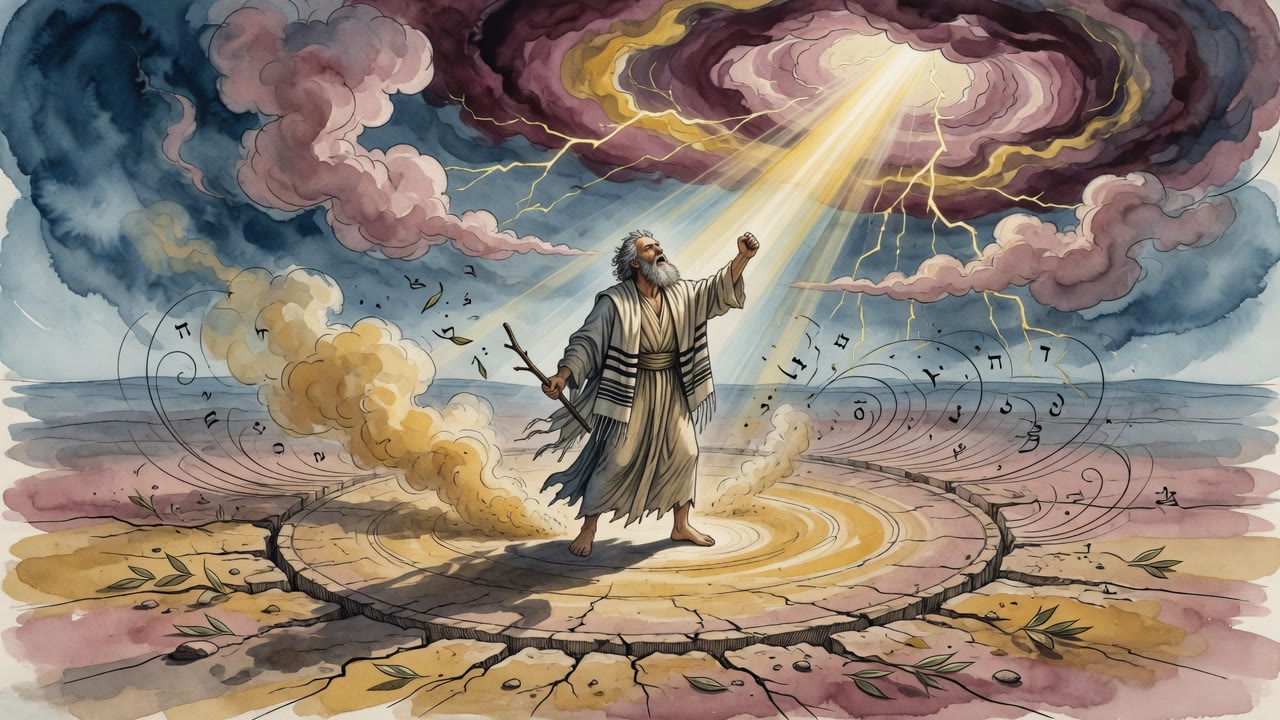
Succoth means booths. He read the word as the clouds of glory that sheltered Israel, a canopy of presence walking with slaves who had just become free. The plain of Eitam still held their tents. Above the tents, shade that was not weather kept the sun from finishing what Pharaoh had started.

Shelter That Is Glory

Akiva leans on Isaiah. For all the glory shall it cover, and a succah shall it be for shade by day (Isaiah 4:5-6). The prophet pairs divine glory with a booth. From that pairing the sage learns that the protective canopy over Israel was clouded holiness, not only desert fog.

The verse of the journey speaks in the past. From where do we know the same shelter waits in time to come? Akiva answers from the same prophecy read forward, joined to Isaiah 35:10, the redeemed of the Lord returning to Zion with song, joy over their heads. The clouds that left Egypt prefigure the joy that will cover the return.

So the first camps after freedom are already a template. Leave under glory. Return under glory. Between those canopies stretches every generation that still knows how to walk with unfinished dough and unfinished trust.

Five Keys That Opened the Door

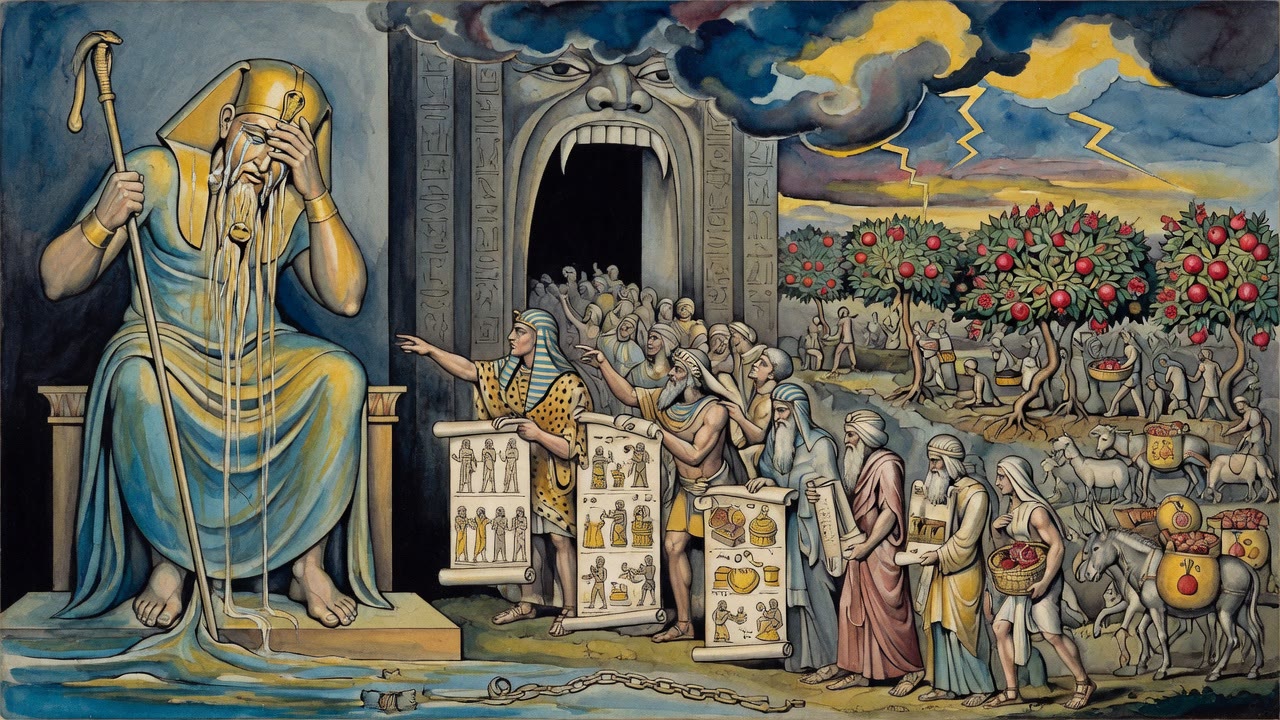
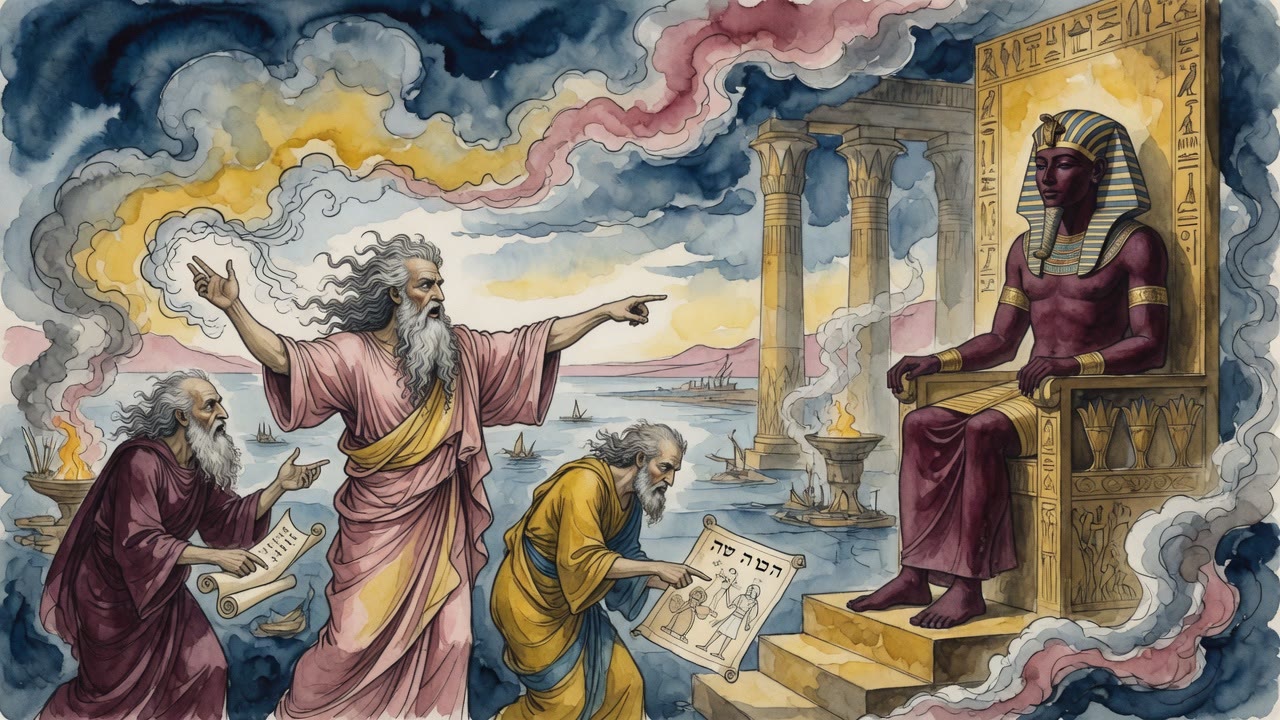
Rabbi Elazar teaches that redemption from Egypt did not arrive as a single thunderclap. It came through five things. Distress. Repentance. Merit of the patriarchs. Mercy. The appointed end. Each condition pressed until the door had to move.

Distress first. The children of Israel sighed (Exodus 2:23). Pain became a catalyst, not a decoration. Then repentance, the plea that rose to God, not only complaint but turning. Then the merit of Abraham, Isaac, and Jacob, because God remembered His covenant. Then mercy, because God saw the children of Israel and knowledge turned to compassion. Then the end, the hour that had been set and would not be delayed forever.

Devarim Rabbah will not let the exodus be only plagues and sea. Interior conditions had to ripen. A people can be crushed for generations without the five keys turning. When they turned, the clouds could finally walk them out.

Walking Between Conditions and Cloud

Put the teachings side by side and the march gains depth. Under their feet, a people still sticky with brick dust. Over their heads, glory as shade. Behind them, five spiritual pressures that forced heaven to act. Ahead of them, Eitam, only the next camp, not yet the sea, not yet Sinai.

Freedom is not only exit. It is being accompanied. A nation can leave a country and still be alone. Israel left under a booth of presence that promised the leaving was not abandonment. The same cloud that cooled them announced that the Redeemer walked the route He had opened.

At night the cloud became fire enough to see by. By day it became shade enough to survive. Geography and miracle shared one column of travelers who still argued, still feared, still carried dough that would become the bread of a people forever marked by haste.

Song Still Ahead

Isaiahs return song has not yet finished. The wilderness generation had cloud for a roof. Later generations inherit the claim that glory will cover again when the redeemed come to Zion. Between those poles sits every exile that still knows how to sigh, turn, remember covenant, and wait for mercy to meet a fixed hour.

At Eitam the people set stakes and looked up. Shade that was not ordinary shade held. Dough hardened into the bread of haste. Children slept under a canopy no Egyptian architect had designed. The road continued, but it continued covered.

Rabbi Akiva and Rabbi Elazar, speaking from different midrashic rooms, leave the same image on the sand. Redemption has conditions, and redemption has company. The people who meet both can walk out of any Egypt without walking alone.

From Eitam the column would soon turn toward the sea, but that hour had not yet arrived. For one night the people slept under a booth of glory and five fulfilled conditions. Distress had risen. Repentance had risen. Covenant memory had risen. Mercy had answered. The end had opened. The cloud kept watch while dough hardened into the bread of a free people.


← All myths
From the tradition

Sources

2 sources

The texts behind this telling. Some cards carry a translation of the source; others are our own retelling of it, and each card says which. Every card links out to the original.

Mekhilta Tractate Vayehi Beshalach 1:20Mekhilta DeRabbi Yishmael

Retold in our words. Read the original at the link below.Mechilta, translated by Rabbi Shraga Silverstein · CC-BY

The verse (Exodus 13:20) records, "And they journeyed from Succoth and they encamped in Eitam." The plain reading treats both as ordinary place names along the route out of Egypt: just as Eitam is an actual location where Israel camped, so Succoth is an actual location from which they set out. R. Akiva, however, reads "Succoth" beyond its geography. The word means booths or shelters, and he takes it to refer to the clouds of glory that sheltered Israel in the wilderness.

He supports this with (Isaiah 4:5-6), "For all the glory shall it cover. And a succah shall it be for shade by day," where the prophet pairs divine glory with a sheltering booth. From this R. Akiva learns that the protective canopy over Israel was a cloud of glory. Yet the verse, he notes, speaks of the past. From where do we know the same shelter awaits Israel in time to come?

He answers from the same prophetic words, "And a succah shall it be for shade by day," read as a promise for the future, joined to (Isaiah 35:10), "And the redeemed of the L-rd will return, and they will come to Zion with song, the joy of the world over their heads." The clouds of glory that sheltered the redeemed leaving Egypt thus prefigure the joy and protection promised to the redeemed returning to Zion.

Full source
Devarim Rabbah 2:23Devarim Rabbah

Retold in our words. Read the original at the link below.The Sefaria Midrash Rabbah, 2022 · CC-BY

The familiar telling remembers the plagues, the parting of the Red Sea, the mighty hand of God... But what about the internal processes, the spiritual shifts that paved the way for that monumental liberation?

In Devarim Rabbah, a collection of rabbinic teachings on the Book of Deuteronomy, our freedom wasn't just a divine decree; it was a culmination of very specific conditions. Rabbi Elazar teaches us that Israel's redemption from Egypt came about because of five things: distress, repentance, the merit of the patriarchs, mercy, and… the end.

First, distress. "The children of Israel sighed," as it says in (Exodus 2:23). They were suffering, truly and deeply. Their pain became a catalyst.

Next, repentance. Now, this one’s interesting. It wasn’t just the suffering, but also the turning inward. (Exodus 2:23) also tells us, "Their plea rose to God." The Etz Yosef, in its commentary, suggests this rising plea indicates a form of repentance. They weren't just complaining; they were actively seeking a change. Some sources even suggest that this is derived from the Jerusalem Talmud.

Then comes the merit of the patriarchs. Remember Abraham, Isaac, and Jacob? Their covenant with God, their dedication, their very essence…it all played a role. "God remembered His covenant [with Abraham, with Isaac and with Jacob]," we read in (Exodus 2:24). Their legacy mattered.

Following the merit of the patriarchs is mercy. It's one thing to remember a covenant; it's another to act on it with compassion. (Exodus 2:25) states, "God saw the children of Israel." He saw their plight and, moved by compassion, extended His mercy.

And finally, the end. This is perhaps the most intriguing one. What does "the end" even mean? Well, according to this interpretation, God had decreed that Abraham’s descendants would be “strangers in a land that is not theirs…four hundred years” (Genesis 15:13), and that this period began from the birth of Isaac. The Etz Yosef explains that God "knew" (Exodus 2:25) that the time had come to fulfill His promise to Abraham, as we also see in Shemot Rabba 1:36. It was the appointed time, the fulfillment of prophecy.

But here’s the kicker: Rabbi Elazar doesn’t stop there. He goes on to say that these same five factors will be at play in the future redemption as well!

He shows us this using verses from (Deuteronomy 4:30-31): distress ("When you are in distress"), repentance ("You will return to the Lord your God"), mercy ("As the Lord your God is a merciful God"), the merit of the patriarchs ("Nor forget the covenant of your fathers"), and the end ("And all these matters befall you by the end of days").

Even King David seems to echo these sentiments in the Psalms (106:44-46): "He saw their distress," "When He heard their cry," "He remembered His covenant for them," "He caused them to receive mercy." And the plea in I (Chronicles 16:35), "Save us, Lord our God, and gather us in and save us from the nations" (see also (Psalms 106:4)7), points towards that eventual "end," that final gathering.

So, what does this all mean for us? It suggests that redemption isn't a passive event, something that just happens to us. It requires our active participation: our acknowledgment of distress, our willingness to turn inward and repent, the legacy of our ancestors, the hope for mercy, and the faith in the ultimate fulfillment of time. Perhaps, by understanding these conditions, we can become active participants in bringing about a better future, a more redeemed world.

Full source