5 min read

David Studied Every Sabbath So the Angel of Death Could Not Reach Him

An angel killed four of David's sons and the prophet Gad, then wiped the sword clean on David's clothes. His limbs shook for the rest of his life.

Curated by Arthur · Told by Maggid ·
Table of Contents
  1. The Angel Cleaned Its Sword on the King
  2. Who Is Greater, the Guard or the Guarded
  3. He Asked for the Date
  4. Every Sabbath, All Day, Inside the Book
  5. The Noise in the Garden
David Studied Every Sabbath So the Angel of Death Could Not Reach Him Click for full size

The Angel Cleaned Its Sword on the King

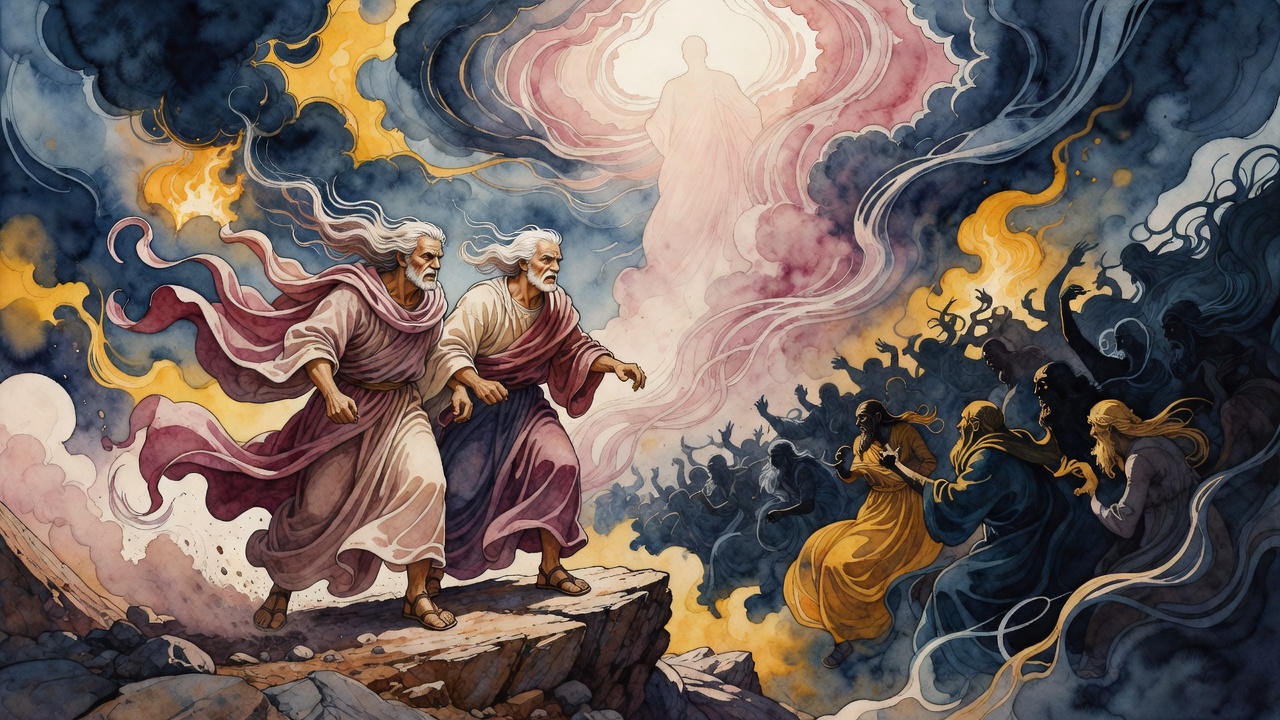
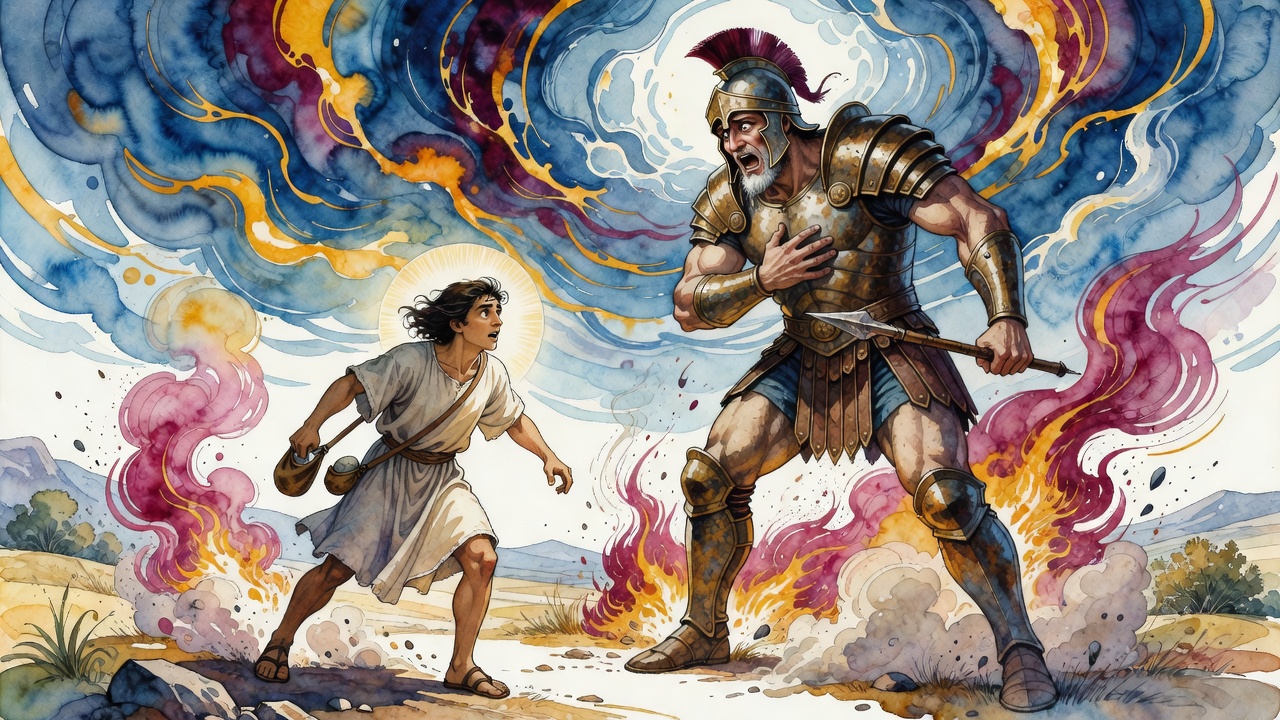
David looked up and saw the sins of Israel stacked from the ground to the top of the sky.

In that same moment an angel came down. It killed four of his sons. It killed the prophet Gad. It killed the elders who had walked out there with him. Then it turned to the king, took hold of his clothing, and wiped the wet blade clean on it.

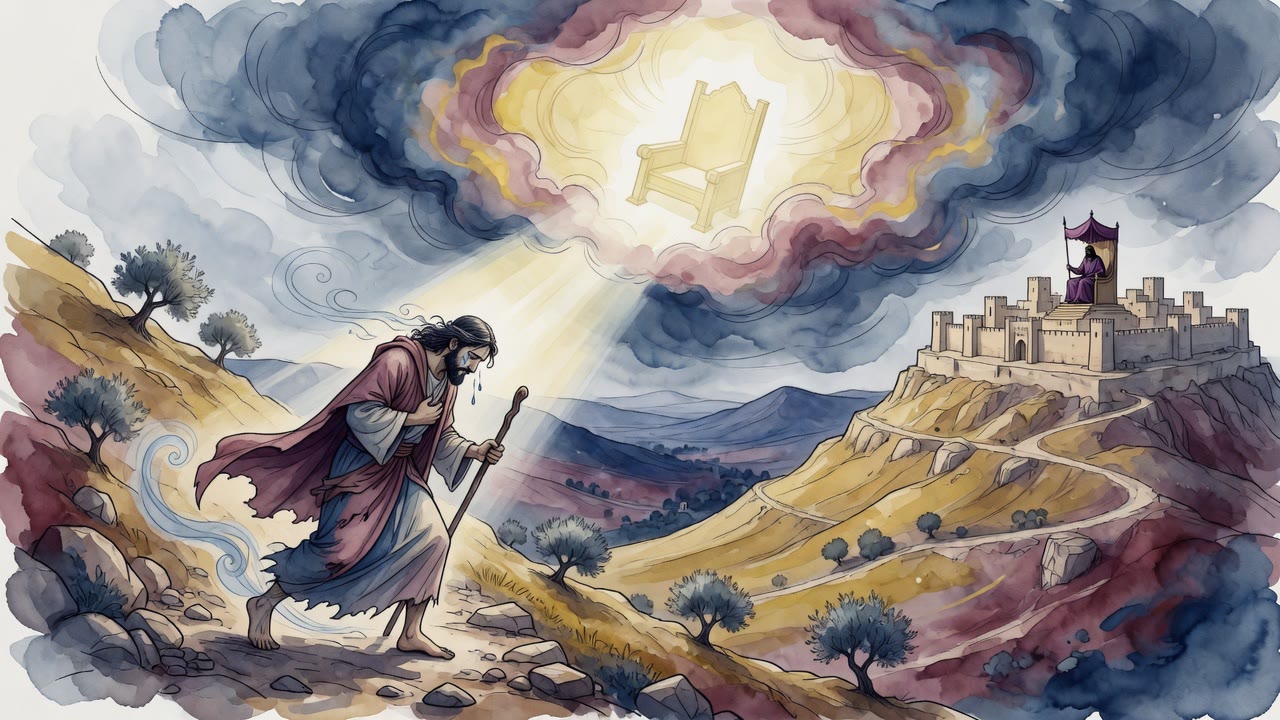
The fear went into his body and never came out again. From that day his arms and his legs shook, and they were still shaking years later when he sat down to write.

Who Is Greater, the Guard or the Guarded

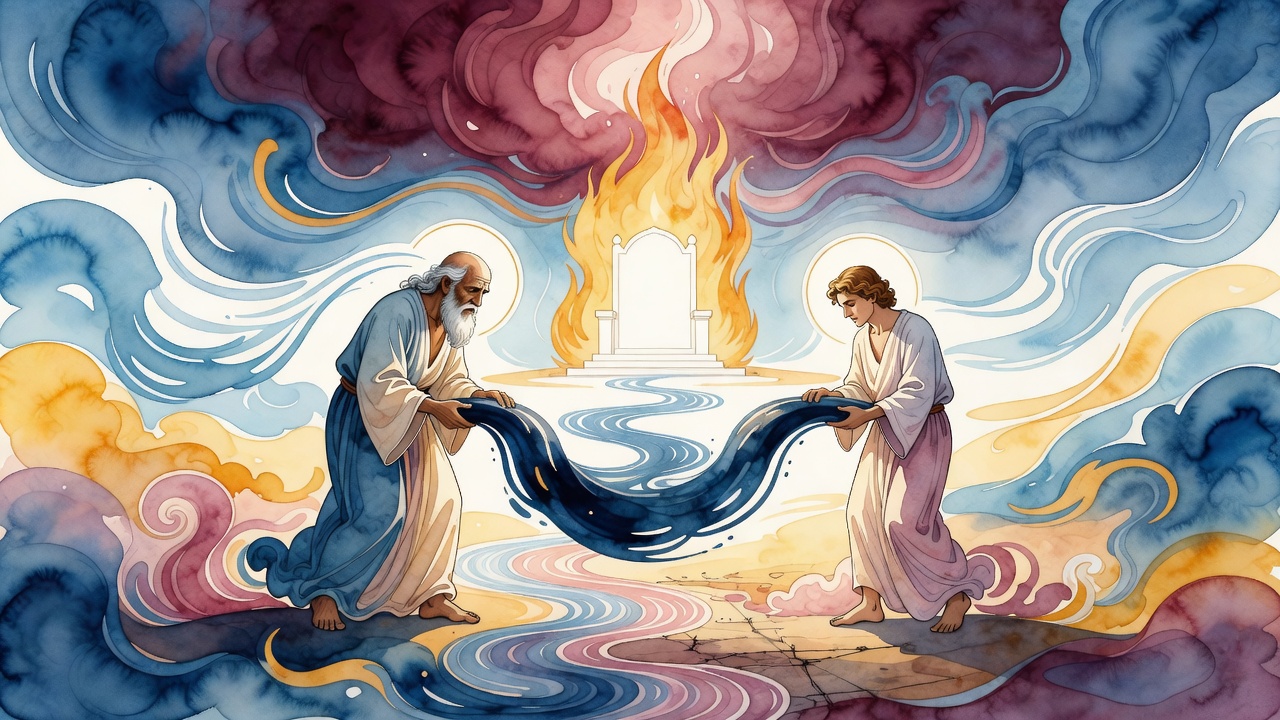
There is an angel appointed over everything. A man who has earned it walks around with ministering angels; a man who is in debt walks around with the other kind, and neither sort announces itself.

Rabbi Meir put the question to a room. "Who is greater, the one who carries or the one who is carried?"

"The one who is carried," they said.

"And who is greater, the one who guards or the one who is guarded?"

"The one who is guarded." Because if the man had nothing to his name, nobody would be carrying him and nobody would be standing over him at all. He will order His angels concerning you, to guard you in all your ways, and they will lift you in their hands so your foot does not hit a stone. The guarding is not free and it is not permanent. It runs on what the man has actually done, and it can run out.

David had watched a sword get cleaned on his own coat. He knew exactly how thin the cover was.

He Asked for the Date

He asked God to tell him when he would die.

The answer was no. No man is told his own end, and the ruling held even for him. One thing came back across the line: he would die at seventy, and it would happen on a Sabbath.

So he tried to move it. "Let it be a Friday instead."

"No. One day you spend inside the Torah gives Me more pleasure than a thousand offerings your son will burn on the altar. I am not giving up a Sabbath of yours."

"Then let me have the Sunday. Let me live one day past it."

"No. Solomon's reign starts that morning, and one reign does not overlap another by the width of a hair."

Every Sabbath, All Day, Inside the Book

So the king built himself a wall out of the only material that holds. The Angel of Death has no power over a man while that man is in the middle of doing what God commanded.

From then on David studied every Sabbath and did nothing else with the day. Not a walk in the garden, not a meal that ran long, not a visitor. He went in at the start of the day and stayed in until the day was over.

Week after week something came for him and found him inside the law and had to stand there and wait and go away again. He was seventy years old and he had worked out the one place in the world where he could not be reached, and he sat in it.

The Noise in the Garden

One Sabbath, which was also the festival of Shavuot, David was bent over the text when he heard something moving in the garden below the palace.

He got up.

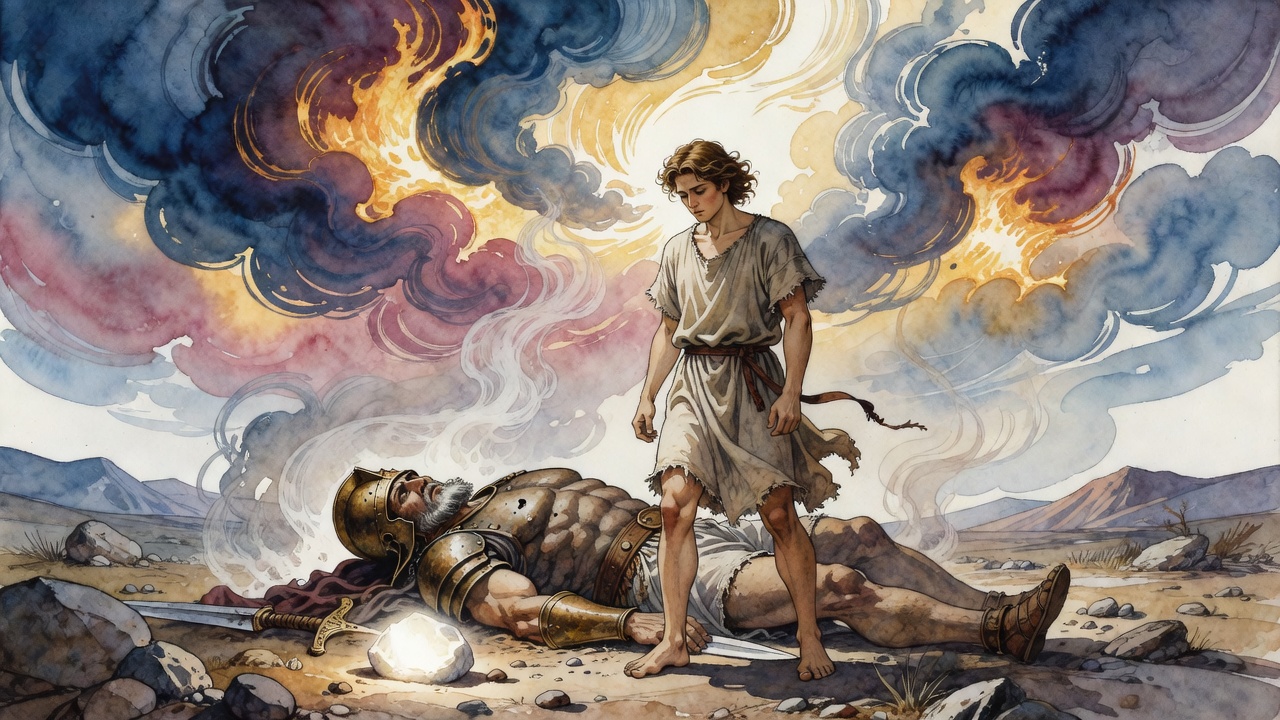
He crossed the room and started down the stairway that ran from the palace to the garden, and as his foot came down the steps gave way underneath him, all of them at once, and the king was dead in the wreck of his own staircase. The noise had been made for exactly that purpose. One interruption was all it needed.

The body could not be moved on a Sabbath, so it stayed where it fell with the sun coming down on it, and that was hard on the people standing around it. Solomon called for eagles. They came and took up positions over his father and spread their wings and held them spread, and the king lay in their shade until the day went out.


← All myths
From the tradition

Sources

4 sources

The texts behind this telling. Some cards carry a translation of the source; others are our own retelling of it, and each card says which. Every card links out to the original.

Midrash Tehillim 60:1Midrash Tehillim

Retold in our words. Read the original at the link below.Rabbi Mike Feuer, Jerusalem Anthology · CC-BY

That feeling isn't new. In fact, according to Midrash Tehillim 60, it goes way back. This particular midrash (a method of interpreting biblical stories beyond their literal meaning) focuses on Psalm 60 and opens with a powerful quote from Isaiah (50:8): "Who will contend with me? Let us stand up together. Who is my adversary? Let him come near to me."

The midrash suggests that God gave the Torah to Israel as a way to respond to the accusations of other nations. It then launches into a fascinating story about Joab, King David's general, who finds himself in a sticky situation during a battle with Aram.

The Arameans, throw a real zinger at Joab. They accuse him of not being a true descendant of Jacob. They point to the story in Genesis (31:42) where Jacob makes a covenant with Laban, reminding Joab that Jacob himself called upon God as a witness, implying a lack of other witnesses, a weakness in the lineage. Ouch.

Joab is stunned. He doesn’t know how to respond to this challenge to his people's very identity. So, he does what any good general would do: he runs back to David. He tells the king, "This and that was said to me by the sons of Aram!"

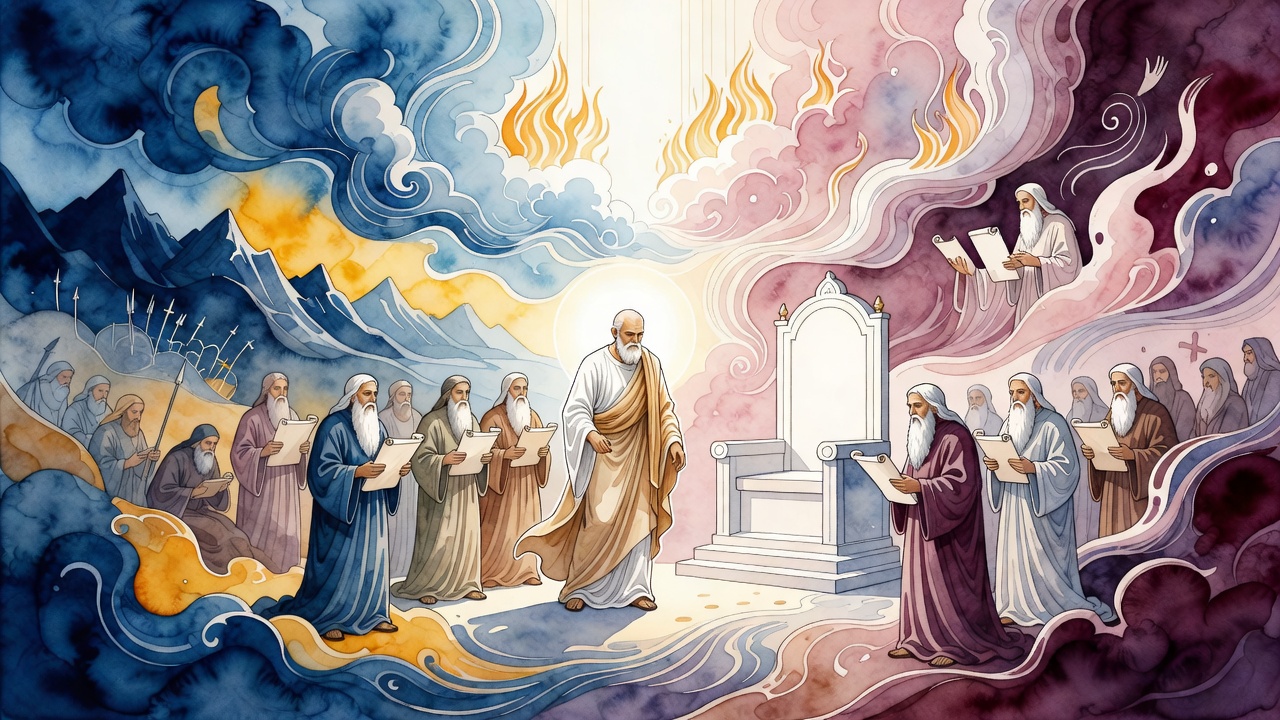
Now, here’s where it gets really interesting. David immediately convenes the Sanhedrin, the high court of ancient Israel. The midrash poetically refers to the Sanhedrin as "Lilies," drawing a connection to the Song of Songs (7:3) where Solomon sings, "Your belly is a heap of wheat, encircled with lilies." This imagery suggests purity, beauty, and perhaps the delicate yet powerful nature of their wisdom.

The Sanhedrin, these "lilies," are tasked with figuring out how to respond to the Aramean’s accusation. The Midrash then recounts how our forefathers made covenants. We made two covenants, one with Abraham when the verse states (Genesis 21:23), 'Now swear to me here by God that you will not deal falsely with me or with my offspring or with my posterity, but according to the kindness that I have done to you, you will do to me and to the land where you have sojourned.'

The story goes that when the Philistines tried to enter the land, they were challenged using a similar argument: "You are not the seed of Abraham, and you do not observe the commandments of the covenant that Abraham made with Abimelech." But the Philistines claimed they did observe the covenant, and that was enough to allow them entry. As Deuteronomy (2:23) reminds us, even the Avvim and Caphtorim were protected by covenants.

So, what does all this mean for Joab? The Sanhedrin reminds him that Jacob himself made a covenant with Aram. They also point out that the Israelites were the first to arrive, referring to Balaam's prophecy in Numbers (22:5) where he notes, "Behold, a people came out of Egypt; behold, they cover the surface of the land, and they are dwelling opposite me."

The Sanhedrin reminds Joab of past transgressions, like those in the days of Cushan Rishathaim (Judges 3:8), when the Israelites were punished for their sins. The Sanhedrin tells him that they also committed two transgressions, one in the days of Balaam, and one in the days of Cushan.

Finally armed with this historical and legal knowledge, Joab returns to the Arameans. But instead of immediately attacking, he pauses. He asks himself a crucial question: "If I destroy them now, what will I do when I ascend from the war?" In other words, what will be the long-term consequences of my actions?

This midrash isn't just a historical anecdote; it's a reflection on identity, covenant, and the importance of understanding our history. And perhaps most importantly, it highlights the need to consider the long-term implications of our actions, even in the heat of battle. How often do we pause, like Joab, to consider the future consequences of our present choices?

Full source
Midrash Tehillim 17:9Midrash Tehillim

Retold in our words. Read the original at the link below.Rabbi Mike Feuer, Jerusalem Anthology · CC-BY

The verse It's a plea, a call to action. But according to the Midrash (rabbinic interpretive commentary), it's also a reminder. A reminder of an oath.

What oath, you ask?

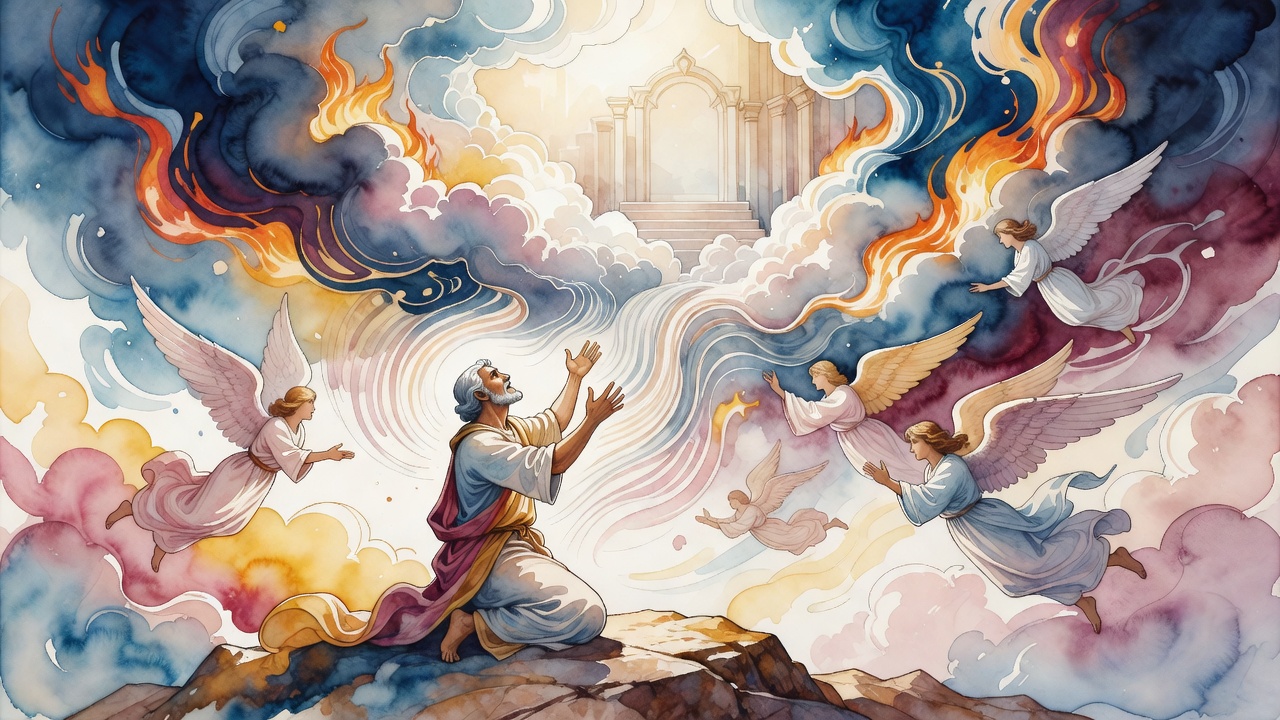
Well, the Midrash Tehillim reminds us of the angel in the Book of Daniel (12:7), who, standing above the waters, "held up his right hand and his left hand unto heaven, and swore by Him that lives forever. This celestial being making a solemn vow in God's name. It suggests that God Himself is bound by His word.

That's the key. The Midrash links this angelic oath to the prophecies of redemption. As it says in Isaiah (30:18), "Therefore the Lord will wait, that He may be gracious unto you." God's waiting, but it's not passive. It’s a purposeful pause before action, action promised by oath. Because, as we are reminded by 1 Samuel (3:14) "Therefore I have sworn to the house of Eli," oaths are serious business with God.

Rabbi Yehoshua ben Levi, quoting Rabbi Levi, drives the point home: "The Holy One, blessed be He, said, 'I have made an oath to reveal the end and to redeem you. Even if Gog and Magog come, I will fight them.'" This is a bold statement! Even in the face of ultimate chaos and destruction – represented by Gog and Magog, those legendary, apocalyptic forces – God is bound to act. Zechariah (14:3) confirms: "Then the Lord will go forth and fight against those nations."

So, when David cries out, "Arise, O Lord, let not man prevail," he's not just asking for help. He’s invoking that divine oath. He's asking God to tip the scales towards merit, towards redemption, rather than letting human failings determine the outcome.

The Midrash then shifts its focus to the "sword." David pleads, "Save my soul from the wicked, with Your sword." This isn't just about physical warfare. It's about spiritual battles, too.

One interpretation connects this sword to the power of the forefathers and the power of Torah. Isaiah (49:2) says, "And He has made my mouth like a sharp sword." The Torah, God's word, is a weapon against evil, a source of strength and protection. Another connects it to Isaac's blessing to Jacob: "And by your sword shall you live" (Genesis 27:40).

And Rabbi Yehoshua ben Levi, again quoting Rabbi Levi, offers a final, fascinating interpretation: this is the same sword God will wield in the world to come. It's the sword of divine justice, the instrument of ultimate redemption. As Isaiah (34:5) proclaims, "For My sword is sated in heaven."

So, what does all this mean for us? It means that even in the darkest times, when it feels like evil is prevailing, we can hold onto the promise of divine intervention. We can remember the oath, the commitment to redeem, to fight for justice. It might not always be easy to see, but the Midrash reminds us that God's promise, like a sharp sword, is always ready to be drawn.

The question is, are we ready to stand alongside it?

Full source
Legends of the Jews 4:79Legends of the Jews

Retold in our words. Read the original at the link below.The Legends of the Jews by Louis Ginzberg (1909) · Public Domain

As Ginzberg retells it in Legends of the Jews, at that very moment, an angel descended, not to offer comfort, but to execute judgment. The angel slew four of David's sons, the prophet Gad, and the elders accompanying him. It was a horrific scene. And to add to the terror, the angel wiped his dripping sword on David's own garments. The shock and fear were so profound that David's limbs never stopped trembling from that day forward.

David, knowing his mortality, once pleaded with God to reveal the day of his death. But his request was denied. God ordained that no one should know when their end will come. It's a mystery, a part of the divine plan that remains hidden from us. However, one thing was revealed: David would die at the age of seventy on the Sabbath, the Shabbat, the day of rest.

Naturally, David wished he could die on Friday instead. But that wish was also denied! Why? Because God delights more in one day that David spent studying the Torah than in a thousand sacrifices offered by Solomon in the Temple. Study, reflection, connection to the divine word, outweigh even the most grand of offerings.

Then, David tried another approach. He petitioned to live until Sunday. Again, no. God explained that this would infringe on the rights of Solomon, his son, as one reign cannot overlap another, not even by a hair's breadth. There's a cosmic order, a divine schedule, that must be maintained.

So, what did David do? Every Shabbat, he devoted himself entirely to studying the Torah. He knew the Angel of Death had no power over a person engaged in fulfilling God's commandments. He was trying to outsmart fate, to find a loophole.

But the Angel of Death, as the stories often tell us, is nothing if not cunning.

One Shabbat, which also happened to be the festival of Shavuot (Pentecost), as David was deeply engrossed in his studies, he heard a noise in the garden. Curiosity piqued, he rose and descended the stairway leading from his palace. As soon as he stepped onto the steps, they collapsed, and David was killed.

The Angel of Death had created the distraction, exploiting the one moment David interrupted his study. It was a clever, almost tragic, trick.

The king's body, now, couldn’t be moved on the Shabbat. This was a source of great distress because it was lying exposed to the sun. So, Solomon summoned eagles, and they stood guard over the body, shading it with their outstretched wings. A beautiful, almost surreal image: nature itself paying homage to the king.

This story, drawn from the tradition of Jewish legend, found in Legends of the Jews reminds us of the limitations of even the most righteous among us. Even David, the king, poet, and warrior, couldn't escape the inevitability of death. It shows us the value of devotion, the importance of studying and connecting with the divine, and perhaps, the futility of trying to outsmart destiny. But maybe, just maybe, it also shows us that even in death, there can be moments of grace and beauty.

Full source
Midrash Tehillim 104:2Midrash Tehillim

Retold in our words. Read the original at the link below.Rabbi Mike Feuer, Jerusalem Anthology · CC-BY

Midrash Tehillim imagines pursuit as an angelic assignment, with every person shadowed by forces earned through their deeds.

As (Deuteronomy 28:8) says, "The Lord will command the blessing for you in your barns." This verse isn't just about overflowing granaries. It's about merit. If you live a life worthy of it, the Midrash (rabbinic interpretive commentary) tells us, ministering angels are assigned to you. These are the good guys, the protectors, the cheerleaders of the cosmos.

What if you're.. not? Well, then, you might find yourself saddled with the angels of destruction. Not exactly the companions you'd want on a road trip.

The Midrash makes it clear: your actions have consequences, not just in this world, but in the unseen realms as well. It even uses the example of tithing, separating a tenth of your harvest for the Temple or the poor. If you do that, then (Deuteronomy 26:10) rings true: "Blessed are you in the city, and blessed are you in the field. Blessed are you when you come in, and blessed are you when you go out." Blessing follows righteousness.

There's a beautiful passage in Midrash Rabbah that says even the everyday conversations of the Israelites are considered Torah! Think about the weight of that statement. Even the mundane can be elevated.

The Midrash Tehillim illustrates this with a parable: a layman says, "May your yoke be upon me." Rabbi Meir then asks, "Who is greater, the one who carries or the one who is carried?" The answer? "The one who is carried is greater than the one who carries." And by extension, "Who is greater, the one who guards or the one who is guarded? He said, 'The one who is guarded is greater.'"

Why? Because, as Rabbi Meir points out, without good deeds, you wouldn't be carried or guarded in the first place. It all ties back to that idea of merit. (Psalm 91:11-12) reinforces this: "For He will command His angels concerning you, to guard you in all your ways; they will lift you up in their hands, so that you will not strike your foot against a stone." If you deserve it, angels of peace will protect you, and "no evil will befall you," as (Psalm 91:10) promises.

This idea of angelic protection isn’t unique. The Legends of the Jews, as retold by Ginzberg, are replete with tales of angels intervening in human affairs, always with an eye toward justice and divine will.

The text culminates with David, upon realizing the beauty of this blessing, praising the Lord with his entire being: "Bless the Lord, O my soul.

So, what does it all mean for us today? Perhaps it's a reminder that we are never truly alone. That our actions resonate beyond the immediate moment, influencing the forces that surround us. And that striving for goodness isn't just a moral imperative, but a way to invite the benevolent guardians into our lives. It's a powerful image: the choice, ultimately, is ours.

Full source