Parshat Bo5 min read

The Dough Left the Kneading Bowl and Rode Out of Egypt on Shoulders

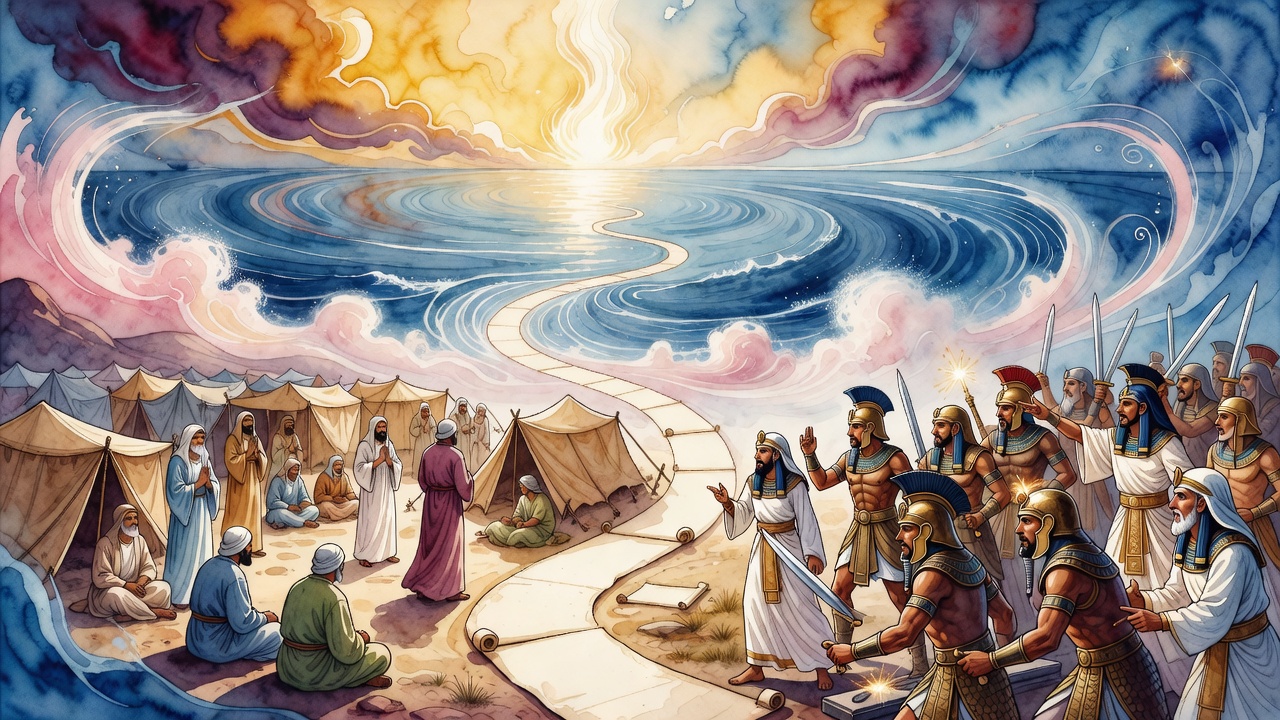
They had cattle enough to carry anything. They put the wet dough on their own shoulders instead, and walked out with Egypt's gods melted down.

Curated by Arthur · Told by Maggid ·
Table of Contents
  1. They Had Cattle and Carried It Themselves
  2. Ask Them for Silver, Gold, and Clothes
  3. The Gods Went Into the Fire
  4. A Locked Garden in a Loud Country
  5. Bread That Never Got Its Hours
  6. The Sea Would Be Richer Than Egypt
The Dough Left the Kneading Bowl and Rode Out of Egypt on Shoulders Click for full size

They Had Cattle and Carried It Themselves

The dough never got its hours.

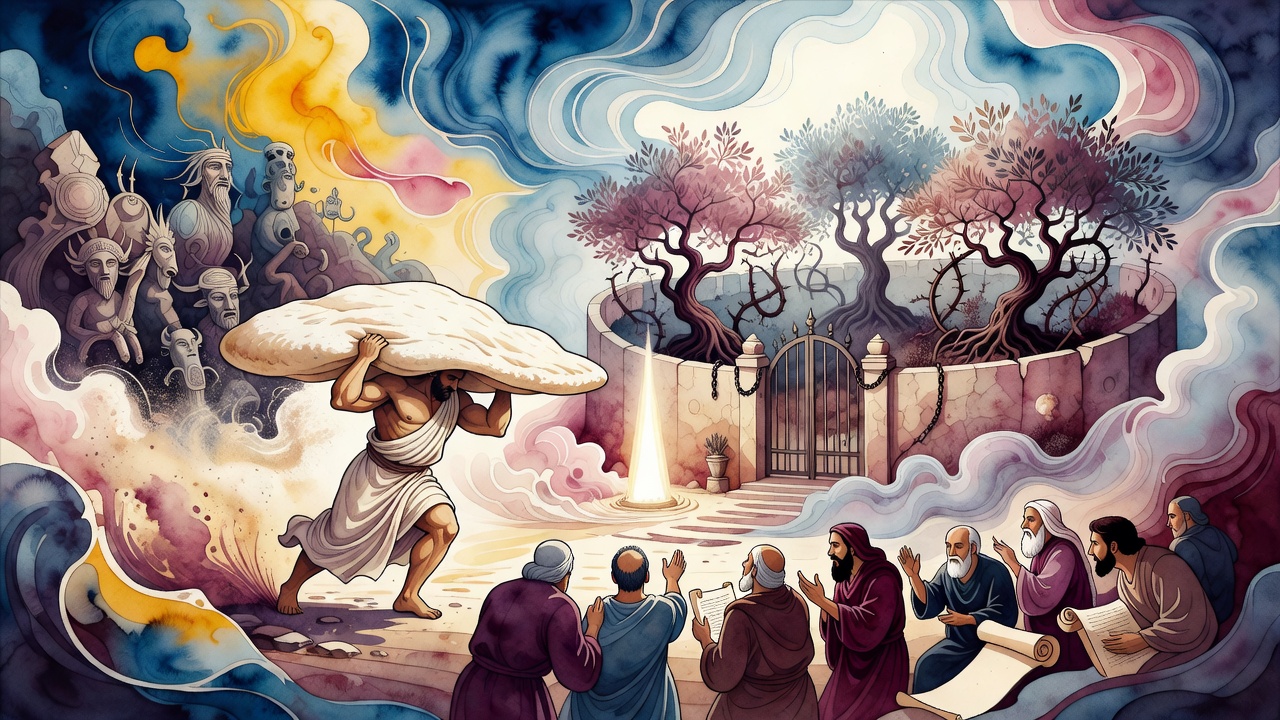
It was still slack in the bowl when the word came down the street, so they scraped it out, wrapped it in whatever cloth was nearest, and swung the bundles up onto their shoulders while it was still soft enough to print a shoulder blade.

Here is the part that should stop a reader. Israel left Egypt with flocks and herds and a great deal of cattle. Beasts everywhere. Not one of them was loaded with the dough. Every household carried its own bundle on its own back, because the thing in the cloth was not baggage. It was a commandment, and they wanted it against their skin.

So the bowls came too, mixed in with the rest, and in them went what was left of the flat bread and the bitter herbs from the night before. Not the lamb. Nothing of the lamb was allowed to see morning.

Ask Them for Silver, Gold, and Clothes

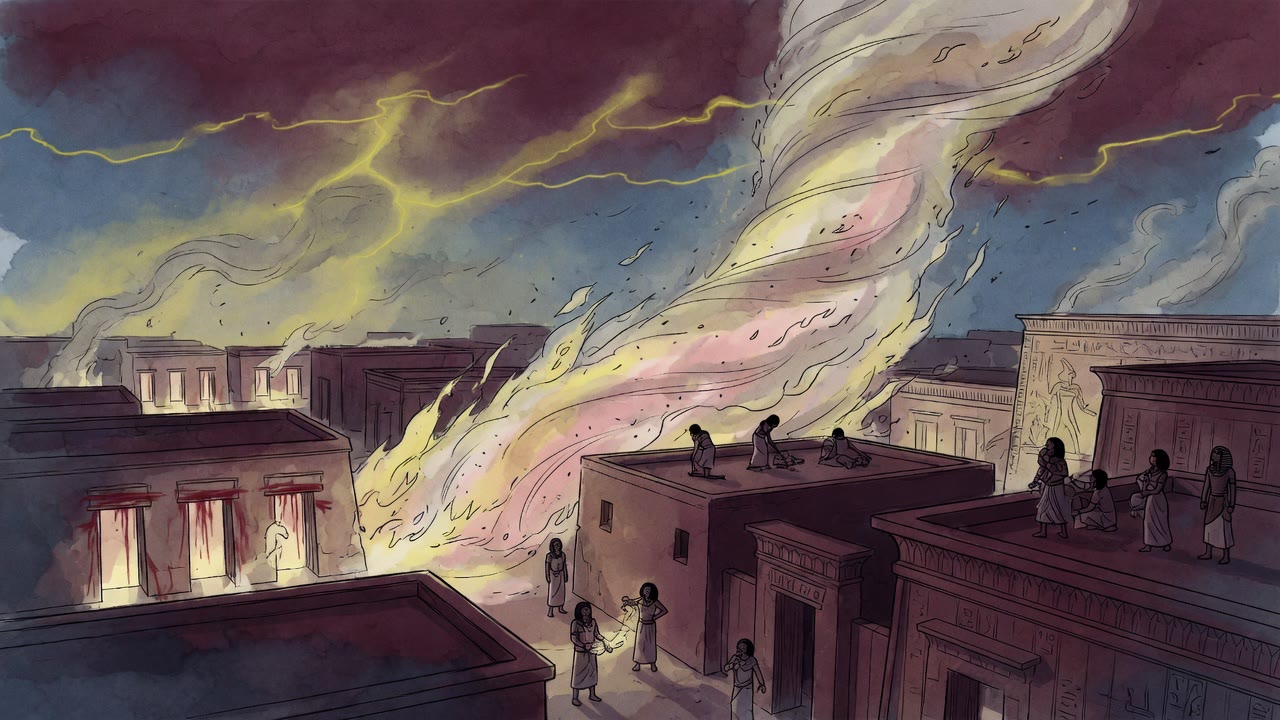
They had also been told to go and ask the Egyptians for things, and they did it while the country was still counting its dead firstborn.

Silver. Gold. And clothing.

The clothing is the strange item on that list, and it is there on purpose. Put a set of good garments beside a bar of silver in front of a family that has never owned either, and watch which one they reach for. They wanted the clothes more. After four hundred years of wearing what slaves wear, a coat was worth more than metal.

And the Egyptians handed it all over. That is the whole transaction. Nobody bargained, nobody stalled, nobody sent them to a steward. The moment an Israelite said lend it to me, it was in his hands.

The Gods Went Into the Fire

Scripture says they emptied Egypt out, and the sages take that literally enough to make a person put the book down.

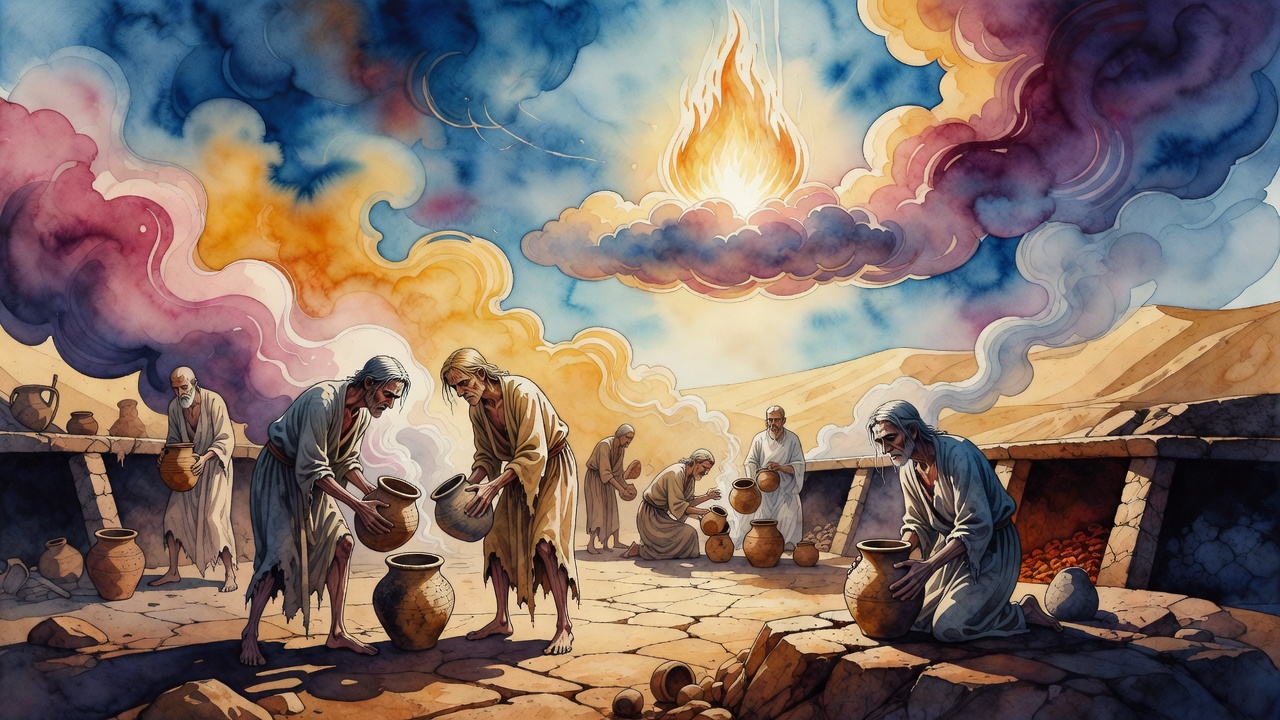
It included the idols. The silver ones and the gold ones, off their stands and out of their niches, carried away by the people who had been building for them.

They melted them. Every one of those figures went into the heat and came back out as what it had been before anyone shaped it, plain metal in a lump, nameless, no face, no crown, no jackal, no bird. Then it went into the packs with the borrowed coats and the wet dough.

Egypt's gods left Egypt that night on the shoulders of Egypt's slaves, and they left as bullion.

A Locked Garden in a Loud Country

Four hundred years is long enough for a people to dissolve into the country holding it, and the tradition makes a hard claim about what did not happen.

They did not dissolve. In all that time, in all those households, mixed unions were not the pattern.

The proof offered is one man. Somewhere in the wilderness a fight breaks out and the Torah stops to identify one of the fighters as the son of an Israelite woman and an Egyptian man. That single line is the evidence, because a thing worth singling out is a thing that happened once. If it had been the weather of the camp, no verse would bother.

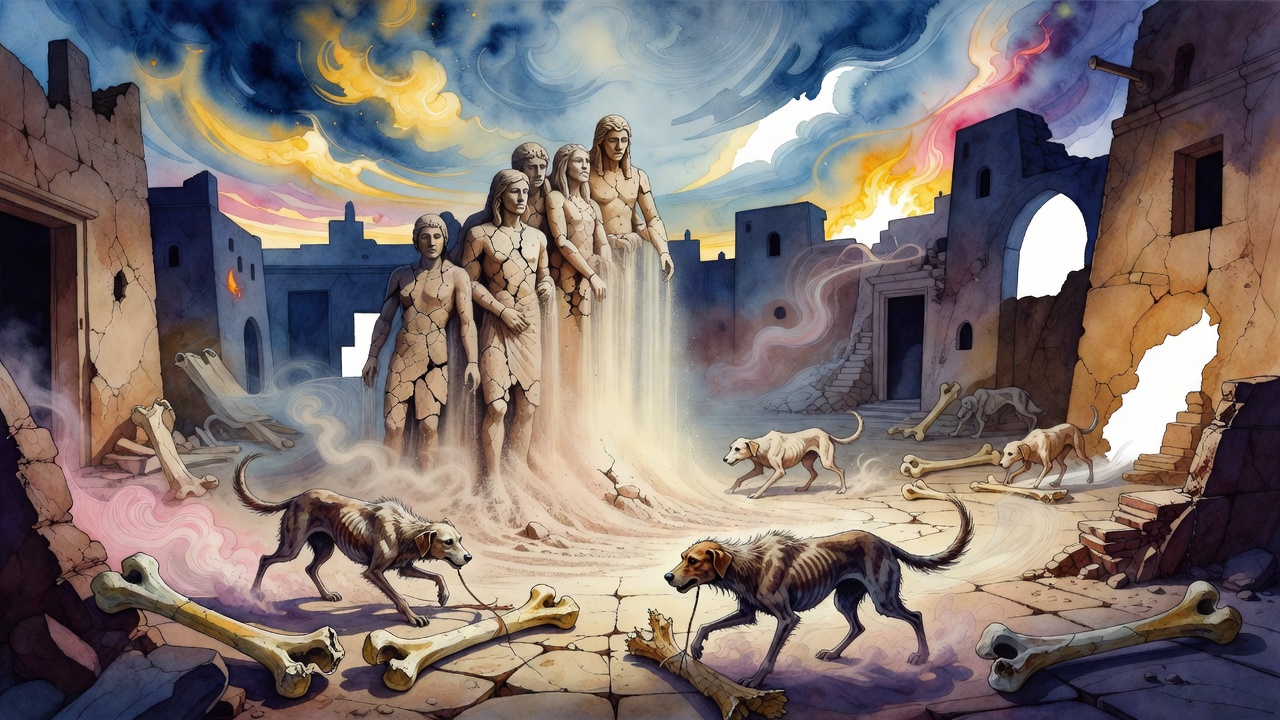
The Song of Songs gives it a shape. A locked garden is my sister, my bride, a fountain sealed. The locked garden is the women. The sealed fountain is the men. A whole people living inside an empire with a gate shut on the inside.

Bread That Never Got Its Hours

Centuries later a prophet describes a baker who never stops stirring the dough from the kneading until it is leavened, and the teachers set that verse down beside this night on purpose.

Redemption has a tempo, and it is not the tempo of a kitchen.

A person can spend a life waiting for a slow and orderly rescue, the kind that lets the bread finish. Then the word comes at a bad hour, and the choice is to walk with the work unfinished or stay in the house where the work can be completed properly. Israel took the bowl off the counter wet.

By morning on the road somebody bit into the first flat cake of it and tasted exactly how fast it had happened.

The Sea Would Be Richer Than Egypt

They went out of that country carrying the strangest inventory any nation ever marched with. Unrisen dough. Leftover bitter herbs. A dead man's bones. Borrowed coats. And the melted-down gods of the empire, cooling in the packs.

The haste in the cloth would become a law, eaten once a year forever, so that no generation forgets that the bread was not ready and the people were.

And the plunder was not finished. What washed up at the edge of the sea a few days later, when the chariots came apart in the water, was worth more than everything they carried out of Egypt.


← All myths
From the tradition

Sources

2 sources

The texts behind this telling. Some cards carry a translation of the source; others are our own retelling of it, and each card says which. Every card links out to the original.

Midrash Tanchuma, Bo 8Midrash Tanchuma

Retold in our words. Read the original at the link below.Townsend 1989 translation of Midrash Tanhuma, S. Buber Recension · CC-BY

And the people took their dough before it was leavened … upon their shoulders (Exod. 12:34). This indicates that the dough did not have sufficient time in which to leaven. Similarly, concerning the Messianic days, it states: Who ceaseth to stir from the kneading of the dough until it be leavened (Hos. 7:4). Their kneading troughs (mish’arotam), alludes to the leftover (shi-yu) unleavened bread and bitter herbs. You may interpret it so, but perhaps it does not refer to the remnants of the unleavened bread and bitter herbs, but to the remnants of the Passover sacrifices? However, since Scripture says of the paschal sacrifice: And ye shall let nothing of it remain until the morning (Exod. 12:10), it could not refer to the leftovers of the paschal sacrifices. Upon their shoulders (ibid., v. 34). Did they have no beasts of burden to carry the remnants of the unleavened bread and bitter herbs? After all, it is written: And a mixed multitude went up also with them; and flocks, and herds, even very much cattle (ibid., v. 38)? They did so because they cherished their religious obligations deeply. And so it is written: upon their shoulders.

The children of Israel did according to the word of Moses; and they asked of the Egyptians jewels of silver, and jewels of gold, and raiment (ibid., v. 35). Why did they ask for raiment? To demonstrate that clothing was more precious to them than silver or gold. And the Lord gave the people favor in the sight of the Egyptians (ibid., v. 36). As soon as they said: “Lend me,” they gave it to them. And they despoiled the Egyptians (ibid.). This includes even the idols of silver and gold. They melted them down and converted them into their original state. They carried everything away with them. The plunder at the sea, however, was greater even than the plunder of Egypt, as it is said: And thou didst increase and grow up, thou camest to excellent beauty (Ezek. 16:7).

Full source
Mekhilta Tractate Pischa 5:3Mekhilta DeRabbi Yishmael

Retold in our words. Read the original at the link below.Mechilta, translated by Rabbi Shraga Silverstein · CC-BY

The Mekhilta makes a striking claim about the moral character of the Israelites in Egypt: they were not guilty of sexual immorality. The proof comes from an unexpected source, a verse that describes the one exception to this rule.

(Leviticus 24:10) mentions "the son of an Israelite woman, the son of an Egyptian man." The rabbis noted that Scripture singles out this case precisely because it was unique. The fact that the Torah bothers to identify this particular mixed parentage tells us that such a situation was extraordinary. If intermingling had been common, why would one case merit special mention?

The Mekhilta reinforces this with a poetic reading from the Song of Songs. (Song of Songs 4:12) describes the beloved as "a locked garden, my sister, my bride, a fountain locked." The rabbis interpreted "a locked garden" as referring to the Israelite women, they kept themselves sexually separate from the Egyptians. "A fountain locked" refers to the Israelite men, they too maintained their boundaries.

This teaching served an important theological purpose. The Israelites had lived in Egypt for generations under brutal conditions of slavery. One might assume that centuries of oppression would have eroded their moral standards and communal identity. The Mekhilta insists otherwise. Even under the harshest circumstances imaginable, Israel preserved its distinctiveness. Their sexual fidelity was not merely a personal virtue but a collective achievement, one that the Torah itself commemorates by highlighting the rarity of its violation.

Full source