Elisha Carried Fire No Woman Could Survive Seeing
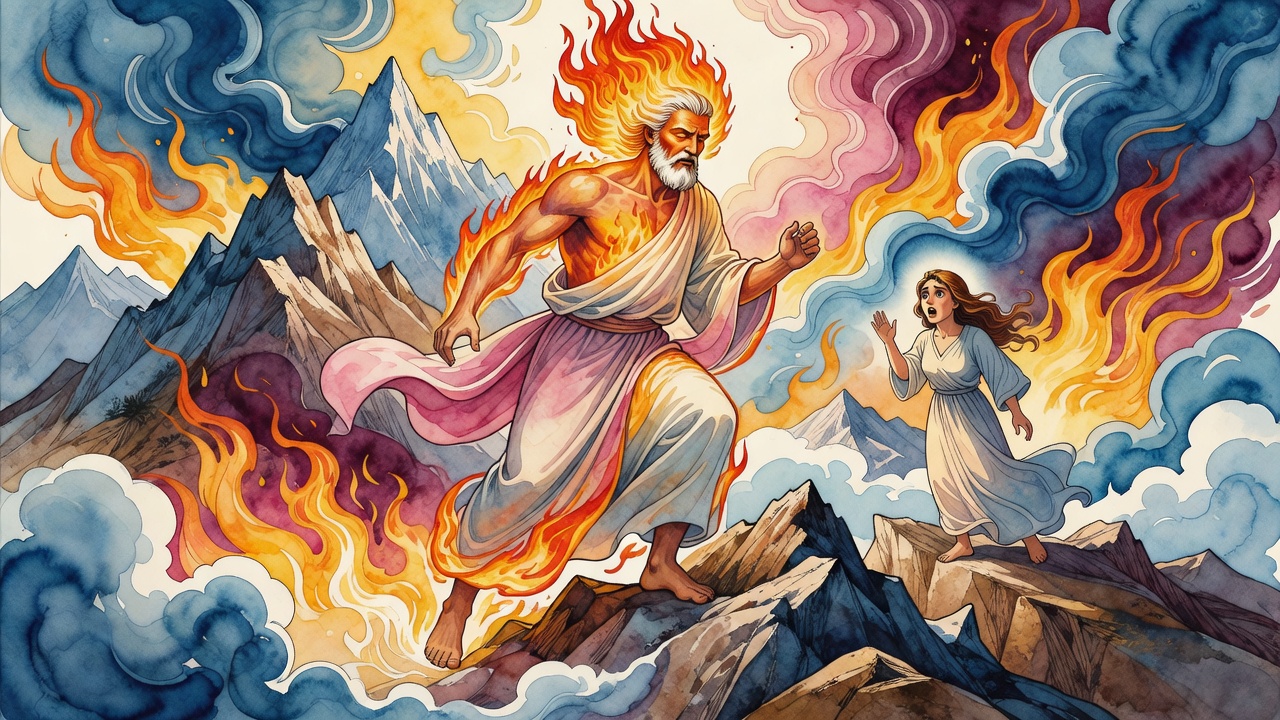
Elisha carried divine fire so concentrated his face burned lethal to look at. He traveled mountain to mountain, and one woman saw him coming.
Table of Contents
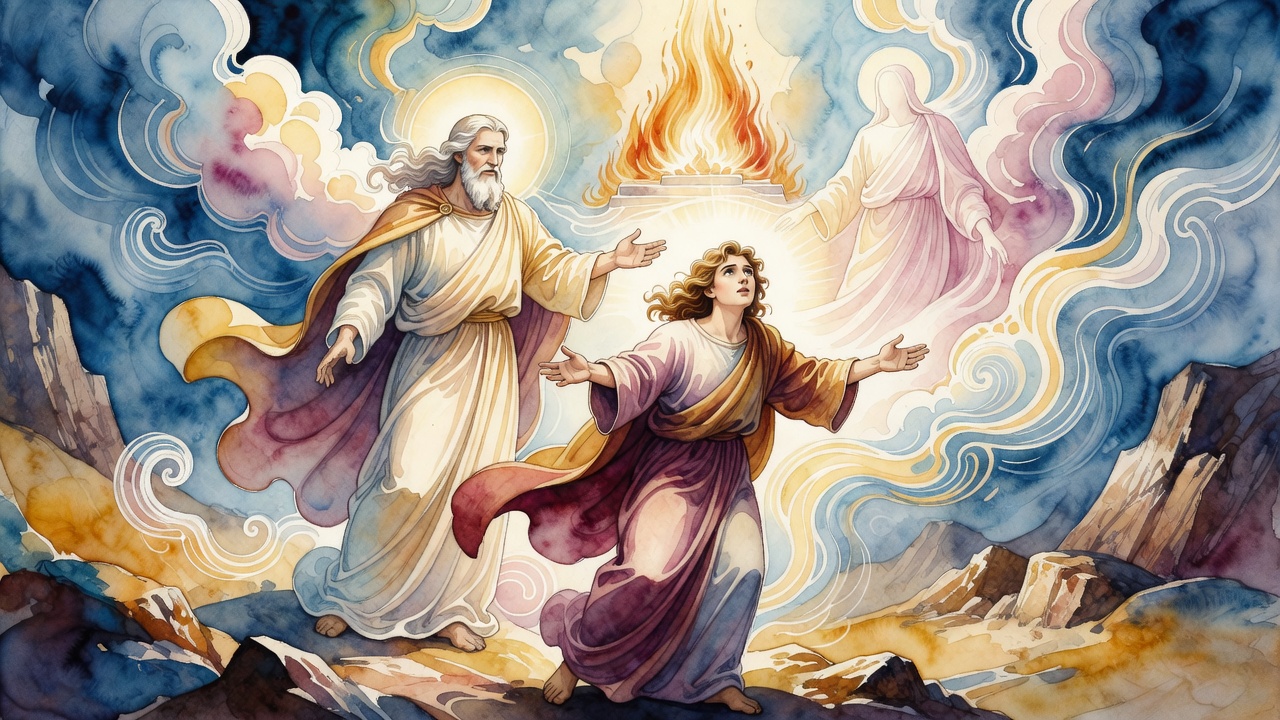
Elisha could not stay in a city. Not for long. He traveled "from mount to mount, and from cave to cave," as the tradition records it, not because he sought solitude the way hermits do, withdrawn and small, but because his proximity to people carried a cost they did not know how to pay. No woman could look at his face and live. This was not a punishment. Nothing had gone wrong. The spirit he had asked for at the Jordan, the double portion of Elijah's fire (2 Kings 2:9), had settled into him so completely that his body could no longer contain it quietly. What burned inside him burned at the surface. His face was the problem. His face was the proof.
 Click for full size
A Room on the Roof
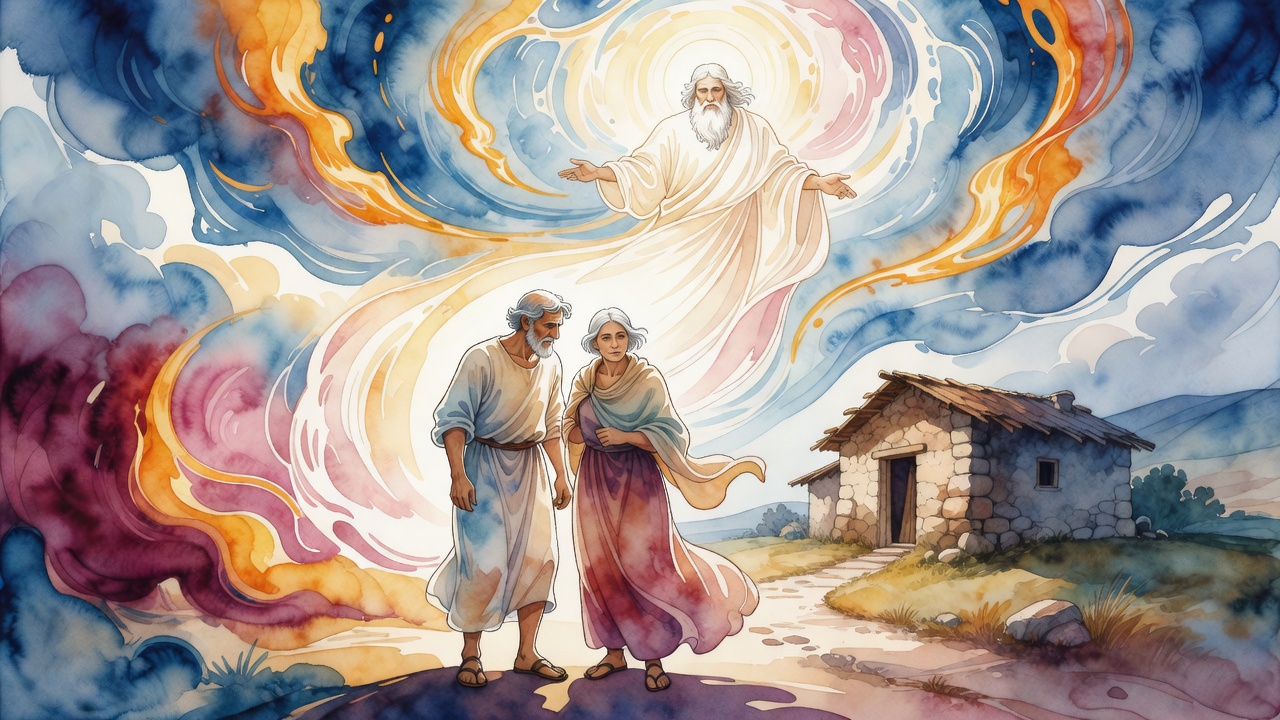
The woman of Shunem recognized him anyway. She was not looking at his face when she recognized him. She watched the way he moved through the city, the way the air around him seemed arranged differently, and she understood what she was seeing. A great woman, the text calls her (2 Kings 4:8), a woman of standing and resources and, more than either of those, of precise intelligence about holy things. She invited him to eat. He came back the next time he passed through. She said to her husband: "this is a holy man." She knew, and she planned accordingly.
She had a room built for him on the roof of her house. A small room: a bed, a table, a stool, a lamp. Four things. Everything a man needs who has no home of his own, who carries too much light to stay anywhere indefinitely. The room was hers to give and she gave it carefully, with the understanding that closeness to holiness requires architecture. You do not stand in the same space as what burns that hot. You build a threshold. You arrange for proximity without annihilation.
When Elisha lay down in that room, above her household, inside the structure she had made possible, he asked his servant Gehazi what could be done for her. She had no son, and her husband was old. Gehazi brought this back to him, and Elisha called her to the doorway of the room. She stood at the threshold, the door between them, and he told her she would hold a son by this time next year. She said: "do not deceive me" (2 Kings 4:16). She had managed her expectations carefully for years. She did not want them pulled open now and found empty. But the word had already been spoken, and a year later the child was there.
The Heat at the Threshold
She had understood the threshold discipline instinctively. When she came to Elisha with a request or a word to deliver, she stood at the doorway and did not enter. She kept her face averted or her eyes lowered or simply made sure the full force of whatever lived in his face did not reach her directly. She had built the room. She knew what was in it. The same intelligence that recognized him on the road understood exactly how close she could afford to stand.
This is what Rabbi Joshua ben Korchah found most worth recording: not the miracles themselves, not the oil that multiplied or the dead child raised or the ax-head that floated, but the structural fact underneath all of them. The divine fire in a prophet does not diminish in order to accommodate the living. The living must arrange themselves around it. The woman of Shunem had done this. She had found a way to remain near the source without being consumed by it, which required more practical wisdom than most people bring to anything.
What God Withheld
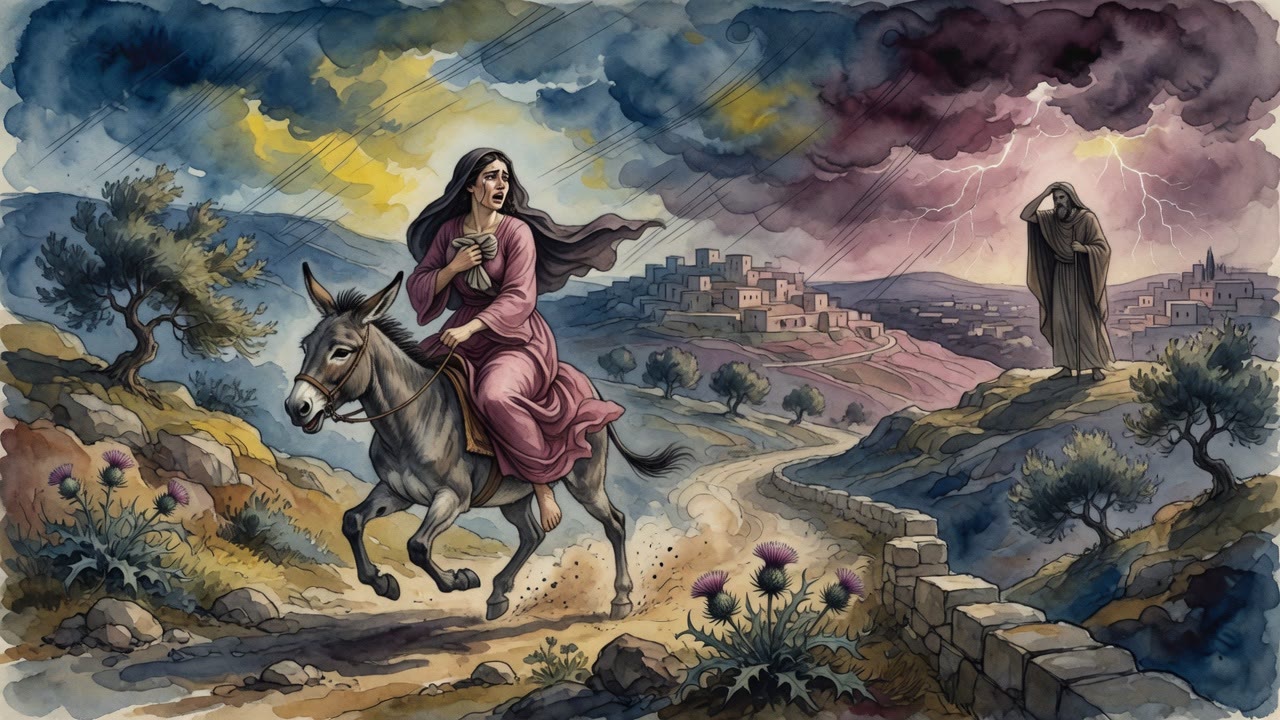
The boy grew. One morning he went out to his father among the reapers, and his head began to hurt, and by noon he was dead in his mother's arms (2 Kings 4:19-20). She laid him on Elisha's bed in the room on the roof. She said nothing to her husband about what had happened. She saddled a donkey and rode to Mount Carmel.
When Elisha saw her coming from a distance, he sent Gehazi ahead. She would not speak to Gehazi. She would not stop until she reached Elisha himself. Then she fell at his feet, and Gehazi moved to push her away, and Elisha said: "leave her, for her soul is bitter" (2 Kings 4:27). She said to him what she had come to say. She had not asked for a son. She had not wanted her hope opened. He had done it anyway. Now her vessel had been filled and its contents spilled. She had lost what she never asked to receive.
Elisha did not answer her, because he could not. He told her what was true and what was strange: the Shechinah (שְׁכִינָה), the divine presence, had shown him everything, everything it always showed him, but this death had been hidden from him. God had not told him. The thing that had happened in his own room, on his own bed, to the child born through his own word, had been kept from him until she arrived at his feet to report it.
The Prophet Before the Hidden Thing
There is a weight to this that Pirkei DeRabbi Eliezer, compiled around the eighth century CE, does not explain and does not need to. The man whose face burned lethal with divine fire, who carried a double portion of Elijah's spirit, who had more of God in him than most bodies can tolerate, was not told. He stood at Mount Carmel with the full intensity of heaven concentrated in his person and learned from a grieving woman that God holds some things back even from prophets. Even from the ones whose faces kill.
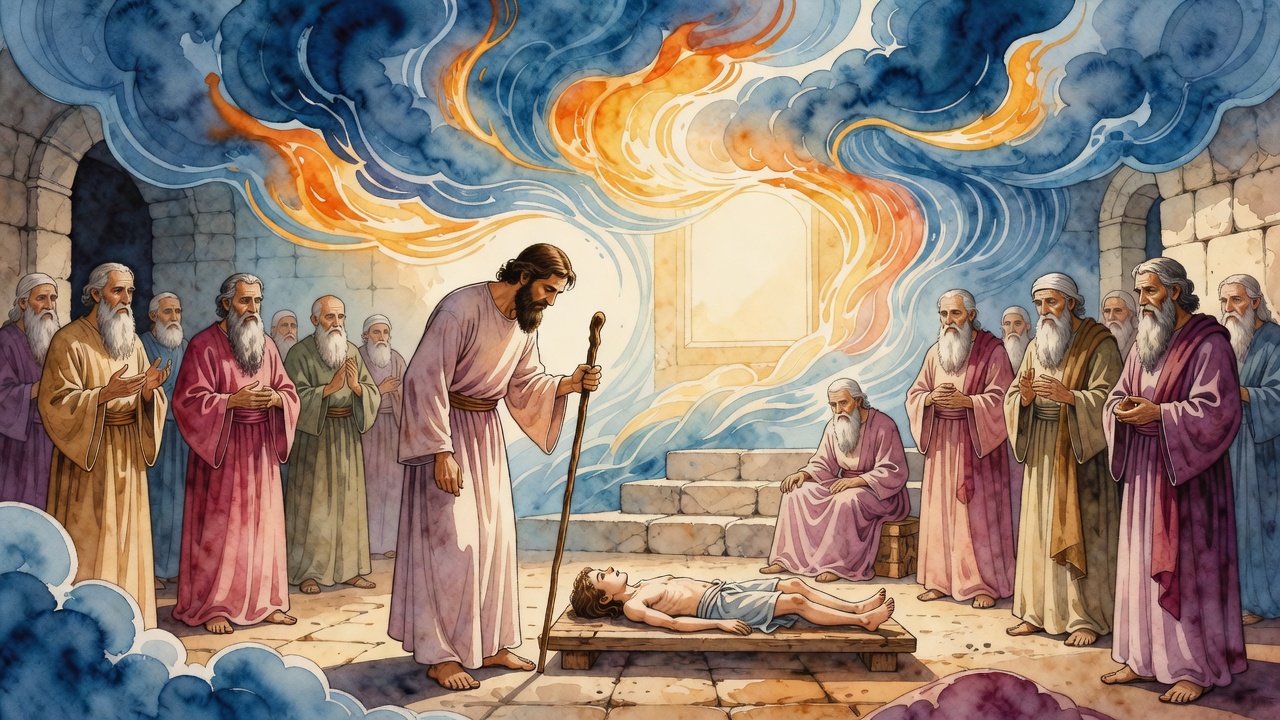
He sent Gehazi ahead with his staff. But the woman would not leave his side, and Elisha followed her back. Gehazi laid the staff on the child's face and nothing happened. Elisha went into the room, the room she had built, and he lay down on the child and breathed into him, and the child's body grew warm, and he sneezed seven times, and opened his eyes (2 Kings 4:34-35).
She came when Elisha called her. She fell at his feet again. She took her son and left.
The room on the roof stayed where it was. The threshold she had built, the careful architecture of proximity, remained. And the prophet who carried too much fire for women to look at directly went back to traveling from mountain to mountain, from cave to cave, carrying what he carried, and knowing now that God does not tell even the burning ones everything.
← All myths