5 min read

When Eliyahu Wept Over the Empty Study House

Two hundred young men filled a courtyard with Torah. A year later only orphans remained, and an angel told Eliyahu not to mourn them for their hidden sins.

Curated by Arthur · Told by Maggid ·
Table of Contents
  1. Two Hundred Voices, Then Silence
  2. Three Days Before the Mountain
  3. Achan and the Thirty-Six
  4. Who Watches the Night
  5. Why the Inclination Exists
When Eliyahu Wept Over the Empty Study House Click for full size

Two Hundred Voices, Then Silence

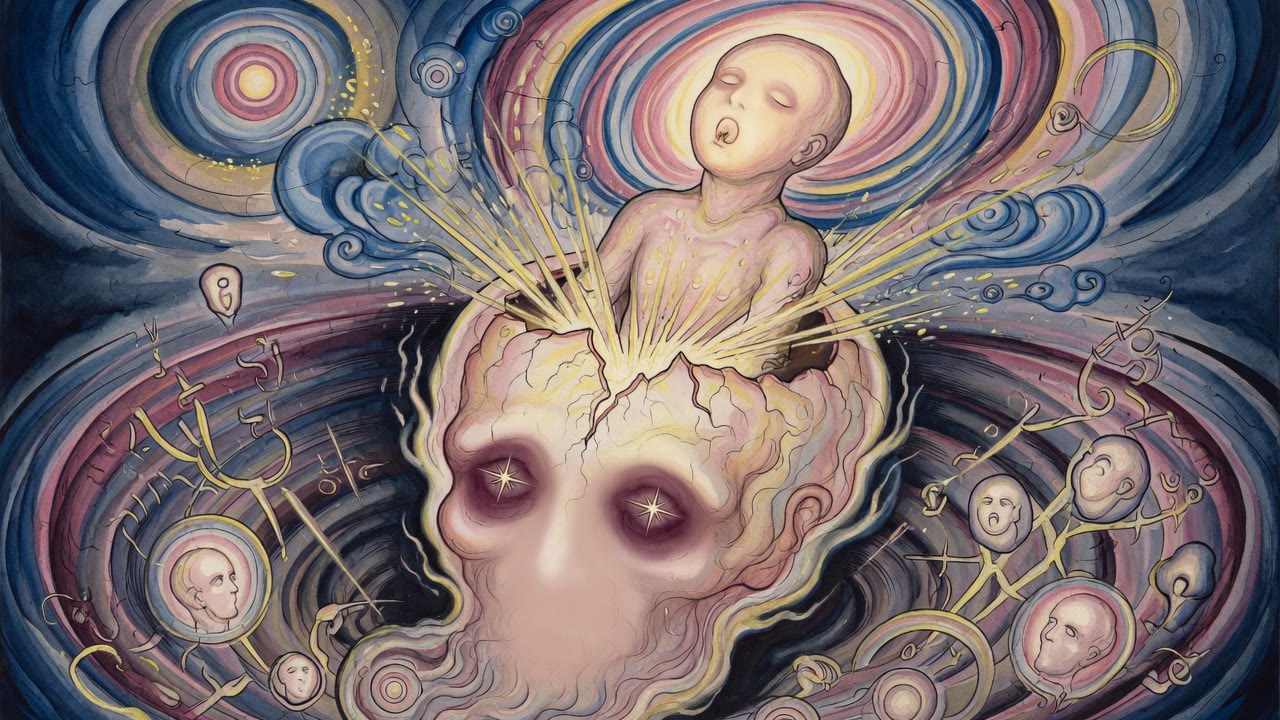
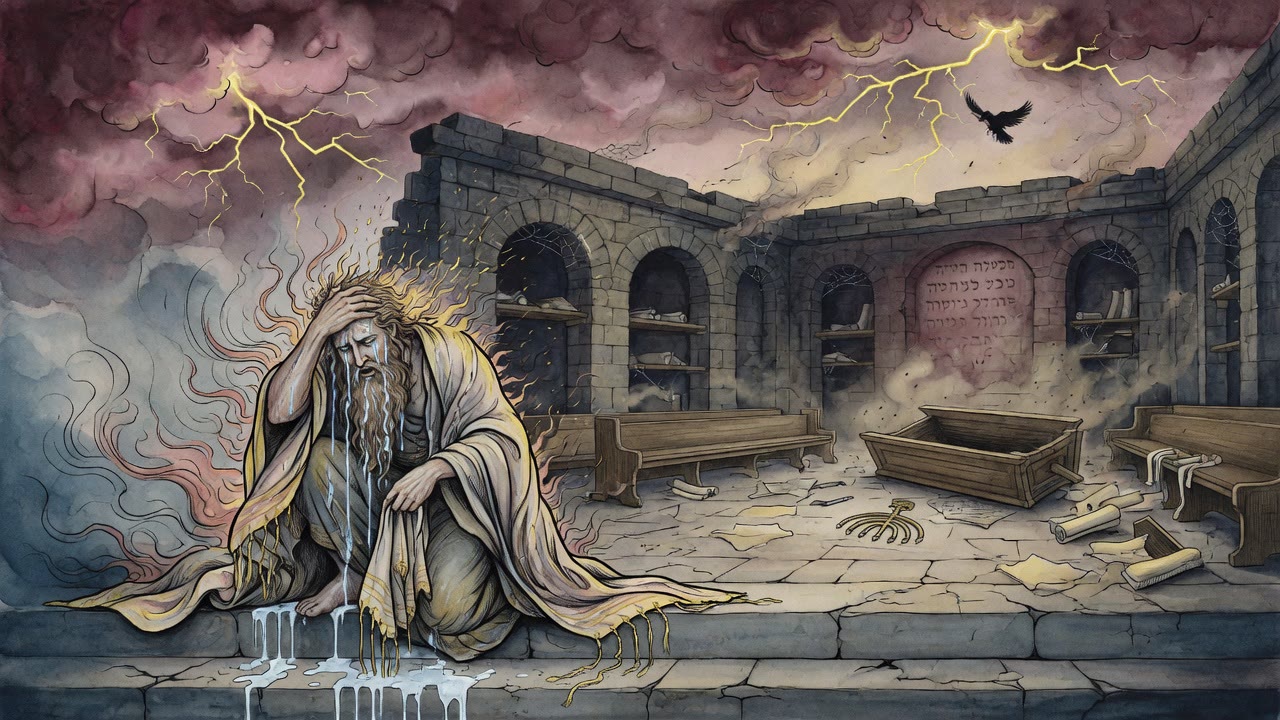
Eliyahu passed through a city of Israel and found two hundred young men learning Torah from a single teacher. The courtyard rang with argument and recitation. Scrolls lay open. Dust rose when they stood to honor a verse. A year later he returned and the courtyard was empty. The teacher and his whole household were dead. Only the youngest children remained alive among the rooms that still held the smell of parchment.

Eliyahu wept until an angel stopped him. Do not mourn these, the angel said, for they had ruined themselves through hidden sins and wasted what God had given them, never knowing death was already reaching for them while their mouths still formed holy words for an audience of one another.

The angel's hardness did not erase the teacher's blood on the floor of Eliyahu's mind. It forced a harder truth. A study house can be full of sound and still be empty of the purity that lets Torah enter a people without becoming costume worn for neighbors.

Three Days Before the Mountain

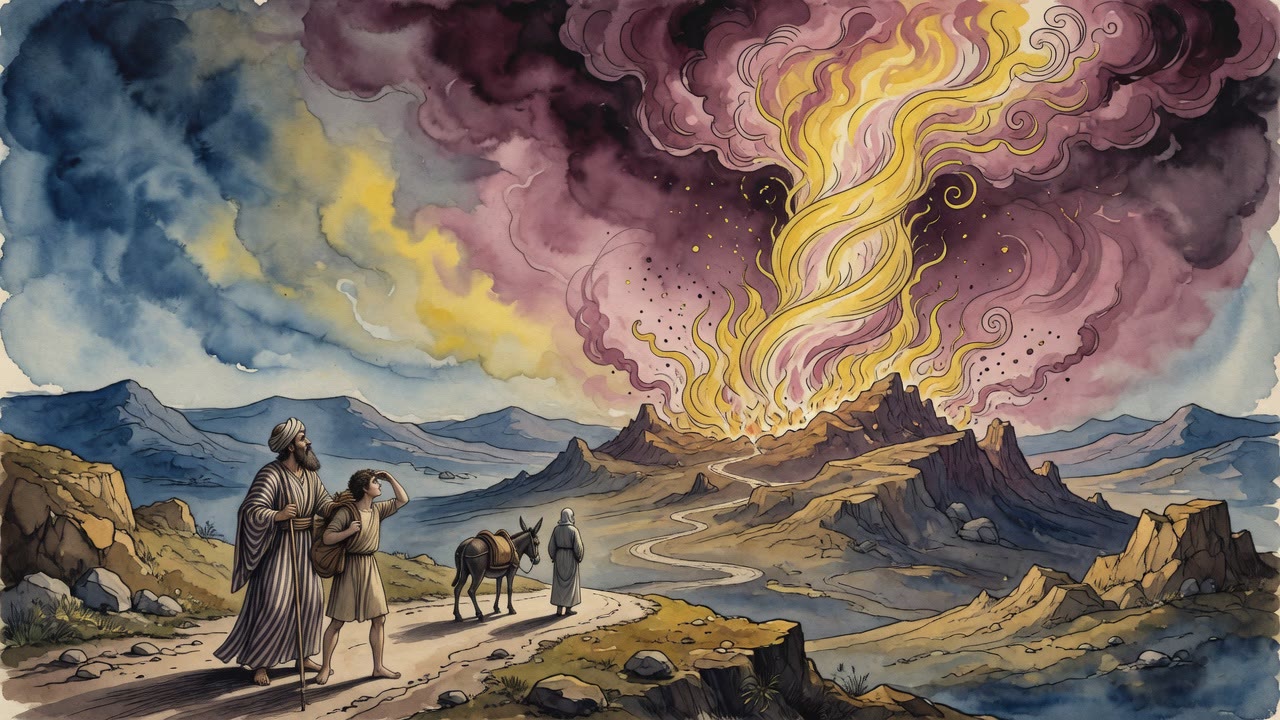
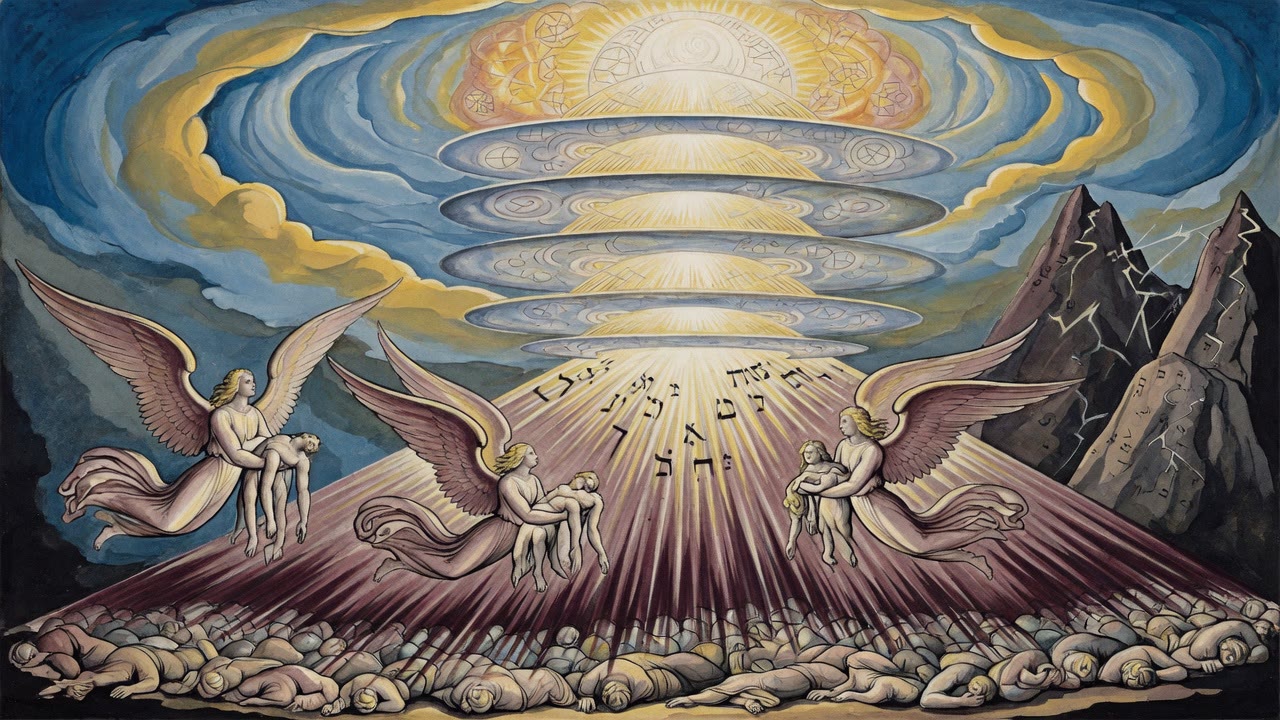
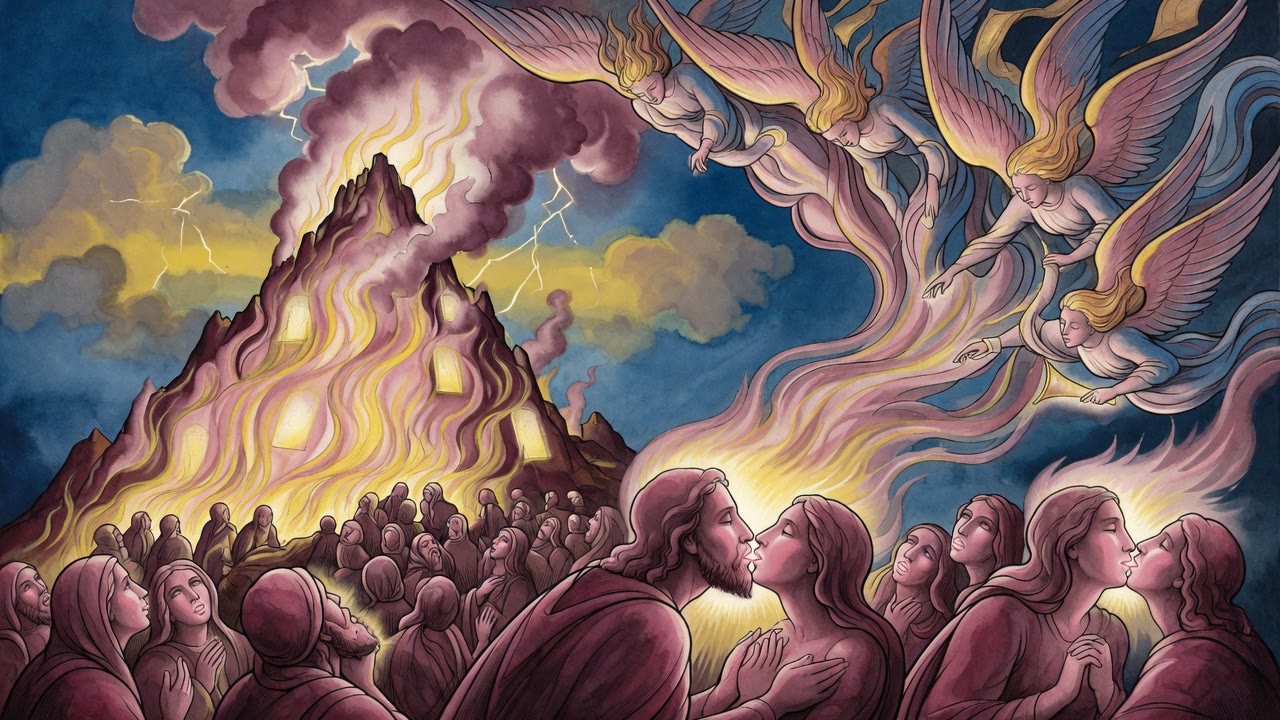
From that ruin Eliyahu turned to the laws of guarding oneself, then to the deeper root of all conduct, the readiness Israel needed before Sinai. Moses told the people to separate and purify themselves three days. Clothes washed. Bodies held back from the mountain's edge. Joshua told the next generation the same before they crossed the Jordan. Holiness is the doorway through which Torah enters a camp that wants more than noise.

Without that doorway, even a courtyard full of young men can become a warning instead of a glory. The body must be ready for the book. The book alone will not save a body that has decided otherwise in secret while the public voice still rises on cue for the teacher's ear.

Eliyahu looked at the orphans and thought of those three days, of how easily a generation can skip the waiting and still claim the words as if the mountain never set a line around itself.

Achan and the Thirty-Six

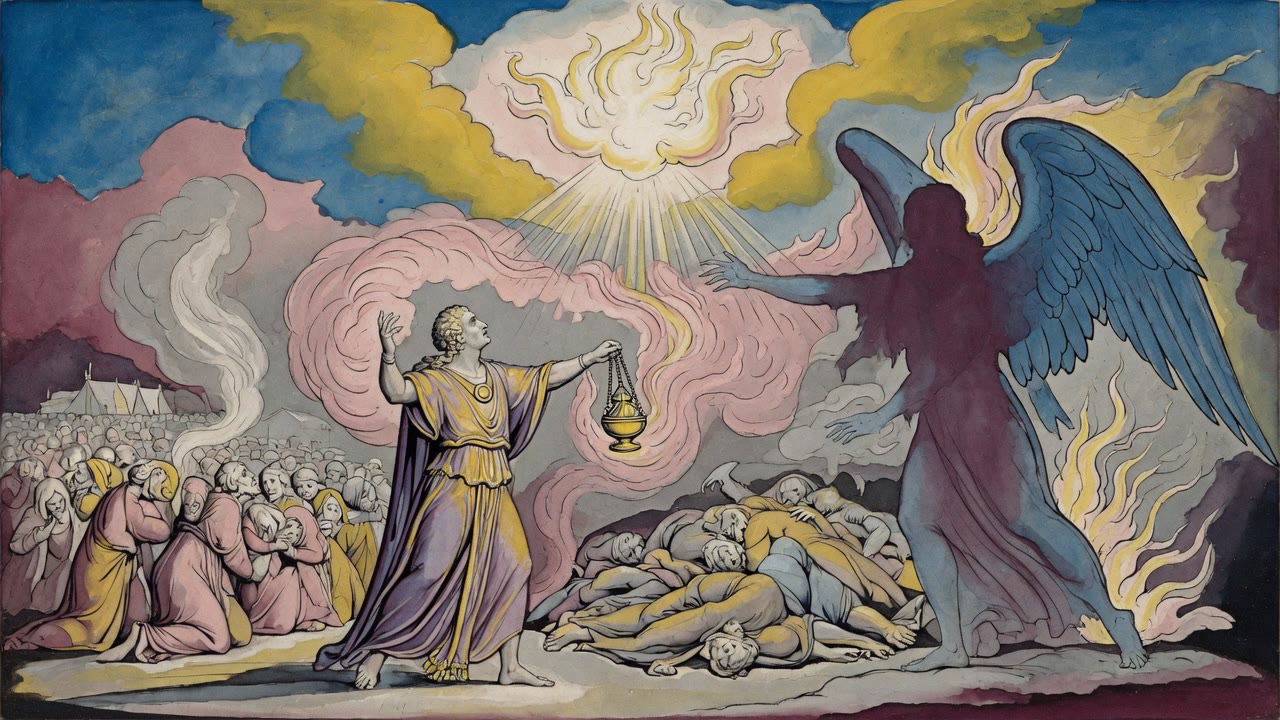
Then came the painful story of Achan. Thirty-six righteous men fell at Ai because one man had taken from the devoted spoil and buried it under his tent floor. When Joshua threw the stolen goods down in anger before God, the Holy One rebuked him, and again when Joshua told Israel they could never serve a jealous God.

God reminded Joshua how Moses had pleaded for the people and won forgiveness by invoking the patriarchs. Joshua explained that he spoke harshly only to make Israel fear sin, and God embraced him for his wisdom, for a leader who never warns becomes a partner to the next Achan waiting with a shovel.

One hidden theft in a tent. Thirty-six graves outside a city wall. The study house's empty courtyard and Ai's field of the dead share a grammar. Hidden sin does not stay private. It spends other people's lives like coin counted in the dark.

Who Watches the Night

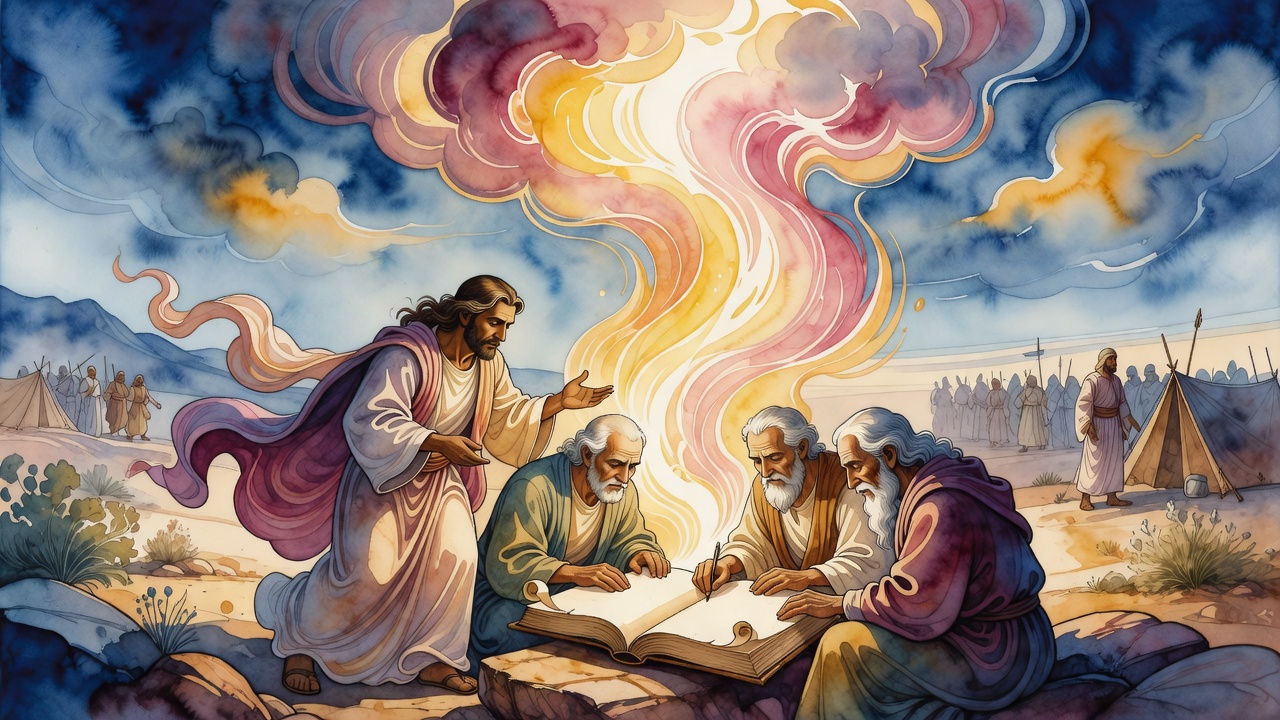
The prophet's cry, "Watchman, what of the night?" becomes a teaching about who guards whom. God Himself stands watch over anyone who carries true Torah within him, the way He watched over Hananiah, Mishael, and Azariah in the furnace when the fire should have won and the king waited for ash.

The Tanna lays out a ladder. Do two or three good deeds and one angel is assigned to guard you. Read Torah, Prophets, and Writings and you get two angels. Master Mishnah, the laws and the aggadot, and serve the sages, and the Holy One guards you with His own hand, closer than any winged escort a person could invent for comfort.

A king walks through the desert with his son. When the heat bears down he plants himself on the sunward side and becomes shade for the boy. So God is Israel's shade at their right hand. The weeping over the ruined Temple is not the end of the story. A morning is coming when they will rejoice with Him as fully as He rejoices in them, even while the long night among the nations drags on with no study-house noise to hide behind.

Why the Inclination Exists

Why did God create the evil inclination at all? He already has untold myriads of angels who sanctify His name without ceasing, crying holy by day and blessing His glory by night. The angels were never the point. God made the evil inclination for the sake of flesh and blood, the creature who eats and drinks and still chooses under pressure that angels never feel.

Effort is what heaven rewards. Angels do not strain against a yetzer (that same evil inclination). Humans do. The empty study house failed that strain in secret. Achan failed it with a garment and silver under dirt. The ladder of angels and the shade of the King answer those who do not fail in private while looking holy in public courts and courtyards full of praise.

Eliyahu wiped his face and kept walking. The children of the dead teacher still needed bread. The night still needed a watchman. The yetzer still needed people who would fight it for a real reward that no stolen spoil can buy and no empty recitation can fake.


← All myths

From the tradition

Sources

3 sources

The texts behind this telling. Some cards carry a translation of the source; others are our own retelling of it, and each card says which. Every card links out to the original.

Tanna Debei Eliyahu Rabbah 18:8Tanna DeBei Eliyahu Rabbah

Translation of the source text.Tanna debei Eliyahu Rabbah, Warsaw 1880 · Public Domain

Once I was traveling through the exile in Babylonia, and I entered a great city of Israel where there were no idolaters at all. I found there a teacher of young children, and two hundred boys sat before him, most of them eighteen and twenty years old. The following year I returned and found the students, but their teacher was no longer among them, only a single child remained, who was his great-grandson. For because of the corrupt deeds of those boys, their teacher died, and his wife died, and his son died, and all the boys who were eighteen and twenty died, and only the little ones were left. I was weeping and sighing over them until an angel came to me from heaven and said: Why are you weeping and sighing? I said to him: Shall I not weep and sigh over these who had come to Scripture and Mishnah and now have gone and are as though they never were? He said to me: You did not do well to weep and mourn and sigh over them. I said: Why? He said: Because they were doing ugly things, things that are not fitting, corrupting themselves, and they were spilling seed in vain, and they did not know that death was overtaking them on account of it.

As for what the Sages taught in the Mishnah, that one man may not be secluded with two women, but one woman may be secluded with two men, that is not the law. For if one of them comes upon her in transgression there is no complete testimony. But one woman may be secluded with three men, for if one of them rises and comes upon her in transgression, here there is complete testimony. This is the difference between two and three. And even what we learned, that one woman may be secluded with three men, we learned only of three men who are disciples of the wise and great men, but with licentious men, even with a hundred men one woman may not be secluded. The Sages further taught: An unmarried man shall not herd cattle, and two unmarried men shall not sleep under one cloak. And this is the established rule in Israel: anyone whose work is with women shall not be secluded with women, such as goldsmiths, carders, embroiderers, weavers, tailors, peddlers, barbers, and launderers.

If you wish to learn and desire words of Torah, go and learn from the beginning of the matter, the start of all deeds. When our fathers stood at Mount Sinai to receive the Torah, the Holy One, blessed be He, told Moses to tell Israel to sanctify themselves two days, as it is said, "and sanctify them today and tomorrow" (Exodus 19:10). Moses came and told them to prepare themselves three days, as it is said, "Be ready for the third day; do not approach a woman" (Exodus 19:15). And not only Moses told Israel to separate themselves from transgression and robbery and from every ugly thing so that they would be pure when they stood at Mount Sinai; Joshua too told Israel to separate from transgression and robbery and every ugly thing, and to be in holiness and purity when they crossed the Jordan, as it is said, "And Joshua said to the people, Sanctify yourselves, for tomorrow the LORD will do wonders in your midst" (Joshua 3:5), and it says, "Prepare provisions for yourselves, for in three days you are crossing this Jordan to come in to possess the land" (Joshua 1:11). But did Israel need provisions there? They were eating only the manna, which they would gather in the morning and leave until evening, and at evening they would eat it at once. Rather, what does "Prepare provisions for yourselves" teach? So he said to them: Repent, so that you may enter the land that the Holy One, blessed be He, gave to your fathers, and eat of its produce, as it is said, "And they ate of the produce of the land of Canaan in that year" (Joshua 5:12). What is written after it? "And it came to pass when Joshua was by Jericho that he lifted his eyes and saw, and behold a man stood opposite him... and he said, No, but I am captain of the host of the LORD; now I have come... And the captain of the host of the LORD said to Joshua, Remove your sandal from your foot, for the place where you stand is holy." Therefore I would say: Happy is the man who increases sitting and labors in study and reduces his commerce and sits and meditates on words of Torah every single day. So it is set out through David, king of Israel, as it is said, "One thing I ask of the LORD, that I seek: that I dwell in the house of the LORD all the days of my life, to gaze on the beauty of the LORD and to visit His sanctuary" (Psalms 27:4).

When they went out to wage war at Ai, thirty-six righteous men fell from among them, as it is said, "And the men of Ai struck down about thirty-six men" (Joshua 7:5). Joshua and the elders came and fell on their faces to the ground before the ark of the LORD. Joshua said: Alas, Lord GOD, why did You bring this people across the Jordan to deliver us into the hand of the Amorite to destroy us?... For what shall I say after Israel has turned its back before its enemies? The Holy One, blessed be He, said to him: What is this, Joshua? Was it not I who said to your teacher Moses at the start, "Now go, and I will send you to Pharaoh" (Exodus 3:10), and he said before Me, "Send, please, by the hand of whom You will send" (Exodus 4:13), and further said, "Since I came to Pharaoh to speak in Your name he has done evil to this people, and You have not delivered" (Exodus 5:23)? Rather, Israel sinned, as it is said, "And the LORD said to Joshua, Arise; why do you fall on your face? Israel has sinned, and they have also transgressed My covenant which I commanded them, and they have also taken of the devoted thing, and they have also stolen, and also deceived, and also put it among their own vessels." At once Joshua said before Him: Master of the universe, tell me who is the man who did this deed. The Holy One, blessed be He, said to him: What is this, Joshua? Am I to speak slander to you today? Rather, you stand up the twelve tribes and cast lots over them and bring out the one who did this deed, as it is said, "Arise, sanctify the people... and you shall draw near in the morning by your tribes... and he who is caught with the devoted thing shall be burned with fire."

At once Joshua went and divided Israel into twelve tribes and cast lots over them and brought out Achan, as it is said, "And Joshua rose early in the morning and brought Israel near by its tribes, and the tribe of Judah was caught... and Achan son of Carmi was caught." At that moment Achan wept a great weeping and said: Woe is me, for the devoted thing that my fellows took from the Midianites my fellows gave to Moses, and I did not give it to him, and therefore this great shame and disgrace has come upon me. Then Achan said to Joshua: What is this, Joshua? You come against me by lot? Cast lots over Eleazar and over Ithamar; will the lot not fall on one of them too? At once Joshua said to him: My son, why do you say this? Do not cast aspersion on the lot, because the land of Israel is destined to be divided by lot. Rather, repent and give confession so that you may come to the world to come, as it is said, "And Joshua said to Achan, My son, give glory now to the LORD God of Israel and give Him confession." At once Achan answered Joshua and said, "Truly I have sinned against the LORD God of Israel, and thus and thus I have done. I saw among the spoil a goodly Babylonian garment and two hundred shekels of silver and a tongue of gold... and I coveted them."

At once the people ran and brought them and placed them into Joshua's hand, and Joshua threw them to the ground and said: For these, thirty-six righteous men, most of the Great Sanhedrin, fell, and he flung them down before Him, as it is said, "And they took them from the midst of the tent and brought them to Joshua and to all the children of Israel and laid them out before the LORD." At once the Holy One, blessed be He, said to him: What have you done, Joshua? I said I would refine My son and My servant so that they would know that I discern the heart of each one, and you cast his vessels before My children. You did not act properly. And Joshua kept mourning over himself until in the end he spoke slander against the Holy One, blessed be He, as it is said, "And Joshua said to the people, You cannot serve the LORD, for He is a holy God; He is a jealous God; He will not forgive your transgressions and your sins, if you forsake the LORD" (Joshua 24:19). The Holy One, blessed be He, said to him: What is this, Joshua, that you again spoke slander before Me? Was it not I who said before your teacher Moses at the start, "Now leave Me alone, that My anger may burn against them and I may consume them, and I will make you into a great nation" (Exodus 32:10)? And when he stood before Me in prayer and mentioned the names of their fathers, I at once heard his prayer, as it is said, "And Moses entreated the face of the LORD his God and said, Why, O LORD, should Your anger burn against Your people... Remember Abraham, Isaac, and Israel Your servants... And the LORD relented of the evil." Was it not I who said to your teacher Moses, "I will strike them with pestilence and dispossess them and make you into a great nation" (Numbers 14:12)? When a great matter came upon Israel through the spies and Moses stood before Me in prayer to mention the names of their fathers, I at once heard his prayer, and when he said before Me, "Forgive, please, the iniquity of this people," I forgave, as it is said, "And the LORD said, I have forgiven according to your word" (Numbers 14:19-20). Was it not I who wrote for the generations that come after you, "Who is a God like You, bearing iniquity and passing over transgression... He delights in mercy; He will again have compassion on us; He will subdue our iniquities" (Micah 7:18)?

Joshua answered before the Holy One, blessed be He: I did not say this to Israel except to put fear in them, so that they would be in awe of You and not sin, but would serve You with a whole heart. At that moment the Holy One, blessed be He, was embracing and kissing the hands of Joshua for his wisdom and his understanding. At once Joshua said to Israel: This is my reward from you, because I speak with you every single hour to fear the LORD and to serve Him with a whole heart. And of them it is said, "A rebuke enters deeper into a man of understanding than a hundred blows into a fool" (Proverbs 17:10), and it says, "Let your foot be rare in your neighbor's house, lest he be sated with you and hate you" (Proverbs 25:17). Surely a person should know before whom he stands and what word he speaks before one greater than himself. And the Sages taught in the Mishnah: Do not appease your fellow in the moment of his anger. But one should seek mercy for householders, that on account of the worldly occupation they have they may busy themselves with it, and all the more so that he should seek mercy for the householders who have Torah in them, that they may busy themselves with it, and seek mercy for those who occupy themselves with the community, that they may serve you for the sake of Heaven, for the Holy One, blessed be He, pays them reward in this world while the principal endures for the world to come, and likewise for those who occupy themselves faithfully with worldly labor. For householders are not uprooted from the world and brought down to the earth except on account of the arrogant. When? When Israel eat and drink and kick out of plenty and do not occupy themselves with worldly labor and words of Torah. Of them Scripture says, "Under three things the earth quakes... under a slave when he becomes king, and a fool when he is filled with bread" (Proverbs 30:21-22). All these things come only on account of the arrogant.

Hear me, my brothers and my people, that you not come to arrogance, but let a person look at himself and know that after death he will be maggot and worm and dust, and let him lift his eyes to the heavens and say: Who created these, sun and moon, stars and constellations, and the four winds of heaven, and all the work of creation, which the Holy One, blessed be He, created in His wisdom and His understanding, and each one of them hangs upon the word of His lips, as it is said, "By the word of the LORD the heavens were made, and by the breath of His mouth all their host... Let all the earth fear the LORD... for He spoke and it was, He commanded and it stood" (Psalms 33:6-9). And let a person look at the works of the Holy One, blessed be He, in man and beast and bird of the heavens and fish of the sea, whose sustenance is each in His hand and whose breath is each delivered into His hand, as it is said, "Thus says the God, the LORD, who created the heavens... who gives breath to the people upon it and spirit to those who walk on it" (Isaiah 42:5). Therefore I would say: A person is obligated to praise and bless and exalt and magnify and sanctify the name of Him who spoke and the world came to be, blessed be He, for the soul and spirit and breath He places in the evening with the keeper of the deposit and in the morning returns it to him, as it is said, "In whose hand is the soul of every living thing and the spirit of all human flesh" (Job 12:10), and it says, "Into Your hand I entrust my spirit; You have redeemed me, O LORD, God of truth" (Psalms 31:6).

Full source
Tanna Debei Eliyahu Rabbah 30:5Tanna DeBei Eliyahu Rabbah

Translation of the source text.Tanna debei Eliyahu Rabbah, Warsaw 1880 · Public Domain

Another interpretation: why is it said, "Watchman, what of the night?" (Isaiah 21:11)? Because the Holy One, blessed be He, sits and watches over whoever has words of Torah truly in him, such as Hananiah, Mishael, and Azariah; therefore it says, "Watchman, what of the night?" From here they said: if a person does two or three good deeds, they hand over to him one angel to guard him, as it says, "Behold, I send an angel before you to guard you on the way" (Exodus 23:20). And if a person reads Torah, Prophets, and Writings, they hand over to him two angels to guard him, as it says, "For He will command His angels concerning you to guard you in all your ways" (Psalms 91:11). But if a person reads Torah, Prophets, and Writings, and studies Mishnah, and learns laws and aggadot, and serves Torah scholars, then the Holy One, blessed be He, guards him Himself.

They told a parable. To what may the matter be compared? To a king who was walking on a road in the wilderness, and his son was with him. When the heat reached him, his father stood on the side of the heat and made shade for his son, so that the heat and the scorching sun would not reach him. And so the Holy One, blessed be He, does for Israel, as it says, "The LORD is your keeper; the LORD is your shade at your right hand" (Psalms 121:5).

And what does "the watchman said, Morning comes" (Isaiah 21:12) teach? The Holy One, blessed be He, said to Israel: My children, did I not tell you at the first that even though you weep and grieve now over the latter Temple, which lies in ruins through your sins, in the future you will come and rejoice with Me in complete joy, just as I rejoice in you, as it says, "As when fire kindles brushwood and fire makes water boil, to make Your Name known to Your foes, that the nations might tremble at Your presence, when You do awesome things we did not expect" (Isaiah 64:1-2)? And what is "and also night"? These are the evil and harsh years in which you dwell among the nations. And what is "if you would inquire, inquire; come back again"? Because the Holy One, blessed be He, gives the Torah only to one who grieves over it, as it says, "The oracle in the steppe: in the thicket in the steppe you shall lodge, O caravans of Dedanites; bring water to meet the thirsty" (Isaiah 21:13-14). "In the evening" [ba-erev] means none other than an expression of evening, and "Jacob" means none other than an expression of grief, and "water" means none other than words of Torah; therefore it says, "in the thicket in the steppe... bring water to meet the thirsty."

To what is Israel likened in this world before their Father in heaven? To a king of flesh and blood who had two servants, and he gives them two pieces of wood and says to them, "Bring me the fire." The one who troubles his body before the king brings the fire before the king; the one who does not trouble his body before the king does not bring it. Another interpretation: a parable of a king sitting on his throne, with his servant serving before him; and the king sees his servant hastening eagerly before him, and at once the king rises from his throne and takes his servant by the hand and seats him before him. And thus the Holy One, blessed be He, said to Israel: My children, do the will of your children and your servants, just as I do the will of My son and My servant, as it says, "Who among you fears the LORD, who obeys the voice of His servant, who walks in darkness and has no light? Let him trust in the Name of the LORD and lean upon his God" (Isaiah 50:10).

Full source
Tanna debei Eliyahu Zuta 12:1Tanna DeBei Eliyahu Zuta

Translation of the source text.Tanna debei Eliyahu Zuta, Warsaw 1880 · Public Domain

If you say: Why did the Holy One, blessed be He, create the evil inclination? Behold, He already has nine hundred and ninety-nine thousand myriads of ministering angels who sanctify His great name every day; from sunrise until sunset they say, "Holy, holy, holy is the LORD of hosts; the whole earth is full of His glory" (Isaiah 6:3), and from sunset until sunrise they say, "Blessed is the glory of the LORD from His place" (Ezekiel 3:12). And when the Holy One, blessed be He, revealed Himself on Mount Sinai to give the Torah to His people Israel, He revealed Himself with two hundred and forty-eight thousand angels who constantly serve before the Holy One, blessed be He, as it is said, "The chariots of God are twice ten thousand, thousands upon thousands; the Lord is among them, Sinai is in holiness" (Psalms 68:18). Rather, the Holy One, blessed be He, created the evil inclination only for the sake of flesh and blood, who eats and drinks like a beast and excretes like a beast, yet comes to serve the Holy One, blessed be He.

They told a parable. To what may this be compared? To a king who had servants, and they sat on the far side of an iron wall, and the king would proclaim to them and say: Whoever fears me and loves me, let him climb over the iron wall and come to me; and whoever climbs over the iron wall surely fears the king and loves the king, and whoever does not climb over surely does not fear the king and does not love the king. Of those who climbed the wall and those who did not climb, which of them is more beloved? You must say, those who climbed the wall. And what is the reward of those who climbed over the wall? See what is said of them: "And the appearance of the glory of the LORD was like a devouring fire on the top of the mountain in the eyes of the children of Israel" (Exodus 24:17). But concerning the righteous, what is said of them? "And those who love Him shall be like the going forth of the sun in its might" (Judges 5:31) -- which is not so of the ministering angels. How fine is the power of the Master of the house, who makes the crown of His servants like His own crown.

And if you say: Will the one who read much and studied much, and the one who read and studied little, have the light of their faces alike as one in the radiance of the world to come? It is not so. Blessed is the Omnipresent, blessed be He, before whom there is no favoritism. And how do you know it is so? Go and learn from Moses and Aaron, Nadab and Abihu, and the seventy of the elders of Israel, who were all in one assembly and the light of their faces was alike as one; and since Moses went up on high and read and studied much in the words of the Torah more than them all, he merited that the light of his face was so great that people could not gaze upon him, as it is said elsewhere, "The righteous is more excellent than his neighbor" (Proverbs 12:26).

And this is the question that Habakkuk the prophet asked before the Holy One, blessed be He, and said before Him: Master of the universe, will the one who read and studied much and the one who read and studied little have the light of their faces alike as one in the radiance of the world to come? And the Holy One, blessed be He, said to him: No, but each and every one according to his way. And because Habakkuk stood and spoke excessive words, the Holy One, blessed be He, showed him all the measures that were spoken to Moses, the father of wisdom and the father of the prophets, and He showed him scales of righteousness and weights of righteousness and an ephah of righteousness and a hin of righteousness, as it is said, "In wrath remember mercy" (Habakkuk 3:2) -- even in wrath, that the Holy One, blessed be He, has mercy, He remembers. And so the sun shall be ease of spirit and great delight to the righteous in the days of the son of David and in the world to come. But the wicked of the unlearned will be judged by it, by the sun, and will be nullified by it, as it is said, "Then you shall return and discern between the righteous and the wicked, between him who serves God and him who does not serve Him. For behold, the day comes that shall burn like an oven, and all the proud and all who do wickedly shall be stubble, and the day that comes shall set them ablaze, says the LORD of hosts, that it shall leave them neither root nor branch. But to you who fear My name shall the sun of righteousness arise with healing in its wings... And you shall tread down the wicked, for they shall be ashes under the soles of your feet" (Malachi 3:18-21). But the wicked of the nations are judged continually for generations on end, as it is said, "And they shall go forth and look upon the carcasses of the men who have transgressed against Me, for their worm shall not die nor shall their fire be quenched, and they shall be an abhorrence to all flesh" (Isaiah 66:24).

But the pious of the unlearned, even though they did not read and did not study, since they had their children read and study, and there is no idolatry among them, and no violence or robbery among them, and no forbidden relations or bloodshed among them, and they sustained the disciples of the wise from their possessions -- the Holy One, blessed be He, brings them and seats them beside the righteous, and they shall enjoy the sun that shall shine for the righteous in the days of the son of David and in the world to come, as it is said, "In that day Israel shall be a third with Egypt and with Assyria, a blessing in the midst of the earth" (Isaiah 19:24). I did not know what this verse meant, but when it says afterward, near it, "whom the LORD of hosts has blessed, saying, Blessed be Egypt My people, and Assyria the work of My hands, and Israel My inheritance" (Isaiah 19:25) -- thus the verse says: "Blessed be Egypt My people," these are the children of Israel who went out of Egypt; "and Assyria the work of My hands," these are the children of Israel who were exiled to Assyria; "and Israel My inheritance," these are the unlearned who had their children read and study Torah. Their children rescue their fathers from that shame and disgrace and from that humiliation and from the judgment of Gehinnom, as it is said, "Therefore thus says the LORD, who redeemed Abraham, concerning the house of Jacob: Jacob shall not now be ashamed, neither shall his face now grow pale" (Isaiah 29:22) -- Jacob shall not now be ashamed before his father Isaac, nor shall his face now grow pale before the father of his father Abraham.

Full source