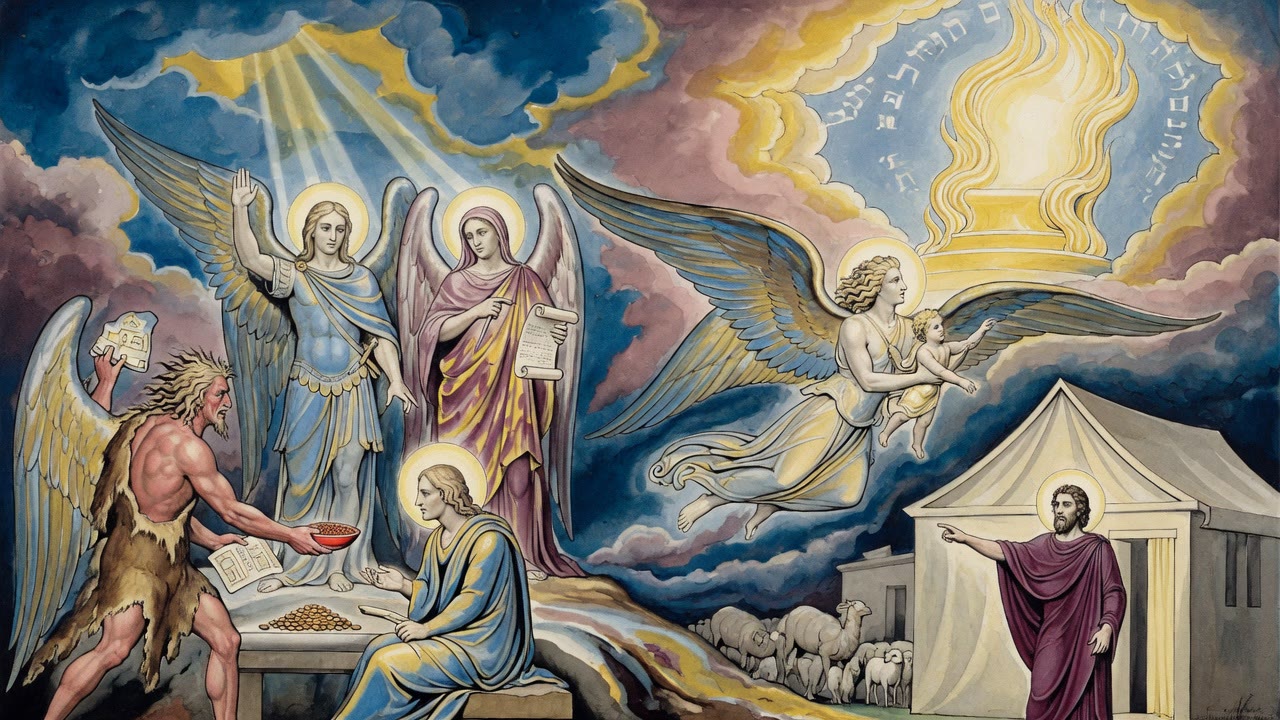
Esau Came Out Red With Jacob's Hand on the Heel
Esau arrived already marked by blood-hunger. Jacob's hand locked on his heel, and centuries later Rabban Gamliel showed Rome that verse as its fate.
Table of Contents
 Click for full size
The Question Rome Came to Ask
The Roman did not sit down. He had come to Rabban Gamliel with the question none of his own advisors would answer honestly, because a man who tells a prefect that the empire has an end does not keep his post through the winter. "Who takes the kingdom after we are gone?"
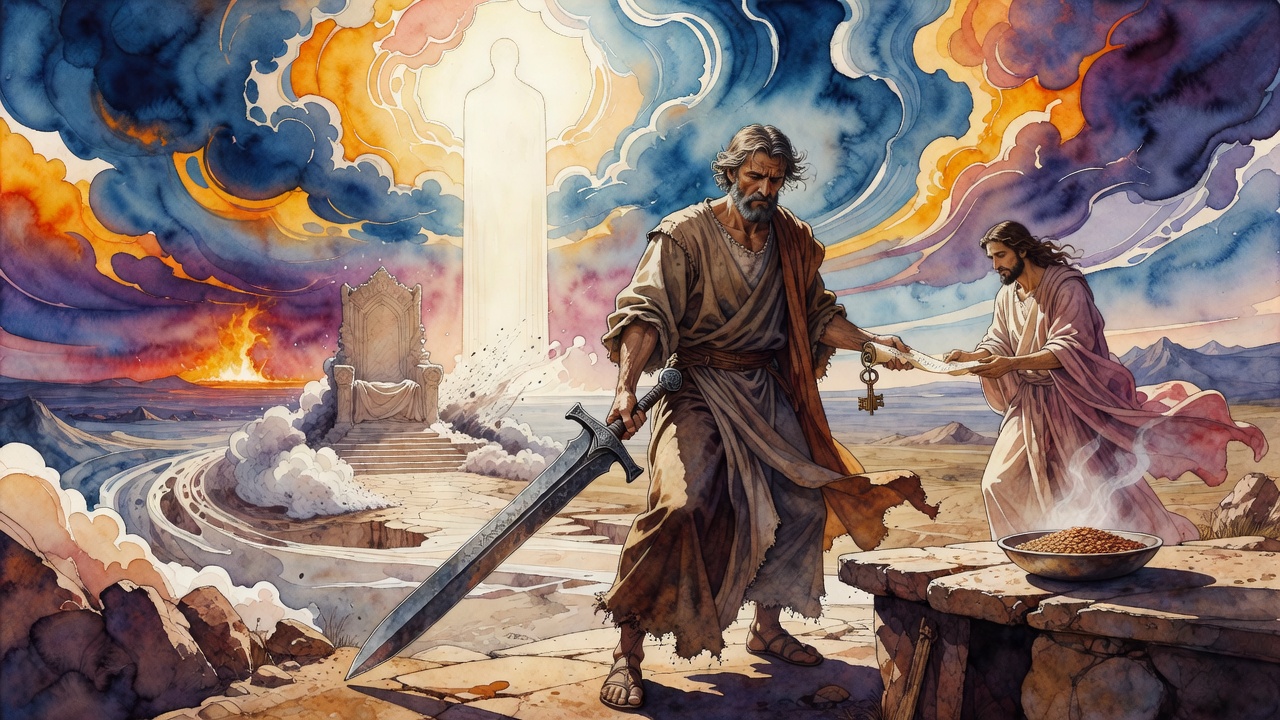
Gamliel did not argue with him and he did not preach at him. He pulled a blank sheet across the table, took up a pen, and copied out one line of Genesis without a word of explanation, so that the Roman had to lean over the table and read it for himself. And afterward his brother came out, his hand grasping Esau's heel.
The prefect could see it was a line about babies. He could not yet see it was a line about him.
Red Before the First Breath
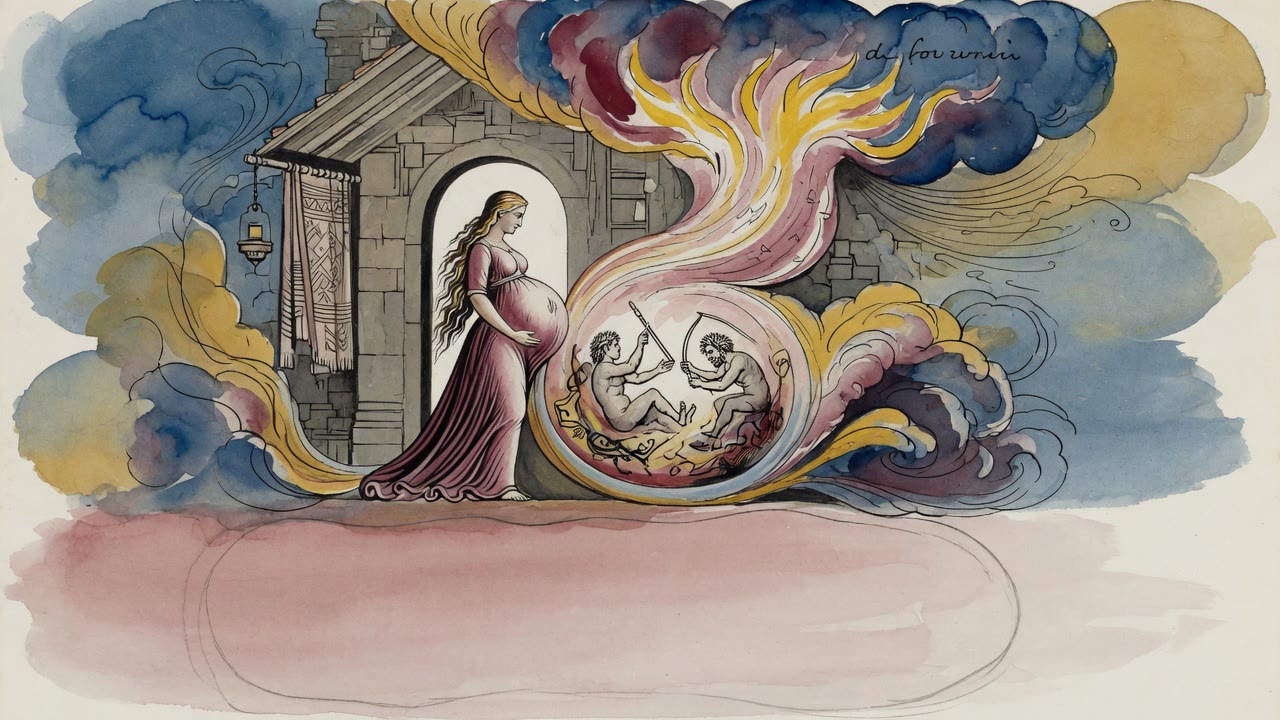
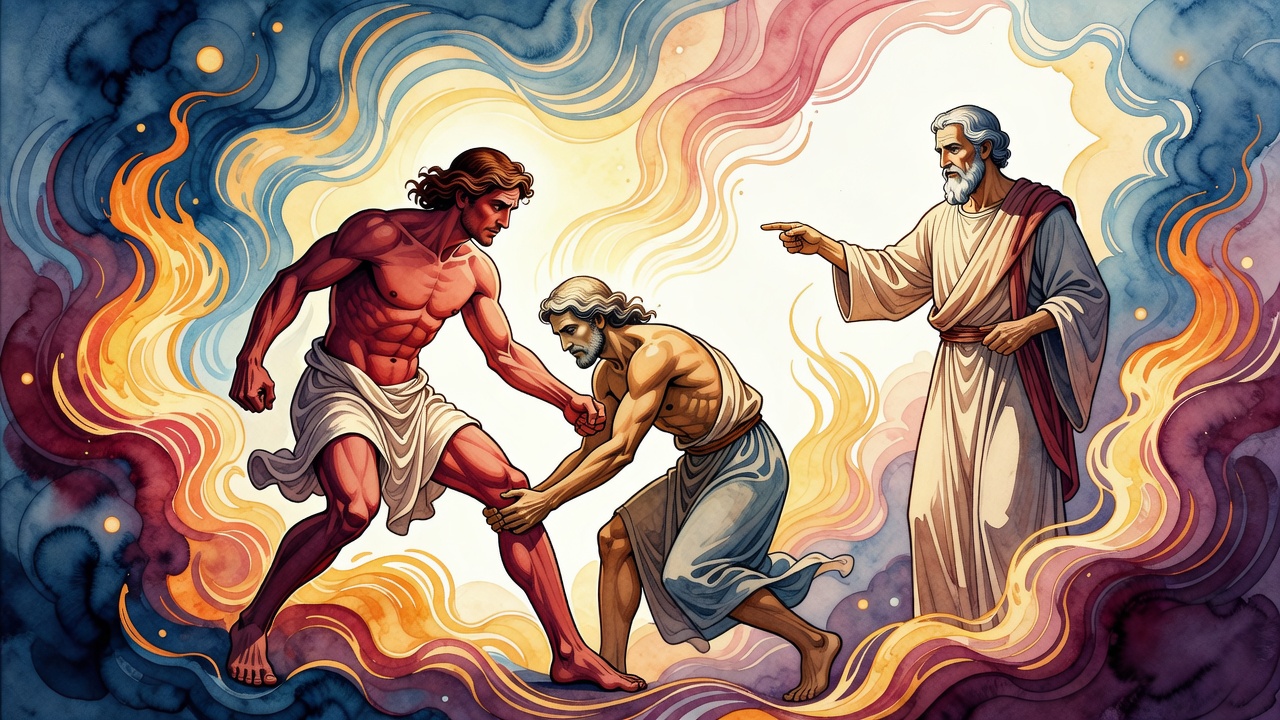
The first of those babies had come out the color of a wound. It was not the flush of a hard birth that fades by evening, since this red had been made slowly, in the dark, over nine months, by an appetite that found what a womb keeps hidden and fed on it. His twin lay in the same water and took nothing. When the second boy came, his hand was already shut on his brother's heel, and someone had to work the fingers loose.
Rebekah had gone to ask heaven what was tearing at her insides, and heaven had told her two nations. Now there were two of them on the birthing stool, one of them red and one of them holding on.
One Womb and Two Roads
Jacob's was the road of life, and it looked like sitting still. He stayed in tents and gave his hours to study, serving Abraham for fifteen years before the old man died and taking his ways off him the whole time, then attending Shem the son of Noah for fifty-eight years after that. Shem had served Methuselah for ninety-eight. So the learning went hand to hand down the generations, each student becoming a link in it, until Jacob stood at the near end of the chain with the whole weight of it behind him. He had come out of his mother already circumcised, finished in the body before he was finished in anything else.
Esau's was the road of death, and he walked it armed. He killed Nimrod, and he killed Nimrod's son after him. Then he began keeping a calendar in his head, because Isaac was old and would not last, and once the mourning for his father was done there would be nothing standing between him and killing his brother in peace.
What the Prefect Worked Out Alone
None of that was on the sheet. Gamliel had written one line about a hand and a heel, and then he sat back and let the Roman do the arithmetic himself.
Esau was Rome. Nobody in the room had to say it, though every student along the wall knew the trade of names and knew what the elder brother stood for: the armies, the roads, the tax rolls, the right to go first through every door. The younger one is behind him with his fingers locked on the heel. He is not winning. He is only still there, waiting for the grip to loosen, which is a different thing and a much longer one. The prefect had asked who comes after Rome, and the answer had been written down before Rome had a name to be written under.
He read it twice, looking for the trick in it, and there was no trick to find. Those who heard about it afterward marveled at the neatness of the thing, old words spoken fresh out of the mouth of a new elder. The prefect went out with the sheet in his hand. There was nothing in it a man could be charged for, since Gamliel had not made the sentence up. He had only copied it.
The Pain Inside the Grip
What the Roman carried out was a promise. What stayed behind in that room was the price on it, because a hand on a heel is not a hand on a crown. To hold the heel is to be behind the man he is holding, and to stay behind him for the whole length of the running.
Jacob spent his life in that posture. He bought the birthright off a brother too hungry to count what he was selling. He put skins on his arms and lied to a blind father for a blessing that should have been able to walk in and ask for itself. Twenty years later he sent his wives and his children across a river ahead of him because four hundred men were coming down the road with Esau at the front of them, and that night he held a stranger until daybreak and came away with a new name and a hip that never worked properly again. Not one of those is a victory a man would choose if he could simply have been born first. The teaching says so without softening it: that righteous man was in pain, and the whole shape of his struggle was already there in the manner of his arrival.
The sheet stayed on the table after the prefect had gone, the ink still dark on the last word of it. Not a throne. A heel, and a hand that would not open, holding on to something that kept moving.
← All myths