Esau Took the Sword and Left Canaan to Jacob
Esau sold the birthright for lentils and Methuselah's blade, then deeded the land and Machpelah to Jacob. Heaven repaid him with provinces ending at Rome.
Table of Contents
 Click for full size
Lentils, Coin, and a Famous Blade
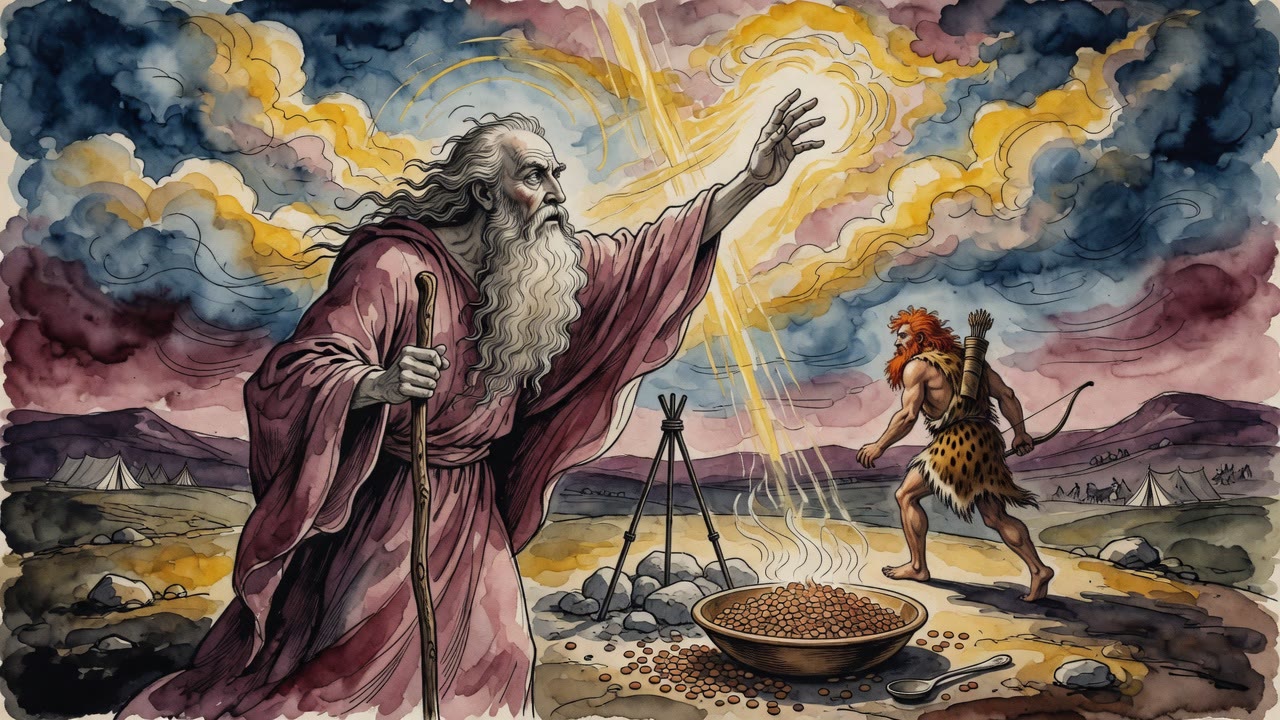
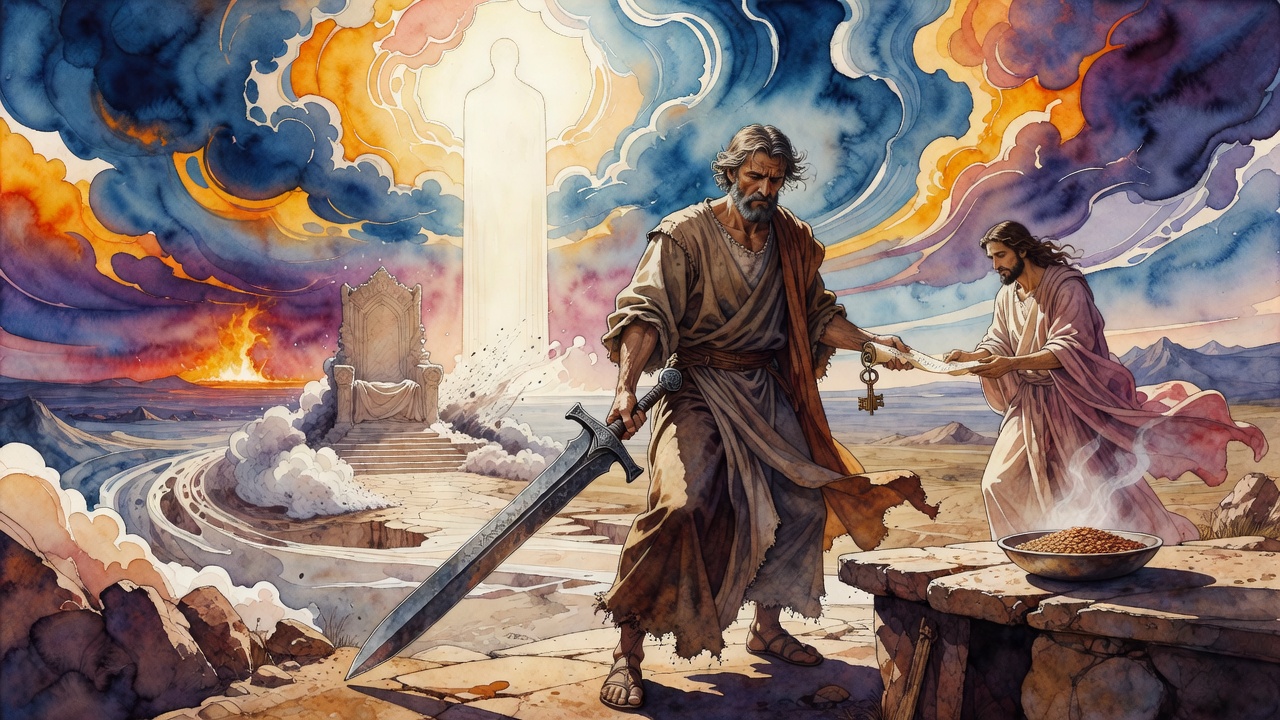
Esau came in from the field faint with hunger and found Jacob with a pot of red lentils steaming like a small ordinary mercy. The sale that followed was not only a stomach's demand. Legend says Esau scoffed at resurrection, that the dead could rise, and doubted God's promise to give the Holy Land to Abraham's seed. A birthright loaded with those claims looked worthless beside stew that could be eaten now. Jacob paid in pottage, in coin, and in a prize that glittered for a hunter's pride, the sword of Methuselah, heirloom passed from Abraham to Isaac and into the bargaining of brothers.
Esau threw a feast for his companions and boasted with his mouth full of victory. He had eaten, drunk wine, enjoyed himself at Jacob's expense, and unloaded a spiritual burden for a good price. Look at me, the boast ran. Jacob only said, Eat, and may it do thee good, a sentence mild enough to cut. Above them the Lord answered the contempt that treated eternity as a bad market. Thou despisest the birthright, therefore I shall make thee despised in all generations. Denying resurrection and the promise cut Esau's line from the world the birthright was meant to carry forward through graves and into morning.
A Bear Robbed of Cubs
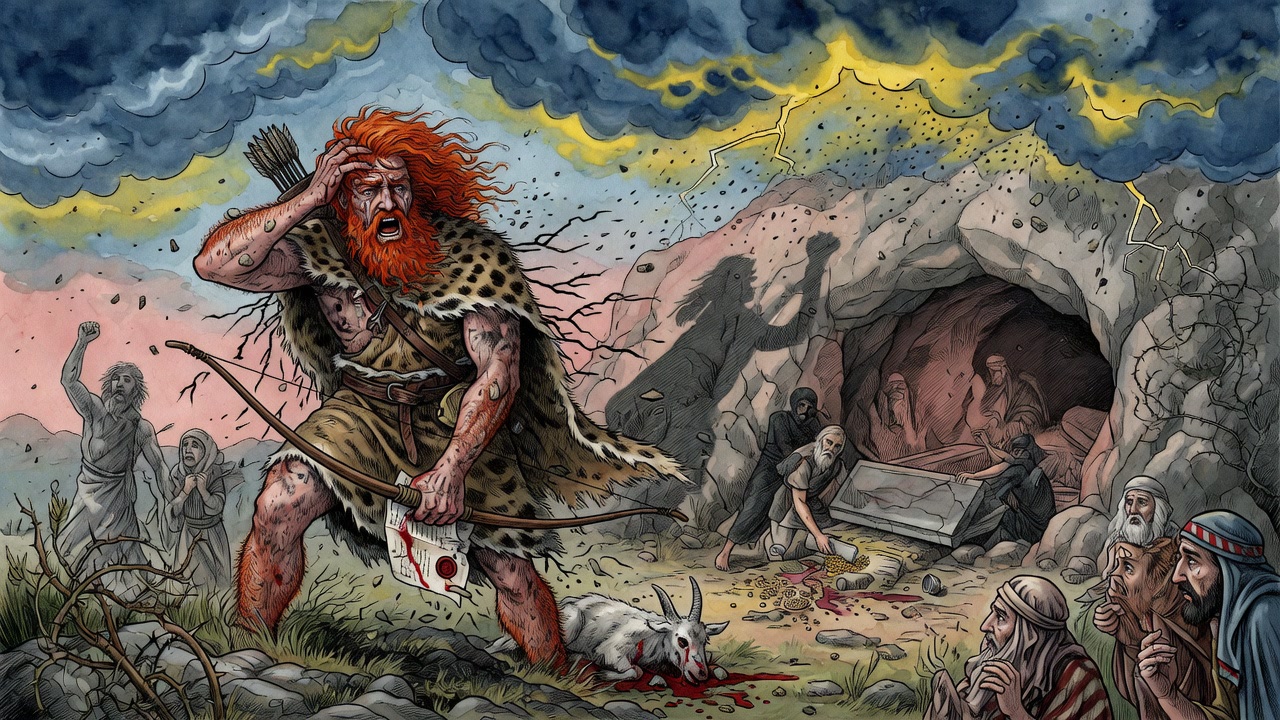
Years later Jacob returned toward home knowing Esau was coming with men, not for a meal but for blood long remembered. Pirkei de-Rabbi Eliezer paints Esau as a bear robbed of her cubs, a man without fear of Heaven, more dangerous than any ordinary ruler whose power still nods upward. Jacob feared not strength alone but strength with no upper limit and no awe. Do not fear a ruler, the teaching runs. Fear a man who has no fear of Heaven.
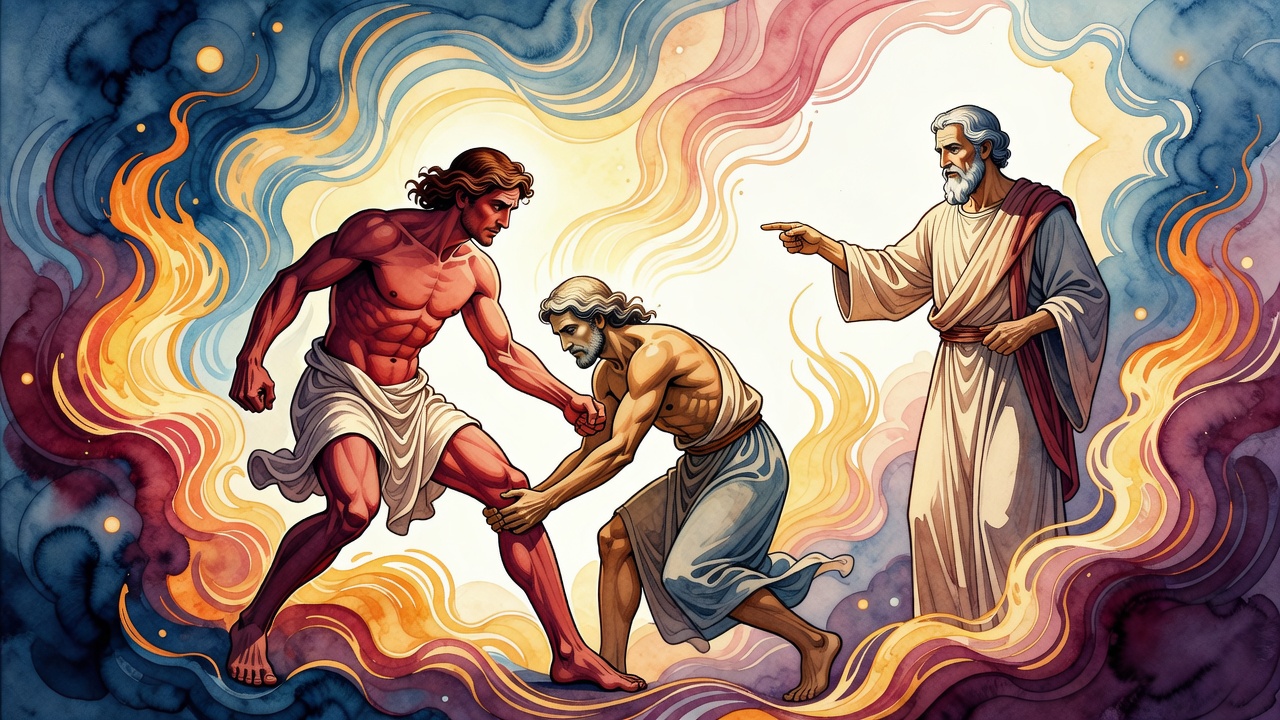
An angel met him in the shape of a man in the night by the ford. They wrestled until dawn pressed the angel to leave for the hour when he must stand to sing and chant praises before the Holy One. Jacob would not release him without a blessing, clinging to the divine presence as if his hip and his future depended on the grip. The angel began to sing praises from the earth. The hosts above heard and understood why a song rose from dust. "Because of the honor of the righteous one," they said, "we hear the voice of the angel who is singing from below." Scripture later echoes the sound. "From the uttermost part of the earth have we heard songs, glory to the righteous." The fight that left Jacob limping also left heaven listening to a hymn sung from river mud.
The Deed for Land and Cave
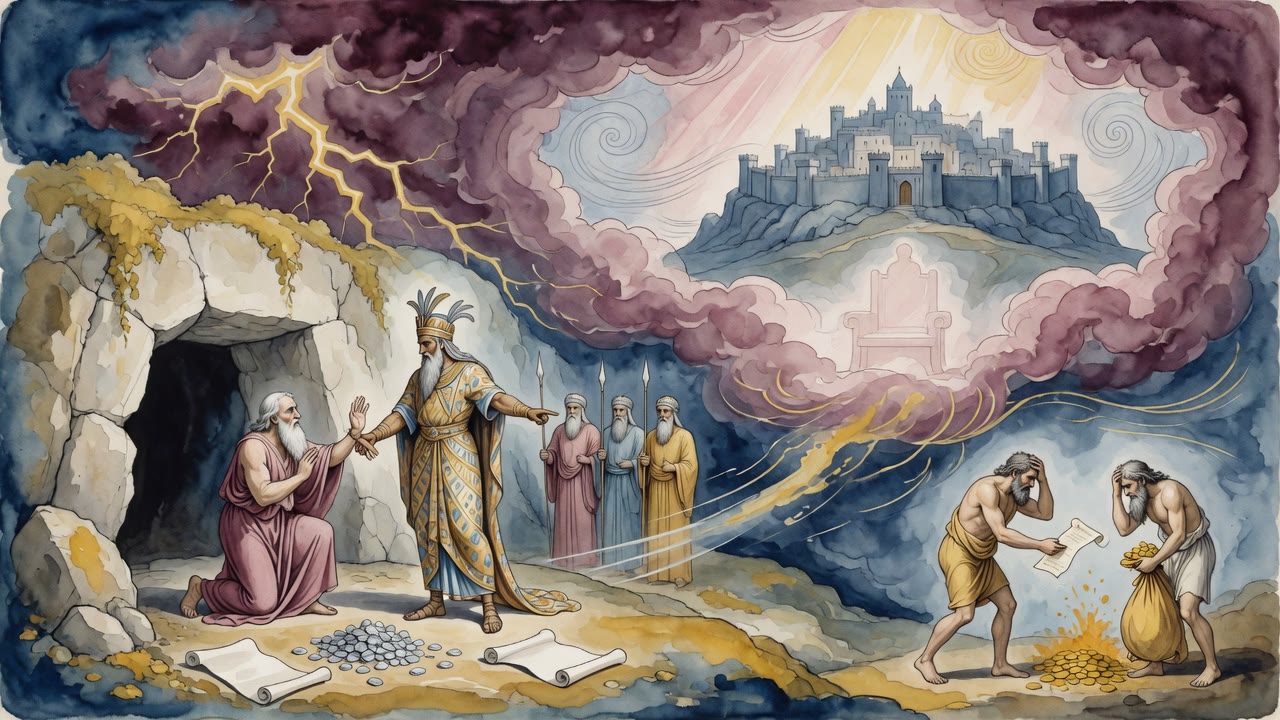
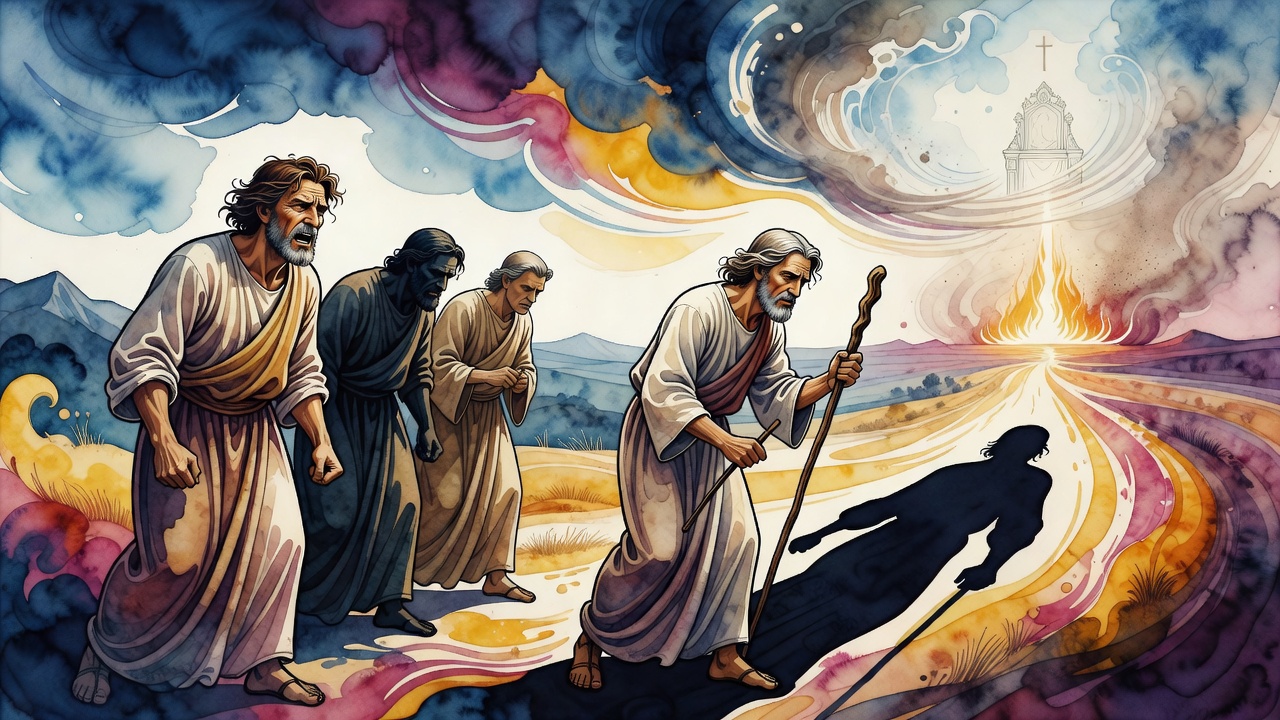
In another strand of the same brother-war, Esau first seized all Isaac had left, then turned and gave Jacob the Land of Israel and the Cave of Machpelah, writing a perpetual deed to seal the transfer. Jacob told him to leave Canaan, to take his vast household elsewhere. Esau took wives, sons, daughters, cattle, and all his belongings and went to a land away from his brother, as Genesis records. For removing his claim and his herds because of Jacob, God gave Esau one hundred provinces stretching from Seir to Magdiel. And Magdiel, the midrash says without flinching, is Rome. Duke Magdiel stands in the genealogy like a pin in a map that runs from a lentil pot to empire's later hills.
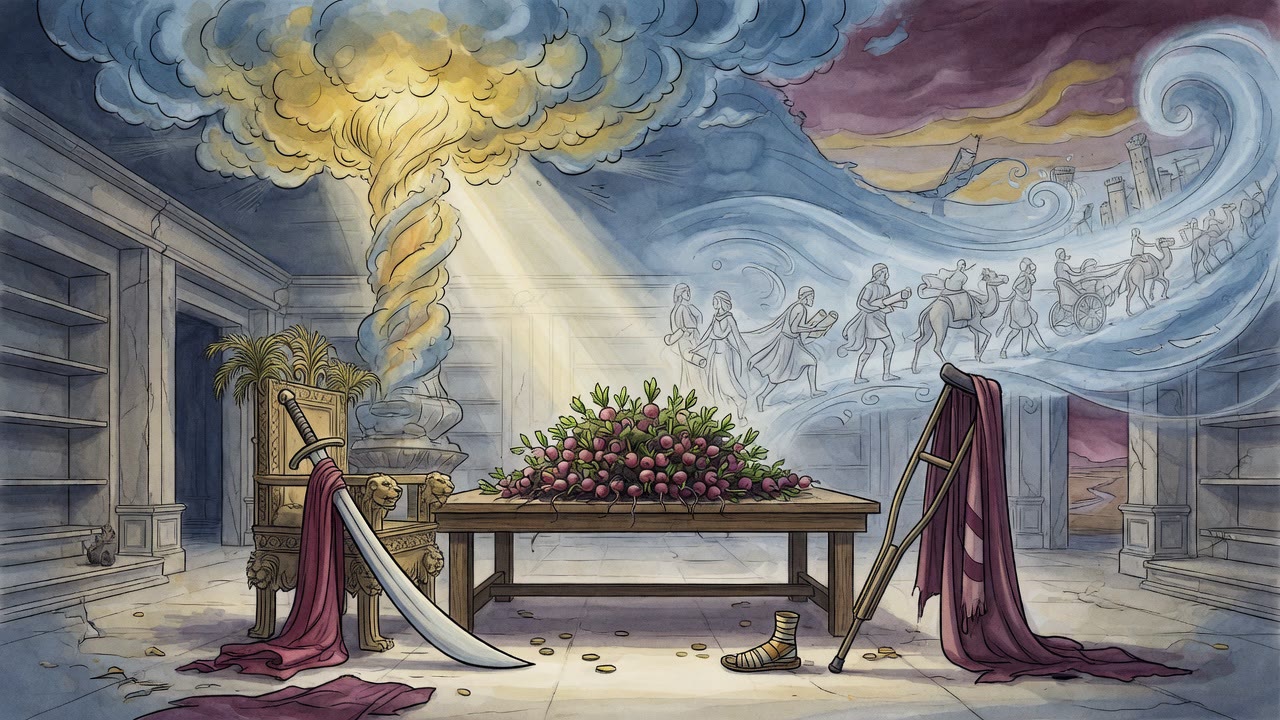
Esau walked out of the land with a sword and walked into history with provinces. Jacob kept the cave where the patriarchs sleep and the ground under the promise, a small heavy inheritance against a wide glittering one. The division was not a soft handshake at a graveside only. It was a sorting of worlds, Machpelah against Magdiel, dew of heaven against the roads of power.
Two Ways of Being First
Esau was first out of the womb and first to despise what firstness meant when it demanded faith in a land not yet held and a rising not yet seen. Jacob was second and spent a life buying, wrestling, limping, and receiving what Esau signed away for heat in the belly and flash in the hand. The birthright, the land, the cave, and the limp form one chain that tugs whenever brothers measure worth by speed of gain. So do the boast-feast, the bear-rage, and the hundred provinces that end in Rome.
The tradition does not pretend the brothers hugged the conflict into mist and walked home humming. It records a sale over lentils, a night of angelsong by a ford, and a deed that sent one brother toward empire and the other toward a piece of earth heavy enough to hold the dead and the future. Lentils go cold. Swords rust in scabbards. Deeds remain in the memory of who sleeps where. Jacob held the paper that named Canaan. Esau held the road that ran to Magdiel. Between them the birthright kept its original price, a bowl of stew, a famous blade, and a future neither fully saw when the pot first boiled.
← All myths