6 min read

Esau Cried Once and God Collected the Debt in Shushan

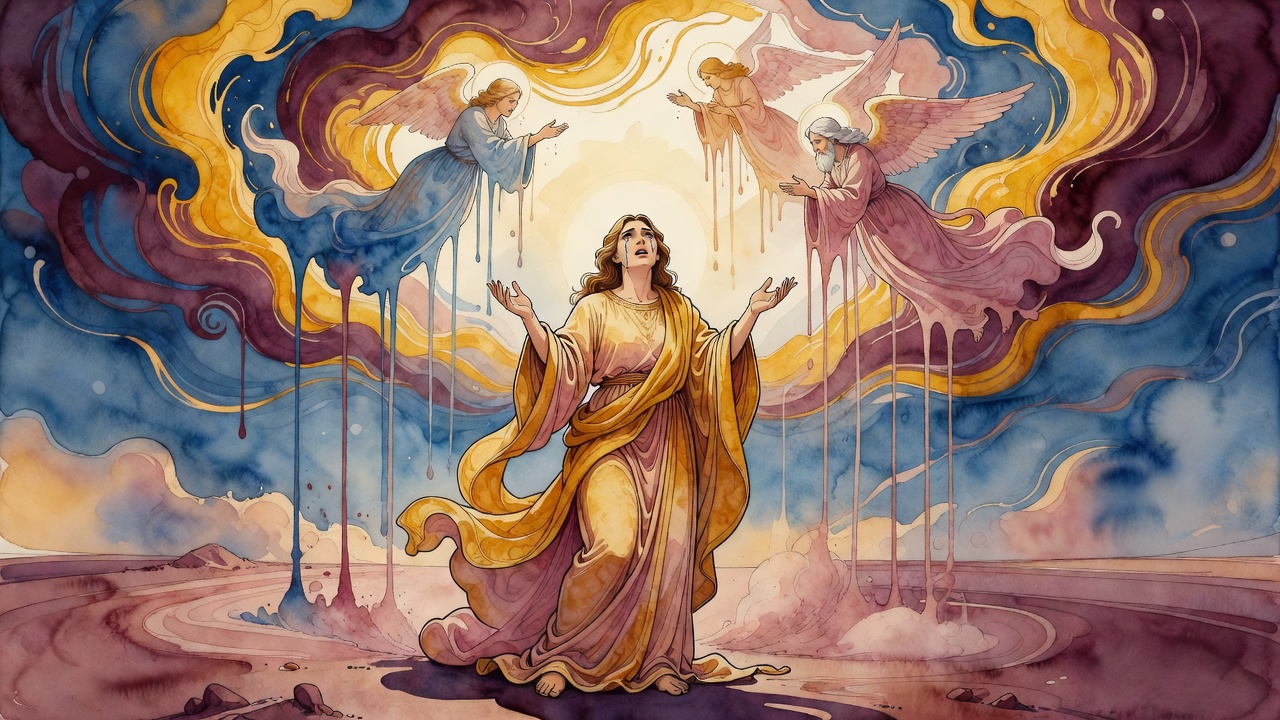
Isaac shook so hard the bed frame moved. He told his son the blessing had already been given away and would stand. Esau begged for a leftover.

Curated by Arthur · Told by Maggid ·
Table of Contents
  1. The Meat Was Still Warm
  2. Clearing His Throat for a Second Blessing
  3. Nobody Says the Holy One Is Lax
  4. The Cry Came Due in Shushan
  5. The Laugh That Opened Every Shut Womb
  6. Seventy-Five Years Old on Two Roads
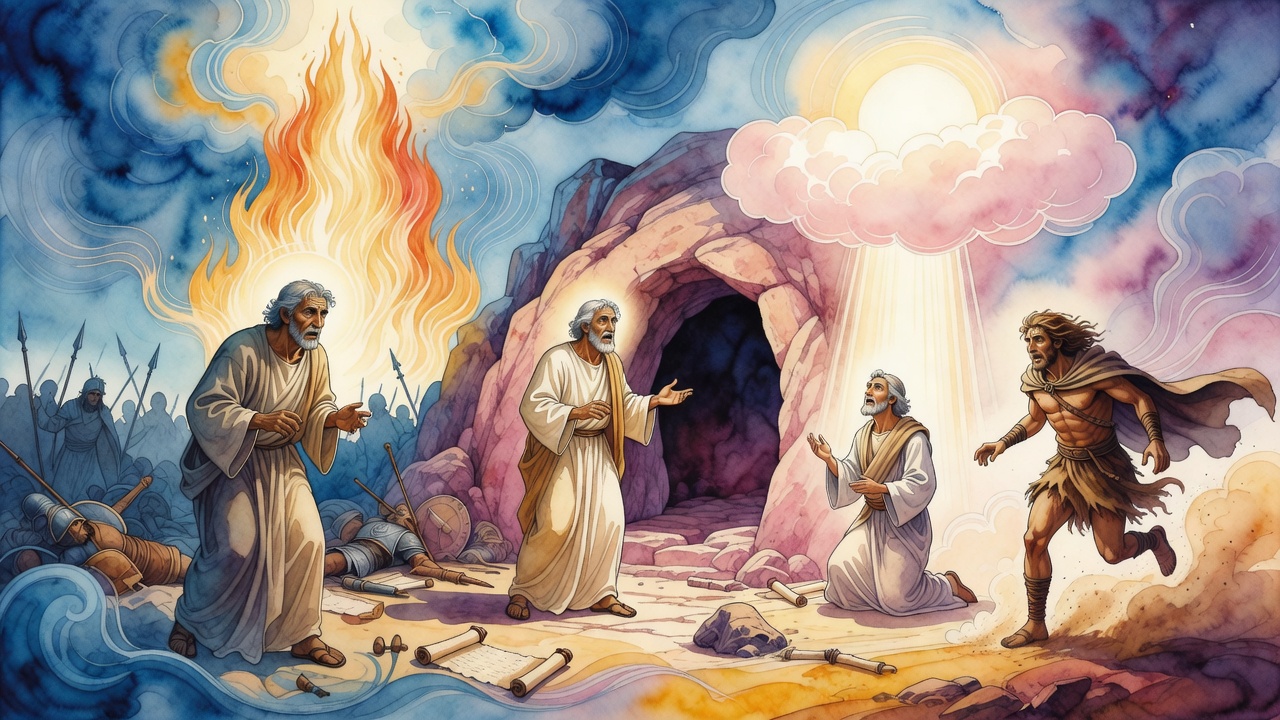
Esau Cried Once and God Collected the Debt in Shushan Click for full size

The Meat Was Still Warm

Esau came in from the field with the dish he had hunted and cooked himself, and he was pleased with it. He set it down in front of his father and told him to sit up and eat, so that his soul would bless him.
Isaac asked who he was.

The old man had gone blind years before. He had eaten already. He had put both hands on a head that smelled like a field and said everything he had to say, and now the son whose voice this was stood at the foot of the bed holding a bowl, and Isaac began to shake. He shook so hard the frame moved. Then he said that someone had come before him and had eaten and had been blessed, and that the blessing would stand.

Esau heard it and let out one cry. Not a word. A very great and bitter cry, the kind that empties a man, and then he found the words underneath it. "Bless me too, my father."

Clearing His Throat for a Second Blessing

Isaac told him that his brother had come with cunning and taken what belonged to him. Rabbi Yohanan looked at the word Isaac chose and would not let it be an insult. The word was not the ordinary word for a lie or a swindle. Jacob had come in with the wisdom of his learning, and that is a different thing from a thief in the dark.

Esau did not care what kind of thing it was. He started to speak and could not, and Reish Lakish caught the sound he made first: a man clearing his throat and spitting before he can get a sentence out. Then it came. Called Jacob, was he. He took my birthright and I said nothing to him. Now he has taken my blessing. Am I supposed to say nothing to him again?

And then, because there was nothing else left to ask for, he asked for a leftover. Have you not reserved a blessing for me? One of the small ones. One of the ones at the bottom of the basket.

He was a grown man with weapons on his belt, and he was begging his father for the scraps of a sentence.

Nobody Says the Holy One Is Lax

Rabbi Hanina heard the cry and said something with his hand on the table. Anyone who says the Holy One, blessed be He, is lax about these things, may his own insides go slack. He is not lax. He is patient. He waits, and He collects what He is owed.

One cry had gone up out of Isaac's tent. Jacob had caused it. The account stayed open while Jacob buried his father, while his sons went down to Egypt, while the sea split and the Temple rose and the Temple burned and the survivors were marched east in chains.

The Cry Came Due in Shushan

Generations later, in a walled city on a Persian plain, a courier put up a copy of a new law. Every Jew in a hundred and twenty-seven provinces was to be killed on one day, and the goods of the dead were to be taken as plunder.

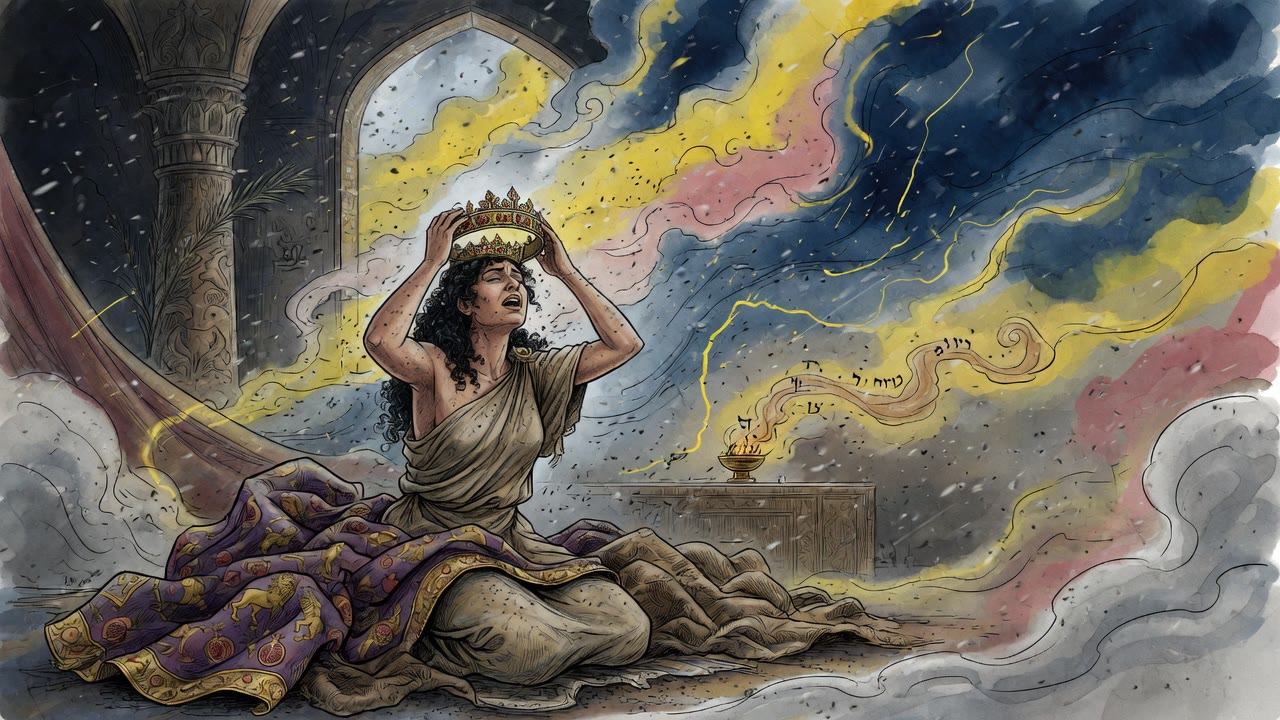
Mordecai read it and tore his clothes. He put on sackcloth, poured ash over his head, and walked out into the middle of the city, and there, in the open, in front of the king's gate, he cried out a great and bitter cry.

It was the same cry. The rabbis heard it land. The debt Jacob had run up in a tent in Canaan was collected from a man in mourning in the middle of a Persian street, and heaven had waited that long to do it.

The Laugh That Opened Every Shut Womb

The same household had once sent a different sound out into the world.

Sarah was ninety when she held her son and said that God had made laughter for her, and that everyone who heard would laugh along with her. Rabbi Berekhya asked the obvious thing. When Reuben is celebrating, why should Simeon care?

Because Sarah was not the only one remembered that day. Women who had stopped counting the years conceived in the same hour she did. Deaf men turned their heads toward a voice. Blind eyes opened. People whose minds had never held a thought held one. Rabbi Levi said the lights in the sky were increased that day, and the sun came up brighter over a tent in the Negev than it had the morning before.

Sarah's verse says God made laughter for her. The verse about the day in Shushan when the king lifted the taxes and sent gifts out to every province uses the same word for what was made. Both days, something was handed out to people who had not asked and did not know where it came from.

Seventy-Five Years Old on Two Roads

Abraham was seventy-five when he walked out of Haran with everything he owned on the backs of animals, and Lot walked out behind him owning none of it. The younger man had no promise, no call, and no land waiting. He went because his uncle went.

The rabbis in Babylon put the two roads next to each other. You left your father's house at seventy-five, God told Abraham. By your life, the one I raise up from you to redeem your children will be seventy-five as well.

Rav said Esther was forty. Shmuel said she was eighty. The rest of the rabbis counted the letters of the name Hadassah and said seventy-five, and left her standing in the corridor outside the throne room at the same age as the man who started walking.


← All myths

From the tradition

Sources

3 sources

The texts behind this telling. Some cards carry a translation of the source; others are our own retelling of it, and each card says which. Every card links out to the original.

Bereshit Rabbah 39:13Bereshit Rabbah

Retold in our words. Read the original at the link below.The Sefaria Midrash Rabbah, 2022 · CC-BY

Our ancestors dealt with that too, as we see in the story of Abraham and his nephew Lot.

The book of Genesis (12:4) tells us, "Abram went, as the Lord had spoken to him, and Lot went with him." But the ancient rabbis weren't content with just a simple reading. They saw layers of meaning, hints of deeper truths. Bereshit Rabbah, a classic collection of rabbinic interpretations of Genesis, pauses on this verse. It points out the seemingly redundant phrase, "[and Lot went with him]." What's the big deal?

The rabbis suggest this wording tells us that Lot was subordinate to Abraham. He wasn't an equal partner, but rather someone following Abraham’s lead, dependent on his journey. He was along for the ride, so to speak.

Then the verse continues, "Abram was seventy-five years old." Why is Abraham’s age mentioned right here? It seems like a simple detail, but nothing in Torah is ever just a detail.

This leads the rabbis to a fascinating detour, connecting Abraham’s age to none other than Esther, the heroine of the Purim story! The verse in Esther (2:7) states, "He was rearing Hadasa, she was Esther." Hadasa was Esther’s Hebrew name, a name that hints at hidden depths.

But what’s the connection to Abraham? Well, the rabbis launch into a discussion about Esther’s age. Rav says she was forty. Shmuel says eighty. But then, the rabbis chime in with their own opinion: seventy-five years old!

Wait a minute… seventy-five? Just like Abraham!

As the rabbis from Babylon explain, God essentially said to Abraham: "You left your father's house at seventy-five. By your life, the redeemer I will establish from your descendants will also be seventy-five." This corresponds to the numerical value of Hadasa. Now, the numerical value, or gematria, of Hadasa is actually 74, but it was common to add one when making such calculations. (Hebrew letters have numerical values, allowing for hidden connections between words and ideas).

So, what’s the takeaway here?

The rabbis are weaving together seemingly disparate threads: Abraham’s initial journey, Lot’s dependence, Esther’s hidden name, and the numerical value of that name. They’re suggesting a profound connection between beginnings and endings, between leaving the old and embracing the new. Abraham’s departure at seventy-five foreshadows Esther’s eventual role as a redeemer, also linked to that significant number.

And that the echoes of the past can resonate in the future in ways we might never expect.

Full source
Bereshit Rabbah 53:8Bereshit Rabbah

Retold in our words. Read the original at the link below.The Sefaria Midrash Rabbah, 2022 · CC-BY

After decades of barrenness, at a very, very advanced age, she miraculously conceives and gives birth to Isaac. In (Genesis 21:6), she exclaims, "God has made laughter for me; everyone who hears will laugh for me!" But there’s so much more packed into that verse than just Sarah’s joy.

The Rabbis of the Midrash (rabbinic interpretive commentary), those ancient interpreters of scripture, saw layers upon layers in Sarah’s words. Rabbi Berekhya, quoting Rabbi Shmuel ben Rabbi Yitzḥak, asks a pointed question: "When Reuben is rejoicing, why should Simeon care? So, Sarah was remembered, why should others care?" Why should Sarah’s personal miracle affect anyone else?

The answer, according to Bereshit Rabbah, is astonishing. Sarah’s miracle wasn’t just a personal one. It was a catalyst. It was a gift to the entire world. The Midrash tells us that when Sarah was “remembered” – when she conceived – many other barren women were “remembered” along with her. They, too, conceived. And it didn’t stop there! The deaf regained their hearing, the blind had their eyes opened, and even those with intellectual disabilities gained intelligence.

Wow.. The text emphasizes the word "making" (asah) in Sarah’s statement: "God has made laughter for me." It then draws a parallel to another verse, ((Esther 2:1)8), "He made abatement for the provinces." (referring to King Ahasuerus throwing a party and granting tax relief). Just as the "making" in the Book of Esther brought gifts to the world, so too did the "making" in Sarah’s story. Sarah's joy became a wellspring of blessings for all.

Rabbi Levi adds another dimension to this miraculous event. He suggests that an addition was made to the heavenly lights. In other words, the sun shone especially brightly on that day, as a sign of the birth of the great righteous one, Isaac. Again, the word "making" is key. "Has made…for me" in Sarah's verse echoes "The Lord made the two lights" (Genesis 1:16) from the creation story. The birth of Isaac, a child born of a miracle, was akin to a new creation.

So what does this all mean? It's easy to read these stories as fantastical tales from a distant past. But I think they offer a profound message about the interconnectedness of humanity and the potential for miracles to ripple outwards, touching countless lives. Sarah's laughter wasn't just for her. It was a spark that ignited hope and healing throughout the world. And maybe, just maybe, that spark can still ignite something within us today. What kind of ripples can we create?

Full source
Bereshit Rabbah 67:4Bereshit Rabbah

Retold in our words. Read the original at the link below.The Sefaria Midrash Rabbah, 2022 · CC-BY

Our story hinges on a moment of profound anguish: "When Esau heard the words of his father, he cried out, a very great and bitter cry, and he said to his father: Bless me too, my father" (Genesis 27:34). A heart-wrenching scene. But the Rabbis, never ones to shy away from a deeper reading, see something more.

Rabbi Ḥanina, in a rather colorful statement, cautions us against thinking that God is "lax." In other words, God isn't just sitting back, twiddling his thumbs. Rather, He is patient, meticulously "collecting His due." The idea here is divine justice, a cosmic balancing of the scales.

So, how does this connect to Jacob and Esau? According to Rabbi Ḥanina, Jacob caused Esau to cry out in anguish. And where, the Rabbis ask, did Jacob ultimately pay for this? The answer they find is striking: in the Shushan citadel, during the events of the Purim story! "When Mordekhai learned what had happened…[he] cried out an exceedingly loud and bitter cry" (Esther 4:1). The parallel is undeniable – Jacob, through Mordechai, experiences a similar cry of anguish. Is this a direct karmic consequence? The Rabbis seem to suggest so.

The passage unfolds Esau’s accusation: "Your brother came in cunning, and he took your blessing" (Genesis 27:35). The Hebrew word used here, bemirma – "cunning" – is key. Rabbi Yoḥanan points out that the Torah specifically uses mirma, and not other words for deceit like sheker, rama’ut, or honaa. Why this particular word? Because mirma doesn't always have a negative connotation. Rabbi Yoḥanan argues that Jacob's "cunning" stemmed from the "wisdom of his Torah." In other words, Jacob wasn’t simply being deceptive; he was acting according to a higher understanding.

But Esau isn't buying it. He cries, "It is for this [hakhi] that his name was called Jacob [Yaakov], as he deceived me these two times; he took my birthright and, behold, now he took my blessing. And he said: Have you not reserved a blessing for me?” (Genesis 27:36). Reish Lakish offers a fascinating interpretation of the word hakhi. He connects it to the sound of someone clearing their throat, meḥakekh. Esau, in his bitterness, is almost spitting out the word, choked with resentment.

Esau laments, "He deceived me…he took my birthright" – and I said nothing to him. "Behold, now he took my blessing" – shall I say nothing to him? He feels doubly wronged. All he's asking for now is a lesser blessing, "from the inferior ones," as the text puts it.

What are we to make of all this? The Rabbis, through their intricate interpretations, invite us to consider the long-term impact of our actions. They suggest that even seemingly isolated events can have far-reaching consequences, playing out across generations. The story of Jacob and Esau becomes a cautionary tale about the importance of integrity, and the enduring power of divine justice.

Full source