Esther Rose at Morning as Benjamin's Ravenous Wolf
Haman had cast his lots and raised a gallows. Esther walked into a throne room without being summoned and pointed at the man beside the king.
Table of Contents
 Click for full size
A Wolf in a Father's Mouth
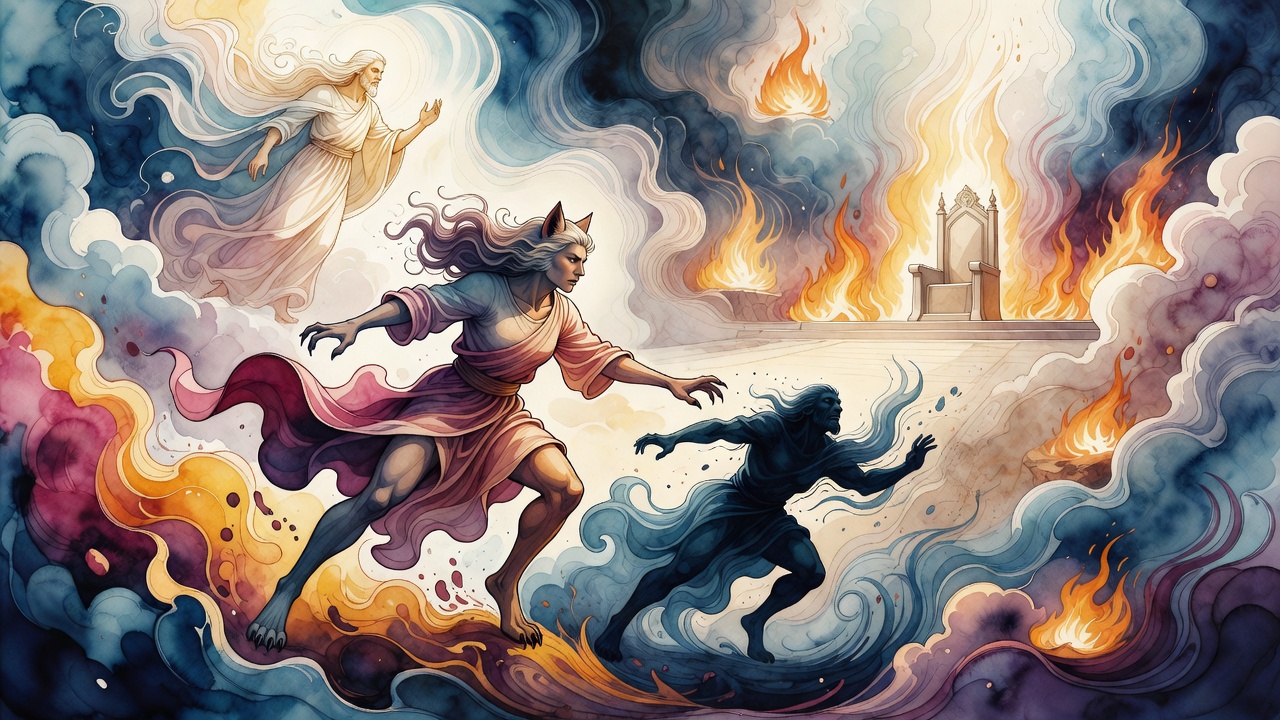
When old Jacob gathered his sons to bless them, he came to Benjamin and called him a ravening wolf: "in the morning he devours the prey, and at evening he divides the spoil" (Genesis 49:27). The room smelled of a dying man's breath and of a future none of the brothers could yet name. The sages turn this verse like a key, and a door swings open onto a later age. The wolf is not only a tribe with a sword. The wolf is a queen.
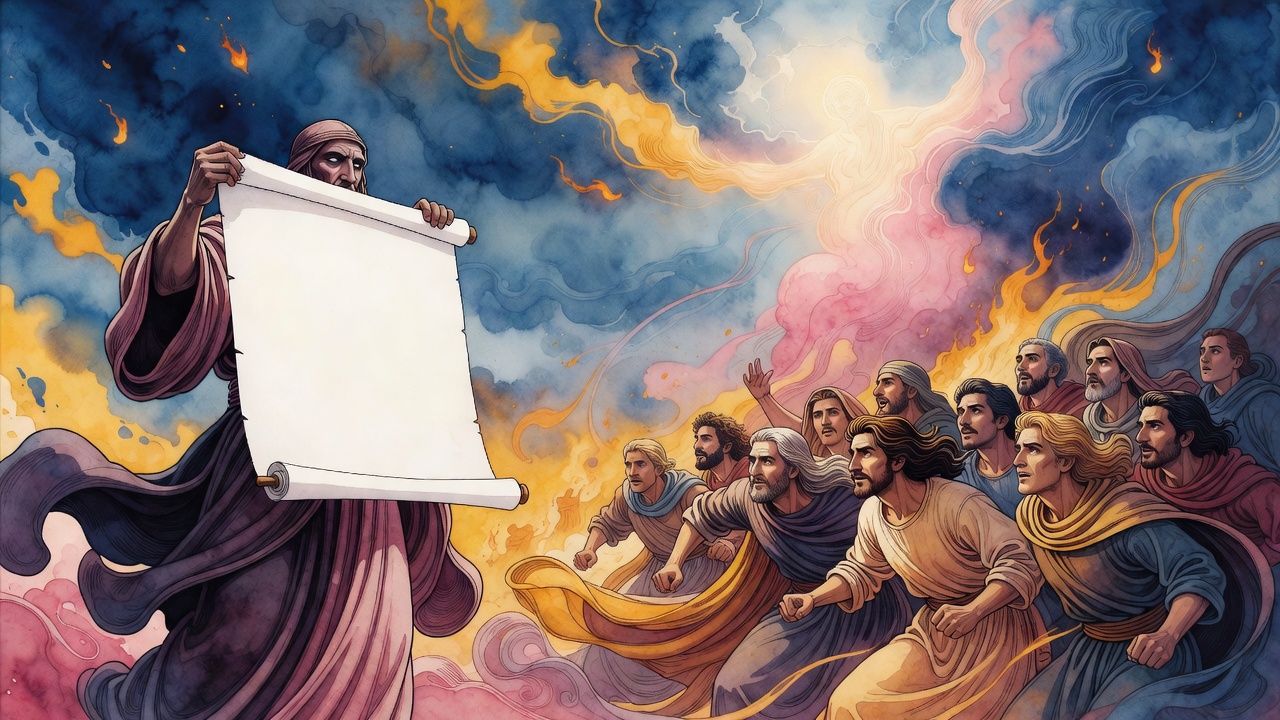
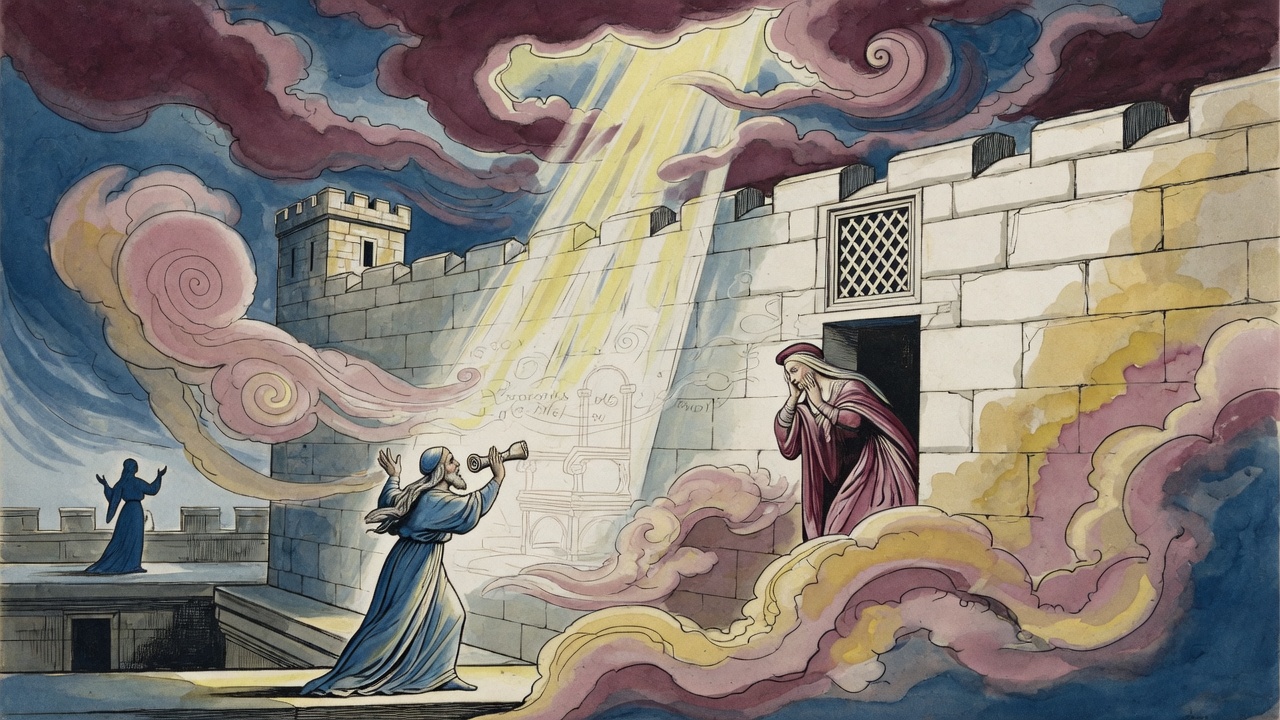
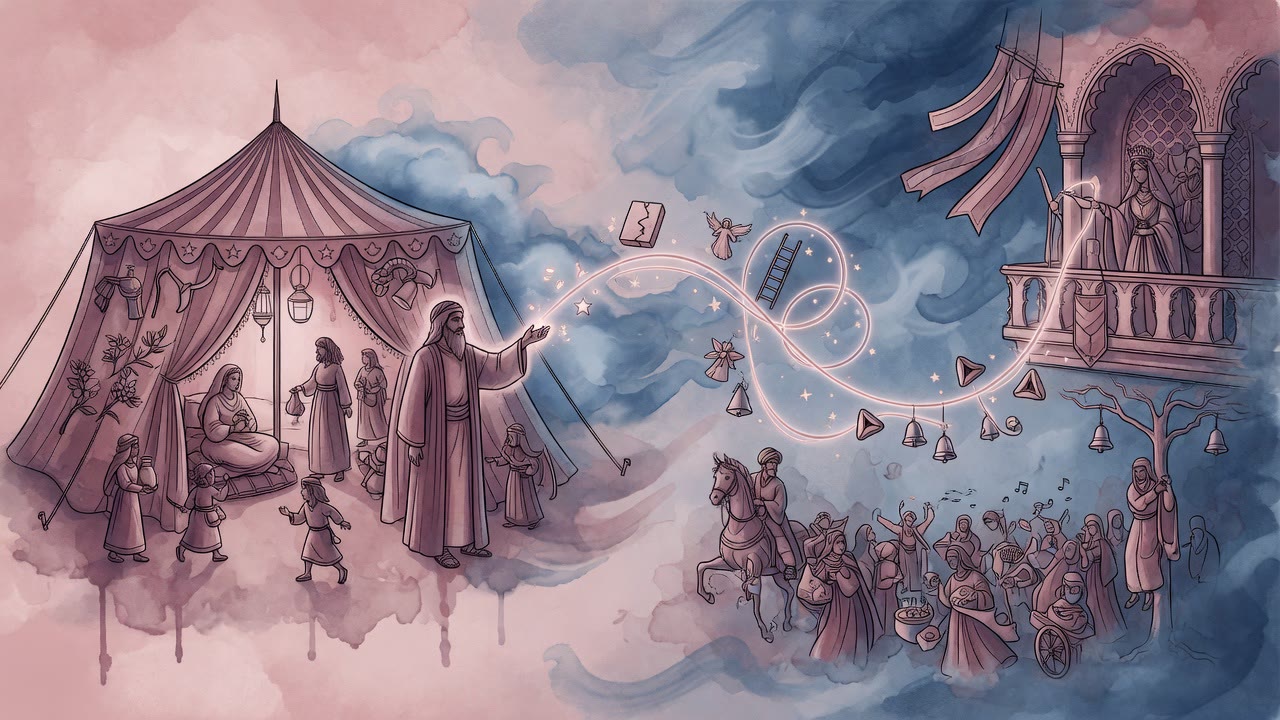
Esther, daughter of Benjamin, rose in the morning of her people's danger and hunted. Haman had cast lots and built a gallows. She dressed in royalty, walked unsummoned toward a throne, and tore the decree open with a feast and a finger pointed at the enemy reclining beside the king. Morning prey. Evening spoil. The blessing had waited centuries for a woman who could wear it without armor, only courage and a fast she had asked of her people.
Only Rachel's Children Can Bring Esau Down
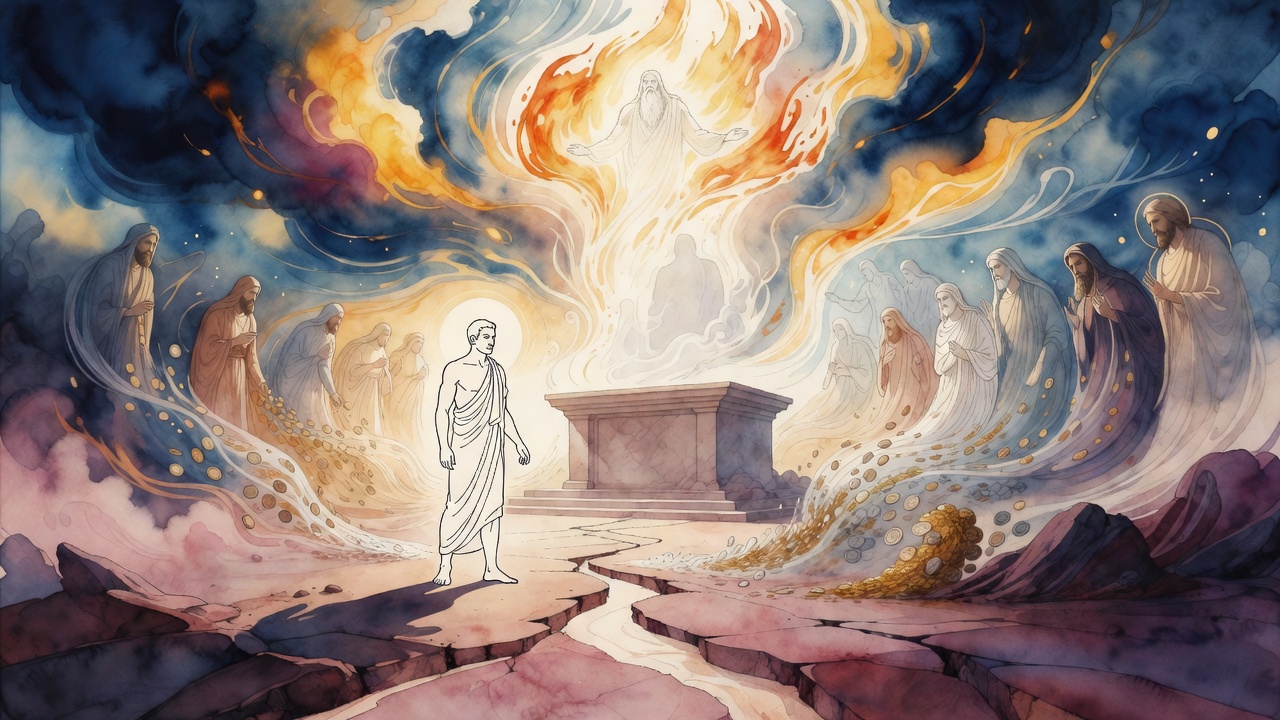
Rabbi Samuel bar Nachman handed down a secret carried in the bones of Esau's line: that house can be brought down by one family only, the children of Rachel. Jeremiah sealed it: "the youngest of the flock shall drag them away" (Jeremiah 49:20). Picture the courtroom at the end of days. The tribes of Israel rise to indict Esau: "Why did you hunt your own brother?" Esau turns on them: "And you, why did you hunt your brother Joseph down into the pit?" The charge sticks in their throats. Their own guilt silences them.
Then Joseph himself steps forward. "Esau, why did you pursue your brother?" Esau has no reply. And should he sneer, "Your own kin wronged you," Joseph answers without flinching: my brothers repaid me evil, and I repaid them only good. At that, Esau falls dumb. Isaiah divides the houses: "Behold, they are as stubble," that is Esau. "Fire has burned them," that is Jacob. "They shall not deliver themselves from the flame," that is Joseph, the flame itself. Stubble cannot stand before fire. Esau cannot stand before the one he never managed to break. Esther's hunt is another face of that same fire wearing Persian silk.
Esther as the Morning Wolf
Benjamin's blessing names morning and evening. Esther's courage is the morning hunt: she enters the court while the danger is still rising, before the lots have finished their work in blood. The evening spoil is the reverse of Haman's house, the letters of rescue riding out to every province, the gallows turned against its builder. A Benjaminite woman does what a Benjaminite blessing promised: tear prey when the day is young, divide spoil when the day is spent.
Haman, Amalek's heir in the story's memory, is Esau's long shadow. The wolf of Benjamin is the only hunter matched to that shadow in the palace of Persia. Rachel's daughter through Benjamin does what the courtroom vision says only Rachel's house can do: silence the accuser who thrives on Israel's own unfinished sins. She does not argue genealogy in the throne room. She points. The king sees. The wolf has already closed its jaws.
Joseph and Zion Wear One Story
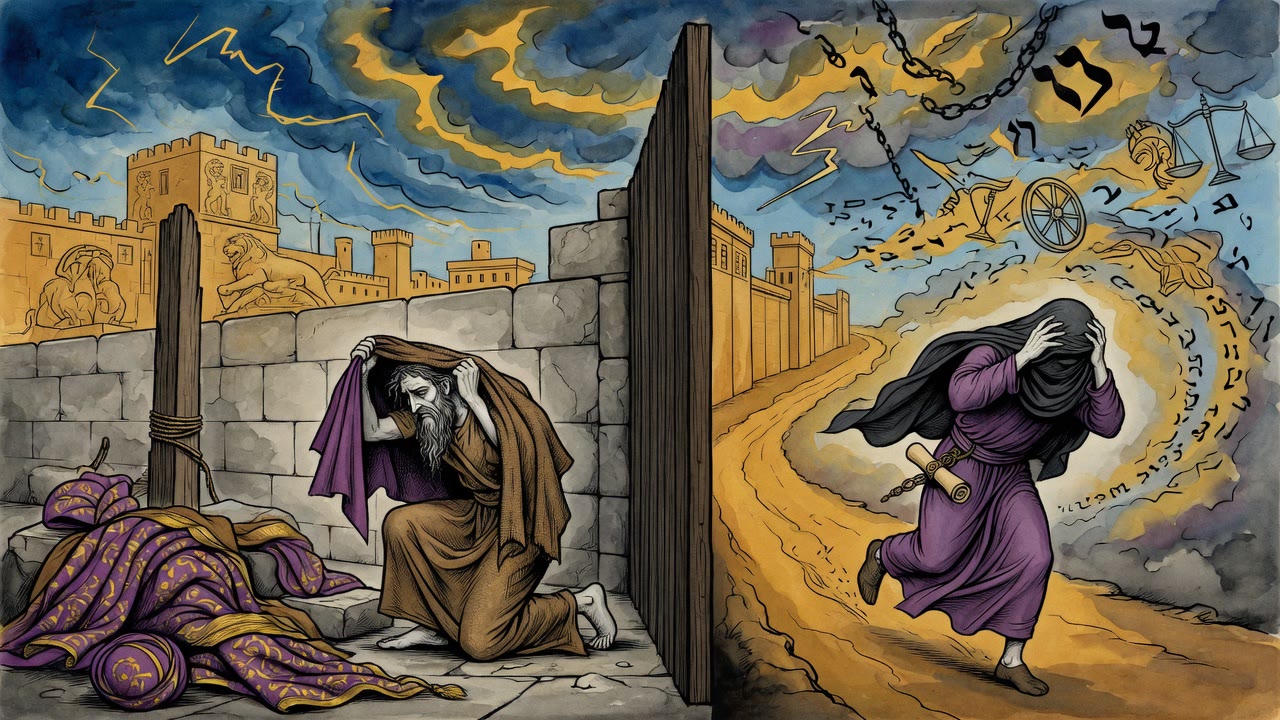
Everything that befell Joseph befell Zion. Joseph was loved; Zion the Lord loves. Joseph was hated by his brothers; Jerusalem was set against her own beloved. Joseph's brothers flung him into a pit empty of water; the prophets sing the same words over Zion: cut off in the pit, no water but only mire. They drew Joseph up; they drew Jeremiah up by ropes. Jacob rent his garments; over Jerusalem the Lord of Hosts called for weeping that would not be consoled.
The parallel does not end in sorrow. Joseph was beautiful; Zion is beautiful in elevation. Joseph rose to a throne; Jerusalem shall be called the throne of the Lord. Joseph was clothed in fine linen; to Zion the cry goes out: "Awake, awake, put on your strength!" As Judah was sent ahead to Joseph, so the Lord sends His messenger to clear the way home. Esther's hunt is one more turn of Rachel's house defending the story Joseph and Zion share: descent, pit, rise, and a throne that is not only Egyptian or Persian but promised.
Prey and Promise
Jacob spoke a wolf over a youngest son. Esther became that wolf in a court of lots and wine. Joseph alone could shut Esau's mouth because he returned good for evil. Zion wears Joseph's pattern until the messenger clears the road. Morning still belongs to the hunter who does not wait for evening to grow brave. When the feast ends and the letters ride, the blessing in Genesis is no longer only a father's poetry. It is a queen's timetable: morning for the kill, evening for the spoil, and Rachel's house still the only fire stubble cannot endure.
← All myths