Esther Stood in Ophir Gold and Begged for Mercy
After three days of ash, Esther robes in Ophir gold, prays the patriarchs letter by letter, and the firmament opens so angels can cry for the world.
Table of Contents
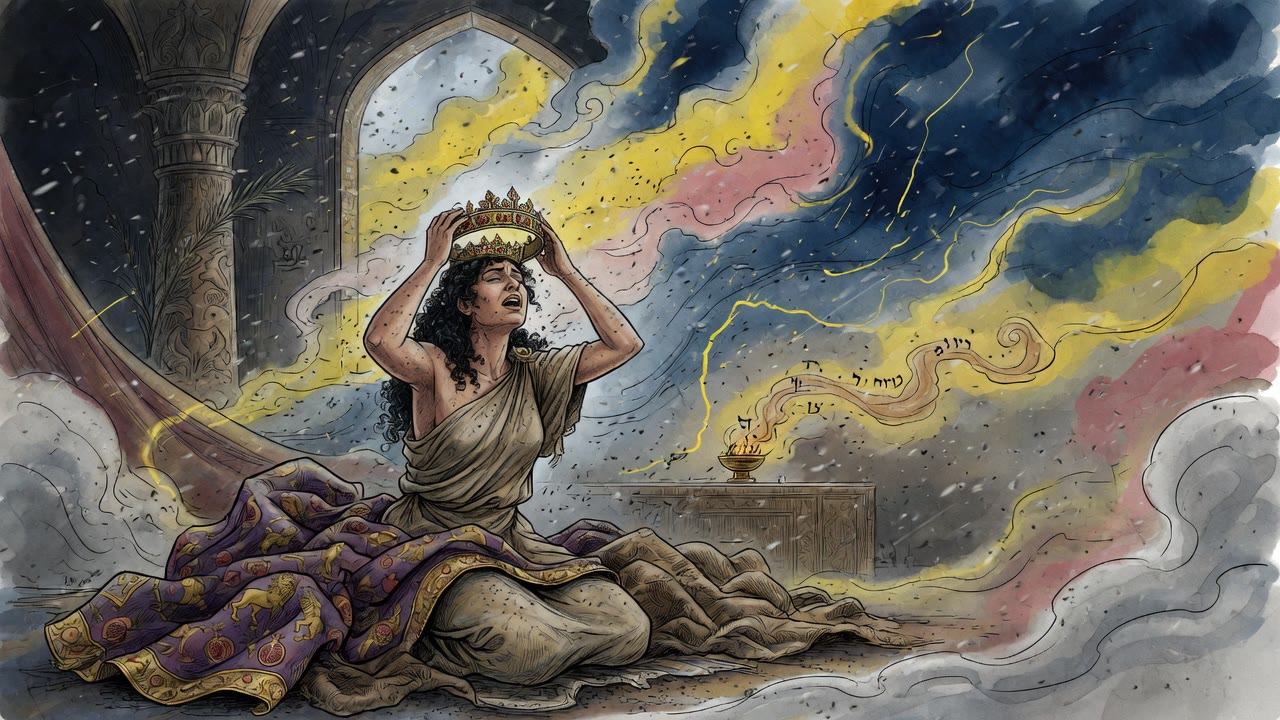
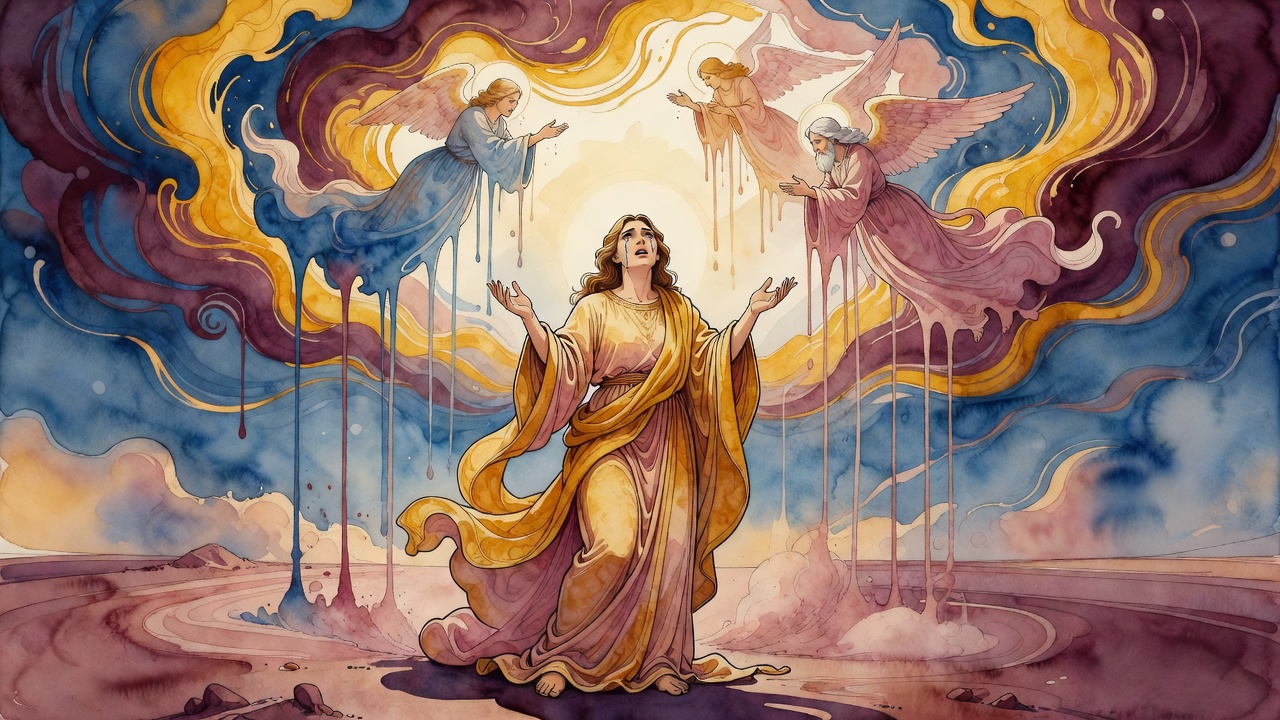
On the third day Esther rose from dust and ashes. Her body still bent from fasting. She washed the ash from her skin and dressed as queens are dressed: robes shot through with the fine gold of Ophir, silk shimmering with stones and pearls from a distant province, a crown of gold on her head, sandals of pure gold on her feet.
 Click for full size
Then, robed like a queen, she stood like a beggar and prayed.
Not Because I Am Beautiful
"You are the God of Abraham, Isaac, and Jacob, and the God of Benjamin my father," she said. "Not because I am beautiful do I go in before this foolish king, but so your people Israel will not perish. For the whole world was made for Israel's sake. If Israel is destroyed, who will say before you 'Holy, holy, holy' three times each day (Isaiah 6:3)?"
She reminded God how He saved Hananiah, Mishael, and Azariah from the fire and Daniel from the lions. She begged the same rescue for a people under a sealed decree.
Then she poured out an alphabet of sorrow, letter by letter: sold children of Abraham, nurslings who never sinned, the dead of Jerusalem stirred in their graves. "Let the binding of Isaac raise me up. Let the voice of Jacob fill my mouth, the grace of Joseph rest on my tongue. Let the angel of mercy receive me."
Three Days Matched Against Three Days
She counted her fast like coins on a scale. Three days to match the three days Abraham traveled to bind his son upon the altar (Genesis 22:4), the binding for whose sake God promised to remember Israel in every trouble. Three days more to match the three days Israel stood at Sinai and answered, "All that the Lord has spoken we will do and obey" (Exodus 19:8).
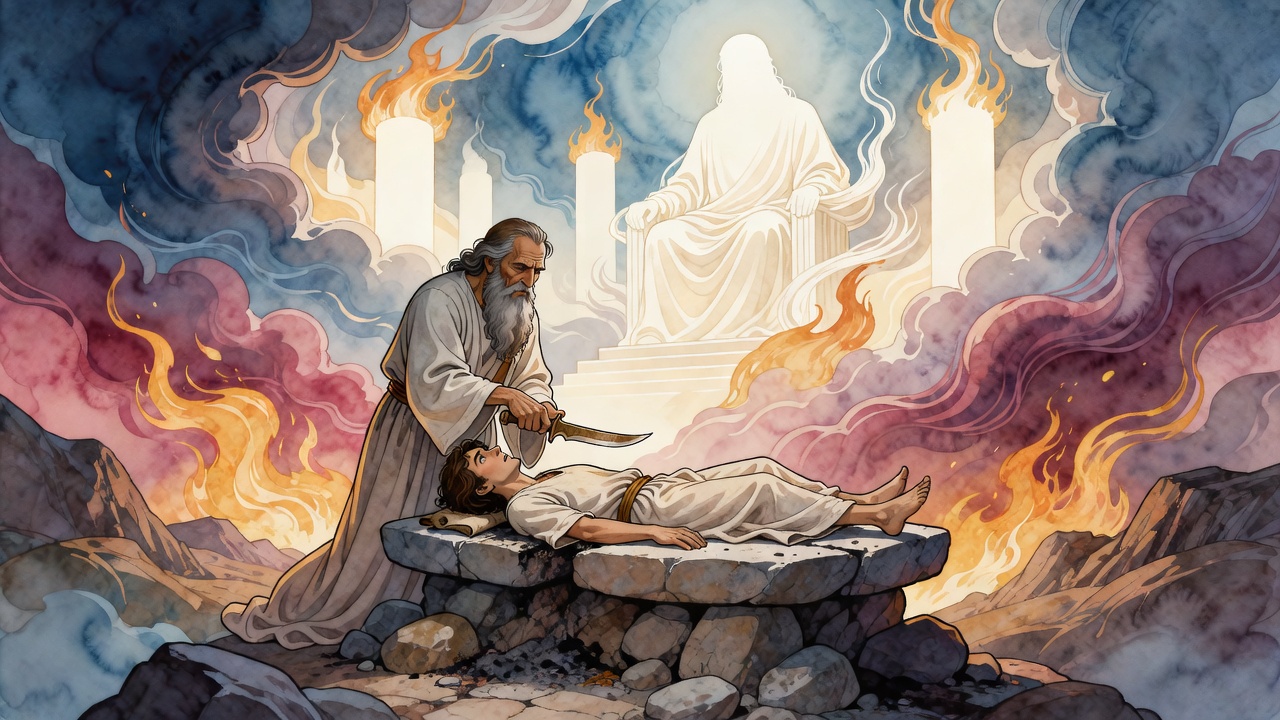
She invoked the right hand and the left with which God made the world, and the knife Abraham held above his son. Searcher of hearts, she pleaded, remember the merit of the patriarchs in this hour, and do not turn my petition away.
Gold weighed on her shoulders. Hunger weighed under it. She walked toward a throne that could kill her with a look.
Windows Tear Open Above the Palace
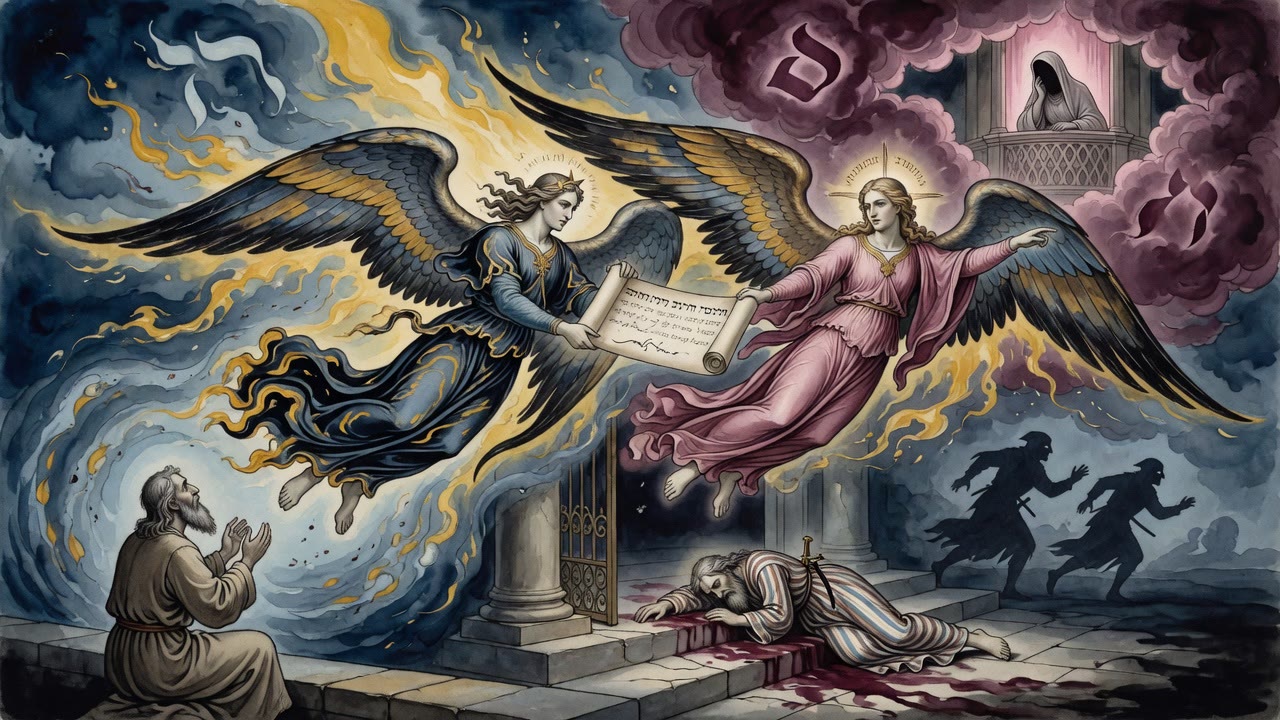
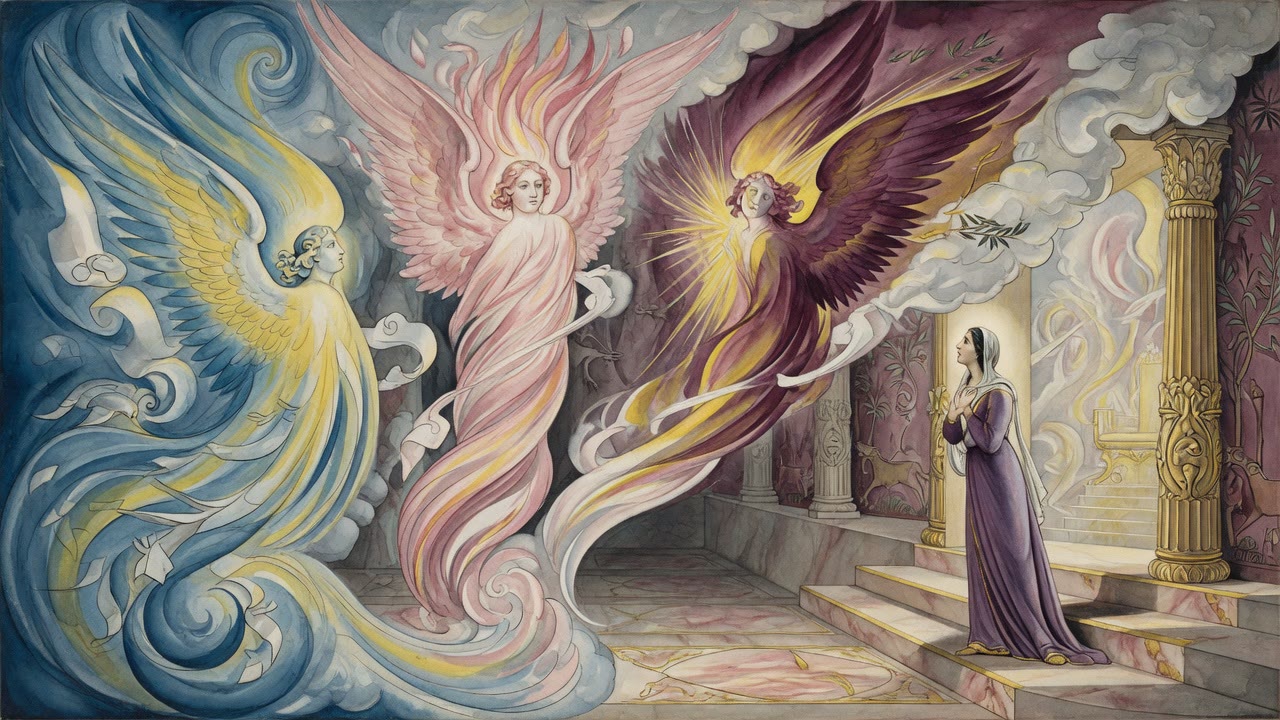
When Esther went to stand before the king, the sky itself tore open. Window upon window broke through the firmament to make room for the angels of the heights. They leaned over the edge of heaven and cried out in bitterness, "Woe to the world if He permits this thing to happen" (Esther 5:1).
Haman's accusation had climbed so high that the celestial court could not stay silent. Below, Esther lifted her own voice into that opening. She called God Merciful and Gracious, slow to anger, Keeper of covenant and kindness for a thousand generations.
She reminded Him that He had heard Jonah weeping inside the fish (Jonah 2:1) and pulled him from the depths. She asked for nothing less for her people.
Queen and Beggar at Once
The king would see only a woman in Ophir gold. Heaven saw a woman who had spent three days empty, then clothed emptiness in empire's best silk so she could speak for the living and the dead.
Angels cried for the world. Esther named the binding, the sea of reeds still unspoken in her bones, the alphabet of sold children. She did not trust beauty. She trusted the God who answers from fire, from lions, from the belly of a fish, and from a sky that can open like a window when one woman walks into a throne room with her life in her mouth.
The doors of the palace waited. So did the doors of the firmament.
Walking Between Two Courts
Esther's sandals of pure gold struck palace stone while angels leaned over the torn firmament. She moved between two courts at once: the Persian one that could kill her for entering unbidden, and the heavenly one already weeping over a decree sealed in Haman's name. Her prayer named sold children and dead of Jerusalem because the danger was not only for the living of Shushan. It was for the whole chain of names that still said Holy three times a day.
She did not trust the shine of Ophir. She used it the way a beggar uses a clean cloak when he must stand before a king: not as proof of worth, but as the only language the door guards understand. Under the silk her stomach was empty. Under the crown her mouth held Abraham's knife, Jacob's voice, Joseph's grace, and the alphabet of grief.
Jonah had prayed from a belly of water. She prayed from a corridor of marble. Both asked to be pulled up before the story drowned. The windows in the sky stayed open long enough for bitterness to pour out of angels' mouths and for one woman's petition to climb through.
← All myths