Parshat Beshalach6 min read

Every King in Sheol Was Comforted Except Pharaoh

At the Red Sea God knotted every Egyptian horse to its rider, and in Sheol (the underworld) He let each drowned king be comforted while Pharaoh lay refused.

Curated by Arthur · Told by Maggid ·
Table of Contents
  1. The Treasuries Pharaoh Threw Open
  2. The Knot God Tied at the Water
  3. Pharaoh Goes Down Among the Slain
  4. Whom Are You More Beautiful Than
  5. The One Comfort Sheol Was Refusing Him
Every King in Sheol Was Comforted Except Pharaoh Click for full size

The Treasuries Pharaoh Threw Open

Before the chariots ever reached the water, Pharaoh gathered his horsemen and warned them. "I know these Hebrews," he said. "They carried off your silver and your gold when they left. Do not let your hearts run after the plunder. Ride to kill, not to gather."

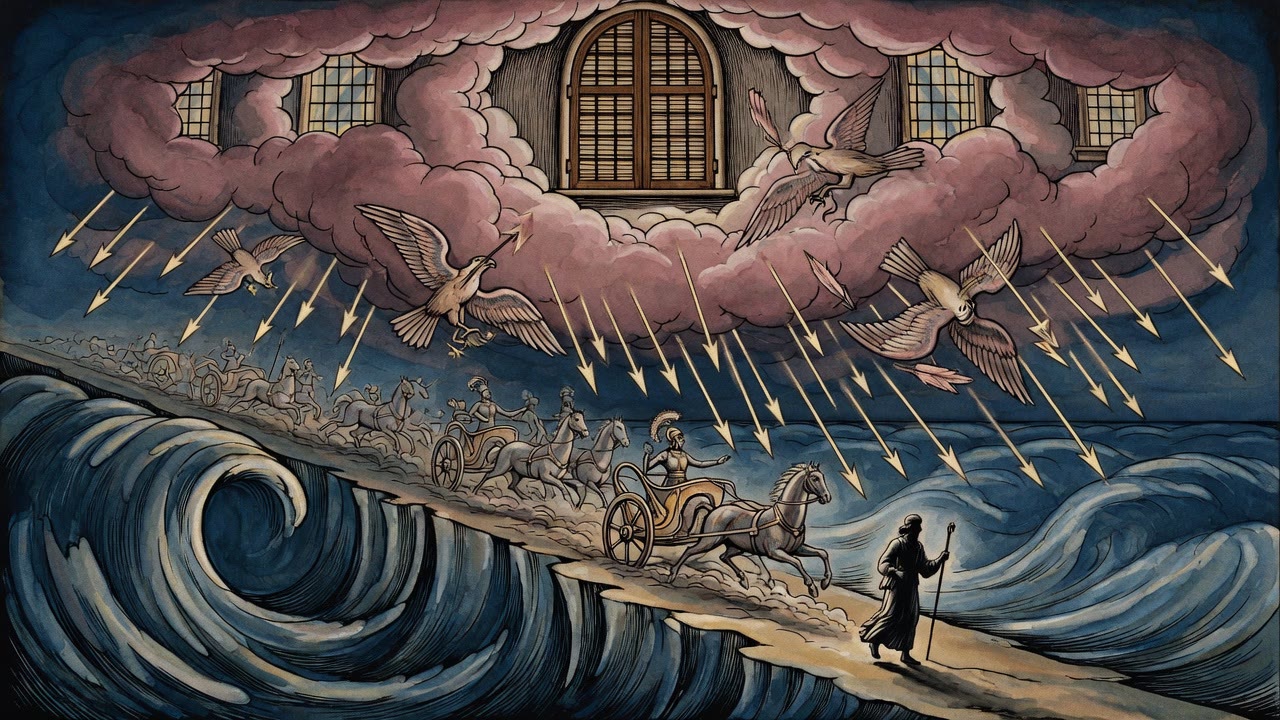
Then he did a strange thing. He unbarred the sealed storehouses that Joseph had filled generations before, the vaults that had held Egypt together through seven years of famine, and he let his soldiers strip them bare. "Take it," he told them. "Take the silver, take the gold, and hang it on your horses." So they braided treasure into the manes and buckled it across the flanks, until every animal in the army glittered. All the horses of Pharaoh's chariot rode out wearing the wealth of Egypt on their backs.

They did not know they were dressing the plunder for someone else.

The Knot God Tied at the Water

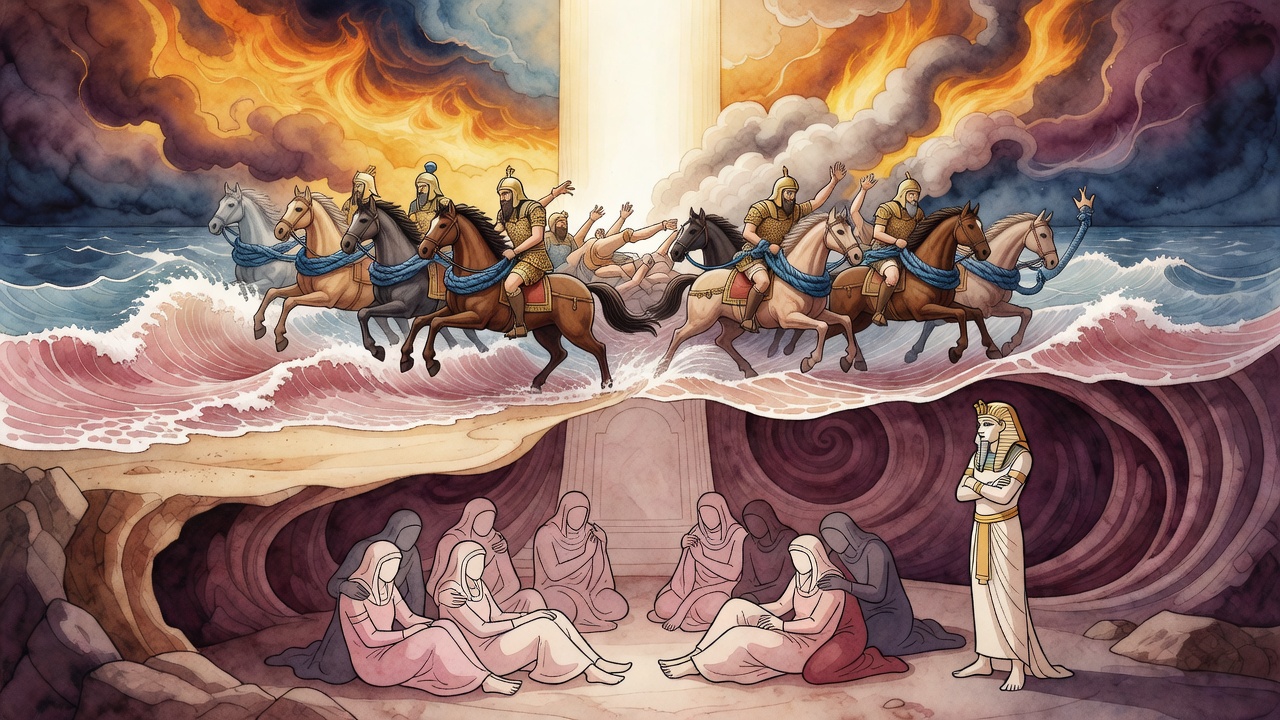
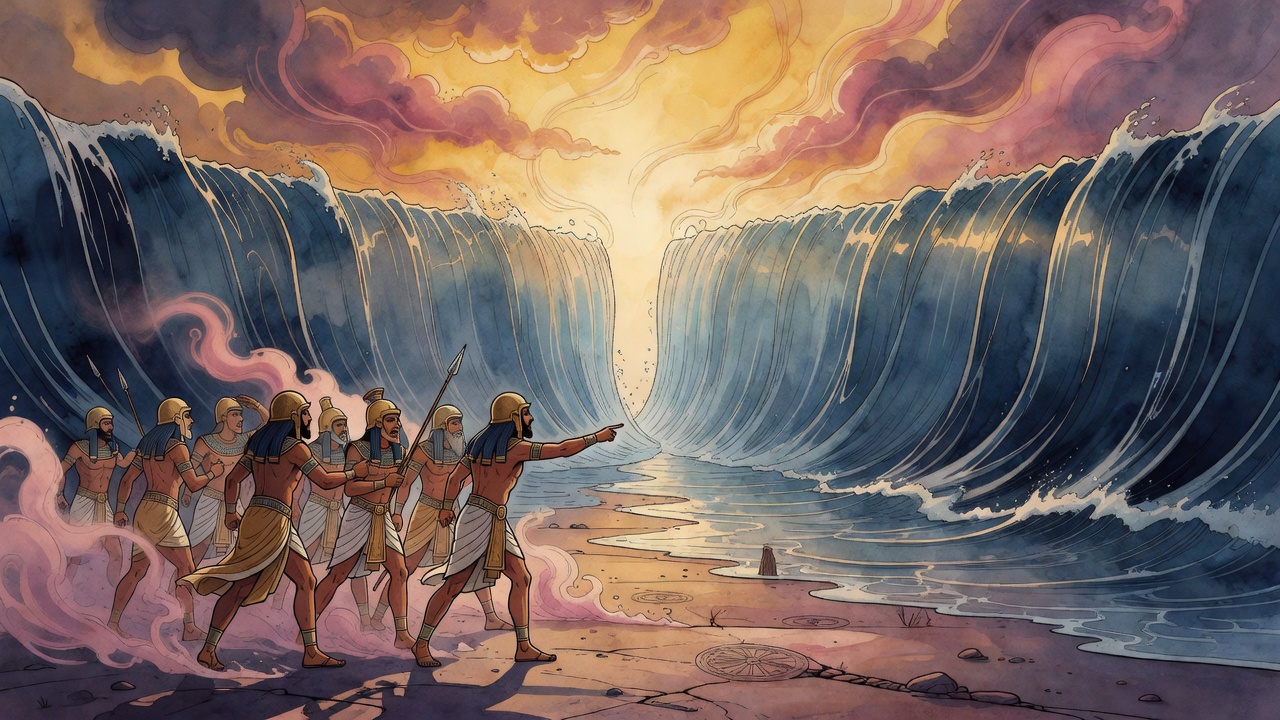
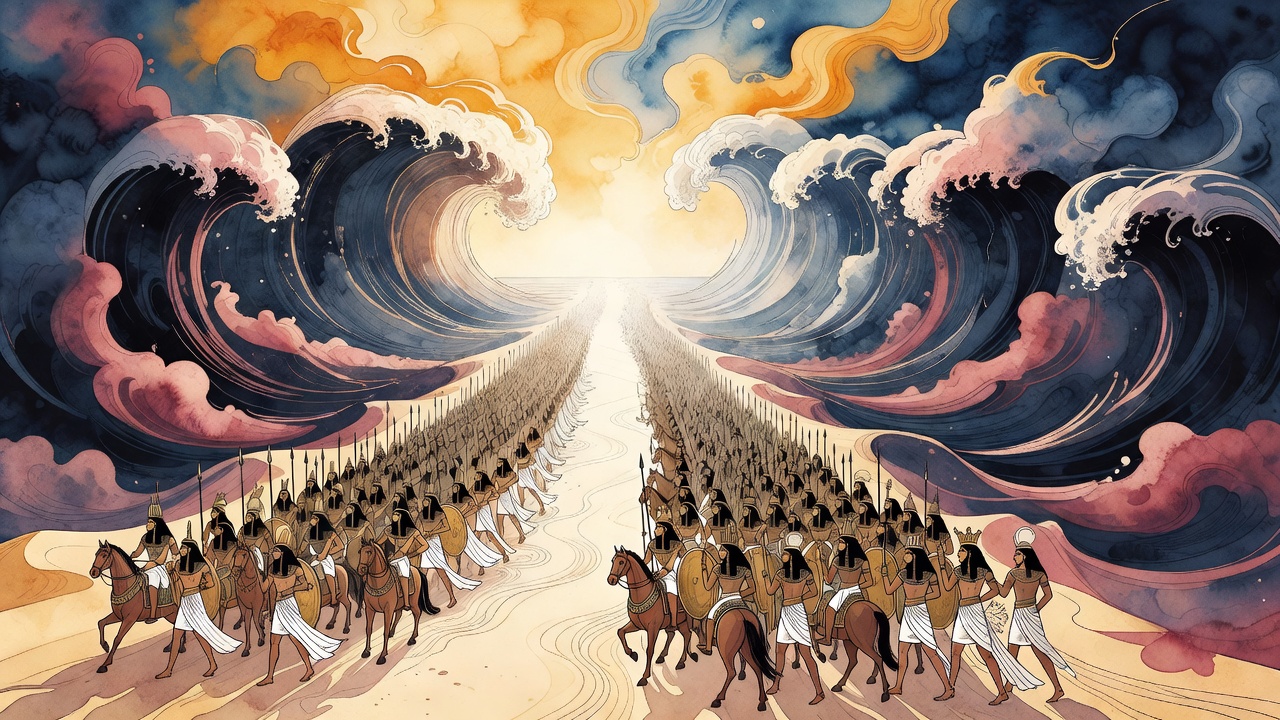
When the sea split and Israel walked down between the standing walls of water, the Egyptians came after them onto the bare seabed, whips high, wheels churning. Bar Kappara taught what happened next, and it is a small thing to say and a terrible thing to watch. The Holy One reached into that charging line and tied each horse to the man who rode it. Not with rope. With judgment. Beast and rider fused into one doomed creature, unable to part, welded together for the drowning.

Then the walls came down.

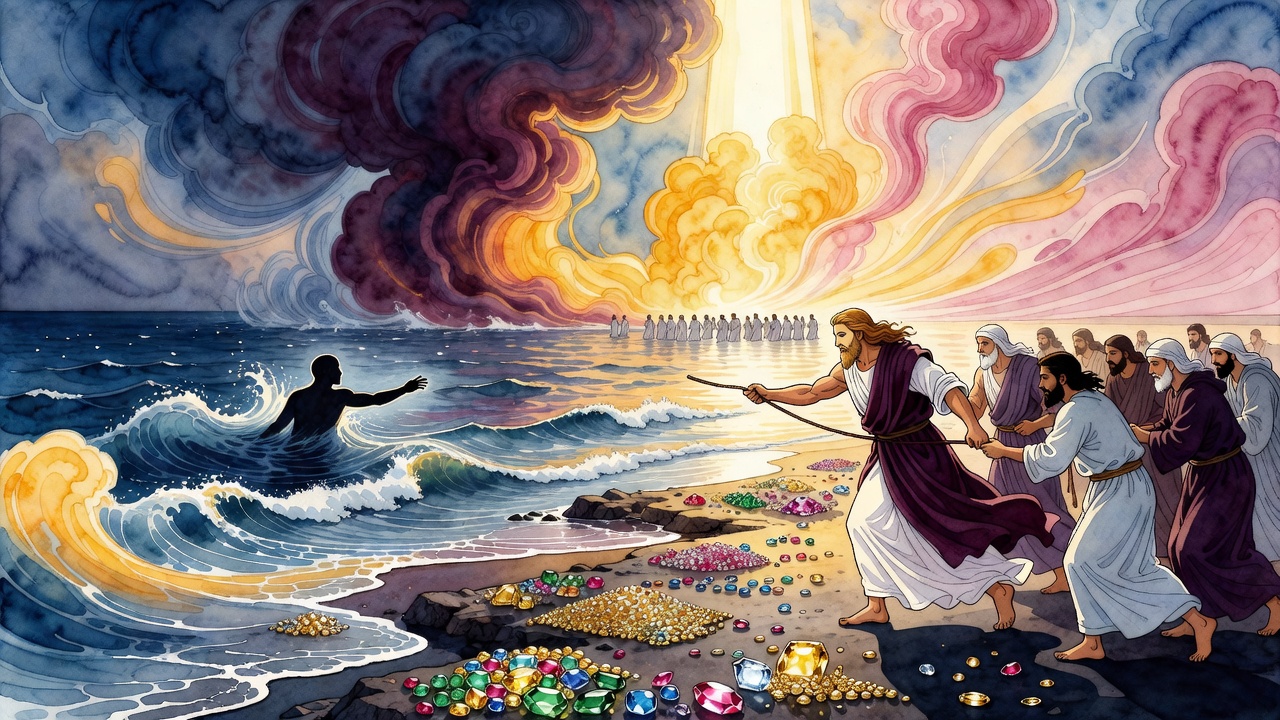
The gold that was meant to buy a slaughter dragged its wearers under. Each horse sank with its rider knotted to it, and the treasure Pharaoh had draped across their flanks pulled them faster toward the bottom. When the water stilled it rolled the wealth of Egypt up onto the shore where Israel stood, and Israel gathered it off the sand. The plunder Pharaoh had forbidden his men to chase had chased them instead, into the hands of the people they meant to kill. That was the spoil of this world, and a promise lay folded behind it, that whatever the nations pile up is stored for Israel in the end.

Pharaoh Goes Down Among the Slain

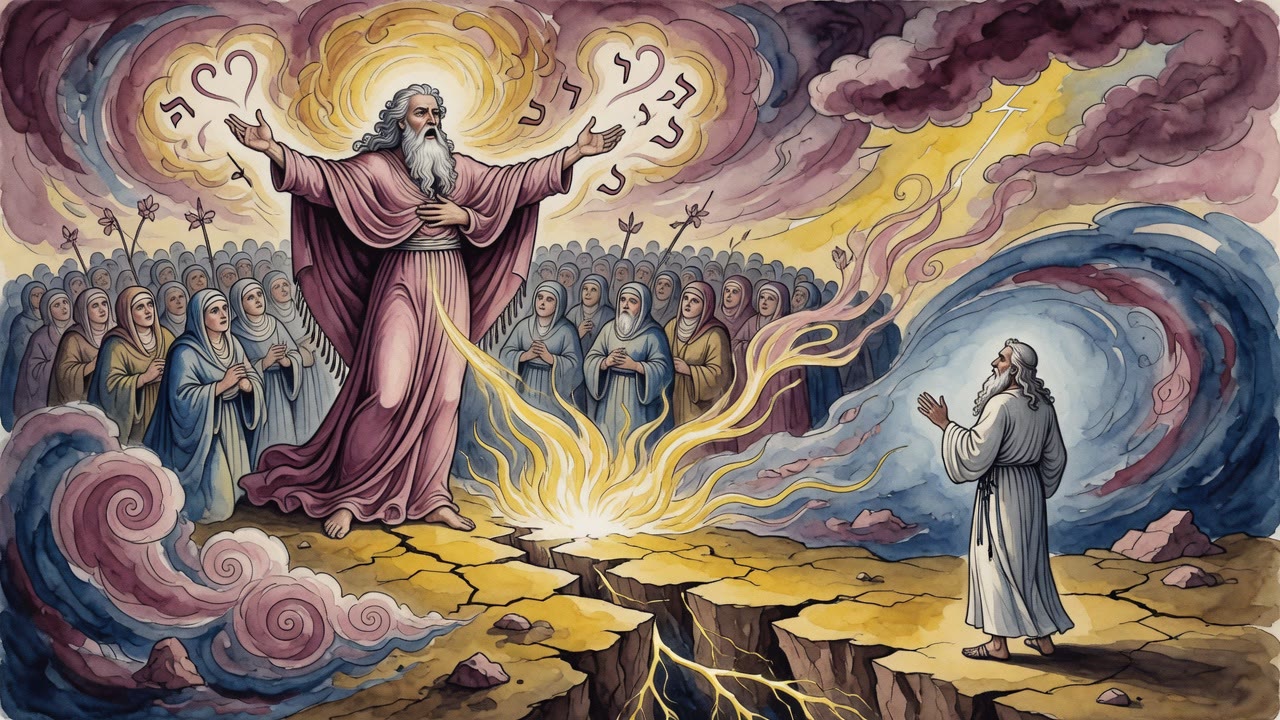
The story does not end on the beach. It follows Pharaoh downward, into the pit where kings go when the sword is finished with them. The Holy One turned to the prophet Ezekiel and gave him a task no one wants. "Son of man, wail over the multitude of Egypt," He said, and Ezekiel raised the death-cry over an army already at the bottom of the water and already on its way to Sheol (the land of the dead).

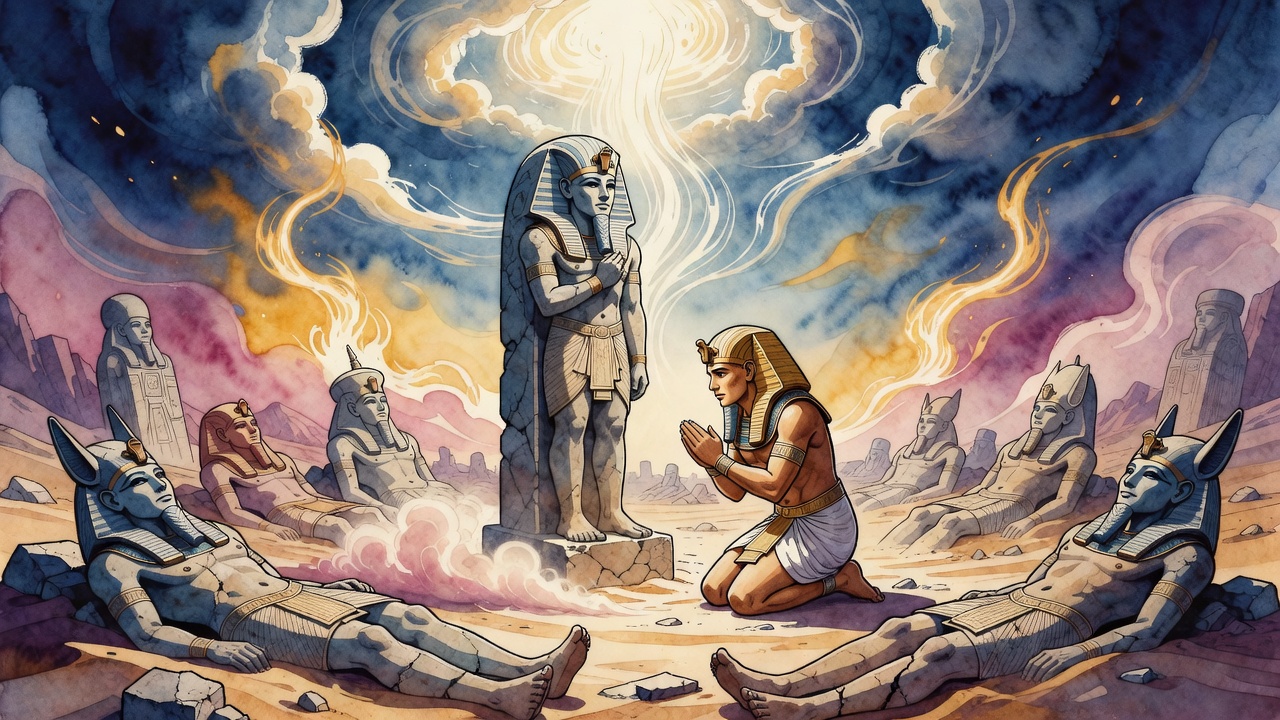
Down there the drowned came ashore in a different country, a gray one, and their king came with them. Pharaoh, who had ridden out with treasure on his horses, walked into the land of the dead stripped of everything, and even there he tried to keep his height. He looked around at the corpses and lifted his chin. "Shall I go down and lie beside him?" he asked, as if there were a lower shelf reserved for lesser men and a better place kept for a king like himself.

Whom Are You More Beautiful Than

The answer came without gentleness. "Whom do you surpass in pleasantness?" the Holy One asked him. "Whom are you more beautiful than? Are you finer than the king of Assyria? Than the king of Tyre, than the king of Sidon? Go down, then, and be laid among the uncircumcised." And Pharaoh went down.

Sheol, it turned out, was crowded with royalty. There lay Assyria and her whole assembly around her grave. There lay Elam and all her roaring multitude. There lay Meshech and Tubal with their hordes. There lay Edom, her kings and all her princes laid out among the slain. There lay the princes of the north, every one of them brought down by the sword they had trusted.

The One Comfort Sheol Was Refusing Him

The pit keeps a custom for its kings. A fallen ruler, arriving among the dead, lifts his eyes and sees the others already there, Assyria and Elam and Edom and all the rest, and something in him eases. He is not the only one the sword unmade. The prophet had spoken the exact word for it: Pharaoh shall see them, and he shall be consoled over all his multitude, over all his army slain by the sword. Every king who comes down gets that cold mercy. The sight of his equals is his comfort.

Pharaoh reached for it. He looked at the buried kings the way a drowning man looks at a rope, waiting for the ordinary consolation of the pit to close over him too, to be told he was no worse than Assyria.

The Holy One did not let it come. "Pharaoh," He said, "you are not to be consoled for what you did to My children." And the comfort that every other king received in the land of the dead was held back from him alone, so that he lay among the slain he had led there and found no rest in their company.

There was a single word behind it. The verse said God did not lead Israel by the near road, va'lo nacham, and the same three letters that spell "led" also spell "comforted." Read the second way, the sentence turns on Pharaoh: God did not comfort him. He drowned his horsemen tied to their horses, he walked into Sheol (the underworld of the dead) trying to keep his crown, and the one kindness the dead give their kings was the one thing he was denied.


← All myths

From the tradition

Sources

2 sources

The texts behind this telling. Some cards carry a translation of the source; others are our own retelling of it, and each card says which. Every card links out to the original.

Midrash Tanchuma Buber, Beshalach 14:3Midrash Tanchuma Buber, Beshalach

Translation of the source text.Midrash Tanchuma (Buber), Public Domain, on Sefaria · CC-BY-SA

Another interpretation of "the horse and its rider" (Exodus 15:1). [Bar Kappara said:] The Holy One, blessed be He, tied them one to the other. Why? So that Israel would benefit from the spoil.

Why so? When Israel went out of Egypt and the Egyptians went out to pursue after them, Pharaoh said to them: I know that they took your silver and your gold, yet do not set your minds upon the plunder. What did he do? He opened the treasuries of Joseph. He said: Take for yourselves silver and gold. So they took it and adorned their horses, as it is said, "all the horses of Pharaoh's chariot" (Exodus 14:9). Therefore they were tied one to the other, so that Israel would benefit from the spoil.

In this world Israel benefited from the spoil of their enemies, but in the world to come all that the nations amass is for Israel, as it is said, "and her merchandise and her hire shall be holiness to the LORD" (Isaiah 23:18).

Full source
Midrash Tanchuma Buber, Beshalach 9:1Midrash Tanchuma Buber, Beshalach

Translation of the source text.Midrash Tanchuma (Buber), Public Domain, on Sefaria · CC-BY-SA

[(Exodus 13:17:) "And God did not lead them", read it instead as "And God did not console (niḼam) [Pharaoh]."] For the Holy One, blessed be He, said to the prophet (Ezekiel 32:18): "Son of man, wail over the multitude of Egypt, and so forth." Pharaoh began to exalt himself and said, "Shall I go down beside him?" He said to him (Ezekiel 32:19): "Whom do you surpass in pleasantness, and so forth", whom are you more beautiful than? Are you better than the king of Assyria, or than the king of Tyre and Sidon? "Go down and be laid with the uncircumcised" (ibid.). "There is Assyria and all her assembly" (Ezekiel 32:22). "There is Elam and all her multitude" (Ezekiel 32:24). "There are Meshech, Tubal, and all their multitude" (Ezekiel 32:26). "There is Edom, her kings and all her princes" (Ezekiel 32:29). "There are the princes of the north" (Ezekiel 32:30). At that moment Pharaoh would see them and be consoled, as it is said: "[Them] Pharaoh shall see, and he shall be consoled [over all his multitude, those slain by the sword, Pharaoh and all his army]" (Ezekiel 32:31). The Holy One, blessed be He, said to him: "Pharaoh, you are not to be consoled for what you did to My children." [Hence:] "And God did not console."

Full source