Parshat Yitro7 min read

Every waiting soul heard Sinai before a mystic called it back

Before any body was formed, all souls waited in a garden above and stood at the thunder of Sinai, until a mystic learned to call one back by name.

Curated by Arthur · Told by Maggid ·
Table of Contents
  1. The Thunder That Every Soul Attended
  2. Where the Whole Souls Broke
  3. The Veil Worn Thin
  4. The Name That Would Not Stay Away

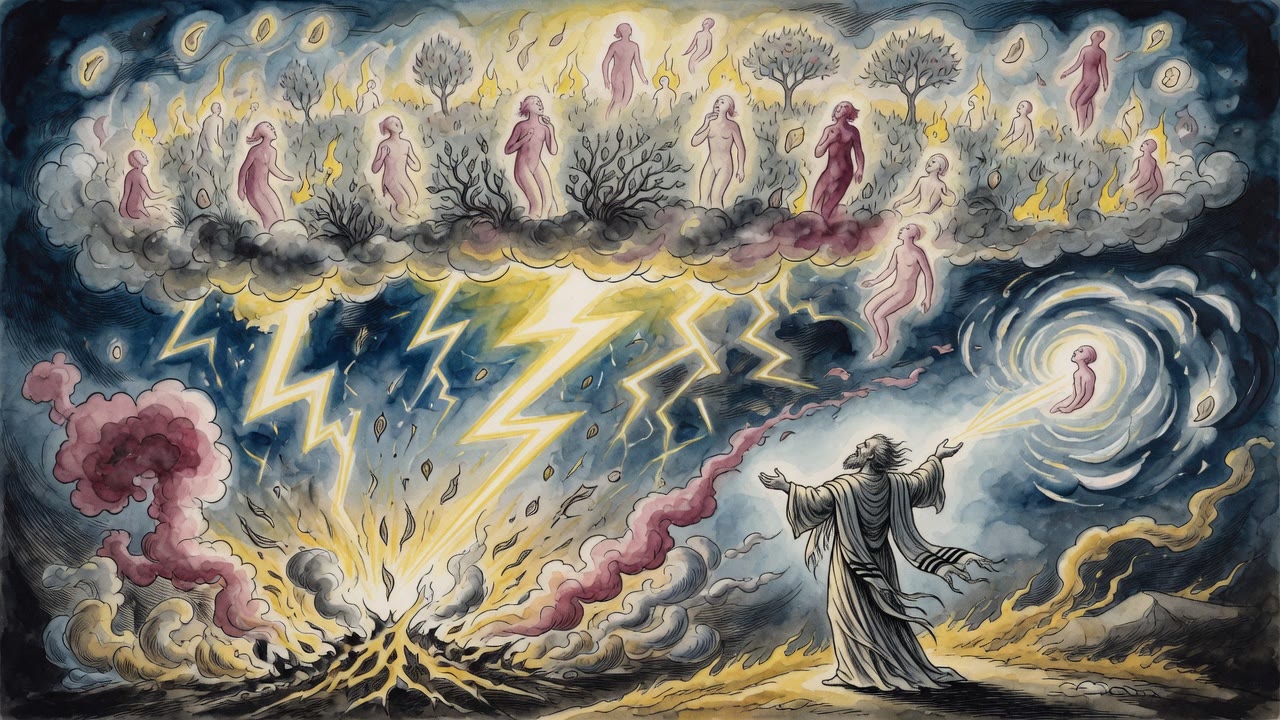
Before a single child had a face, the souls were already awake. They lived in a garden set high above the earth, a second Eden with no dust in it, and each one was a joined thing, male and female pressed into one body of light the way a seed holds both halves of what it will become. Nothing there happened by chance. What would come to pass had been settled long before it came to pass, and the souls knew it, the way a traveler knows the road is already laid though he has not yet walked a step of it.
Every waiting soul heard Sinai before a mystic called it back Click for full size

They waited. That was their work. Then, on a day the garden had been built to hold, they were summoned downward all at once.

The Thunder That Every Soul Attended

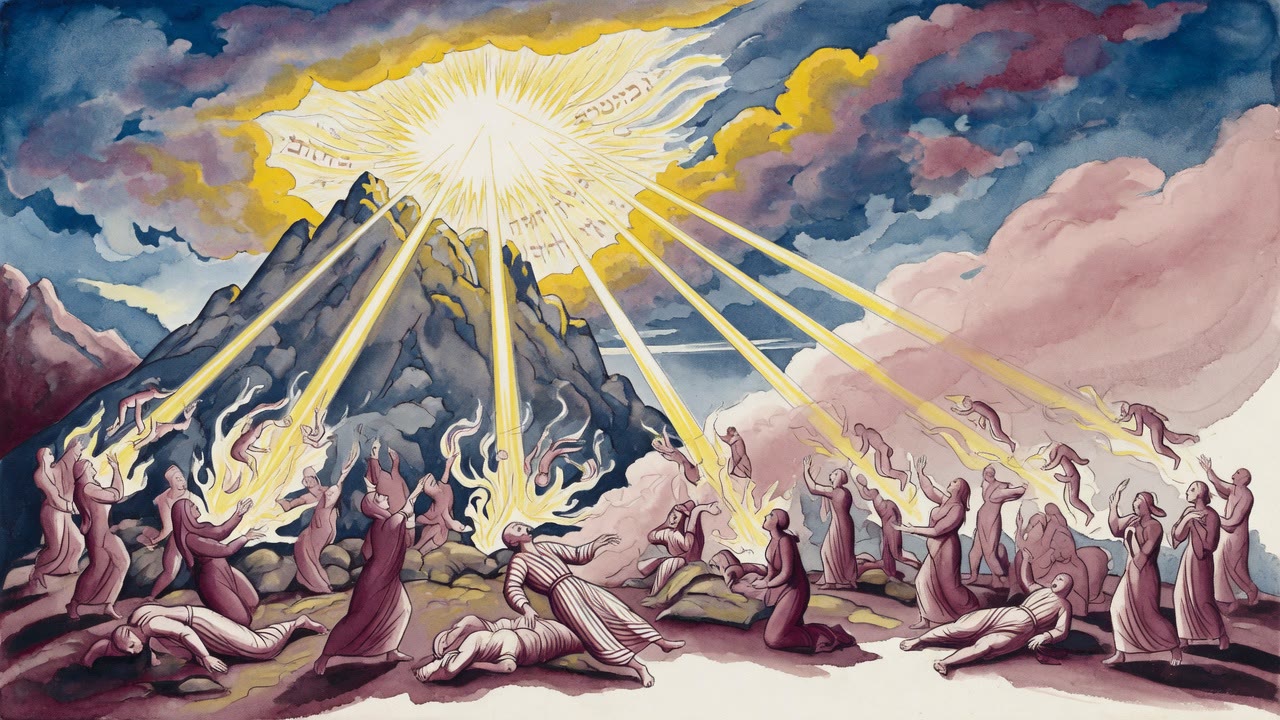
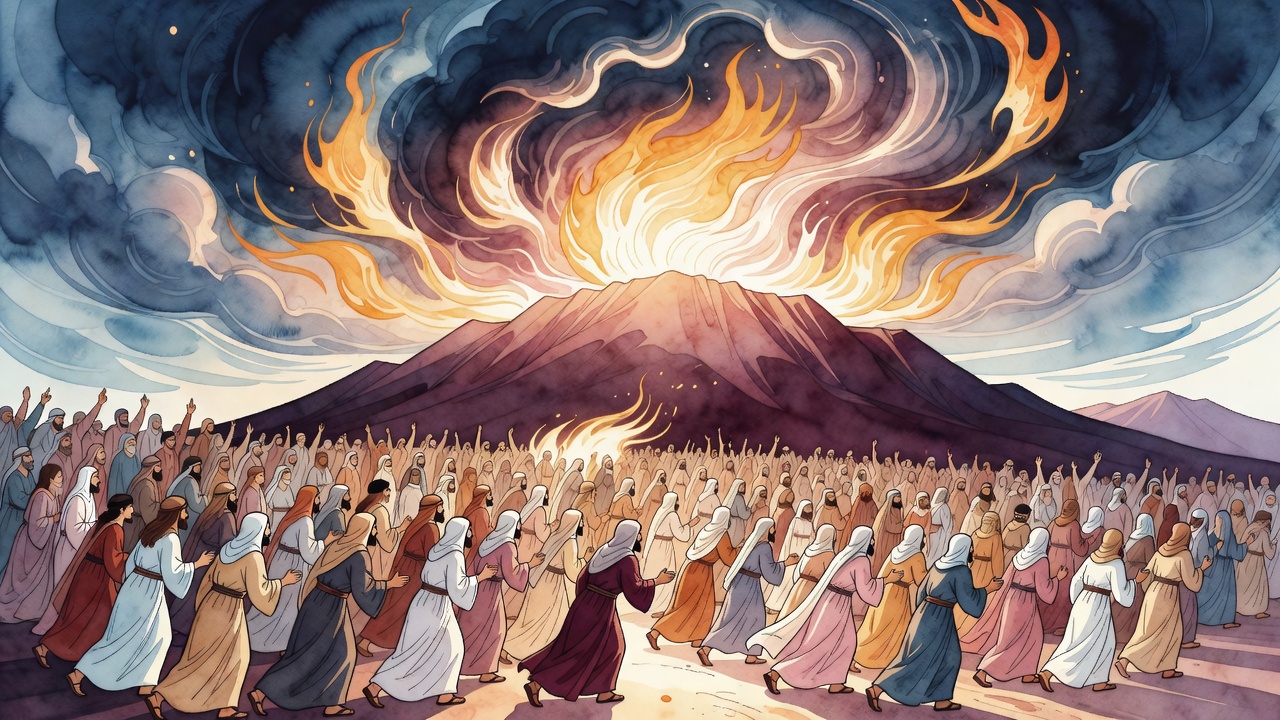
The mountain below them burned without being consumed, and the sky bent low over it. Six hundred thousand souls came to the edge and looked. Not one of them was born yet. Not one had a mother. Every soul that would ever wear flesh was there in the smoke and the noise, standing where the living stood, because the covenant was not being cut with a single generation but with everyone the generations would ever carry.

Menashe ben Israel found them hidden inside a single word. When the covenant was spoken, it was made "with those who are standing here with us this day, and also with those who are not here with us this day." He read "standing" as "existing." The ones absent in body were present in soul, all of them, every future name, bound to the Torah before they had lips to recite it.

And the Torah bound them back. It held six hundred thousand letters, one for every soul at the mountain, so that no soul stood there without a letter and no letter was written without a soul to answer it. Long after, Rabbi Nachman of Bratslav could still feel the weight of them at night. "I cannot sleep," he said. "Before I fall asleep, all six hundred thousand letters of the Torah come and stand before me."

Where the Whole Souls Broke

Then the descent began, and the joined souls came apart. Each one split as it fell, male going one way and female another, so that a person walking the earth was only half of what had stood in the garden, hunting without knowing it for the face that had once been fused to his own. And even the half that came down did not come down whole. Moshe Hayim Luzzatto, the one they called the Ramhal, taught that every soul kept an upper part rooted in heaven and sent only its lower part into a body. The living carried a stub of themselves. The rest stayed above, still watching the mountain.

There were six hundred thousand root-souls, and at first that was enough. But the people multiplied past the count of the roots. Soon there were not enough whole souls to fill the bodies being born, and heaven began dividing what it had, a spark to this child and a spark to that one, some infants carrying a single splinter of an ancient soul, some carrying splinters of several at once. A soul could return, too. The Ari of Safed said plainly that he was Rabbi Akiva come back into the world a second time, the same soul turning again through flesh like a wheel that has not finished its rounds.

The Veil Worn Thin

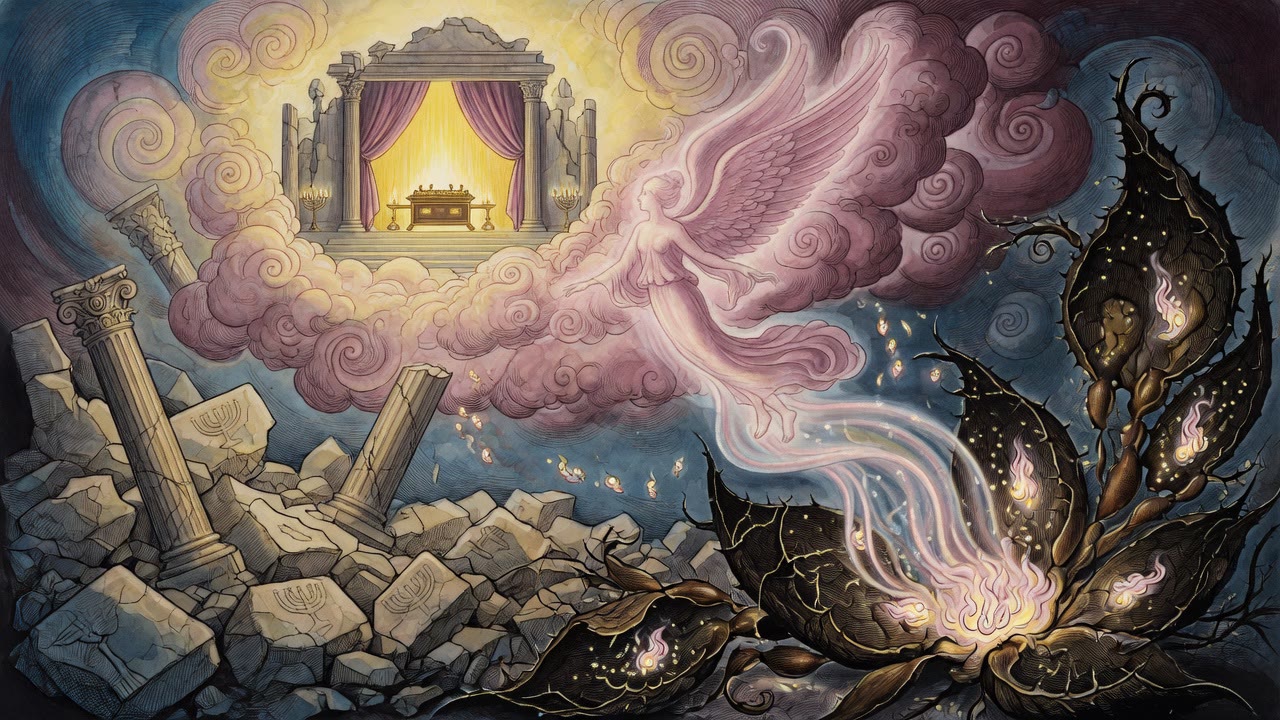
The descent left the world thick with souls that were not gone, only elsewhere. Above every roof the upper halves waited. Behind the thin cloth that hangs between the worlds, the returned and the departed pressed close, near enough to touch if a hand knew where to reach. And there were men who learned to reach.

They called it the practical craft, and it was not a game played with a board and a moving cup. It was slow, and it frightened the ones who did it well. A man who wanted to draw a soul across the veil first made himself clean, and quiet, and afraid in the right way. Then he needed one thing above all others. He needed the name.

A name was not a label stuck onto a soul from outside. In this craft a name was a vessel, and the soul was the wine inside it, so that to hold the name truly was to have a hand already closed around the thing itself. That was why it worked. Spoken with the right knowledge, a name did not invite a soul. It compelled one. The soul could no more stay away from its own name than water can refuse the shape of the cup poured around it. It came forth. It had to.

The Name That Would Not Stay Away

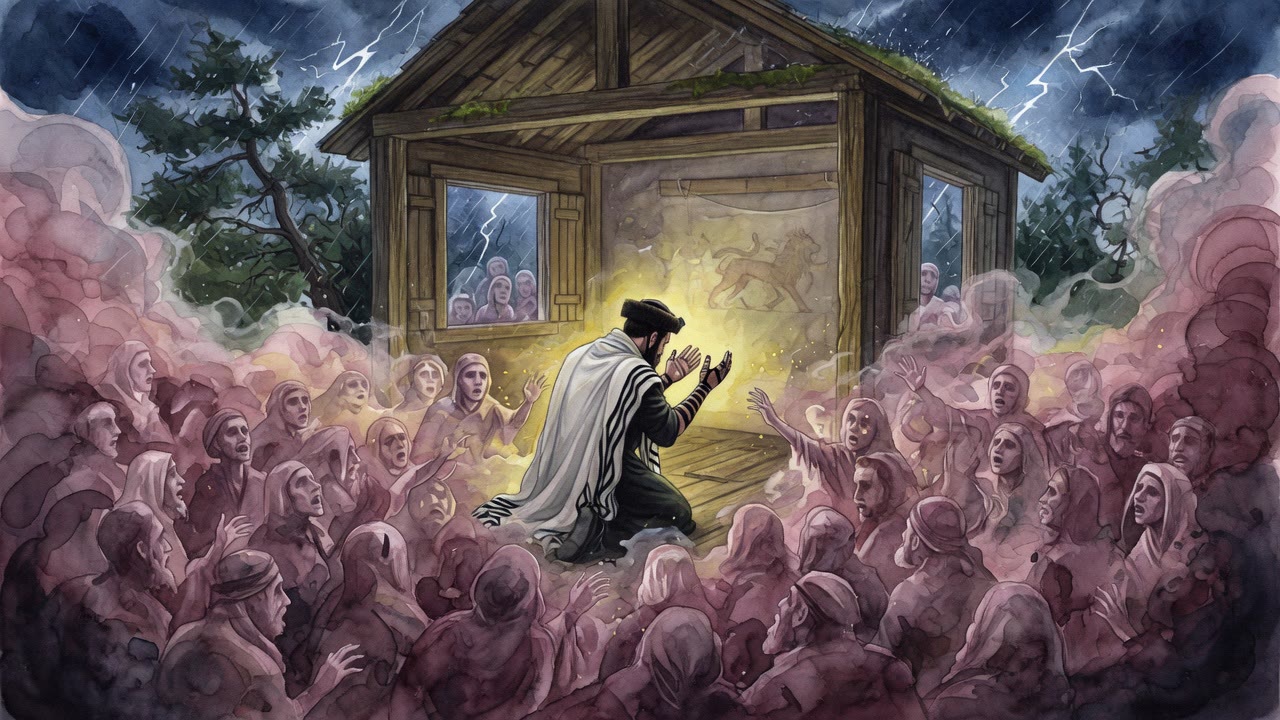
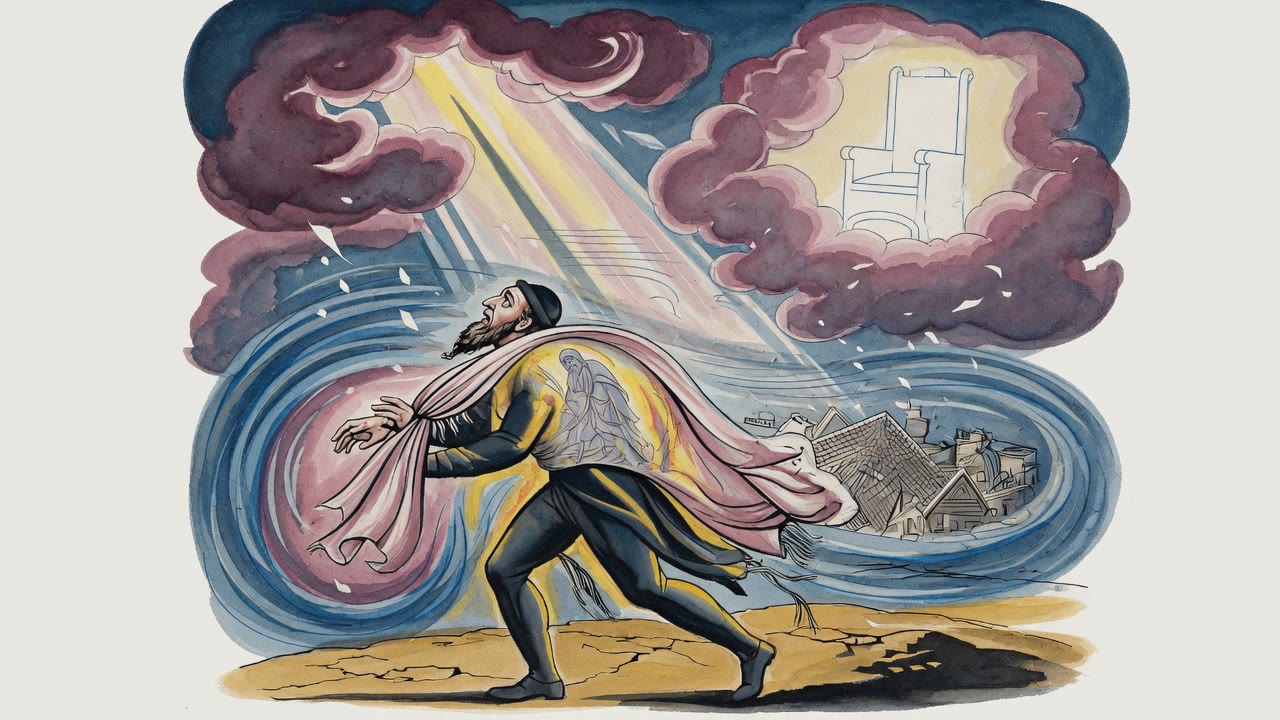
The room was small, a single lamp burning in it. A man who had fasted and washed and shut the door bent over a page, holding a name the way a man holds a live coal, knowing what it can do. He spoke it. The air changed. Somewhere the thin cloth stirred, and on the far side a soul that had stood at the mountain before it ever stood in a cradle turned toward the sound of the only word that was entirely its own, and it crossed.

Men reached that way for many reasons. To ask a question no living teacher could answer. To finish an earthly task too heavy for earthly hands. To touch, for a moment, work that belonged to heaven. The teachings gathered under the Baal Shem Tov's name held that this was possible, that connection ran both directions, that the wall between the waiting souls and the walking ones was real but not sealed. It opened for anyone who knew the word to knock with.

And the soul on the other side had been ready for a very long time. It had waited in the garden before the world had need of it. It had stood in the thunder beside the letter that matched it. It had split, and fallen, and perhaps returned, and split again. When at last its own name found it across the veil, it did what it had always done. It answered the call.


← All myths
From the tradition

Sources

2 sources

The texts behind this telling. Some cards carry a translation of the source; others are our own retelling of it, and each card says which. Every card links out to the original.

Midrash Tanhuma-YelammedenuMidrash Tanchuma

Retold in our words. Read the original at the link below.Townsend 1989 translation of Midrash Tanhuma, S. Buber Recension · CC-BY

The Tree of Souls tells us that these souls resided in the Garden of Eden, up above. And get this: they were all present at the Giving of the Torah at Mount Sinai!

How do we know this? Well, the verse in Ecclesiastes (6:10) says, "Whatever happens, it was designated long ago and it was known that it would happen." It suggests a preordained plan, souls included.

Initially, these souls in the heavenly realm were both male and female – two sides of the same coin. But when they enter this world, they separate, taking on either a male or female form. The hope? That, if they are worthy, they will reunite in marriage, becoming a single, complete unit once more – body and soul. You're not just finding a partner; you're finding the other half of your very soul, the part that was once united with you in paradise!

What about all those souls and all those people? According to tradition, six hundred thousand souls were present at Mount Sinai. Later on, though, as the Jewish population grew, there weren't enough "complete" souls to go around. So, what happened? Well, most people, instead of having a full soul, possess sparks of a soul, or even sparks from multiple souls.

The Ba'al Shem Tov, a central figure in Hasidic Judaism, is said to have had a particularly pure soul. Tradition holds that his soul was unique in one specific way: it was not present when Adam and Eve tasted the forbidden fruit.

Nishmat Hayim 2:16 explains that Rabbi Menashe ben Israel finds the presence of those future souls at Mount Sinai alluded to in the verse, "I make this covenant to those who are standing here, and with those who are not here with us today" (Deut. 29:14). He understands "standing" as "existing". So, "those who are standing here" refers not only to those alive at that moment, but also to the souls of all future generations. They, too, were at Sinai to receive the Torah.

Speaking of the Torah, did you know that it is said to contain 600,000 letters, corresponding to the 600,000 souls present at Mount Sinai? Rabbi Nachman of Bratslav was so connected to this idea that he said, "I cannot sleep. Before I fall asleep, all 600,000 letters of the Torah come and stand before me" (Sihot ha-Ran 176).

The Zohar, a foundational text of Kabbalah, explores these concepts in depth, as does the Etz Hayim. Rabbi Moshe Hayim Luzzatto, known as Ramhal, believed that there are 600,000 heavenly souls that are the roots of all the souls of Israel. Each soul, he taught in Adir ba-Marom, has an upper part that remains in heaven and a lower part that inhabits a human body.

And then there's the idea of gilgul (the reincarnation of souls), reincarnation, a key principle among Sephardic Jews especially. The Ari, a towering figure in Kabbalah from 16th-century Safed, believed he was the reincarnation of Rabbi Akiba!

So, what does it all mean? Perhaps it's a reminder that we are all interconnected, part of something larger than ourselves. As Rabbi Dov Ber teaches in Maggid Devarav le-Ya'akov 66, each soul is like a tiny particle of the Shekhinah, the Divine Presence, a drop in the ocean of the Divine. Maybe that feeling of searching, of longing, isn't just a romantic notion, but a deep-seated yearning to reconnect with our other half, to return to that state of wholeness we once knew. And maybe, just maybe, the sparks of those ancient souls within us are still striving to fulfill their purpose, to learn, to grow, and to ultimately, reunite.

Full source
Toledot Ya'akov YosefChassidic Literature

Retold in our words. Read the original at the link below.Sefaria-hosted English translation · Public Domain

There's a corner of Jewish mysticism where the veil between worlds feels thin enough to touch. Practical Kabbalah lives there. It's all about calling upon souls, reaching out to them across that veil. But how does one actually do it?

In Tree of Souls, a beautiful exploration of Jewish mystical concepts, the key, the secret weapon, is knowing the spirit's name. Names have power, don't they? Our own names are tied to our identity, our sense of self. When someone uses your name, they have your attention. It’s like a little key unlocking a door. Apparently, it works the same way with souls.

The Toledot Ya'akov Yosef, a collection of teachings by Rabbi Yaakov Yosef of Polonne, a prominent disciple of the Baal Shem Tov, hints at this. So does the Sefer Ba'al Shem Tov itself, a compilation of stories and teachings attributed to the Baal Shem Tov, the founder of Hasidism. These texts imply that invoking a soul by its name compels it to respond. It can't resist coming forth.

Why is this? What's so special about a name? Well, in Kabbalistic thought, names aren't just arbitrary labels. They are vessels. They are containers of energy, of essence. The name of something is that thing, in a fundamental way. So, to know a soul's name is to know something incredibly deep and intimate about that soul.

The purpose of calling upon souls? A myriad of reasons. To answer questions that plague us. To assist in earthly tasks that feel overwhelming. Even to help with heavenly tasks, things beyond our mortal comprehension. Keter (Crown, the highest of the ten sefirot) Shem Tov 104, another collection of Baal Shem Tov's teachings, and Bereshit 131 in the Sefer Ba'al Shem Tov both touch on this idea of seeking assistance from these invoked souls. We see echoes of this concept even in Shemot Rabbah 42d, a Midrashic (rabbinic interpretive commentary) commentary on the Book of Exodus.

Of course, this isn't a simple parlor trick. We're not talking about a ghostly Ouija board session. The Kabbalistic approach is steeped in intention, in reverence, in a deep understanding of the spiritual realms. It requires knowledge, preparation, and respect.

But the core idea remains: connection is possible. That we are not alone. That there are forces, energies, souls, that can be accessed, if we know how to call them. If we know their name.

What names are we searching for? What connections are we yearning to make? And what power might we unlock, simply by knowing the right word?

Full source