5 min read

Four Cups Held Egypt's Four Redemption Verbs

On Seder night the cup does not only toast freedom. Each pour names a verb God spoke over Egypt, and the donkeys left with gold.

Curated by Arthur · Told by Maggid ·
Table of Contents
  1. The First Pour Opens the House
  2. Deliver, Then Save, Then Judge
  3. Wine Becomes Torah on the Tongue
  4. Donkeys Walk Out Under Gold
  5. The Room Holds All Four at Once

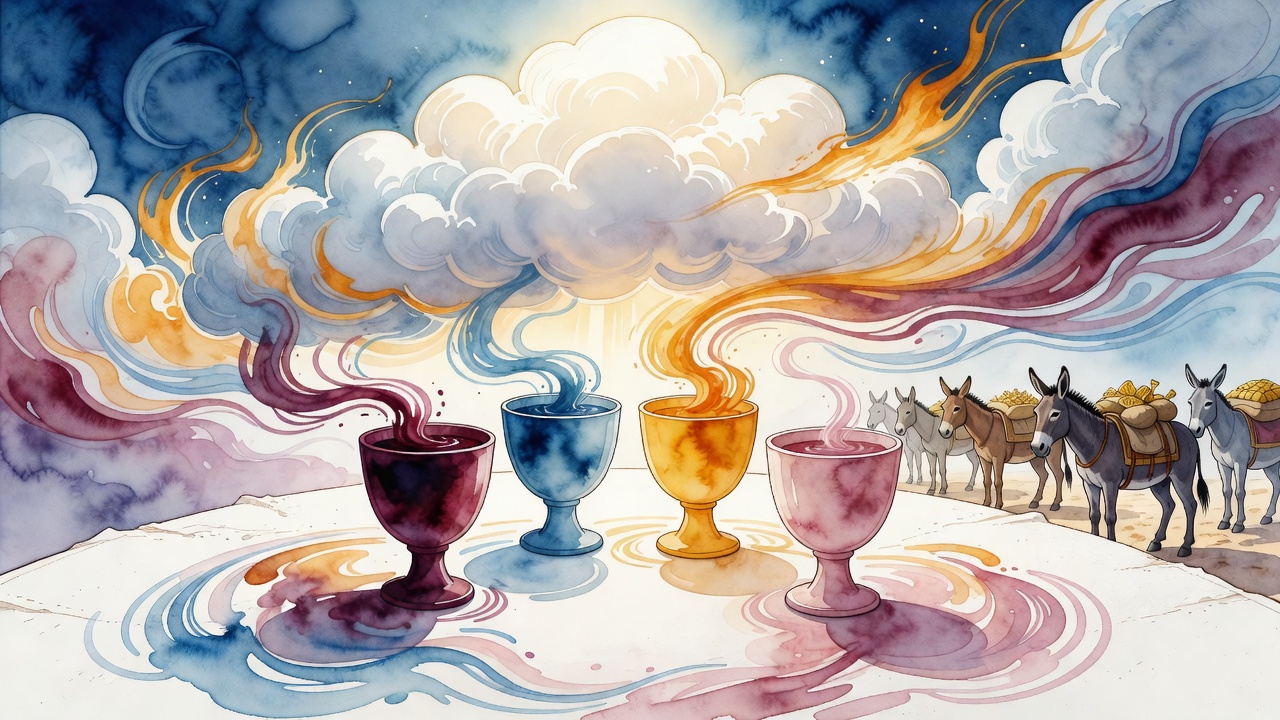
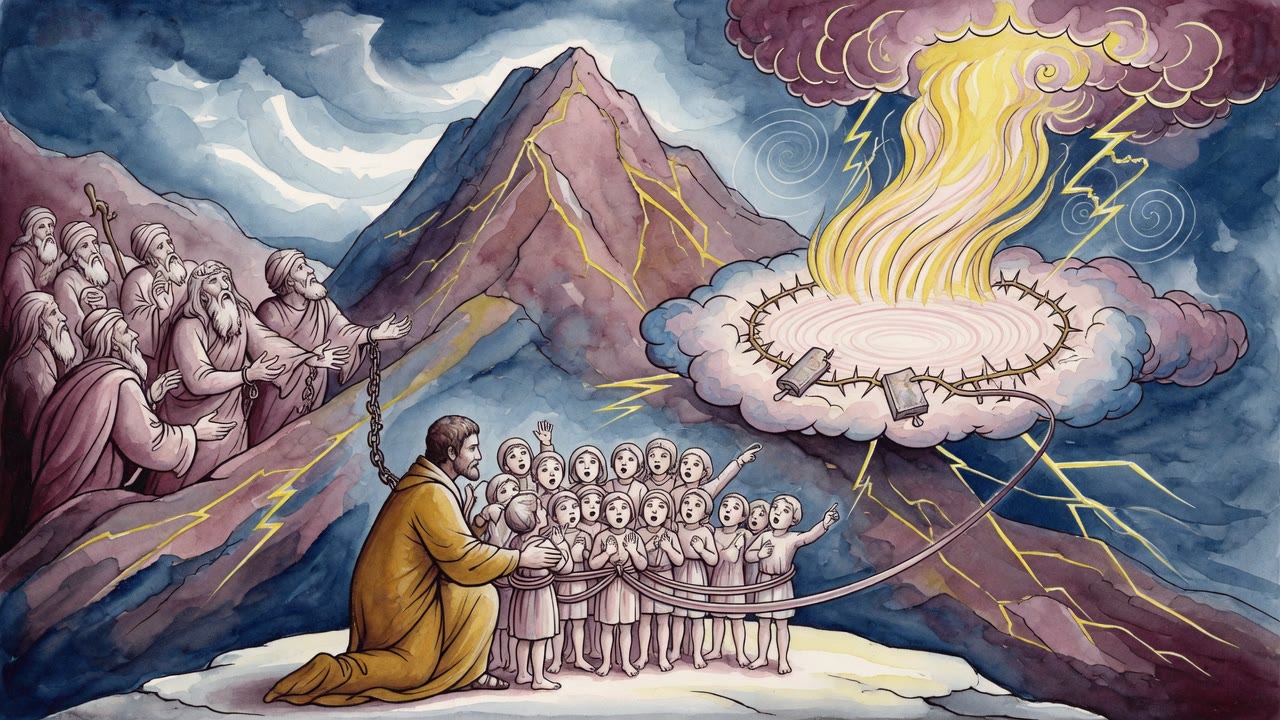
Moses stood in the dust of Egypt and heard four verbs fall one after another, each heavier than the last. Bring out. Deliver. Save. Judge. The people still bent under baskets of clay, and already the speech that would unmake Pharaoh was lining up like four cups on a future table (Exodus 6:6).

Four Cups Held Egypt's Four Redemption Verbs Click for full size

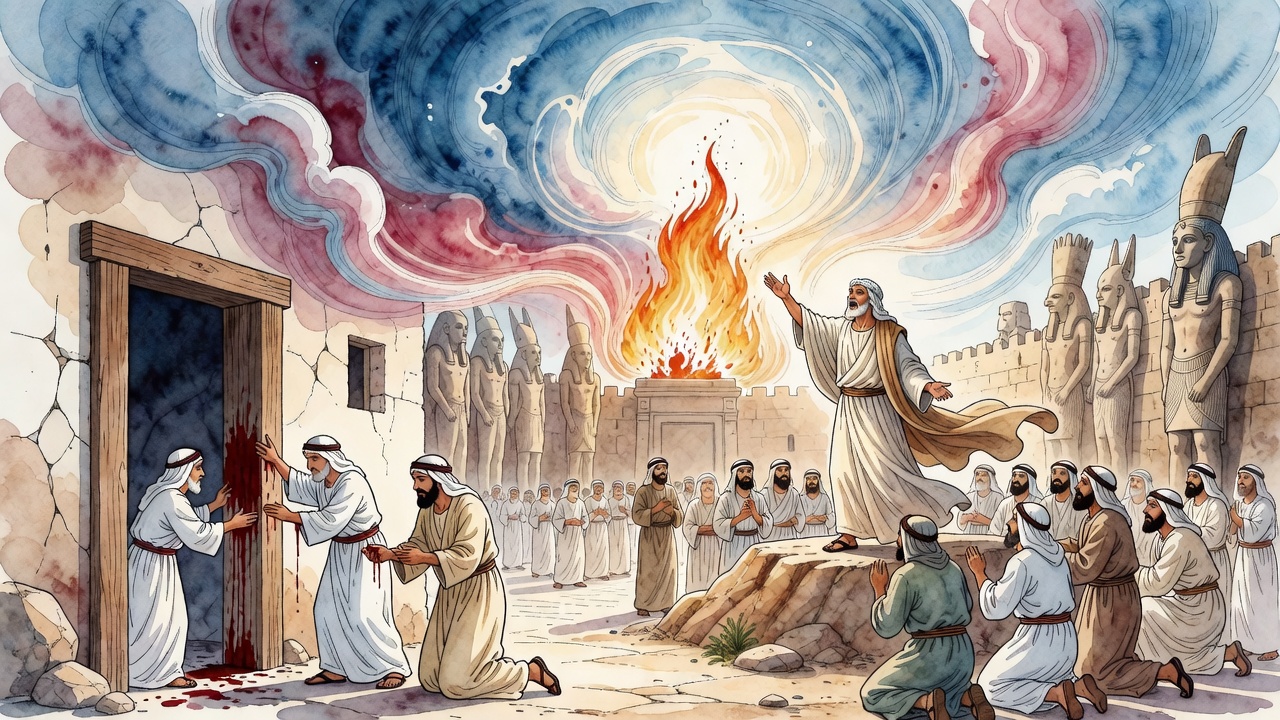
No one in Goshen could see the table yet. They saw brick. They saw overseers. They saw the Nile that had taken sons. But the verbs were already traveling toward a night when free hands would lift wine and speak what bondage had tried to silence.

The First Pour Opens the House

Years later the house is ready. Matzah lies under cloth. Bitter herbs wait like a remembered wound. A child stares at the first cup, and an elder's hand closes around the stem.

The first verb is not soft. Bring you forth from the oppressive bondage of the Egyptians. Not from work alone. From the weight that sits on the neck until the neck forgets it was made for looking up. The wine moves. The room leans forward. Redemption has a sound, and it begins with leaving.

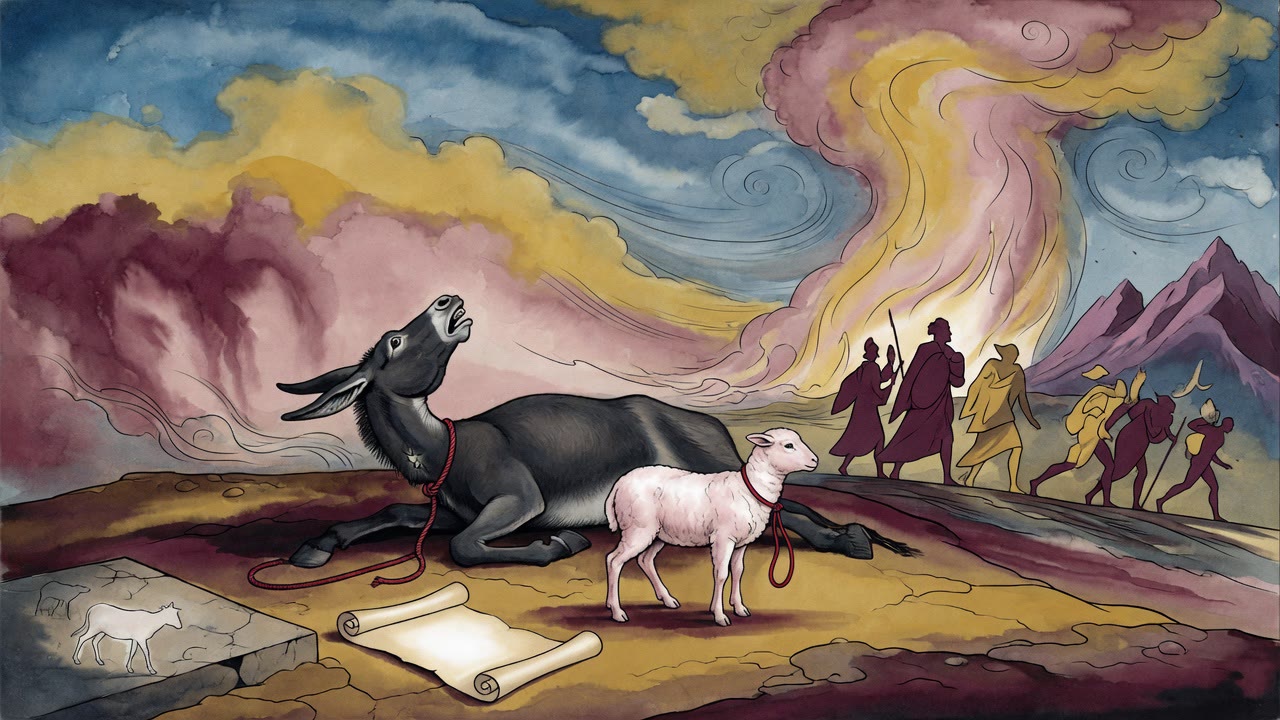
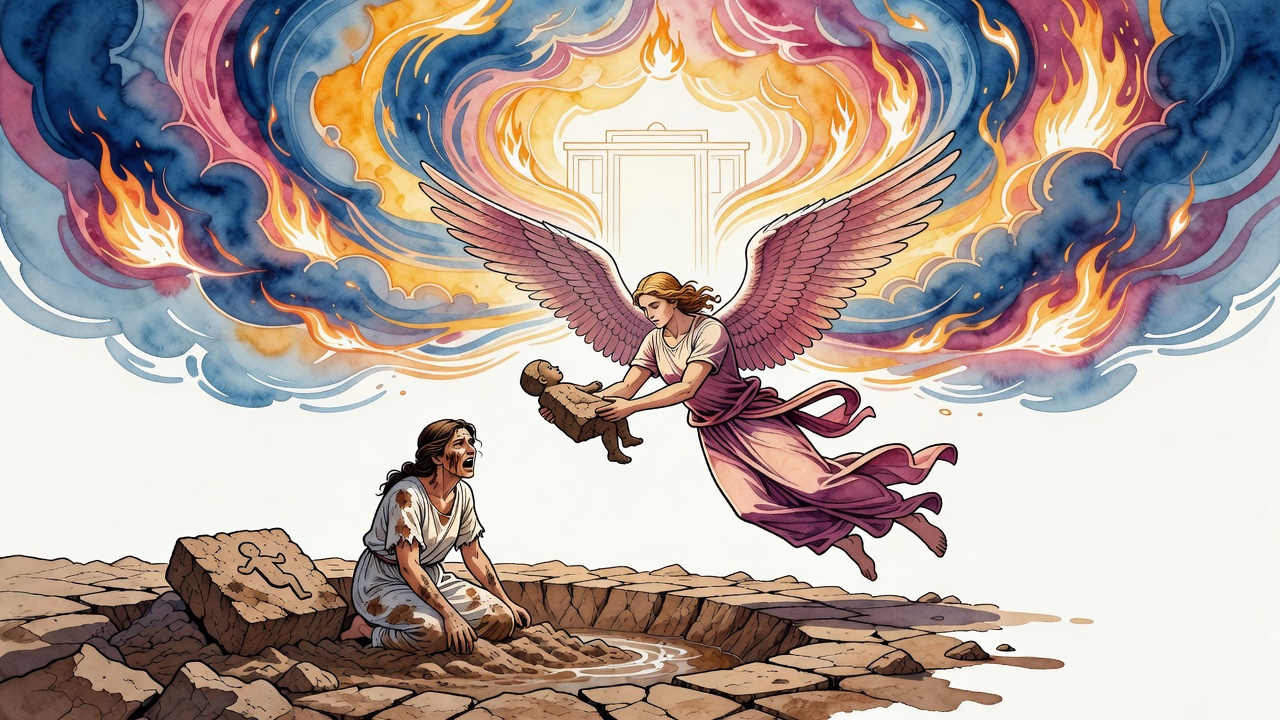
On that night the story of the donkey also sits nearby. Firstborn donkeys that left Egypt carrying silver and gold had to be redeemed later, neck unbroken if a person paid the price. Redemption first. Breaking only if redemption failed. The order is a law, and also a temperament. Prefer the open door to the closed throat.

Deliver, Then Save, Then Judge

The second cup is deliverance from servitude itself. Leaving the bricks is not enough if the brick-mind still rules the calendar. A people can walk out of a country and still count hours by a master's shout. Deliver means the shout loses authority.

The third cup is save, with an uplifted arm. The arm is not a metaphor for a polite favor. It is a warrior's posture. The sea splits under that arm. The plagues arrive under that arm. Children will later pour this cup and feel, for a moment, the height of the gesture that pulled their ancestors through water.

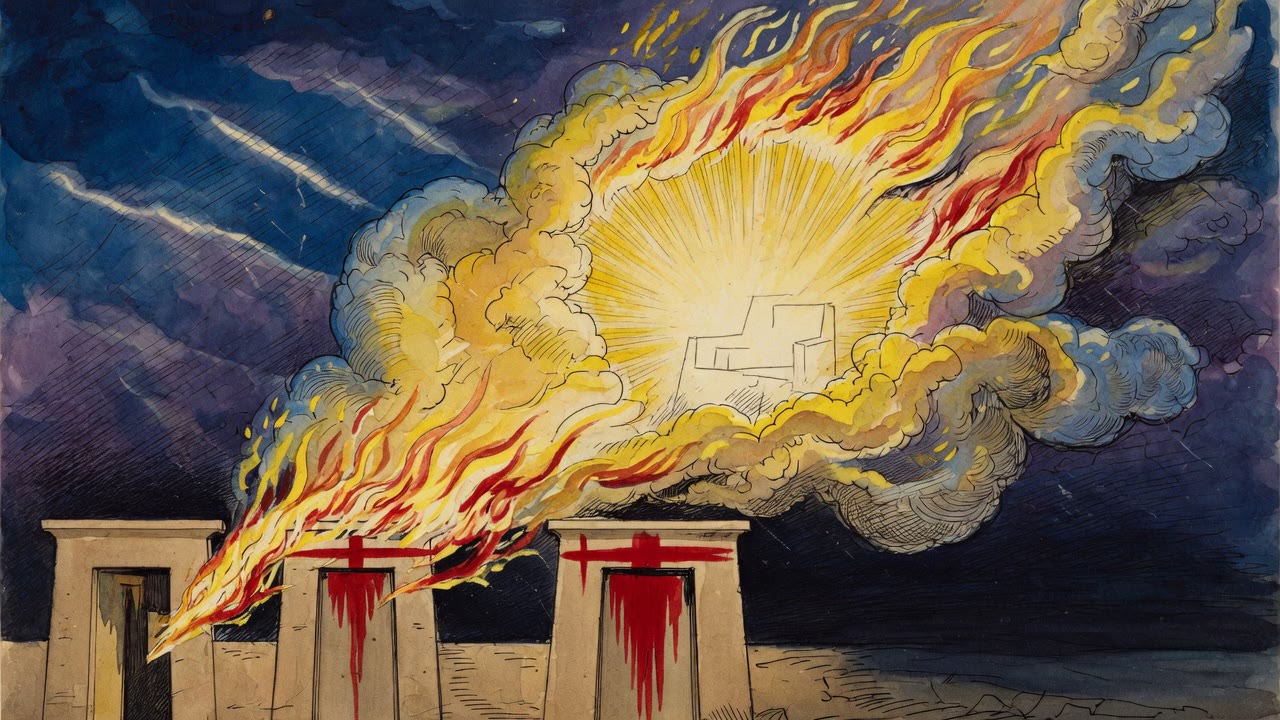
The fourth cup is judge. Great judgments. Blood in the river. Darkness that could be touched. Firstborn silence. The God who brings out also settles accounts. Freedom without judgment would leave Egypt's violence unweighed. The fourth pour does not apologize for that weighing.

Wine Becomes Torah on the Tongue

There is another reading of the wine. Not only four cups of freedom, but wine as the joy of learning the laws of the night itself. Passover laws on Passover. Shavuot laws on Shavuot (the festival of weeks, when Torah was given). Sukkot laws under the booth. Love recounted through wine means the festival is not only eaten. It is studied until the mouth that drinks also argues, asks, and remembers why each gesture is there.

A guest who only swallows misses half the cup. A guest who opens the book of the night and tastes the reason for the herbs has already begun the second freedom, the freedom of a mind that knows what it is doing.

The child asks the questions. The adults answer with more than recipe. They answer with verbs. They answer with the donkey that was redeemed rather than killed. They answer with the order that prefers repair to ruin.

Donkeys Walk Out Under Gold

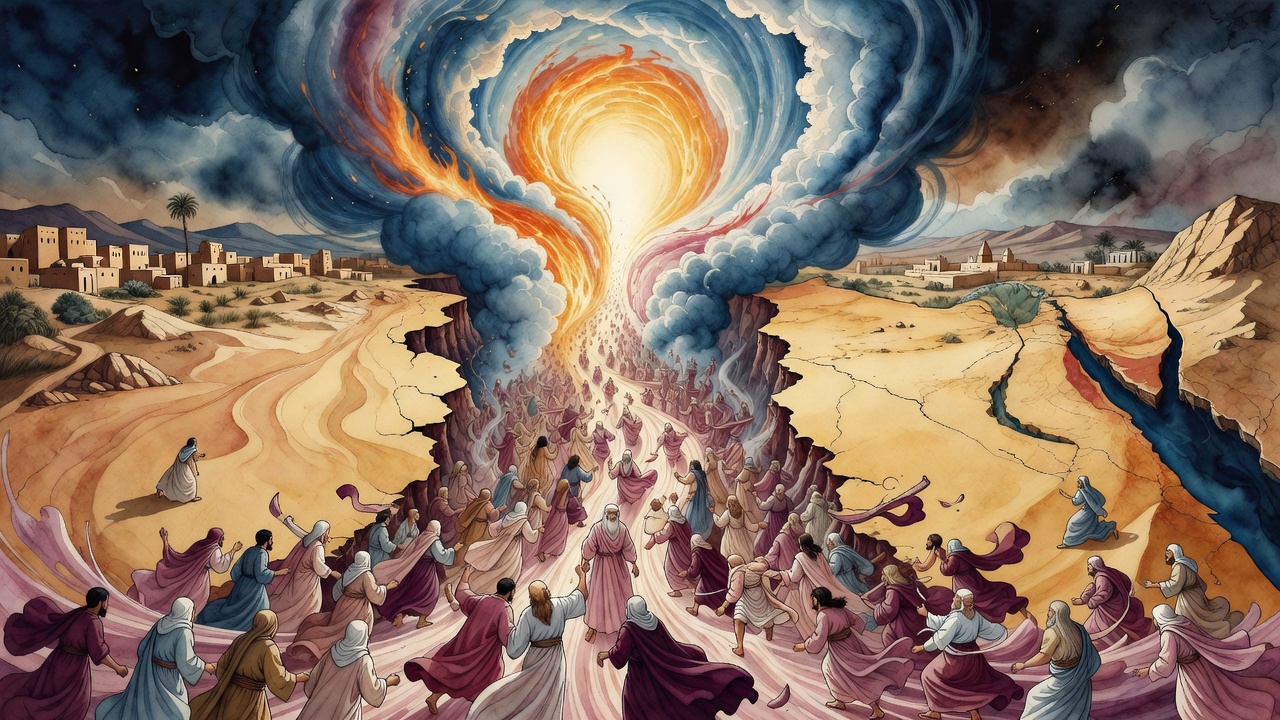
In the streets of Egypt, when the night of leaving finally came, the animals moved under loads that were not bricks. Gold and silver pressed their backs. The same beasts that had hauled Pharaoh's freight now carried the payment of a nation that had been unpaid for generations.

Later law would single out the firstborn donkey for redemption. Horses and camels did not get that line. The donkey had been Egypt's working body, and so the donkey became the working symbol of what must be bought back rather than discarded. Prefer the living recovery. Keep the grim fallback for when recovery is refused.

At the Seder table that memory is quiet. No donkey stands in the dining room. But the priority still shapes the night. Redeem first. Break only if you must. The cups keep the same ethic. Each pour tries to free something before it judges something.

The Room Holds All Four at Once

By the end of the night the four verbs have become four temperatures in the same body. Exit. Release. Rescue. Verdict. Guests rise a little changed, not because the wine was strong, but because the sequence made a spine under the story.

Outside, cities still make bricks of other kinds. Inside, the table has practiced a different grammar. God spoke four ways into one bondage, and Israel answered with four lifts of a cup, and with study that keeps the festival from turning into empty sweetness.

The last taste is not triumph alone. It is readiness. Next year the verbs will be poured again, because freedom is not a single past tense. It is a repeated speech act against every new Egypt that forgets the price of a neck.


← All myths

From the tradition

Sources

3 sources

The texts behind this telling. Some cards carry a translation of the source; others are our own retelling of it, and each card says which. Every card links out to the original.

Targum Pseudo-Jonathan on Exodus 6:6Targum Pseudo-Jonathan on Exodus

Retold in our words. Read the original at the link below.The Targum of Jonathan ben Uzziel, trans. J. W. Etheridge, London, 1862 · Public Domain

God outlines the Exodus in a sequence of verbs that the sages will later count as the Arba Leshonot Shel Geulah, the Four Expressions of Redemption. Targum Pseudo-Jonathan preserves them carefully: I will bring you forth from the oppressive bondage of the Mizraee, and will deliver you from your servitude, and save you with an uplifted arm, and by great judgments.

Count them. Bring forth. Deliver. Save. Judge. Four distinct verbs, four distinct stages. Later Jewish liturgy will encode these four expressions in the four cups of wine drunk on Passover (Yerushalmi Pesachim 10:1). Every Jew who has ever held a Seder cup has held one of these verbs.

Each Verb a Different Layer

The Targum's Aramaic intensifies each stage. Oppressive bondage, not just slavery, but the heaviest kind. Uplifted arm, bizerua ramema, the posture of a warrior-king. Great judgments, the plagues, the splitting of the sea, the drowning of the chariots.

The sages of the Targumic tradition see the four expressions as progressive liberations. First, remove the physical burden. Second, end the slave status. Third, demonstrate divine power so that Israel understands who rescued them. Fourth, punish the oppressor so that history remembers the cost of tyranny.

This is the Jewish theology of redemption in miniature. Liberation is not one event but a layered process. Physical release is necessary but not sufficient. Dignity must also be restored. Power must also be displayed. Justice must also be executed.

The takeaway: the Passover Seder is built on the scaffolding of this verse. Every cup lifted is one of these verbs enacted. The Jewish imagination insists that redemption is not a door you walk through once. It is a sequence you drink slowly, one expression at a time, until the taste of freedom has worked its way into every layer of what it means to be human.

Full source
Shir HaShirim Rabbah 4:10Shir HaShirim Rabbah

Retold in our words. Read the original at the link below.The Sefaria Midrash Rabbah, 2022 · CC-BY

Shir HaShirim Rabbah, the classical Rabbinic commentary on Song of Songs, offers a fascinating perspective. It suggests that we can "recount your love through wine [miyayin]." But what does that mean? It's not just about the four cups at Passover, though those certainly play a role. It's about something far more profound.

The Rabbis suggest that the "wine" is the wine of Torah itself. the laws of Passover on Passover, the laws of Shavuot (the Festival of Weeks) on Shavuot, the laws of Sukkot (the Festival of Tabernacles) on Sukkot. Part of the joy, the very essence of these festivals, lies in delving into the specific laws and customs that pertain to each one. It's not just passively observing; it’s actively engaging with the wisdom of our tradition. It's about learning, questioning, and understanding why we do what we do.

The interpretation doesn't stop there. The Rabbis offer another, even more evocative, layer. "We will recount your love through wine," they say, "through the wine of the patriarchs." The Yalkut Shimoni, in its citation of this midrash (Shir HaShirim 982), even points out that the actions of the patriarchs were more pleasing to God than the wine libations performed in the Temple.

So, what does that mean? What actions did Adam, the first human, perform before God? More importantly, who performed actions before God like Abraham? Who performed actions before God like Isaac? And who performed actions before God like Jacob?

These are powerful questions. They invite us to consider the legacy of our ancestors, not just as names in a story, but as models for our own lives. What were the qualities that made Abraham, Isaac, and Jacob so beloved by God? Was it their unwavering faith, their acts of kindness, their struggles and triumphs?

The answer, of course, is complex. But the midrash suggests that by studying their lives, by contemplating their actions, we can draw closer to God ourselves. It's about emulating their virtues, striving to live lives of purpose and meaning. It’s about recognizing that our actions, our choices, our very being can be a form of "wine," a libation offered up to the Divine.

Full source
Yalkut Shimoni on Torah 224:1Yalkut Shimoni on Torah

Translation of the source text.Torat Emet (Yalkut Shimoni) · CC-BY-NC

"And if you will not redeem it, then you shall break its neck" (Exodus 13:13). From here they said: the commandment of redemption takes precedence over the commandment of breaking the neck. The commandment of designating [a Hebrew maidservant as a wife] takes precedence over the commandment of redeeming her, as it says, "who has not designated her, then he shall let her be redeemed" (Exodus 21:8). The commandment of levirate marriage took precedence over the commandment of chalitzah in earlier times, when they intended it for the sake of the commandment; now that they do not intend it for the sake of the commandment, they said the commandment of chalitzah takes precedence over the commandment of levirate marriage. The commandment of redemption by the [original] owner takes precedence over redemption by any other person, as it says, "And if it is not redeemed, then it shall be sold at your valuation" (Leviticus 27:27).

"And every firstling of a donkey you shall redeem with a lamb" (Exodus 13:13). Rabbi Chanina said: I asked Rabbi Eliezer in the great house of study, why are the firstlings of donkeys different from the firstlings of horses and camels? He said to me: it is a decree of Scripture; and furthermore, because they assisted Israel at the time they went out of Egypt, for there was not a single one of Israel who did not have ninety Libyan donkeys laden with the silver and gold of Egypt.

Full source