Translation of the source text.William Davidson Edition - Vocalized Aramaic + William Davidson Edition - English · CC-BY-NC
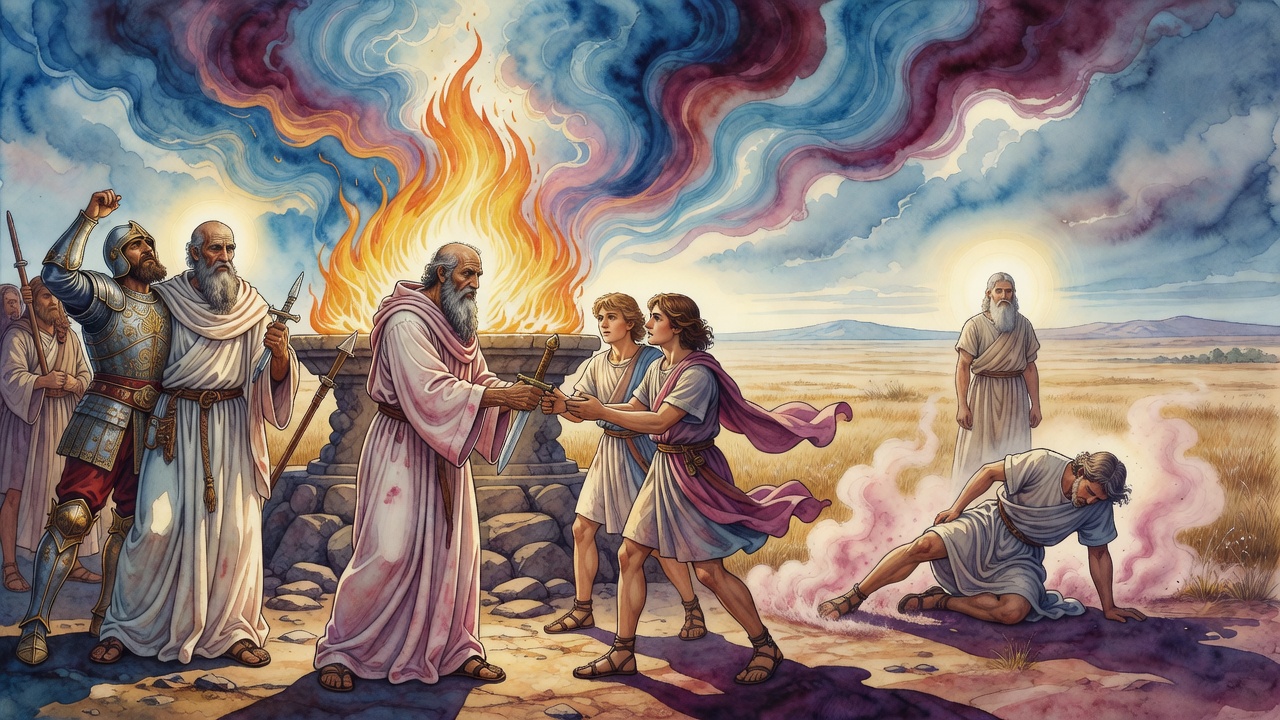
of phylactery boxes were found on the heads of those killed in Beitar. Rabbi Yannai, son of Rabbi Yishmael, says: There were found three large baskets each holding forty se’a of phylactery boxes. And it was taught in a baraita: There were forty large baskets each holding three se’a. The Gemara notes: And these Sages do not disagree: This Sage is referring to phylacteries of the head, whereas this Sage is referring to phylacteries of the arm, for owing to the different manners in which they are fashioned, they are also different in size.
Rabbi Asi says: Four kav of brains from children whose skulls were smashed were found on one stone. Ulla says: Nine kav. Rav Kahana said, and some say that it was Sheila bar Mari who said: What is the verse from which it is derived? “O daughter of Babylon, marked for devastation; happy is he who shall repay you your recompense for what you have done to us.
Happy is he who shall seize and dash your little ones against the rock” (Psalms 137:8–9). § The verse states: “The precious sons of Zion, comparable to fine gold” (Lamentations 4:2). What is the meaning of the expression “comparable to fine gold”? If we say that it means they were covered in fine gold [piza], this is difficult; but didn’t the school of Rabbi Sheila say: Two istira weights of fine gold came down into the world, one in Rome and one in all the rest of the world.
If so, it is certainly impossible to cover the inhabitants of Jerusalem with fine gold, as there is not enough of it in the entire world to do so. Rather, this means that they would be so attractive that they would disgrace fine gold because of their beauty. The Gemara relates that initially the noblemen of Rome would keep an image imprinted on a seal by their beds and engage in sexual intercourse opposite that image, so that they would beget children of similar beauty.
From this point forward, from the time of the Great Revolt, they would bring Jewish children, tie them to the foot of their beds, and engage in sexual intercourse across from them, because they were so handsome. It is related that it once happened that they did this to two children, and one of them said to the other: Where is this affliction written in the Torah? The other said to him: As it is written: “Also every sickness, and every plague, which is not written in the book of this Torah” (Deuteronomy 28:61).
The first one said: How far am I in my studies from this, i.e., how much more would I have had to learn in order to reach this verse? The other said: Had you gone on one and a half columns [pusta], you would have reached this. The first child said to the other: Had I reached this verse, I would not have needed you, as I would have known on my own that the verse was speaking about this. Rav Yehuda says that Shmuel says in the name of Rabban Shimon ben Gamliel: What is the meaning of that which is written: “My eye affects my soul because of all the daughters of my city” (Lamentations 3:51)?
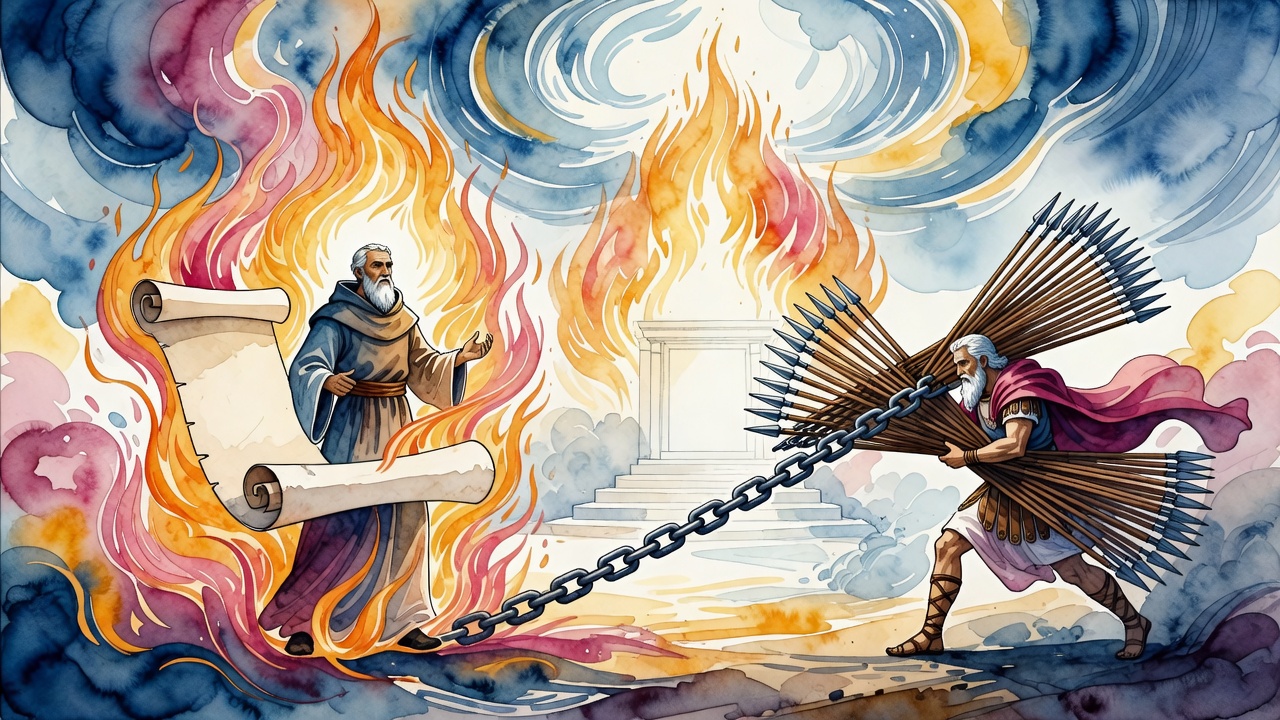
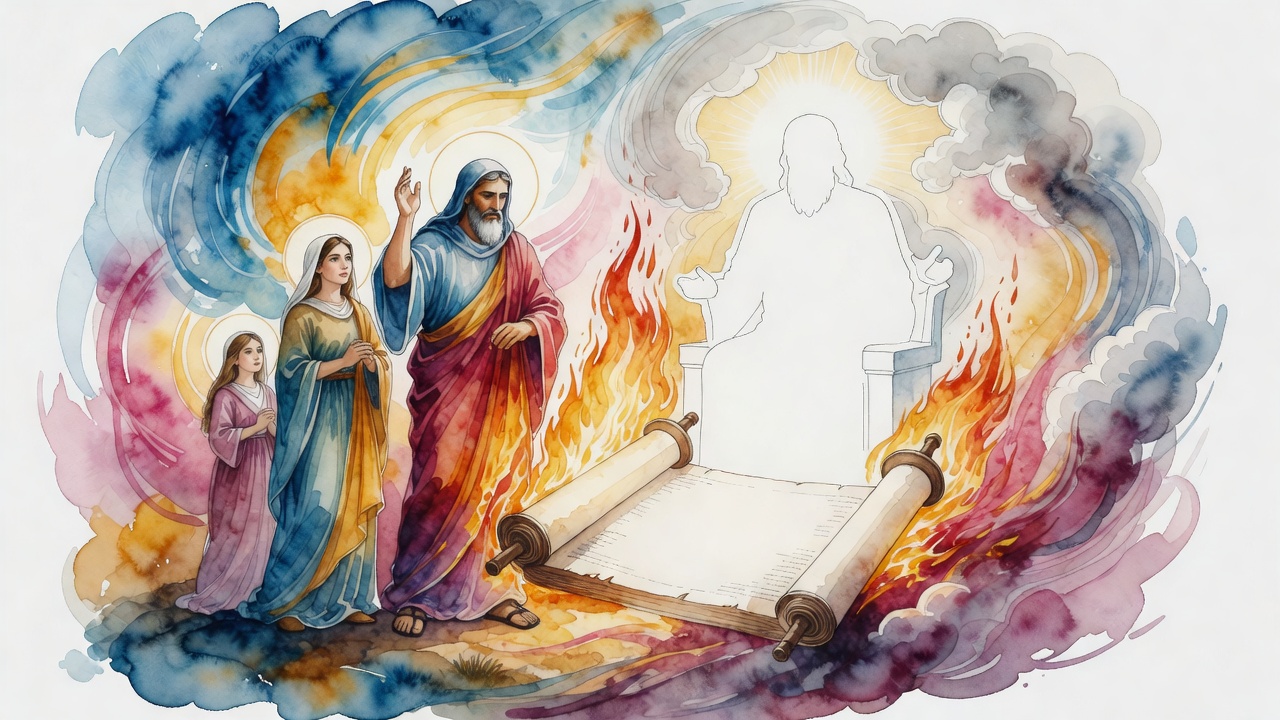
There were four hundred synagogues in the city of Beitar, and in each and every one of them there were four hundred schoolteachers, and each and every one of these teachers had four hundred schoolchildren. And when the enemy entered there, these schoolchildren stabbed them with their pens [beḥotreihen]. And when the enemy prevailed and caught them, they wrapped the children in their scrolls and lit them on fire.
The Sages taught another baraita (Tosefta, Horayot 2:5) relating to the fate of the Jewish children: There was an incident involving Rabbi Yehoshua ben Ḥananya who once went to the great city of Rome, where they said to him: There is a child in prison with beautiful eyes and an attractive appearance, and his curly hair is arranged in locks. Rabbi Yehoshua went and stood by the entrance to the prison.
He said, as if speaking to himself: “Who gave Jacob for a spoil, and Israel to the robbers?” (Isaiah 42:24). That child answered by reciting the continuation of the verse: “Did not the Lord, He against Whom we have sinned, and in Whose ways they would not walk, neither were they obedient to His law?” Rabbi Yehoshua said: I am certain that, if given the opportunity, this child will issue halakhic rulings in Israel, as he is already exceedingly wise.
He said: I take an oath by the Temple service that I will not move from here until I ransom him for whatever sum of money they set for him. They said that he did not move from there until he ransomed him for a great sum of money, and not even a few days had passed when this child then issued halakhic rulings in Israel. And who was this child? This was Rabbi Yishmael ben Elisha.
Rav Yehuda says that Rav says: There was an incident involving the son and the daughter of Rabbi Yishmael ben Elisha the High Priest, who were taken captive and sold into slavery to two different masters. After some time the two masters met in a certain place. This master said: I have a male slave whose beauty is unmatched in all of the world, and that master said: I have a female slave whose beauty is unmatched in all of the world.
The two masters said: Come, let us marry these two slaves to one another and divide the children born to them between us, as they will certainly be very beautiful. They secluded them in a room. This one, the son, sat in one corner, and that one, the daughter, sat in the other corner. He said: I am a priest and the descendant of High Priests.
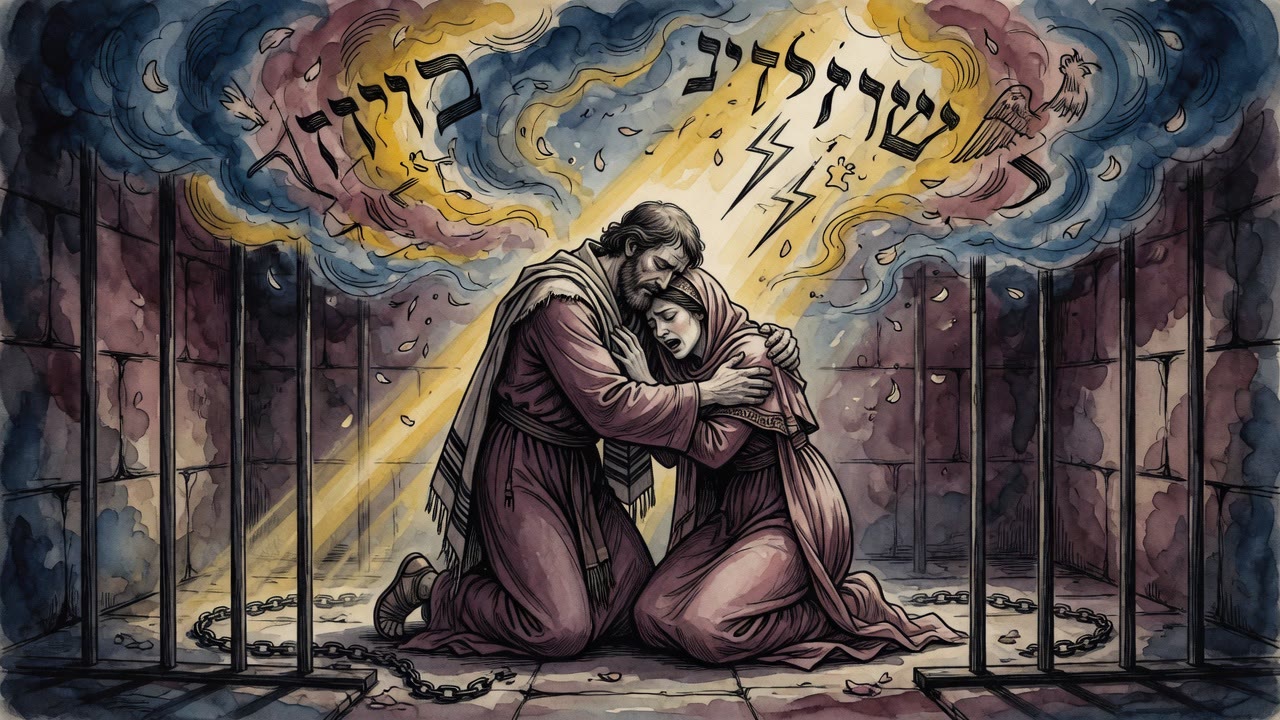
Shall I marry a female slave? And she said: I am the daughter of a priest and the descendant of High Priests. Shall I be married to a male slave? And they wept all through the night.
When dawn arrived they recognized each other and saw that they were brother and sister. They fell on each other and burst into tears until their souls departed due to their great distress. And with regard to them and others like them, Jeremiah lamented: “For these things I weep; my eye, my eye runs down with water” (Lamentations 1:16). Reish Lakish says: There was an incident involving a certain woman named Tzafenat bat Peniel.
And why was she called this? She was called Tzafenat because they would all gaze [tzofin] at her beauty, and she was called bat Peniel because she was the daughter [bat] of the High Priest who served in the innermost sanctum [lifnai velefnim] of the Temple. And it happened that she was taken captive and her captor abused and raped her all night. The next day he dressed her in seven garments and took her out to sell her.
A certain man who was especially ugly came and said to the man who was selling her: Show me her beauty. He said to him: Good-for-nothing, if you wish to buy her then buy her, for there is no beauty like hers in all of the world. The potential buyer said to the seller: Even so, I wish to see for myself. He removed the six outermost garments, and she herself tore the seventh, and rolled in ashes.
She said before God: Master of the Universe, even if You have shown no pity to us, and have allowed us to be disgraced in this way, why have You not shown pity to the sanctity of Your mighty name by which we are called? And with regard to her and others like her, Jeremiah lamented: “O daughter of My people, gird yourself with sackcloth and roll in ashes; make you mourning as for an only son, most bitter lamentation, for the spoiler shall suddenly come upon us” (Jeremiah 6:26).
It is not stated: Upon you, but rather “upon us,” for the spoiler shall come, as it were, both over Me and over you. God Himself shares this pain and His name is also disgraced. § Rav Yehuda says that Rav says: What is the meaning of that which is written: “And they covet fields, and take them by violence; and houses, and take them away; so they oppress a man and his house, even a man and his heritage” (Micah 2:2)?
There was an incident involving a certain man who set his eyes on his master’s wife, and he was a carpenter’s apprentice [shulya]. One time his master needed to borrow some money, and his apprentice said to him: Send your wife to me and I will lend her the money. He sent his wife to him, and the apprentice stayed with her for three days. He then went back to his master before she did, and the master said to him: Where is my wife whom I sent to you?
The apprentice said to him: I sent her back immediately, but I heard that the youth abused and raped her on the way. The master said to his apprentice: What shall I do? The apprentice said to him: If you listen to my advice, divorce her. He said to him: But her marriage contract is large and I do not have the money to pay it.
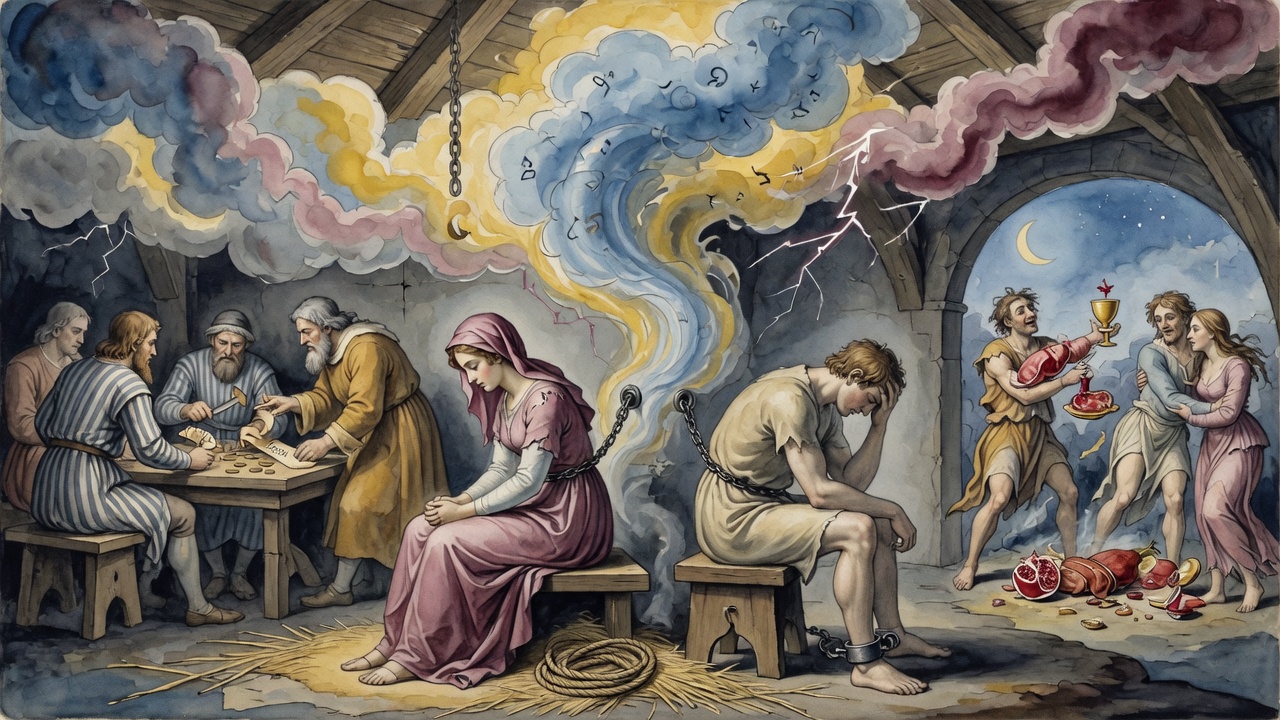
The apprentice said to him: I will lend you the money, and you will give her payment of her marriage contract. The master arose and divorced her, and the apprentice went and married her. When the time came that the debt was due, and he did not have the means with which to repay it, the apprentice said to his master: Come and work off your debt with me. And they, the apprentice and his wife, would sit and eat and drink, while he, the woman’s first husband, would stand over them and serve them their drinks.
And tears would drop from his eyes and fall into their cups, and at that time the Jewish people’s sentence was sealed, for remaining silent in the face of this injustice. And some say that the Jewish people were punished for two wicks in one lamp, a euphemism for the sin of adultery committed by this couple while the master was still married to the woman. § The Gemara returns to the mishna, which states: If one first purchased land from a Sicarius, and afterward returned and purchased the same field from the prior landowner, so that he will be considered the legal owner of the field, his purchase is void.
Rav says: They taught that the purchase is void only in a case where the prior owner says to the buyer when he came to acquire the field from him: Go, take possession of the field and thereby acquire it, as in such a case the prior owner can say that he did not actually mean to sell him the field. But if he sold it to him with a bill of sale, the buyer acquires the field. And Shmuel says: Even if he sold it to him with a bill of sale, the buyer does not acquire it unless the prior owner writes him a guarantee that if the field is repossessed by a creditor of the prior owner, the prior owner, who sold him the field, will compensate him for his loss, as by writing this guarantee he demonstrates that this is a true sale.

 Click for full size