5 min read

God Braided Eve's Hair and Clothed Adam in Skin

Jacob had God's own promise to bring him up out of Egypt. Joseph took the job first. When Moses died on the mountain, nobody was left to take it.

Curated by Arthur · Told by Maggid ·
Table of Contents
  1. The Braid
  2. Needlework After the Fruit
  3. At the Tent Door and Under the Oak
  4. Two Men Snatched the Job
  5. Nobody Left to Take It From Him
God Braided Eve's Hair and Clothed Adam in Skin Click for full size

The Braid

Adam had spent his time naming animals and watching them pair off, and he was still short a rib. What happened to the rib took longer than it needed to.
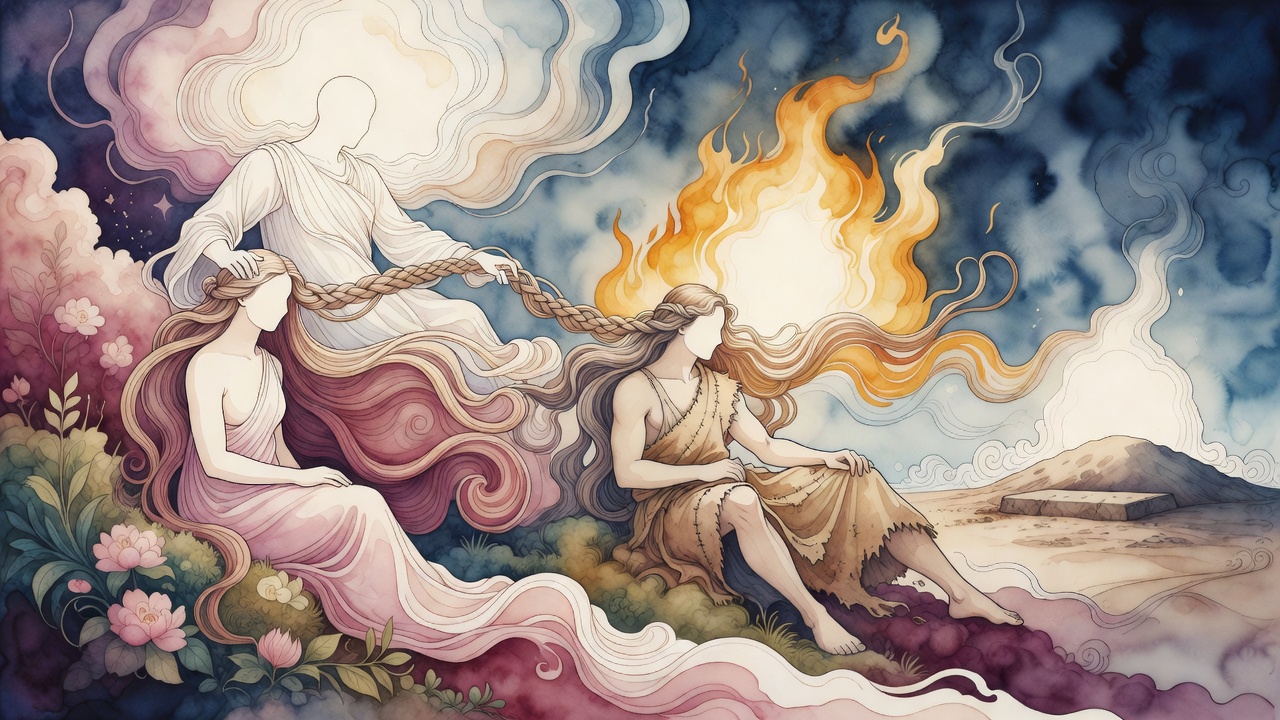
God did not shove the woman out at him from behind a carob tree or a sycamore. He took her somewhere else first. Rabbi Abbahu counted twenty-four kinds of jewelry hung on her before anyone saw her. Rabbi Berekhya said the verb the verse uses, that God built her, is the word they use in the coastal towns for braiding hair. He braided her hair. Then He walked Eve over and gave her to the man, and stood there like a groomsman at a wedding, and blessed the pair of them.

She arrived finished. Nothing about her was left for Adam to fix.

Needlework After the Fruit

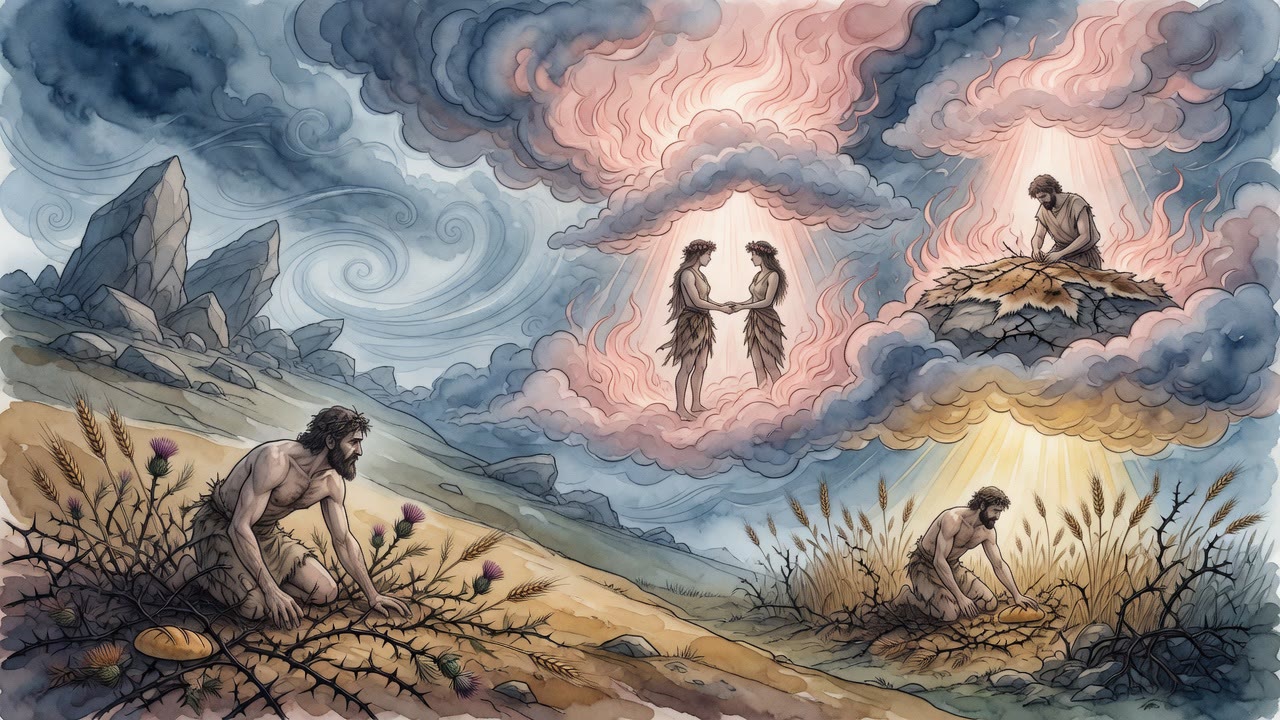
Then the fruit, and the sudden knowledge of what they looked like, and the fig leaves stitched into something that would not hold a day.

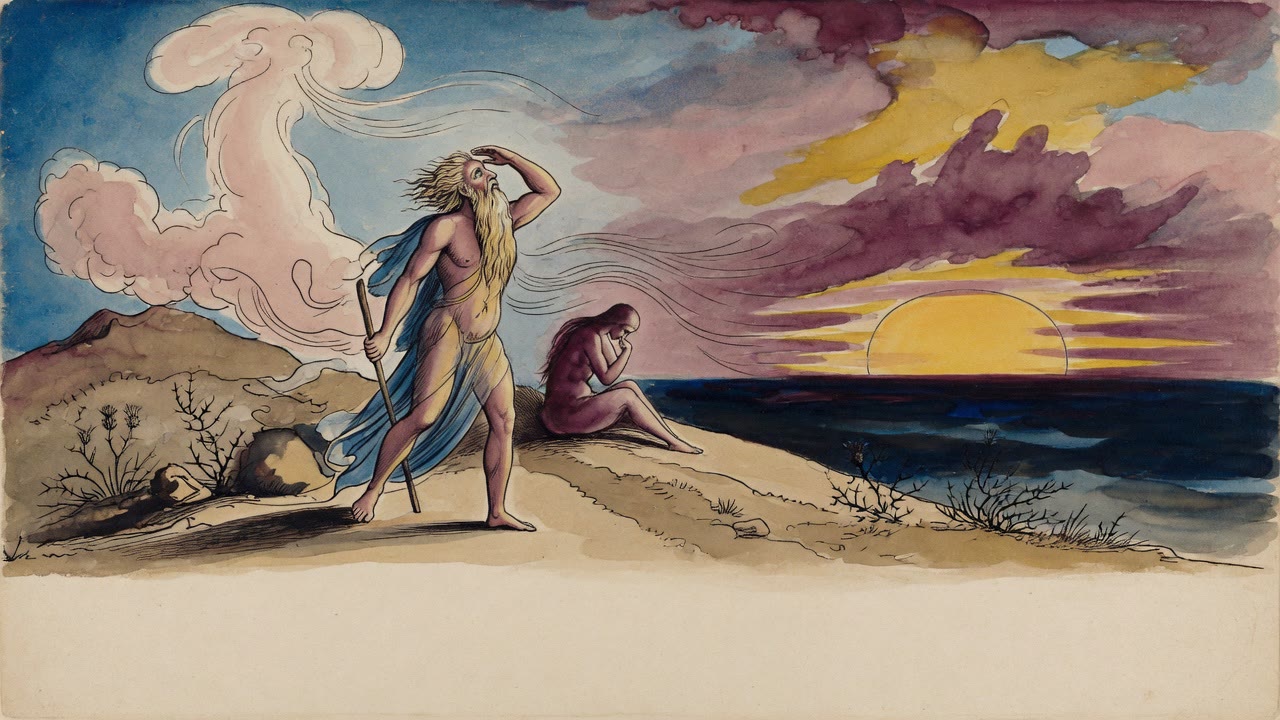
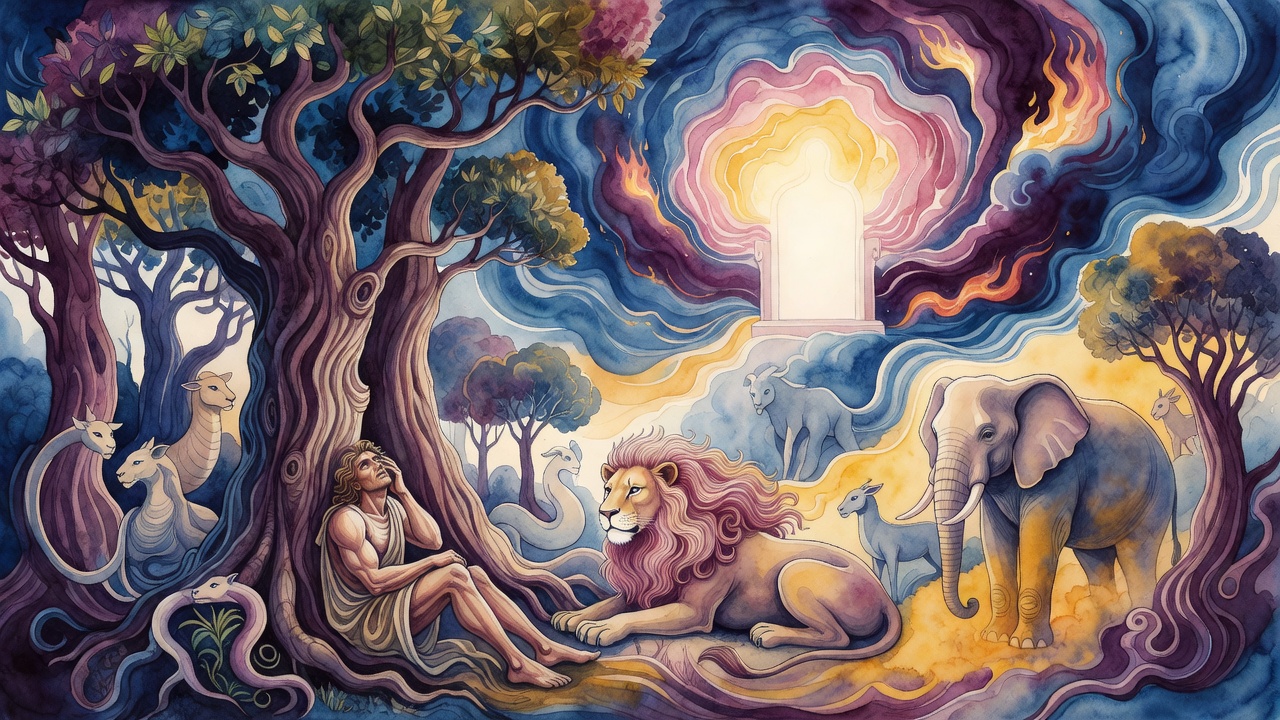
The Lord God made garments of skin for the man and his wife, and clothed them. The same hands. First the braid, then the coat. He dressed them, and then He put them out, and they walked east wearing what He had made for them.

At the Tent Door and Under the Oak

Old Abraham sat in the mouth of his tent in the worst heat of the day with a knife wound three days old, and the Lord appeared to him in the plains of Mamre. That is a sick call. Nothing is asked of Abraham in that verse and nothing is announced. Someone came to sit with a man who was healing.

When Abraham died, God came to Isaac and blessed him, and the blessing was the one you give a mourner.

Jacob got the same visit at the worst possible hour. Deborah, the nurse who had raised his mother, died on the road and was buried under an oak below Bethel. While he was still sitting in that grief, word arrived that Rebecca was dead too. He wept twice in one sitting, and the tree took its name from it, Allon Bakhut, the oak of weepings. Then God appeared to Jacob and blessed him, and Rabbi Shmuel bar Nachman says that blessing was the mourner's blessing as well.

Two Men Snatched the Job

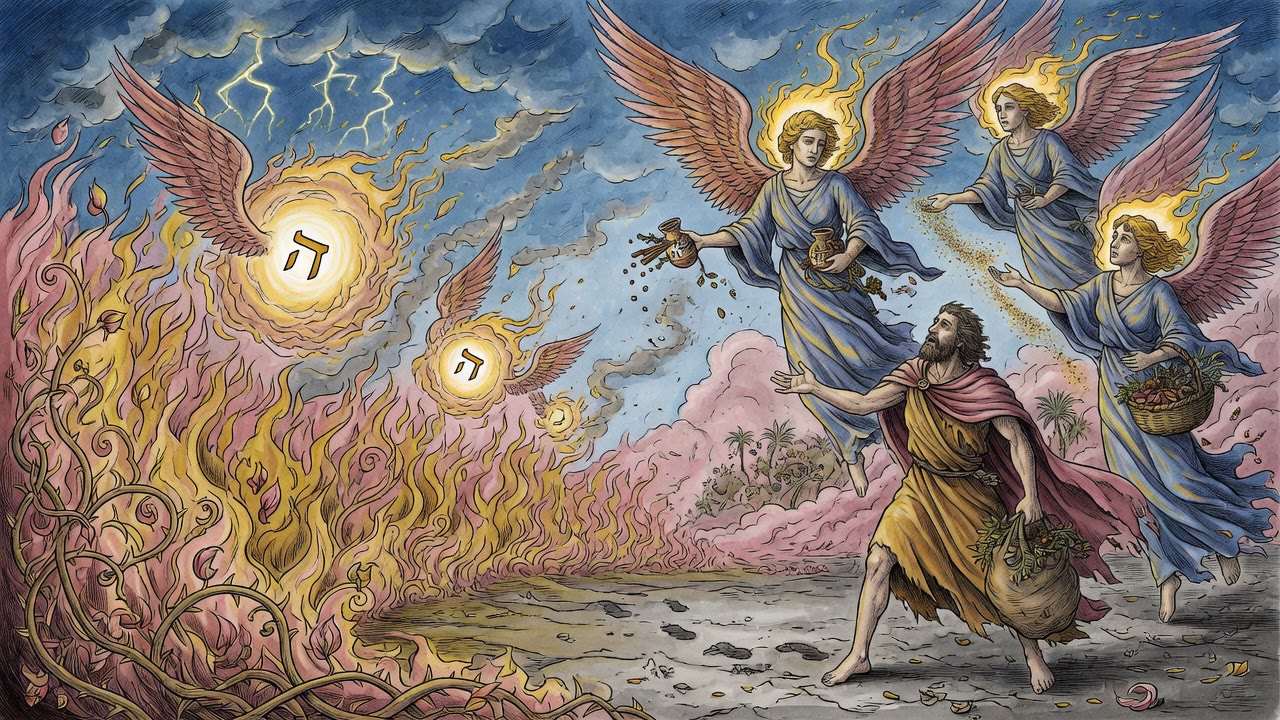
Jacob died in Egypt. By rights the burial belonged to the One who had told him on the way down, "I will go down with you into Egypt, and I will surely bring you up again." That is a promise about a body.

Joseph got there first and took it. Joseph went up to bury his father, the verse says, and he took the funeral out of God's hands.

Then Joseph died in Egypt, and his burial belonged to the tribes. He had made them swear it, standing over them: God will remember you, and you will carry my bones up out of here. That oath sat unclaimed for generations.

Moses got there first. On the way out of Egypt he went and found the coffin and carried Joseph's bones out himself.

Nobody Left to Take It From Him

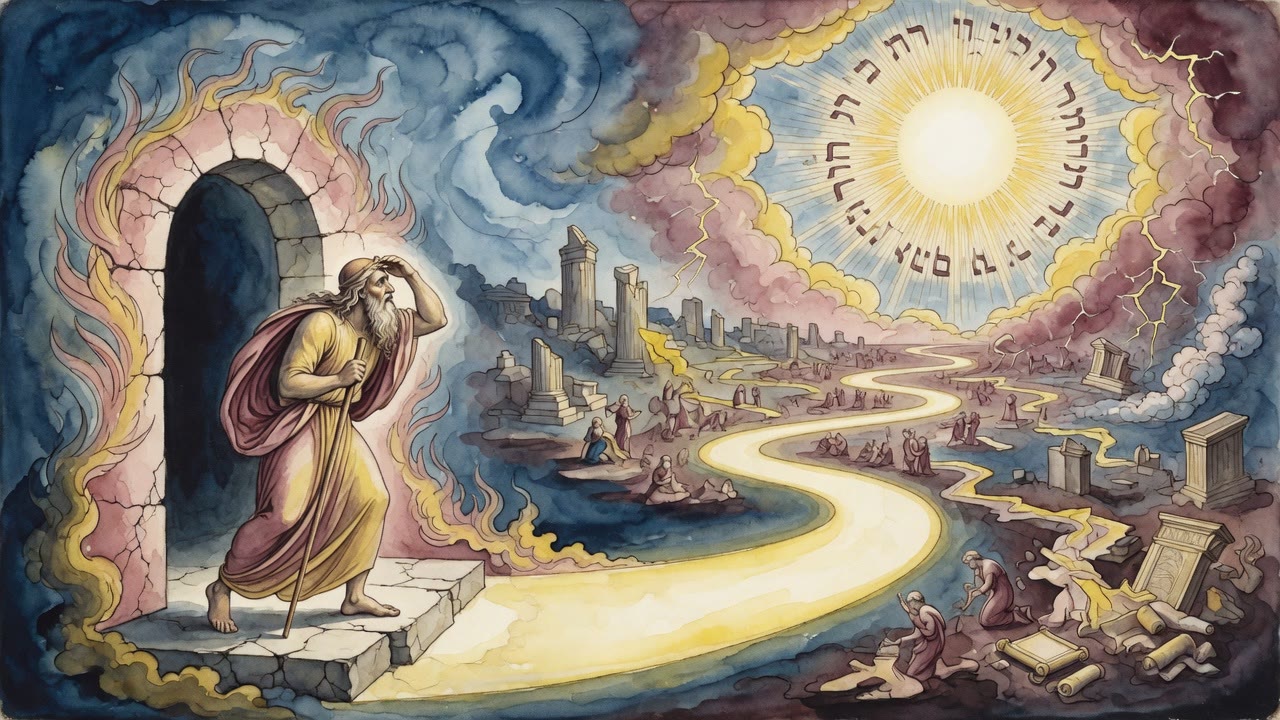
Moses climbed a mountain in Moab, looked at a country he was not going to enter, and died there with no funeral party anywhere in sight. There was no one to snatch it. The whole camp was down on the plains of Moab, and not one of them was on that mountain.

So God buried him in the valley, and no one has ever been able to point at the spot.

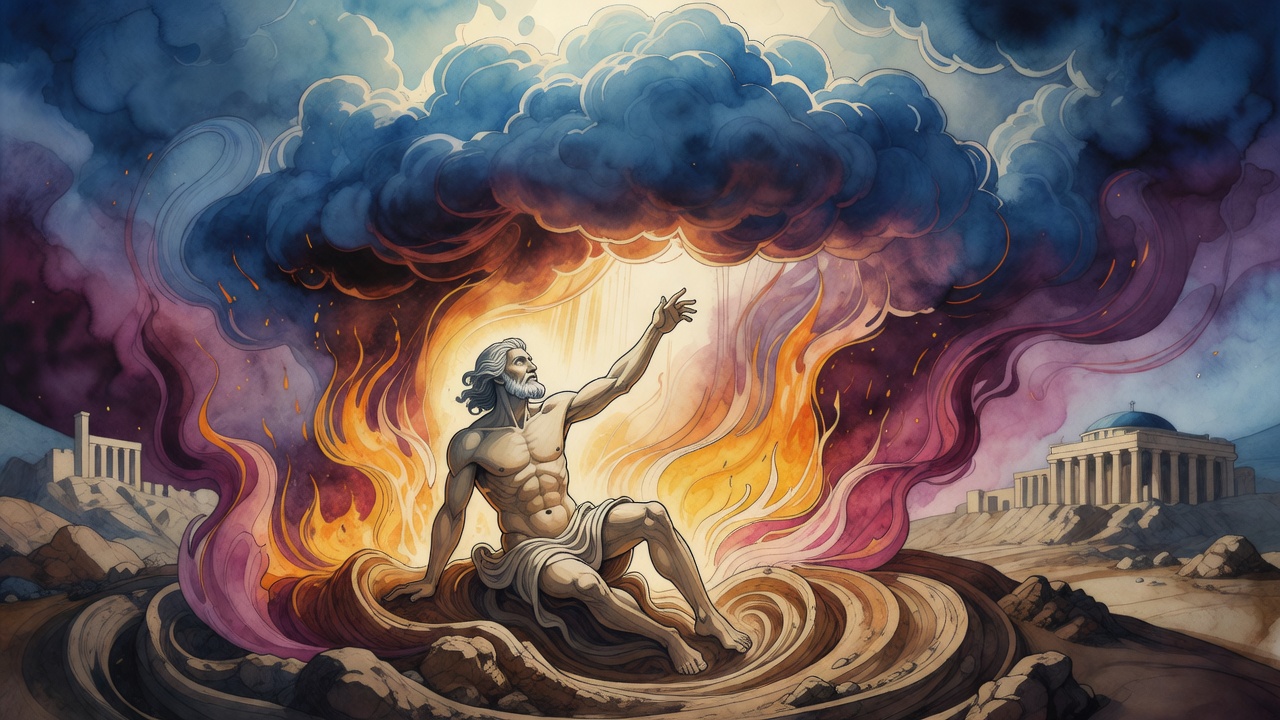
Not everything gets mended that way. Kohelet says that what is bent cannot be made straight, and the sages read it as a list of the world's permanent damage. The waters turned salt during the six days of creation and have stayed salt ever since. God cut eleven days off the lunar year, and after all the cycles and all the leap months the moon has still not caught the sun. The generation of the Flood had their years shortened to a hundred and twenty and never got them back.

The sea is still salt. The moon still runs short. And the man who carried another man's bones out of Egypt lies somewhere in a valley in Moab, buried by the same hands that once braided a woman's hair in a garden and walked her over to a man who had nothing to offer her but a name.


← All myths
From the tradition

Sources

3 sources

The texts behind this telling. Some cards carry a translation of the source; others are our own retelling of it, and each card says which. Every card links out to the original.

Kohelet Rabbah 2:3Kohelet Rabbah

Retold in our words. Read the original at the link below.The Sefaria Midrash Rabbah, 2022 · CC-BY

God is often remembered as this distant, powerful being, but Jewish tradition paints a much more intimate picture. And get this: according to some of our oldest texts, God performs acts of kindness just like we do!

Take the very beginning, for example. (Genesis 3:21) tells us, "The Lord God made for Adam and for his wife garments of skin, and clothed them." A simple act of providing clothing. But the Rabbis saw so much more in it. They saw a model for how we should behave.

The Kohelet Rabbah points out that the Holy One, blessed be He, performs acts of kindness: adorning brides, blessing grooms, visiting the sick, burying the dead, and comforting mourners. Now, that's quite the to-do list! a little. The text uses biblical verses to illustrate each point. "He adorns brides," it says, "as it is written: 'The Lord God built [the rib that he took from the man into a woman, and He brought her to the man]' (Genesis 2:22)." Now, Rabbi Yoḥanan takes this verse and runs with it. He doesn't just say God "built" Eve; he says God adorned her and then showed her to Adam!

Rabbi Abbahu adds a beautiful detail. He asks, "Perhaps you will say that He showed her to him from behind a carob tree or from behind a sycamore tree?" As if God just shoved her out there! No, no, says Rabbi Abbahu. God adorned her with twenty-four types of jewelry before presenting her to Adam. The Midrash (rabbinic interpretive commentary) HaMevo’ar further emphasizes that even though Eve was created from Adam's rib and naturally should have been right next to him, God took the time to bring her to another location to adorn her and then brought her to Adam.

And it doesn't stop there. God "blesses grooms," as (Genesis 1:28) states, "God blessed them." Simple and direct. God "visits the ill," as we see when "The Lord appeared to him in the plains of Mamre" (Genesis 18:1), visiting Abraham after his circumcision. God "buries the dead," as it is written, "He buried him in the valley" (Deuteronomy 34:6), referring to Moses' burial. And God "comforts the mourners," as evidenced by the story in (Genesis 35:8): "He called its name Alon Bakhut" – the Oak of Weeping.

Rabbi Shmuel bar Naḥman explains that Alon Bakhut marks the place where Jacob mourned. While he was mourning Deborah, his nursemaid, he received news of his mother Rebecca’s death, and he wept two weepings – bekhiyot – hence the name. The very next verse tells us, “And God appeared to Jacob again… and blessed him” (Genesis 35:9). The Rabbis interpret this as God blessing Jacob with the blessing of mourners, offering solace in his grief.

What's the takeaway here? It's not just that God can do all these things. It's that God does do them. And by doing them, God sets an example for us. We are meant to emulate God, to walk in God's ways, to be partners in the ongoing work of creation.

So, the next time you're performing a simple act of kindness – visiting a friend who's sick, offering condolences to someone who's grieving, helping a bride prepare for her big day – remember that you're not just being a good person. You're imitating God. You're participating in a divine tradition that stretches back to the very beginning of time. And that, my friends, is a powerful thought.

Full source
Kohelet Rabbah 2:2Kohelet Rabbah

Retold in our words. Read the original at the link below.The Sefaria Midrash Rabbah, 2022 · CC-BY

It's woven into the very fabric of our faith.

Rabbi Berekhya, in Kohelet Rabbah, makes a powerful point: acts of kindness appear at the beginning, middle, and end of the Torah.! From the creation story to the very end of Moses' life, this theme echoes.

Let’s rewind to the beginning. Remember the creation of Eve? (Genesis 2:22) tells us, "The Lord God built the rib...into a woman, and He brought her to the man." But Rabbi Berekhya sees more than just construction here. He suggests that God Himself braided Eve's hair and brought her to Adam, acting as the ultimate groomsman. Can you imagine? The Kadosh Baruch Hu, the Holy One Blessed be He, personally involved in this act of loving creation. In some coastal towns, they even used the word "building" to refer to braiding hair, adding another layer to this beautiful image.

Then we leap to the middle of the Torah. (Genesis 18:1) recounts how "The Lord appeared to him in the plains of Mamre." But why? The Midrash (rabbinic interpretive commentary) explains that God was visiting Abraham, who was recovering from his circumcision. It's like a divine get-well visit! And it doesn't stop there. (Genesis 25:11) states, "God blessed Isaac his son." This, we learn, is the blessing of the mourners. God came to console Isaac after the death of Abraham. These aren't just fleeting appearances; they're deliberate acts of compassion and empathy.

Finally, at the very end of the Torah, we read in (Deuteronomy 34:6), "He buried him in the valley." This refers to God burying Moses. The ultimate act of kindness, performed by the Divine for His most faithful servant.

Rabbi Hanin takes this idea even further. He asks, what is the true measure of recompense for acts of kindness? He illustrates with a series of events. Jacob dies in Egypt. Who should rightfully care for him? God Himself, who promised, "I will descend with you to Egypt, and I will also take you up" (Genesis 46:4). But Joseph steps in and "snatches the mitzvah," the good deed, for himself, as it says, "Joseph ascended to bury his father" (Genesis 50:7).

Then, Joseph dies in Egypt. Whose responsibility is it to care for him? Surely the tribes, to whom he swore an oath: "God will surely remember you, and you shall carry up my bones from here" (Genesis 50:25). But Moses comes along and "snatches the mitzvah," as (Exodus 13:19) tells us, "Moses took Joseph’s bones."

And finally, Moses dies. And God, in His glory, repays him, as it is stated: “He buried him in the valley” (Deuteronomy 34:6).

What's the takeaway here? That even when others step up to do good, the opportunity for kindness is always there. And that ultimately, acts of kindness, especially those done for others, are noticed and valued by something much greater than ourselves. It’s a cycle, a continuous flow of compassion that connects us to each other and to the Divine.

So, the next time you have the chance to offer a helping hand, a listening ear, or a comforting word, remember this story. Remember the beginning, middle, and end of the Torah. Remember that even the smallest act of kindness can ripple outwards, creating a world of difference. And maybe, just maybe, it's those acts of kindness that truly define us.

Full source
Kohelet Rabbah 1:15Kohelet Rabbah

Retold in our words. Read the original at the link below.The Sefaria Midrash Rabbah, 2022 · CC-BY

Our tradition wrestles with this very feeling. The book of Kohelet, or Ecclesiastes, famously explores the futility of life, that "all is vanity." But within the rabbinic expansions on Kohelet, called Kohelet Rabbah, we find not just resignation, but also a deep exploration of what can and cannot be fixed in this world.

One passage in Kohelet Rabbah 1:15 grabs your attention right away: "That which is warped cannot be straightened, and that which is lacking cannot be counted. But what does it really mean? The rabbis, masters of interpretation, offer multiple layers of understanding.

First, the text connects this idea to the very creation of the world. The waters, it says, were corrupted – nitavetu – during those initial six days and became salty. Now, millennia later, they haven’t been fully repaired. Similarly, the lunar year is shorter than the solar year. God "subtracted" eleven days, and no matter how many years, cycles, or intercalations pass, the two will never align perfectly. A cosmic imbalance, forever present.

Then, the text takes a more moralistic turn, linking the idea to the generation of the Flood. Their actions, once corrupted – again, nitavetu – could not be repaired. God even shortened their lifespans, limiting them to 120 years, as stated in (Genesis 6:3). This loss, this diminishment, could not be restored.

But it's not all doom and gloom! The rabbis then pivot, offering a glimmer of hope. "If a person does not divert himself – me’avet – from Torah study, he can repair himself." Even if he sins! And "if a person does not detract from his Torah study, he can still be counted" – among the Torah scholars, no less. But the flip side is equally true: neglect Torah, and you may find yourself beyond repair, beyond being counted.

The text illustrates this with a story of Rabbi Yehuda and Rabbi Elazar, who studied together. Rabbi Yehuda got married, and his seven-day wedding feast put him behind Rabbi Elazar. Even after years of trying, he couldn't catch up. "That which is lacking cannot be counted," the text reminds us.

The passage continues with further examples. If you miss the time for reciting the Shema, the central Jewish prayer, or neglect your prayers, the verse applies: "That which is warped cannot be straightened."

The text then brings in Rabbi Shimon ben Menasya, who offers a particularly powerful interpretation. What does it mean, "that which is warped cannot be straightened?" He says it's about a person who engages in relations with a forbidden relative and has a child, a mamzer. A mamzer faces restrictions on who they can marry within the Jewish community. This, Rabbi Shimon argues, is a wrong that is incredibly difficult, if not impossible, to right. He contrasts this with a thief or robber, who can make amends by returning what they stole.

Rabbi Shimon emphasizes that the term "warped" applies to someone who was originally straight but became corrupted. And who is that? A Torah scholar who forsakes the Torah. Rabbi Shimon ben Yoḥai adds that we should examine the daily offerings, meaning those who should be bringing light to the world through Torah learning, but have strayed. Yehuda ben Lakish, quoting Rabban Shimon ben Gamliel, compares such a person to "a bird straying from its nest," as (Proverbs 27:8) puts it.

Finally, the text touches on a fascinating, almost mythical idea. The thought of creating one thousand generations entered God's mind, but many were "obliterated." The reason? "He commanded the matter for one thousand generations," as (Psalm 105:8) states – referring to the Torah, according to one interpretation, and circumcision, according to another. Before giving these commandments, God considered a thousand generations, but only created a fraction of that number.

Rabbi Yaakov bar Aḥa, in the name of Rabbi Yoḥanan, concludes with a practical lesson: never abstain from going to the study hall. He tells a story about a complex question regarding ritual purity and a boat in the Jordan River. For a long time, no one in Yavne could answer it. Finally, Rabbi Ḥanina ben Akavya provided the explanation.

So, what are we left with? A interplay of ideas about what can and cannot be fixed. The passage acknowledges the existence of inherent imbalances in the world, the consequences of past actions, and the importance of staying connected to Torah learning. But it also suggests that while some things may be beyond our power to repair, we still have agency. We can choose to engage with Torah, to strive for righteousness, and to contribute to a world that, despite its imperfections, still holds the potential for meaning and connection. Perhaps the key is to focus on what can be straightened, what can be counted, and to find solace and purpose in the ongoing journey of repair – the tikkun (spiritual repair) olam – that is at the heart of Jewish tradition.

Full source