God Lifted Abram Above the Sky and Told Him to Step on His Star
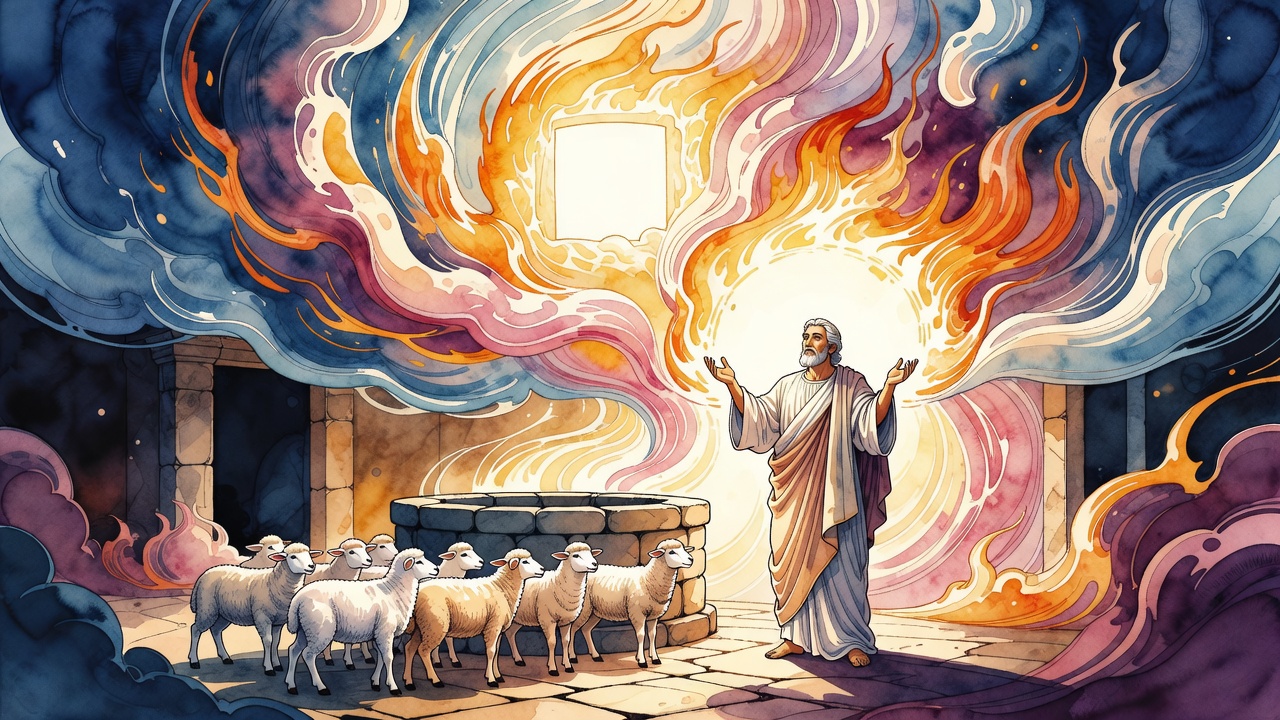
Abram knew how to read a horoscope, and his own said he would never father a son. God agreed with the reading, then took him up above the sky.
Table of Contents
 Click for full size
Ten Years in Canaan and Still No Child
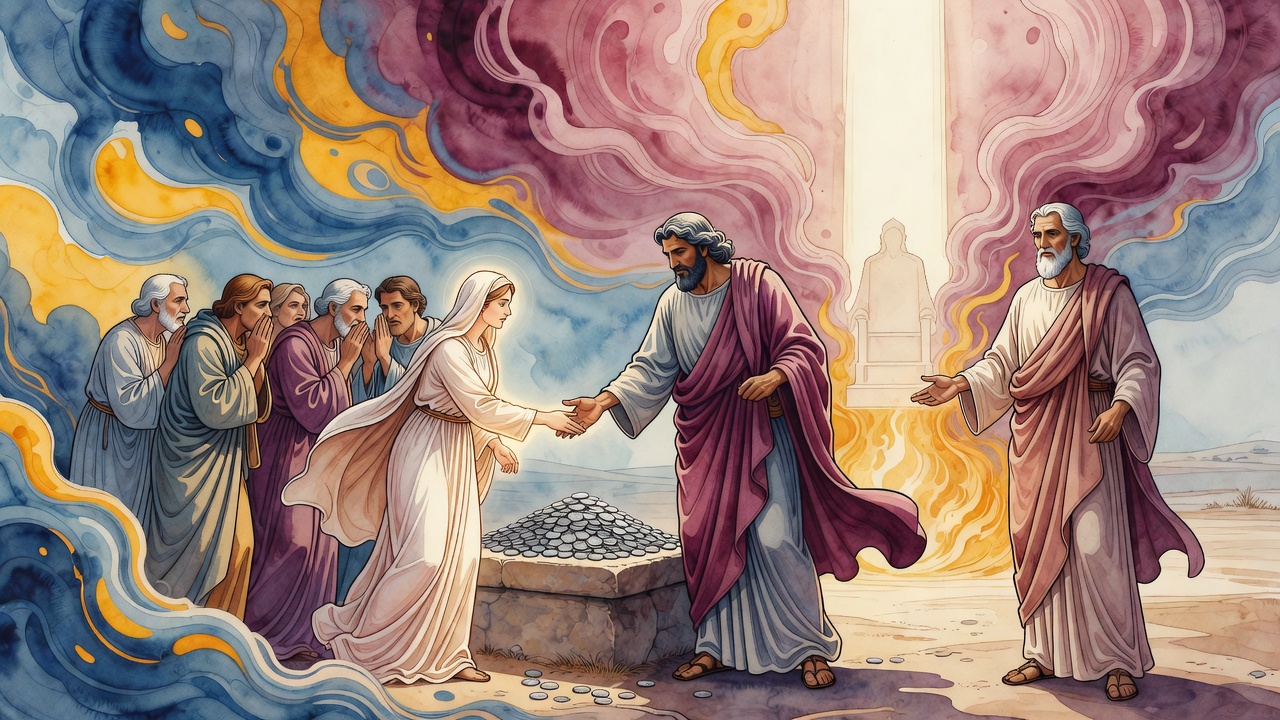
Sarai did the arithmetic before she said anything. Ten years in the land, and the count only starts once you are in the land, so the years in Haran did not help her case and she knew it.
Then she went and found the Egyptian girl and worked on her with words, and the words were flattering and terrible at once. Think how fortunate you are. You are going to be joined to this holy body.
She gave Hagar to her husband as a wife, not as a concubine, and she gave her to him and to nobody else, because the point of the arrangement was that the house would be built and there was no other way left to build it.
He Read His Own Sky and Found It Shut
Abram came to God with the complaint of a man who has checked his own figures twice.
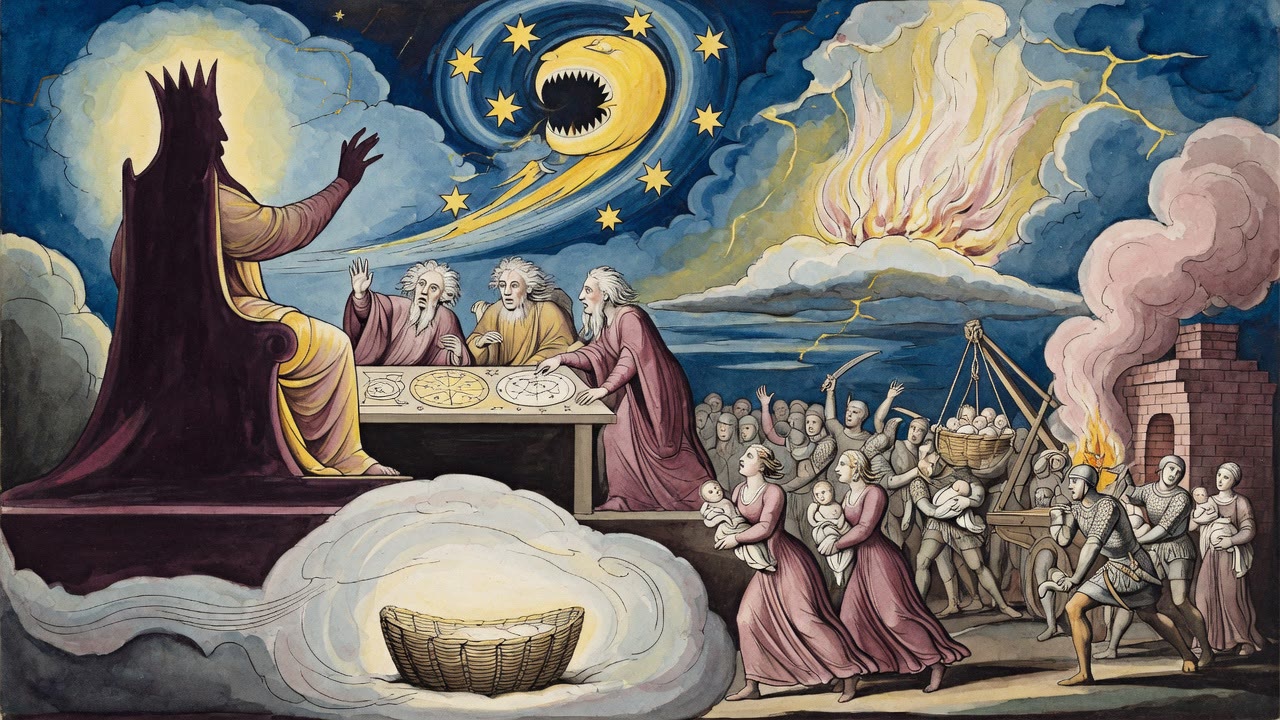
"My constellation presses me," he said. "It stands over me and it says the same thing every night. Abram, you will not father a child. The one who inherits me is going to be a servant of my household."
He was not guessing. He knew how to read that sky. He had been reading it his whole life, and every reading came back the same, and the sentence in it was not cruel, only fixed.
God did not argue with the reading.
"It is exactly as you say."
God Took Him Up Above the Dome
Then he brought him outside.
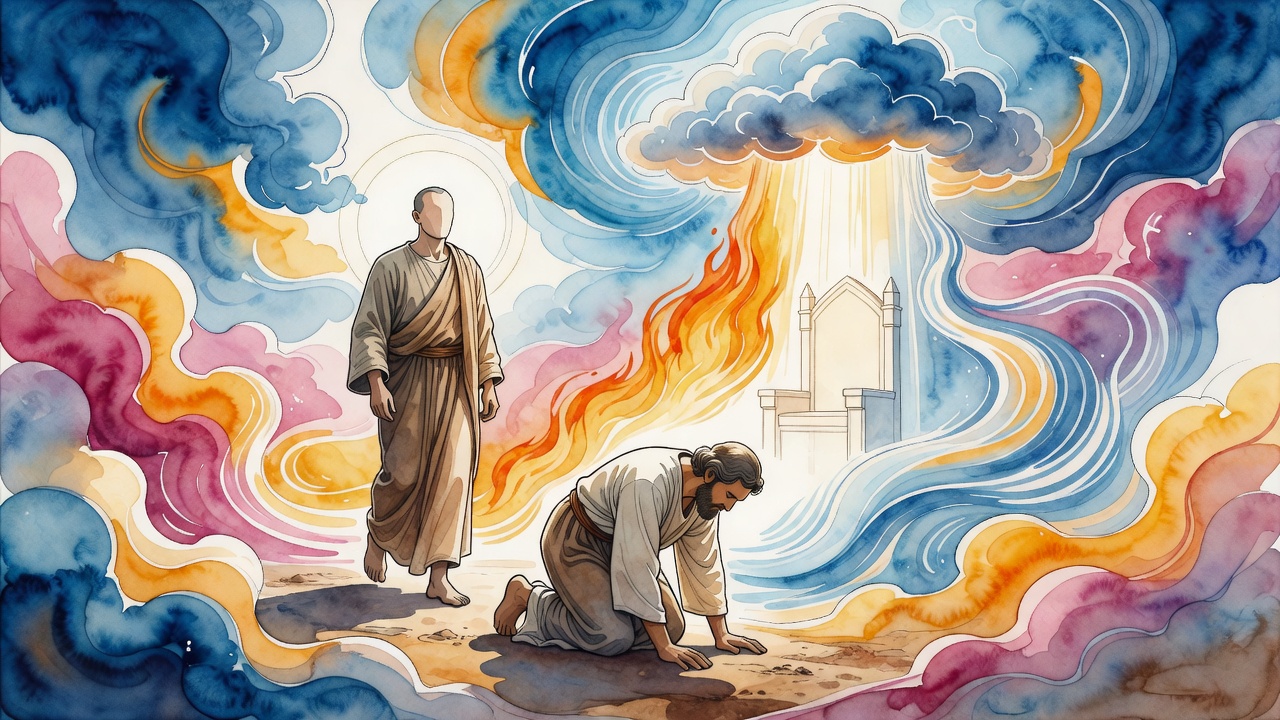
Outside of what. The man was already standing under the open night. He was taken outside the world, up past the streets of heaven, and set down on top of the dome of the firmament, on the far side of the place where the constellations run.
"Look toward the heavens."
The word is not lift up your eyes. The word is look down. Everywhere that word is used, somebody is looking at a thing below him.
So Abram stood above the sky he had been reading from underneath his whole life and looked down at his own star.
"Get out of your astrology," God said. "You are a prophet. You are not an astrologer."
Years later a foreign king would wake in the middle of the night in Gerar with God in his bedroom telling him to give the woman back, because the husband is a prophet and the prophet will pray for you and you will live. That was the proof. The stars answer to the man who prays, and the man who prays had spent decades taking orders from the stars.
Rav Levi put it the way a man puts things when his feet hurt. While the sandal is on your foot, tread on the thorn. Whoever stands underneath them is afraid of them. You are standing on top of them. Step on it.
"Now, who is greater," God said. "You, or the thing you are standing on?"
The Old Sentence Could Not Reach the New Names
"Are you telling me I am going to have a child?"
"Leave your measure. Abram will not father a child. Abraham will. Sarai will not bear. Sarah will."
The verdict in the sky was never overturned. It was left standing exactly where it was, correct in every particular, and pronounced over two people who no longer existed. A letter went into each name, and the couple the constellation had been ruling for a century were not in the room anymore.
Generations afterward, when Israel started leaning toward the same charts and diviners the nations used, God shut it down and gave a reason that was really a family story. Your father Abraham wanted to go that way too. I would not let him.
God Told It Slightly Wrong to Keep the Peace
Sarah heard the promise from behind the tent flap and laughed inside herself, and what she said inside herself was not flattering to her husband. After I am worn out, am I going to have pleasure? And my lord is old.
God came and reported the laugh to Abraham. "Why did Sarah laugh, saying, am I really going to bear a child, when I have grown old?"
She had said her husband was old. God said she had said she was old.
Bar Kappara looked at that swap for a long time and said what he saw. Peace between a husband and a wife is worth so much that Scripture itself will tell it slightly wrong in order to keep it.
The Blacksmith and the Two Chains
Is anything too hard for the Lord?
Rabbi Yudan ben Rabbi Simon answered with a man walking into a forge holding two broken chains. He puts them on the anvil. Can you fix these for me?
The blacksmith looks at him. I made them. I made them out of nothing but ore and fire in the first place. Am I not able to mend them?
I made those two bodies, God said. Am I not able to bring them back to the days when they were young?
At the set time she bore a son, and they called him Yitzchak, which is laughter, after the noise she had made behind the tent flap when she heard it was coming.
← All myths