God Ransomed Israel With Egypt and Reversed the Law of Redemption
Six hundred thousand people walked out of Egypt and not one of them said the word first. A Midianite priest arrived weeks later and said it.
Table of Contents
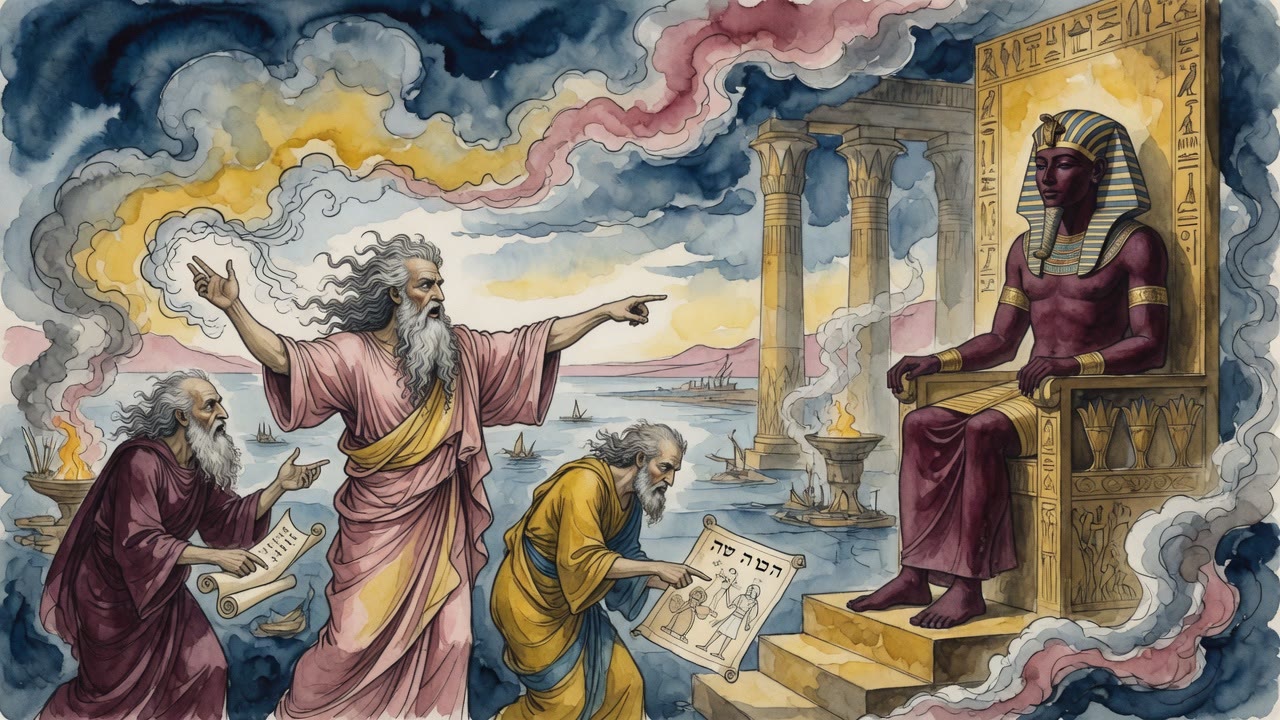
Moses was standing in front of Pharaoh before the sun was properly up, giving him a full day of warning.
 Click for full size
Tomorrow, at this hour. Get your servants in off the fields. Get your animals under a roof. Whatever is still standing out there in the morning is going to die.
The Storehouses Opened
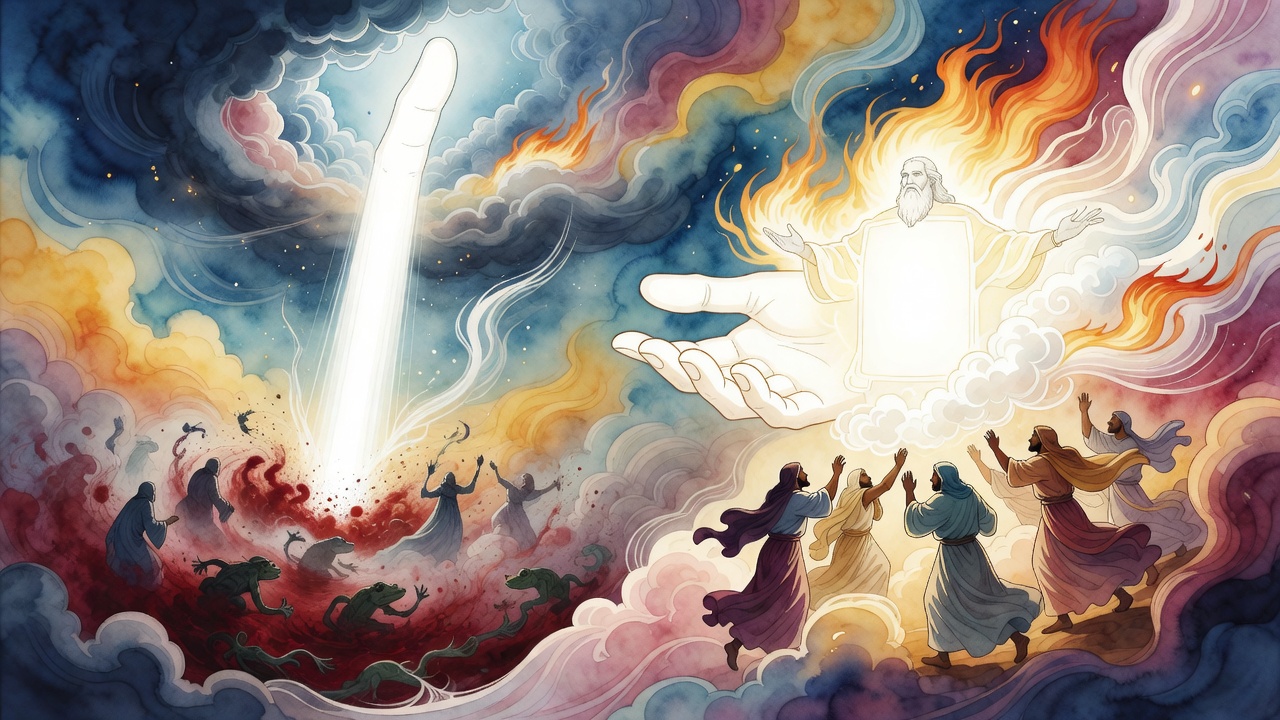
The hail did not gather in the sky. It came down out of the storehouses of heaven, rooms stacked to the ceiling and locked, whose doors swing open when the Judge of the earth names a date out loud.
Some of Pharaoh's own officials believed him. They ran their households indoors and drove their cattle in behind them. The rest left everything where it was and went to bed.
In the morning the doors opened. Hail came down with fire running along the ground inside it, fire alive in the middle of ice, which nobody in Egypt had ever seen and nobody could counterfeit. It broke the flax and it broke the barley and it flattened every man and beast left standing in the open. Goshen, where Israel lived, took nothing.
Pharaoh sent for Moses that afternoon and said he had sinned. When the hail stopped he changed his mind again.
The Law He Broke for Them
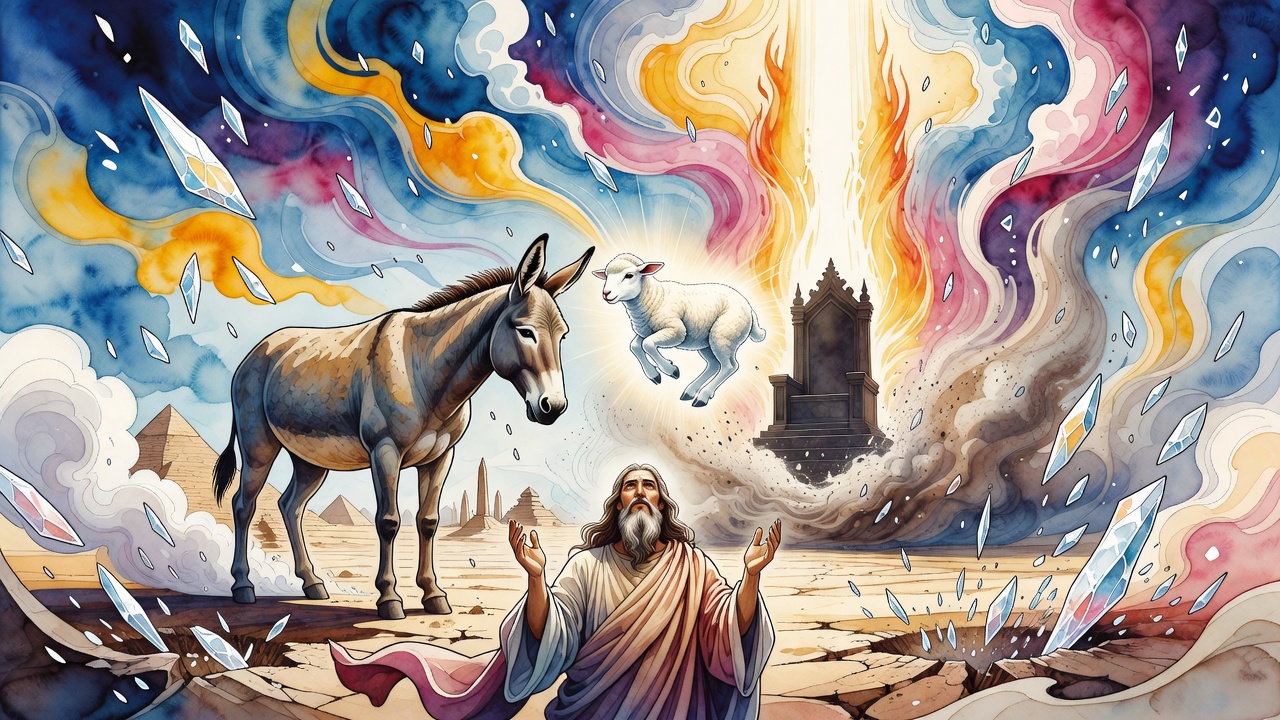
There is a law in the Torah about a firstborn donkey. The donkey cannot be brought to the altar, so a lamb is handed over in its place, and the donkey is bought back with the lamb's life. Lower bought back by higher. God wrote it Himself.
"For love of Israel," He said, "I turned the order of the world around."
He did not redeem the donkey with the lamb that night. He reversed it and ransomed the lamb with the donkey. A prophet had already set Egypt down as a nation of donkey flesh. Another prophet had already called Israel a sheep scattered across the map. So the ransom ran backward: the donkey-nation paid, and the sheep walked.
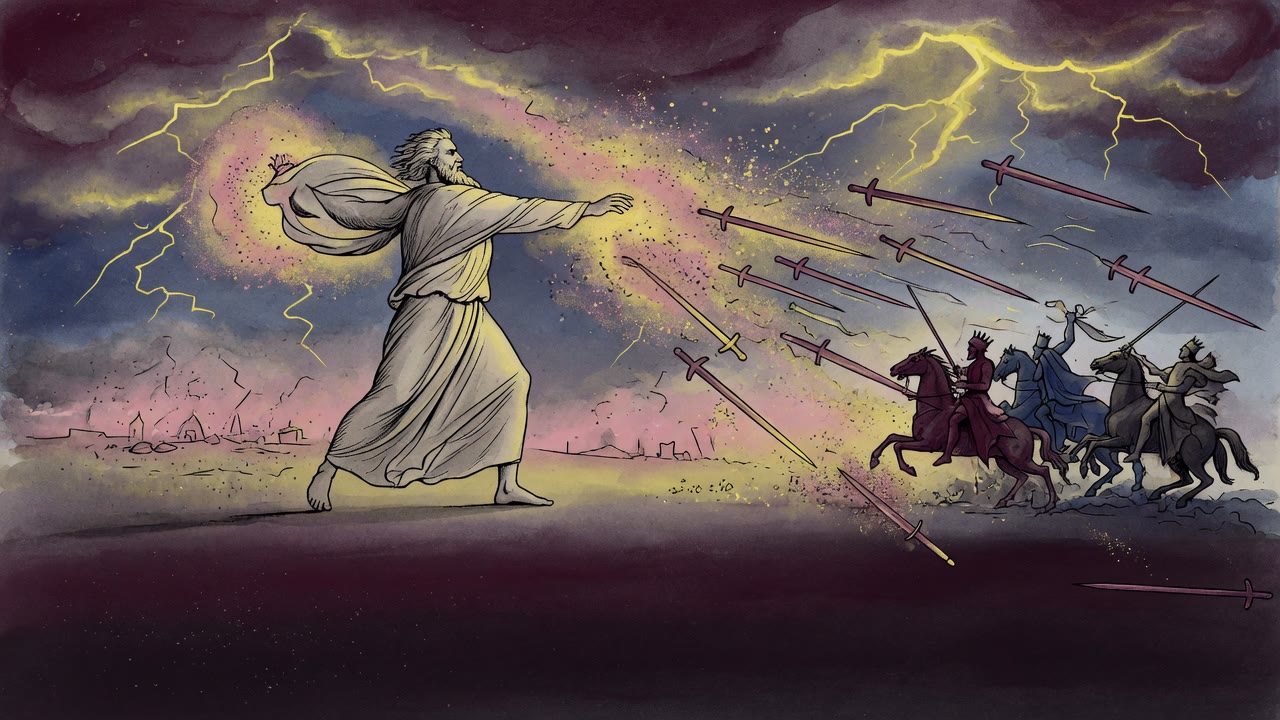
At midnight the firstborn of Egypt died in their beds, from the son on the throne down to the son in the dungeon, and the cattle in the stalls with them. Pharaoh got up in the dark. So did his household and every household behind it, and there was not one house in the country without a dead body in it.
The same night God took the firstborn of Israel for Himself.
Count Every One of Them
Later, in the wilderness, the order came to count them. Every firstborn male in Israel, by name, one at a time.
The redemption had a price and the price had been paid on somebody else's street. The counting is what keeps that from softening into a warm feeling about deliverance. These are the ones bought on the night the other houses were screaming. Write their names down.
Jethro Took a Blade to His Own Flesh
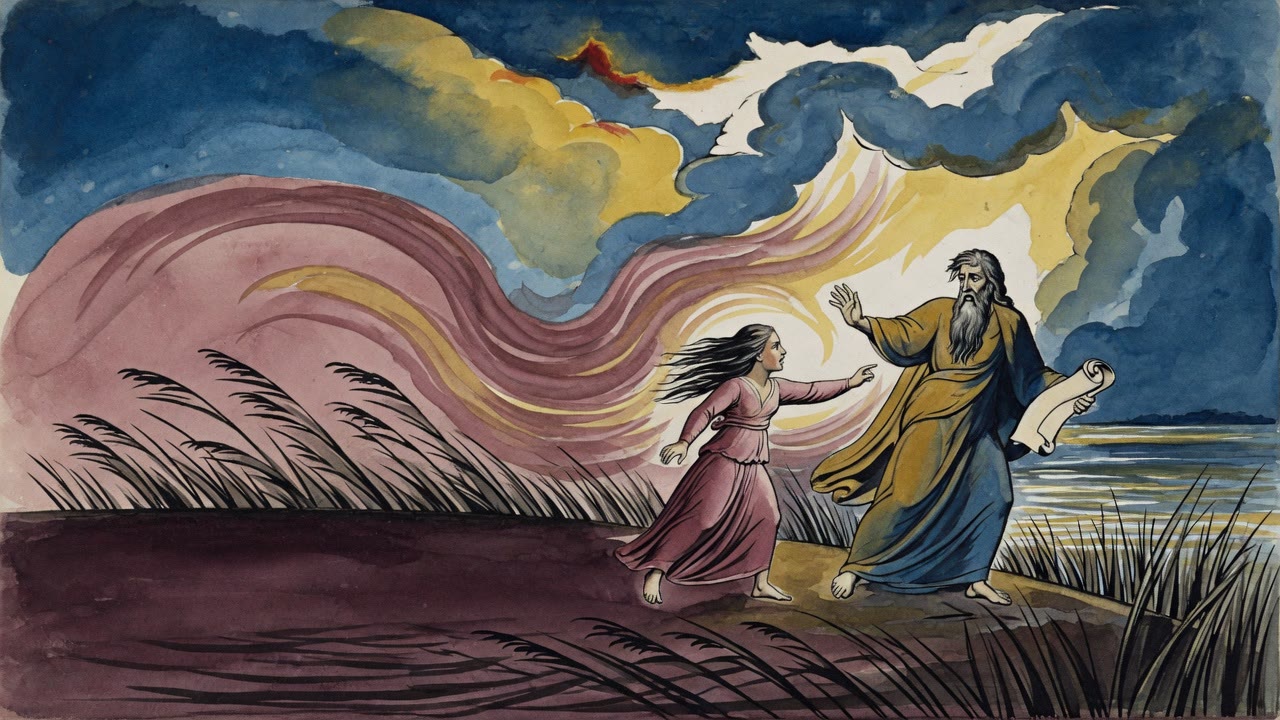
Jethro came out to the camp at the mountain with Moses' wife and Moses' two sons, because word had reached Midian about everything that had happened. Moses went out to meet him, bowed to him, kissed him, and took him into the tent, and told him all of it, start to finish.
Then something happened to Jethro in that tent, and two teachers read it two different ways.
Rav said he took a sharp blade and passed it over his own flesh, an old priest of Midian circumcising himself in a tent at the edge of the wilderness.
Shmuel said the word means his skin went up in ridges all over him. Not awe. Grief. Egypt had gone down, and Egypt had been his world too, and the body of a man who leaves one people for another does not always agree with him.
Rav Papa drew the rule out of it that people still repeat: do not insult a foreigner in front of a convert. Not one generation later. Not ten.
The First Man to Say Blessed
Then Jethro said it.
"Blessed be the LORD, who pulled you out of the hand of Egypt and out of the hand of Pharaoh."
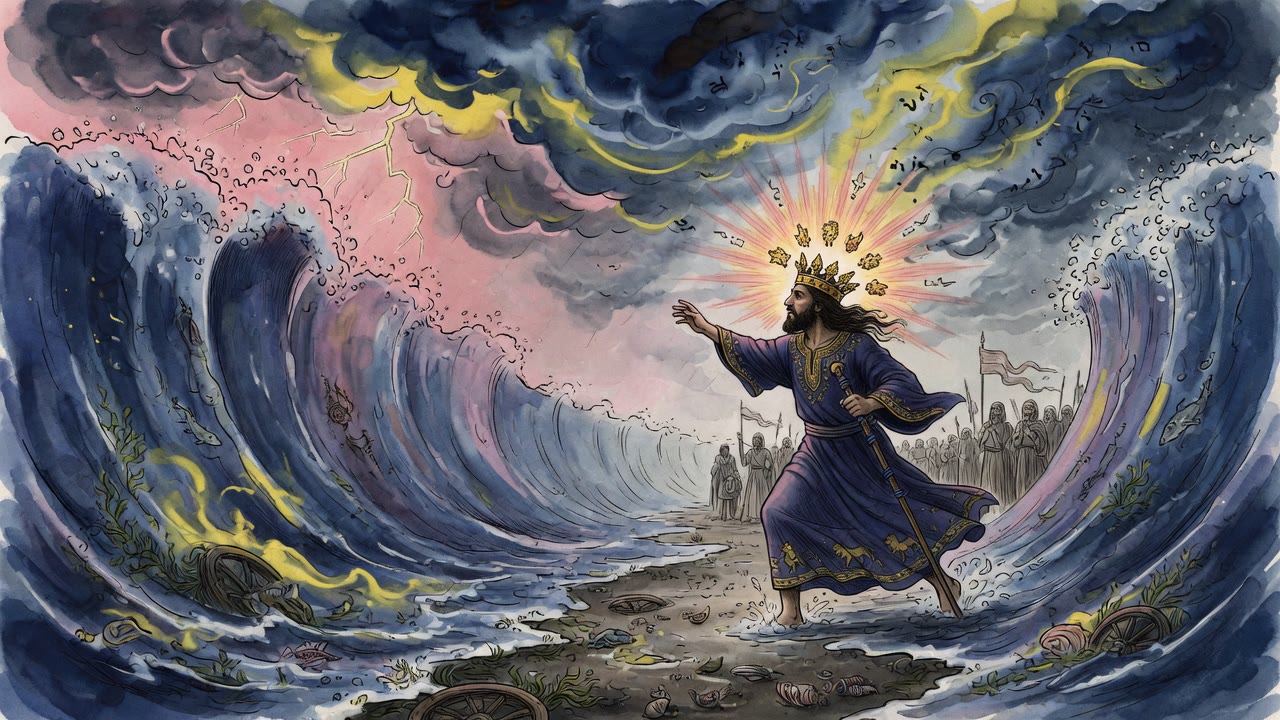
Rabbi Pappus would not let that pass quietly. A disgrace, he called it, to Moses and to six hundred thousand people. They had walked between two walls of water and eaten bread off the ground and none of them had opened with that word. A Midianite priest, three months late to the story, said it first.
Everything after that hangs off Jethro's mouth. Whoever comes to a place where a miracle was done for Israel says: blessed is the One who did a miracle for our fathers in this place. A public rescue puts the blessing on everyone. A private rescue puts it on the one who was saved and lets everyone else alone. The sages went on arguing where the line falls, over Daniel and his three friends walking out of the furnace, over a whole tribe saved at once, and never over whether the blessing is owed.
They read his sentence closely too. Out of the hand of Pharaoh, he said, and the teachers heard something under it: not the hand of a man at all, but the hand of the great river serpent a prophet had named him. Out from under the hand of Egypt meant out from under the weight of Egypt, which is a different thing and takes longer.
Jethro brought a burnt offering, and Aaron and all the elders of Israel came and ate bread with the Midianite in front of God.
← All myths