God Reduced His Host When the Temple Fell
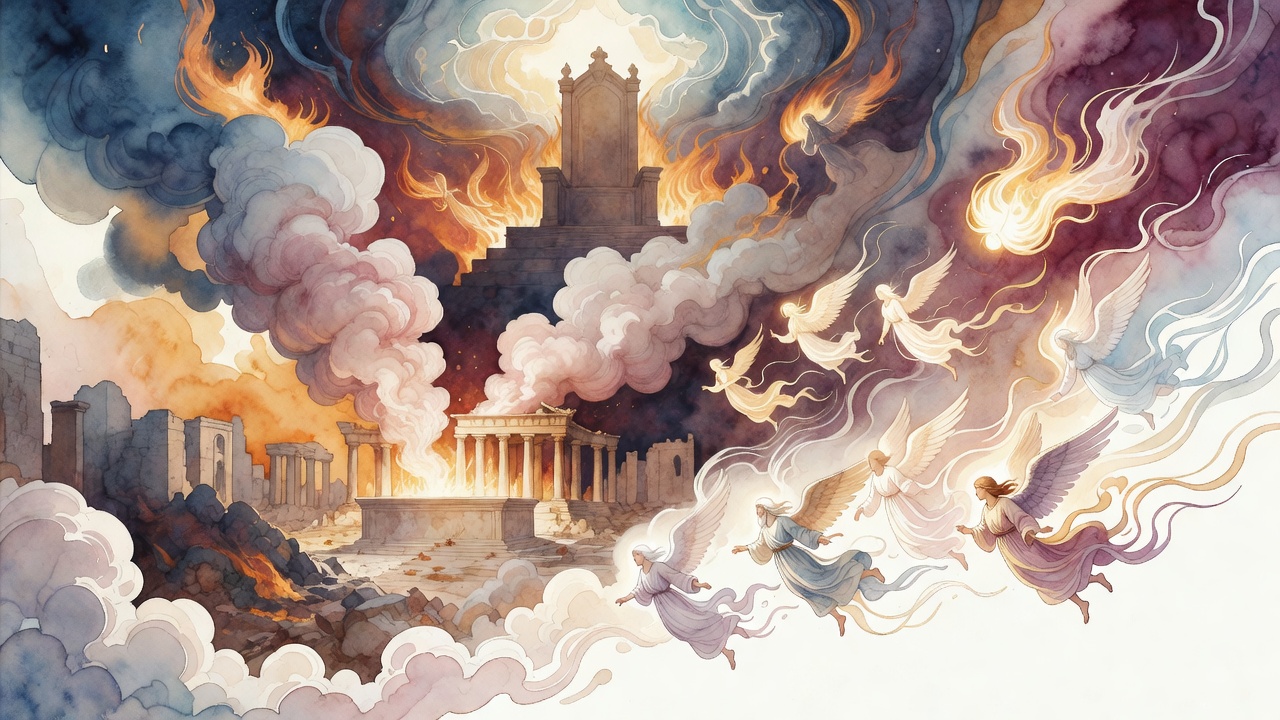
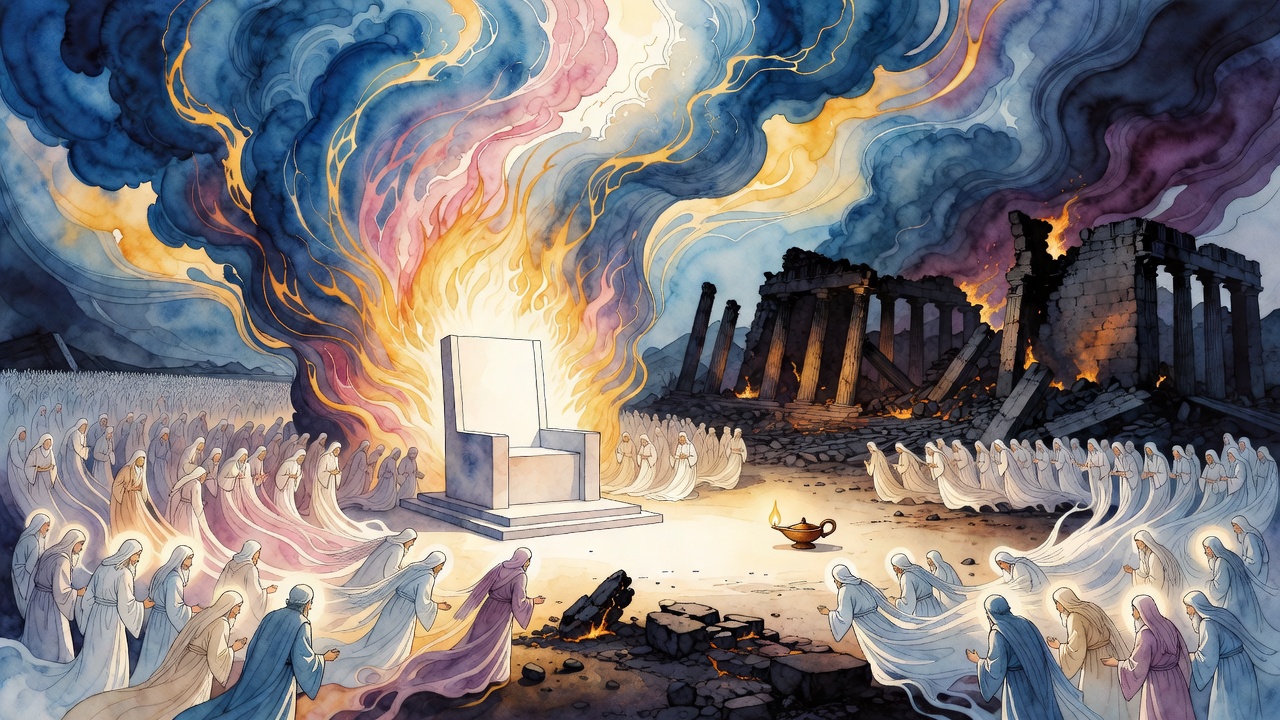
Smoke hung over the stones. A seraph folded his fire smaller and took a place farther from the Throne. Below, the last priests had already fallen.
Table of Contents
Smoke still hung over the stones when the singing thinned. On the Mount the last priests had already fallen or fled. Below them, in the ranks no eye of flesh could count, a silence started that was not peace.
 Click for full size
God looked at the empty courts where the daily offerings had once pressed upward like heat. He would not take full glory from a city that had no house left for Him.
Ranks Stepped Back From the Throne
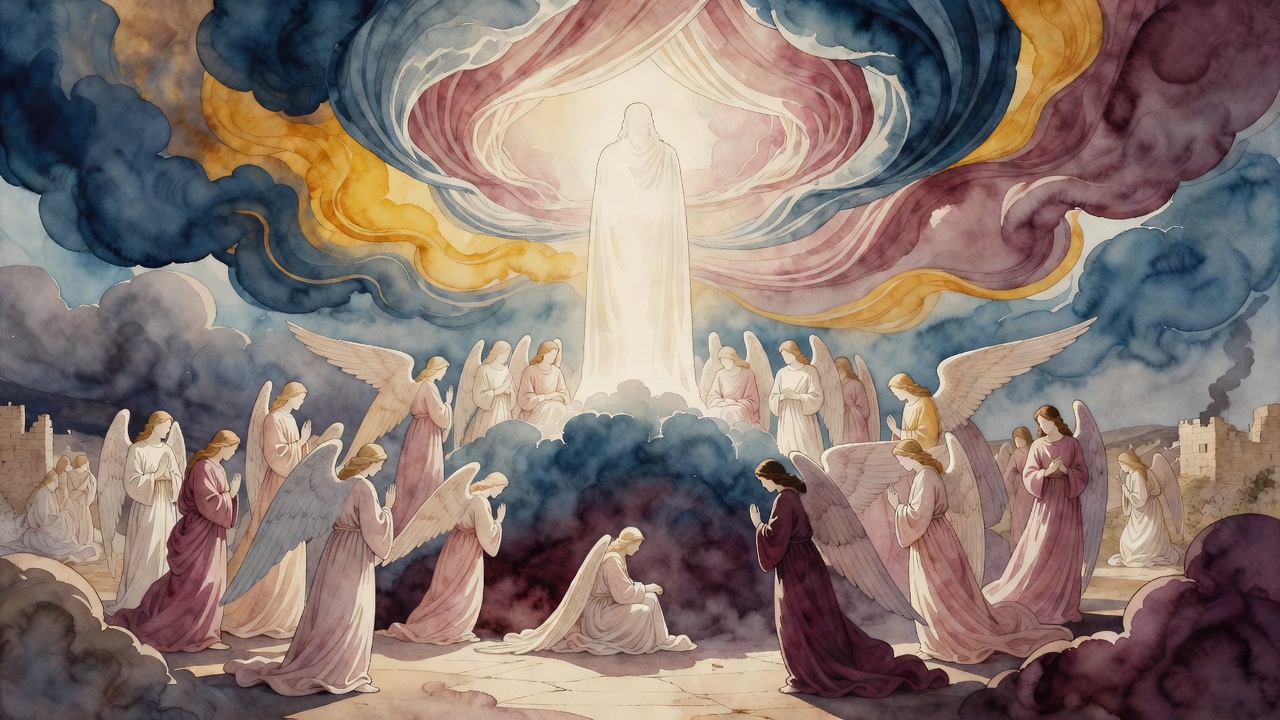
Before the Temple fell, the lauding of the Holy One rose complete. Angels packed the courts. Praise had a roof and a schedule and blood and oil to carry it. When the building went down, God reduced His entourage. He said it was not right for His lauding to ascend as it used to ascend.
Whole companies stepped back. A seraph that had stood near the Throne for ages of men felt the space open beside him. No command named his dismissal in words a mortal could steal. The absence itself was the order. He folded his fire smaller and took a place farther out, where the heat of the Throne thinned to a hard light. Below, ash settled on the place the altar had been. Another rank turned, walked the long rim of the court, and did not come back to the inner ring.
Job had asked whether there was a number to His troops (Job 25:3). Daniel had seen thousands upon thousands serving (Daniel 7:10). Psalms spoke of myriads and companies at Sinai (Psalms 68:18). One troop could hold thousands upon thousands, and still there was no final tally of troops. After the fire, the question that mattered was not the total. It was which ranks still packed the hall when the house on earth was gone.
Asaf's Toes Over the Lip
On earth another man nearly fell for a different unfairness. Asaf watched the wicked walk healthy as the Hall of the Temple once stood, thick oak cornices and all, while the pure of heart carried plagues and chains the scoffers never tasted. "But I, my feet came close to veering," he said (Psalms 73:2).
Jealousy of the revelers almost sent him to Gehinnom (the realm of judgment after death) with the arrogant cynics who bring woe to the world. Rav and Levi argued which Asaf spoke. One said the son of Korah, who would have sat with his father in the pit. One said another Asaf, who would have sat with the wicked. Either way, the toes were already over the lip.
He watched what looked like peace on the wicked and nearly named it peace. Then the word broke open under him. What he had called peace was delayed retribution, a debt stacking in silence, not rest. "There is no peace for the wicked" (Isaiah 57:21). The health he envied was the Hall's own strength, forty cubits high, twenty wide, oak piled on oak, standing until the day of judgment tore it.
The House That Had to Be Torn Open
Moses had warned Israel that when they entered Canaan, a mark of leprosy could strike a house in the land of their possession (Leviticus 14:34). A family would empty the rooms. Neighbors would see what had been hoarded or hidden. The walls would open under a priest's order.
The nations' wicked might ride healthy until judgment day. Israel would meet earthly blows sooner, so the accounting would not wait forever. Asaf's near-fall and that torn house share one pressure. Apparent ease is not the ledger. Apparent ruin is not always the last line.
God is good to Israel, to those pure of heart (Psalms 73:1). Not to every mouth that says His name. To the heart that keeps the paths of Torah paved inside it. Asaf's feet stayed on the path after the almost-fall. The wicked still looked healthy for a season. The house-plague still waited in the land for those who would need the walls torn open.
Oil Still Asked From Below
Job also asked, "On whom will His light not rise?" (Job 25:3). Who among all who enter the world can claim the sun failed him by day or the moon by night? God lights the upper realms and the lower ones and every face that opens under sky. After the Host thinned, that light did not go out. The dismissal was not a blackout. It was a refusal to stage full pageantry over a broken house.
Still He desired Israel's light. The command to the children of Israel to bring pure olive oil for the lamp (Leviticus 24:2) did not die with the stone walls. Oil pressed from fruit. Flame in a vessel. A small human light answering the sun that needs no answer. God who reduced the choir still asked for that thin line of fire from below.
Weather for a Sleeper's Table
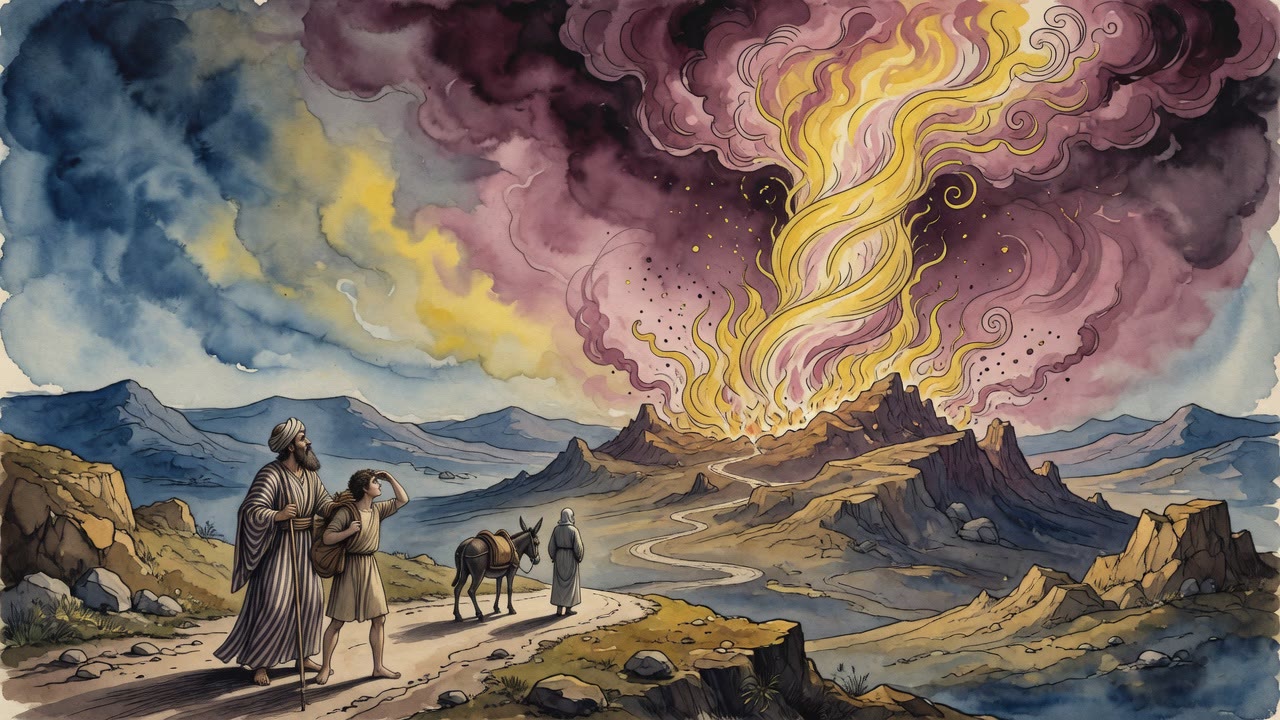
Five hundred years of wind and cloud and rain can run while a sleeper never wakes, and a table still sets itself before him. That care does not cancel the grief of a missing Temple. It runs under it. Abraham once lifted his eyes and saw the place from afar (Genesis 22:4). Distance and nearness keep trading places. God draws the far near. He also stands at a distance when the near house is ash.
Years later, exiles still faced east and spoke as if a building stood. Angels who had stepped back did not always step forward again on human calendars. A child in Babylon pressed his father about evening prayers that felt thinner than the stories of Solomon's courts. The father had no number for troops. He had a smudge of oil on a lamp wick and a memory of smoke that was not the smoke of offerings. He lit the lamp anyway.
Somewhere above the thin flame, a reduced court still heard it, and did not call the hearing complete, and did not refuse it either. After the Temple fell, heaven itself ran with a smaller retinue, and the world learned praise without the old roof.
← All myths