Heaven Cuts Its Angel Troops When the Temple Falls
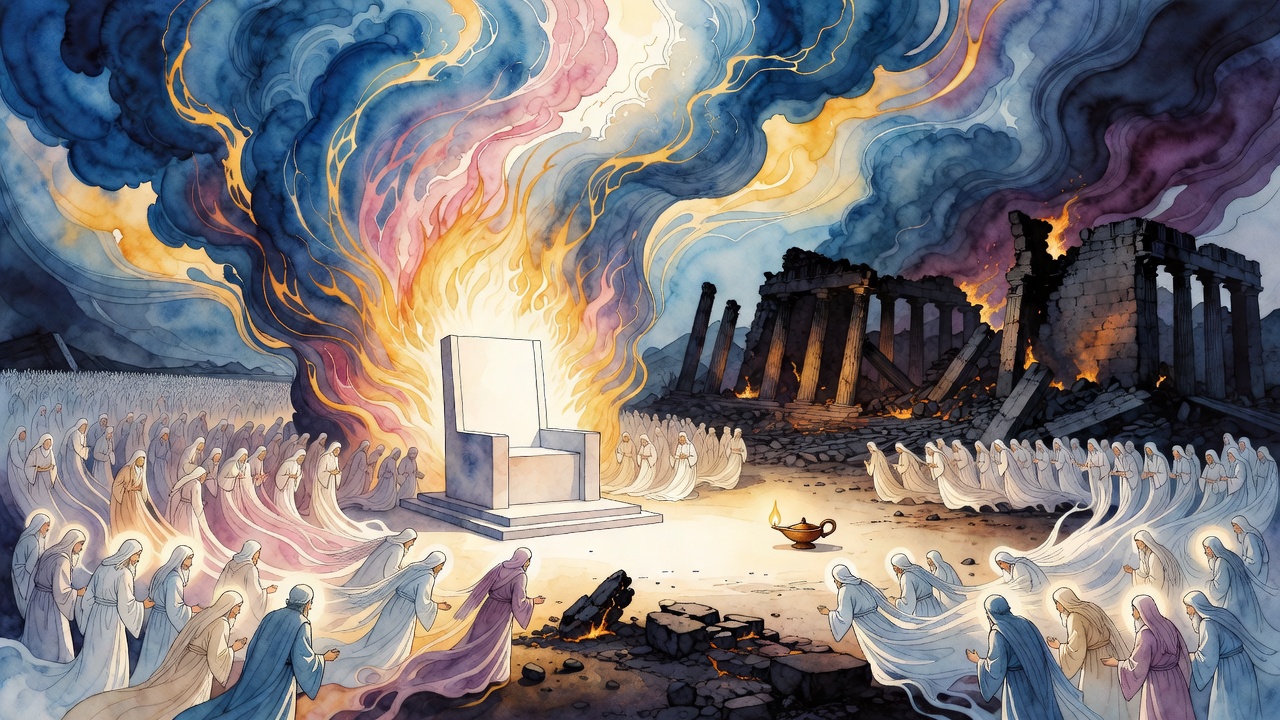
Smoke rose where the altar used to shine. Job asked if God's troops had a number, and Heaven answered by thinning its own ranks after Jerusalem burned.
Table of Contents
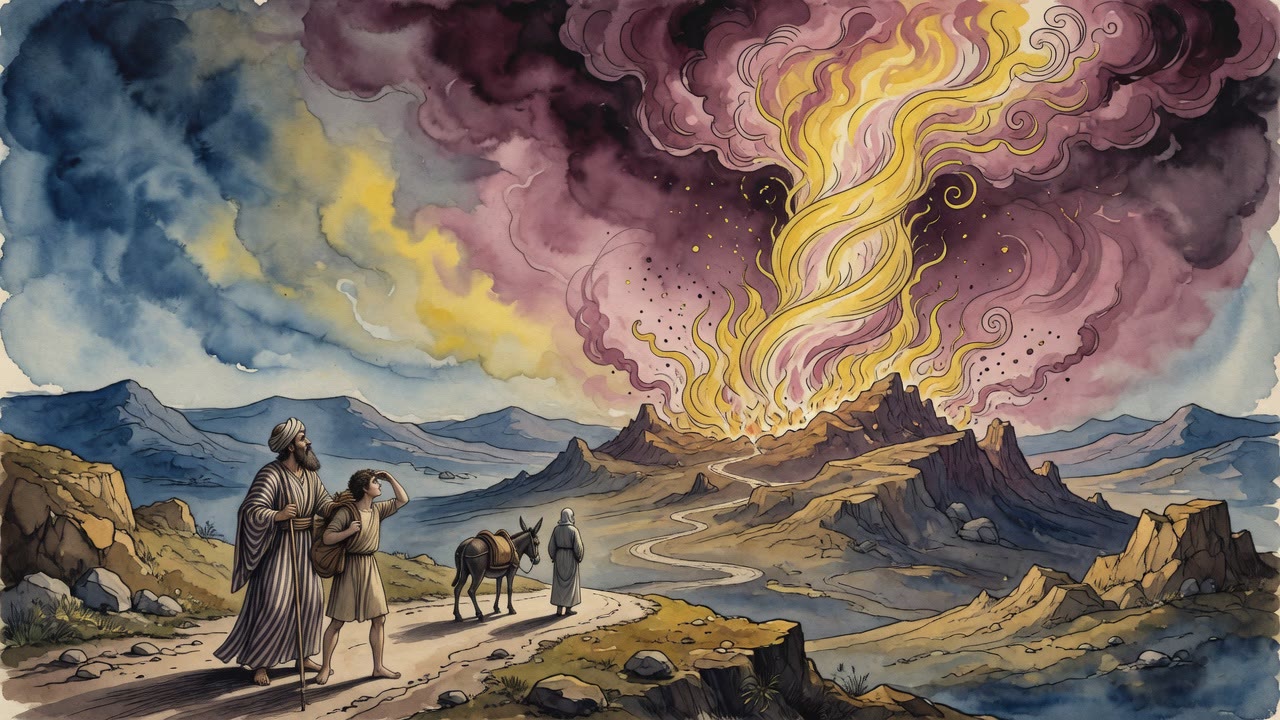
Job stood under a sky that still burned. Ash clung to his skin. The question left his mouth before he could dress it in piety. "Is there a number to His troops?" (Job 25:3).
 Click for full size
He was not counting for comfort. He was asking whether Heaven still kept its full army when the world below had lost its house of prayer.
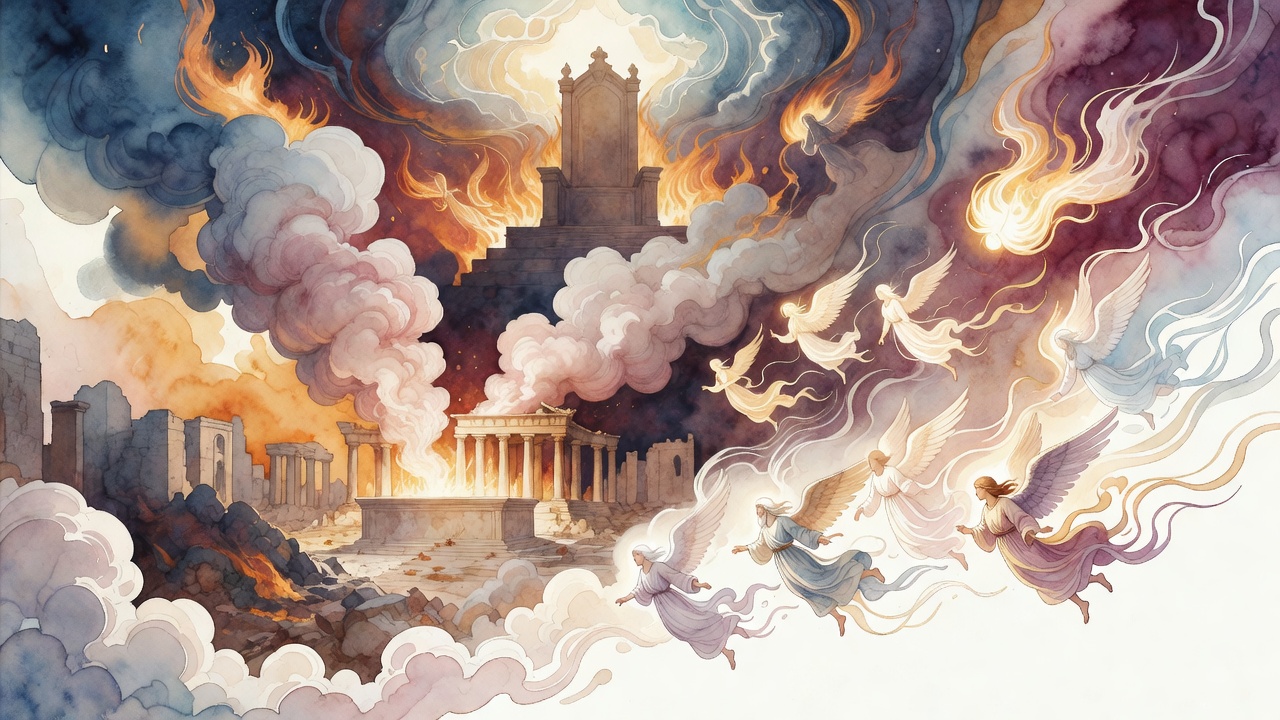
Far from his ash heap, in another age of ruin, the same question would answer itself in smoke. When the Temple fell, the praise that used to climb from Jerusalem thinned. The Holy One, as it were, reduced His entourage. It was not right, He said, for lauding to ascend as it once ascended.
The Arithmetic of Infinite Ranks
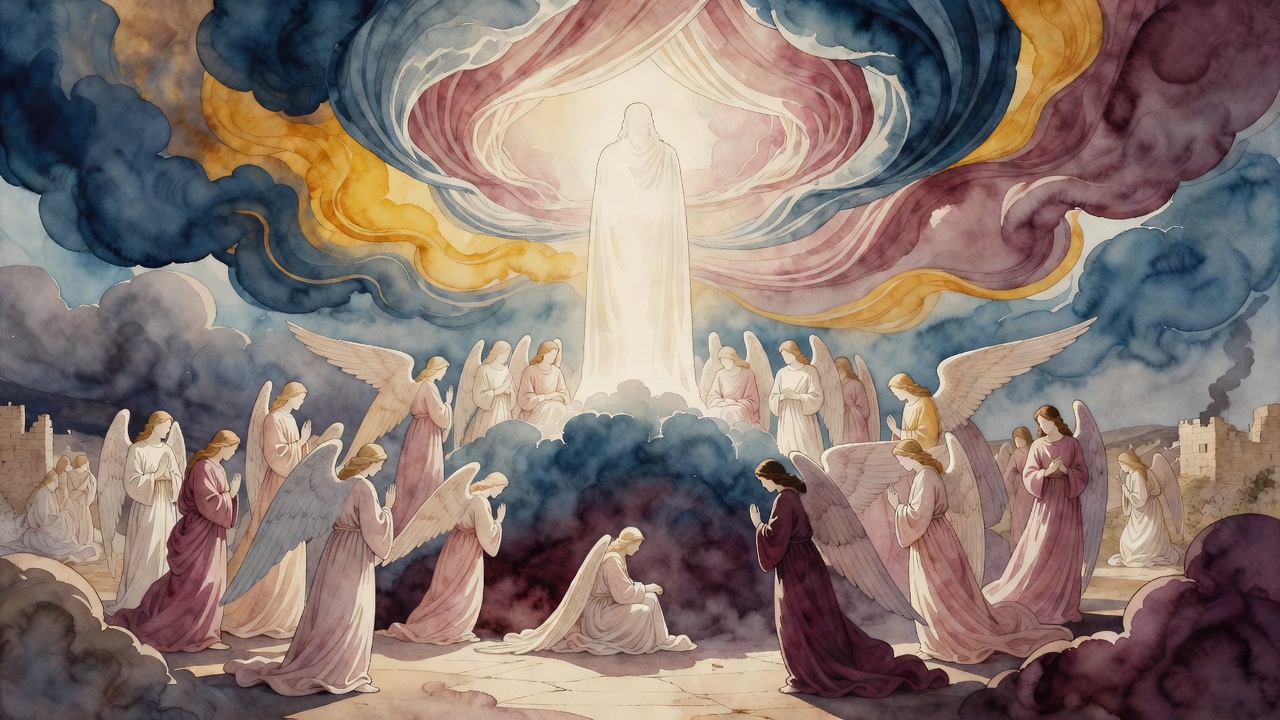
Scripture itself refuses a single number. One verse asks if the troops can be counted, as if infinity were the only honest answer. Another speaks of thousands upon thousands serving before Him (Daniel 7:10). A third piles myriads upon myriads of companies (Psalms 68:18).
Rabbi Yehuda HaNasi tried to hold the contradiction without breaking it. Each troop is vast past measuring. Then there are countless such troops. Legions stacked on legions. The mind gives out before the host does.
Job's question was never a census form. It was a wound wearing the shape of a number. If Heaven's army is endless, why does the earth feel so empty of protection? If the army can be thinned, what does grief look like in the upper world?
The midrash answers with a picture that hurts more than any number. Before the destruction, glory rose whole. After the destruction, the court of Heaven itself went into a kind of mourning. Not absence of power. Absence of the old completeness of praise.
When the Light Still Rises on Everyone
Job heard another line pressed against his first. "On whom will His light not rise?" (Job 25:3). The sun still climbed. The moon still silvered roofs that no longer held sacrifices. No one who enters the world can claim the light skipped him.
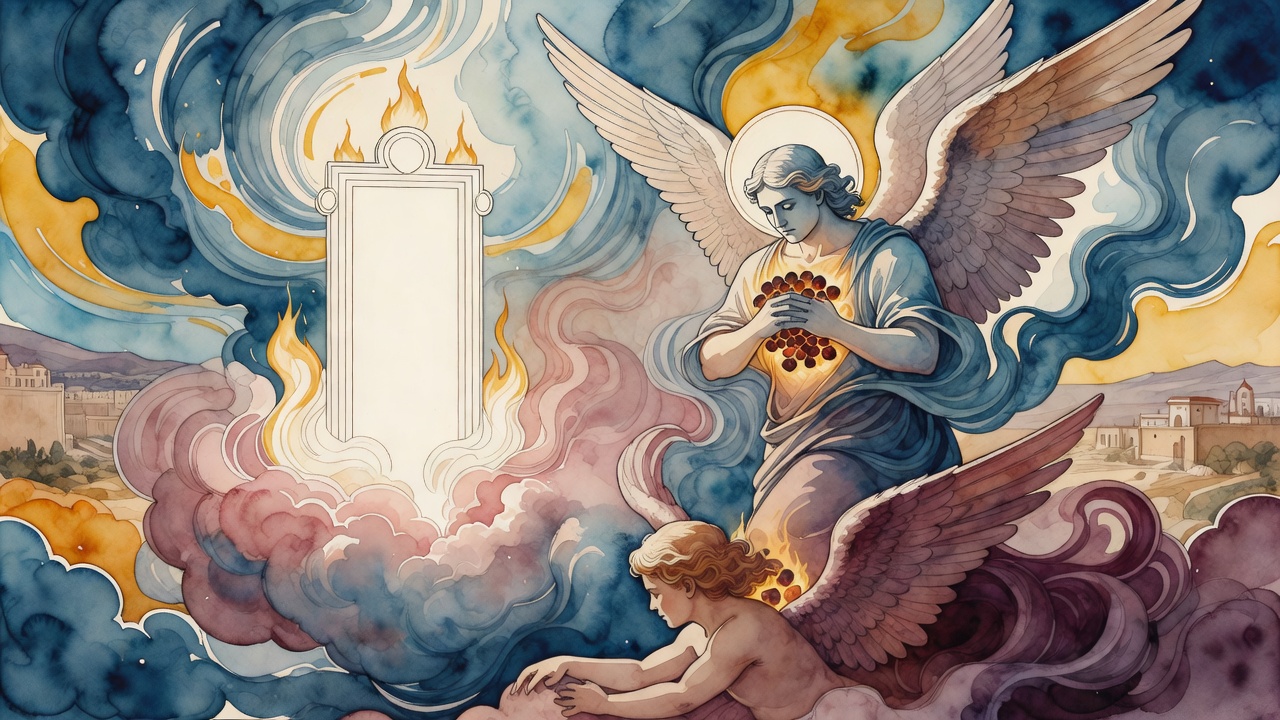
Heaven illuminates the supernal realms and the dust of the street with the same stubborn brightness. That is the public light. The midrash insists on a private longing beside it. God desires Israel's light, the specific devotion that once climbed from pure olive oil commanded for the lampstand (Leviticus 24:2).
The oil was never only fuel. It was a daily argument that connection still mattered. Command the children of Israel, the verse says, as if the Holy One still wants their particular flame more than the free light that falls on every nation without asking.
Job sat in darkness of affliction while the public light kept rising. That is the cruelty of a world that still works while a righteous man does not.
Joy Withheld Until the Work Is Done
Elsewhere the sages weigh a single letter in a verse of praise. It does not say the LORD already rejoiced in His works as a finished fact. It says, "Let the LORD rejoice in His works" (Psalms 104:31), a joy still leaning forward, still waiting.
Heaven has not yet taken its own full gladness in the world it made. By what right, then, do the children of Adam rush to claim complete joy before its time? The gladness is appointed for the deeds of the righteous, for a day when upright labor stands finished before Him.
Until then the verse remains a promise. The reduced troops of the ruined Temple and the withheld rejoicing of the Creator are two sides of one patience. Heaven refuses both cheap victory and cheap celebration.
Job wanted the months of old. Israel wanted the old ascent of praise. Both wait in a light that still rises and a joy that has not yet broken open.
The House That Thinned the Court
Picture the day the stones came down. Priests without an altar. Songs without a floor. The midrash does not say Heaven grew weak. It says Heaven would not pretend the old music still filled the halls.
Reducing the entourage is a royal gesture of grief. A king who keeps full pageantry after the palace burns is either cruel or blind. The Holy One, in the midrash's daring speech, chooses neither. He cuts the ranks to match the loss.
Job's question floats across centuries and lands on that image. Is there a number to His troops? There is a number that changes with love and ruin. There is a court that can be full and a court that can be quieter because the lower house fell silent.
Still the light rises on the wicked and the righteous alike. Still the withheld joy waits for works that will let Heaven itself be glad. The ash on Job's skin and the ash of the Temple are different fires, but both teach the same hard mercy. Presence does not always mean unbroken ceremony. Sometimes presence means a thinner court and a lamp still commanded in the dark.
← All myths