Parshat Behar6 min read

God Sold the World to Abraham for Keeping Torah

At three years old Abraham worked out who had made him. The sages count the letters of a single word and find the exact number of years.

Curated by Arthur · Told by Maggid ·
Table of Contents
  1. The Pot He Set Aside for a Law Nobody Had Written
  2. One Hundred Seventy-Two Years of Knowing
  3. The Whole World Is Mine and I Sold It
  4. A Tenant in His Own House
  5. Aaron Was Paid Before He Ran
  6. Take Aaron
God Sold the World to Abraham for Keeping Torah Click for full size

The Pot He Set Aside for a Law Nobody Had Written

Four hundred years before anyone stood at Sinai, Abraham was cooking a dish early and putting it aside.

Rabbi Samuel bar Nahman said it in the name of Rabbi Alexandri, and it is the smallest claim anyone ever made about the man. Not the fire, not the covenant, not the mountain. A cooked dish, held back from one day so that the work of the next day would count as something already begun. The rule that governs it would not be spoken aloud for centuries. There was no scroll. There was nobody to check. Abraham kept it anyway, and kept the rest of the Torah with it, every commandment in a book that had not been written.

Heaven watched a man guard a pot for a Sabbath that had no law yet, and started drawing up papers.

One Hundred Seventy-Two Years of Knowing

Rabbi Simeon ben Lakish did the arithmetic out of one word.

Scripture says that Abraham was rewarded eqev, because he obeyed My voice. Take the word apart and it is a number. Ayin is seventy. Qof is one hundred. Bet is two. One hundred seventy-two.

Abraham lived one hundred seventy-five years. Subtract three, the years a child cannot yet know anything, and the sum lands exactly on the rest of his life.

So he was three. Standing in a house stocked with gods, at an age when a boy still falls over on his own feet, he worked out which one had made him, and then he did not stop knowing it for a hundred and seventy-two years.

The Whole World Is Mine and I Sold It

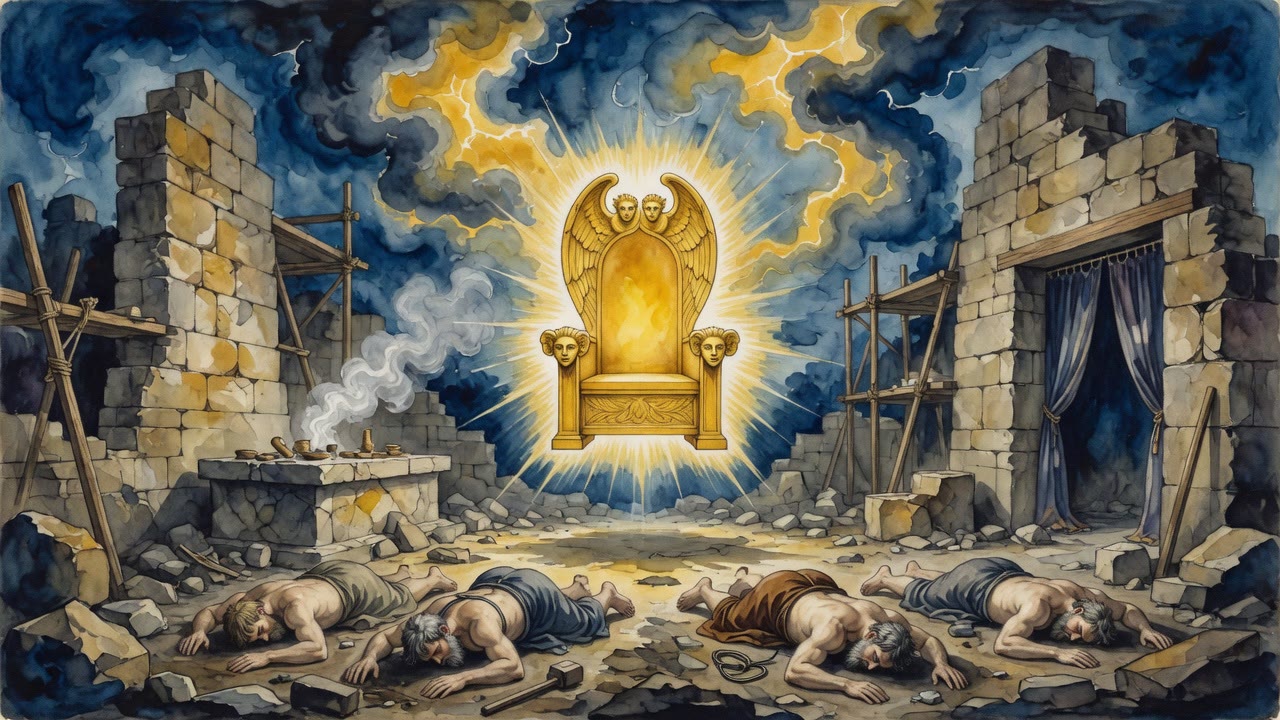
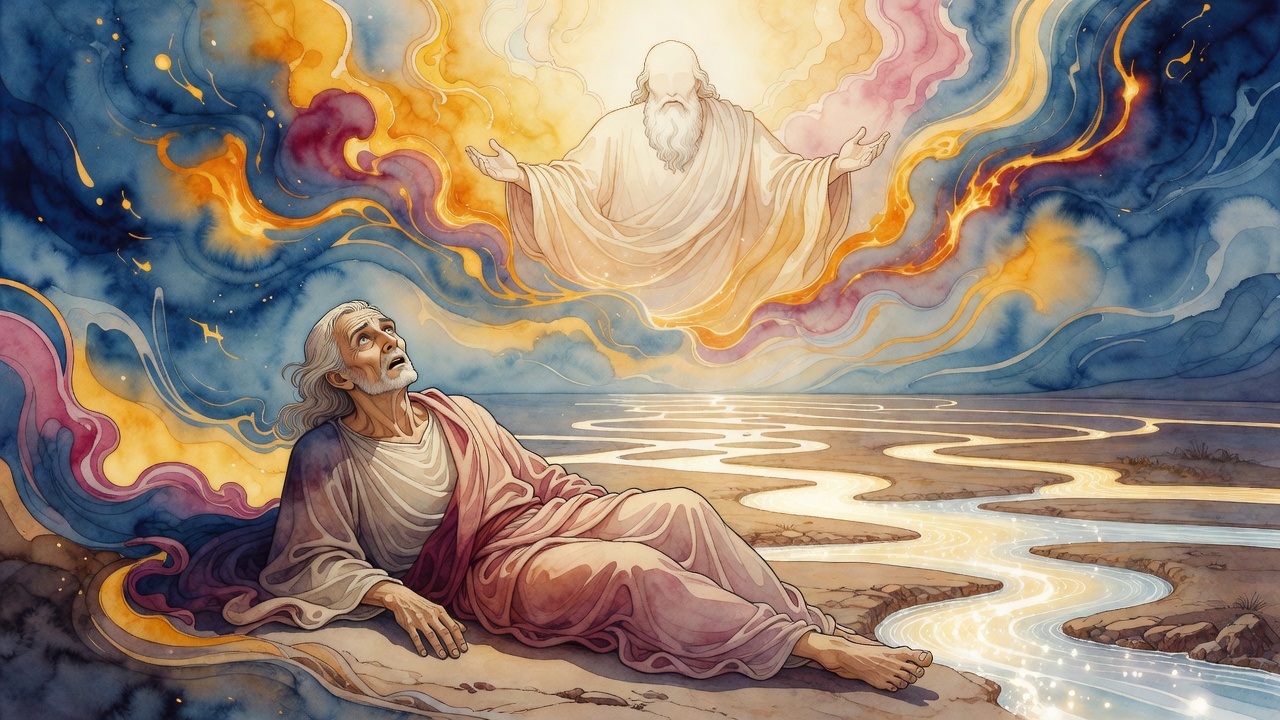
When the Holy One saw how much this man loved the commandments, He began transferring the upper and the lower worlds into his name.

The receipt is in the blessing the priest-king of Salem spoke over Abraham when he came back off the battlefield with dust still on him. Blessed be Abram of God Most High, koneh of heaven and earth. The word means maker. It also means the one who acquires, the buyer, the holder of title. Read it the second way and the sentence is a deed changing hands.

The whole world is Mine, said God, and I sold it to Abraham, because he kept My commandments.

Not for silver. There was no silver in it anywhere. A man had kept faith with an owner nobody else in the world acknowledged, and the owner signed over the property.

A Tenant in His Own House

Then the voice turns from Abraham to his descendants, and the warmth goes out of it.

You made Me a lodger. That is the charge. By your sins you turned Me into a man renting a house from its owner, and Jeremiah had to ask out loud why the God of Israel had become like a stranger passing through His own land. And when you sinned before Me, I sold you off. For no price. Nothing came back across the table.

That is what exile is in this telling. Not a defeat. A sale at zero.

Which is why the law about selling reads the way it does. When you sell a field to your fellow, or a house, or a vessel, do not cheat him. Do not put your thumb on the scale of a man who trusts you. The Holy One sold a world to Abraham on terms He is willing to have examined, and He wants the same terms used in a market stall in Judea over a jar and a handful of coins.

Aaron Was Paid Before He Ran

There is a second account in the same book, and it was also settled early.

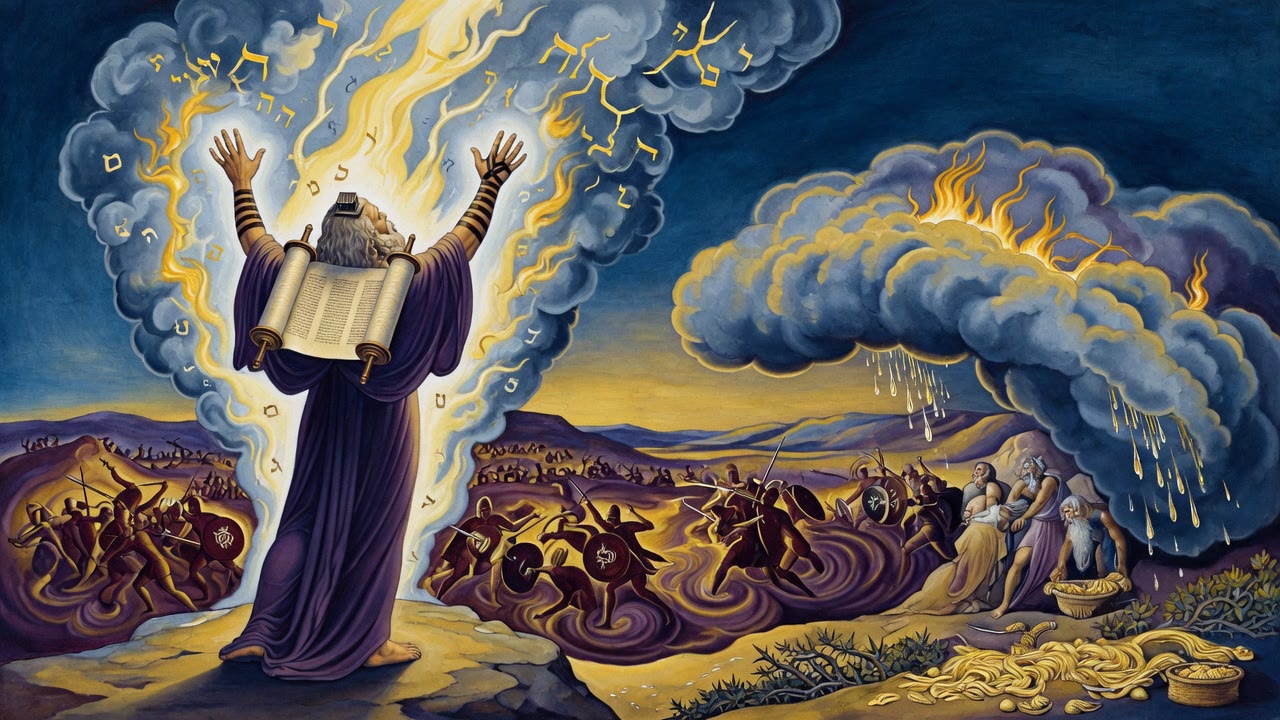
Wrath had gone out from before the Holy One and people were already dropping in the camp. Moses turned on his brother. "Why are you standing here? Take the fire pan. Put fire from the altar on it."

Aaron did not move. "My lord Moses, do you want to kill me? My sons brought strange fire before the Holy One and fire came out and ate them. Now you tell me to take the fire pan and carry holy fire outside the sanctuary. How am I not destroyed?"

"Go. Hurry. While you are standing here talking, they are dying. Take it out to the congregation and cover them."

Aaron heard the second sentence and stopped arguing. "If I die for Israel," he said, "I am not even worth so great an honor."

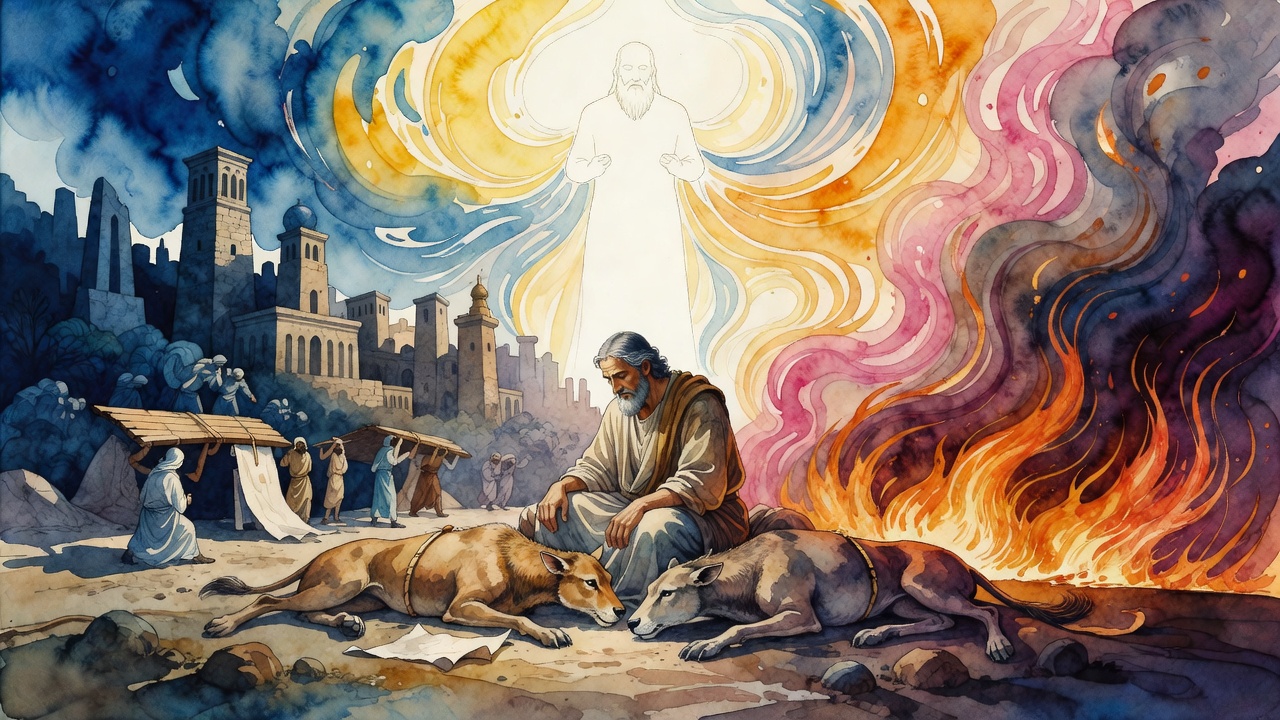
Then he took the pan and ran into the middle of it, holding the same element that had killed his two children, and stood between the dead and the living until the plague stopped.

Take Aaron

Long before that, when the priesthood was first being handed out, the Holy One had given Moses a strange instruction with a strange verb in it. Take Aaron and his sons.

Take. Not summon, not appoint, not anoint. Moses asked about the word and got an answer that reads like a bookkeeper's.

I am in debt for a taking, said the Holy One. So get up and make him great with the word take, because he is going to save My children by taking, and I do not leave that kind of account open.

The wise inherit glory, Solomon wrote, and fools carry off shame, and the verse has been sorting the world since the first week: Noah against the generation of the flood, Shem against Ham, Abraham against the four kings he broke, David against Goliath. Aaron and his sons are the next line in it.

Two men were paid before the invoice was written. One guarded a cooking pot for a commandment that did not exist, and was handed heaven and earth. One was made great with a verb, and later carried fire into a plague to earn it.


← All myths
From the tradition

Sources

2 sources

The texts behind this telling. Some cards carry a translation of the source; others are our own retelling of it, and each card says which. Every card links out to the original.

Midrash Tanchuma Buber, Behar 3:1Midrash Tanchuma Buber, Behar

Translation of the source text.Midrash Tanchuma (Buber), Public Domain, on Sefaria · CC-BY-SA

"And when you make a sale to your fellow [or buy from the hand of your fellow], let none of you deceive" (Leviticus 25:14). That you should not deceive one another, for I too have sold. When? At the time when Abraham observed the commandments of the Holy One, blessed be He. Before the Torah was given, Abraham our father observed it [and kept all the commandments that are in the Torah. Rabbi Samuel bar Nahman said in the name of Rabbi Alexandra: Abraham observed even the eruv of cooked dishes, as it is said, "Because (eqev) Abraham obeyed My voice and kept My charge" (Genesis 26:5). What is eqev? Rabbi Simeon ben Lakish said: At the age of three years Abraham recognized the Holy One, blessed be He. How so from eqev? Ayin is seventy, qof is one hundred, bet is two, behold, one hundred and seventy-two. And Abraham lived one hundred and seventy-five; subtract from them three, when he was a small child, behold, at the age of three years Abraham recognized the Holy One, blessed be He].

When the Holy One, blessed be He, saw how Abraham cherished the commandments, He began to make over to him the upper realms and the lower realms, as it is said, "Blessed be Abram of God Most High, [Maker of heaven and earth" (Genesis 14:19), and so it says, "For all the land that you see, to you I will give it"] (Genesis 13:15). The Holy One, blessed be He, said: The whole world is entirely Mine, and I sold it to Abraham because he observed My commandments. But you, through your iniquities, have caused Me to become [like] a resident who rented a house from its owners, for so Jeremiah said, "Why should You be like a stranger in the land?" (Jeremiah 14:8). And when you sinned before Me, I sold you, as it is said, "You sell Your people for no wealth" (Psalms 44:13). Therefore, if a person needs to sell a house or a field or an article, you shall not deceive one another. Thus it is said, "Let none of you deceive his brother" (Leviticus 25:14), "and you shall not deceive one another, his fellow" (Leviticus 25:17).

Full source
Midrash Tanchuma, Tzav 9Midrash Tanchuma

Retold in our words. Read the original at the link below.Townsend 1989 translation of Midrash Tanhuma, S. Buber Recension · CC-BY

(Lev. 8:2) “Take Aaron and his sons.” It is written (in Prov. 3:35), “The wise shall inherit glory, but fools take up shame.” This verse functioned from the beginning of the world until now. “The wise shall inherit glory.” This refers to Noah and his children. “But fools take up shame.” This refers to the generation of the flood. “The wise shall inherit glory. This refers to Shem of whom it is stated (in Gen. 9:26), “Blessed be the Lord, the God of Shem.” “But fools take up shame.” This refers to Ham of whom it is stated (in Gen. 9:25), “And he said, ‘Cursed be Canaan (the son of Ham).’” “The wise shall inherit glory.” This refers to Abraham. “But fools take up shame.” This refers to the kings whom he smote (in Gen. 14:15). “The wise shall inherit glory.” This refers to Isaac. “But fools take up shame.” These are the people of Gerar. “The wise shall inherit glory.” This refers to Jacob. “But fools take up shame.” This refers to Esau. “The wise shall inherit glory.” This refers to Joshua. “But fools take up shame.” These are the thirty-one kings whom he smote (according to Josh. 12:24). “The wise shall inherit glory.” This refers to David. “But fools take up shame.” This refers to Goliath. “The wise shall inherit glory.” This refers to Eli. “But fools take up shame.” These are his sons, of whom it is stated (in I Sam. 2:12), “Now Eli's sons were scoundrels.” “The wise shall inherit glory.” These are the sons of Aaron of whom it is stated (in Lev. 8:2), “Take Aaron and his sons….” Why is “take” mentioned here? The Holy One, blessed be He, said to Moses, “I am indebted in taking. Hence you are to arise and magnify him through taking.” And when did Aaron take (such that God was indebted to him for it)? When (in Numb. 17:11) wrath had gone forth upon ‘those who hate Israel’ (a euphemism for Israel), Moses said to him, “Why are you standing [here]? (At the beginning of the verse), ‘Take the fire pan, and put fire [from the altar] on it.’” Aaron said to him, “My Lord Moses, do you wish to kill me? Because my sons offered profane fire to the Holy One, blessed be He, they were [destroyed by fire], as stated (in Lev. 10:1-2), ‘[Now Aaron's sons, Nadab and Abihu each took his fire pan…;] and they offered alien fire before the Lord…. So fire came forth from before the Lord and consumed them.’ Now you are saying, ‘Take the fire pan!’ My sons brought in strange fire and were destroyed by fire. So should I bring forth holy fire outside? Would I not die or be destroyed by fire?” Moses said to him, “Go and act quickly; for as you are talking, they are dying. Rather (according to Numb. 17:11, cont.), ‘Take it quickly unto the congregation and make atonement for them.’” When Aaron heard that, he said, “If I die for Israel, I would not be adequate (for such a great honor).” Immediately (in Numb. 17:12) “Aaron took it as Moses had said.” Therefore, the Holy One, blessed be He, said to Moses (in Lev. 8:2) “’Take Aaron.’ Magnify him through taking. Just as Aaron [is going to] save My children by taking, so you are to magnify him through taking.” Ergo (in Lev. 8:2:) “Take Aaron.”

Full source