God Spared the Orchard for One Rose at Sinai
A king finds his orchard choked with thorns and lifts the axe, then smells one rose. For Israel's pledge at Sinai the whole ruined world is left standing.
Table of Contents
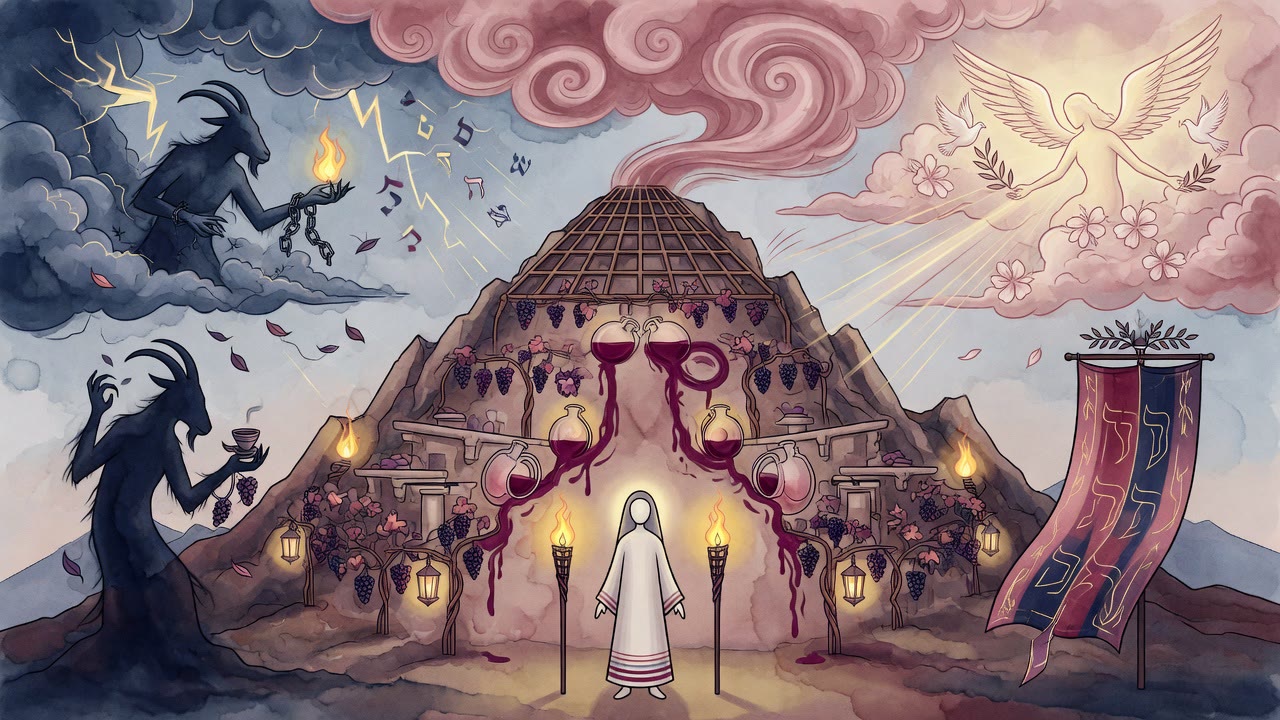
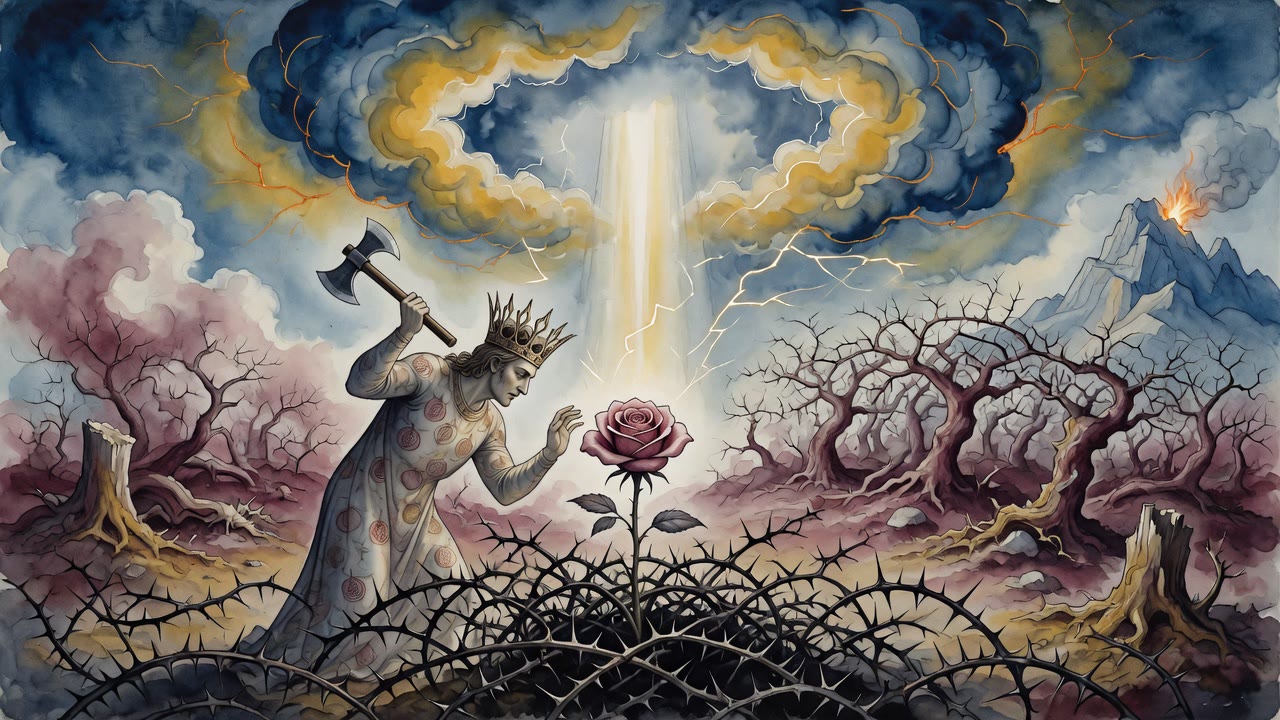
The king came back to his orchard with the taste of distance still in his mouth. He had planted rows of fig and vine, pomegranate and apple, then left the work to a sharecropper and turned away. When he returned the paths were gone. Thorns had eaten the lanes. Briars closed over fruit that never finished. Heat sat on the ruin like a second roof. He reached for the cutters without ceremony. A ruined garden is cheaper to erase than to nurse.
 Click for full size
Then one rose held its color in the mess. He bent. Fragrance cut through the smell of crushed weed. His hand loosened on the blade.
"Because of this rose," he said, "the orchard will be saved."
Thorns After Twenty-Six Generations
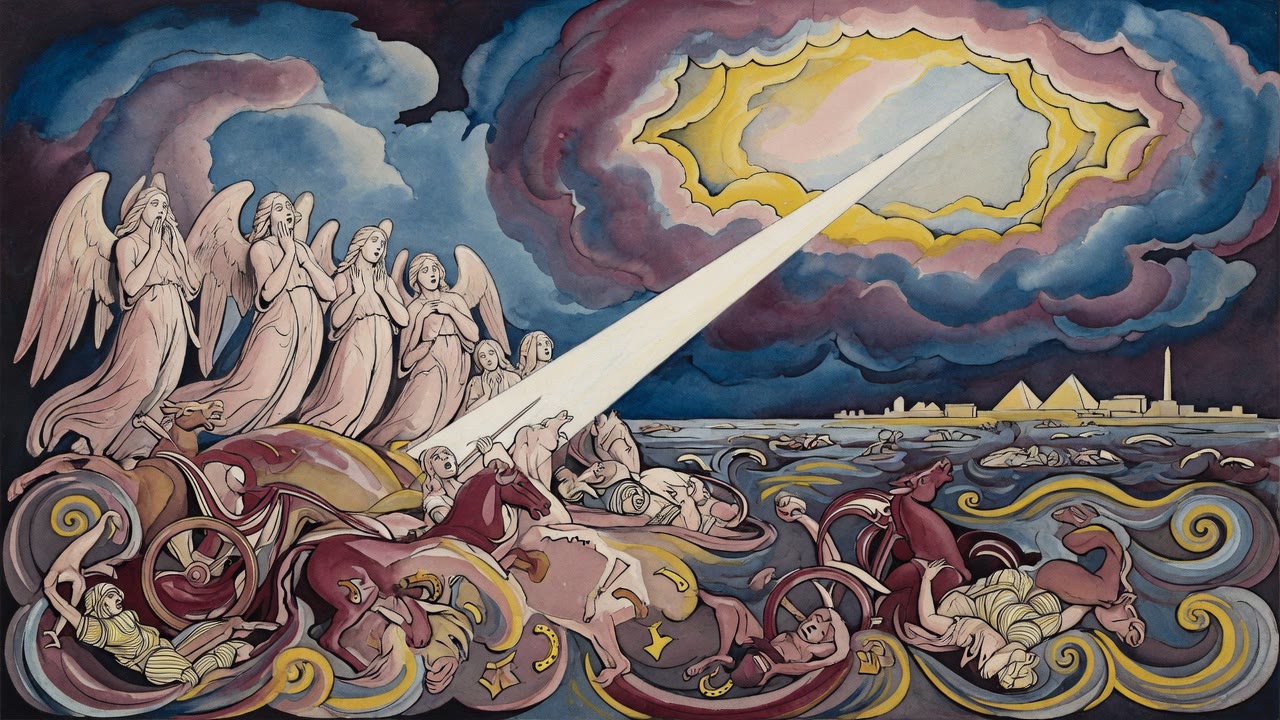
The orchard is the world. The sharecropper is the long patience of history. Twenty-six generations pass from Adam toward Sinai, and the Holy One looks down on what free hands have made of free air. Water sits on water. Order frays. The generation of Enosh names idols. The Flood generation fills the earth with violence until only an ark can argue for life. The Dispersion generation stacks brick toward heaven and scatters when the languages break.
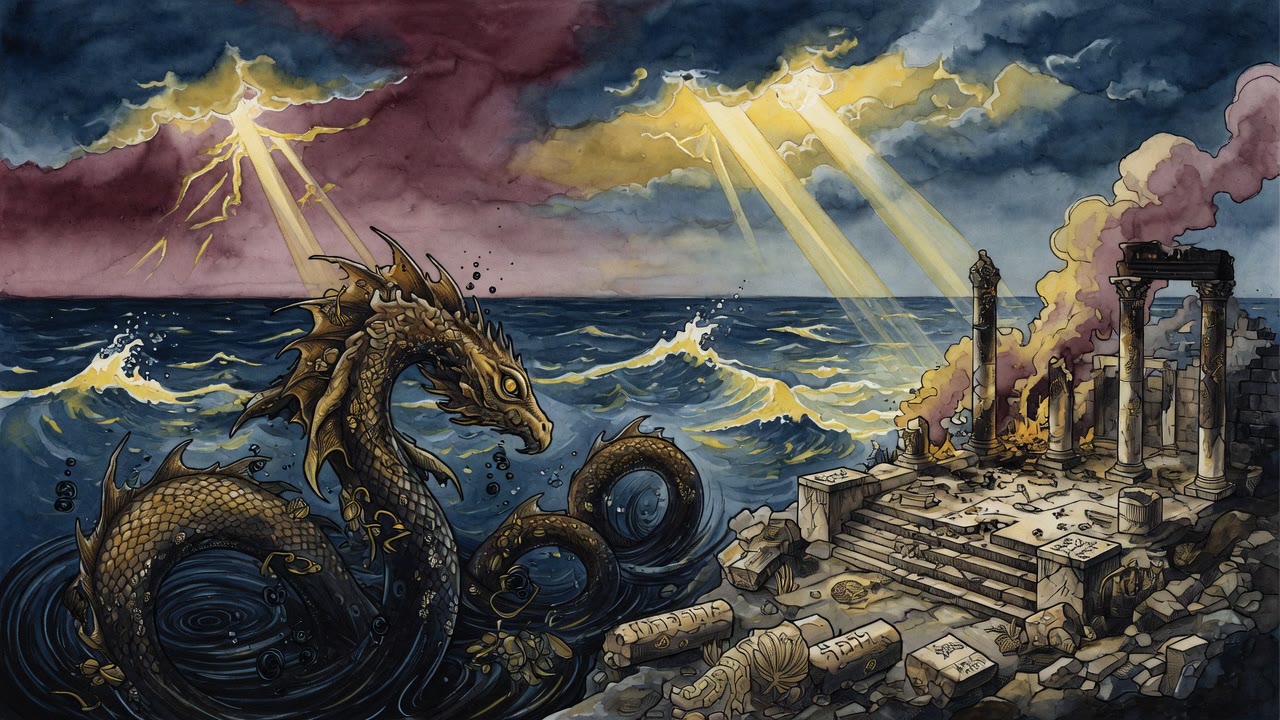
Cutters are ready. "The Lord sat enthroned at the Flood" is judgment seated, not a tourist watching weather (Psalms 29:10). The world that began for Israel's sake looks like a waste of planting. Thorns have better root systems than righteousness.
Then the rose appears, not as a flower in soil but as a people at a mountain.
The Rose That Spoke Two Words
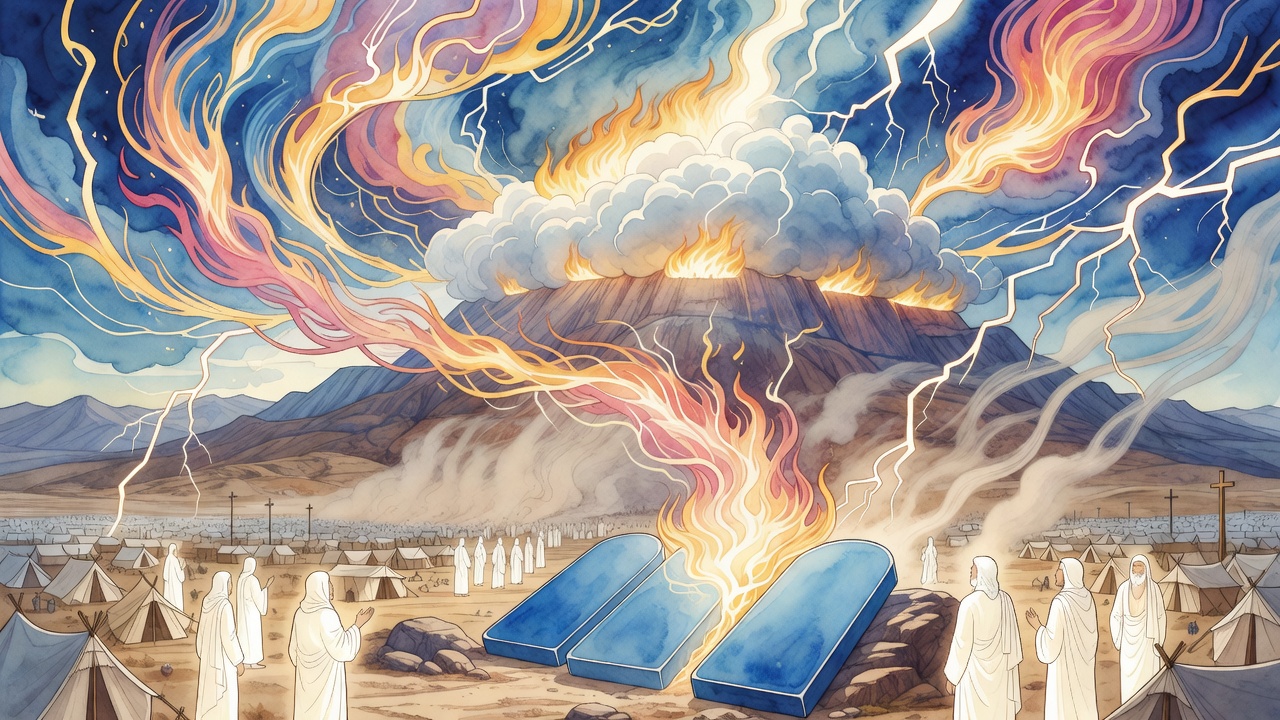
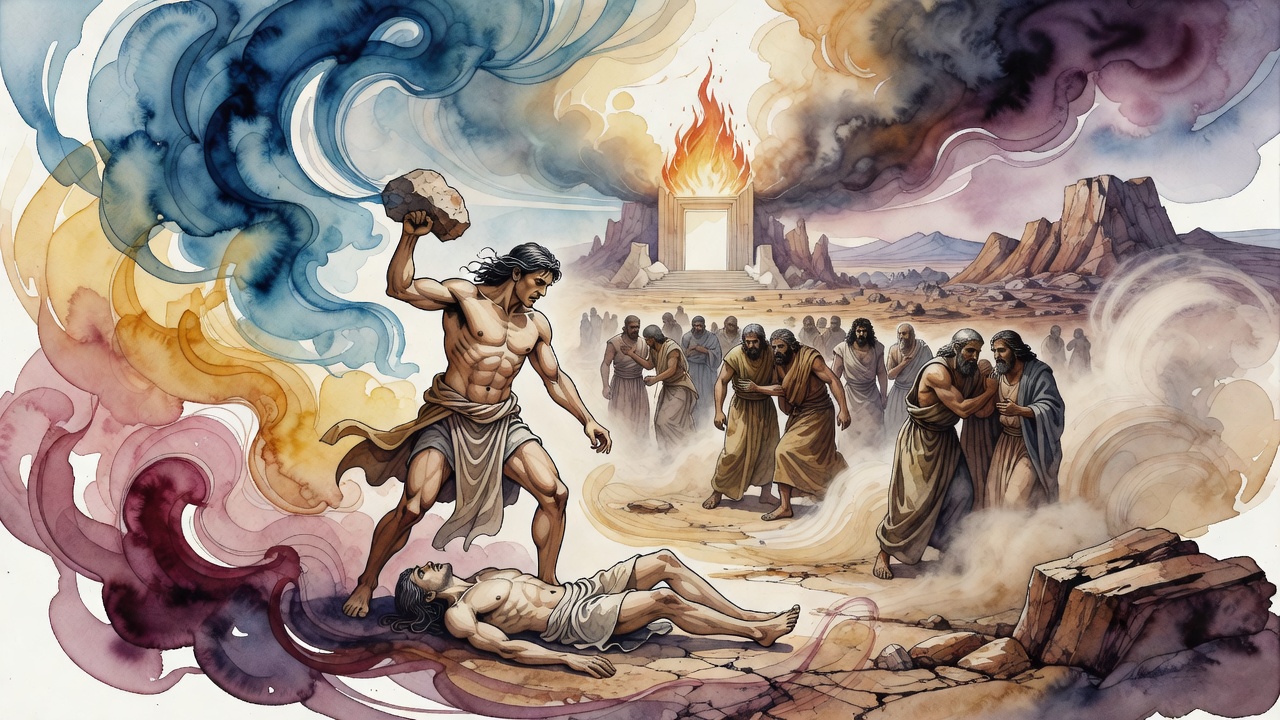
Israel stands at Sinai. Smoke wraps the peak. The ground shakes. Children grab the hems of robes. A man covers his face and still hears the words through his palms. They answer with a pledge that does not wait for full understanding: Na'aseh v'nishma, we will do and we will hear (Exodus 24:7). Doing first. Hearing second. The fragrance reaches the King who had already lifted the axe in his mind.
Because of that rose the orchard is not razed. Generations of failure do not get the last word. A single national breath of acceptance holds open a sky that had every legal right to close. The cutters stay in the shed. Children who will never see Sinai still eat fruit from trees that almost became ash for the sake of thorns.
The sharecropper's failure remains on the record. The rose does not pretend the briars were imaginary. It only proves that one true scent can outweigh a field of knives.
Hands of Gold and a Slab of Ivory
What the rose received in stone still looks, in the Song, like a lover's body written in treasure. "His hands are rods of gold set with beryl; his belly is a slab of ivory covered with sapphires" (Song of Songs 5:14). Those hands are the Tablets themselves, God's own workmanship, words more desired than much fine gold (Exodus 32:16; Psalm 19:11).
Some say the tablets rolled like a scroll. Some say they were hewn from the orb of the sun. Rabbi Ḥanina ben Gamliel counts five words on one stone and five on the other, two hands, ten fingers, a body of law that can be held. Ivory and sapphire are not decoration for a poem alone. They are the weight a redeemed orchard must carry once the axe is set down: commandments hard enough to cut, bright enough to outshine the briars that nearly won.
Israel did not only smell sweet at the mountain. Israel took gold-and-stone hands into the camp and learned how easily those hands can be traded for a calf. The rose can wilt. The sparing still happened. The tablets remain the measure of what the fragrance promised.
Smoke Between the Staves
Later, in a built house of boards and curtains, another scent keeps the line open. On Yom Kippur the high priest carries incense into the Holy of Holies, and the cloud fills the narrow space between the staves of the Ark. "A bundle of myrrh is my beloved to me, that lies between my breasts" becomes, for Rabbi Yoḥanan, the spice pressed between those poles, love speech turned into smoke that can stand where a body cannot linger (Song of Songs 1:14; Exodus 30:34).
The house of Avtinas guards the blend, eleven spices counted from Moses's charge, equal parts and pure frankincense, a craft so tight a family name becomes a lock on the recipe. When the cloud rises correctly, the nation smells for a moment what the rose smelled like to heaven: not perfume for pleasure, but a direct line that says the orchard is still under care.
Outside that cloud the builders of Jerusalem keep working. The Song's "daughters of Jerusalem" are bonot, builders, and the Great Sanhedrin (Israel's supreme court of seventy-one sages) lays legal stone under a city meant to draw more towns than any old covenant list promised. The rose becomes a metropolis of judgment, not only a mountain memory. Nations will be given as daughters without the old ledger of obligation alone, gift layered on gift, if the builders do not drop the plumbline.
The king who almost cut the orchard still walks the rows. Thorns return every season. Briars learn new names. The rose must bloom again in courts, in incense, in two tablets a human back can break and a people can still lift. The axe is not thrown into the sea. It hangs in the tool shed of heaven, oiled, ready, waiting to see whether the next generation still knows how to smell like Sinai when the paths fill with weed.
Under the last light of a desert evening the mountain's dust still clings to some sandals. Somewhere a child recites five and five. Somewhere a priest measures galbanum against frankincense until the pans balance. The orchard stands because one rose once answered before it fully understood, and because the King who loves that scent has not yet decided the thorns have won.
← All myths