God Spoke From a Thorn-Bush and Korah Refused to Listen
Korah's sons could not open their mouths. Fire stood around them and the pit opened under their father. A pillar rose anyway, and they sat down to sing.
Table of Contents
 Click for full size
Fire in a Plant Nobody Wanted
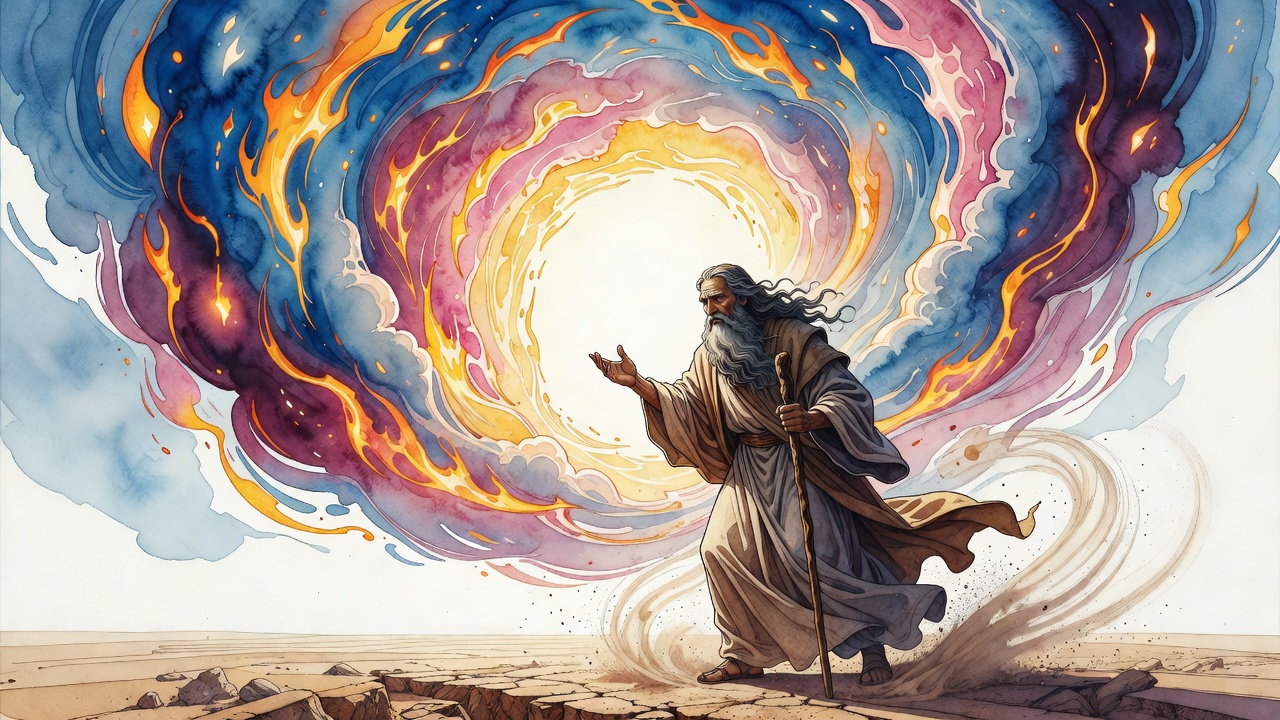
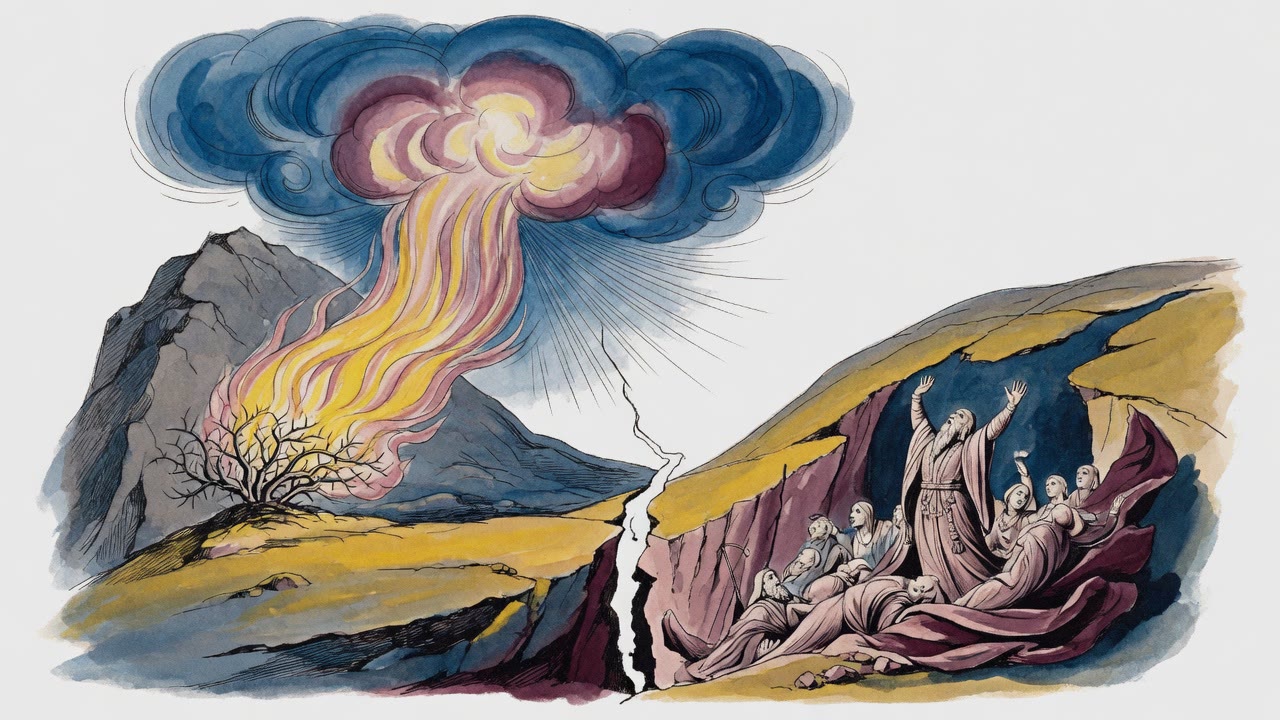
Moses had been in Midian long enough to forget the palace. He was tending Jethro's flock on the far side of the wilderness when he saw fire in a thorn-bush. The bush burned and did not burn up. He walked closer.
God spoke from inside the thorns. The plant was the seneh (סנה), the lowliest shrub on that ground. Its wood was useless. Its branches scratched. Nations could not carve idols from it. Nobody wanted it for timber, shade, or gods.
That was why the voice was there. God was with a people inside their humiliation, not above it. He suffers along with Israel. Nothing in nature, not even this stunted bush, exists without the Shechinah (שכינה), God's dwelling presence. Moses took off his shoes on cracked earth, at the height of knee-high scrub, and learned that heaven will speak from low places no one would pick for a shrine.
The leaf held five leaflets. God named five men: Abraham, Isaac, Jacob, Aaron, and Moses himself. For their merit He would redeem. A bird that alights on a thorn-bush does not leave with its wings whole. Moses stood in the scratch of it and did not step back.
Seventy Men Around a Small Tent
Later, in the wilderness, the burden of judging a whole camp sat on one man. God told him to gather seventy elders of noble stock and pious character. Moses stood them around the Tent of Meeting: thirty on the south, thirty on the north, ten on the east, himself on the west. The tent was thirty cubits by ten. Each elder received a cubit of space.
God descended as on the day of revelation and put of Moses's spirit upon them. They received prophecy to the end of their days. Moses's spirit was not less. He was a burning candle from which many others are lit, and the first flame does not shrink because other wicks catch.
He remained the head of that seventy. The men stood in their cubits and carried what one mouth could not. No cedar. No palace stair. A tent the width of ten cubits, and a share of spirit that did not run out.
Korah Wanted a Higher Place
Korah was a Levite, a cousin, wealthy, and furious. He watched Moses hold the leadership and Aaron hold the priesthood and decided what was left for him was not enough. "All the congregation is holy, every one of them, and the Lord is among them. Why do you lift yourselves above the assembly?" (Numbers 16:3).
He dressed the grievance as equality. He refused to listen. God had chosen the lowest plant. He had chosen slaves. He had given leadership to a man with slow speech who had spent years with another man's sheep. Korah was not asking to stand in the low place. He was asking why his height had been overlooked.
The earth opened. It took him down, and the company with him. The same ground that had held a voice in a shrub now swallowed the man who would not hear it.
His Sons Could Not Open Their Mouths
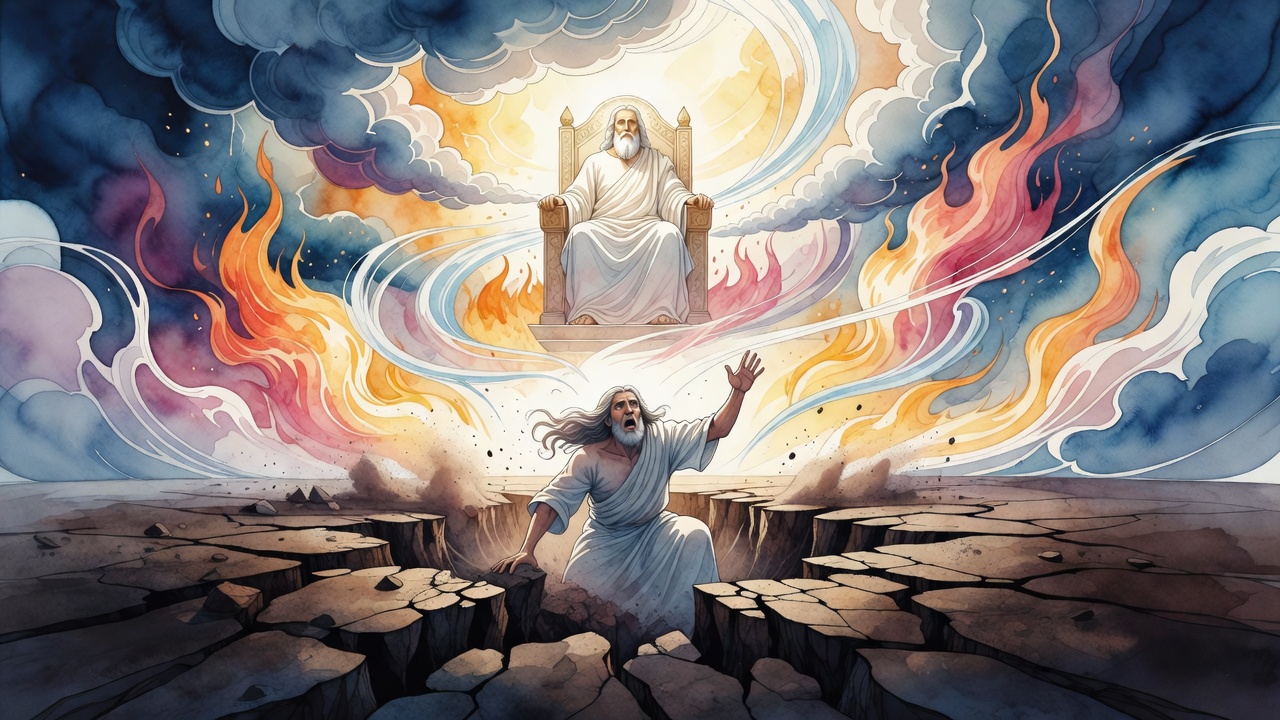
Korah's three sons cried, "Help us, Moses!" Fire stood around them. Below them the pit of Gehinnom (גיהנם) gaped. The Shechinah said, "If these men were to repent, they should be saved. Repentance do I desire, and naught else."
They decided, all three at once, to repent. They could not open their mouths. The fire would not give them air for a confession. The pit would not give them a floor for kneeling.
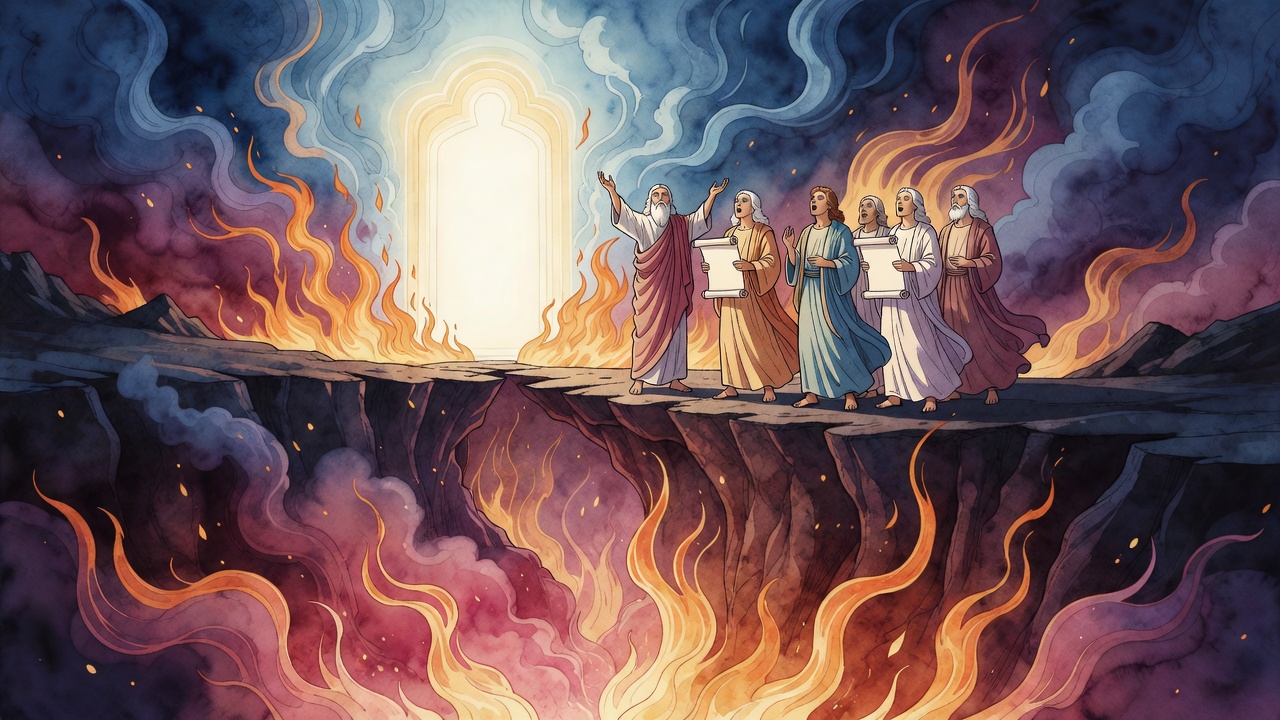
God took the thought. In the sight of all Israel a pillar rose in Gehinnom. They seated themselves on it. They sat and sang praises sweeter than mortal ear had heard. Moses and all Israel leaned in to listen.
They Sang From the Pillar
The gift did not stop at rescue. They received prophecy there, in the pit, and sang events of the world to come. "Fear not the day on which the Lord will take hold of the ends of the earth, and the wicked be shaken out of it. The pious will cling to the Throne of Glory. Fear not, you pious, the Day of Judgment. The judgment of sinners will have as little power over you as it had over us when all the others perished and we were saved."
Korah did not sing. Korah was gone. His sons, falling with him, found a floor where he had wanted a throne. The camp stood at the rim and listened to music coming up from the dark.
← All myths