Moses Argued God Down Every Time Except Once
God offered Moses a nation of his own if Israel died. Moses argued the people free. At the Jordan he asked for himself and the door stayed shut.
Table of Contents
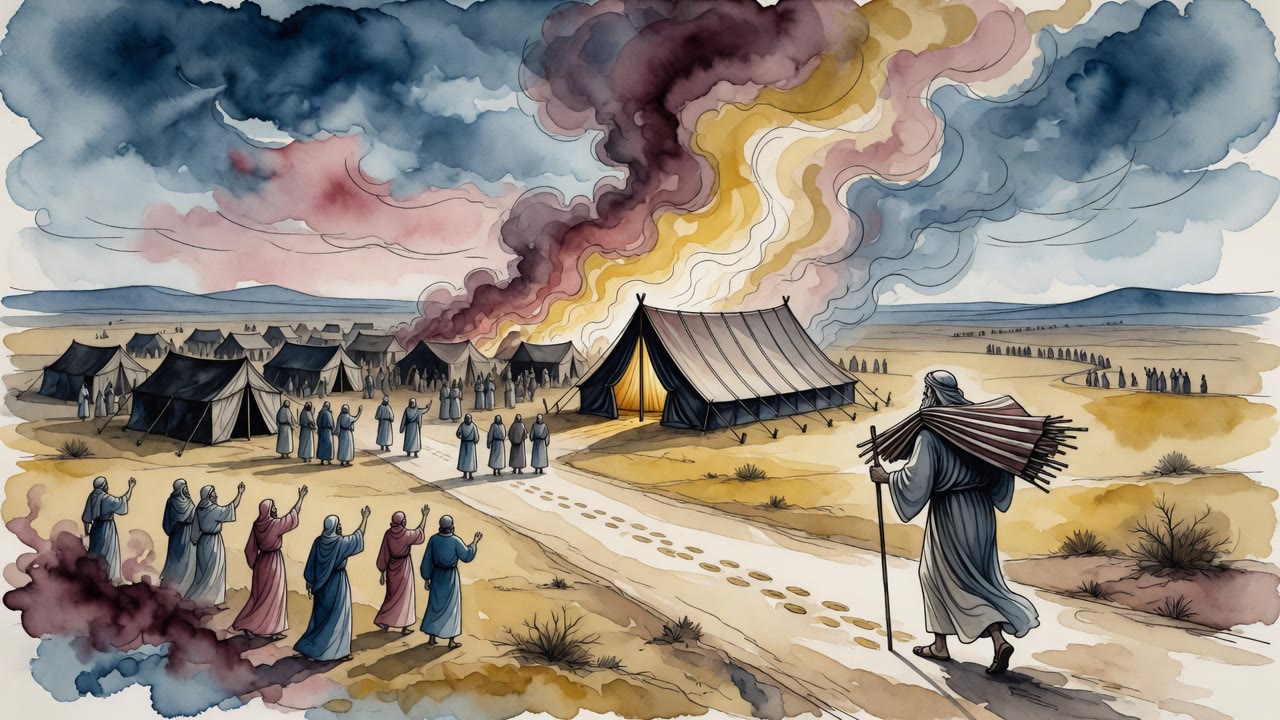
The tablets were still hot in Moses's arms when he came around the last slope and heard the singing.
 Click for full size
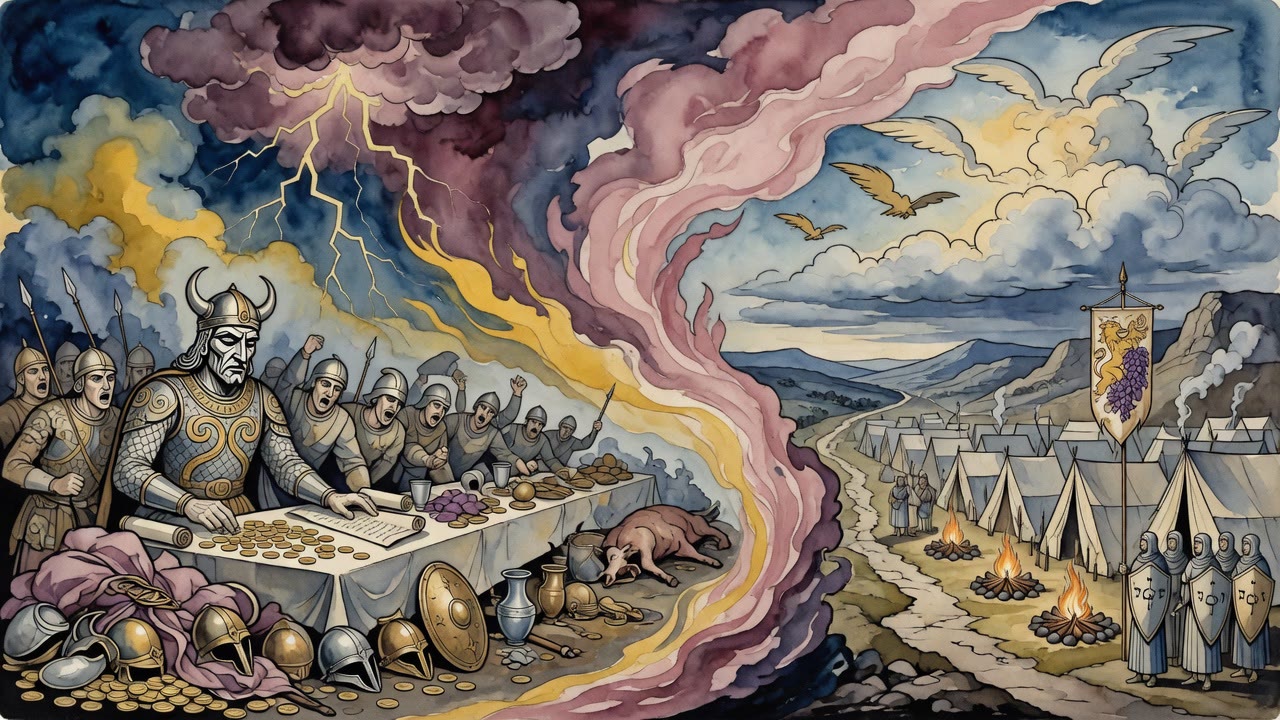
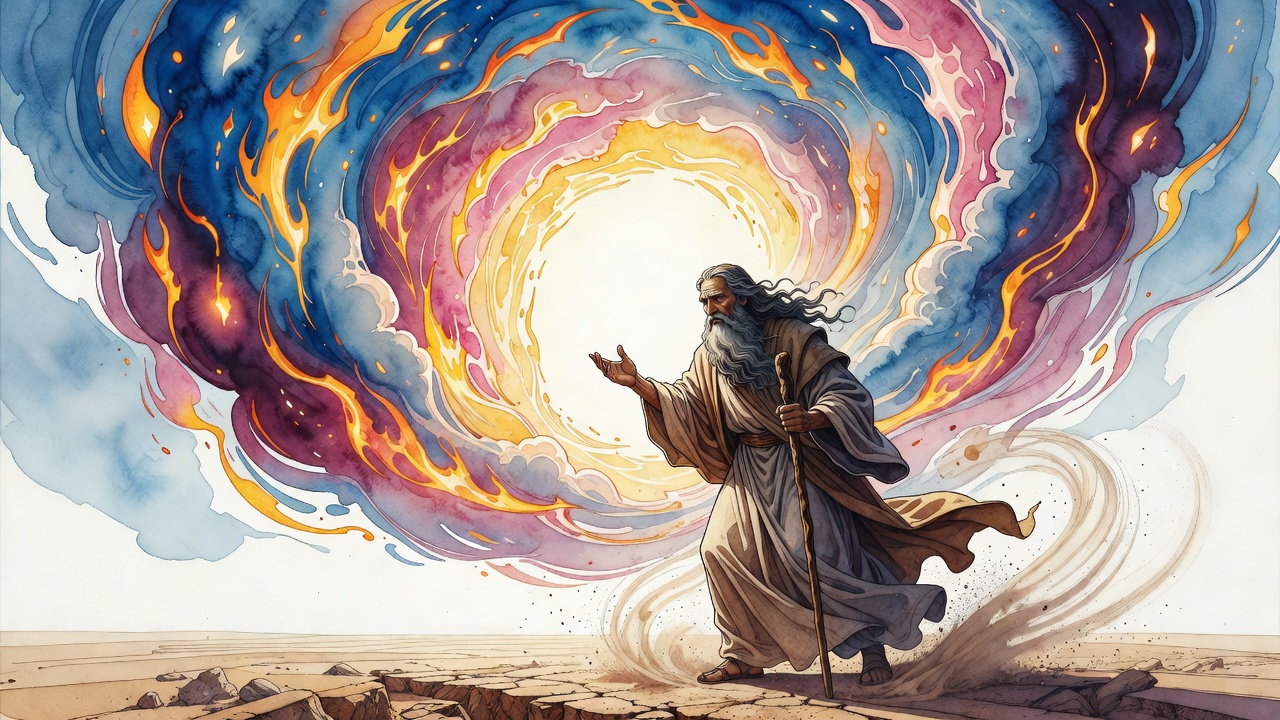
He saw the calf. He smashed the tablets on the stones. Then God spoke. "Let Me alone so I can destroy this people and make a great nation out of you."
Moses did not weep first. He argued. "Egypt will say You brought them out to kill them in the mountains. Remember Abraham, Isaac, and Jacob, and the oath You swore them. If You wipe them out now, the nations will say their God could not finish what He started."
The verdict reversed. Moses had no army to force it. He had a case, and God took a sound case. For forty years that became the pattern. God issued a decree. Moses paused. Moses built a brief. The decree moved.
Ambassadors Before the Sword
On the eve of war with Sihon, the command was clean. Rise up. Fight him. Take the land.
Moses heard it and sent ambassadors anyway, offering peace and a road through.
God pushed back. "I told you to fight. Why are you sending messengers?"
"I am doing what You do," Moses said. "When You made the world, You offered peace first. You sent a warning before the Flood. You called to Adam in the garden before the punishment. You showed patience before judgment every time."
God accepted the sequence. The peace offer went out. Sihon refused it. Then the sword was justified. Moses had not cancelled the command. He had been told to fight, and he asked leave to negotiate first. Heaven let a negotiator rewrite the first step, and then commanded him never again to declare war on a city without first urging surrender in peace.
The Earth Opened Without His Plea
When Korah and his company came at Moses and Aaron, they did not come with a calf or a coward's report. They came with a claim. Upon Sinai all Israel heard, "I am the Lord." They asked, "Why then do you lift yourselves above the congregation?"
They said the burden was heavier than Egypt. They said fifteen thousand men a year had become a tribute to death since the spies. They said it would have been better to stay. They accused Moses of grabbing power. They tried to stone him. He ran to God.
"I do not care if they insult me or Aaron," he said. "I insist that the insult of the Torah be avenged. If these men die the common death of all men, I shall myself become a disbeliever and declare the Torah was not given by God."
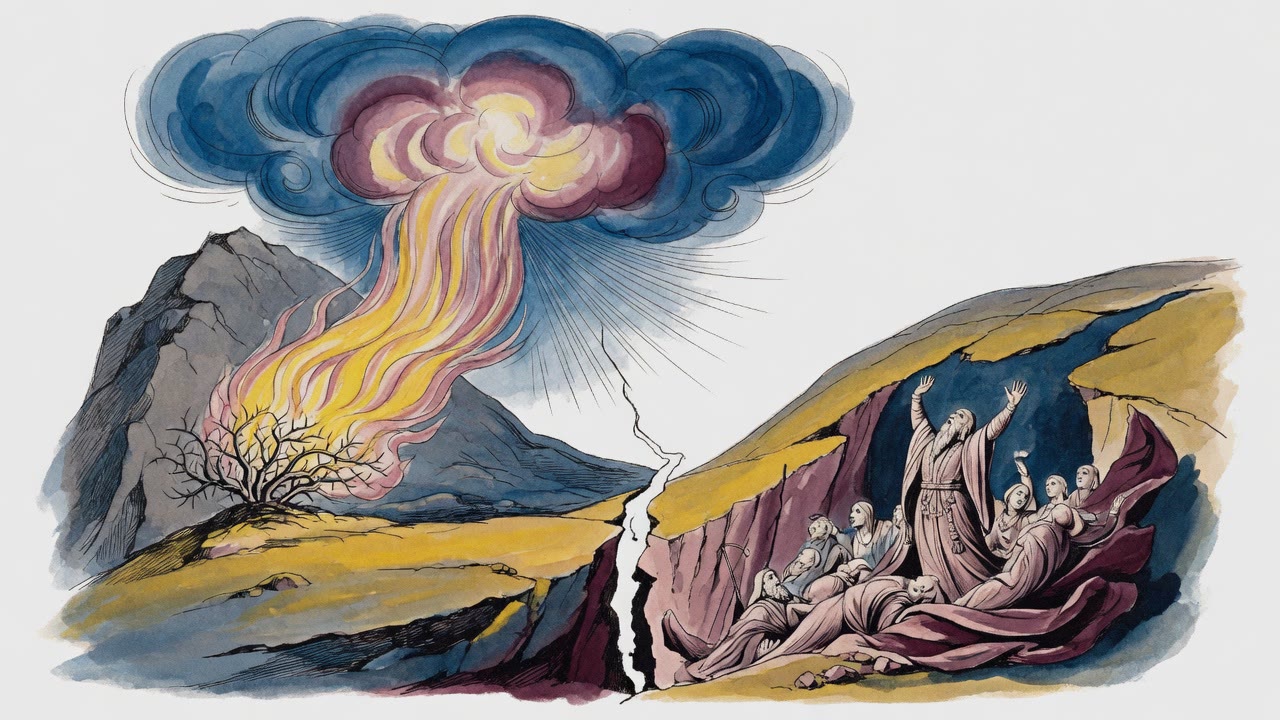
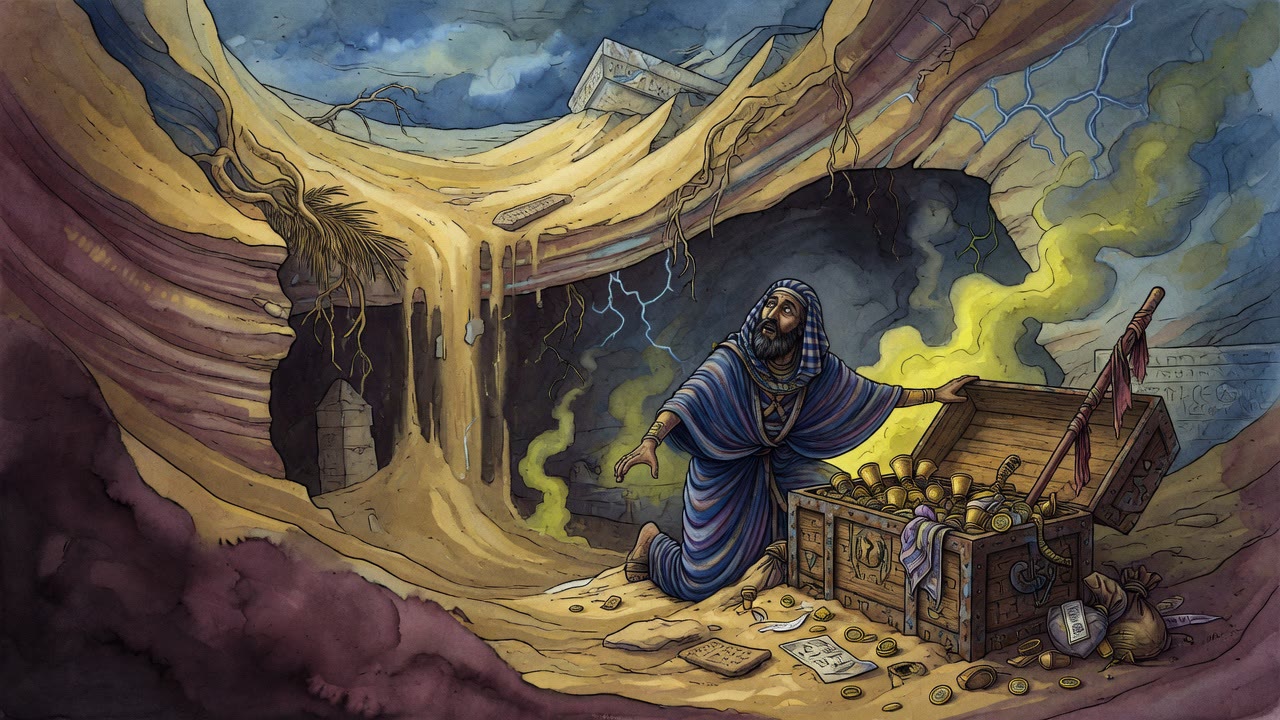
The ground opened. Moses did not build a case for Korah's life. He had argued for the dancers around the calf. He had argued for Miriam when leprosy struck her. He had argued for Israel after the spies came back afraid. He did not argue for Korah. That sin was a hand on the structure itself, and Moses knew which doors would open and which would not.
Five Hundred Fifteen Prayers
At the Jordan the old skill came back like a habit. Moses wanted entry. He wanted the land he had carried a people toward for forty years.
"Lord of the world," he said. "Consider how much I had to bear for the sake of Israel until they became Your people. I suffered with them. Shall I not take part in their rejoicing? Your Torah says, in his day you shall give the laborer his hire. Where is my hire for the forty years I labored for Your children in Egypt, in the desert, and at the giving of the Torah?"
He prayed it again. He prayed it until the count reached five hundred fifteen, the number of Va'etchanan (ואתחנן), "and I pleaded." The 515th prayer was still in the air when God said enough.
"Go up the mountain. See the land. That is what you will have."
The Door That Would Not Open
Every other time the argument had been for someone else. The covenant was larger than one sin, and Moses could stand inside it and pull. The argument for his own crossing could only point at his own merit. Merit has a ceiling. At Meribah he had struck the rock instead of speaking to it, and that blow sat in the file no brief could close.
He climbed. Canaan lay out under the light, fields and ridges he would never walk. The greatest negotiator in Israel could argue a nation off a death sentence and could not argue himself across a river. The client and the lawyer were the same man, and the door stayed shut.
← All myths