5 min read

God Turns a Ring and the Mountains Catch Fire

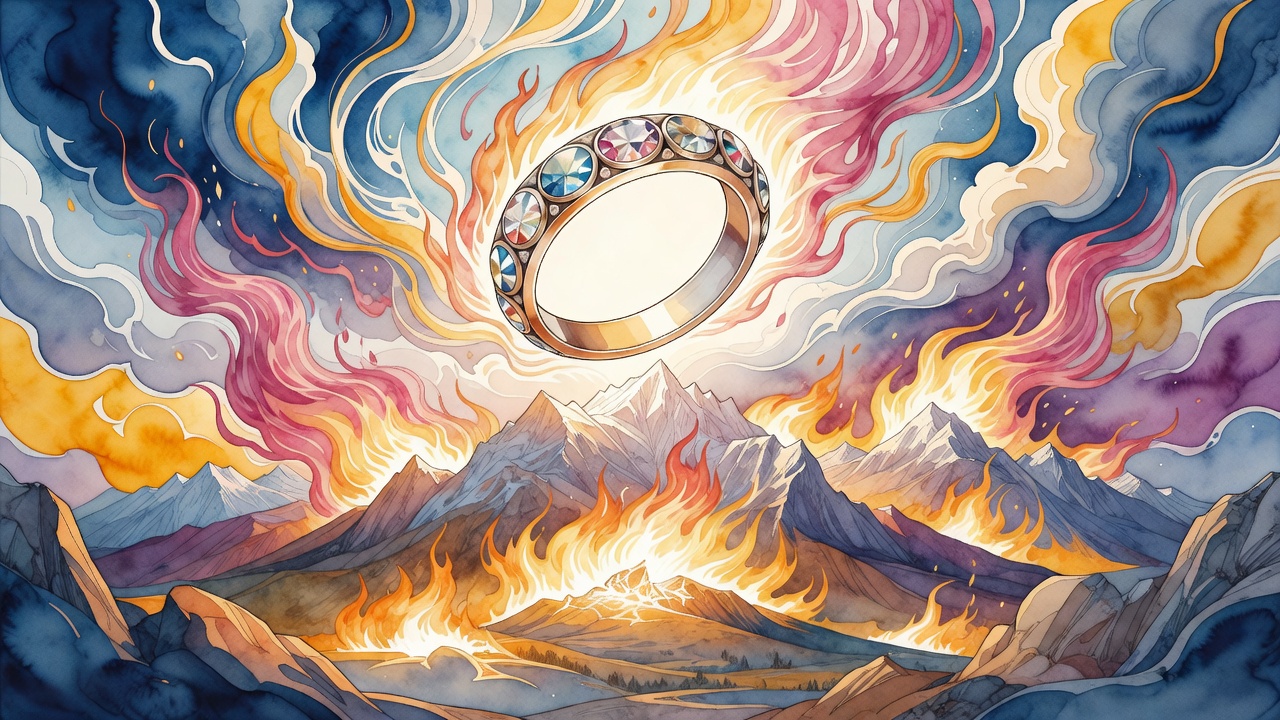
Over bare mountains God turns a gemmed ring, and sparks dress the land in holiness that exile later tries to shake out.

Curated by Arthur · Told by Maggid ·
Table of Contents
  1. Mountains Without a Promise
  2. The First Turn Over Galilee
  3. When the Heart of Holiness Breaks
  4. The Shake at the End of Days
  5. A Traveler Stops on the Ridge
God Turns a Ring and the Mountains Catch Fire Click for full size

Mountains Without a Promise

Before the land was called holy in the mouths of wanderers, it lay bare. Desolate ranges stretched under a sky that gave no speech. No temple smoke. No cities that knew a Name. Only rock, dust, and the long patience of emptiness waiting for a decision no human could force.

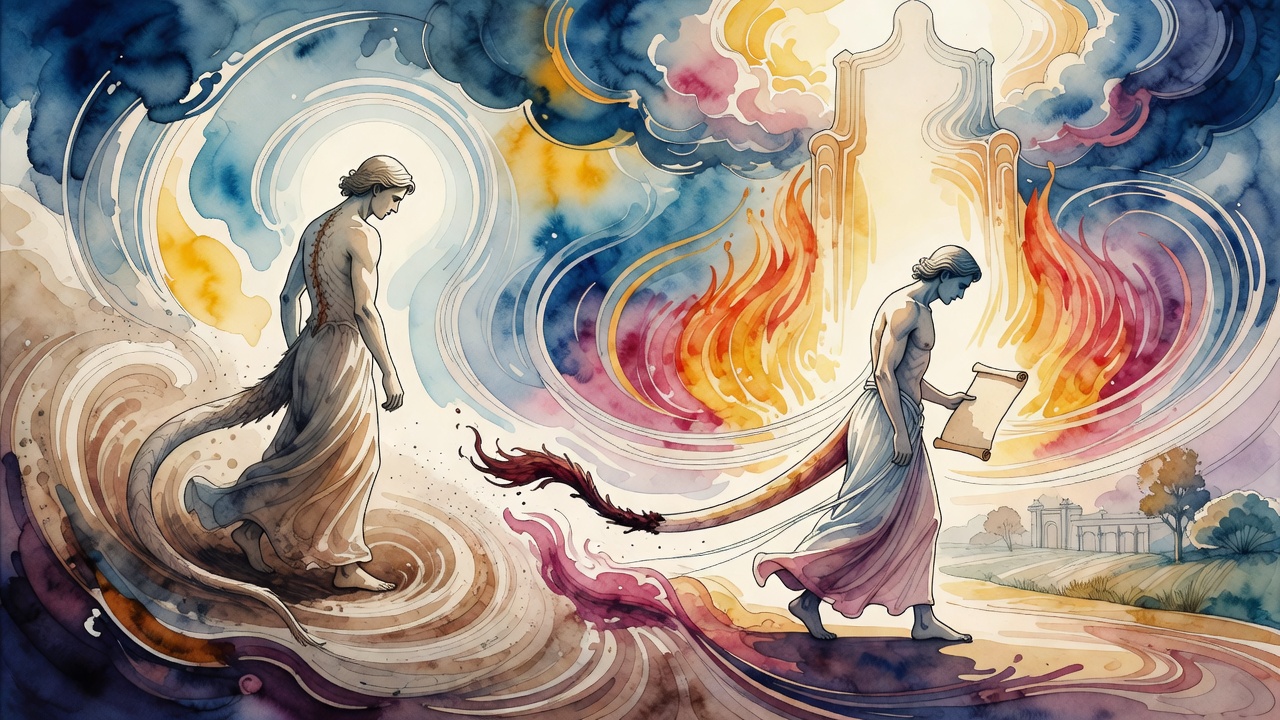
God wore a ring set with every precious stone the eye can name: amethyst, emerald, sapphire, lights crowded edge to edge. When the ring turned, the firmament received sparks the way a night field receives fireflies, except these sparks were not insects. They were pieces of intention, flung outward to choose a place.

The First Turn Over Galilee

God turned the ring. Sparks arced over the Galilee and the Jordan Valley, reached desert floor and the hard rim of the Dead Sea. Mountains took a bluish gleam. Luminous circles settled into the valley like rings laid gently on water. The old formula from creation returned without apology: God saw that it was good.

The second turn brought fire instead of blue. Fiery sparks wrapped the ridges until the mountains looked like a tallit thrown across the land, fringes of light where stone met sky. Holiness here was not a soft mist. It was heat that claimed geography. A fragment of stone left the ring, flew over the Negev, and struck with force enough to melt. Where it landed, the Sea of Eilat began to shine day and night, a liquid memory of the ring that birthed it.

From that hour the land was no longer only soil and border. It carried a charge. People who would later walk it barefoot would feel it without always knowing the story of the ring.

When the Heart of Holiness Breaks

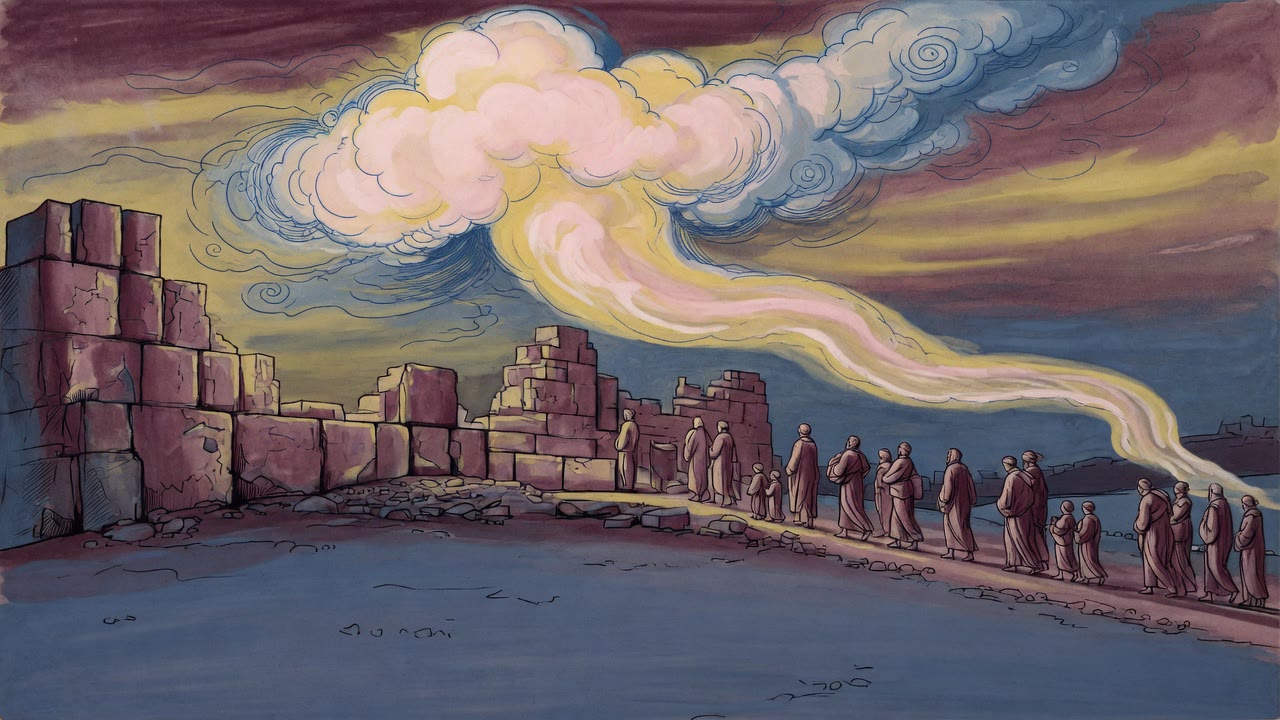
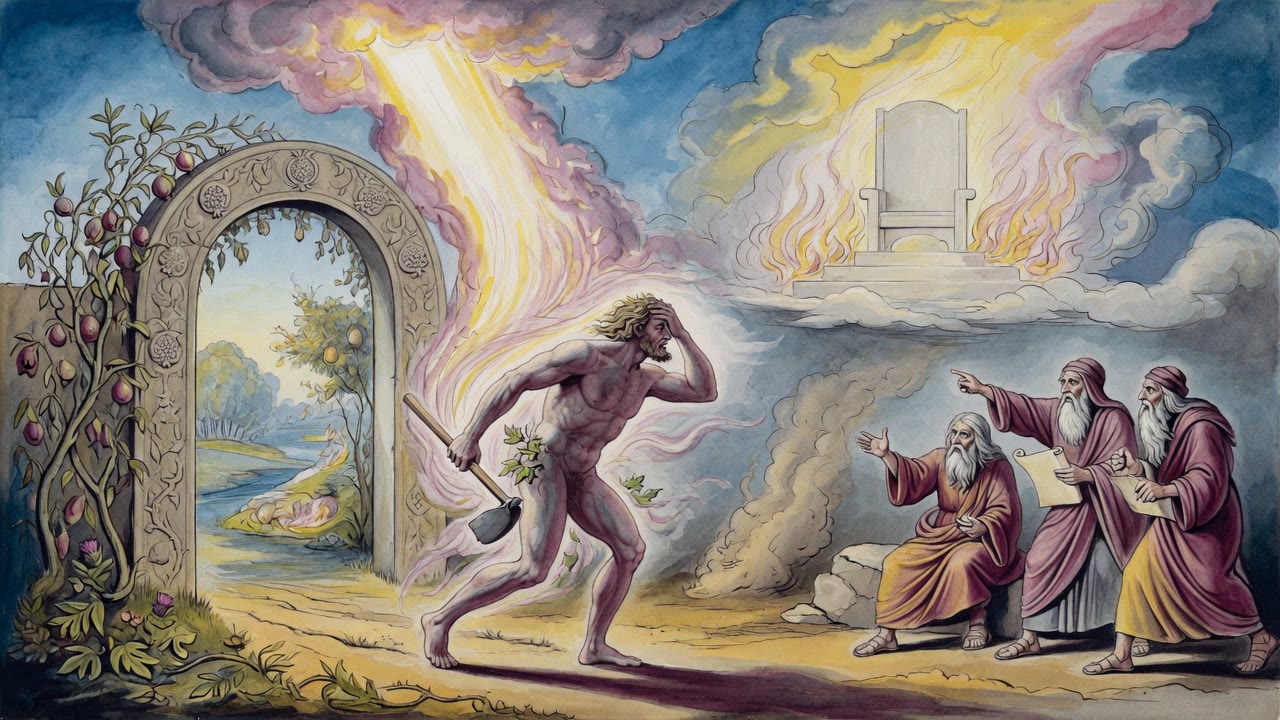
Centuries later the Temple fell, and the charge did not simply fade. It went into exile with the people who had failed it. The land became broken down because of the wickedness of those who dwelt there. Holiness did not vanish; it became a wound. Actions of the inhabitants had always entered the soil. When those actions were aligned with the covenant, the land flourished in more than crops. When wickedness took hold, the stain sank deeper than any plow could turn.

Pirkei de-Rabbi Eliezer keeps the image of a land that can absorb crime the way cloth absorbs oil. The heart of holiness had been the House in Jerusalem. When that heart shattered, the body of the land staggered. Exiles sang by foreign rivers and still named the hills that no longer held their daily walk, because the ring's sparks had not been a decoration. They had been a claim.

In the streets of the ruined city, ash mixed with the dust of offerings. Priests without an altar walked with empty hands. Farmers in the hills still planted, but the old confidence that the ground itself was an ally had thinned. A grandmother pointed a child toward the east and said the Name that once filled the courts. The child saw only broken courses of stone. Both were telling the truth. The ring's work had not been undone, but it had been covered by the weight of what people did on the soil it dressed.

The Shake at the End of Days

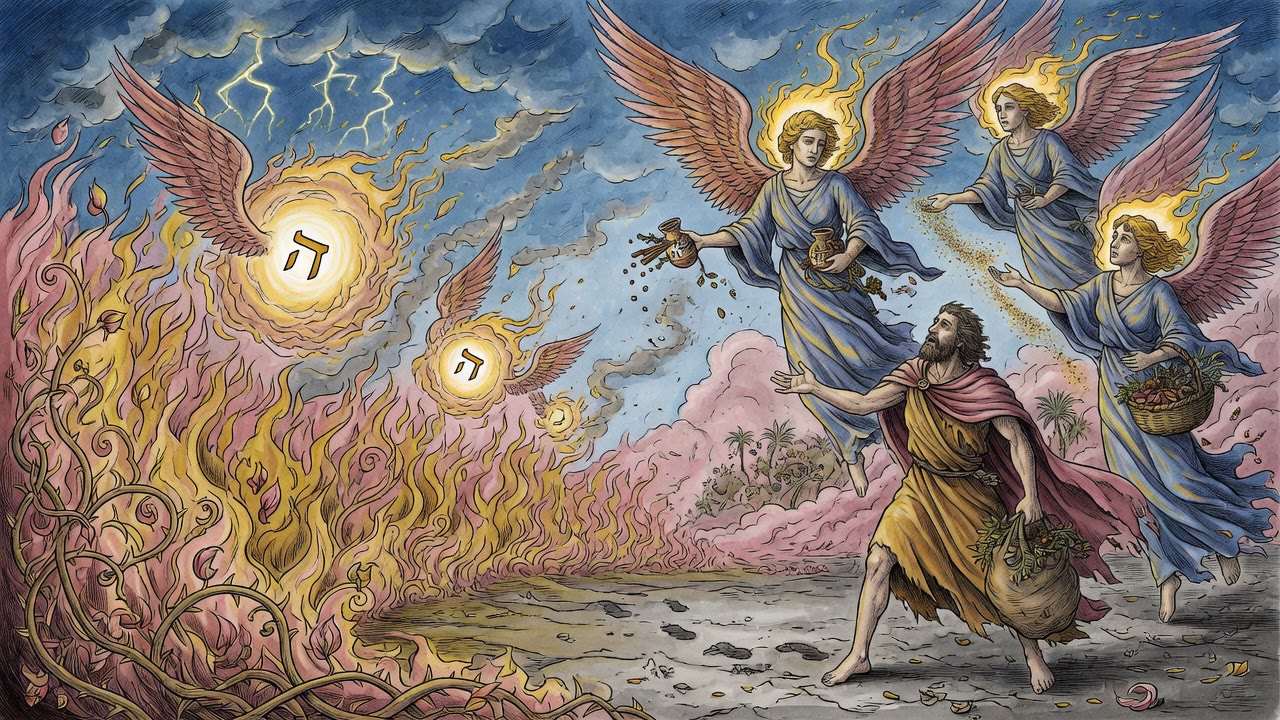
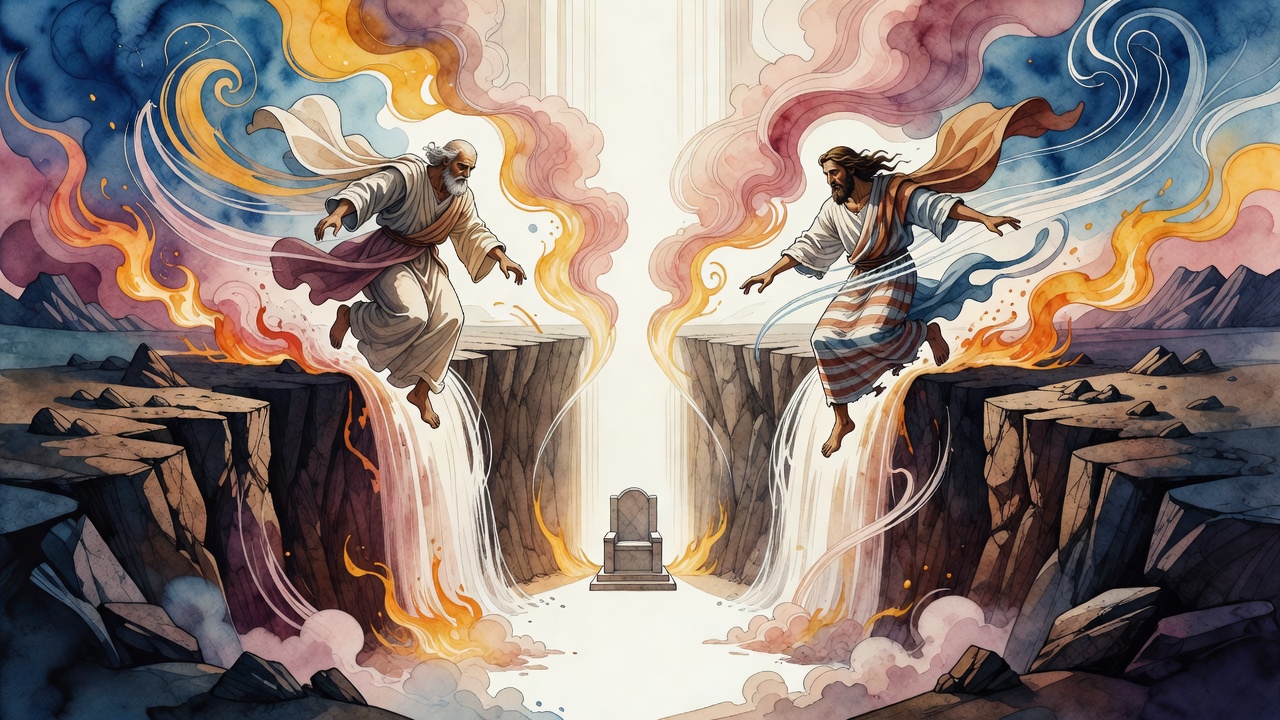
The same tradition refuses to leave the land forever bowed under its stain. In the Days to Come, God will take hold of the corners of the earth and shake the wicked out of it, as Job heard when the whirlwind asked who seizes the corners of the earth to shake the wicked free (Job 38:13). The image is almost domestic in its violence: a rug lifted and snapped until dust and crumbs fly. The land itself becomes the cloth. The unclean things that clung to it lose their grip.

Later teachers heard a cousin of this hope in the language of broken vessels and hard shells that refuse to let go of light. The point for the land is simpler and older. What God dressed in sparks can be cleaned again by the same Hand. Exile is not the last sentence spoken over the mountains that once wore a tallit of fire.

A Traveler Stops on the Ridge

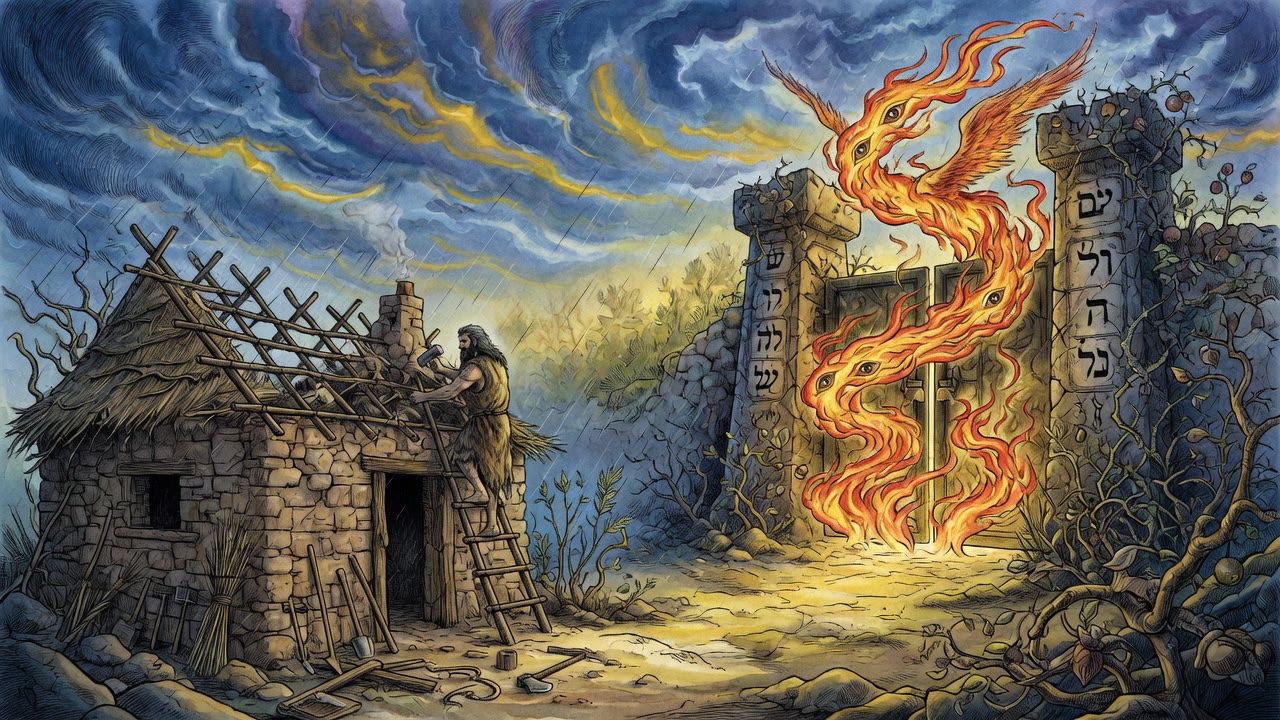
Imagine a traveler on those ridges after rain, when the air is sharp and the sea far below holds a hard glitter. He does not see the ring. He sees stone and scrub and a road that wants water. Still the old story insists the ground under his boots once received sparks deliberate enough to melt a sea into being. The holiness he seeks is not only in books carried in a sack. It is in the claim that this place was chosen the way a jeweler turns a stone toward light.

When the land later shakes free of what stuck to it, the traveler's grandchildren may walk without the old stain underfoot. Until then the mountains keep both memories: the first spark and the long exile of holiness from its own house.


← All myths
From the tradition

Sources

2 sources

The texts behind this telling. Some cards carry a translation of the source; others are our own retelling of it, and each card says which. Every card links out to the original.

Beit HaMidrash (Jellinek) 5:63Midrash Aggadah

Retold in our words. Read the original at the link below.Sefaria-hosted English translation · CC-BY

A bare, deserted landscape, just desolate mountains stretching as far as the eye could see. Not exactly the Promised Land we know and cherish.

Then, something incredible happened.

The tradition says God wears a magnificent ring, a celestial adornment studded with every precious gem imaginable – amethysts, emeralds, sapphires…each one a source of light, scattering holy sparks across the firmament like a million twinkling stars.

One day, God decided to transform that desolate land.

He turned the ring on His finger.

The Zohar tells us that sparks flew forth, arcing over the Galilee and the Jordan Valley, reaching the desert and even as far as the Dead Sea. In an instant, the mountains shimmered, cloaked in a bluish gleam, and luminous circles embraced the Jordan Valley. "God saw that it was good," the story goes, and turned His ring once more. This time, fiery sparks enveloped the mountains, resembling a glimmering tallit, a prayer shawl.

This act of creation, this divine intervention…it's not just about aesthetics. It's about imbuing the land with holiness, with a divine presence. Perhaps, as some suggest, this echoes the Kabbalistic idea of the "shattering of the vessels," the Shevirat HaKelim, and the scattering of holy sparks. (Remember that myth? We touched on it before, about how creation is a process of gathering those sparks.)

But the story doesn't end there.

God raised His hand, and a fragment of precious stone soared over the Negev. It landed with such force that it melted, becoming the Sea of Eilat – sparkling and shining day and night, forever remembering its origin in God's ring. As we find in Tree of Souls (Howard Schwartz), this is an origin story, explaining how a desolate land transformed through divine intervention.

And then, God gazed northward. He turned His ring again, and the most beautiful of God's sapphires descended to earth, transforming into the Sea of Galilee, the Kinneret. Ginzberg, in his Legends of the Jews, might even say these jewels flew like comets!

So, the next time you see a picture of the Sea of Galilee shimmering under the sun, or imagine the vibrant coral reefs of Eilat, remember this story. Remember the desolate mountains, the turning of the ring, and the sparks that transformed a land into something truly holy. It's a powerful reminder that even the most barren places can be filled with beauty and divine light.

What do you think? Does this story change how you see the Land of Israel? Does it give you a new appreciation for the beauty of the natural world, knowing that, according to tradition, even these landscapes hold a spark of the divine?

Full source
Pirkei DeRabbi Eliezer 34Pirkei DeRabbi Eliezer

Translation of the source text.Pirke DeRabbi Eliezer, Sefaria Vocalized Edition · Public Domain

"See now that I, even I, am He" (Deuteronomy 32:39). Rabbi Eliezer says: And what did Scripture see fit to say two times, "that I, even I, am He"? Rather, the Holy One, blessed be He, said: I am He in this world and I am He in the world to come. I am He who redeemed Israel from Egypt, and I am He who is destined to redeem them at the end of the fourth kingdom. Therefore He said, "I, even I, am He." Anyone who says that there are other gods, I will put him to death with a death from which there is no resurrection; and every nation that says there is no God but Me, I will revive it after the second death to the life of the world to come. For I put to death and give life, therefore it is said, "I kill and I make alive" (Deuteronomy 32:39). I have wounded Jerusalem and her people on the day of His fierce anger, and with great mercy I will heal them; therefore it is said, "I have wounded Jerusalem, and I will heal." And no angel or seraph will rescue the wicked from the judgment of Gehinnom, as it is said, "And there is none who delivers from My hand" (Deuteronomy 32:39).

Rabbi Yehonatan says: All the dead rise to the resurrection except for the generation of the Flood, as it is said, "The dead shall not live" (Isaiah 26:14). These are the nations, who are like the carcass of a beast, who shall arise on the Day of Judgment; but the generation of the Flood, even on the Day of Judgment, do not arise, as it is said, "the shades shall not rise" (Isaiah 26:14). And all their souls become spirits and harm a person of Israel. Further, as it is said, "Therefore You have visited and destroyed them, and made all remembrance of them to perish" (Isaiah 26:14).

Rabbi Zechariah says: The sleep of the night is like this world, and the waking of the morning is like the world to come. And what is the sleep of the night? A person lies down and sleeps, and his spirit roams about the whole earth and tells him in a dream all that will be, as it is said: "In a dream, in a vision of the night... then He opens the ears of men and seals their instruction" (Job 33:15-16). So too the dead: their spirits roam about the whole earth and tell them all that was; but they give praise and song to the Holy One, blessed be He, who is destined to revive them, as it is said: "Let the faithful exult in glory; let them sing for joy upon their beds" (Psalms 149:5). And the waking of the morning is like the world to come, as it is said: "Satisfy us in the morning with Your steadfast love, that we may sing for joy and be glad" (Psalms 90:14), and so on.

Five sounds go out from one end of the world to the other, yet the sound is not heard. At the time they cut down a tree that bears fruit, the sound goes out from one end of the world to the other yet the sound is not heard; and at the time the serpent sheds its skin; and at the time a woman is divorced from her husband; and at the time the child comes out of the body, until it sees the Divine Presence.

Rabbi Azaryah said: All the souls return and are gathered, each to the generation of his fathers and to his kin, the righteous with the righteous and the wicked with the wicked. For so the Holy One, blessed be He, said to Abraham our father: "And you shall come to your fathers in peace" (Genesis 15:15). From here we learn that Terah his father did repentance. And is it the case that when the soul leaves the body this is peace? Rather, the righteous come forth to greet him in peace, as it is said: "He enters into peace; they rest on their beds" (Isaiah 57:2). And another verse says: "And you shall be gathered to your grave in peace" (2 Kings 22:20).

Rabbi Hanina says: All Israel who die outside the Land, their souls are gathered into the Land, as it is said: "And the soul of my lord shall be bound in the bundle of the living" (1 Samuel 25:29). And all who die of the nations within the Land, their souls are flung by a sling outside the Land, as it is said: "And the souls of your enemies He shall sling out, as from the hollow of a sling" (1 Samuel 25:29).

In the time to come the Holy One, blessed be He, will take hold of the corners of the earth and shake it of all impurity, like a person who shakes out a garment and casts out all that is in it and throws it outside, as it is said: "To take hold of the corners of the earth, that the wicked might be shaken out of it" (Job 38:13).

A person has three friends in his life, and these are they: his children and the members of his household, his money, and good deeds. And at the hour of his departure from the world, he calls to his children and the members of his household and says to them: "I beg of you, take me out of this evil judgment of death!" And they say to him: "Have you not heard that there is no authority over the day of death? And is it not so written, 'No man can by any means redeem his brother' (Psalms 49:8)?" And even his money, which he loves, cannot redeem him, as it is said: "Nor give to God a ransom for him" (Psalms 49:8). Why? "For the redemption of their soul is costly, and must be let alone forever" (Psalms 49:9). Afterward he brings in his good deeds and says to them: "Come and rescue me from this death, and strengthen yourselves with me, and do not let me go out from the world, for you still have hope in me if I am saved." And so his good deeds answer him: "Go in peace; before you go there we will go ahead of you," as it is said: "And your righteousness shall go before you" (Isaiah 58:8).

During the seven days of mourning the body begins to be infested with worms, and the body returns to dust as it was, as it is said: "And the dust returns to the earth as it was" (Ecclesiastes 12:7). And from where do we learn that the soul was given from heaven? Come and see: when the Holy One, blessed be He, formed the human being, what did He do? He breathed into his mouth and a soul was cast into him, as it is said: "And He breathed into his nostrils the breath of life" (Genesis 2:7).

Rabbi Yishmael says: All the dead become like the dust of the earth, until nothing remains of the body except as much as a spoonful of decay, and it mingles with the dust as leaven mingles with the dough. In the time to come, when the Holy One, blessed be He, will command to give over the deposits of all the bodies, He mingles it in the earth like dust, beautifying it and increasing it. Immediately the whole earth quakes and the mountains tremble and the graves open.

Rabbi Azaryah says: All the souls are in the hand of the Holy One, blessed be He, as it is said: "In whose hand is the soul of every living thing" (Job 12:10). To what may the matter be compared? To one who was walking in the marketplace with a key in his hand. As long as the key is in his hand, all his money is in his hand. So too the Holy One, blessed be He: the key of the burial place and the key of the storehouses of the soul are in His hand. In the time to come, the Holy One, blessed be He, opens the graves and opens the storehouses of the soul, and returns each and every spirit into the fleshly body of a man, as it is said: "You send forth Your spirit, they are created, and You renew the face of the earth" (Psalms 104:30).

The soul resembles its Maker. Just as the Holy One, blessed be He, sees and is not seen, so the soul sees and is not seen. Just as before the Holy One, blessed be He, there is no sleep, so the soul does not sleep. Just as the Holy One, blessed be He, bears His world, so the soul bears the whole body. And all the souls are His, as it is said: "Behold, all souls are Mine" (Ezekiel 18:4).

Rabbi Yehudah says: From the day the Temple was destroyed, the land languishes from the wickedness of all its inhabitants, like a person who is ill and has no strength, as it is said: "Every man is brutish" (Jeremiah 10:14), and the land is defiled under its inhabitants and has no strength to stand and yield its fruits.

In the time to come the Holy One, blessed be He, brings down the dew of resurrection and revives the dead, as it is said: "Your dead shall live, my dead bodies shall arise" (Isaiah 26:19). "Your dead shall live" these are Israel who died trusting in His name. "My dead bodies shall arise" these are the nations who are like the carcass of beasts, who shall arise before the judgment but shall not live. "Awake and sing, you who dwell in the dust" (Isaiah 26:19) these are the righteous who are dwellers in the dust of the earth.

Full source