God Wore a Warrior's Face at the Sea and an Elder's at Sinai
At the Sea He thundered as a young warrior, at Sinai He came slow and old, and the mystics swore the two faces hid one unchanging maker.
Table of Contents
 Click for full size
The Young Warrior at the Water's Edge
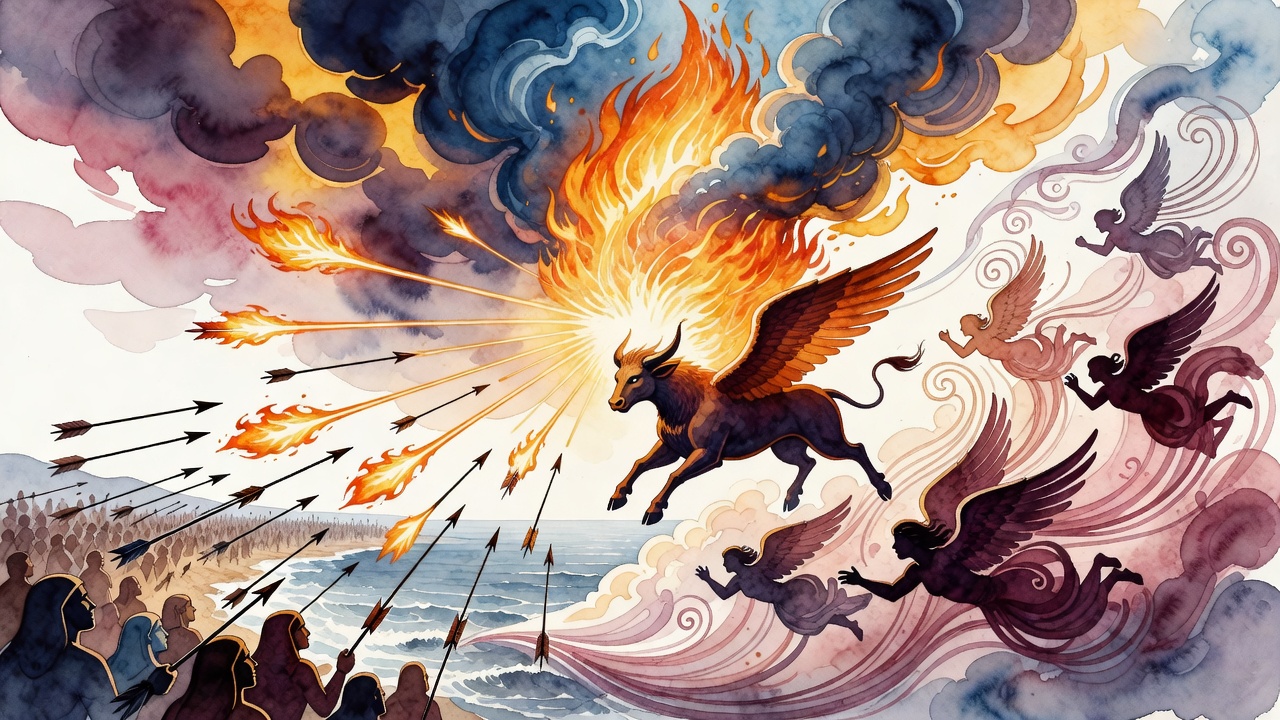
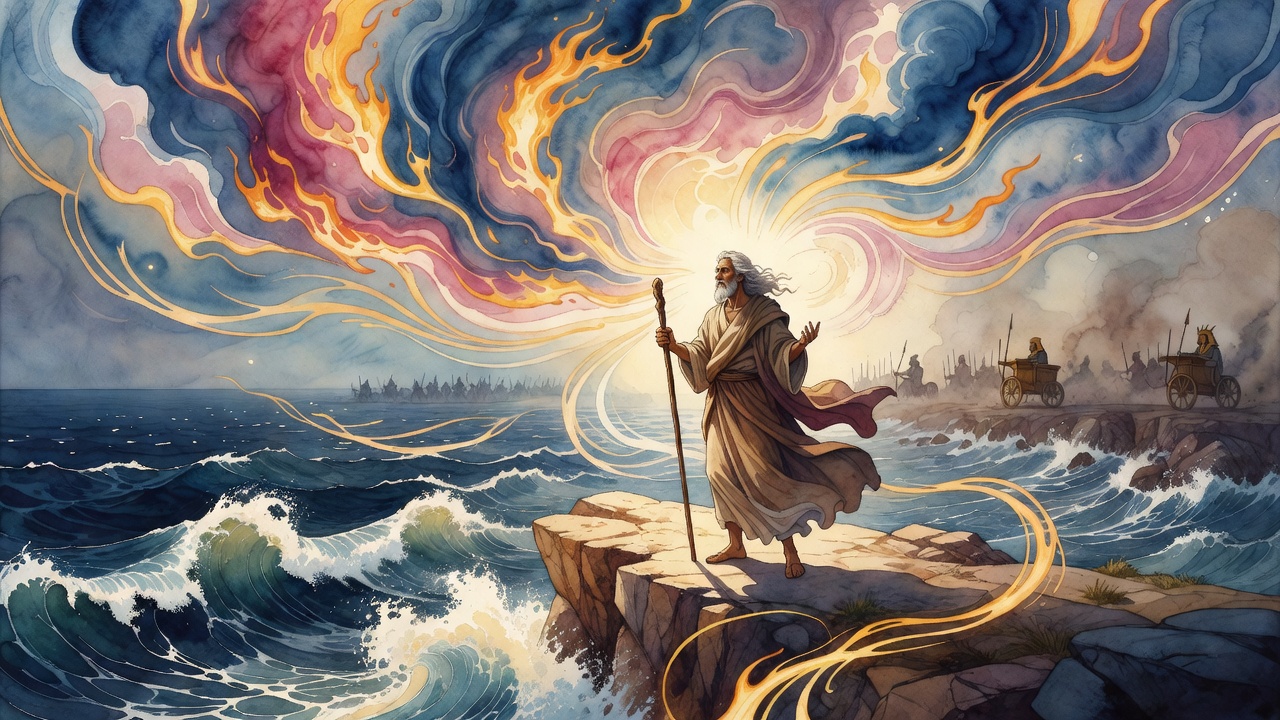
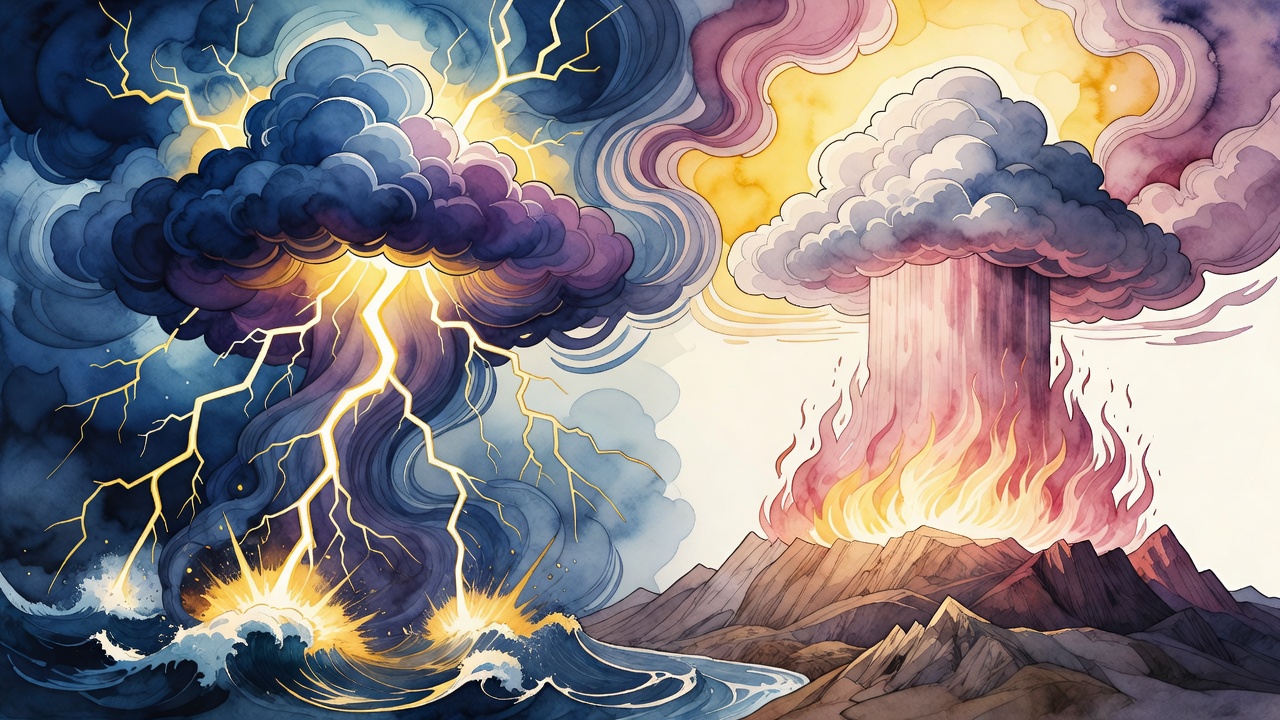
Egypt came on with six hundred chariots, and the sea stood in front of Israel like a wall of iron. Then the water changed. Out of the cloud a figure rode down onto the shore, and he was young. His face was the face of a fighter who had never lost a battle. His bow was fire. His arrows were flame. His spear burned like a torch, his shield was banked cloud, and his sword was a single stroke of lightning laid across the sky. He hewed flames out of his own voice and split the rocks along the shore, and the deep opened before him like a servant bowing low.
Israel had never seen him wear this shape. At the burning bush he had come as a low flame in a thornbush. In Egypt he had come hidden inside the plagues. Here he came as a soldier, and the soldier was terrible.
Pharaoh Boasted That He Had Made Himself
On the far bank Pharaoh watched and was not afraid. He had heard the reports of this God. His spies had brought him the things the Hebrews said: that their God stretches out the heavens and lays the foundation of the earth, that his voice hews flames of fire, that he shatters mountains and breaks rocks, that he sends the rain and the dew, that he makes the green herb sprout and answers the cry of the beasts and shapes the child inside its mother until it comes out into the air of the world.
Pharaoh laughed at the whole list. "From the very start you are lying," he said. "I am the lord of the world. I created myself, and I made the Nile." He believed it. He had said the words before, and they stood written against him: "My river is my own, and I have made myself."
So he drove his chariots into the corridor between the standing walls of water, chasing the young warrior as though a man could chase the lightning that made him. The sea that had bowed to its maker rose and came down, and the boaster who had made himself learned in one breath who had truly made the river.
The Same Voice Came Gentle at the Mountain
Fifty days later the same people stood at the foot of a mountain and waited for the warrior. They did not get him.
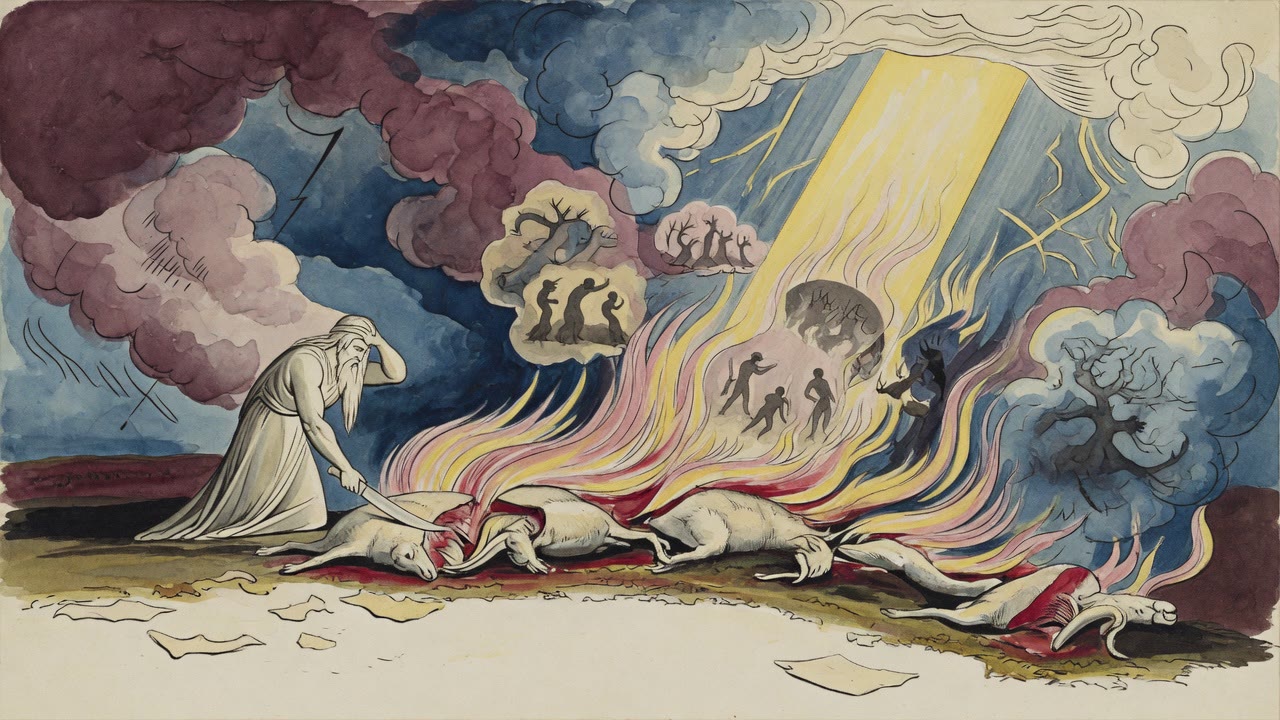
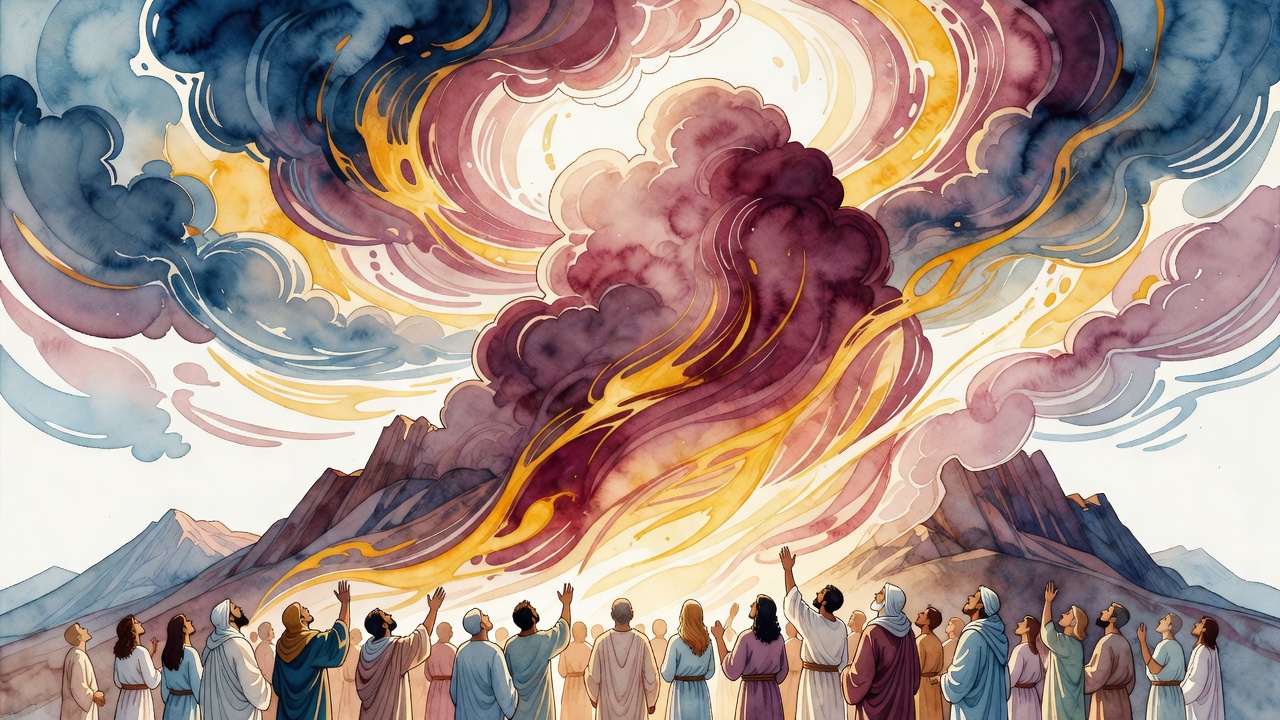
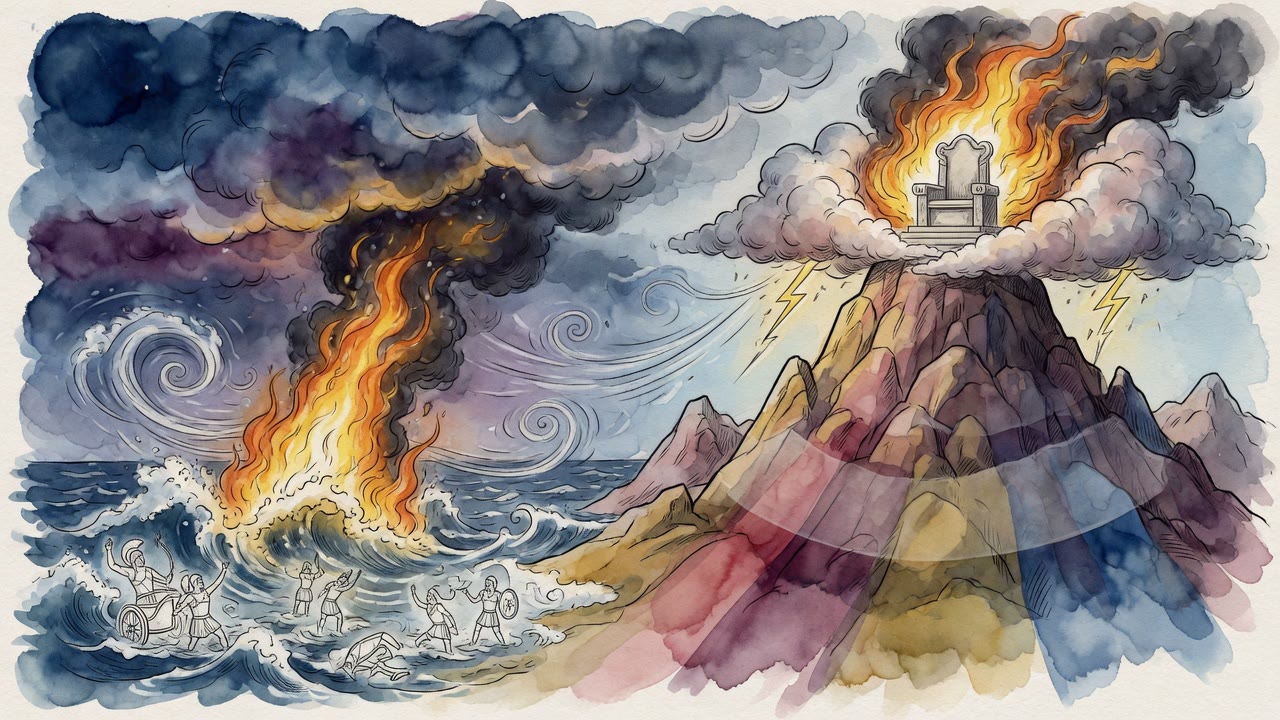
The one who came down onto Sinai rode no storm of arrows. He came slow, and old, and heavy, the way a grandfather is heavy with years and patience. He came full of law and full of mercy, and the voice that had hewn flames of fire at the sea now shaped itself into words a frightened people could hold. I am. You shall. Remember. Honor. The fire was still there. It burned around the mountain and inside every letter. But the shape above it was not a young man spoiling for a fight. It was a teacher with all the time in the world for slow students.
Israel could not fit the two pictures together. At the sea, a warrior with a sword of lightning. At the mountain, an elder handing down a covenant with his own patient hands. It was as if two different gods had kept two different appointments.
Whispers of Two Powers Ran Through the Camp
And there was the danger. If the young fighter at the water and the old lawgiver at the mountain were two faces, a person could slide toward thinking they were two gods, one for war and one for peace, one who drowns armies and one who teaches children. The nations pressing in on every side had a hundred gods arranged exactly like that, a furious god for the storm and a kinder god for the harvest.
The sages who kept the memory of these events saw the trap and slammed it shut. The warrior and the elder, they said, were one. The same maker who bent his bow of fire at the sea bent low over the tablets at Sinai. He had shown two faces on purpose, and the purpose was kindness. He met a people at war with the face of war, and he met a people ready to learn with the face of a teacher, so that no witness at either place would be crushed by a form too great to bear.
The Maker Did Not Change, Only the Eyes That Watched
Long after, a Hasidic master named Levi Yitzchak of Berditchev said it plainly to anyone still troubled by the many faces. God does not change in the slightest, he taught. Not at the sea, not at the mountain, not ever. What changes is the one who looks. The Holy One comes to each soul in the exact measure that soul can grasp, meeting a warrior as a warrior and a student as a student, and the difference lives entirely in human eyes.
The mystics of the Zohar had already drawn the same veil across the mystery. When God comes down to deal with a fragile world, they taught, he wraps himself in garments, because the naked force that split the sea would burn any creature that met it bare. The garments are the stories themselves, the wars and the wanderings, the shore and the mountain. To most eyes the garment is the whole of it, a warrior here and an elder there. Only the wise of heart reach past the cloth to the single body beneath, unchanged, wearing every face and imprisoned by none.
At the sea they had chased a young man made of fire. At the mountain they had trembled before an old man made of law. Both times it was the one who told Pharaoh nothing and let the water answer for him. The faces were many. The maker of the river was one.
← All myths