Parshat Yitro5 min read

God Rose Before Israel on Sinai's Third Morning

On Sinai's third morning God was ready before Israel woke. Thunder spoke in distinct voices, and the nation that sang at the sea stood under a speaking sky.

Curated by Arthur · Told by Maggid ·
Table of Contents
  1. Thunder That Did Not Repeat Itself
  2. You Saw, Not Merely Heard a Report
  3. The Voice Had Already Been Sweet at the Sea
  4. The King Who Arrived First
  5. From Wet Ankles to Smoking Stone

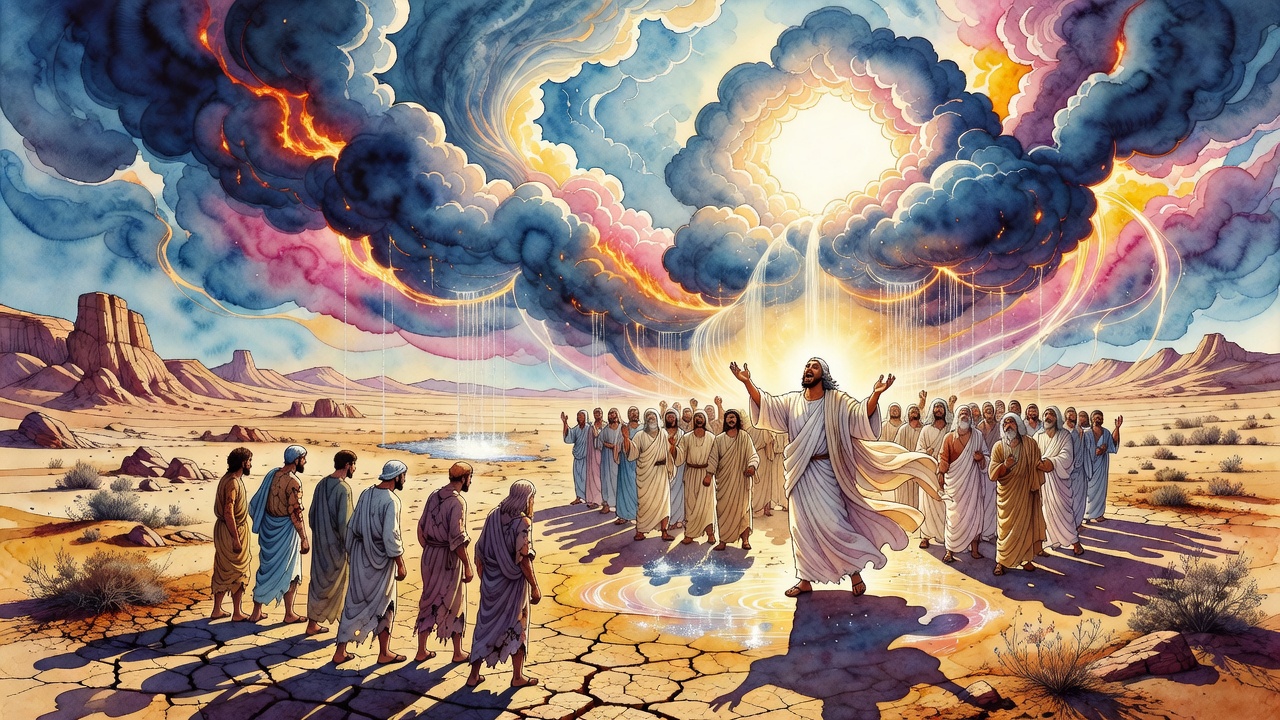
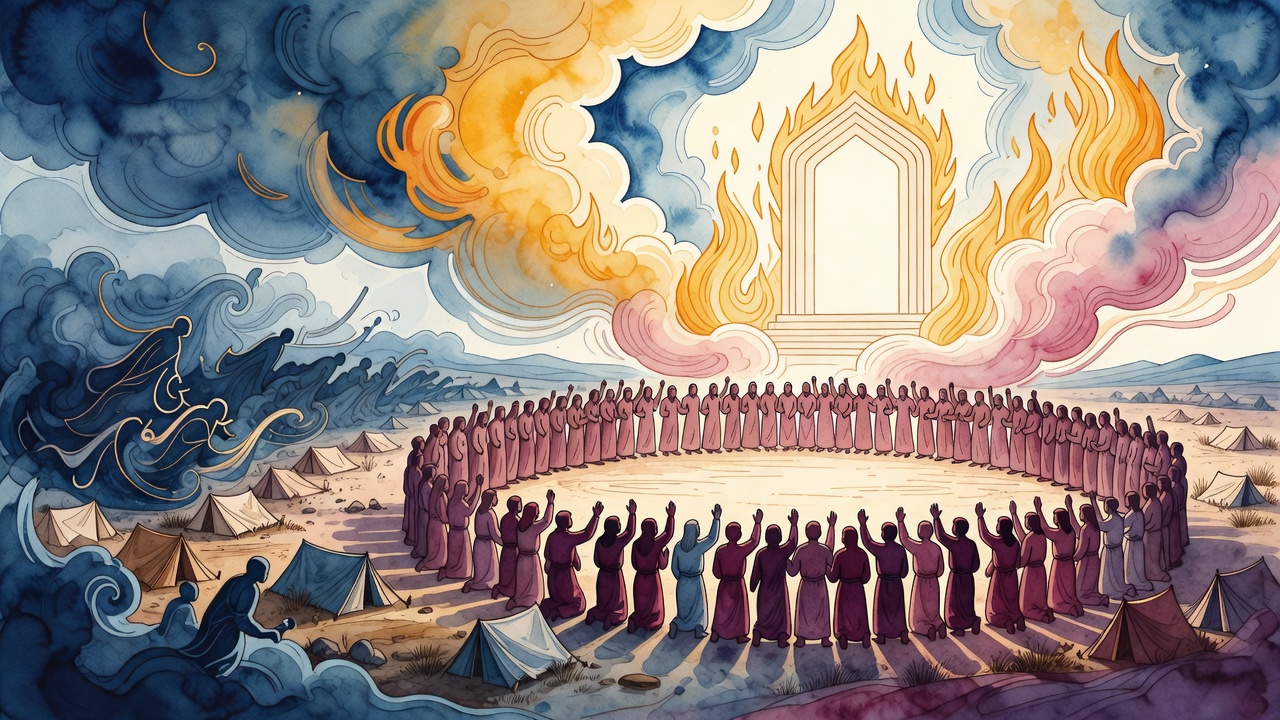
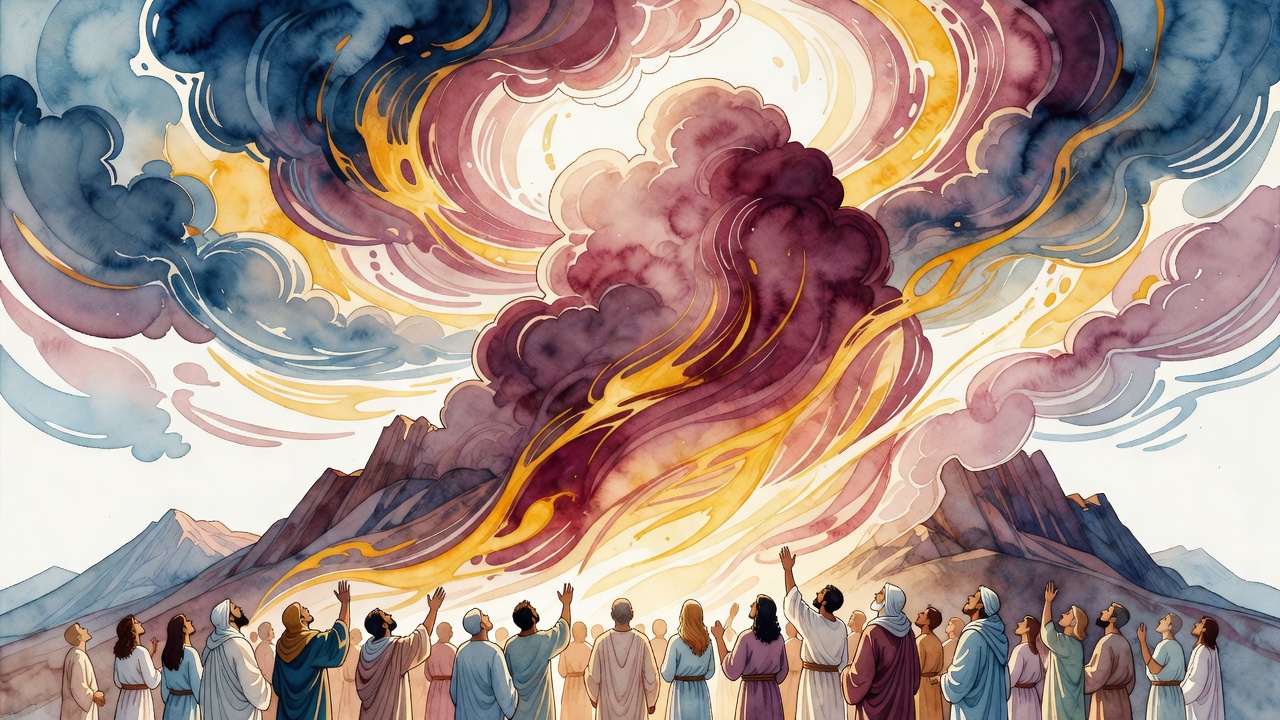
The third morning climbed the mountain before the camp finished rubbing sleep from its eyes. "And it was, on the third day, when it was morning" (Exodus 19:16). God was already there. The King had risen first. The people who thought they would assemble early and wait found themselves the late guests at their own revelation.
God Rose Before Israel on Sinai's Third Morning Click for full size

While the King was on His couch, the Song says, my nard gave forth its fragrance (Song of Songs 1:12). The couch is the heavenly throne. The nard is Israel, scent rising even as they slept. Merit moved upward before feet moved toward the mountain's base. The Teacher was ready before the students. The Giver of the Torah anticipated the receivers.

Thunder That Did Not Repeat Itself

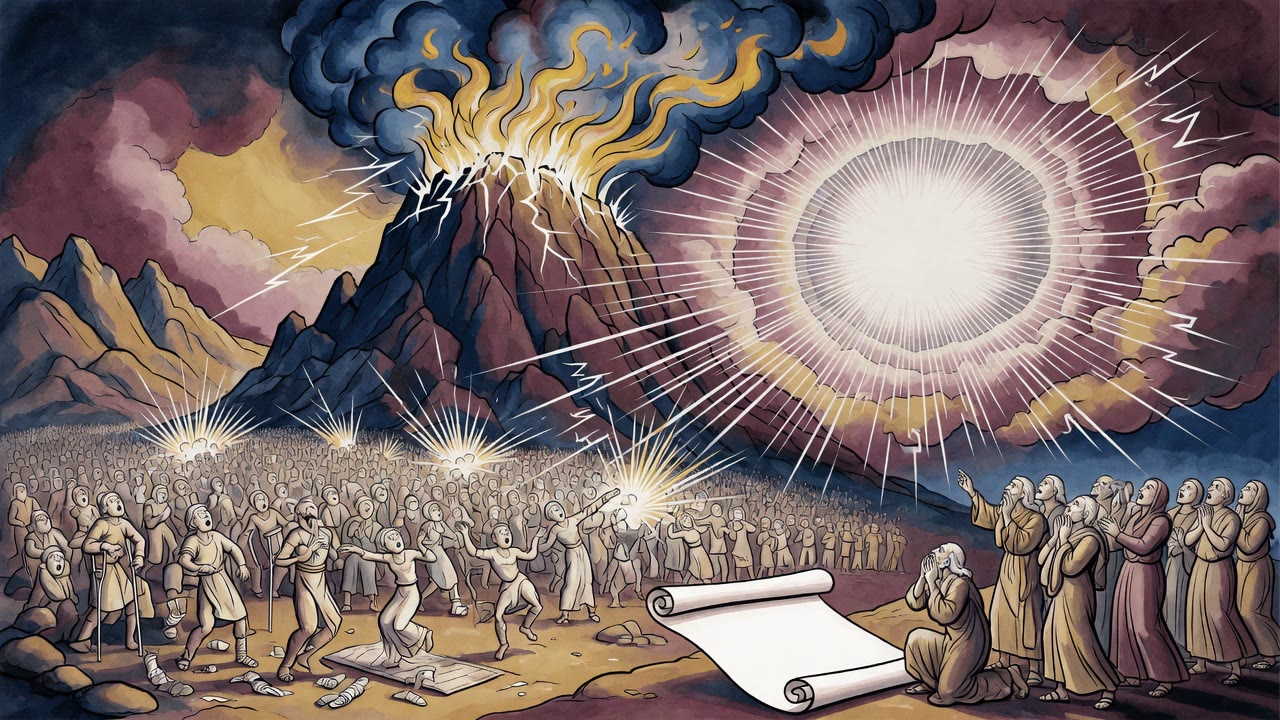
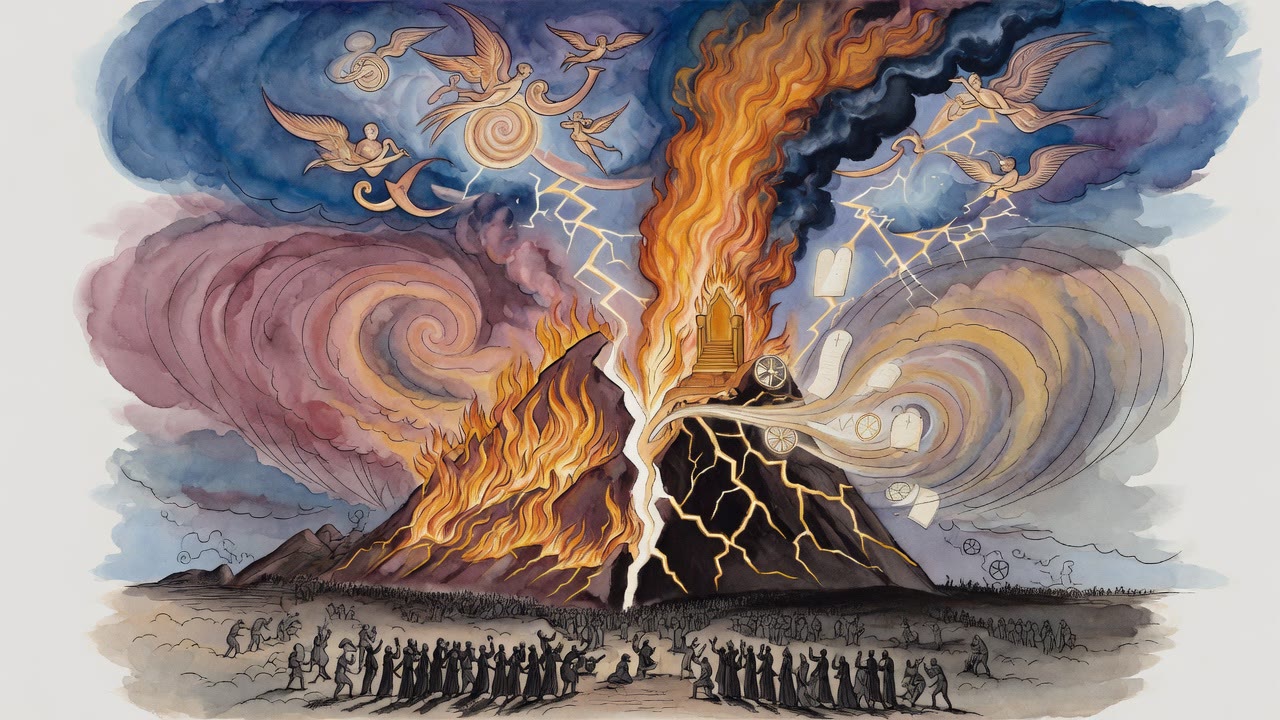
The thunders at Sinai were not weather. Each clap differed from the others. The sounds were distinct, varied, purposeful, as if the heavens refused to speak in a single dull note. Ordinary storms hammer one rhythm. This morning spoke in a vocabulary of noise no desert had catalogued.

Israel stood under that strange weather and learned that revelation is not a copy of nature's habits. It is nature commandeered into speech.

You Saw, Not Merely Heard a Report

God said, "You saw that from the heavens I spoke to you." The claim cuts a line between nations. Other peoples may believe a messenger. Belief still leaves a heart partly divided, a sliver of distance between report and knowledge. Secondhand testimony, however reliable, cannot finish what direct sight finishes.

At Sinai the whole nation stood as witness. Men, women, and children met the voice without an intermediary for the core event. "You yourselves saw." Hearts were not split between rumor and fact. The covenant rests on a collective experience, not on a private vision later packaged for the crowd.

That is why the sages weight this morning so heavily. Lawgiving mattered. Firsthand seeing mattered more as foundation. A people that saw cannot be argued out of the mountain by a clever denial centuries later in a foreign court.

The Voice Had Already Been Sweet at the Sea

Before Sinai's thunders, Israel's voice had already risen at the sea. "For your voice is sweet," the Song says, and the midrash points to the Red Sea, when the nation sang, "I shall sing to the Lord, for He is exalted over all the exalted" (Exodus 15:1). Slaves hours earlier became singers. God found the sound sweet.

"And your face is fair" turns toward the infants. From the mouths of babes and sucklings strength was founded (Psalms 8:3). Even nursing children pointed toward the heavens when the waters stood. Faces lifted in wonder were the fair face of the verse. Beauty, here, is devotion looking upward while heaven looks back.

Sinai did not invent relationship. It sealed a relationship already tuned at the sea, after deeds that preceded any demand for kingship: Exodus, split water, manna, well, quail, Amalek defeated. Only then, "I will rule over you," and the double yes.

The King Who Arrived First

On the third morning the order of hospitality reversed human expectation. Hosts usually wait while guests travel. Here the Host finished preparation while the guests still breathed the last of sleep. The mountain smoked. The horn grew loud. A nation that had sung with wet ankles at the sea now stood with dry fear at the foot of the speaking sky.

God rose early for them. They rose into a world where thunder had grammar and where "you saw" would outlast every later doubt. The nard of their sleeping merit had already reached the couch. The day only made the scent visible as fire and sound.

From Wet Ankles to Smoking Stone

The road from sea to mountain is a curriculum. First the body learns that water can stand like walls. Then the stomach learns that bread can fall with the dew. Then the throat learns song. Only after those lessons does the ear receive commandments that will govern every later ordinary day.

If Sinai had come first, the yes might have been fear alone. Coming after deeds, the yes could be recognition. The King who asks to rule has already ruled the chase, the hunger, and the ambush. The third morning's early arrival of the Host is of a piece with that sequence: God does not improvise care at the last minute. He is present before the people finish arranging their sandals.

Infants who pointed at the sea's miracle grew toward a mountain where even the weather refused monotony. Sweet voice and fair face met varied thunder and undivided sight. The relationship had a past before it had a full constitution.

By the time the horn's blast filled the plain, no one could claim the day had begun with human initiative. Heaven had kept the earlier hour. Israel answered with bodies arranged at the boundary, ready at last for a speech that had already been waiting in fire and cloud.


← All myths
From the tradition

Sources

4 sources

The texts behind this telling. Some cards carry a translation of the source; others are our own retelling of it, and each card says which. Every card links out to the original.

Mekhilta Tractate Bachodesh 3:20Mekhilta DeRabbi Yishmael

Retold in our words. Read the original at the link below.Mechilta, translated by Rabbi Shraga Silverstein · CC-BY

"And it was, on the third day, when it was morning" (Exodus 19:16), the day the Torah would be given at Sinai. The Mekhilta draws a remarkable inference from this verse: God "arose" before the Israelites did. The Creator of the universe was ready and waiting for His people before they had even woken up.

To illustrate this, the Mekhilta cites a verse from (Song of Songs 1:12): "While the King was on His couch, my nard gave forth its fragrance." The "King" is God. The "couch" represents His heavenly throne. And the "nard", the fragrant perfume, represents Israel, whose merit and readiness rose up to God even as they slept. God was already present, already prepared, already reclining as a host awaits honored guests, before Israel opened their eyes on the morning of revelation.

This image overturns the expected hierarchy of the scene. One might assume that the people would rise early, purify themselves, assemble at the mountain's base, and then wait for God to descend. Instead, God was there first. The King arrived before His subjects. The Teacher was ready before His students. The Giver of the Torah anticipated the receivers.

The Mekhilta then notes the "thunderings" mentioned in the verse. And specifies that these were not ordinary thunder. Each clap was different from the others. The sounds at Sinai were not repetitive natural phenomena. They were distinct, varied, and purposeful, each thundering unique, as if the heavens themselves were speaking in a language that defied simple description. The morning of revelation was unlike any morning before or since.

Full source
Mekhilta Tractate Bachodesh 9:20Mekhilta DeRabbi Yishmael

Retold in our words. Read the original at the link below.Mechilta, translated by Rabbi Shraga Silverstein · CC-BY

At Sinai, God made a statement to Israel that no other nation in history could claim: "You saw that from the heavens I spoke to you." The Mekhilta pauses on this verse to draw out a distinction that might seem obvious but carries enormous theological weight, the difference between seeing something yourself and being told about it by someone else.

When other people tell you something happened, you might believe them. You might even be convinced. But somewhere inside, the Mekhilta says, your heart remains "divided." There is always a sliver of doubt, a gap between hearing a report and knowing something firsthand. Secondhand testimony, no matter how reliable, can never fully replace direct experience.

This is what made the revelation at Sinai unique. God did not send a messenger. God did not relay the Torah through an intermediary and ask Israel to trust the report. The entire nation, men, women, and children, stood at the foot of the mountain and experienced the divine voice directly. "You yourselves saw!" the verse emphasizes.

The Mekhilta's point is that the foundation of Israel's covenant with God rests not on faith in a story passed down through generations, but on a collective, national experience of direct revelation. Every Israelite who stood at Sinai was a firsthand witness. Their hearts were not divided. They did not need to take anyone's word for it.

This teaching explains why the rabbis placed such extraordinary importance on the Sinai event. It was not just a moment of lawgiving. It was the moment when an entire people saw for themselves, removing any possibility of doubt at its very root.

Full source
Mekhilta Tractate Bachodesh 3:28Mekhilta DeRabbi Yishmael

Retold in our words. Read the original at the link below.Mechilta, translated by Rabbi Shraga Silverstein · CC-BY

The Mekhilta offers a poetic interpretation of the Song of Songs, reading its romantic language as a dialogue between God and Israel. And locating that dialogue in specific moments of biblical history.

"For your voice is sweet," the verse says. When was Israel's voice sweetest to God? At the Red Sea. When the waters split and the Egyptian army drowned, the entire nation burst into song: "I shall sing to the Lord, for He is exalted over all the exalted" (Exodus 15:1). This was the moment when Israel's collective voice rose in praise for the first time, a spontaneous eruption of gratitude so pure that God Himself found it sweet. The people who had been slaves hours earlier were now singers, and their song was the most beautiful sound in creation.

"And your face is fair," the verse continues. The Mekhilta connects this to (Psalms 8:3): "From the mouths of babes and sucklings You have founded strength." Even the youngest children, infants still nursing at their mothers' breasts, recognized God at the Red Sea and pointed toward the heavens. Their innocent faces, turned upward in wonder, were the "fair face" that the verse describes.

The psalm continues: "When I see Your heavens...", the wonder of creation itself reflects back the beauty of the people who recognize it. God sees Israel's face as fair because Israel sees God's heavens with awe. The relationship is reciprocal. Israel's voice is sweet because it sings to God. Israel's face is fair because it looks toward God. Beauty, in the Mekhilta's reading, is a function of devotion.

Full source
Mekhilta Tractate Bachodesh 5:2Mekhilta DeRabbi Yishmael

Retold in our words. Read the original at the link below.Mechilta, translated by Rabbi Shraga Silverstein · CC-BY

Before God ever asked Israel to accept His kingship, He proved Himself through action. The Mekhilta lays out the sequence with deliberate precision, and the order matters.

First, God took Israel out of Egypt. He shattered the most powerful empire on earth to free a nation of slaves. Then He split the sea, turning an impassable barrier into dry land while the pursuing Egyptian army drowned behind them. He brought down manna from heaven, bread that appeared fresh every morning on the desert floor, feeding an entire nation in a place where no food could grow. He raised the miraculous well of Miriam, a source of water that followed the Israelites through the wilderness. He sent quail when they craved meat. And He waged war against Amalek, the first nation to attack Israel after the Exodus.

Only after all of this, after liberation, miracle, sustenance, water, food, and military protection, did God say to them: "I will rule over you."

They responded: "Yes! Yes!"

The double affirmation is not accidental. The Mekhilta presents a model of legitimate sovereignty. A ruler does not demand allegiance first and deliver benefits later. God demonstrated His worthiness through deeds before asking for a single thing in return. The covenant at Sinai was not imposed on an unwilling people. It was offered to a nation that had already witnessed, firsthand, what their King could do. Their "Yes!" was not coerced. It was earned.

Full source