6 min read

God's Voice Broke the Cedars When Torah Came Down

At Sinai God's voice left the fire and struck the world like a storm that splintered cedars. Moses asked who else had heard and lived. Silence answered.

Curated by Arthur · Told by Maggid ·
Table of Contents
  1. Before Torah, No Voice
  2. I Am the Lord Your God
  3. Shofar in the Wilderness Calendar
  4. Hold Instruction Like Life
  5. Ears That Still Ring

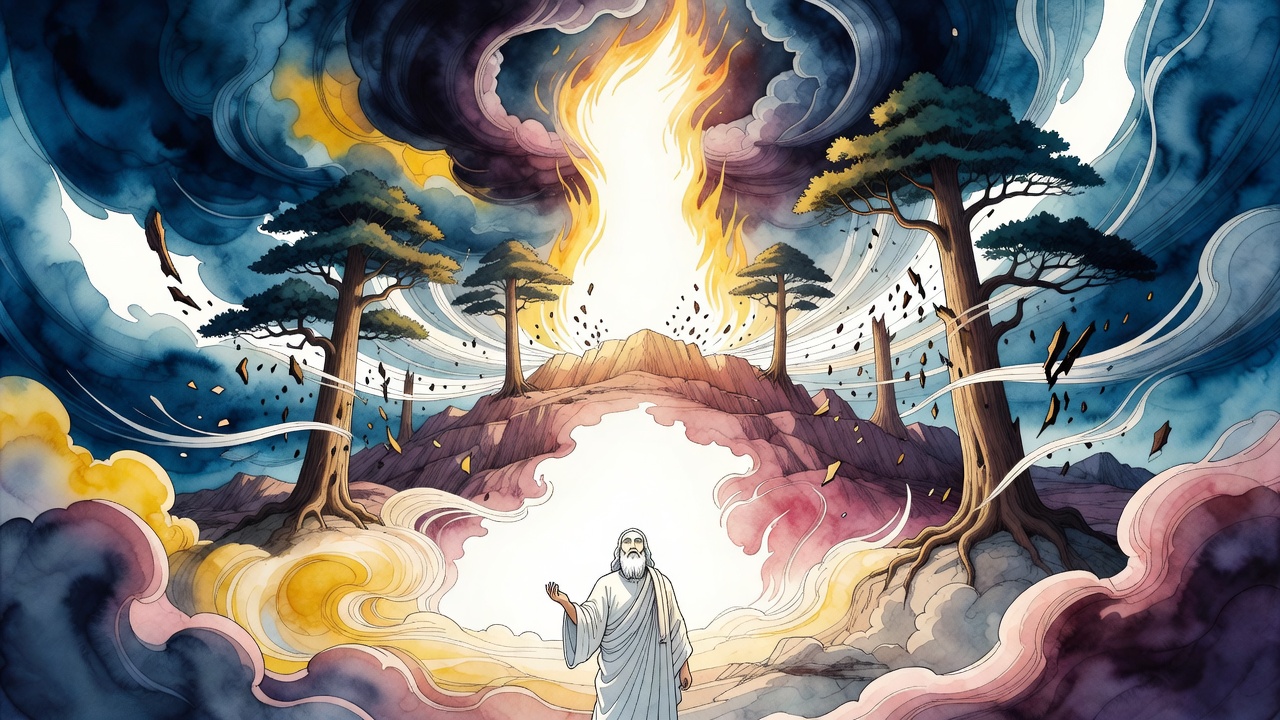
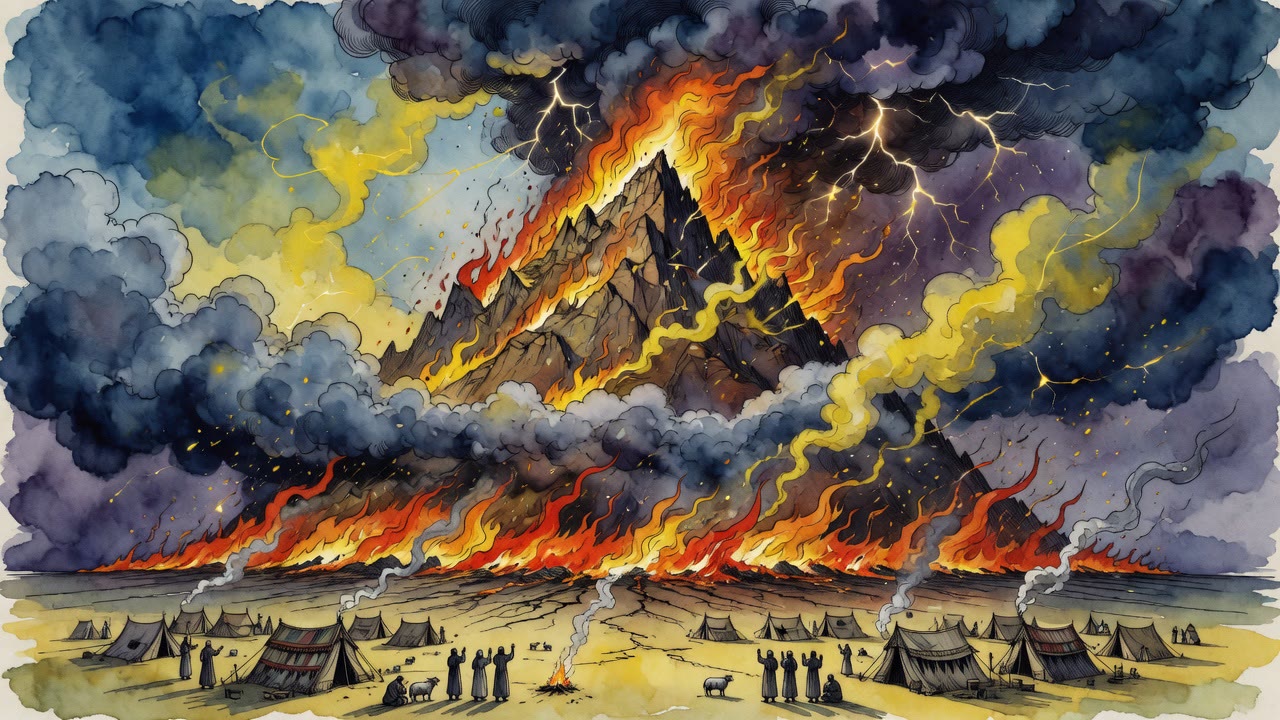
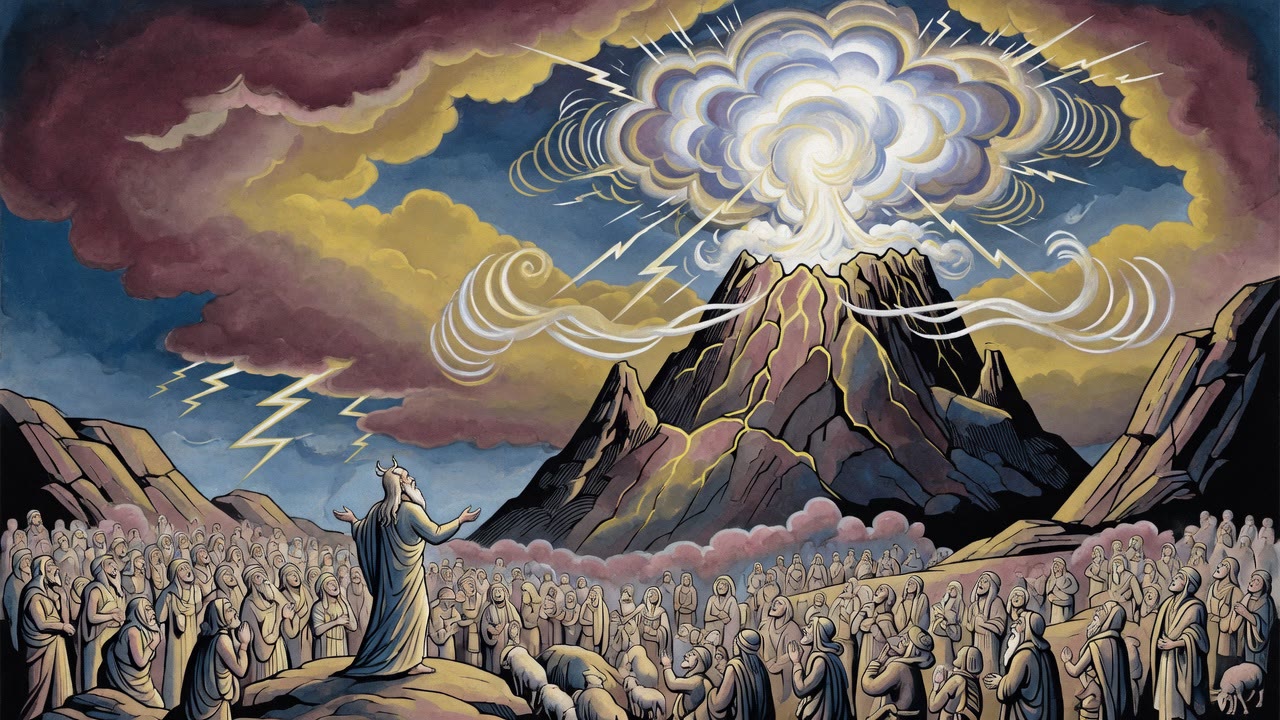
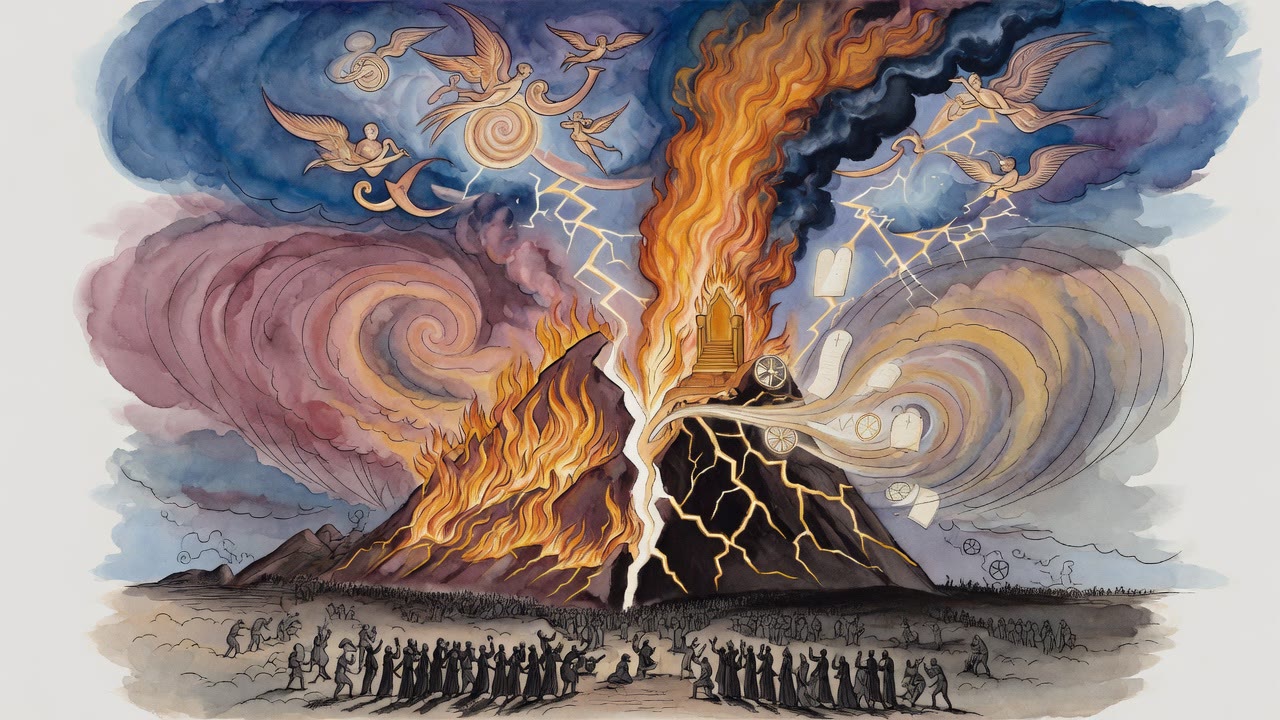
The mountain smoked like a kiln that had decided to become a throat. Moses climbed into fire thick enough to taste and came down carrying words that still rang in the bones of everyone who had stood at the fence. He would later throw the question like a challenge across history. "For who is there of all flesh that has heard the voice of the living God speaking out of the midst of fire, as we have, and has still survived?" (Deuteronomy 5:23).

God's Voice Broke the Cedars When Torah Came Down Click for full size

No hand went up in any other nation. Creation itself had been quieter than this.

Before Torah, No Voice

When the Holy One made heavens and earth, the midrash says, there was no voice of this kind. Nations lived under sky and never heard the Speaker address them as a people from inside flame. The giving of Torah changed the acoustic of the world. Suddenly the Lord had a public register. "The voice of the Lord breaks the cedars; the Lord breaks in pieces the cedars of Lebanon" (Psalm 29:5). Lebanon skips. Sirion leaps like a young ox. Flames of fire flash with the voice (Psalm 29:7-9). These are not weather notes. They are the side effects of revelation hitting timber and nerve.

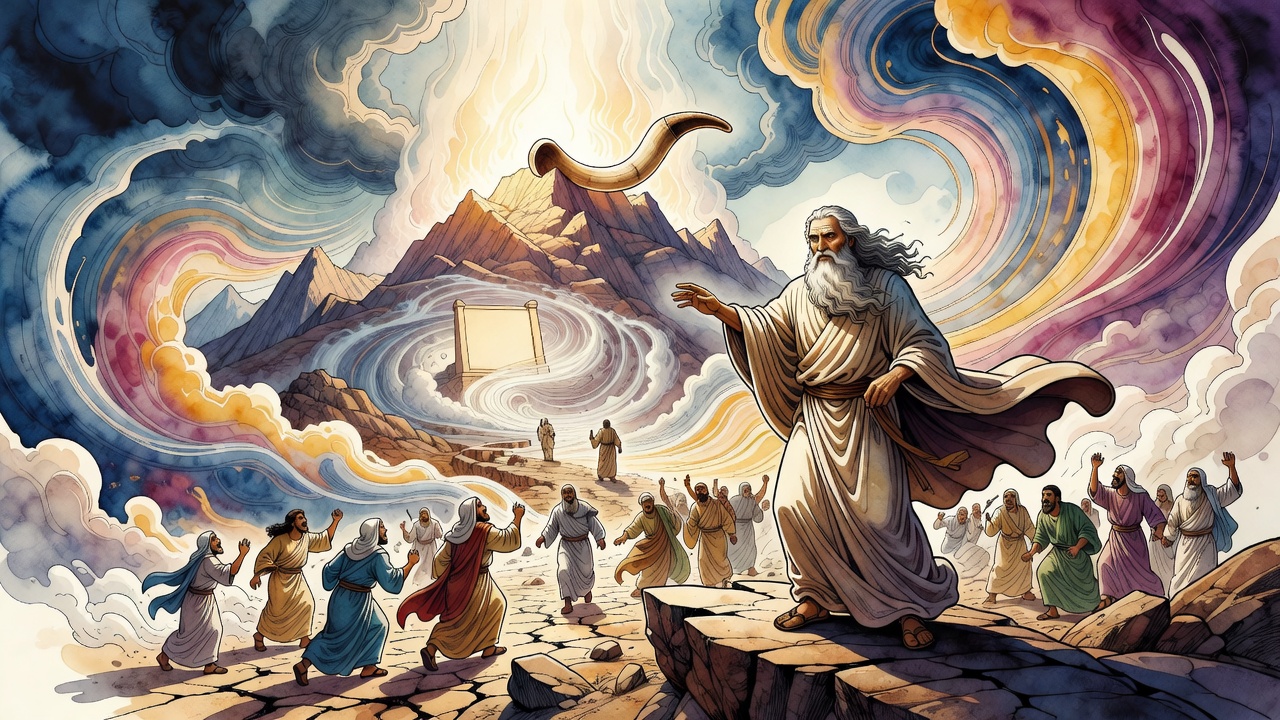
All lesser voices in nature, the teaching adds, exist so God can strengthen a people with this one. The shofar at Sinai grew louder and louder (Exodus 19:19), a ram's horn climbing a ladder of volume until ears had no unclaimed space left.

I Am the Lord Your God

Pesikta de-Rav Kahana hears the first commandment as a reunion more than a rulebook header. "I am the Lord your God" (Exodus 20:2). Joseph's bones, carried up from Egypt, and Moses' living mouth stand in the same hour of disclosure. The God who ran providence through a prison and a palace now speaks plain at a mountain. Slavery's long silence cracks. The people who left with dough on their backs receive a voice denser than manna.

Miracles become testimonies, David later understands. Signs are not fireworks for bored pilgrims. They are exhibits entered into the case file of Torah. "Such knowledge is too wonderful for me" (Psalm 139:6), and still he refuses to drop the exhibit.

Shofar in the Wilderness Calendar

Long after Sinai, the same sound orders the camp. One blast summons leaders (Numbers 10:4). Those who know the shofar (a ram's horn) walk in the light that went before Israel by day (Exodus 13:21). Elders who set the months hear a divine yes answering their calendar work. Rabbi Yosei links the horn to Torah's beautiful words, a hind let loose (Genesis 49:21), speech that runs free and still lands true. On the covered new moon the shofar cries renewal. "Renew your deeds and improve your deeds, and I will cover your sins" (cf. Psalms 85:3).

Rabbi Berechiah offers the fiercest image. The shofar's sound enters one end and leaves the other. Accusers pack the air with charges. God hears from one side and vindicates from the other. Sinai's volume becomes, in the long year, a courtroom technology of mercy.

Hold Instruction Like Life

"Keep hold of instruction; do not let go; guard her, for she is your life" (Proverbs 4:13). The voice that broke cedars can still be dropped by a careless generation. Torah's words are opening utterances, doors and lamps (Proverbs 6:23). The simple become wise by testimony that does not require a philosopher's resume (Psalm 19:8). Moses compares teaching to rain (Deuteronomy 32:2). Rain that is refused leaves a field that remembers thunder and still dies thirsty.

Woe, the midrash says, not only for active evil but for the shrug that lets instruction slip. The same God who spoke from fire will not endlessly chase those who love simplicity more than life.

Ears That Still Ring

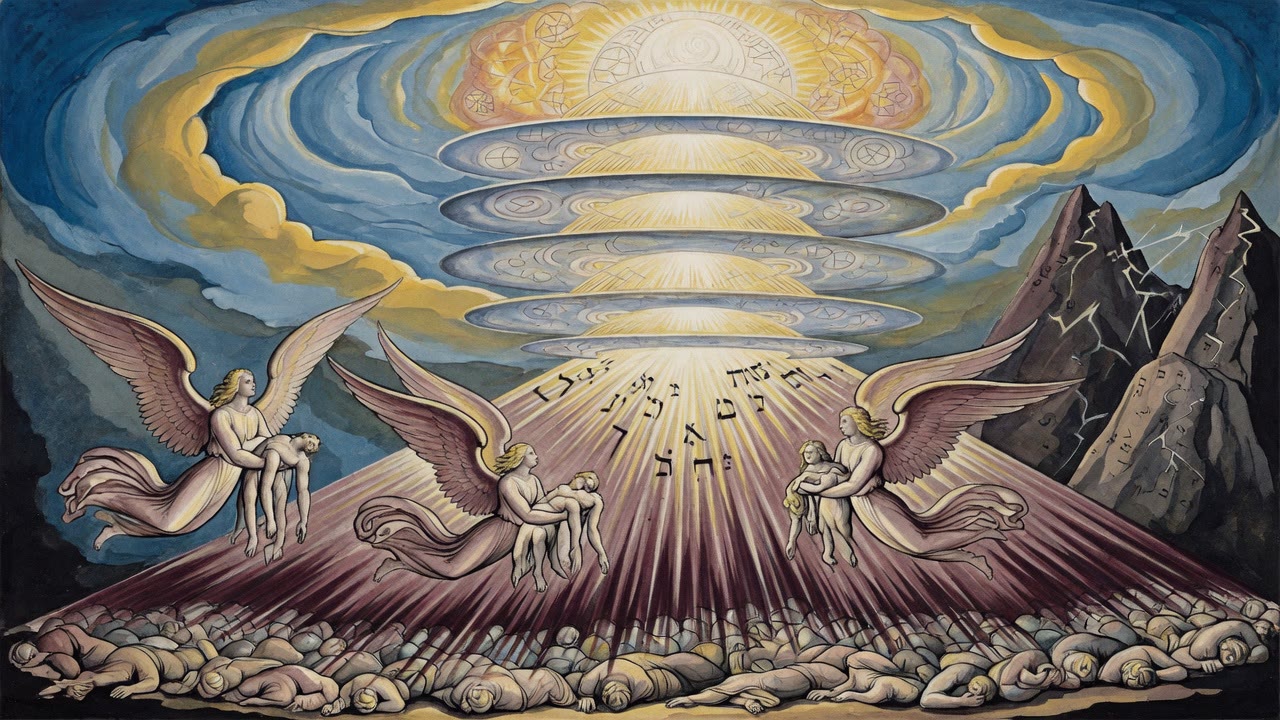
Israel leaves Sinai with a permanent injury of glory: the knowledge that flesh once heard the living God and did not dissolve. Every later shofar blast is a smaller cousin of that volume. Every "I am the Lord your God" in prayer is a reentry into the hour when Joseph's story and Moses' mouth shared one revelation. The cedars of Lebanon, in the psalm, never fully recover their arrogance. Neither do the people who stood under the voice and lived.

Moses' question still hangs over the nations. Who else heard and survived? The answer remains a silence that makes Israel's memory louder.

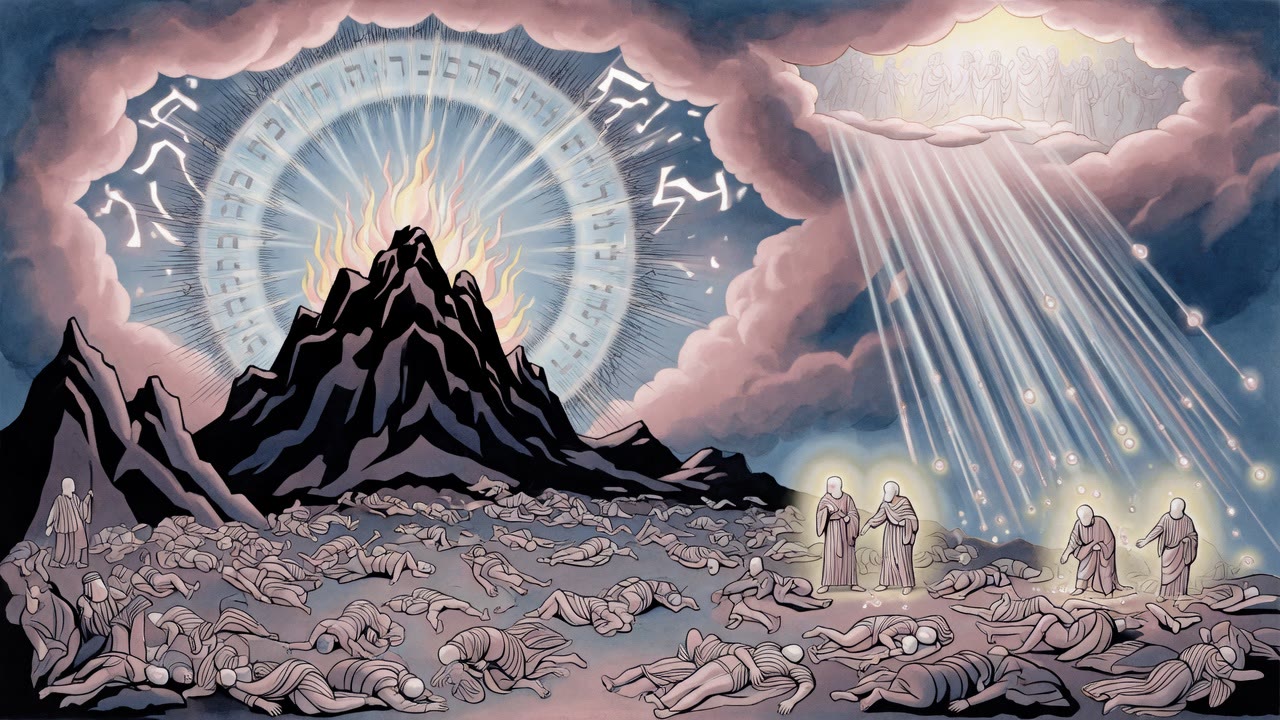
At the fence below, people saw the voices, the midrashic tradition insists, as if sound had become visible weather. Boundaries mattered. Too near, and flesh would not survive the experiment of direct address. Too far, and the nation would receive only rumor. Moses moved between those distances as the only body authorized to climb and return without dissolving.

Joseph's long arc met that hour like a buried root feeding a sudden tree. The God who timed two years in a pit now timed a mountain. Providence stopped whispering through dreams and spoke in commandments that could be copied, taught, and dropped like rain on the next generation's fields. "My teaching shall drop like the rain" (Deuteronomy 32:2) turns revelation into climate. Climate is harder to escape than a single storm.

Later, when Israel blew the shofar in the wilderness and in the month of covering, they were not reenacting theater. They were handling a descendant of Sinai's volume, a tool that still makes accusers speak and still lets vindication answer from the other side of the hollow horn. The voice that broke cedars can still break habits if the people keep hold of instruction as life rather than hobby.

Moses' question remains unanswered by the empires that rose after. Who of all flesh heard and lived? Israel points at its own scarred hearing and keeps the words. That is the whole strange victory of a mountain that once burned and of a people that still refuses to go deaf on purpose.


← All myths

From the tradition

Sources

3 sources

The texts behind this telling. Some cards carry a translation of the source; others are our own retelling of it, and each card says which. Every card links out to the original.

Midrash Tehillim 119:32Midrash Tehillim

Retold in our words. Read the original at the link below.Rabbi Mike Feuer, Jerusalem Anthology · CC-BY

It wasn't just about getting a list of rules. According to Midrash Tehillim, it was a moment when the very voice of God became audible to humankind, a unique event in all of creation! Moses, in (Deuteronomy 5:23), asks, "For who is there of all flesh that has heard the voice of the living God speaking out of the midst of fire, as we have, and has still survived?" It’s a rhetorical question, of course. The answer is: no one! Moses is reminding the Israelites just how extraordinary their experience was.

The Midrash (rabbinic interpretive commentary) goes on to say that when God created the heavens and the earth, there was no voice. No nation had ever heard God's voice directly. So, what changed? The giving of the Torah! That’s when God’s voice became audible.

(Psalm 29:5-7) paints a vivid picture: "The voice of the Lord breaks the cedars; the Lord breaks in pieces the cedars of Lebanon. He makes Lebanon skip like a calf, and Sirion like a young wild ox. The voice of the Lord flashes forth flames of fire." These powerful images aren't just about nature; they're about the awesome power unleashed when God's voice is revealed. All of nature's voices, the Midrash says, exist so that God can give strength to His people. And remember the shofar blast at Sinai? (Exodus 19:19) tells us, "And the sound of the trumpet grew louder and louder."

David, in the Psalms, understood this deeply. He recognized that the miracles God performed for Israel were inextricably linked to the Torah. "Miracles are your testimonies," he proclaims. These miracles weren't just random acts of divine intervention; they were testimonies to the power and truth of the Torah itself. "Such knowledge is too wonderful for me," David admits in (Psalm 139:6).

So, how do we hold onto this incredible gift? (Proverbs 4:13) gives us the answer: "Keep hold of instruction; do not let go; guard her, for she is your life." If we keep the Torah, the Torah will keep us. That's why David says, "Therefore my soul keeps them."

The Midrash beautifully describes the Torah's words as "opening utterances shedding light." What does that mean? Well, they're like openings and doors, each word leading to deeper understanding. As (Proverbs 6:23) says, "For the commandment is a lamp and the teaching a light."

But what about those who turn away from the Torah? The Midrash doesn’t mince words. Woe to the wicked, not just for doing evil, but for failing to follow the Torah. Proverbs warns, "How long will you love simplicity, you foolish ones?" The consequences of rejecting wisdom are severe: "I also will laugh at your calamity," God says. Those who hate knowledge and reject the fear of the Lord will find themselves abandoned in their time of need.

The Midrash emphasizes that the Torah is accessible to all, even the "simple." As (Psalm 19:8) states, "The testimony of the Lord is faithful, making the simple wise." That's why David declares, "Your word is a lamp to my feet." He longs for it, opening his mouth wide in anticipation, just as someone craves rain in a drought. Moses himself compares his teaching to rain in (Deuteronomy 32:2), "My teaching shall drop like the rain."

The Midrash makes a striking comparison: "Just as snakes shed their skin, people shed their mouths for gossip." We crave the Torah like snakes crave the wind, a vital life force. The Torah isn't just an ancient text; it's a living, breathing source of wisdom and guidance, waiting for us to open our mouths and receive it.

So, the next time you hear the shofar blast or read a passage from the Torah, remember Mount Sinai. Remember the unique moment when God's voice became audible, a moment that continues to resonate through the ages. How will you open your mouth to receive it?

Full source
Pesikta DeRav Kahana 12:25Pesikta de-Rav Kahana

Translation of the source text.Sefaria-hosted English translation · CC-BY

[25] Another interpretation: "I am the LORD your God" (there). Rabbi Hanana bar Pappa said: The Holy One, blessed be He, appeared to them with an angry face, with a moderate face, with a welcoming face, with a laughing face. An angry face for Scripture: when a man teaches his son Torah he must teach him with awe. A moderate face for Mishnah. A welcoming face for Talmud. A laughing face for Aggadah. The Holy One, blessed be He, said to them: Even though you see all these likenesses, still "I am the LORD your God" (there). Rabbi Levi said: The Holy One, blessed be He, appeared to them like this statue, which has a face from every direction; a thousand people look at it and it looks at all of them. So too the Holy One, blessed be He, when He was speaking, each and every one of Israel would say, "The Word is speaking with me." "I am the LORD your God," in the plural, is not written here, but rather "I am the LORD your God," in the singular (there).

Rabbi Yose son of Rabbi Hanina said: And according to the strength of each and every one, the Word was speaking with him. And do not be astonished at this matter, for when the manna came down to Israel, each and every one tasted it according to his strength: the little children according to their strength, and the young men according to their strength, and the elders according to their strength. The little children according to their strength: just as this infant who nurses at his mother's breast, so did he taste it, as it is said, "And its taste was like the taste of a cake baked with oil" (Numbers 11:8). And the young men according to their strength, as it is said, "And My bread which I gave you, fine flour and oil and honey I fed you" (Ezekiel 16:19). And the elders according to their strength, as it is said, "And its taste was like wafers made with honey" (Exodus 16:31). And if regarding the manna, each and every one tasted it according to his mouth, then with the Word, each and every one heard according to his strength. David said, "The voice of the LORD is in strength" (Psalms 29:4); "the voice of the LORD is in His strength" is not written, but rather "the voice of the LORD is in strength," in the strength of each and every one. The Holy One, blessed be He, said to them: It is not because you hear many voices, but rather know that I am He, "I am the LORD your God" (Exodus 20:2).

In this world Israel was redeemed from Egypt and was enslaved in Babylon, and from Babylon to Media, and from Media to Greece, and from Greece to Edom; and from Edom the Holy One, blessed be He, will redeem them, and they will be enslaved no more, as it is said, "Israel is saved by the LORD with an everlasting salvation; you shall not be ashamed nor confounded forever and ever" (Isaiah 45:17). Concluded.

Full source
Midrash Tehillim 81:3Midrash Tehillim

Retold in our words. Read the original at the link below.Rabbi Mike Feuer, Jerusalem Anthology · CC-BY

The blast of the shofar, that ancient ram's horn, isn't just some ritualistic noise. It’s a call to action, a reminder, and, if we listen closely, a whisper from the Divine.

Midrash Tehillim, a collection of rabbinic teachings on the Book of Psalms, cracks open Psalm 81 to explore the shofar's many layers. "Blow the shofar in the month," the verse commands, and the Midrash (rabbinic interpretive commentary) asks: What does it all mean?

It starts with a connection to the wilderness generation, those Israelites who wandered with Moses. Remember them? As it says in Numbers (10:4), they camped and traveled according to the shofar's call. One blast summoned the leaders. According to the Midrash, "Those who know the shofar blast" in (Psalms 89:16) refers to them. They lived their lives guided by its sound, walking, as (Exodus 13:21) says, in God's light: "And the Lord went before them by day."

The Midrash doesn't stop there. The shofar isn't just about following directions. It's also about time, about the Jewish calendar. Another interpretation in Midrash Tehillim suggests that "Happy is the people" refers to the elders, the ones who determine the months and establish the new year – Rosh Hashanah, the Jewish New Year. And Rabbi Abbahu adds a beautiful layer: when these elders set the calendar, it's as if God agrees with them, saying, "Yes, this is right."

And what about the sound itself? Rabbi Yosei ben Yaakov, quoting Rabbi Acha, beautifully connects the shofar to Torah, to divine teaching. He cites (Genesis 49:21), comparing it to Naphtali, "a hind let loose, who utters beautiful words." These are the words of Torah delivered through the shofar, "the sound of the shofar" from (Exodus 20:15).

Rabbi Yoshiyah brings up a crucial point: other nations might raise their hands in doubt. But the Jewish people, he says, understand how to please God with the shofar. We understand its call. And then, the Midrash links the shofar to Yom Kippur, the Day of Atonement. "In the light of Your countenance they will walk," the verse continues in Psalms. This refers to Yom Kippur, the day when God forgives and enlightens us. It's a day when, hopefully, we are at our most vulnerable and open.

"Blow the shofar in the new moon," the verse repeats, referring to that time of the month when the new moon is "covered," hidden from view. It's a powerful metaphor for Rosh Hashanah, a time for renewal. The rabbis say: "Renew your deeds and improve your deeds, and I will cover your sins," echoing the words of (Psalms 85:3): "You have borne the guilt of Your people, You have covered all their sins."

And finally, Rabbi Berechiah, quoting Rabbi Abba, offers a striking image. "Just as the shofar sound comes from one end and goes out the other, so do all the accusers in the world accuse before me, but I hear from one side and vindicate from the other." It's a powerful vision of divine justice, of God hearing all sides and ultimately choosing to vindicate. The sound travels, carrying our hopes, our fears, our pleas for forgiveness.

So, the next time you hear the shofar blast, remember its history, its connection to the wilderness, to Torah, to the calendar, to forgiveness. Remember that this single sound is a bridge between us and the Divine. It's a call to listen, to reflect, and to renew ourselves for the year ahead. What will you answer?

Full source