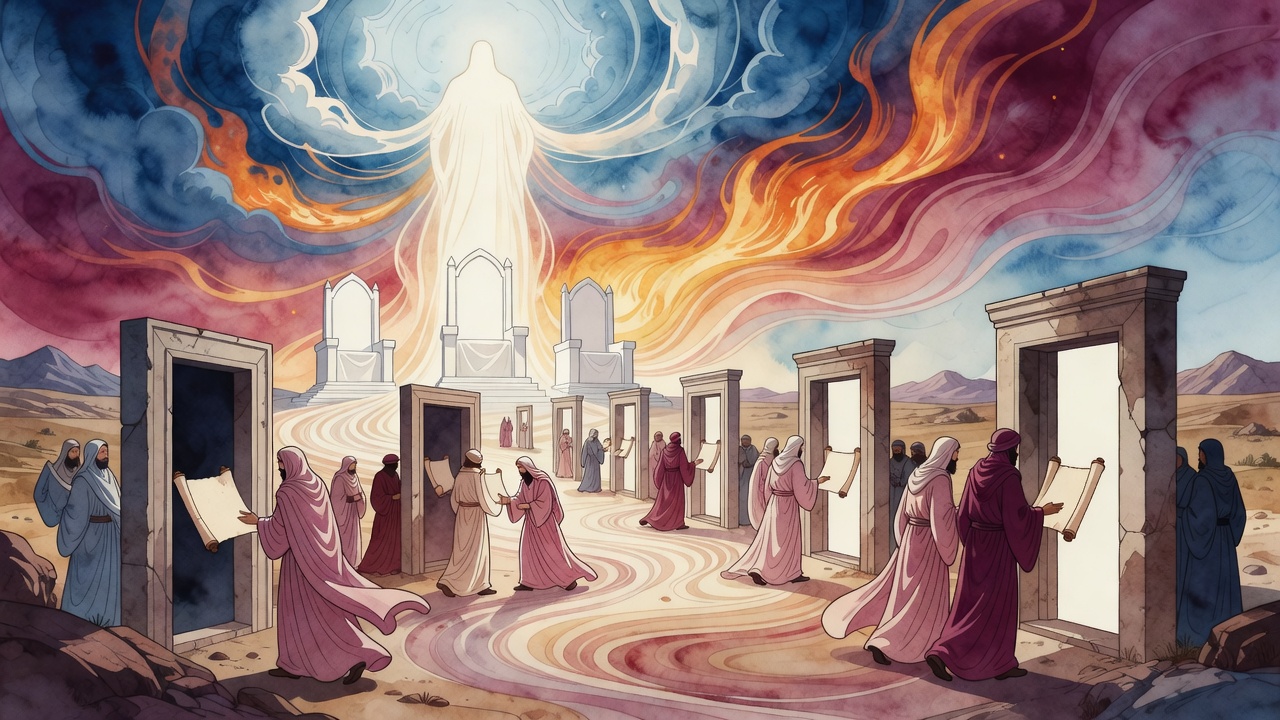
The Shofar Climbed While Nations Ran to Balaam
Morning thunder shook the earth until nations fled to Balaam. He said it was Torah, not flood, while Sinai's shofar (a ram's horn) grew louder and Moses.
Table of Contents
The morning did not arrive soft.
 Click for full size
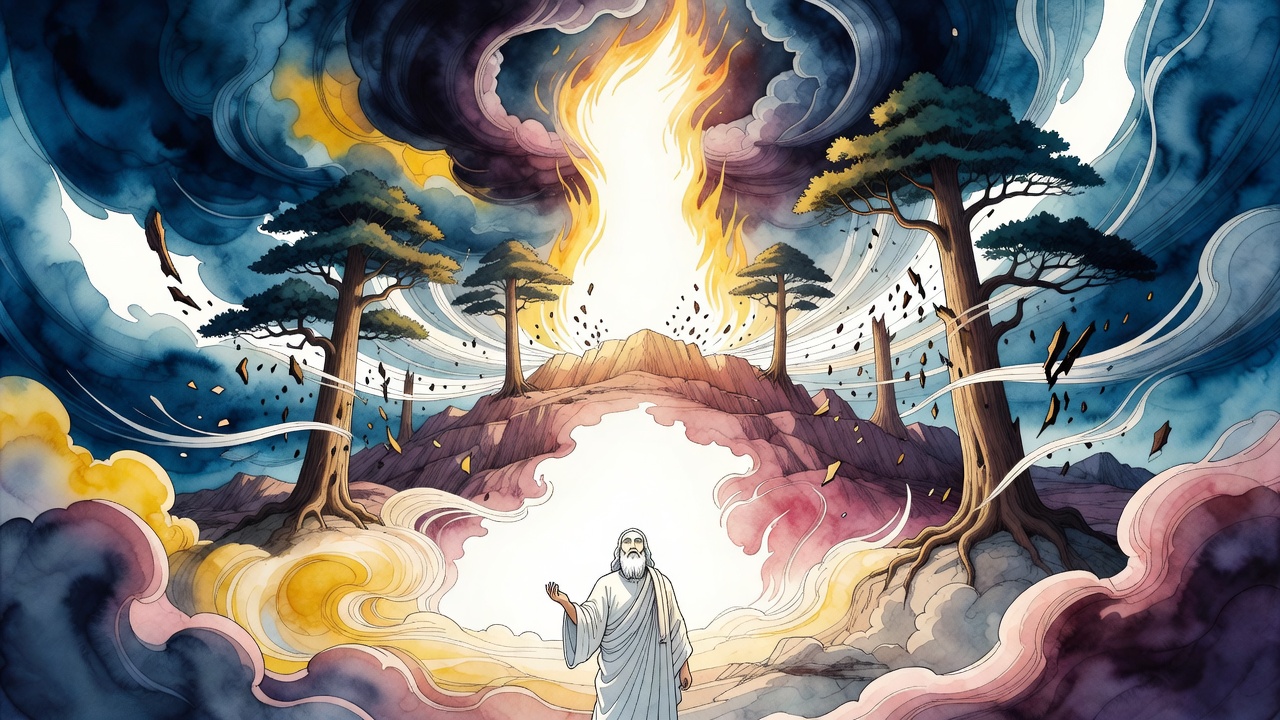
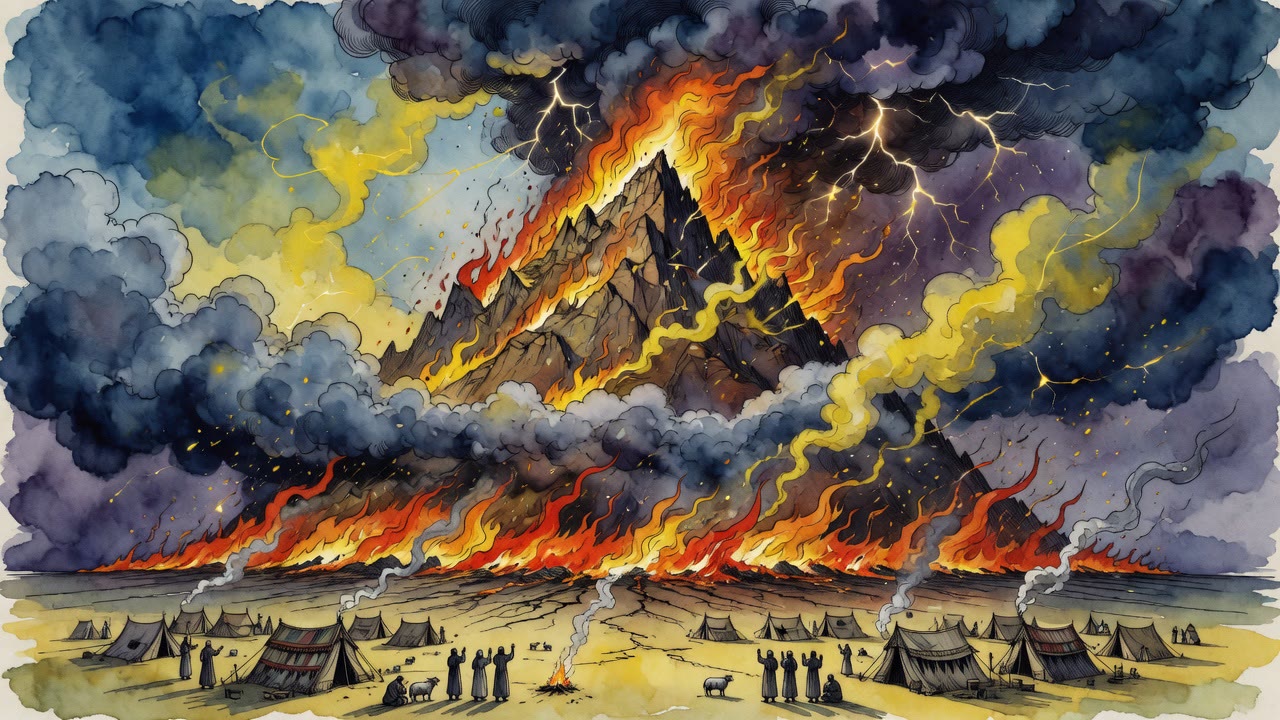
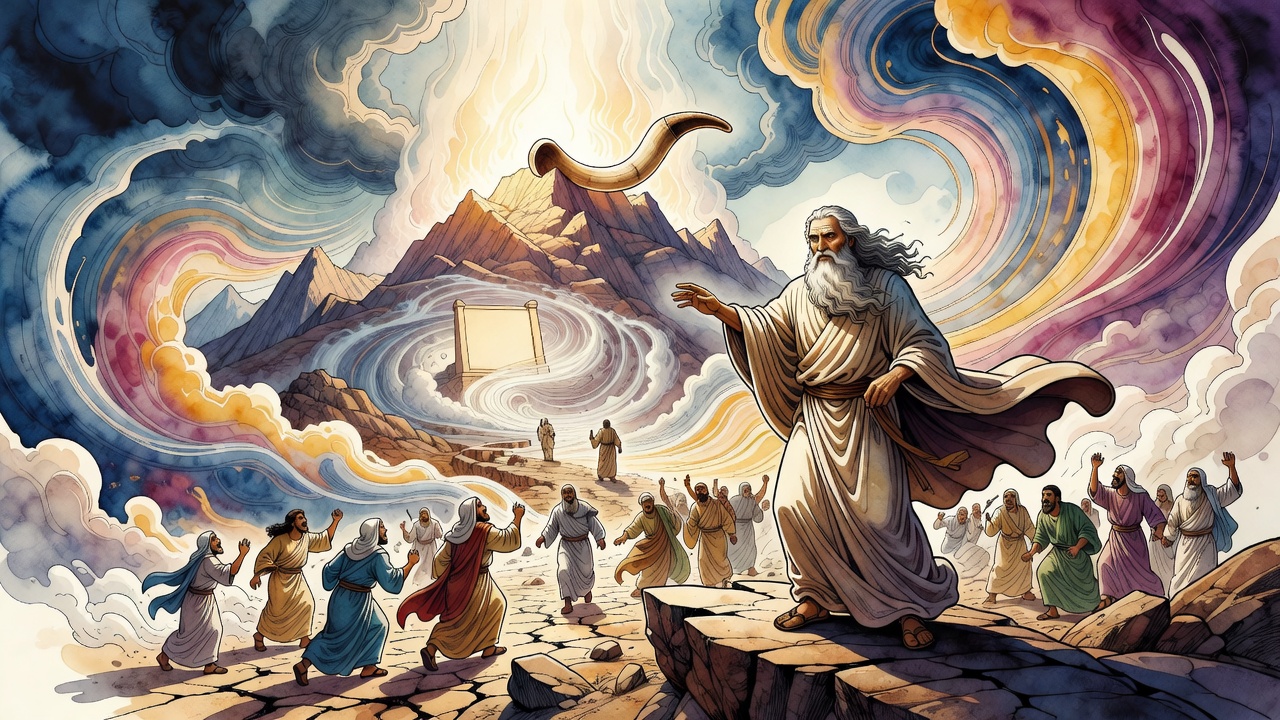
Light came up over Mount Sinai and split into thunder stacked on thunder, lightning stacked on lightning, each crash and flash different from the last. Cloud rolled in. Rain struck the stone. The voice of the Lord moved like a force that breaks cedars, carves flame, and shakes a wilderness until sand itself seems to flinch (Psalm 29).
It was morning on purpose. Night would have been the wrong hour for a gift of life. Torah belongs to daylight, to everyone who enters the world under an open sky.
Below the mountain, Israel had prepared and still trembled. Far beyond the camp, peoples who had no share in the covenant felt the ground answer the mountain and ran.
Nations Pounded on Balaam's Door
They came to Balaam, prophet for hire among the nations, with dust on their clothes and flood in their eyes.
"Is God drowning the world again?"
Balaam called them fools. After Noah, God had sworn the waters would not erase flesh a second time that way. The oath still held.
"Then a flood of fire," they pressed, voices overlapping, hands out as if a man could push the sky back.
"Not water and not fire," Balaam said.
"What is that sound that shakes us?"
He gave them the answer that turned pure dread toward a strange blessing. The Lord was giving Torah to His people. The noise was gift, not unmaking. The nations heard it and could only answer that the Lord should bless His people with peace. They had no part in the mountain, and still the mountain had reached them.
If Israel, prepared and longing, shook in their sandals, the terror of those who stood outside the covenant needed no further proof. The whole created order had been put on notice.
The Shofar That Would Not Weaken
A human shout thins. The longer a throat works, the sooner the sound frays, goes hoarse, dies. The blast at Sinai refused that law.
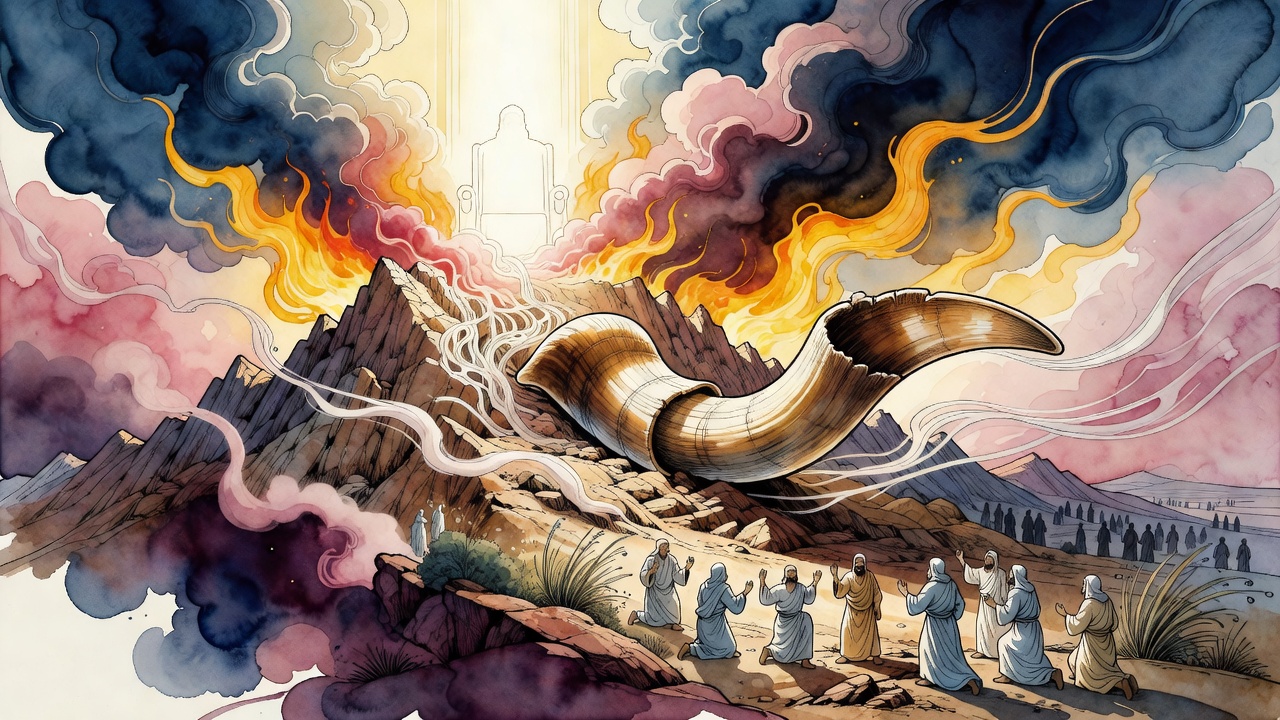
The shofar (a ram's horn blown like a trumpet) climbed. Note on note, it grew louder and stronger the longer it sounded, as if the instrument had found a breath that does not tire. The One who spoke worlds into being is not bound by the limits of meat and air. The mountain held a horn that learned only increase.
Masters of Torah later took that climb as their own picture. The longer they learn, the stronger they grow. Understanding settles. Years deepen what a first hearing only grazes. Wisdom sits with the aged not as a polite compliment but as a description of a blast that refuses to fade.
On the day itself no one needed the later moral. They only needed to stay upright while the sound kept rising. Knees unlocked and locked again. Hands pressed over ears and then dropped, because covering did nothing. The horn climbed past the point where a human lung would have failed, and the mountain did not crack under it.
Moses Spoke and God Waited
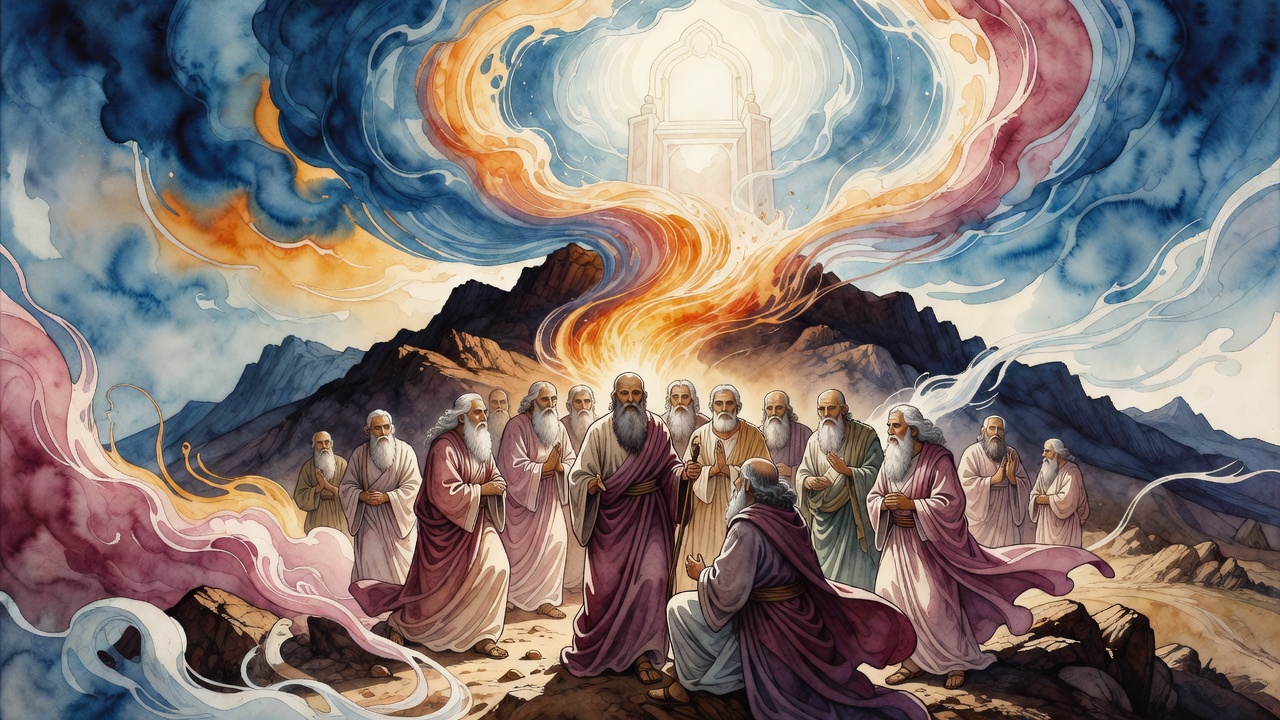
Moses stood in that weather as the bridge between fire and camp. The verse says he would speak and God would answer him with a voice (Exodus 19:19). Rabbi Eliezer heard courtesy inside the power. God held back and did not pour the next word until Moses gave the signal that the children were ready, that they had accepted with joy. The Teacher waited on the messenger. The mountain's King deferred to the timing of a man with dust on his feet.
Moses felt the weight of that patience in his chest. He was not a passive funnel. He was the one who had to know when the people could take the next measure of glory without breaking.
When he spoke for them, the answer came. When he held silence, the silence held. Thunder did not drown that arrangement. It framed it.
The Voice Passed Without Loss
Rabbi Akiva heard another claim in the same short phrase, "with a voice." The power and the sweetness that flooded Moses as he listened were the same power and sweetness he poured into Israel. Nothing thinned in the handoff. What he received at full strength he delivered at full strength. The camp heard the revelation the way he heard it, not a diluted copy, not a secondhand rumor of fire.
That is rarer than miracle weather. Human teachers lose edge between ear and mouth. Moses did not. The shofar (a ram's horn) climbed. The prophet's channel stayed wide. Israel took the Word without the usual tax of transmission.
Far off, nations still tasted the tremor in their bones and remembered Balaam's verdict: not flood, Torah. On the mountain, the horn kept rising. In the space between cloud and camp, Moses spoke, God answered, and the people received a voice that had not been spent on the way down. Morning held. Life, the gift tied to daylight, entered history as sound that refused to die and as a messenger who refused to weaken what he carried.
When the last peal faded into the work of commandments, the ground was still the same ground. The nations went home under a sky that had scared them into a blessing. Israel stood under a mountain that had scared them into a covenant. Between those two crowds, the shofar's impossible climb and Moses' undiminished voice remained the measure of what had happened when the world shook and was not ended.
← All myths