5 min read

The Shofar That Grew Stronger on the Mountain

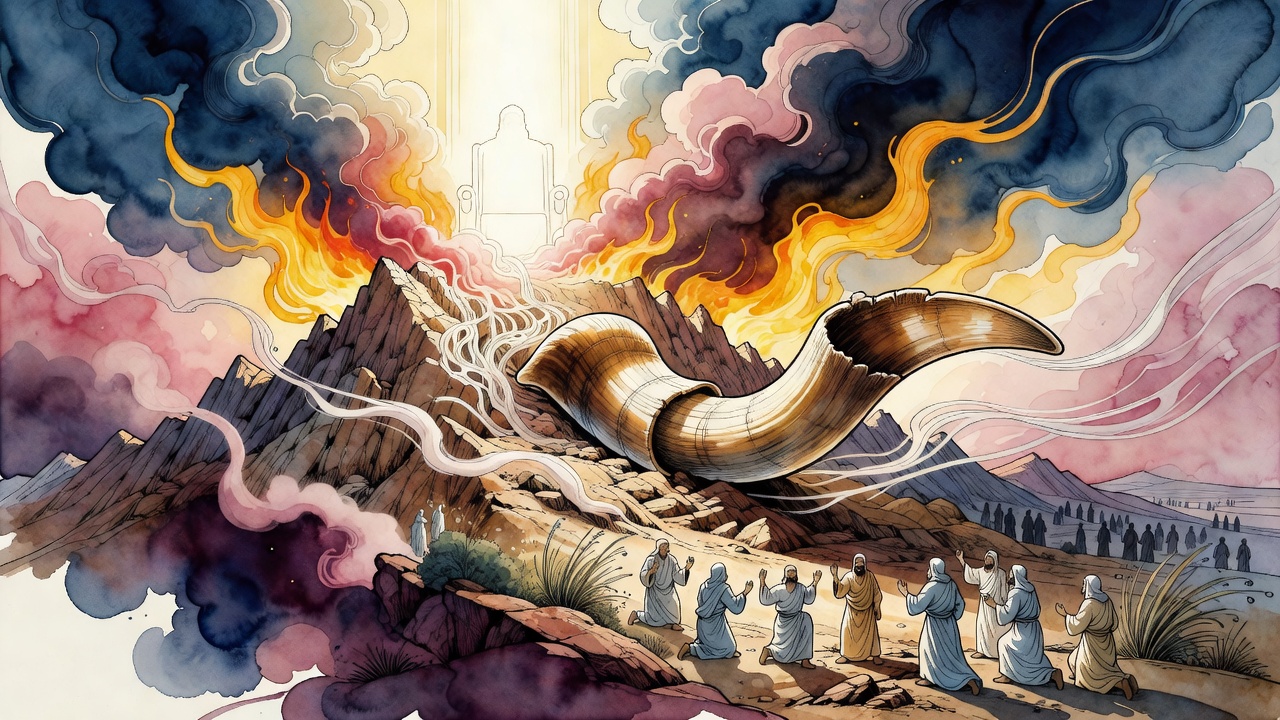
At Sinai the shofar, a ram's horn, grew louder the longer it sounded. Nations had already refused the law. Israel shook and still said yes.

Curated by Arthur · Told by Maggid ·
Table of Contents
  1. Sound That Broke Its Own Law
  2. Before the Mountain, the Road of Refusals
  3. Israel Speaks Before It Asks
  4. Even Moses Could Not Keep Every Command
  5. When the Blast Finally Stopped

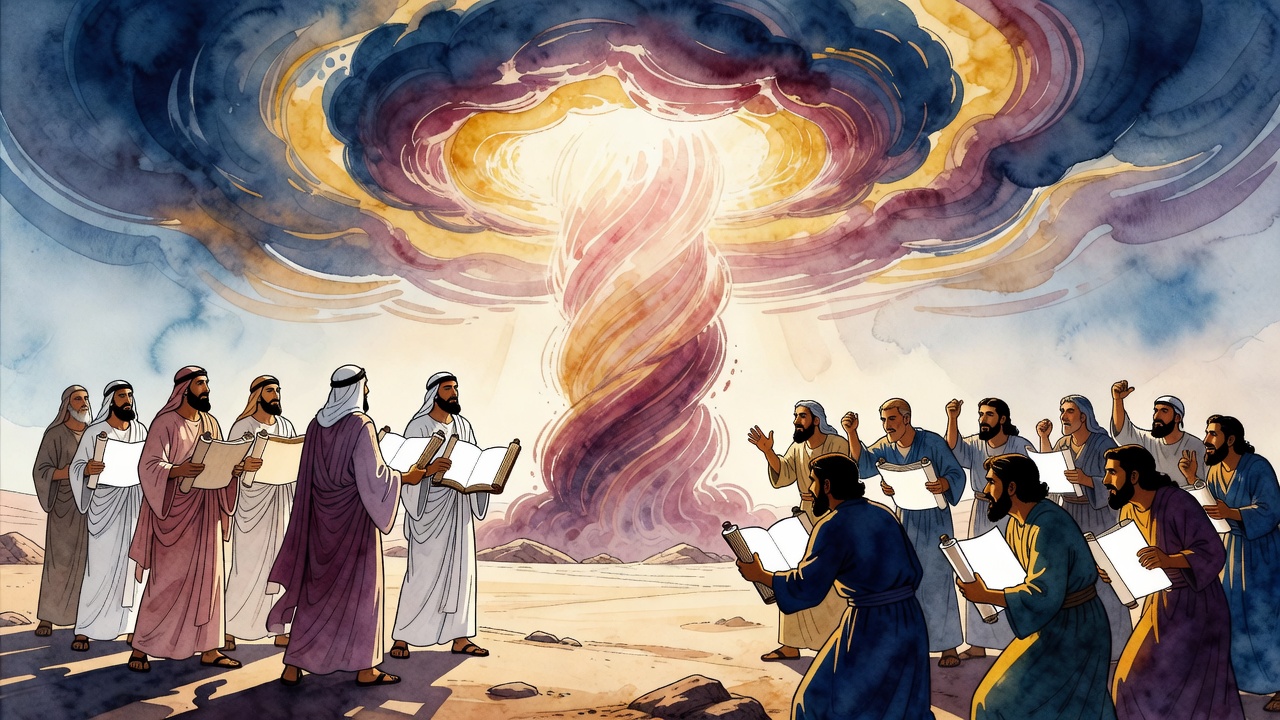
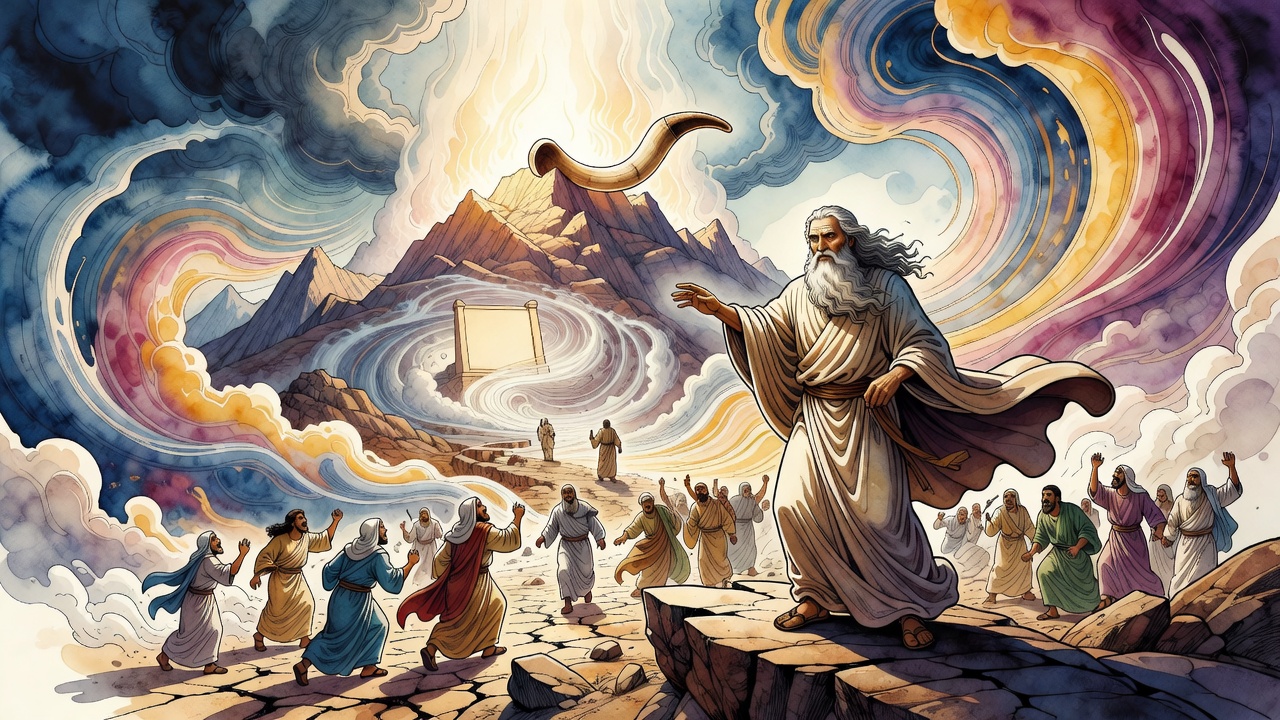
The blast did not fade. Every ear at the foot of the mountain waited for the drop that always comes when a horn runs out of breath. The sound climbed instead. Strong became stronger. Stronger became exceedingly strong. Bodies in the camp began to shake before the words arrived.

The Shofar That Grew Stronger on the Mountain Click for full size

Sound That Broke Its Own Law

Under ordinary sky a sustained note thins. Trumpets go hoarse. Human lungs fail. The longer the push, the weaker the cry. At Sinai the rule flipped. "And the sound of the shofar, very strong" (Exodus 19:16) meets "And the sound of the shofar (a ram's horn) grew exceedingly strong" (Exodus 19:19). The sages read the pair as one continuous climb. Time did not wear the blast down. Time fed it.

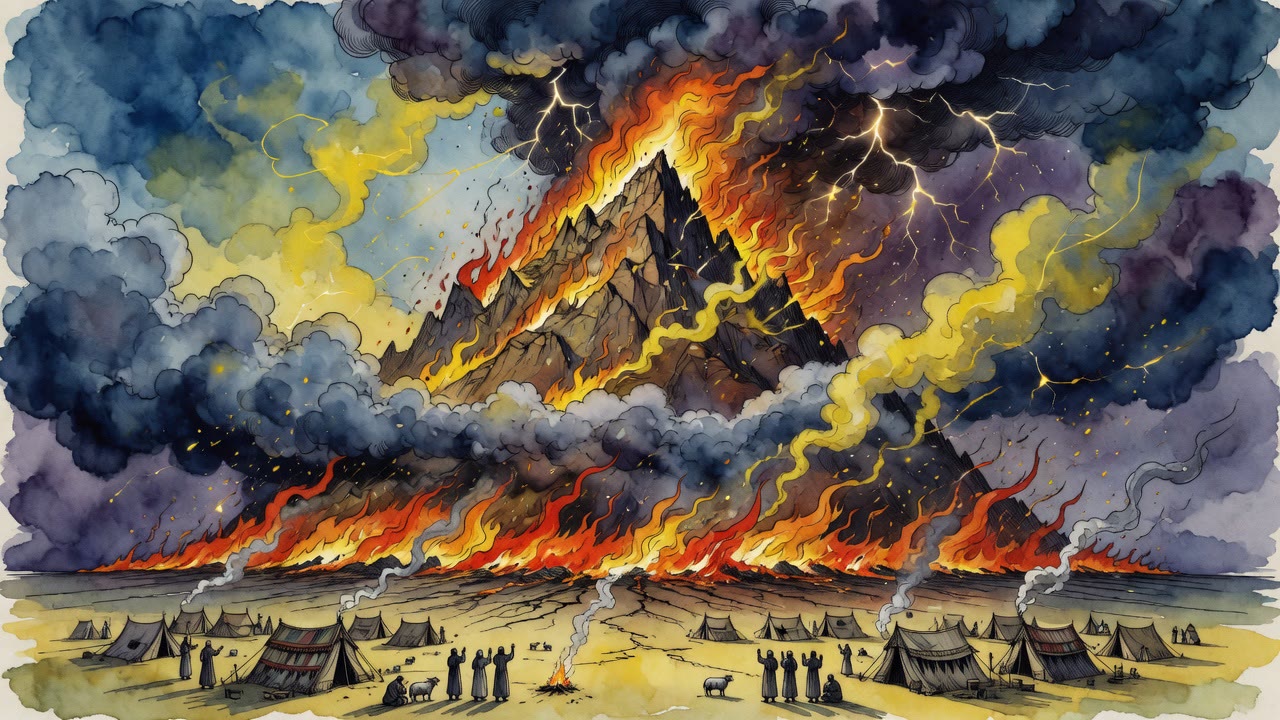
Mercy hid inside the terror. The opening volume was only enough to train the ear. Heaven did not dump the full force in the first second. The people were given a slope of sound so flesh could adjust to what flesh was never built to hear. Then the slope steepened until the camp trembled. Vayecherad, the verse says. They were shaken, not merely startled. Children pressed into their mothers' sides. Old men gripped staffs as if the ground itself might answer the horn.

Before the Mountain, the Road of Refusals

The midrash sends God on a tour of the nations first, so no people can claim they were never asked. He revealed Himself to the sons of Ishmael and offered the Torah. They asked what was written in it. He answered with a single command: You shall not steal. They recoiled. Theft, they said, was bound up with the blessing of their father, the wild man whose hand was against every hand (Genesis 16:12). To take "You shall not steal" would be to renounce the inheritance they claimed. They declined.

Other nations, in the same pattern, refused the law that cut across their chosen way. Murder, the hard edges of the covenant. Each people measured the scroll against its habits and walked away. Heaven measured the land afterward and dispersed the nations, the prophet says, once they refused the law that holds the world (Habakkuk 3:6). The road to Sinai was paved with polite and impolite noes.

Israel Speaks Before It Asks

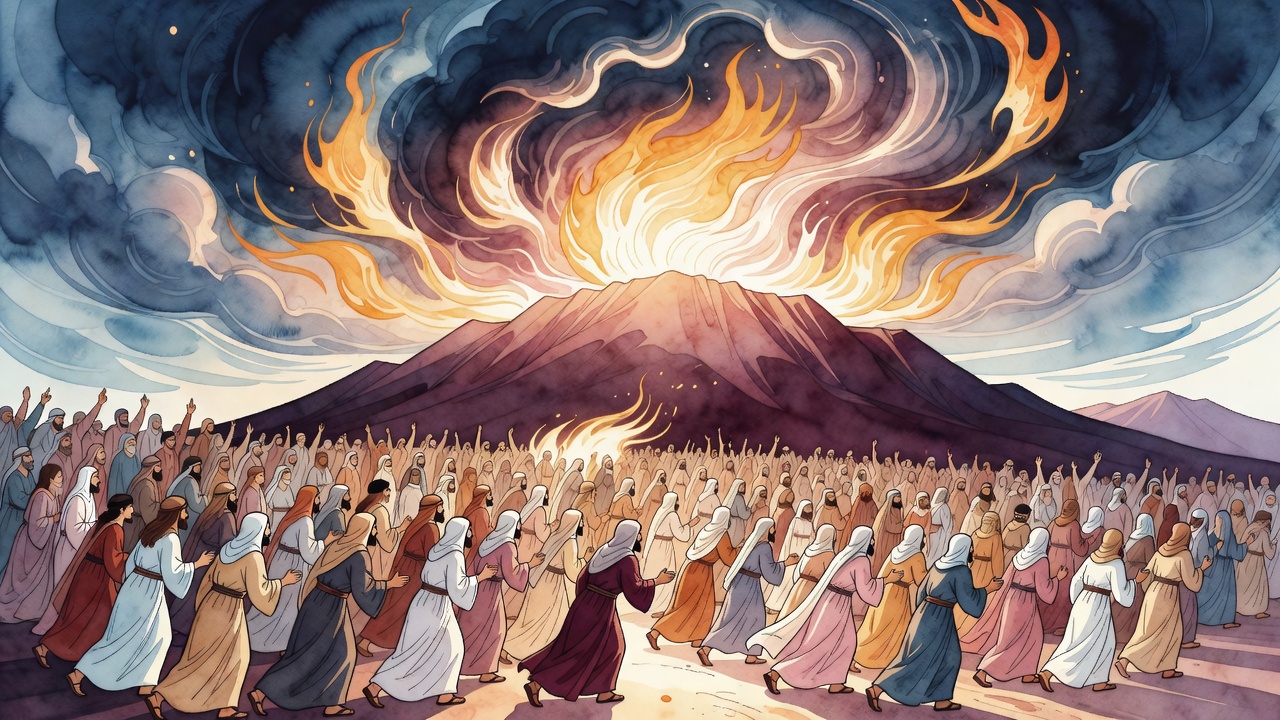
When the Holy One came to Israel, the fire of the Law was already in His right hand. The people did not open the terms first. They opened their mouths. "All that the Lord says, we shall do and we shall hear" (Exodus 24:7). Acceptance before inventory. The shofar was still climbing when that posture set. Fear and consent shared the same air.

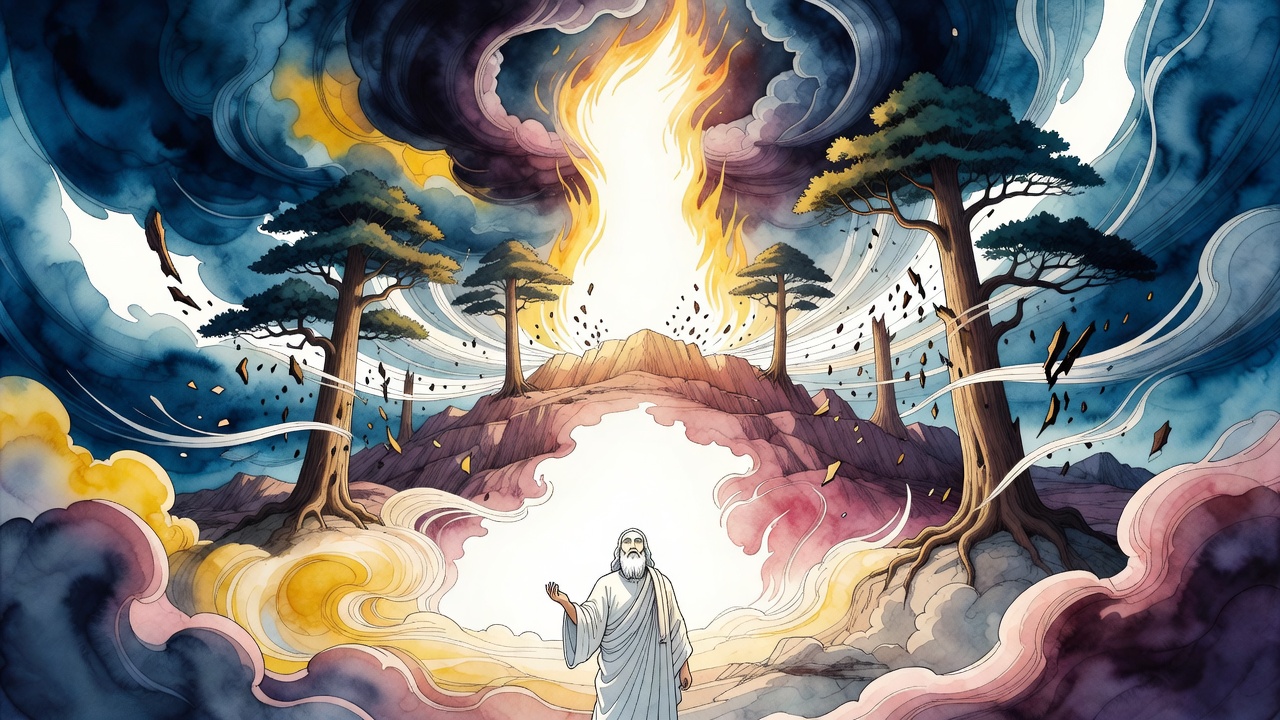
Moses stood between blast and people as the only body that could climb and return. The mountain smoked. The camp shook. The yes held. They did not bargain for a softer horn. They did not ask for a delay until the sound leveled off. They put their necks under a law whose first note was already past comfort.

Even Moses Could Not Keep Every Command

Later teachers would admit a quieter truth. No single person, not even Moses, keeps all 613 mitzvot. Priests alone hold priestly laws. Levites alone hold levitical duties. A man without a son cannot circumcise. Temple and Land hold whole sets of obligations that sleep when Temple and Land are closed. Perfection is not a private score. It is communal arithmetic across houses, sexes, eras, and places.

The Sinai yes was never a claim that one body would exhaust the whole scroll. It was a claim that this people would stand under the whole of it together, while the shofar still refused to fade. One horn, many shoulders. The blast that defied nature also defied the fantasy of solitary completion.

A woman near the edge of the camp covered her child's ears and then uncovered them again, because covering did not dim the climb. The sound was inside the bones by then. Sheep bolted to the end of their ropes and stood trembling with the people. Aaron found his brother only by the path the smoke made up the slope. Between one breath and the next the horn added weight, as if the air itself had grown denser with commandment.

When the Blast Finally Stopped

Ordinary sound ends in weakness. This sound ended in excess. The people who had said yes still trembled. The nations who had said no still lived by the refusals they chose. Between them stood a mountain that had trained human ears the way a father trains a child to carry weight: first a little, then more, then more than seemed possible.

Somewhere in every later generation a horn sounds and thins the way nature demands. Sinai remains the exception that teaches the rule. When God speaks, the sound can grow while the body learns how to bear it. The camp that shook did not scatter. It bound itself to a law no one person could finish alone, under a blast no ordinary horn could sustain.


← All myths
From the tradition

Sources

3 sources

The texts behind this telling. Some cards carry a translation of the source; others are our own retelling of it, and each card says which. Every card links out to the original.

Mekhilta Tractate Bachodesh 3:22Mekhilta DeRabbi Yishmael

Retold in our words. Read the original at the link below.Mechilta, translated by Rabbi Shraga Silverstein · CC-BY

"And the sound of the shofar, very strong" (Exodus 19:16), the Mekhilta connects this to a later verse (Exodus 19:19): "And the sound of the shofar grew exceedingly strong." Together, these verses describe something that defied every law of nature the Israelites had ever known.

Under normal circumstances, the longer a sound is sustained, the weaker it becomes. A trumpet blast starts strong and fades. A human voice grows hoarse. Every sustained sound in the natural world follows the same trajectory: loud to soft, strong to weak, forceful to faint. This is simply how sound works. Or how it worked, before Sinai.

At Sinai, the shofar's sound operated in reverse. The longer it was sustained, the stronger it grew. Instead of fading, it intensified. Instead of weakening, it built. The sound did not diminish with time, it multiplied. What began as a strong blast became stronger still, then exceedingly strong, then beyond anything the people had experienced.

The Mekhilta explains the purpose of this supernatural progression: in the beginning, the sound started at a manageable level to accustom the ear. God did not assault the people with the full force of divine sound all at once. He allowed them to adjust gradually, letting the sound build so that their senses could adapt to what was coming. It was an act of mercy embedded within an act of power.

The final phrase records the people's response: "Vayecherad all the people in the camp", they were shaken. Not merely frightened, not merely startled, but physically trembling. The sound of the shofar at Sinai shook the Israelites to their core, and it did so precisely because it defied everything they thought they knew about how the world worked.

Full source
Mekhilta Tractate Bachodesh 5:10Mekhilta DeRabbi Yishmael

Retold in our words. Read the original at the link below.Mechilta, translated by Rabbi Shraga Silverstein · CC-BY

The Mekhilta tells of God offering the Torah to the nations before giving it to Israel, so that no nation could later complain it had been passed over. He came and revealed Himself to the sons of Ishmael and asked them: Will you accept the Torah? Before agreeing, they wished to know its terms and asked what was written in it. He answered with one of its commands: "You shall not steal."

The sons of Ishmael recoiled, because theft was bound up with the very blessing given to their ancestor. They replied that this prohibition struck at the blessing by which their father was blessed, citing (Genesis 16:12) "And he shall be a brutish man," a wild man whose hand is against all and all against him, living by raiding and plunder. To accept "You shall not steal" would be to renounce their inheritance, so they declined the Torah. In the fuller midrashic pattern the children of Esau similarly refused over "You shall not murder," each nation rejecting the law that crossed its chosen way of life.

When the Holy One came at last to Israel, Scripture describes the giving of the Torah (Deuteronomy 33:2) "in His right hand, the fire of the Law for them." Israel did not first interrogate the contents. They all opened their mouths together and cried out (Exodus 24:7) "All that the L-rd says, we shall do and we shall hear," placing acceptance before inquiry. The Mekhilta seals the contrast with the prophet (Habakkuk 3:6) "He stood and measured the land; He looked and dispersed the nations," for once the nations refused the law that binds the world, God released them from the standing they might have had.

Full source
Kabbalistic teaching on the 613 mitzvot (Hebraic Literature, 1901)Hebraic Literature (1901)

Retold in our words. Read the original at the link below.Project Gutenberg eBook #14368, Hebraic Literature · PD-US-pre-1929

The kabbalists posed a problem that sounds simple until you sit with it: no one is truly perfect unless he has observed all 613 mitzvot. And yet, who has ever done so?

Not even Moses. The master of the prophets, peace be upon him, did not keep them all. The reason is not moral. It is structural.

Four obstacles, the sages said, prevent any single person from observing every commandment.

First, the obstacle of category. Priestly laws bind only the Kohanim. Levitical duties fall only on Levites. Certain Israelite laws exclude both. A priest cannot perform the mitzvot of a non-priest. A non-priest cannot perform the mitzvot of a priest. The Torah distributes commandments the way a family distributes inheritance, some to each child, none to all.

Second, the obstacle of circumstance. The commandment to circumcise a son cannot be performed by a man without a son. Many mitzvot depend on life situations that never arise.

Third and fourth, the obstacles of condition and exception. Many commandments apply only to the Temple, many only in the Land of Israel. Without Temple or Land, whole tractates of obligation fall dormant, waiting for restoration.

The teaching is humbling and liberating. Jewish perfection is not an individual score. It is communal arithmetic. No Jew keeps all 613. But the Jewish people, taken together across priest and Levite and Israelite, male and female, Land and diaspora, keeps them all. The covenant is a team assignment.

Full source