Parshat Yitro5 min read

The Nations Failed the Family Records Test for Torah

Before Sinai, the nations demanded to know why Israel was chosen. God asked for family records. Only Israel could open pure books of descent.

Curated by Arthur · Told by Maggid ·
Table of Contents
  1. The Cry at the Foot of the Mountain
  2. Books That Would Not Open
  3. A People That Counted Its Years
  4. Thunder Against the Erasers
  5. The Ledgers Stay Open
The Nations Failed the Family Records Test for Torah Click for full size

The Cry at the Foot of the Mountain

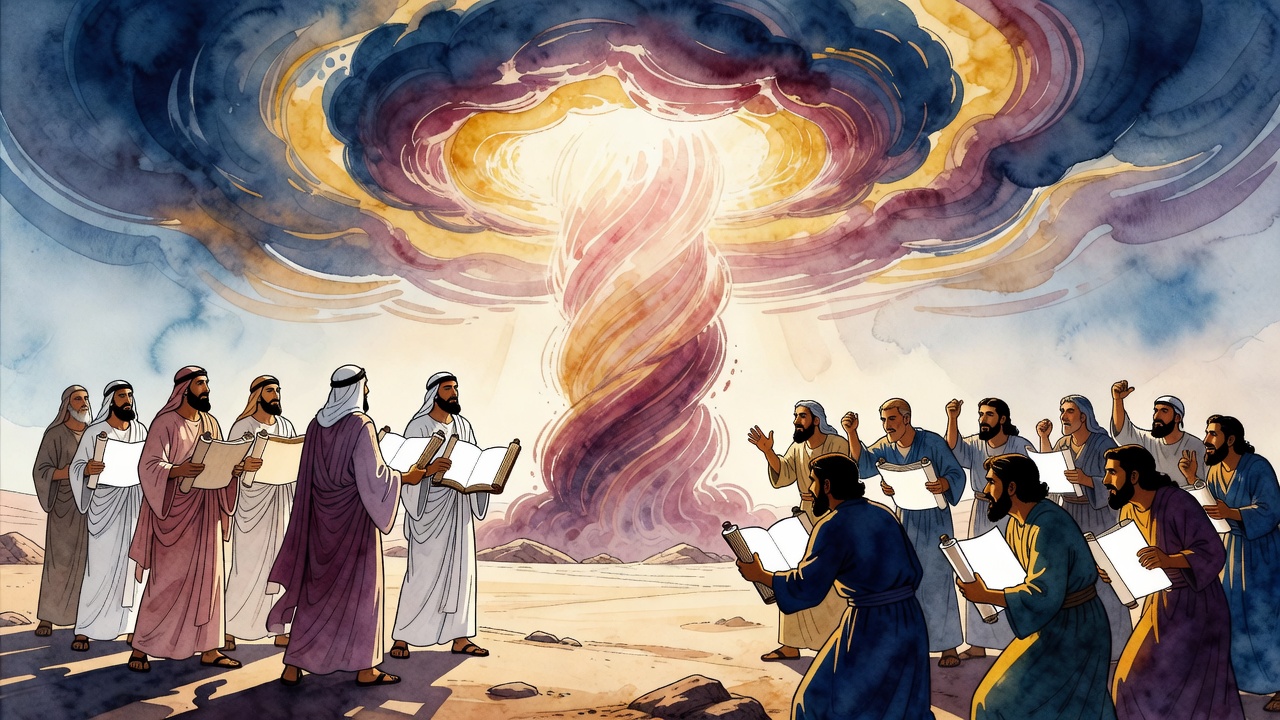
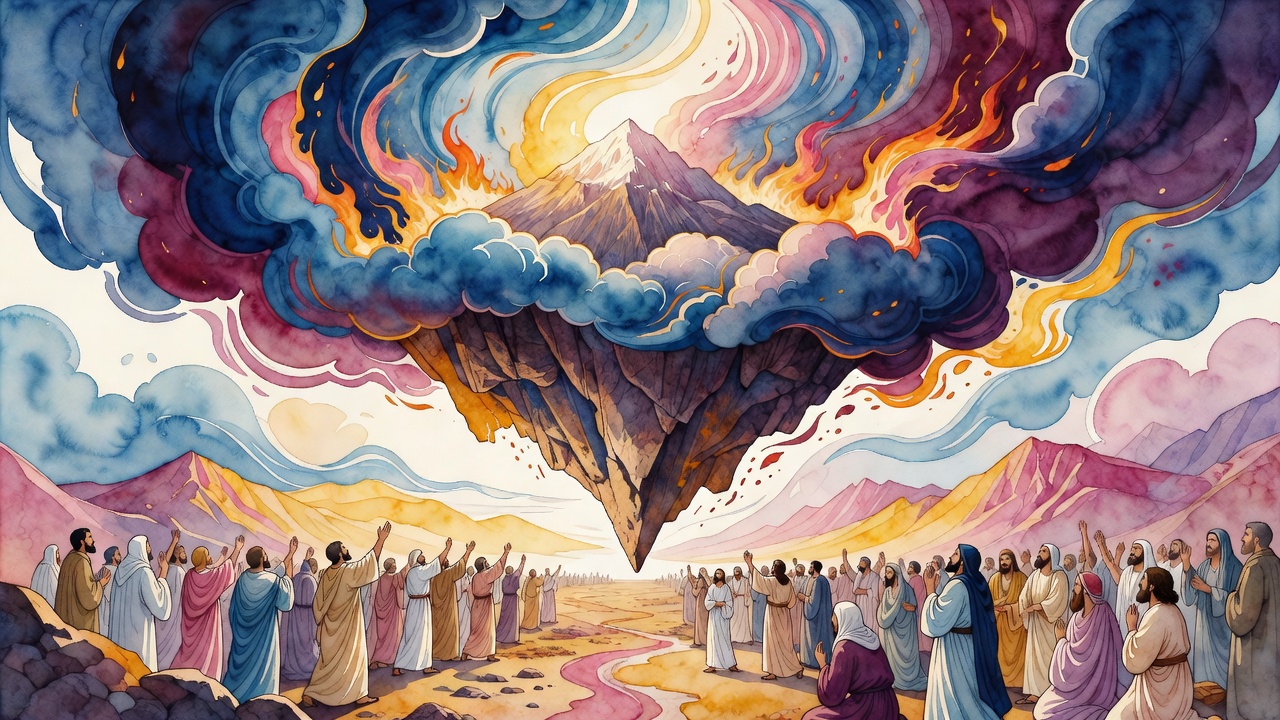
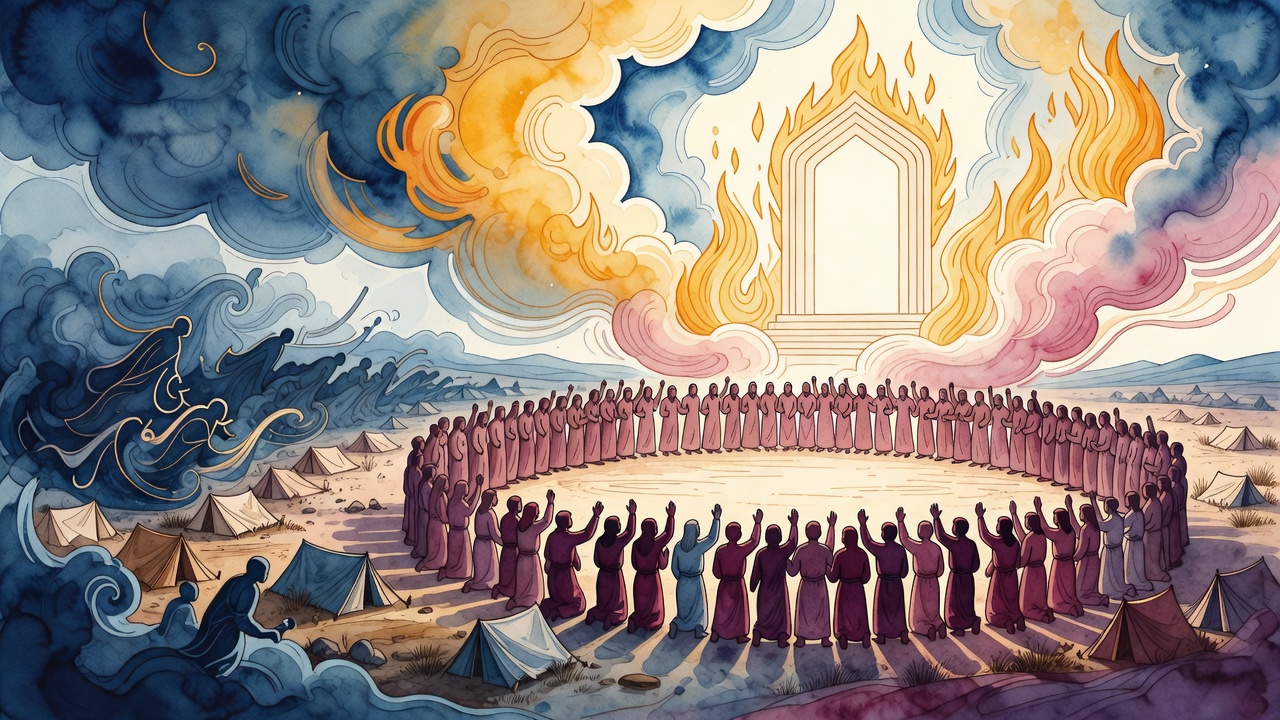
The mountain had barely begun to smoke when the complaint went up. The nations of the world watched the fire settle over one camp and demanded a hearing. Why them. Why Israel. The question wore the clothing of fairness, and God did not brush it aside. He answered with a test that sounded like paperwork and cut like a blade.

"Bring Me your family records," He said, "and My children shall bring theirs."

Not a contest of armies. Not an auction of gold and incense. Ledgers. Books of descent. Proof of an unbroken chain that could stand in the same fire about to cut commandments into stone. The mountain would not be handed to the loudest grievance.

Books That Would Not Open

One by one the nations went looking for their books, and one by one the books betrayed them. Records snagged on gaps, on compromises, on marriages and generations that could not bear daylight. The failure was moral before it was clerical. Names on a page were never only names. They were the conduct of the houses that carried them, and where a chain had been sold, mixed, or denied, no scribe could certify it for the yoke of Sinai.

Israel did not bluff. Every man stood ready to prove pure descent and the commitment of the fathers behind him, back through households that had lived under promise since Abraham. When heaven asked for the ledger, no one flinched.

The envy that opened the scene did not survive it. The nations looked at what the records showed and broke into praise of Israel's family purity. Scrolls closed across the world. One nation's books stayed open.

A People That Counted Its Years

The habit behind that readiness was old, and it outlived the mountain. Jewish scribes kept counting long after Sinai, in chronicles that refuse a foggy past. The Lesser Order of the World runs the tally out loud: one thousand six hundred fifty-six years from Adam to the Flood. Three hundred forty more to the scattering at Babel. Fifty-two years to the birth of Isaac, four hundred from Isaac to the night Israel walked out of Egypt, forty more in the wilderness after that. The chronicle presses on through the land, the exile, the seventy years between the Temples, the four hundred twenty years the Second Temple stood, refusing to let a single span blur.

Dry numbers, but the same muscle the mountain tested. A people that can count from the first man to its own morning is a people that can present papers when heaven asks. The nations that failed at the mountain had preferred fog. Fog cannot be summoned to testify.

Thunder Against the Erasers

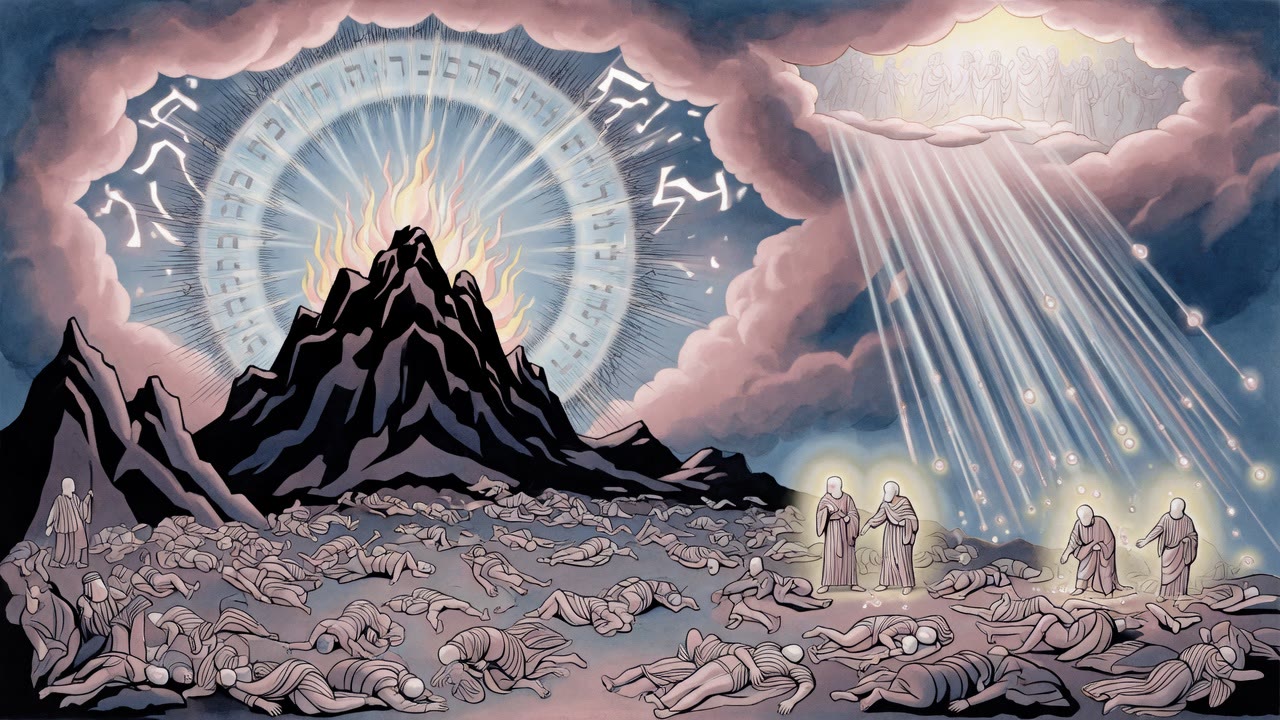
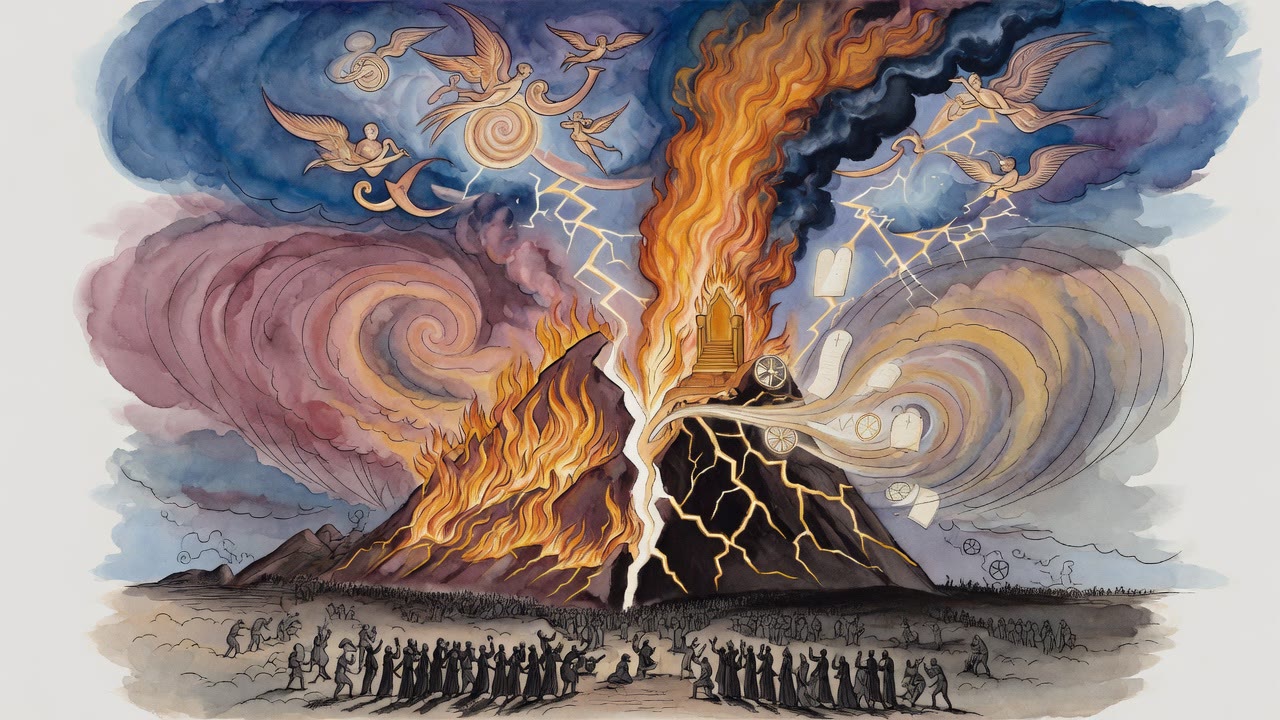
The same tradition keeps a darker voice for the nations' defeat, sung in weather instead of ink. "The earth quaked and trembled from the noise of Thy thunder against them." Storm as pursuit. Whirlwind as consumption. Rain turned to hail until the enemies fell in floods and could not rise, their carcasses left like rubbish in the middle of the streets, consumed and perished, so that God's people might be delivered in might.

The records test is a courtroom. The quake is a battlefield. They answer the same claim from opposite ends: that any nation might have worn the Torah as lightly as a borrowed cloak. In the courtroom the answer is a ledger no other people could open. On the battlefield it is what happens when complaint hardens into assault against the people who kept the books.

The Ledgers Stay Open

So the scene at the giving of the Torah is more than smoke and letters of fire. It is a stack of books slamming shut across the world, and one set that opens clean. Chosenness here is not a compliment. It is custody, argued with ledgers and defended with storms.

The mountain did not choose a random crowd. It chose the people who could still name their fathers when heaven asked, and who would go on numbering their years so that no one could ever say the chain had been invented. The cry of "why them" met its evidence and went quiet. The counting never stopped.


← All myths
From the tradition

Sources

3 sources

The texts behind this telling. Some cards carry a translation of the source; others are our own retelling of it, and each card says which. Every card links out to the original.

Legends of the Jews 4:43Legends of the Jews

Retold in our words. Read the original at the link below.The Legends of the Jews by Louis Ginzberg (1909) · Public Domain

It seems everyone wanted a piece of the action!

The Legends of the Jews, that incredible compilation of rabbinic stories by Louis Ginzberg, offers a fascinating perspective on this very question. Imagine the scene: God is about to bestow the Torah upon Israel, and suddenly, a chorus of voices rises from the other nations. "Why them?" they cry. "Why were they chosen?"

It's a fair question. What made Israel so special in the eyes of the Divine?

God, in His infinite wisdom, doesn't simply dismiss their concerns. Instead, He offers a challenge, a test of sorts. "Bring Me your family records," He declares, "and My children shall bring their family records."

Think about what this means. God wasn't just looking for lineage; He was looking for something deeper: evidence of the integrity and purity of their heritage. Could they prove an unbroken chain of faith and commitment?

And here's where the story takes a dramatic turn. The nations, one by one, falter. They cannot produce the evidence needed. Perhaps their histories were marred by inconsistencies, by compromises, or simply by a lack of meticulous record-keeping. Whatever the reason, they failed the test.

But Israel? Israel stood firm. Every man, Ginzberg tells us, was ready to prove his pure descent, to demonstrate the unwavering commitment of his ancestors. They were a people whose history, whose very identity, was intertwined with the principles of righteousness and faith.

The Midrash (specifically Midrash Rabbah, if you want to look it up) expands on this idea, suggesting that the nations' inability to prove their lineage stemmed from moral failings. This wasn't just about names on a list; it was about the character and conduct of generations.

The result? The nations, initially envious and questioning, were overwhelmed. They burst into praise, acknowledging Israel's exceptional family purity. And it was this very purity, this unwavering commitment to their heritage, that earned them the Torah.

So, the Torah wasn't simply given; it was earned, in a sense. It was a reward for the dedication and faithfulness of the Jewish people.

What does this story mean for us today? Maybe it's a call to reflect on our own lineages, both literal and spiritual. Are we upholding the values passed down to us? Are we striving for that same level of integrity and commitment?

Perhaps the story of the giving of the Torah isn’t just a historical event, but a continuous invitation, a challenge to earn it anew, every single day.

Full source
Legends of the Jews 1:38Legends of the Jews

Retold in our words. Read the original at the link below.The Legends of the Jews by Louis Ginzberg (1909) · Public Domain

That's just a glimpse of the awe-inspiring power

This isn't just about destruction; it's about the raw, untamed force of the Divine, a power that both terrifies and protects.

Our sources paint a vivid picture. "The earth quaked and trembled from the noise of Thy thunder against them," we read. Think about the sheer volume, the unending roar, the palpable sense of impending doom. "Thou didst not withhold their souls from earth, and Thou didst bring down their lives to the grave."

It wasn't a gentle passing. This was a cataclysmic event, a divine reckoning.

And the storm didn't let up. "Thou didst pursue them in Thy storm, Thou didst consume them in the whirlwind," continues the account. It's relentless, this divine wrath. There's no escape, no shelter from the tempest. Even nature itself turned against them: "Thou didst turn their rain into hail, they fell in floods, so that they could not rise." The very elements conspired to bring them down.

The devastation was complete. "Their carcasses were like rubbish cast out in the middle of the streets." It's a stark, brutal image, stripping away any semblance of dignity or honor. This is the fate of those who stand against the Divine will.

The end was swift and absolute. "They were consumed, and they perished before Thee." There's no ambiguity here, no room for interpretation. Their defiance led to their utter annihilation. And the purpose? "Thou hast delivered Thy people in Thy might." The destruction wasn't arbitrary; it was a necessary act of salvation, a demonstration of power to protect the chosen.

What does this tell us? Is it simply a story of divine retribution, a cautionary tale about the consequences of disobedience? Or is there something deeper here? Perhaps it's a reminder of the awesome responsibility that comes with power, whether divine or human. Perhaps it's evidence of the enduring strength of faith, a promise that even in the darkest of times, deliverance is possible.

Maybe, just maybe, it's a call to examine our own lives, to ask ourselves what we stand for, and to consider the legacy we will leave behind when the storm finally comes for us all.

Full source
Seder Olam Zutta 1:2Seder Olam Zutta

Translation of the source text.Seder Olam Zuta, Rabbi M. Grossberg. London, 1910 + JewishMythology.com faithful English Beta translation · Public Domain

From Adam until the Flood was one thousand six hundred and fifty-six years. From the Flood until the Dispersion was three hundred and forty years. That was the year 1,996 from Creation. From the Dispersion until Isaac our father was born was fifty-two years. That was the year 2,048 from Creation. From the birth of Isaac our father until Israel went out from Egypt was four hundred years. That was the year 2,448 from Creation. The forty years that Israel was in the wilderness brought the count to the year 2,488 from Creation. Eight hundred and fifty years passed from the time they came into the land until they were exiled from it. That was the year 3,338 from Creation. The Babylonian exile lasted seventy years between the First Temple and the building of the later Temple. That was the year 3,408 from Creation. The later Temple stood four hundred and twenty years and was destroyed. That was the year 3,828 from Creation. From the destruction of the Temple until now are one thousand and fifty-three years. Together they are four thousand eight hundred and eighty-one years from Creation.

Full source