Parshat Yitro5 min read

Sinai Froze the World Under Six Secret Names

The nations measured each commandment against the kings they knew. No rivals, no false oaths in his name. Then came honor your father and your mother.

Curated by Arthur · Told by Maggid ·
Table of Contents
  1. Three Months Before the Wedding
  2. Six Names on One Mountain
  3. Creation Holds Its Breath
  4. Nations Agree Until Parents
  5. Chosen for Knowledge and Consequence
Sinai Froze the World Under Six Secret Names Click for full size

Three Months Before the Wedding

God did not give the Torah the week of the Exodus. Three months passed. The delay matched the law of a free woman, a convert, or a captive set free, who waits before marriage. Israel, newly released, needed time as a free people before the covenant wedding at the mountain. A king loads a bride with gifts first. Manna, a well, and quail arrived as bridal gifts before the words that would bind forever. Food and water taught dependence before law taught obligation.

Jethro's departure before the great day also cleared the scene in the legends that bind the timing to his exit. The delay was not neglect. It was courtship with a calendar. A people still smelling of brick yards is not yet ready to stand under fire and speech. Three months of free sky rewrote their posture. Only then did the mountain become a canopy.

Wedding language is not soft decoration here. It is the structure of chosen binding, gift then vow, presence then demand.

Six Names on One Mountain

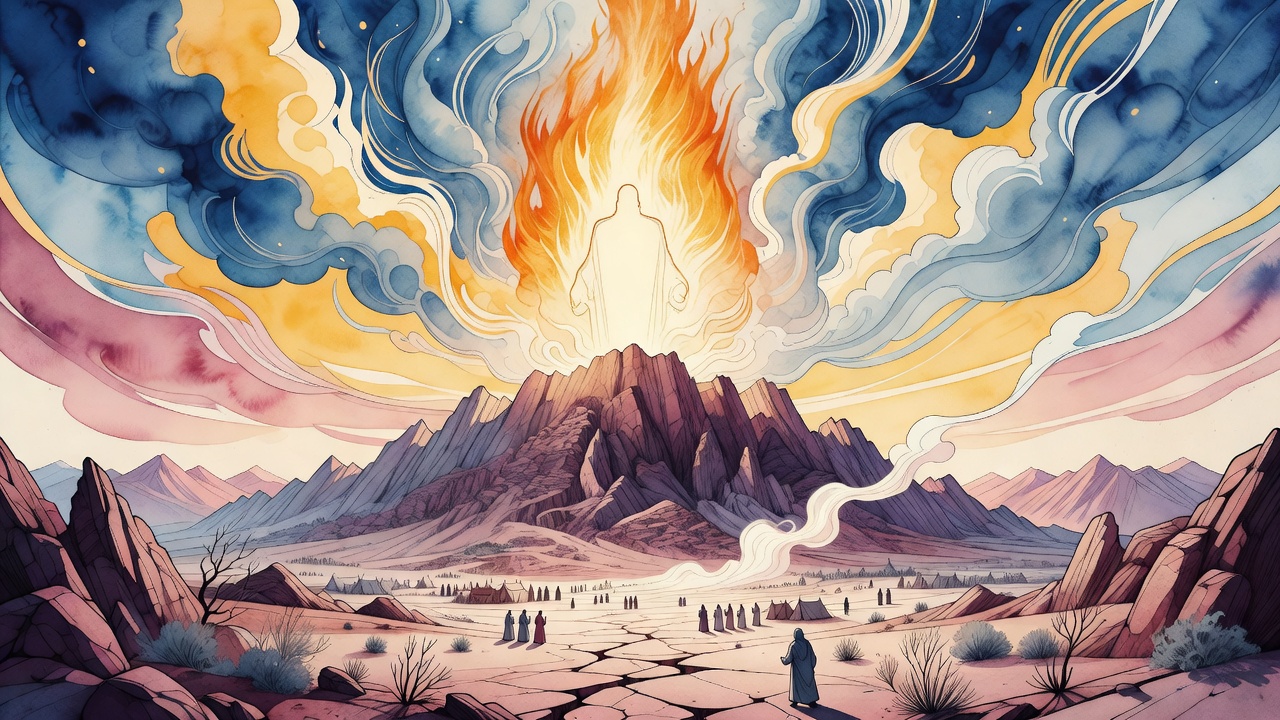
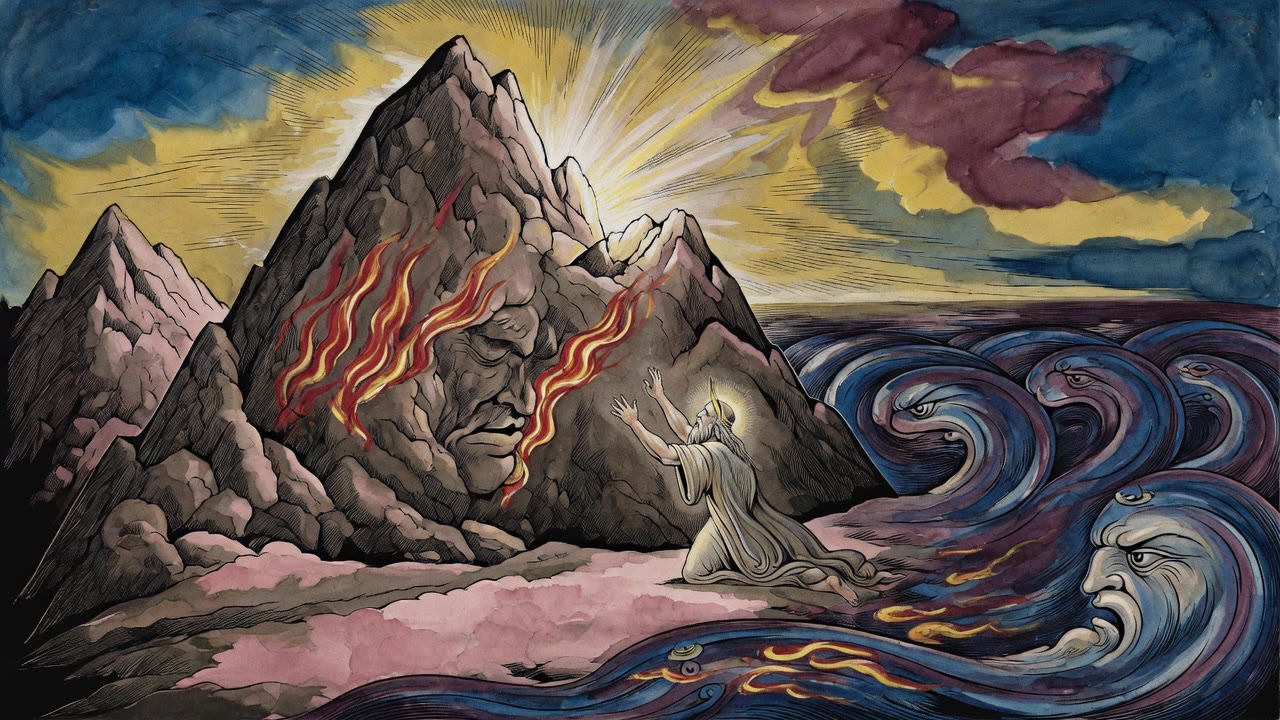
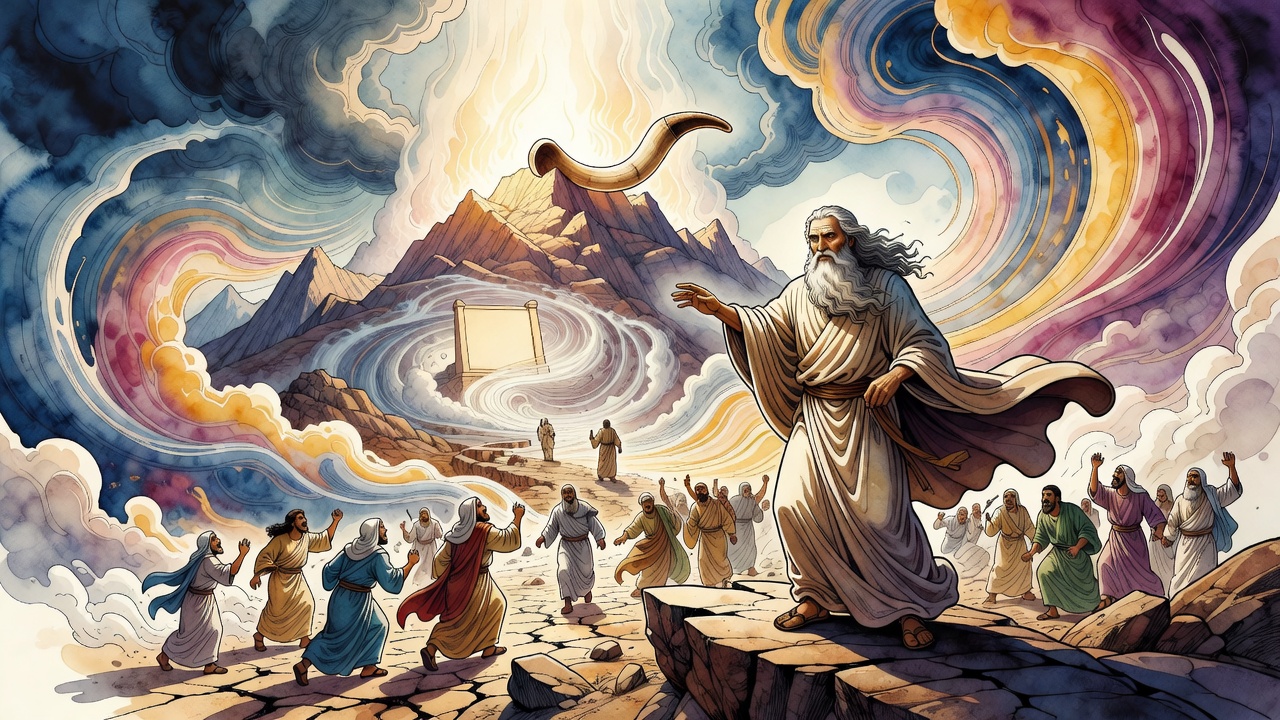
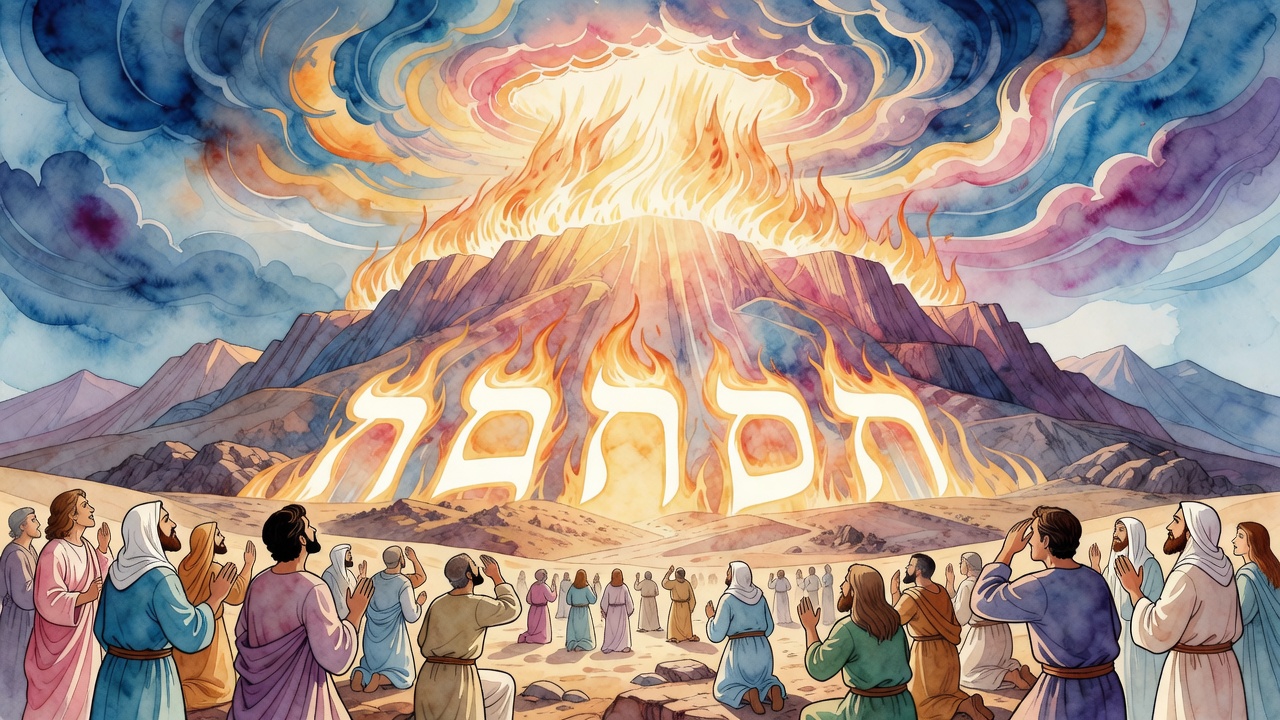
The mountain wore more than one name. Desert Sin spoke of commandment and decree. Desert Kadesh spoke of the people made holy by acceptance. Desert Kadmut spoke of Torah as something ancient, a blueprint older than the hour it was heard. Desert Paran spoke of a nation multiplied and ready. Desert Sinai carried the grief of the nations' refusal, the turn of heaven against those who would not take the gift. Horeb echoed destruction for that refusal. One ridge held command, sanctity, antiquity, growth, and the hard edge of rejected wisdom.

To name the place six ways is to refuse a thin story of revelation. The peak was classroom, altar, and courtroom for the world. Israel stood in the blast. The nations heard the offer and, in the midrashic telling, stepped back. Acceptance and refusal both happened at the same geography. The names remember both.

Creation Holds Its Breath

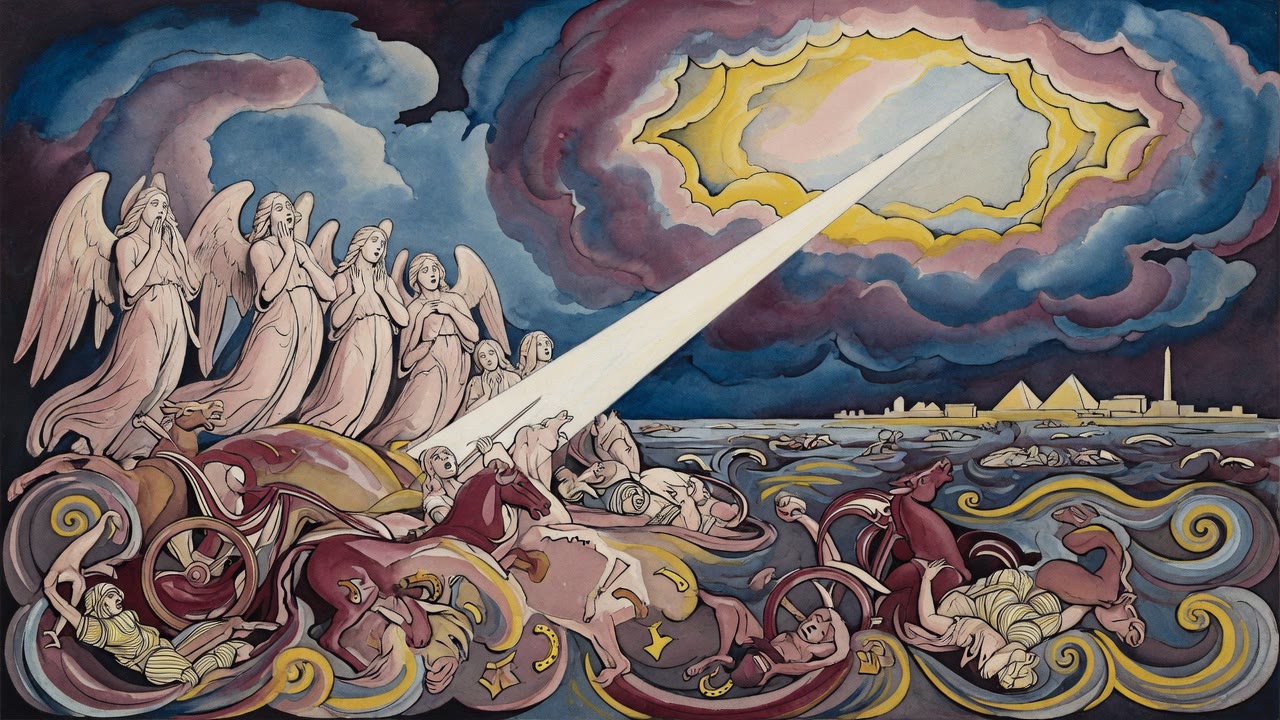
When the Voice spoke, all creation was ordered still. Birds shut. Cattle fell silent. Ofannim folded motion. Seraphim held back their holy cry. The sea paused. Into that echoless quiet came the words, I am the Lord your God. The sound split into seventy languages so every nation heard. Israel endured the direct blow of speech. Others heard and shook. Revelation was a global broadcast with one people standing in the blast center, bodies able to bear what others could not.

Silence made room for a sentence that would measure history. Gates of fear opened in listeners who would not become keepers of the words. Hell's dread and heaven's hush met in the same instant. A voice without echo is more terrifying than thunder, because nothing answers back and nothing softens the edge. The world learned monotheism first as stillness, then as speech.

Nations Agree Until Parents

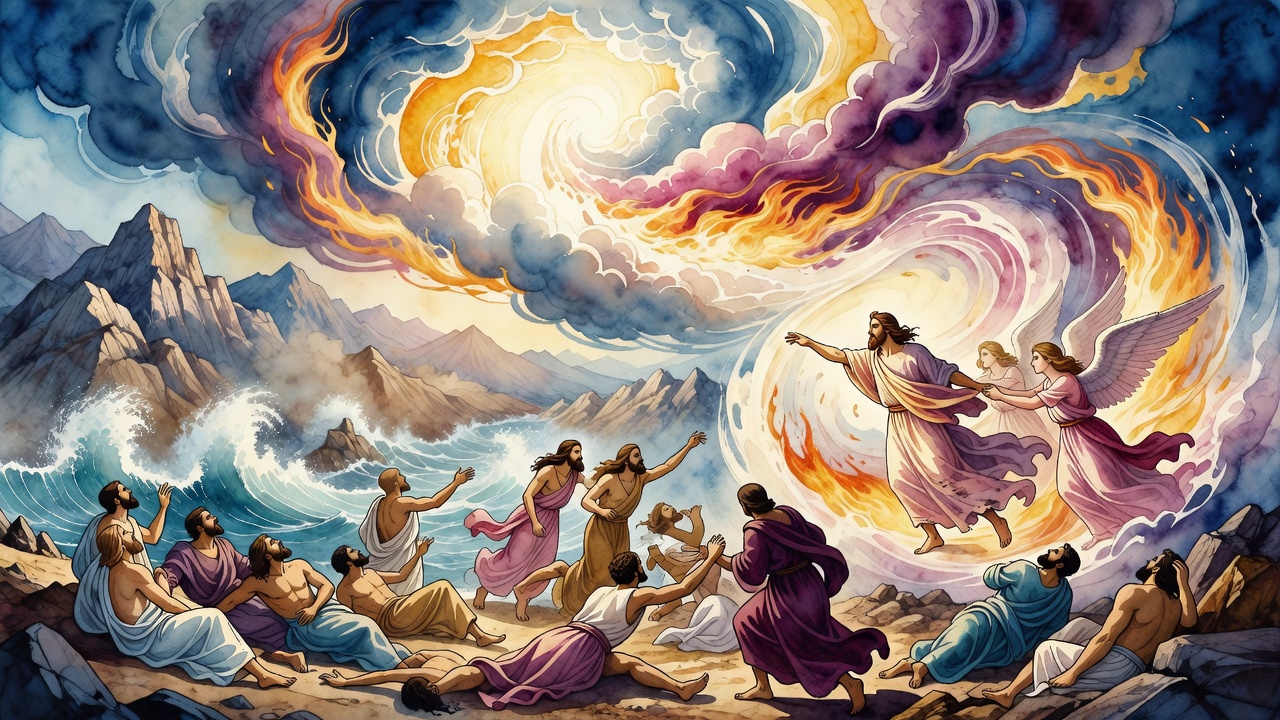
As each commandment sounded, the nations measured it by kings they knew. A king wants recognition. A king wants no rivals. A king hates false oaths in his name. A king keeps a feast day. Those first words they could translate into palace logic. Then came honor your father and your mother. Their laws said a man who enlisted as the king's servant disowned his parents. Here the divine King demanded honor for father and mother still. That broke their analogy.

Truly, they said, this is honor due to Him. Family loyalty inside covenant shocked empires built on absolute royal claim. The fifth word exposed how different this sovereignty was. It did not eat the home to feed the throne. Earthly kings had trained subjects to orphan themselves for the crown. The God of Israel trained children to keep parents inside the circle of awe. That single command separated Sinai from every palace the nations used as a mirror.

Chosen for Knowledge and Consequence

Moses later told Israel what the gifts meant. God gave Torah and marvels to distinguish them among the nations. Ignorance had been an excuse. Now they knew what to do and what to refuse. They also knew the righteous would be rewarded and the godless punished in the world to come. Choice after Sinai was informed choice. Distinction was responsibility, not ornament. A people that has heard cannot plead darkness.

Three months of waiting, six names, a frozen world, nations startled by parental honor, and a speech about knowledge and consequence form the mountain's full weather. Israel left the foot of that ridge unable to claim they had not heard. The wedding had happened. The gifts had been eaten. The Voice had used every language, and one people had answered with a life that must now match what it heard. Sinai under six names remains the place where silence, speech, and chosen duty met, and where the world learned that some kings demand orphans while this King demands that parents still be honored in the shadow of the throne.


← All myths
From the tradition

Sources

5 sources

The texts behind this telling. Some cards carry a translation of the source; others are our own retelling of it, and each card says which. Every card links out to the original.

Legends of the Jews 2:17Legends of the Jews

Retold in our words. Read the original at the link below.The Legends of the Jews by Louis Ginzberg (1909) · Public Domain

The tradition says the timing was absolutely crucial, divinely ordained, and brimming with meaning. The Israelites are freed from centuries of slavery, they witness incredible miracles, and then… they wait. Three months. What's that all about?

Well, according to Legends of the Jews, God had very good reasons for delaying the giving of the Torah until after Jethro's departure. And the specific time He chose was chosen for a good reason, too.

The analogy used is fascinating. Just as a female proselyte, a woman converting to Judaism. Or a woman freed from captivity, or even an emancipated slave, couldn't enter wedlock immediately, God waited. They each needed a period of adjustment, a time to acclimate to their new status. Tradition says they must live as a free Jewess for three months before marriage. Similarly, God waited three months after delivering Israel from Egyptian bondage before “marrying” them, so to speak, at Mount Sinai.

It's a powerful image: God betrothed to Israel. But there's more!

The tradition continues, painting God as a king preparing for his wedding. Kings overwhelm their chosen brides with gifts. So too, Israel first received manna to eat, a miraculous well for water, and flocks of quails for meat. Only then was the Torah granted to them. These weren’t just random acts of kindness; they were bridal gifts, preparing Israel for their covenantal relationship with God.

And what about Moses in all this? He was practically bursting with anticipation. Remember the promise God made when He first appeared to Moses? "When thou has brought forth the people out of Egypt, ye shall serve God upon this mountain" (Exodus 3:12). Moses, according to this tradition, waited "most longingly" for that promised moment, constantly asking, "When will this time come to pass?"

Finally, as the moment approached, God tells Moses, "The time is at hand when I shall bring about something entirely new. It speaks to the profound transformation that's about to occur. It's not just about receiving laws; it's about entering into a new, revolutionary relationship with the Divine.

So, next time you read about the Exodus and the subsequent wait for Sinai, remember this: it wasn't just a pause. It was a preparation. A betrothal. A moment of profound transformation that shaped the destiny of Israel and, in many ways, the world. What "entirely new" thing is God waiting to reveal to us now?

Full source
Legends of the Jews 2:22Legends of the Jews

Retold in our words. Read the original at the link below.The Legends of the Jews by Louis Ginzberg (1909) · Public Domain

For a second. Six different names, each hinting at a different facet of that earth-shattering moment. It’s like trying to describe a diamond – you can

So, what are these names? And what do they tell us?

First, there's the Desert Sin. According to Legends of the Jews, this name reflects the moment God announced His commandments. Sin, in this case, isn't about wrongdoing; it's about commandment, about divine decree. This name highlights the raw, authoritative power of the revelation.

Then we have the Desert Kadesh, meaning "holy" or "sanctified". This reminds us that the encounter at Sinai wasn't just about God speaking, but about the people of Israel being transformed. They were sanctified, set apart, made holy through their acceptance of the covenant.

Next is the rather mysterious Desert Kadmut. Kadmut refers to something pre-existing, ancient. This name suggests that the Torah wasn't a new invention, but a revelation of something that had always existed, a divine blueprint for the universe itself, now unveiled for humanity. The fourth name is Desert Paran, which speaks to the immense growth and multiplication of the Israelites. As Ginzberg retells in Legends of the Jews, this name represents the burgeoning nation, ready to embrace its destiny.

But things take a sharp turn with the last two names.

We arrive at Desert Sinai – the name we all know. But the text suggests a darker meaning here. It says the "hatred of God against the heathens began there, for the reason that they would not accept the Torah." Horeb, the sixth name, echoes this theme, signifying the "annihilation of the heathens." the verse says, God's wrath towards those who refused the Torah began at Sinai.

Whoa. Heavy stuff.

It's important to understand this "hatred" not as simple vengeance, but as a consequence of rejecting a path toward moral and spiritual elevation. As we find in Midrash Rabbah, the Torah was offered to all nations, but only Israel accepted. This refusal, in this interpretation, created a divide, a separation. It's not about arbitrary favoritism, but about the responsibility that comes with accepting divine wisdom.

So, what does this all mean? This mountain, this place of revelation, carries within it a interplay of meanings: divine command, sanctification, ancient wisdom, national growth… and the sorrowful consequences of rejection.

Mount Sinai, in all its six-named glory, stands as a reminder that revelation is not a passive event. It's a call to action, a challenge to embrace responsibility, and a moment that forever changes not only those who accept it, but also the world around them. It’s a powerful story of choice, consequence, and the enduring power of divine encounter.

Full source
Legends of the Jews 2:59Legends of the Jews

Retold in our words. Read the original at the link below.The Legends of the Jews by Louis Ginzberg (1909) · Public Domain

Did they just shrug it off? Were they curious? Intrigued? According to the Legends of the Jews, they had some pretty strong opinions, actually. So, the story goes that when they heard the first commandment – "I am the Lord your God" – the other nations were like, "Okay, makes sense." The Legends of the Jews tells us that they figured every king wants to be recognized. So, naturally, God wants his people to pledge allegiance to Him. Seemed

Then came the second commandment: "You shall have no other gods before me." Now, things got a little spicier. These nations, according to the legend, were like, "Hold on a minute. No king wants a rival." This, they interpreted, was God staking his claim as the only sovereign. Makes sense. The third commandment – "You shall not take the name of the Lord your God in vain" – drew a similar reaction. "What king wants people swearing falsely in his name?" they supposedly asked in Legends of the Jews. Again, they saw it as a reflection of earthly power dynamics.

The fourth commandment, about keeping the Sabbath holy? Well, they apparently thought, "Every king enjoys celebrating his birthday, so God is the same! They were seeing echoes of human leadership in divine law.

Then… then came the fifth commandment: "Honor your father and your mother." And this is where things took a sharp turn.

According to the story, the nations were completely floored. They said, "Our laws state that if a man enlists himself as a servant of the king, he disowns his parents!" for a second. Allegiance to the earthly king superseded even familial bonds.

But here was God, commanding honor for both father and mother. The Legends of the Jews emphasizes that the other nations saw this as something truly different. "Truly," they said, "this is honor due to Him!"

Why such a different reaction to this one? Perhaps they recognized a deeper truth: that honoring one's parents is, in a way, honoring the source of life itself, the very foundation upon which society is built. And perhaps, by extension, honoring God, the ultimate source.

That even in the seemingly simple act of honoring our parents, we are acknowledging something profound about the nature of creation and our place within it.

Full source
Legends of the Jews 2:53Legends of the Jews

Retold in our words. Read the original at the link below.The Legends of the Jews by Louis Ginzberg (1909) · Public Domain

The familiar picture has it as a booming voice echoing across the desert, but the rabbinic tradition paints a far more intricate – and frankly, – picture.

To truly drive home the message of His absolute oneness, God commanded all of creation to freeze. Absolute stillness. The Zohar tells us that every single element of the natural world was hushed. No birds chirping, no cattle lowing. The Ofannim, those celestial beings, stilled their wings; the Seraphim, the fiery angels, held their chorus of "Holy, holy, holy." Even the mighty sea held its breath. A profound, palpable silence descended, broken only by the echoless voice proclaiming, "I am the Lord your God."

In Ginzberg's retelling in, Legends of the Jews, these words weren't just for the ears of the Israelites huddled at the foot of the mountain. No, this was a worldwide broadcast, so to speak. The Divine voice, in its infinite power, split itself into the seventy languages of humanity, ensuring that everyone on Earth could understand. Every single person, regardless of their language or location, heard the voice of God. As we find in Midrash Rabbah, while the Israelites were able to withstand the direct impact of the divine word, the effect on the rest of the world was. intense. The souls of the "heathens," as they were often called, were nearly ripped from their bodies. The sheer power of the revelation was almost unbearable.

It didn't stop there! The blast of divine energy even reached into Sheol, the realm of the dead. All those who had passed away were momentarily revived and transported to Sinai. Why? Because this revelation wasn't just for the living, but for the dead and even those yet to be born! Every prophet, every sage, received their portion of the divine wisdom at that moment, a share they would then carry forward and reveal to humanity throughout history.

But perhaps the most astonishing detail is this: while everyone heard the same words, the voice itself sounded different to each person. It was as if God was speaking to each individual in a way that resonated with their unique soul. And the vision they perceived was also unique. Some saw a warrior, others a teacher. That's why God cautioned them, “Do not believe that because you have seen Me in various forms, there are various gods. I am the same that appeared to you at the Red Sea as a God of war, and at Sinai as a teacher.”

So, what does all this mean? It means that the revelation at Sinai wasn't just a historical event, it was a deeply personal and transformative experience for every single soul that existed, had existed, or would ever exist. And it begs the question: if we could have been at Sinai, what would we have heard? What would we have seen? And how would it have changed us?

Full source
Legends of the Jews 2:72Legends of the Jews

Retold in our words. Read the original at the link below.The Legends of the Jews by Louis Ginzberg (1909) · Public Domain

He addressed them with words that still resonate today.

He said: "God gave you the Torah and wrought marvels for you." It wasn’t just about receiving the law; it was about being chosen, being set apart. Moses continued, explaining that the purpose of the Torah and its observances was "to distinguish you before all other nations on earth." It's a powerful statement about responsibility, about the unique role of the Jewish people.

Moses wasn't just handing out compliments. He was delivering a serious message, a call to accountability. "Consider," he urged, "that whereas up to this time you have been ignorant, and your ignorance served as your excuse, you now know exactly what to do and what not to do." Before Sinai, there was a certain innocence, a lack of clear direction. But now? Now they knew. They were informed. The stakes had been raised.

Moses didn't stop there. He went on to say, "Until now you did not know that the righteous are to be rewarded and the godless to be punished in the future world, but now you know it." The concept of olam ha-ba, the world to come, was being revealed, adding another layer of consequence to their actions.

And then comes the kicker, the heart of Moses's message: "But as long as you will have a feeling of shame, you will not lightly commit sins." בושה – shame. It's not about blind obedience or fear of punishment. It's about internalizing a sense of right and wrong, of having a conscience that guides your actions. It's about recognizing the weight of their new covenant with God.

That feeling of shame, of moral accountability, is what Moses believed would keep the people on the right path. It's not enough to know the rules; you have to feel them, to internalize them.

The text then tells us, "Hereupon the people withdrew twelve miles from Mount Sinai, while Moses stepped quite close before the Lord." Can you picture that? The people, filled with a mixture of awe and trepidation, stepping back, creating space. And Moses, the ultimate leader, drawing even closer, becoming the intermediary between God and his people. He steps into the space that they cannot enter.

A reminder that receiving the Torah wasn't just a one-time event. It was the beginning of a journey, a journey of learning, of growth, and of striving to live up to the immense responsibility of being chosen. And perhaps, most importantly, a journey guided by that essential feeling: בושה – shame.

Full source