Sinai and the Rivers Refused to Plead for Moses
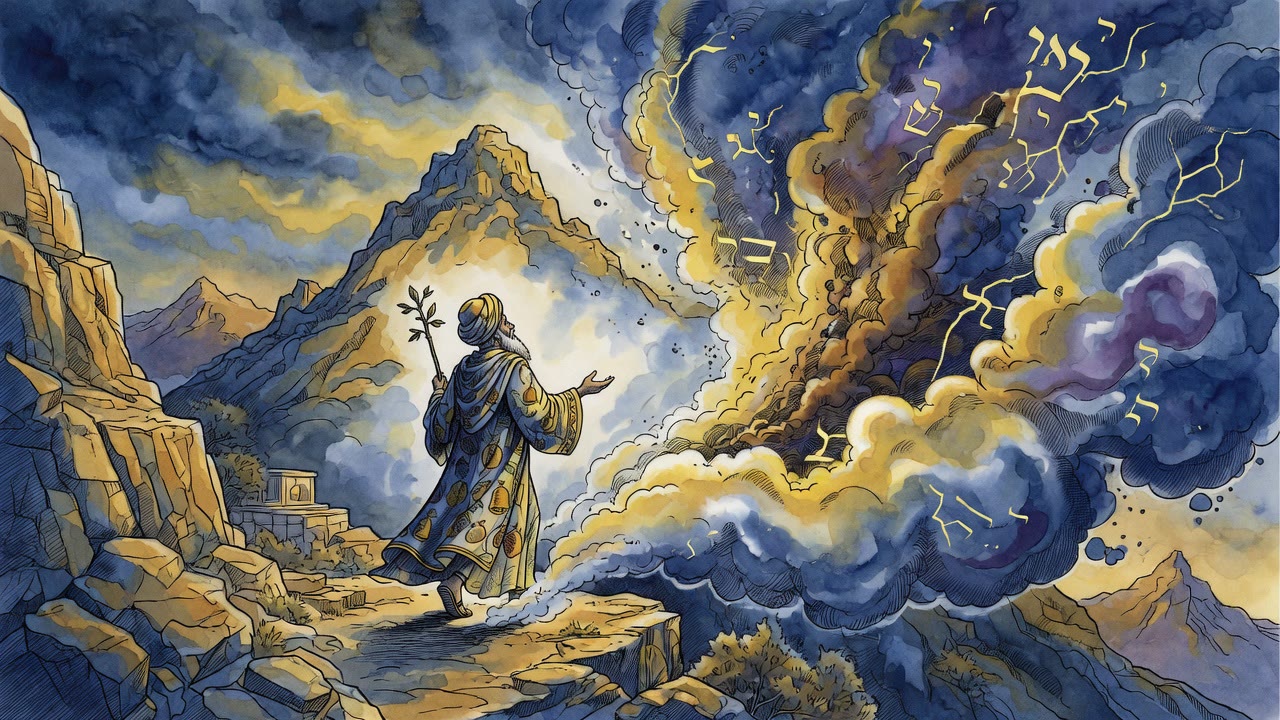
Moses went back to the mountain that had smoked for him. He asked it to speak. The ridge remembered fire and would not go near God again.
Table of Contents
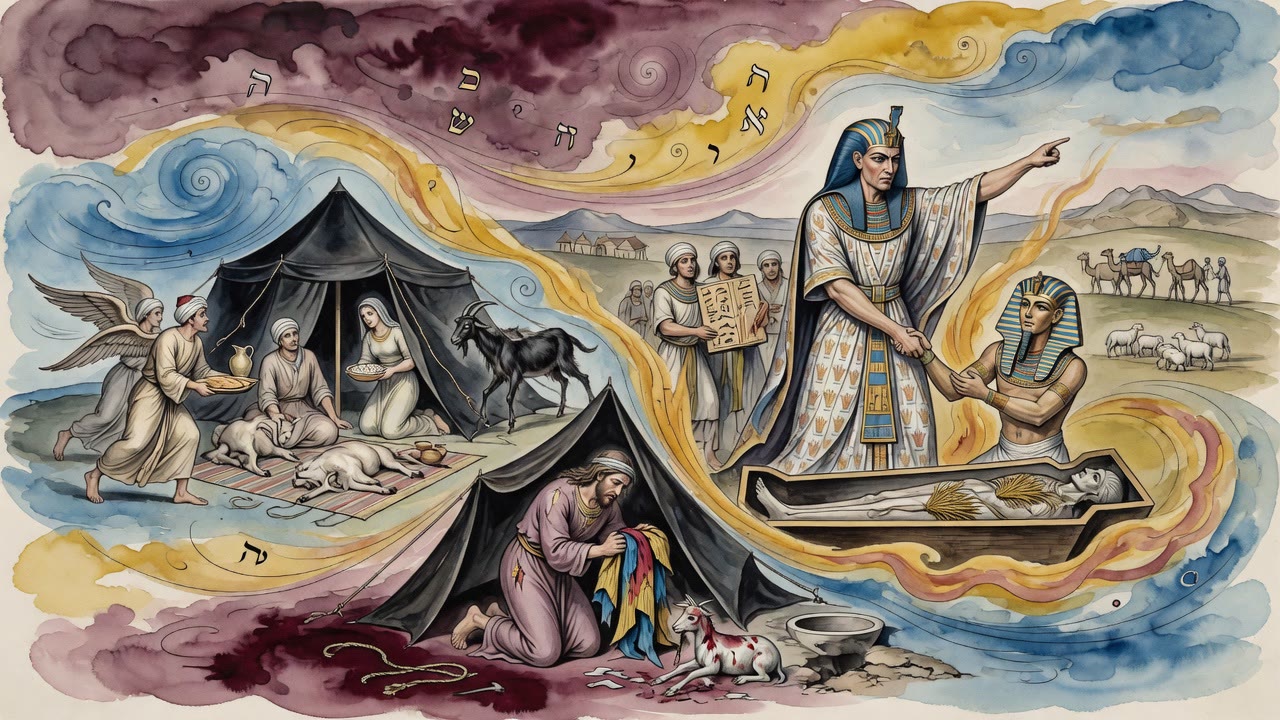
Moses felt the decree settle on his bones the way cold settles on stone after sunset. He had brought a people through water and law. He had stood so close to God that light clung to his skin. Now the measure of his years was full, and he wanted more time the way a man wants breath after a long climb.
 Click for full size
He needed an advocate. Someone, something, that could stand before the Holy One and argue that the servant should not yet be taken.
He Asked the Mountain
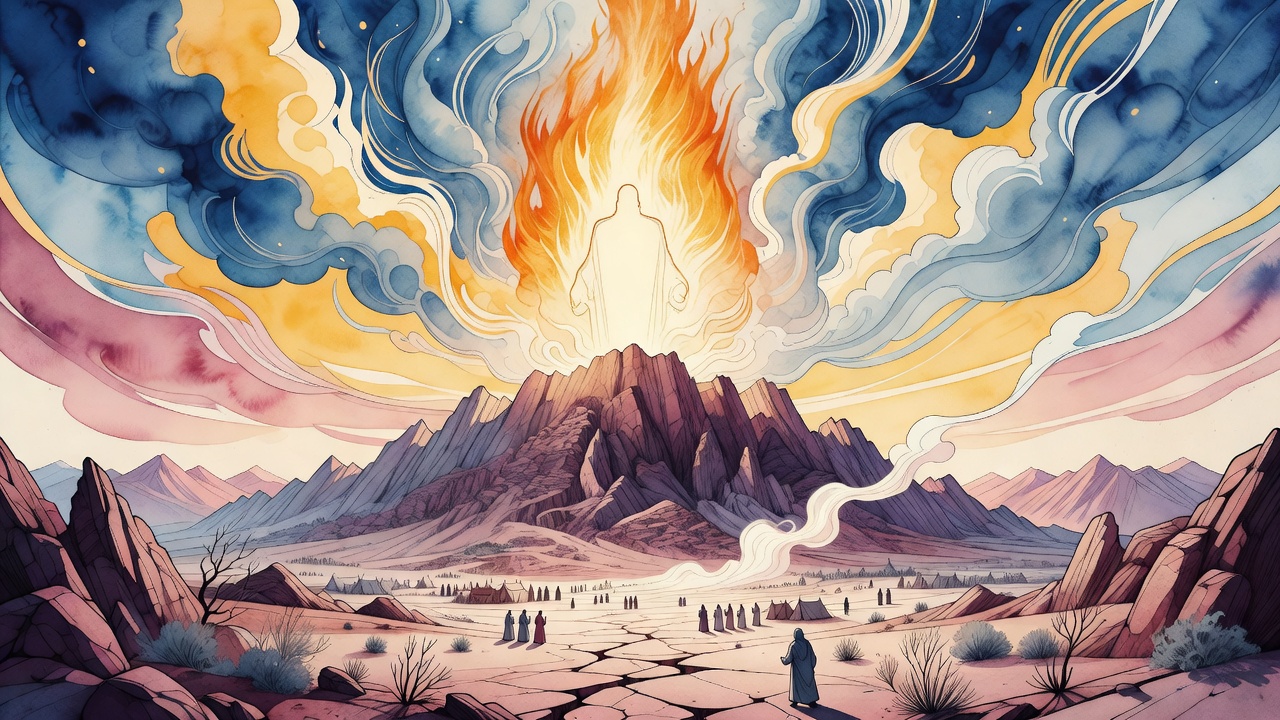
He went first to Mount Sinai. That ridge had smoked when the Lord descended in fire. Israel had heard the commandments and then, when the words finished, had withdrawn twelve miles while Moses stepped quite close before the Lord.
He had taught them, in those days, what the Torah was for: to distinguish them among the nations, to end the excuse of ignorance, to open the knowledge that the righteous are rewarded and the godless punished in the world to come. He had told them that as long as they kept a feeling of shame, bushah (בושה), they would not sin lightly. The people had stepped back. He had stepped in.
Now he stood at that same mountain and asked it to plead.
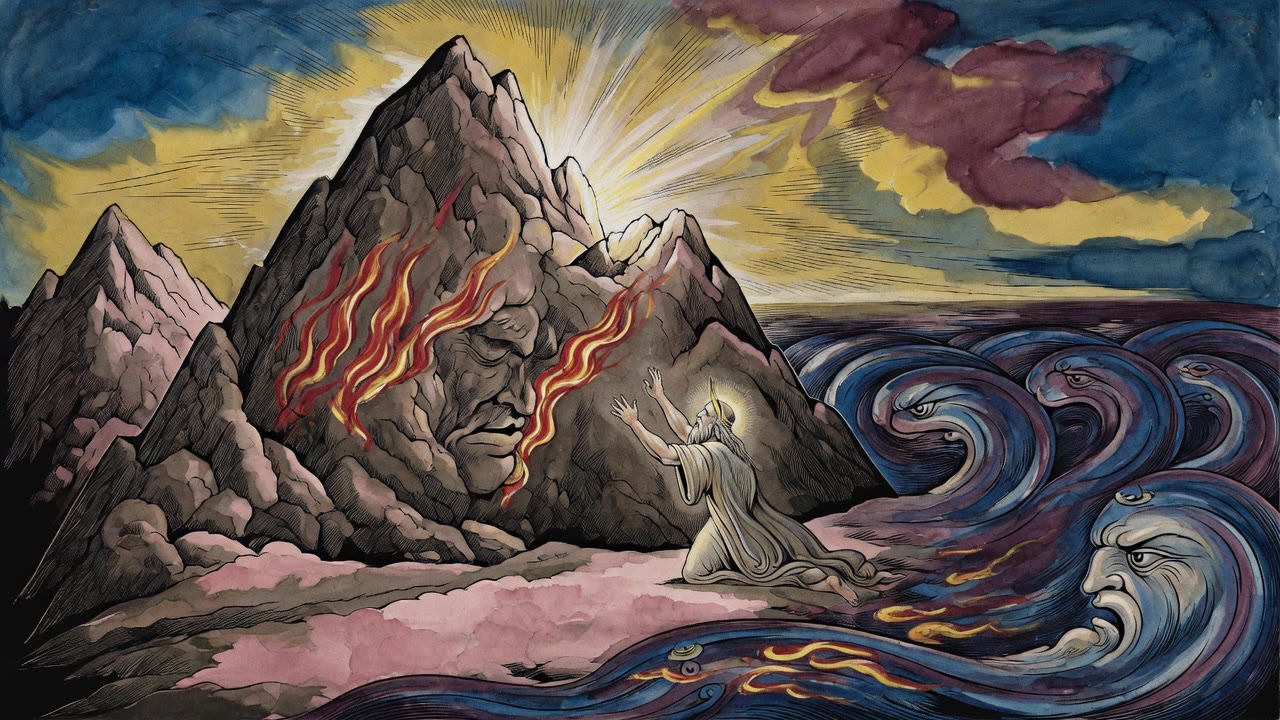
Sinai answered with the record Moses himself had written. "Didst thou not see with thine eyes," the mountain said, "and record in the Torah that Mount Sinai was altogether in smoke, because the Lord descended upon it in a fire?" (Exodus 19:18). The peak that had held the Presence would not approach that Presence as a lawyer for a man. It had felt the heat. It would not pretend it could bargain past the fire it still remembered.
Moses put his palm on the rock. The stone was cold now. He had once climbed it with his face uncovered. The mountain would not climb with him.
The Rivers Would Not Speak
Moses turned from stone to water. He went to the rivers, those long powers that cut countries and feed fields. If Sinai was too scorched to speak, perhaps flow would speak. Water cleanses. Water had opened under his staff once and closed on chariots.
The rivers refused. "The Lord made a way in the sea, and a path in the mighty waters," they said, holding the line from (Isaiah 43:16). "We cannot save ourselves out of His hand, and how then should we aid thee?" The waters that had split for Israel confessed they lived only by the same hand that now closed on Moses. A path through them was not their gift to give twice for a private plea.
Moses stood at the bank and felt the current go on without him. He remembered the staff in his hand at the sea, the wall of water on either side, the dry path under a whole nation's heels. That path had been God's path. The rivers would not reinvent it as a private rescue. No wave rose to carry his case upward. Spray touched his ankles and fell back into the ordinary pull of the stream.
Dust Answered for the Rest
He kept walking. He went to the deserts, empty enough to hold any prayer. He went to fire, wind, and earth, the pieces of the world that had served his signs and plagues. He asked each in turn to stand with him before the decree.
Their answer came plain. "All go unto one place; all are of the dust, and turn to dust again" (Ecclesiastes 3:20). The elements named their own end. They would not dress themselves as eternal counsel. Wind that had driven locusts would not now drive a verdict backward. Fire that had sat on Sinai would not climb higher as a witness for hire. Earth that had opened for rebels would not open a loophole for their teacher.
What returns to dust cannot out-argue the One who formed dust. Moses, who had struck rock and lifted a serpent of bronze, heard creation decline the role of advocate and felt the last doors close without a slam.
No mountain. No river. No desert wind. No flame willing to climb higher than its nature.
The People Had Already Stepped Back
He thought of the day the people withdrew twelve miles and he alone stepped close. He had told them that knowledge ended their excuses. He had told them shame would keep them from sin. That teaching still lived in their mouths. It could not buy him another year.
The mountain that had let him near when they stepped back now refused to near God for his sake. The shame he planted in Israel did not grow into a petition that could reverse the measure of his life.
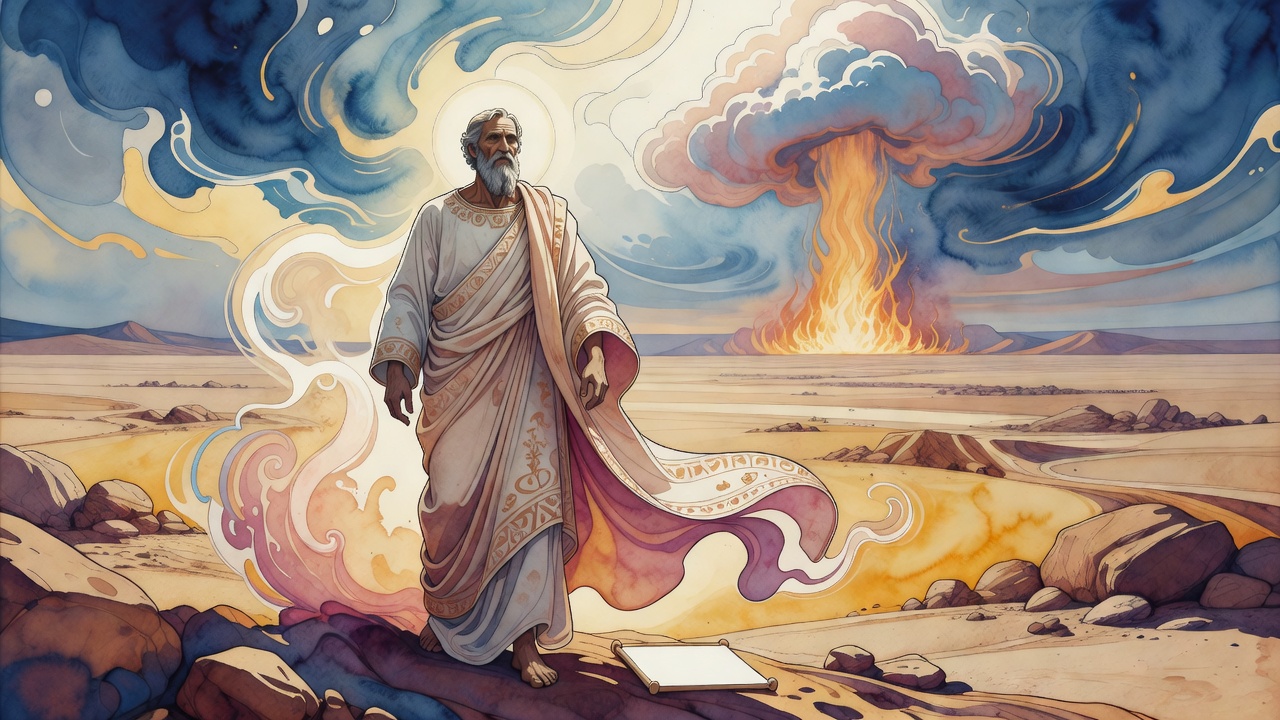
Moses stopped asking the world to speak. The world had answered. He remained the man who had stood between fire and a frightened nation, now without a second voice at his shoulder. The decree did not lift. The path toward the mountain of his death stayed open only for him.
He set his palms on his knees the way an exhausted walker does when the next ridge is the last. No cloud lowered to argue. No bush burned with a new assignment. The people who still carried his teaching about shame would cross a river he would not cross. Dust under his sandals. Silence from Sinai. Water running past without a word left to give.
← All myths