Moses the Poor Wise Man Who Held Back the Siege
Moses argued the words at Sinai were spoken to him alone, not to them. God kept answering. Moses ended standing like a man thirty days in a sickbed.
Table of Contents
 Click for full size
A Little City With Few People
Open Ecclesiastes like a sealed gate. "There was a little city, and few people in it" (Ecclesiastes 9:14). The little city is the wilderness, vast and trackless. The few people are the generation between Egypt and the Land, a fragile host under open sky.
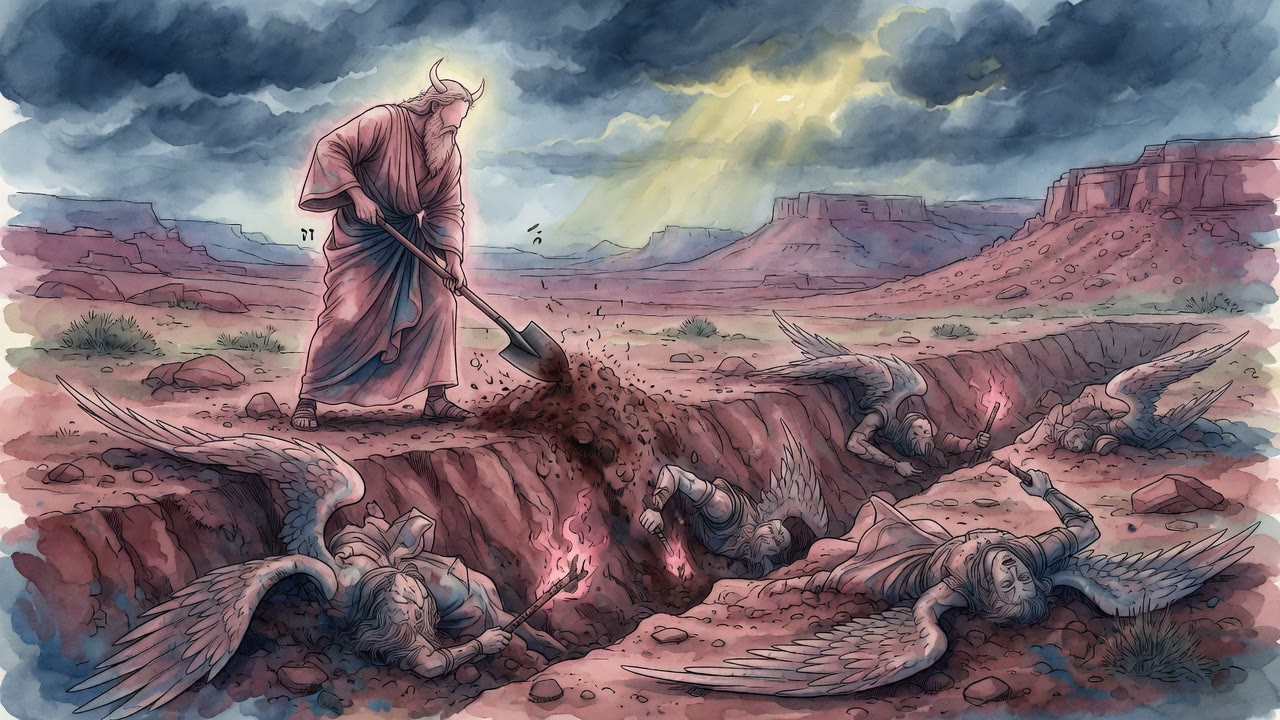
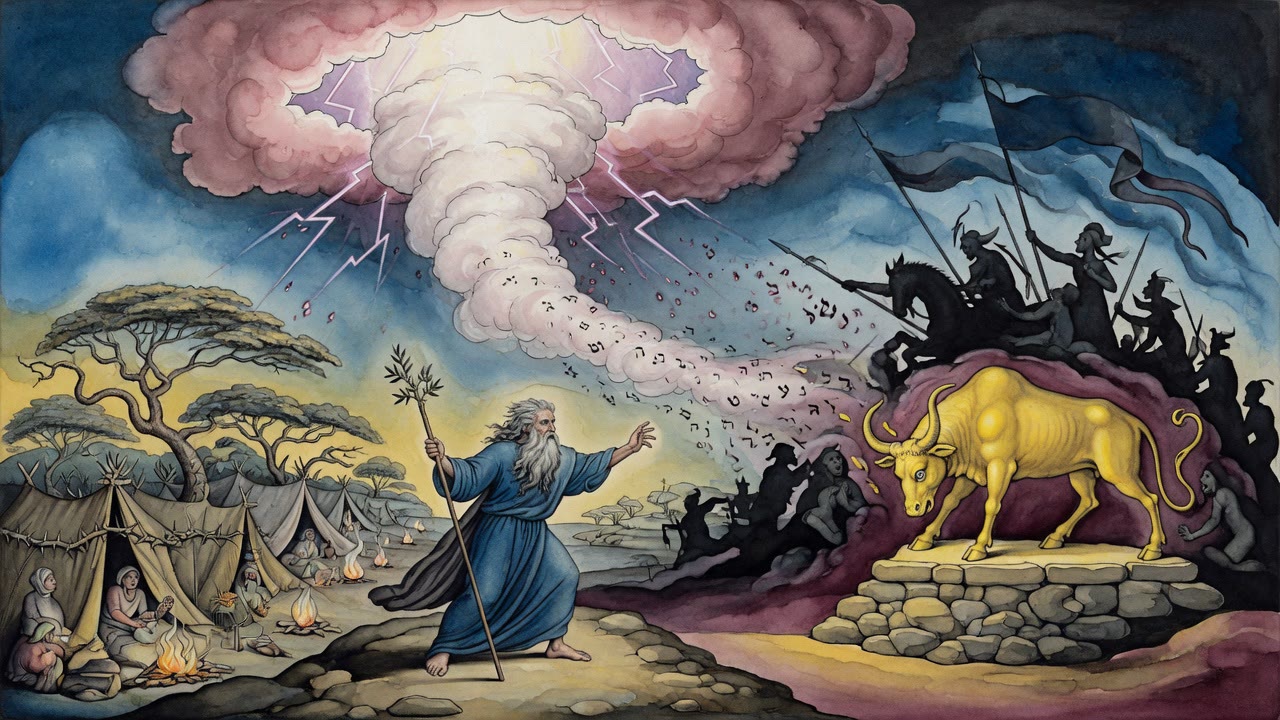
A great king comes against it. The King is the Holy One, blessed be He. He builds great siege works. The siege rises in the terrible hour when Israel fashions the calf. The verdict thunders: "Let Me alone, that I may destroy them" (Exodus 32:10).
The Poor Wise Man Inside the Walls
"Now there was found in it a poor and wise man." This is Moses the righteous, of whom Scripture says a wise man scaled the city of the mighty. He has no palace and no treasury. He has a cry.
"Why, O Lord, should Your wrath burn against Your people?" With that wisdom he delivers the city. The siege does not fall because the calf was small. The siege falls because a poor man inside the walls will not let the King finish the destruction without a hearing.
The Defense That Runs Out of Strength
Moses does not flee the argument. "Why are You angry?" "Because they made the calf." "But had You commanded them, they would not have transgressed. At Sinai You said, I am the Lord your God, singular. You commanded me, not them. Every word fell to one man."
The Holy One will not let the defense stand. Perhaps they made a calf but did not bow? "And they bowed down to it." Perhaps bowed but did not sacrifice? "And they sacrificed." Perhaps sacrificed but did not name it a god? "And they said, These are your gods, O Israel." With each answer the ground thins under Moses' feet until he stands like a man thirty days in a sickbed, no strength left in his legs. Scripture says vayechal: he grew ill with grief over his people.
Abraham, Isaac, Jacob as Ransom
So he changes the plea. He reaches back to the fathers. If they are owed fire, remember Abraham in the furnace. If the sword, remember Isaac, who bared his throat for the Name. If exile, remember Jacob, whose days were few and evil. For the sake of the fathers, forgive the sons. Far be it from You to uproot such a planting.
Later the road will harden again. An angel is offered as messenger. Moses answers that an angel makes Israel no different from the nations who also have prophets and guardian powers. "If Your presence does not go, do not take us up from here" (Exodus 33:15). The poor wise man will not accept a thinner escort after he has already held back the full decree.
No One Remembered That Poor Man
Ecclesiastes adds a bitter line: "But no one remembered that poor man" (Ecclesiastes 9:15). Mortals forget the one who saved them. The Holy One does not. "Then He remembered the days of old, Moses and His people" (Isaiah 63:11). The deliverer the camp overlooks, God keeps forever in mind.
The wilderness city still stands. The calf is ground. The people still walk. Somewhere in the middle of that walking a poor man spent his strength in argument and then spent it again in presence, and the great King withdrew the siege that would have ended the few people of the little city for good.
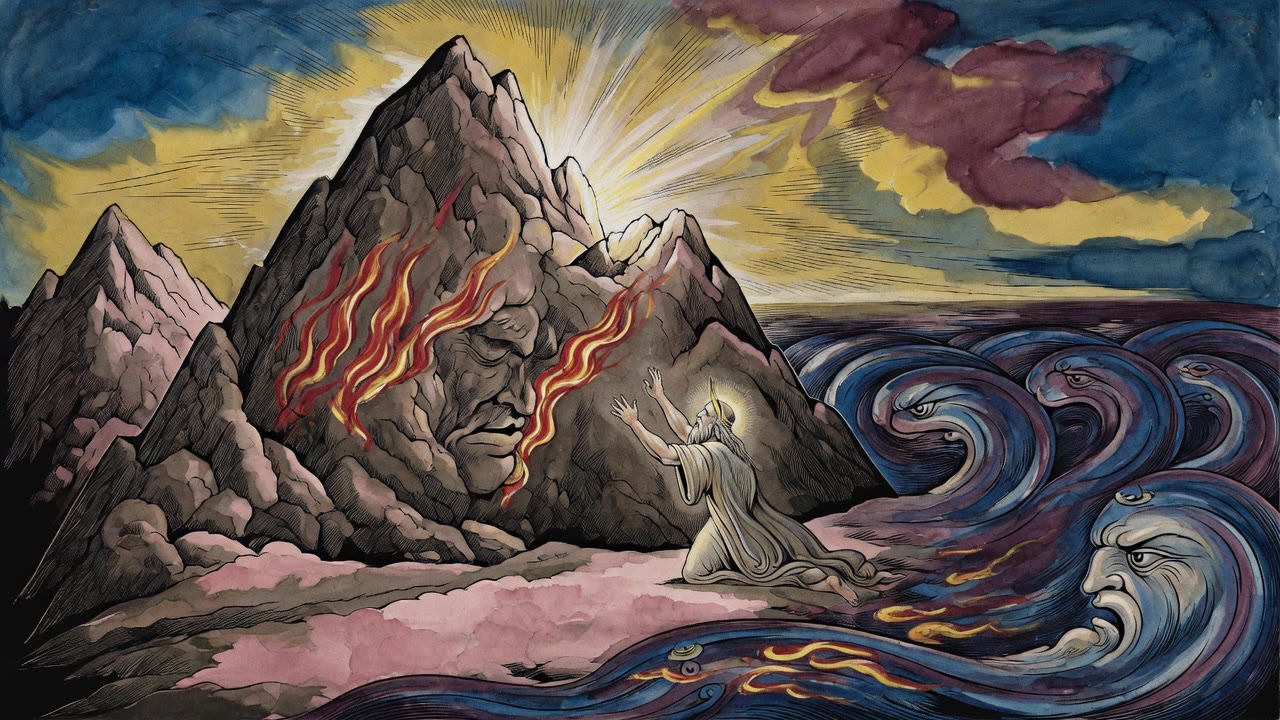
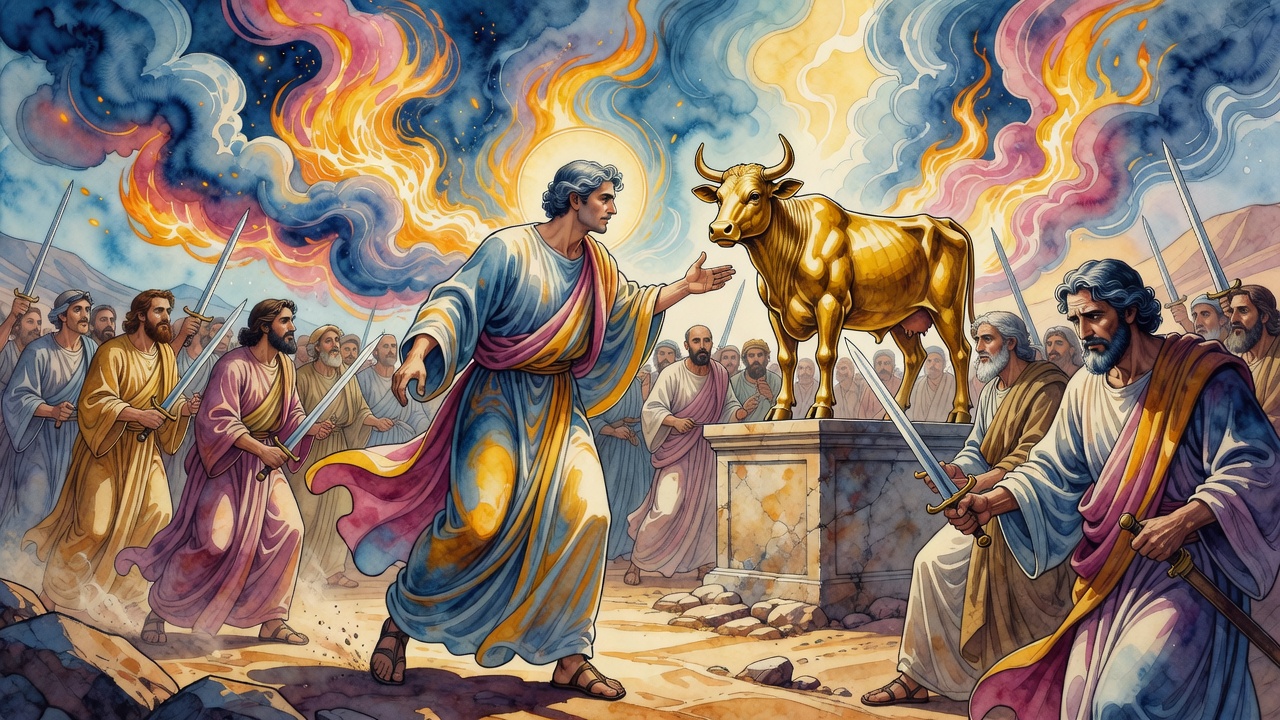
The calf still shines in the camp while Moses argues on the height. The few people of the little city do not know a siege of heaven is aimed at their tents. They dance. He grows sick with grief. The distance between the mountain and the dancing is the whole terror of leadership: seeing the decree they cannot see, and spending your last strength to cancel it.
When the legal defenses fail, memory of the fathers becomes the only wall left. Abraham's furnace, Isaac's throat, Jacob's hard days: three ransoms stacked where one people failed. The poor wise man does not invent new merit. He reminds the King of old deposits still held in heaven's account.
Ecclesiastes thought no one would remember. The camp forgets easily, as camps do after danger passes. Scripture refuses the forgetting. Days of old, Moses and His people: the pair stays linked in the prophet's mouth so that every later generation that opens the little city of Ecclesiastes will find a shepherd-advocate still standing inside the gates with one cry left.
Below the mountain the gold still catches sun. Above it Moses has already spent his first line of defense and found it broken. The shift from lawyer to rememberer is visible in the way he stands: less like a man citing a clause, more like a man opening old graves of merit and asking the Judge to look inside.
When he later refuses an angel-guide, he is still the poor wise man of the little city. A thinner presence would leave the walls half-guarded. He has already learned that half a deliverance is how a siege returns. So he bargains for the Presence itself, not a deputy, until the King who built the siege works agrees to walk inside the city He nearly erased.
← All myths