Habakkuk Drew a Circle and Refused to Step Out
His calves ached inside the ring and his throat went dry. The answer came as a rebuke. You called on Me, God said, and did not wait for Me.
Table of Contents
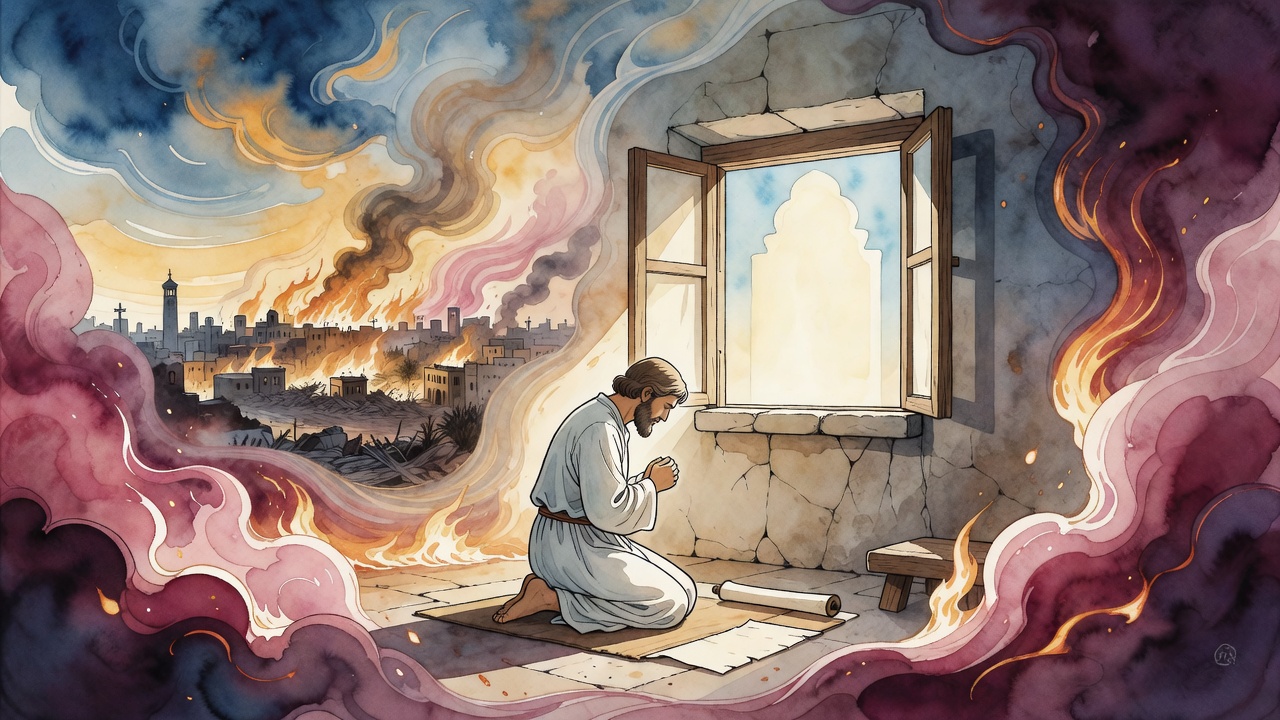
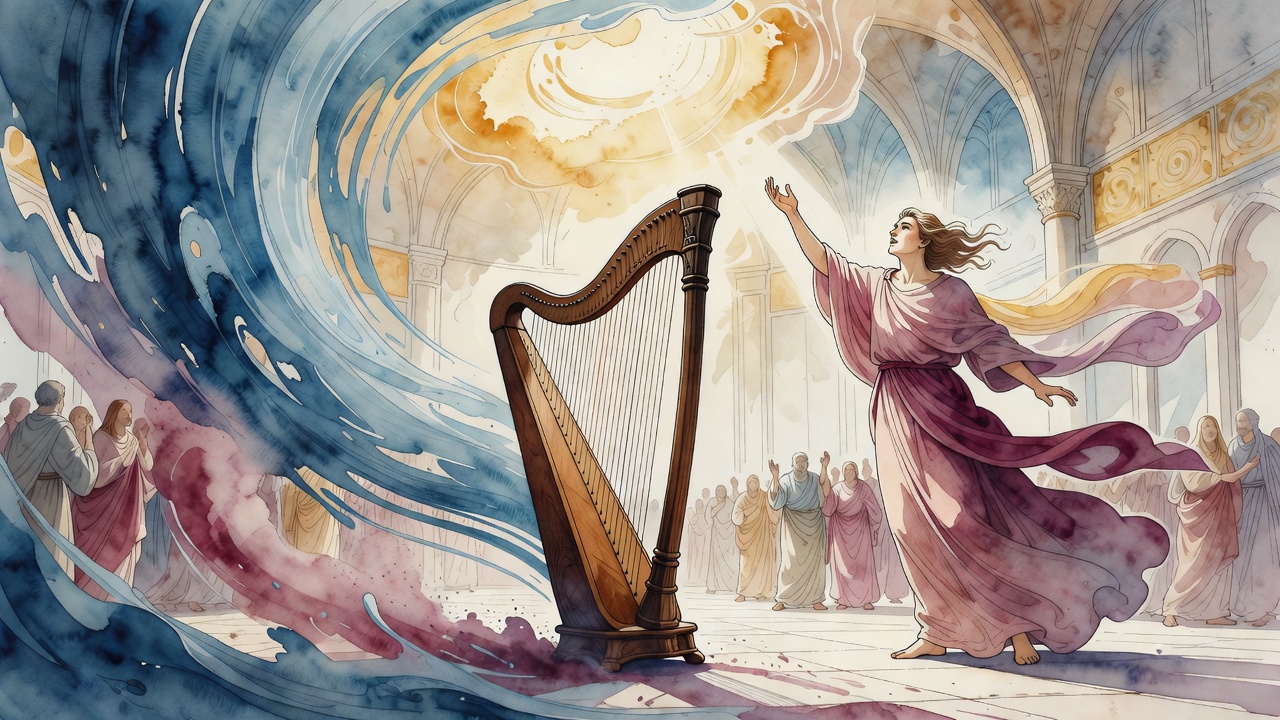
Habakkuk scraped a circle into the ground with the heel of his sandal. Dust rose. He stepped inside the ring and planted his feet as if the dirt itself were a vow. "Master of the Universe," he said, "I will not move from here until You answer me." The air did not soften. The circle held.
 Click for full size
The Rampart and the Watch
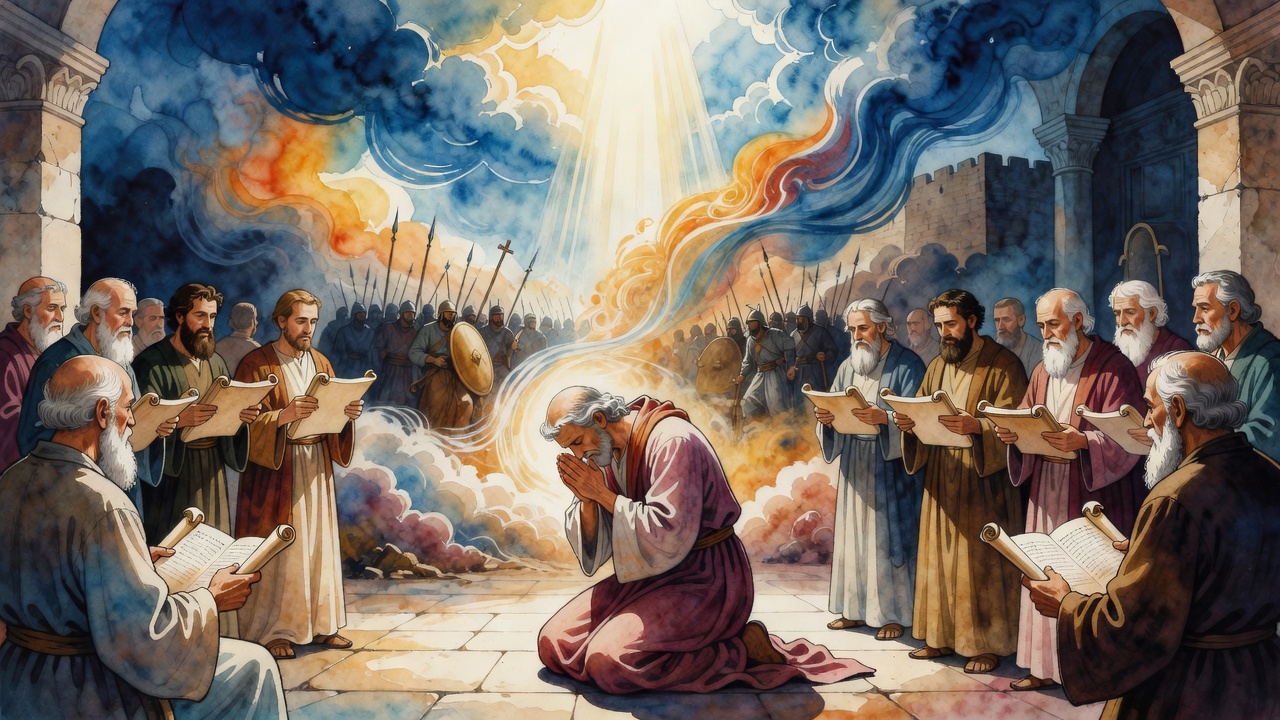
He had already named his station. "I will stand on my guard post and station myself on the rampart, and I will keep watch to see what He will speak to me" (Habakkuk 2:1). Waiting was not passive. Waiting was a body locked in place, eyes on the horizon of speech. Distress made him draw geometry. Prayer became a perimeter he refused to cross.
Inside that ring he demanded an answer about the end, the geulah (גאולה), the redemption that seemed to lag while the people bled under foreign weight. He had spoken of the end as if it had already passed. The delay pressed on his ribs like a stone.
You Called and Did Not Wait
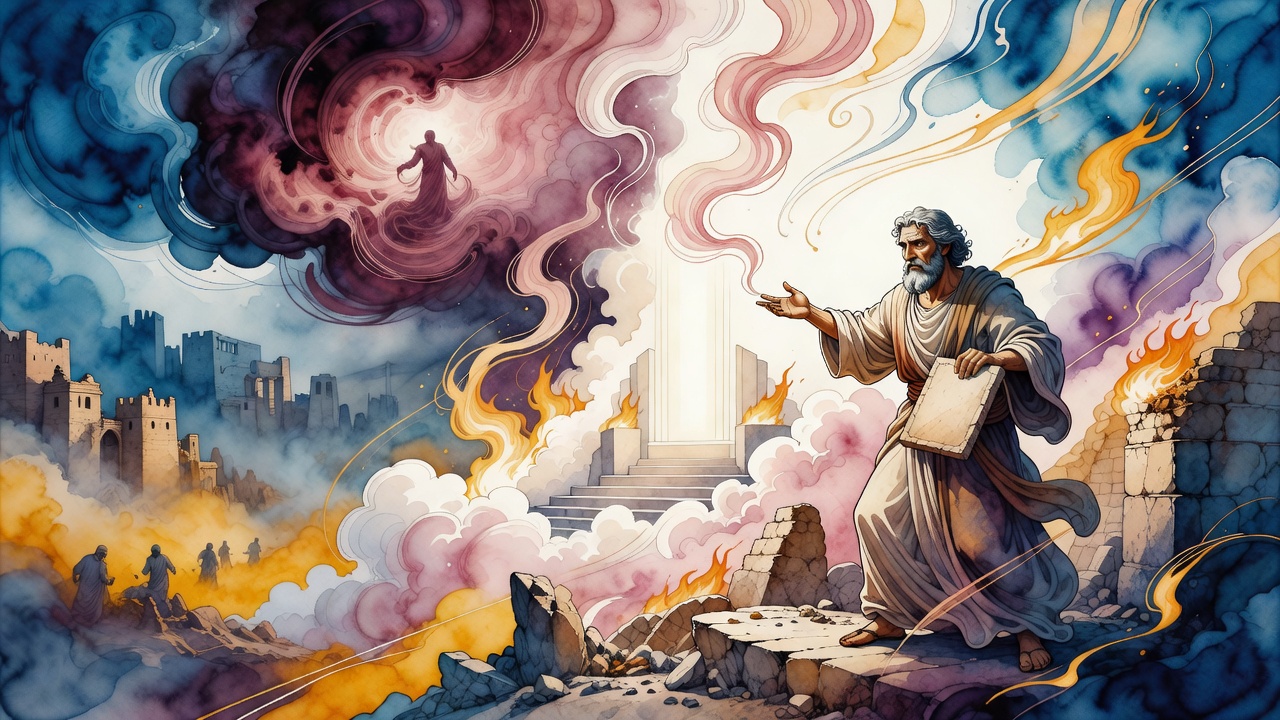
God answered him, and the answer cut. "You called upon Me and did not wait for Me to respond." The prophet had rushed the timetable. He had declared the end finished while the end still walked slowly toward the world. "If it will tarry, wait for it" (Habakkuk 2:3). The circle did not free him from patience. It taught him that a cry without listening is only half a prayer.
Heaven shows the righteous the troubles Israel endures, and they stand and plead. Habakkuk's body on the rampart became a model: raise the voice, then stay for the reply that may not match the script you wrote in fear.
The Shepherd Left Off the List
Another ache walks beside that circle. David, in the midrash on the psalms of remembrance, compares himself to a shepherd dismissed when the king grew angry at the flock. The king drove the sheep away, left the pasture open, and sent the shepherd off. Later the sheep returned. The pasture was rebuilt. The flock stood whole again.
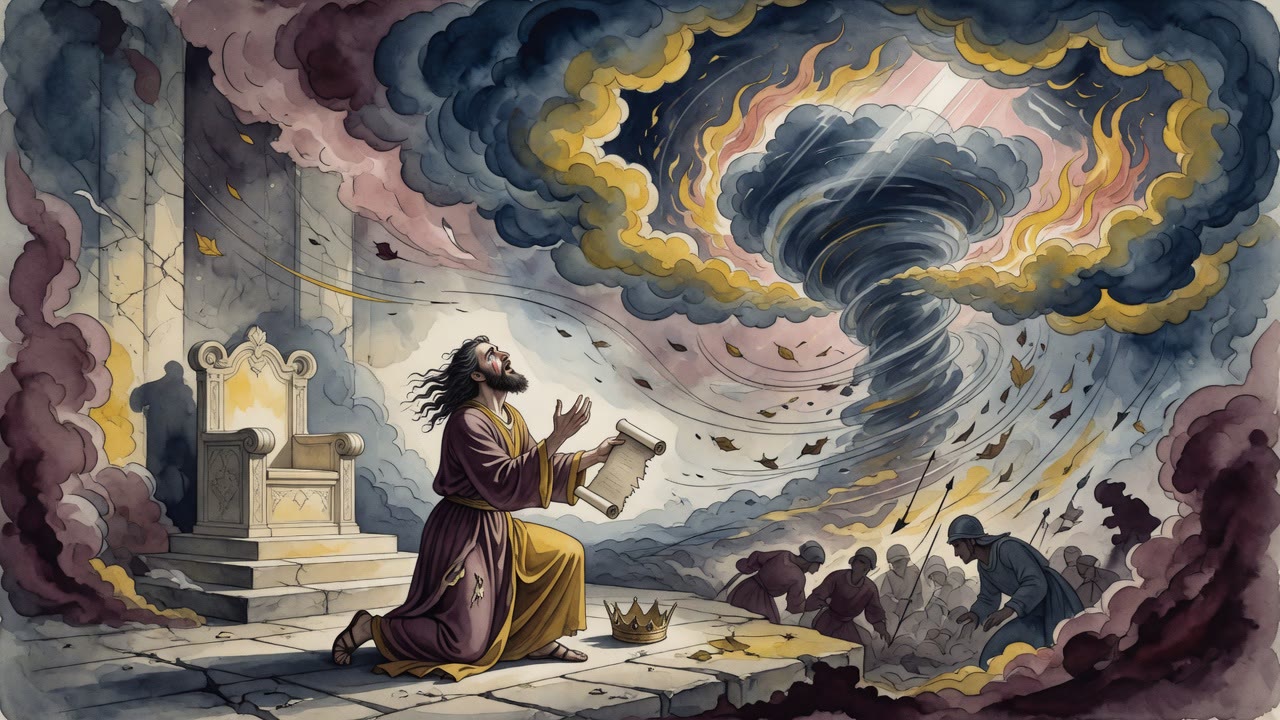
The shepherd said, "Behold, the sheep are gathered, and the pasture is built, but I am not remembered." David watched Zion's hope rise in the verses and still felt his own name missing from the ledger. "God, save me," he sang, "to remember" (Psalm 70:1). Rescue without remembrance is a half-built fold. The midrash lets the ache stand: a king may gather people and still forget the one who kept watch.
Lashes Without a Count
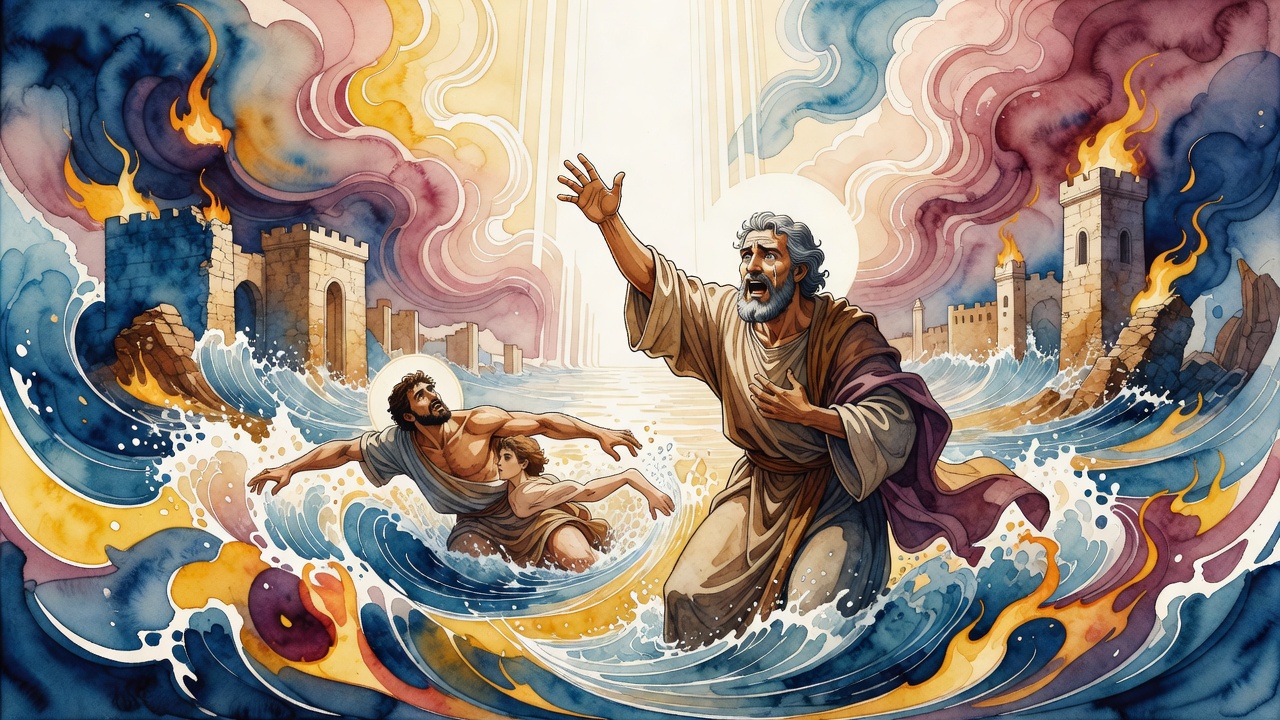
Israel's soul refuses comfort because it does not know the measure of its days under pressure. A father who strikes a son and names ten lashes can count them down, and the son finds a strange comfort in the number. Nine remain. Eight. The end is visible. But when the people cannot see how many nights remain among the nations, the soul will not be soothed (Psalm 39:5). Habakkuk's circle is that demand for a count. David's "remember me" is that demand for a name.
Both stand in the same weather: crying out on the day of distress, refusing to pretend the delay is small, and learning that heaven's answer may be "wait" before it is "now." The circle in the dust is gone. The posture remains whenever a body plants itself and will not leave until the silence breaks.
Night would have been easier outside the ring. Inside it, the prophet's calves ached and his throat dried. He had turned waiting into a physical law of his own making. Heaven answered with a harder law: the end has its own pace, and a cry that outruns listening becomes another form of haste. Habakkuk's later song still climbs, but it climbs after the rebuke, not around it.
David's shepherd parable keeps its own salt. The flock returns. The pasture is rebuilt. Zion's cities rise in the verse. Still the watcher says he is missing from the list. Remembrance is not vanity in that midrash. It is the demand that rescue include the one who stood the long night with the sheep. A people gathered without its shepherds named is a fold with a door left off the hinges.
Between the circle and the forgotten shepherd stands every generation that knows how to shout and does not know how to count the remaining lashes. The midrash does not hand out easy calendars. It hands out postures: plant your feet, raise your voice, accept "wait" without pretending the delay is kind, and keep asking to be remembered when the pasture looks finished without you.
The stringed instruments of the psalm open the same file of distress. Cry out with the voice, and he will answer. The midrash will not let the answer be instantaneous applause. Habakkuk gets an answer that reorders him. David gets a vocabulary for being left off the rebuilt list. Both keep praying after the first reply fails to match the wish.
← All myths