Translation of the source text.Pesikta Rabbati, ed. Meir Friedmann (Ish-Shalom), Vienna 1880 · Public Domain
"When you lift the head of the children of Israel according to their number" (Exodus 30:12). Let our master teach us: how many times in the year do they make the terumat ha-lishkah, the withdrawal from the chamber? Thus our masters taught: at three seasons in the year they make the withdrawal from the chamber, before Passover, before Shavuot, and before the Festival of Sukkot (Mishnah Shekalim 3:1). And where did the chamber withdrawal go? They would buy the daily offerings with it, on behalf of all Israel, from the shekels that they weighed out. Why? So that all Israel would be partners in it. They would begin from Adar, from the first of Adar, to collect, and they would make the withdrawal on the first of Nisan. In order not to press Israel, they would warn Israel from the new moon of Adar. Solomon said, "The way of the slothful man is as a hedge of thorns" (Proverbs 15:19).
Rabbi Yaakov ben Yose said: the verse speaks of God and Esau. "The way of the slothful" is Esau. What is "as a hedge of thorns"? Just as this hedge of thorns catches in a person's clothes, and he loosens them on one side while it catches on another side, so is the kingdom of Esau. It collects the arnona tax, and before the arnona is collected, the poll tax comes upon them; and before that is collected, the tirbos levy comes upon them. But the Holy One, blessed be He, is not so. Rather, "the way of the righteous is made plain" (Proverbs 15:19), paved before Israel. They are notified on the first of Adar, and the collection is made on the first of Nisan. This is "the way of the righteous is made plain." If you say they were collected from beyond their strength, no great amount was collected from them, but only a half-shekel. Rabbi Chanina said: half a sela. And if you say that this half was collected for the Temple stores, it was not collected except for Israel's atonement, for they would buy the daily offerings with it.
The Holy One, blessed be He, said: It is foreseen before Me that every counting by which Israel will be counted has deficiency in it. What then shall I do? I will prepare a remedy for them, so that every counting by which they are counted will have atonement for them. And what was their atonement? This was the atonement of the shekels. From where is this derived? From what is read in the matter: "When you lift."
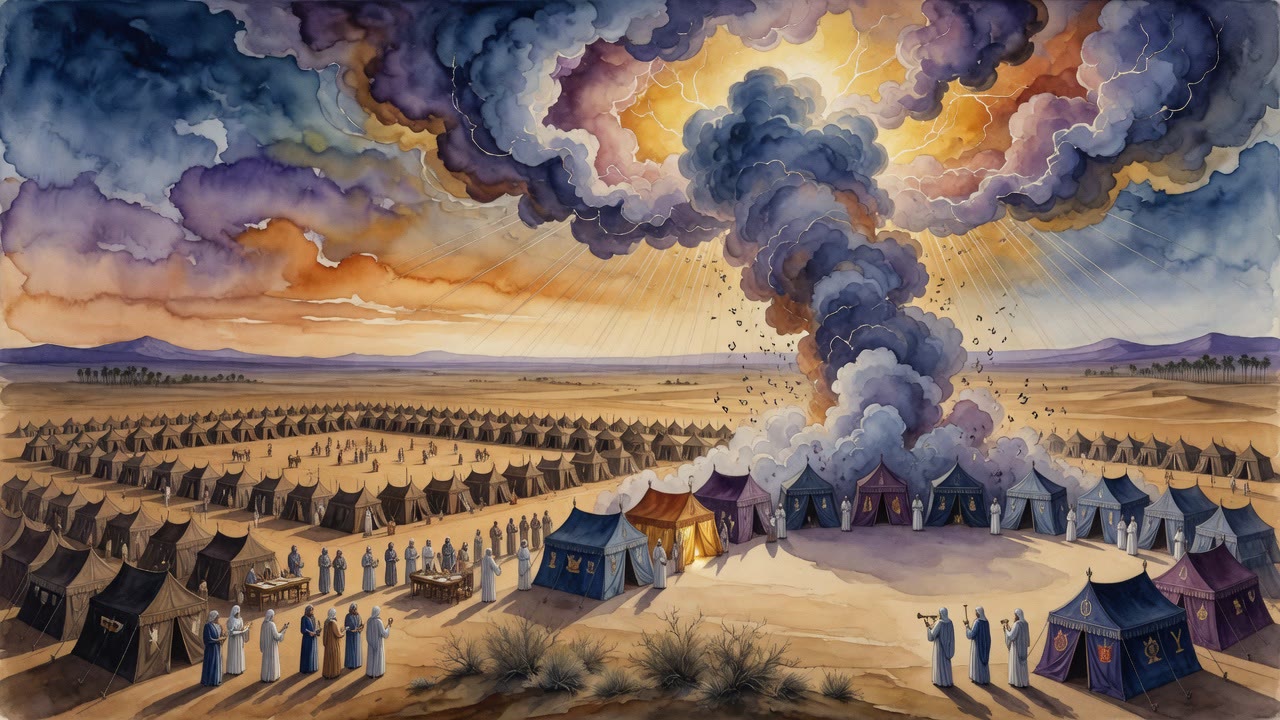
"When you lift the head of the children of Israel." Thus Rabbi Tanchuma son of Rabbi Abba opened: This is what was said by the holy spirit through Solomon: "Your navel is like a round goblet; let not the mixed wine be lacking" (Song of Solomon 7:2). What is "your navel"? This is the Great Sanhedrin that was in Jerusalem and judged capital cases. Why does he compare it to the navel? Just as the navel is placed in the center of a person, so the Sanhedrin sat in Jerusalem, for Jerusalem is the center of the world. Another interpretation: "Your navel is like a round goblet." What is "your navel"? Just as the navel is the life of the infant, so all this people lived by the merit of the Sanhedrin, who sat and occupied themselves with the laws of Torah.
"A round goblet." Avin ben Chisda said: people call the moon sihara. This is the Sanhedrin, for they did not sit in a triangle, but in a strongylon, a semicircular threshing-floor shape, so that they could see one another. If they sat in a triangle, those sitting in the corners would strain to see one another and could not ask one another questions. This is "a round goblet." Another interpretation: What is "a round goblet"? Agan is a basin, as it is written, "And Moses took half of the blood, and put it in basins" (Exodus 24:6). Just as this basin is round, a strongylon, so they sat. What is ha-sahar? When they sat, commerce and reward were in the world.
"Let not the mixed wine be lacking." They would sit and mix the halakhot: this is forbidden and this is permitted, this is impure and this is pure. Another interpretation: "Let not the mixed wine be lacking." When a skilled mixer mixes, he puts one third of the cup as wine and two parts as water. So the Sanhedrin was never lacking from twenty-three. How so? Seventy members of the Sanhedrin sat in it, and when they wished to go and eat, they did not all leave at once. Some would go and eat, and some would remain on watch until those returned; then the others would go. Its count never lacked fewer than twenty-three. Another interpretation: "Let not the mixture be lacking." Do not read it this way, but "the Mixer." This is the Holy One, blessed be He, for by their merit His world was not lacking; His glory rested among them. Once the Sanhedrin ceased, the Shekhinah withdrew.
"Your belly is like a heap of wheat" (Song of Solomon 7:2). These are Israel. Why were Israel compared to wheat? Because wheat kernels are split in their middle, which you do not find in lentils or in other fruits. Why are wheat kernels split? Because everything else is secondary to them. Another interpretation: "Your belly is like a heap of wheat." Rabbi Huna said in the name of Rabbi Idi: Would a heap of stacte or heaps of peppers not be more beautiful than wheat? Since the Holy One, blessed be He, loves them, let Him call them a heap of peppers. Rather, the world can exist without stacte and without peppers, but the world cannot exist without wheat. If the world lacks stacte and peppers, people can bear it; but if it lacks wheat, they have no life even for one hour.
Another interpretation: "Your belly is like a heap of wheat." Rabbi Yochanan said: read it as a heap of sins. How so? A dish of piggul, notar, and forbidden fat comes before an Israelite, and he comes to eat. He thinks it is permitted fat. Then someone says to him: it is forbidden fat. Immediately he pulls back his hand from eating. Who restrained him from eating? What fence stands between him and the dish? Only that he looked into the words of Torah. "Set about with lilies" (Song of Solomon 7:2). The verse says only: interpret me. Does a person fence with lilies? People fence their vineyards or fields with thorns, briars, nettles, and brambles. Have you ever seen a person fence a field with lilies? Rather, these are the words of Torah, which are soft like lilies. How so? A man longed to see his wedding canopy. There is no greater day for him than the day he rejoices with his wife. He spent his expenses and arranged his canopy. He came to be with his wife, and she said to him: I saw a red lily. Immediately he separated from her. He turns his face this way, and she turns her face that way. Who separated him from her? What serpent bit him? What scorpion stung her? What fence stood before them? Only the words of Torah, which are soft like a lily. This is "Your belly is like a heap of wheat, set about with lilies."
Another interpretation: "Your belly is like a heap of wheat." Rabbi Levi said: Why was the congregation of Israel compared to wheat? A householder has a steward. When he comes to reckon with him, what does he reckon? Does he say to him: pay attention to how many baskets of straw you bring into the storehouse, or how many baskets of stubble, or how many baskets of thorns you bring into the storehouse? Where does he put the thorns? Into the fire. Where does he throw the refuse? Into the refuse heap. Where does he winnow the straw? To the wind. But what does he say to his steward? Pay attention to how much wheat you bring into the storehouse. Why? Because it is the life of the world. So the Holy One, blessed be He, is the householder, for the whole world is His, as it is said, "The earth is the LORD's, and the fulness thereof; the world, and they that dwell therein" (Psalms 24:1). His steward is Moses, as it is said, "He is faithful in all My house" (Numbers 12:7).
The Holy One, blessed be He, said to him: Should you set your mind to count the nations? No, for they are compared to straw. Who are these? The Egyptians, as it is said, "You sent forth Your wrath, which consumed them as stubble" (Exodus 15:7), and "the house of Esau for stubble" (Obadiah 1:18). What do they do with stubble? They float it on water, as it is said, "He overthrew Pharaoh and his host in the Red Sea" (Psalms 136:15). They are compared to thorns, as it is said, "The people shall be as the burnings of lime; as thorns" (Isaiah 33:12). What do they do with thorns? They throw them into the fire, as it is said, "Thorns cut up shall they be burned in the fire" (Isaiah 33:12). They are compared to straw. What do they do with straw? They winnow it to the wind, as it is said, "They shall be as stubble before the wind, and as chaff that the storm carrieth away" (Job 21:18). But Israel are compared to wheat, for they are the grain of the world: "Your belly is like a heap of wheat." Therefore the Holy One, blessed be He, said to Moses: Pay attention to count Israel, to know how many there are among them. "When you lift the head of the children of Israel."
Another interpretation: "Your belly is like a heap of wheat." The stalk of wheat rises upward. The reed is long, its leaves are broad and long, and the ear stands at the head of the reed. Its reed grows proud and says: for my sake the field was sown. The ear says to them: the threshing floor is coming, and everyone will be reconciled as to for whose sake the field was sown. When the threshing floor comes, they put the straw into the fire, scatter the chaff to the wind, and leave the wheat for the threshing floor; every passerby takes it and kisses it. So the nations of the world say to Israel in this world that for their sake the world was created. In the time to come, "the people shall be as the burnings of lime; as thorns cut up shall they be burned in the fire" (Isaiah 33:12). But Israel: "The LORD alone did lead him" (Deuteronomy 32:12), and, "Put in the sickle, for the harvest is ripe" (Joel 3:13). Therefore they were compared to wheat.
Another interpretation: "Your belly is like a heap of wheat." Rabbi Yitzchak said: Why like wheat? Because what is the practice with wheat? When it enters the storehouse, it enters by measure and count. When they come to take it from the storehouse, they take it out by count and by measure. When one comes to sow it, one sows it by count and by measure. So when Israel entered Egypt, the Holy One, blessed be He, counted them: "Your fathers went down into Egypt with seventy persons" (Deuteronomy 10:22), and, "All the souls that came into Egypt were seventy" (Genesis 46:27). When they came to leave, He counted them, as it is said, "And the children of Israel journeyed from Rameses to Succoth, about six hundred thousand on foot" (Exodus 12:37). And when they went out into the wilderness, He counted them again: "And the LORD spoke unto Moses in the wilderness of Sinai" and "Lift the head of all the congregation of the children of Israel" (Numbers 1:1-2). And here too: "When you lift the head."
Another interpretation: "When you lift the head of the children of Israel." Rabbi Levi said: Why did He count them at every hour? A parable: a king had many treasuries and did not concern himself to count them. He had one small gold chest, and at every hour he would take it and count how much was in it, then put it away. After some days he would take it out and count it. They said to him: My lord, of all the treasuries you have, you do not concern yourself to count them, but only this small one? He said to them: All these are not mine; they are going down to destruction, they belong to destruction. But this one cost me much pain before I acquired it. Therefore I do not occupy myself with all those, but only with this one that I acquired. So too, the Holy One, blessed be He, has many nations in the world, many populations of nations, and He does not concern Himself with them. They said to Him: Master of the universe, You have many nations in Your world, yet You do not concern Yourself with counting them, but at every hour You say, "Lift the head of the children of Israel." The Holy One, blessed be He, said to them: All those populations that you see are not Mine; they are for destruction and for Gehinnom, as it is said, "The people shall be as the burnings of lime" (Isaiah 33:12). But these Israelites, whom I count at every hour, are My treasured possession, as it is said, "You shall be unto Me a treasured possession from among all peoples" (Exodus 19:5). Just as a person's treasures are beloved to him, so they are beloved to Me. They cost Me pain; they cost Me great expenditure. "Or has God tried to go and take Him a nation from the midst of a nation?" (Deuteronomy 4:34). The Holy One, blessed be He, said: "Is Ephraim My dear son?" (Jeremiah 31:20), the son who cost Me dearly. Therefore I do not concern Myself with counting all the nations, but only Israel. "When you lift the head of the children of Israel."
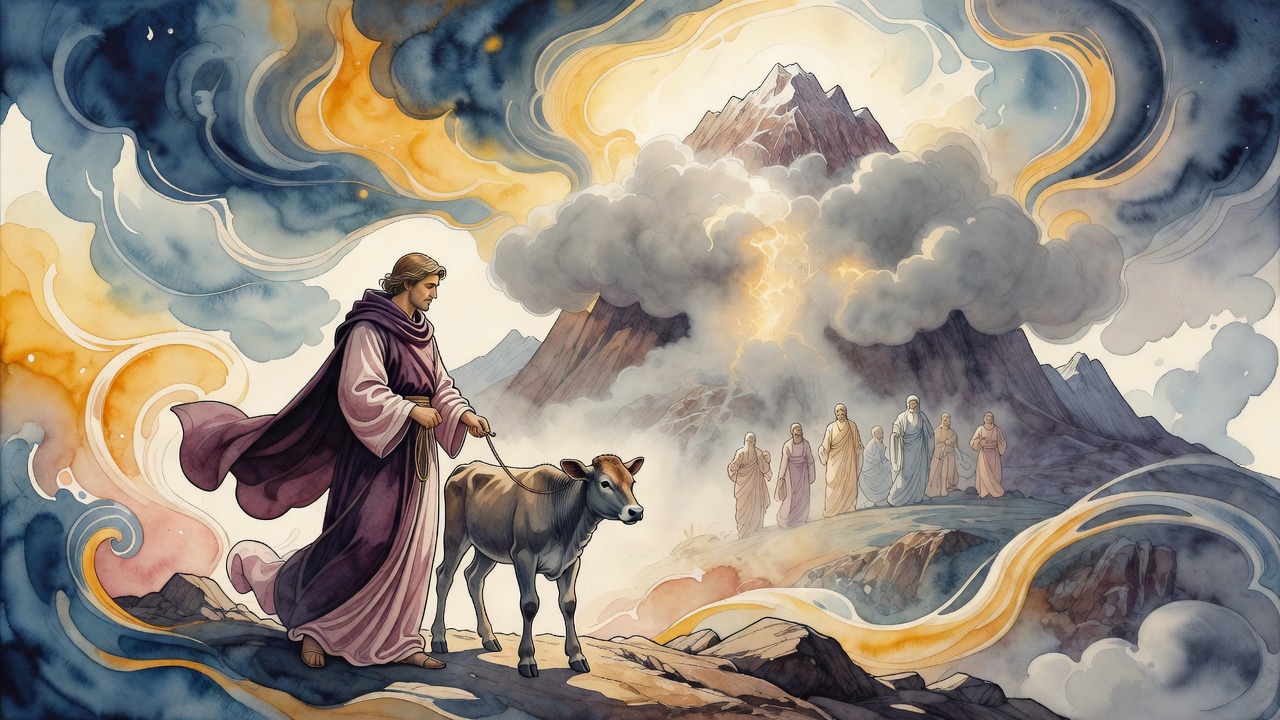
Another interpretation: "When you lift the head." Rabbi Yonatan of Beit Govrin opened: "And the mean man bows down, and the great man humbles himself; therefore do not lift them" (Isaiah 2:9). What is "the mean man bows down"? These are Israel, who are called man, as it is said, "You My flock, the flock of My pasture, you are man" (Ezekiel 34:31). When did they bow down and become low? At the time they did that deed. The Holy One, blessed be He, lowered them. When they stood at Sinai and said, "We will do and we will hear," crowns were placed on their heads. Rabbi Abba bar Kahana said in the name of Rabbi Levi: When Israel received the Ten Commandments, one million two hundred thousand ministering angels descended with girdles and crowns in their hands. Two of them attended each Israelite, one placing crowns and one girding him with a girdle. When they did that deed, the angels descended, removed the crowns, and loosened the girdles. "And the children of Israel stripped themselves of their ornaments from Mount Horeb" (Exodus 33:6). It is not written "they were stripped," but "they stripped themselves," whether willingly or unwillingly. What are their ornaments? Ornament language, as in, "I decked you also with ornaments" (Ezekiel 16:11). At that hour Israel became low. "The mean man bows down" refers to Israel, "you are man" (Ezekiel 34:31). "And the great man humbles himself" refers to Moses, as it is said, "Now the man Moses was very humble" (Numbers 12:3).
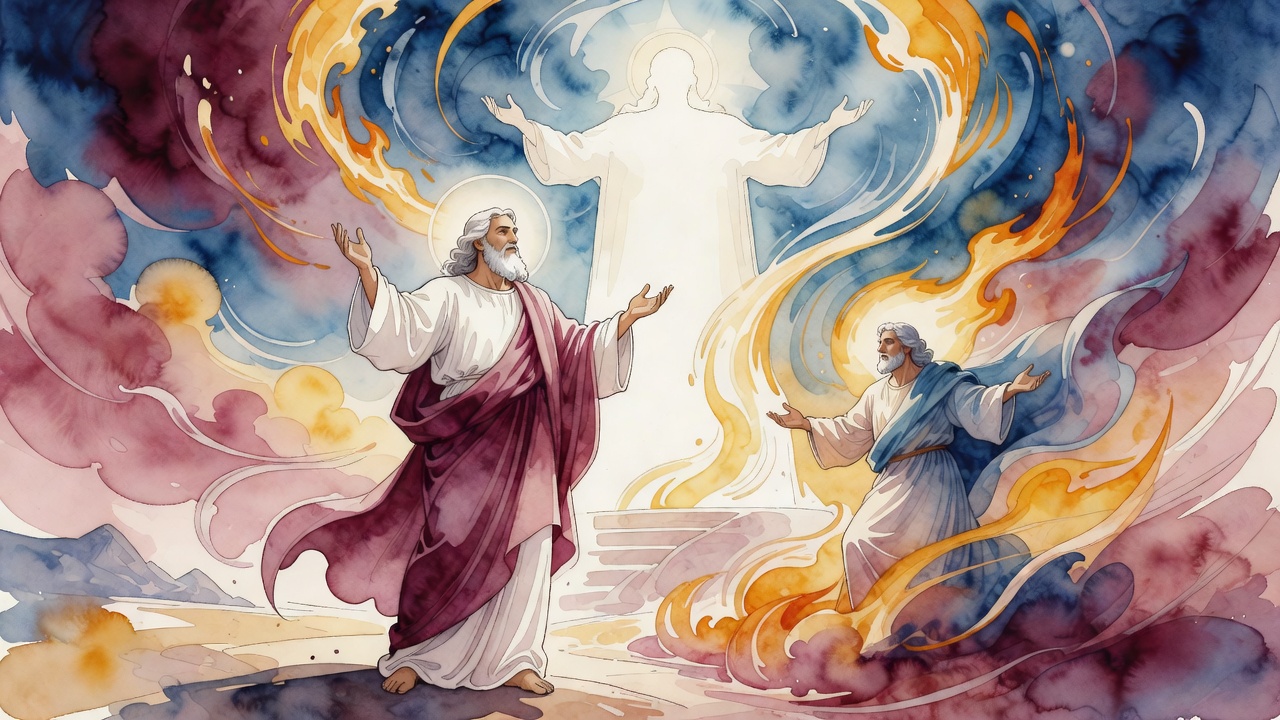
Why was Moses humbled? Because when he went up above to bring down the tablets, Israel corrupted themselves below. Immediately the angels stood to kill him. What did the Holy One, blessed be He, do for him? He said: Stand here; you have no strength against them. "Arise, go down quickly from here, for your people have corrupted themselves" (Deuteronomy 9:12). When they merited and rose, you rose with them, as it is said, "And Moses went up" (Exodus 19:3). Now that they have sinned and are in descent, you too must go. Why? Because you depend on them. Immediately Moses descended, took the calf, ground it, scattered it upon the water, and made the corrupt ones drink it (Exodus 32:20). Afterward he taught advocacy: "LORD, why does Your wrath wax hot?" (Exodus 32:11), and, "Why should the Egyptians speak?" (Exodus 32:12). And if You kill them, how will You uphold what You stipulated with the patriarchs? "Remember Abraham, Isaac, and Israel, Your servants" (Exodus 32:13). Once Moses was accepted and the Holy One, blessed be He, was reconciled to him, Moses began saying to Him: Master of the universe, "Show me now Your ways" (Exodus 33:13). He said to Him: By what did You judge us and acquit us? The Holy One, blessed be He, answered him: "I will do this thing also that you have spoken" (Exodus 33:17). Why? "For you have found grace in My sight" (Exodus 33:17). Once he was accepted the first time, he began to demand another thing: "Show me Your glory" (Exodus 33:18). He said to him: You cannot, as it is said, "You cannot see My face" (Exodus 33:20). Moses pressed in prayer, and the Holy One, blessed be He, accepted him. He said to him: Since you pressed in this matter, I will place you in the cleft of the rock; and as I pass by, I will cover you with My hand because of the angels of wrath, so that they do not strike you. "And it shall come to pass, while My glory passes by, that I will put you in a cleft of the rock, and will cover you with My hand while I pass by" (Exodus 33:22).
What did Moses do? He sat in the cleft of the rock until the Holy One, blessed be He, passed by. Angels came to strike Moses. What did the Holy One, blessed be He, do? He protected him with His hands. From there Moses took the rays of splendor, as it is said, "And there were rays" (Habakkuk 3:4). From where? "From His hand" (Habakkuk 3:4). When Moses descended toward Israel, they saw him as something exalted and splendid. Just as no person can look at the sun when it rises, so no person could look at Moses unless he placed a veil over his face, as it is said, "And he put a veil on his face" (Exodus 34:33). At that hour Israel were distressed. They said: We are in descent because we did that deed, even though the Holy One, blessed be He, has been reconciled to us and forgiven our iniquities. And you, Moses, were with us, yet Moses' rays stand upright and our rays are low. Immediately Moses came to the Holy One, blessed be He, and said to Him: Master of the universe, when You lowered them, I too was lowered with them, as it is said, "The mean man bows down, and the great man humbles himself," meaning Moses. Now that You have raised my head, raise their head too. The Holy One, blessed be He, said to him: Go, raise their head. Rabbi Yonatan of Beit Govrin said: Moses answered: No, my Master. Just as You raised my head, so You raise the head of Your children. From where? As it is said, "Do not lift them." Do not read ve-al, "and do not," but ve-lo, "and for Him": You shall lift their head for Him. The Holy One, blessed be He, said to him: No. I raised your head; so too I will raise the head of My children. "When you lift the head of the children of Israel."
Another interpretation: "When you lift the head." It is not written "when you appoint," but "when you lift." What is the language of taking the head? To what may the matter be compared? To a prince who sinned against his father. The king said: Go, lift his head; go, hang his head. The executioners heard and took him away to cut off his head. When his tutor heard, he said to the king: My master, will You destroy Your son from the world? Do You not have a stratagem? You need not do this. The king said to him: What shall I do? I have already issued my decree upon him, that they should lift his head and hang it. The tutor said to him: Your decree can stand, and Your son can remain in his place unharmed. The very language You issued against him, with it You can make him great in the world. What did You say? Go, lift his head. Let them go and raise his head higher than it was. Your decree will be upheld, and Your son will have greatness. The king said to him: By your life, since you have taught me advocacy and his life has been given through you, I will raise him and lift his head. So the son is Israel, as it is said, "You are children of the LORD your God" (Deuteronomy 14:1). They sinned against the Holy One, blessed be He, and angered Him. The Holy One, blessed be He, said: I will destroy them from the world, "Let Me alone, that I may destroy them" (Deuteronomy 9:14). When Moses heard this, he girded his loins in advocacy and came before the Holy One, blessed be He. He said to Him: Master of the universe, will You destroy Your children from the world? He mentioned how much He had labored over them until He brought them out of Egypt, and he also mentioned their fathers. Once Moses defended them, the Holy One, blessed be He, relented. Since the decree had already gone out that their head would be lifted, he turned the language around and raised their head. The Holy One, blessed be He, said to him: By your life, since you have taught advocacy for them, through you I will raise and lift their head. "When you lift the head of the children of Israel."
Another interpretation: "When you lift the head of the children of Israel." Thus Rabbi Tanchuma son of Rabbi Yonah of Matzotzra opened: "For God is judge; He lowers this one and raises that one" (Psalms 75:7). What is "For God is judge"? At the time Israel did that deed, Moses immediately descended, ground it, scattered it upon the water, and made them drink it (Exodus 32:20). Our masters said: Anyone who had witnesses and warning was killed. Anyone who had witnesses but no warning drank from those waters and was examined like a sotah. Anyone who had neither witnesses nor warning died in the plague. This is "For God is judge; He lowers this one and raises that one." He lowers anyone who participated in the deed of the calf, and raises anyone who did not participate in the deed of the calf. This is "When you lift."
Another interpretation: "When you lift." Thus Rabbi Tanchuma son of Rabbi Menachem ben Yaakov, who said in the name of his father, opened: This is what Scripture says: "If there be an angel over him, an advocate, one among a thousand" (Job 33:23). Job speaks concerning human beings at the time when their sins cause harm and they are sick: "His flesh shall be fresher than a child's; he shall return to the days of his youth" (Job 33:25), and, "His soul draws near unto the pit, and his life to the destroyers" (Job 33:22). What does this mean? Immediately destructive angels come and prosecute him, and the Holy One, blessed be He, says: Is there no angel who will teach merit on his behalf? As it is said, "If there be over him an angel, an advocate, one among a thousand" (Job 33:23). Our masters said: Even if there are nine hundred ninety-nine who condemn and one who acquits, the Holy One, blessed be He, as it were, inclines toward acquittal. Rabbi Eliezer son of Rabbi Yose the Galilean says: Even if in that angel who acquits there are nine hundred ninety-nine parts that condemn and one part that acquits, the Holy One, blessed be He, as it were, inclines toward acquittal. Why? Rabbi Yochanan said: When you hear a teaching in the name of Rabbi Eliezer son of Rabbi Yose the Galilean, make your ear tremble like this receiving funnel to receive it. Immediately: "Then He is gracious unto him, and says: Redeem him from going down to the pit; I have found a ransom" (Job 33:24). What is "Redeem him"? The angel who teaches merit for him says to the Holy One, blessed be He: Redeem him through sufferings, and You bring him to repentance.
Another interpretation: "His soul draws near unto the pit" speaks concerning Israel at the time they made the calf. The angels came and prosecuted them at that hour. This is what Moses said: "For I was afraid of the anger and hot wrath" (Deuteronomy 9:19). Immediately Moses stood at that hour, girded his loins in prayer, taught merit for Israel, and sought mercy before the Holy One, blessed be He. Job explains it: "If there be over him an angel, an advocate." There is no angel here except Moses, as it is said, "And He sent an angel, and brought us forth out of Egypt" (Numbers 20:16). What mercy did he seek for them? He said before the Holy One, blessed be He: Master of the worlds, "LORD, why does Your wrath wax hot against Your people?" (Exodus 32:11). "Then He is gracious unto him, and says: Redeem him from going down to the pit." What does this mean? Moses said to Him: Master of the worlds, I know they are liable to death, for thus You said to me, "He that sacrifices unto any god, save unto the LORD only, shall be utterly destroyed" (Exodus 22:20). But I beg You: redeem them from the destructive angels. Remember the merit of their fathers: "Remember Abraham, Isaac, and Israel, Your servants, to whom You swore by Yourself" (Exodus 32:13).
"When you lift the head." Thus Rabbi Tanchuma son of Rabbi said in the name of Rabbi Shmuel: "Many say of my soul: there is no salvation for him in God, Selah. But You, LORD, are a shield around me, my glory, and the lifter of my head" (Psalms 3:2-3). "Many say of my soul": when David stumbled in that deed, his enemies rejoiced over him and said: from now on, he has no salvation. He says of himself, "Many say of my soul: there is no salvation for him." "But You, LORD." You also said in the Torah, "The adulterer and the adulteress shall surely be put to death" (Leviticus 20:10). But when Nathan came, he said to me, "The LORD also has put away your sin; you shall not die" (2 Samuel 12:13). Then I knew that You had protected me. "But You, LORD, are a shield around me." And not only that, but "my glory, and the lifter of my head." "My glory" is kingship, and "the lifter of my head" is the anointing oil.
Another interpretation: "Many say of my soul" speaks concerning Israel. When? When they made the calf. All the nations of the world began rejoicing over them and speaking about them, saying: From now on, these have no standing and no salvation. "Many say of my soul: there is no salvation for him." "But You, LORD." You also were with them, for You wrote in Your Torah, "He that sacrifices unto any god shall be utterly destroyed" (Exodus 22:20). But when Moses said, "Remember Your servants" (Deuteronomy 9:27), and, "Turn from Your fierce wrath, and repent of this evil" (Exodus 32:12), He relented: "And the LORD repented of the evil which He thought to do unto His people" (Exodus 32:14). We knew that You had protected us. "But You, LORD, are a shield around me." And not only that, but "my glory, and the lifter of my head." "My glory" is the Tabernacle, "And let them make Me a sanctuary" (Exodus 25:8), and "the lifter of my head" is "When you lift the head."
Another interpretation: "When you lift." We find in many places that the Holy One, blessed be He, said to Moses, "Lift the head of the children of Israel" (Numbers 1:2), and, "When you lift the head." Why so? The Holy One, blessed be He, said to Moses: Moses, all that you can do to raise this nation, raise it, for it is as though you raise Me. As it is said, "When you lift the head of the children of Israel." It is not written "when you lift the children of Israel," but "the head." The head of Israel is none other than the Holy One, blessed be He, as it is said, "Their king shall pass before them, and the LORD at their head" (Micah 2:13). To what may this be compared? To someone sitting and making a crown and setting precious stones and pearls in it. A passerby saw him and said to him: Set in it all you can, for it is destined to be placed on the head of a king. A parable: an elder had one cloak. He would shake it out at every hour and fold it. They said to him: Why are you careful with this one? He said: Because this was placed on me when I was appointed elder. So the Holy One, blessed be He, said to Moses: Be careful with this nation more than all the nations I created in My world, for it first made Me king, as it is said, "This is my God, and I will glorify Him" (Exodus 15:2). A king had many purple garments, and he had one more purple garment. At every hour he would command his chamberlain about that purple garment. The chamberlain said to him: My lord king, you have many purple garments. Why do you command me about this one more than all of them? He said: I am careful with this one, for because of this one I married a princess; I wore it at that time. So the Holy One, blessed be He, said to Moses: Be careful with this nation, for it first made Me king at the sea before all the nations, and said to Me, "This is my God, and I will glorify Him" (Exodus 15:2). Therefore raise their head. "When you lift the head."
Another interpretation: "When you lift the head." Rabbi Shmuel ben Nachman said: There are three offerings here. The first offering was for the sockets of the Tabernacle. The Holy One, blessed be He, said to Moses: Tell them to bring shekels. Immediately they brought them and made sockets. Once the sockets were made, the boards were made; afterward they covered them with the curtains. Why so? The Holy One, blessed be He, said: With the shekels that Israel brought, they made the sockets of the Tabernacle. Why all this? Because the Shekhinah came into the Tabernacle, and they bear it. "When you lift the head." If you do not learn it from here, you have another verse to teach it: "The service of the holy things belonged unto them; they shall bear upon their shoulders" (Numbers 7:9).
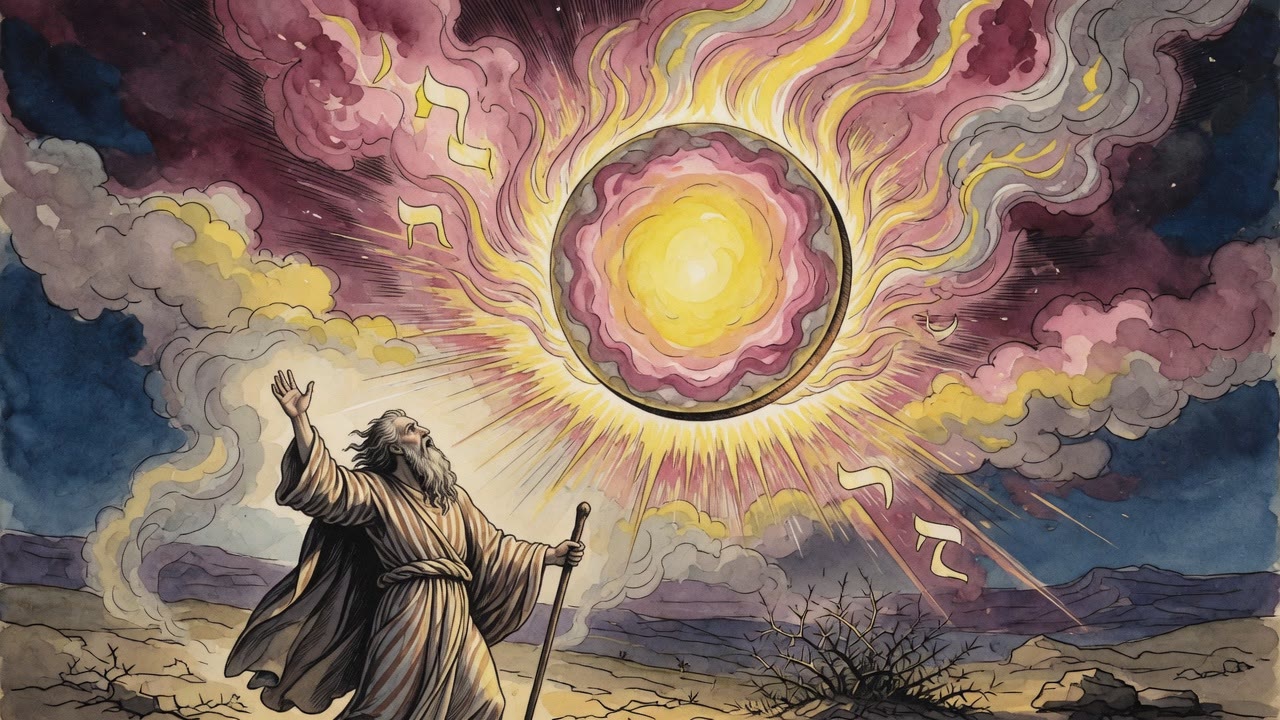
Another interpretation: "This they shall give" (Exodus 30:13). How many small coins did the Holy One, blessed be He, tell him? "This they shall give": six grammisin of silver. The Holy One, blessed be He, said: They sinned from the sixth hour onward, as it is said, "When the people saw that Moses delayed" (Exodus 32:1), read as though Moses was at the sixth hour. Therefore let them bring six grammisin. And our masters said: They sinned from half the day onward; let them bring a half-shekel and be atoned. "This they shall give, half a shekel" (Exodus 30:13). And how much is a half-shekel? Ten ma'in. The Holy One, blessed be He, said: "This they shall give," ten ma'in, which are a half-shekel, so that they may atone for the Ten Commandments which they transgressed. "This they shall give, every one that passes among them that are numbered" (Exodus 30:13). Another interpretation: "This they shall give." The Holy One, blessed be He, took something like a small coin of fire and said to him: Like this shall everyone who passes among them give.
Another interpretation: "This they shall give." Come and see the belovedness of Israel, for their transgressions bring them to great elevations. How much more so their merits. When Joseph was sent by his father to go to his brothers, as soon as they saw him, they planned to kill him, as it is said, "And they said one to another" and, "Come now therefore, and let us slay him" (Genesis 37:19-20). They stood and threw him into the pit and said: Let us eat and drink, and afterward we will draw him up, bring him out, and kill him. They ate and drank and came to bless. Judah said to them: Are we going to kill and then bless the Holy One, blessed be He? We would only be blaspheming. What is "What profit is it if we slay our brother?" (Genesis 37:26). Judah said to them: "The robber who blesses blasphemes the LORD" (Psalms 10:3). Rather, "Come, let us sell him to the Ishmaelites" (Genesis 37:27). "And they sat down to eat bread" (Genesis 37:24). Rabbi Yehudah HaLevi son of Rabbi Shalom said: One reclining meal, at which the tribes sat and took counsel concerning Joseph to sell him, brought merit to the whole world, for he was sold to Egypt and sustained the whole world in the years of famine. "They sat down to eat bread" means to feed bread to the whole world. If their transgression caused the whole world to live, their merit, all the more so. So too here: what caused the portion of the shekels? The transgression of the calf. If their transgression brought them to a commandment, their merit, all the more so. "You are all beautiful, My beloved, and there is no blemish in you" (Song of Solomon 4:7).
Another interpretation: "When you lift." Israel were counted in ten places: once when they descended to Egypt, as it is said, "All the souls of the house of Jacob that came into Egypt were seventy" (Genesis 46:27); once when they ascended from Egypt, as it is said, "About six hundred thousand on foot" (Exodus 12:37); once here, "When you lift"; twice in the Book of Numbers; twice in the days of Saul, "And he numbered them in Bezek" (1 Samuel 11:8), and, "And Saul numbered the people in Telaim" (1 Samuel 15:4); once in the days of David, "And Joab gave the sum of the number of the people" (2 Samuel 24:9); once in the days of Ezra, as it is said, "The whole congregation together was forty and two thousand" (Ezra 2:64); and once in the time to come, "The flocks shall pass again under the hands of him who counts them, says the LORD" (Jeremiah 33:13). Whenever they were counted by the mouth of the divine command, no plague touched them. Whenever they were counted not by the mouth of the divine command, a plague touched them. When were they counted not by the mouth of the divine command, and a plague touched them? In the days of David, as it is said, "Ha-Satan stood up against Israel, and incited David" (1 Chronicles 21:1). Immediately the plague touched them, as it is said, "So the LORD sent pestilence upon Israel" (1 Chronicles 21:14). What was lacking in the days of David was filled in the days of Solomon: "Judah and Israel were many, as the sand which is by the sea in multitude" (1 Kings 4:20). From what is read in the matter. And Rabbi Tanchuma son of Rabbi interpreted: "I went down into the garden of nuts to see the fruits of the valley" (Song of Solomon 6:11).
Another interpretation: "When you lift" and "they shall give, every man, a ransom for his soul" (Exodus 30:12). The Holy One, blessed be He, said to Moses: They are liable to death because they made the calf. Rather, let them give the ransom of their souls. "They shall give, every man, a ransom for his soul." When Israel heard this, they were distressed. They said: Was it for nothing that we labored, plundered the houses of Egypt, and took their wealth, only to throw away our wealth? The Torah wrote of fines. Have we violated the divine utterance, accepted it and transgressed it, so that now each one of us must give fifty silver pieces like one who violates a woman, as it is said, "Then the man that lay with her shall give unto the damsel's father fifty shekels of silver" (Deuteronomy 22:29)? Or like one who seduces a virgin: "And if a man entice a maid that is not betrothed" (Exodus 22:16). What is his penalty? "He shall pay money according to the dowry of virgins" (Exodus 22:17). Then each one of Israel would need to give Him fifty sela, for we became like one who seduces: we seduced the divine utterance and did not keep it, as it is said, "They flattered Him with their mouth, and they lied unto Him with their tongues. For their heart was not right with Him" (Psalms 78:36-37). And not this, and not that, but if someone has a goring ox and it gores a slave, what is his punishment? Its owner gives "thirty shekels" to his master (Exodus 21:32). We made an ox, as it is said, "They changed their glory into the likeness of an ox that eats grass" (Psalms 106:20). Now each one of Israel would need to give thirty shekels of silver. Or like one who brings out an evil name, concerning whom it says, "They shall fine him a hundred shekels of silver" (Deuteronomy 22:19). We brought out an evil name against the Holy One, blessed be He, who brought us up from the land of Egypt, and we said to the calf: "This is your god, who brought you up out of Egypt" (Nehemiah 9:18). The Holy One, blessed be He, knew what was in their hearts. He said to Moses: Tell them: Why are you afraid? I do not seek from you payment like one who violates, nor like one who seduces, nor like one who brings out an evil name, nor like one whose ox gores. Rather: "This they shall give" (Exodus 30:13). Rabbi Meir said: The Holy One, blessed be He, took a small coin of fire, called Moses, and said to him: "This they shall give." When David saw that through this they had atonement, he began saying: Come and see the wonders of the Holy One, blessed be He, and His deeds. In the very matter by which they angered Him, in that matter He gave them atonement. "For God is judge; He lowers this one and raises that one" (Psalms 75:7). The this that lowered Israel into the pit of destruction was "This is your god, O Israel." And the this raises Israel, for He raised their horn through "This they shall give."

 Click for full size