Heaven Casts Down the Prince Before the Kingdom Falls
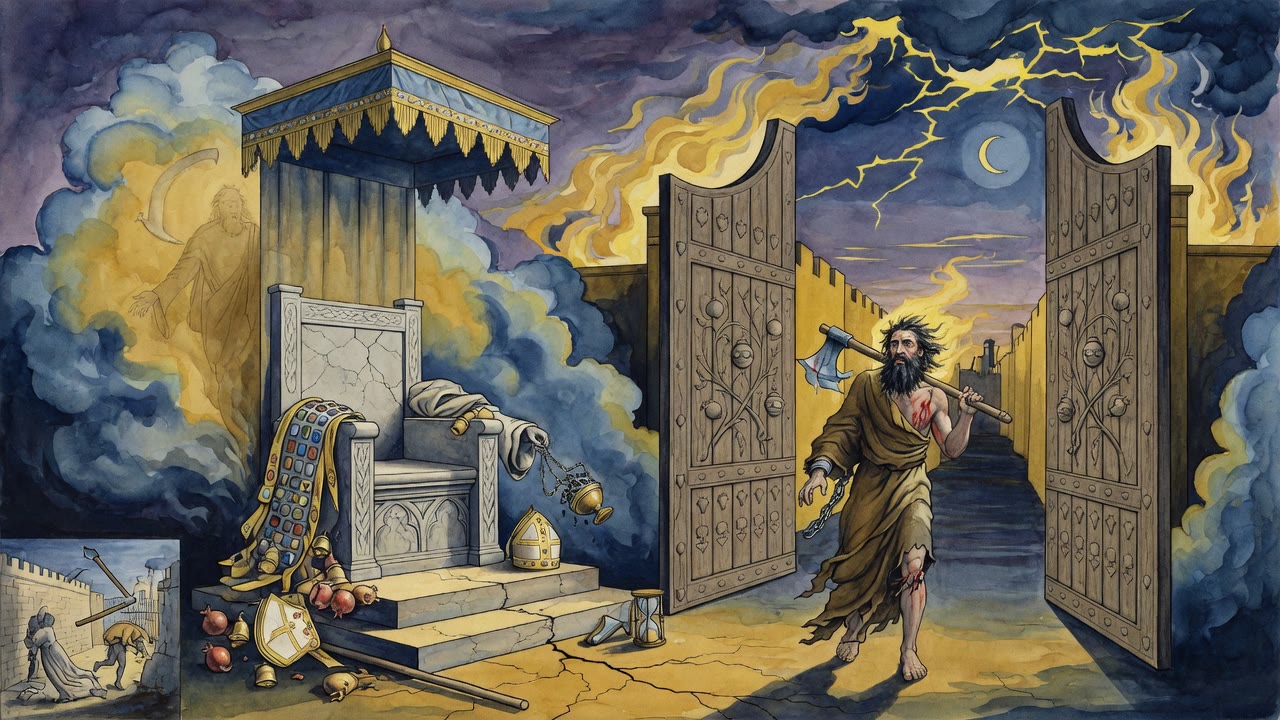
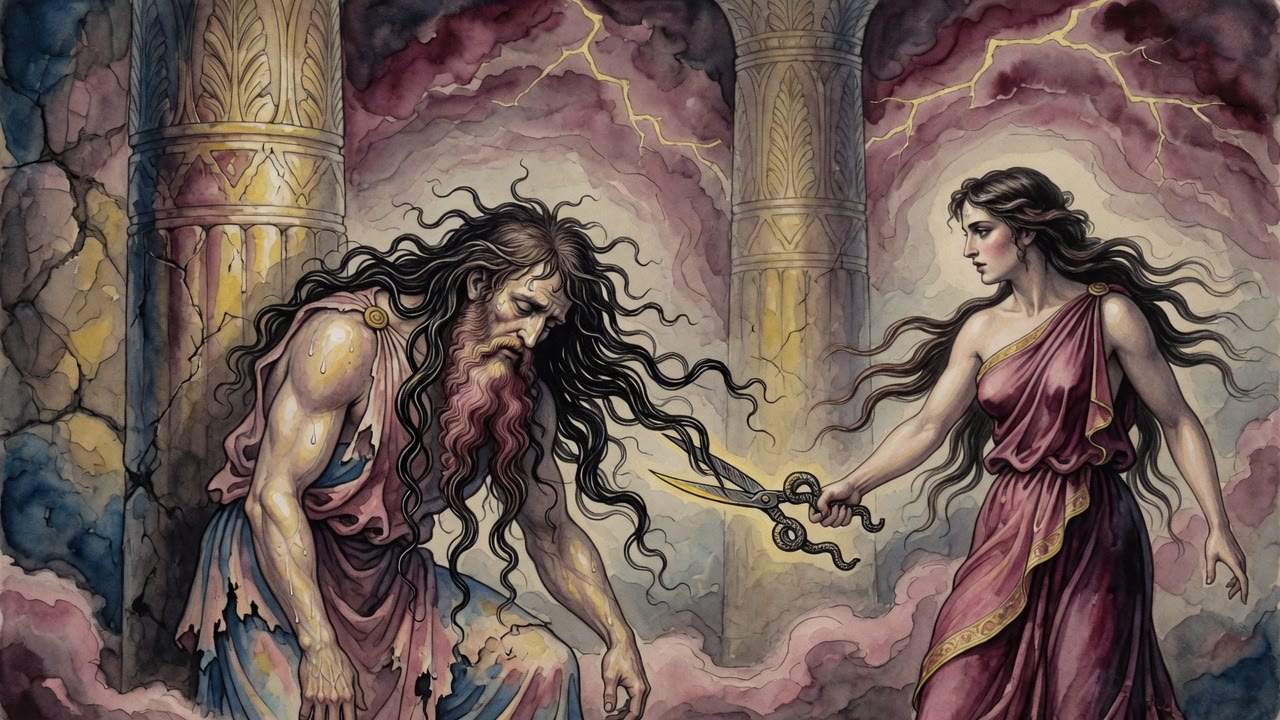
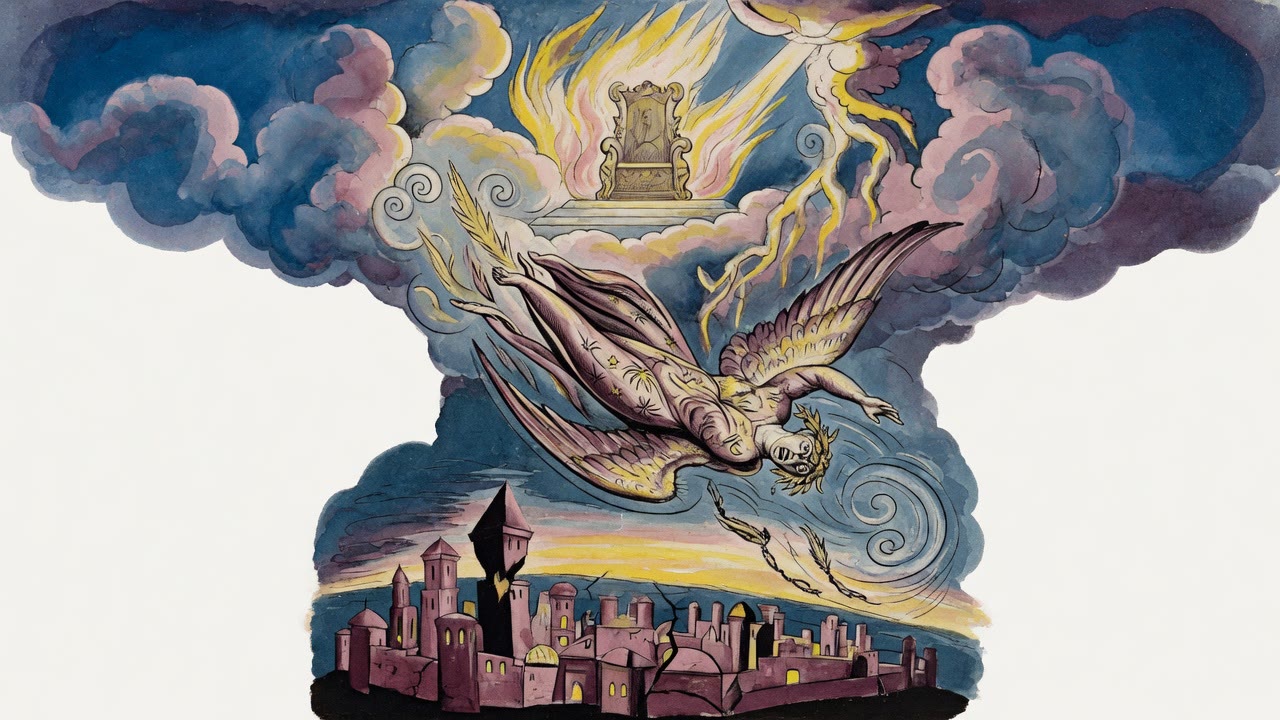
Before God strikes any nation on earth, His night court throws down that people's guardian-prince in heaven, and the kingdom falls by morning.
Table of Contents
 Click for full size
The Court That Sits While the World Sleeps
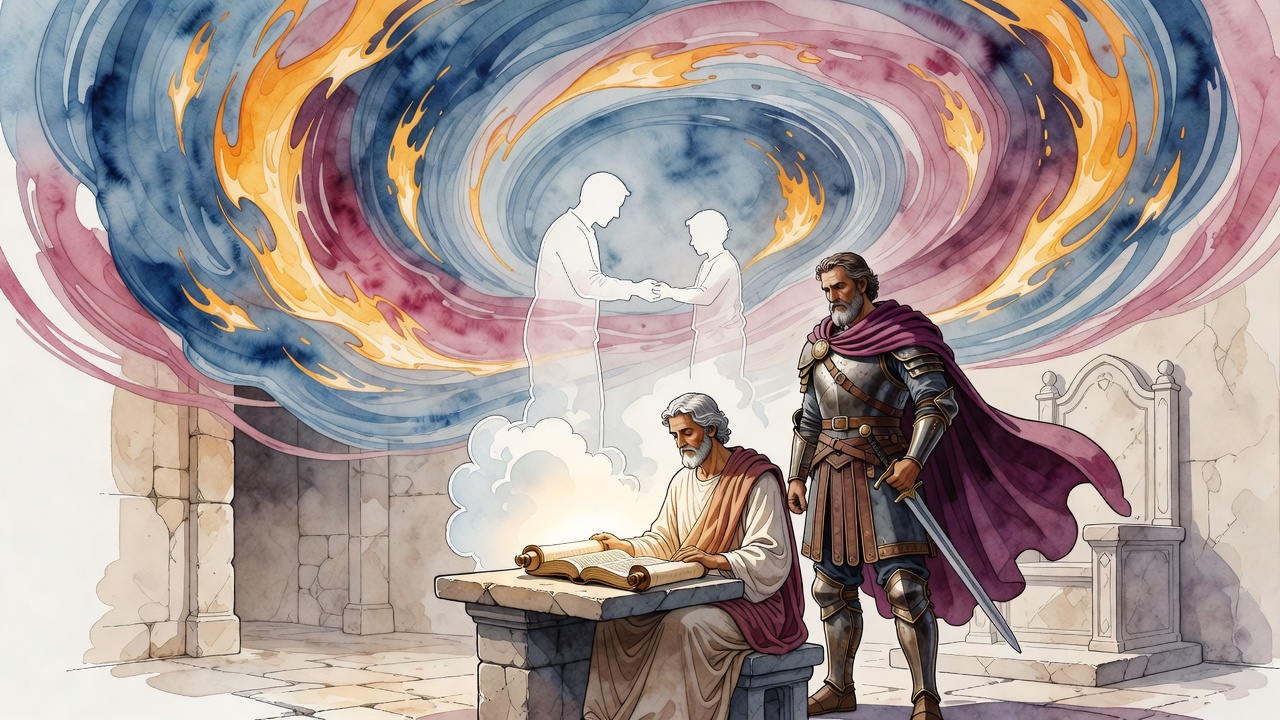
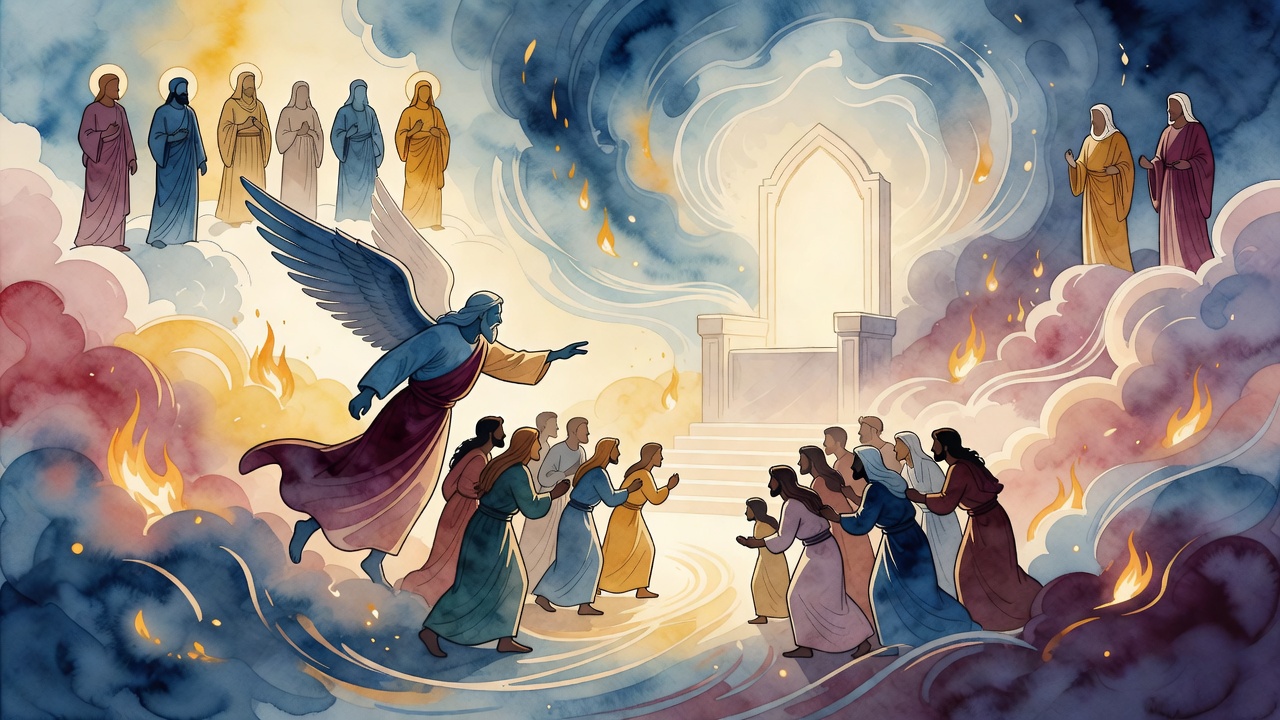
Long before an army marches, before a border is crossed or a city burns, a court convenes in the dark above the sky. God takes His seat, and the host of heaven stands in ranks around Him. Among them stand the princes, one for every nation under the sun, each an angel who carries his kingdom's name and pleads its cause. When a people below has filled its measure of cruelty, judgment does not fall first on the people. It falls first on the prince.
"He takes knowledge of their works," the verse says, "and He overturns them in the night, so that they are crushed" (Job 34:25). Rabbi Chanina read that line and heard the order of things. The overturning happens in the night, in the unseen court, before the crushing is felt at dawn on the earth below.
The Prince Overturned Before the Kingdom
Rabbi Chanina said it plainly. The Holy One never exacts punishment from a nation below until He has first exacted it from that nation's prince above. He pointed to the prophet's warning that in the day of reckoning the LORD would visit "upon the host on high, on high," and only afterward "upon the kings of the earth, upon the earth" (Isaiah 24:21). The sentence begins in heaven. The angel who stands for a kingdom is thrown from his place, and the kingdom, robbed of the one who held it up, staggers and falls by morning.
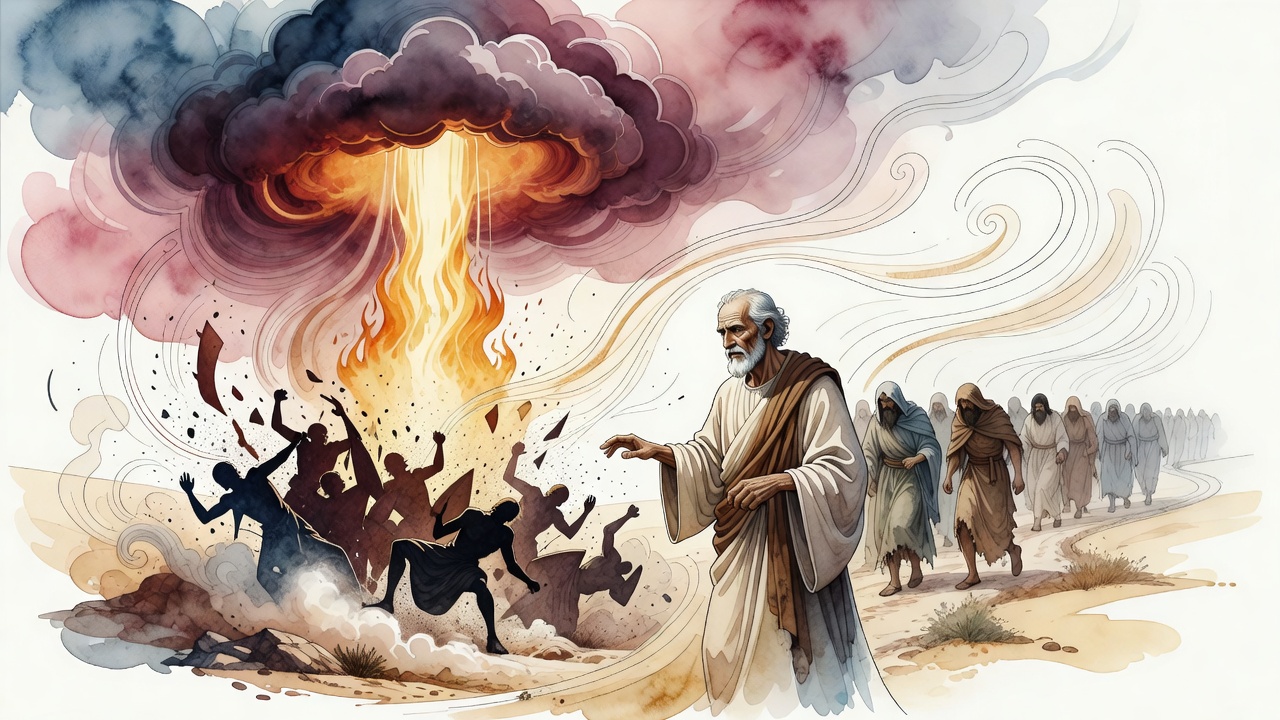
It had happened this way from the beginning. In the generation of the flood, the sons of God came down first and took the daughters of men (Genesis 6:2). Only then did God look and see that the wickedness of man was great upon the earth (Genesis 6:5). The rot started at the top, in the heavenly host, and reached the ground last. When the waters came, they were only finishing what the court above had already decided.
The Keeper of Two Bundles
Rabbi Acha imagined God as a keeper of deposits, a man who holds what others leave with him until the day they return to collect. "I am a keeper of deposits," he had God say. Sarah left a deposit. She placed in His hands a bundle of commandments, a lifetime of kindness and faith bound together, and He kept it. So when her time came, the verse does not say God helped Sarah or blessed Sarah. It says God remembered Sarah (Genesis 21:1), returned to her exactly what she had entrusted, and set a son in her arms in old age.
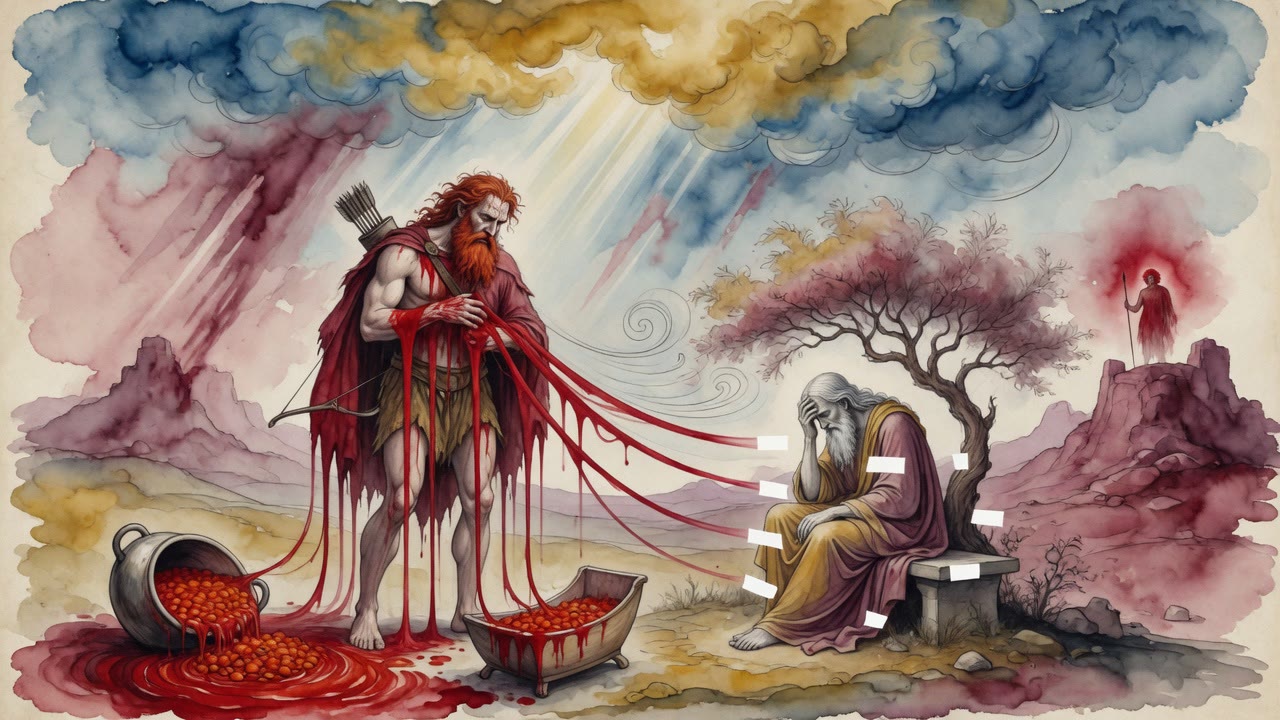
Another had left a deposit too. Amalek placed in His hands a bundle of thorns, an armful of cruelty bound tight, and He kept that as well. Nothing left with the keeper is ever lost. It waits in the dark of the storehouse for the day of collection.
Amalek's Prince and the Debt That Waited
Amalek came against Israel in the wilderness, striking the faint and the stragglers at the rear (Exodus 17:8). Generations passed. The command came down to a later people, "Remember what Amalek did to you" (Deuteronomy 25:17), as though the wound were still open and bleeding. And then, when the debt was called, the same word that had answered Sarah answered Amalek. "I have remembered what Amalek did to Israel," God said (1 Samuel 15:2), using the very verb of Sarah's blessing turned inside out. He had remembered her kindness with a child. He remembered Amalek's thorns with a sword.
But the sword on earth was the last thing to move. Before Saul ever rode against Agag, the prince of Amalek had already been summoned before the court above and stripped of his standing. The bundle of thorns was pulled down from the shelf. The angel who had held the nation up was overturned in the night, and only then did the armies below feel the ground give way beneath them.
David Cries Rebuke Against the Nations
Long after, David watched the children of Esau grow strong and press down on Israel. He remembered that two nations had wrestled inside one womb, that God had told Rebecca two governments would come out of her, and that the elder was already named the border of wickedness (Malachi 1:4). Esau had crowded the whole record of the world's hatred into his single line.
So David lifted his voice, and he did not ask God to soften the nations or to reason with them. He asked God to rebuke them, to reach past the visible kings and their armies to the invisible princes who stood for them in heaven. He had understood the order of the court. A kingdom is only as tall as the angel who holds it up. Overturn the prince in the night, and by morning there is nothing left of the kingdom below but the debt it once left with the keeper.
← All myths