Heavens Tore Open on Shavuot at Midnight
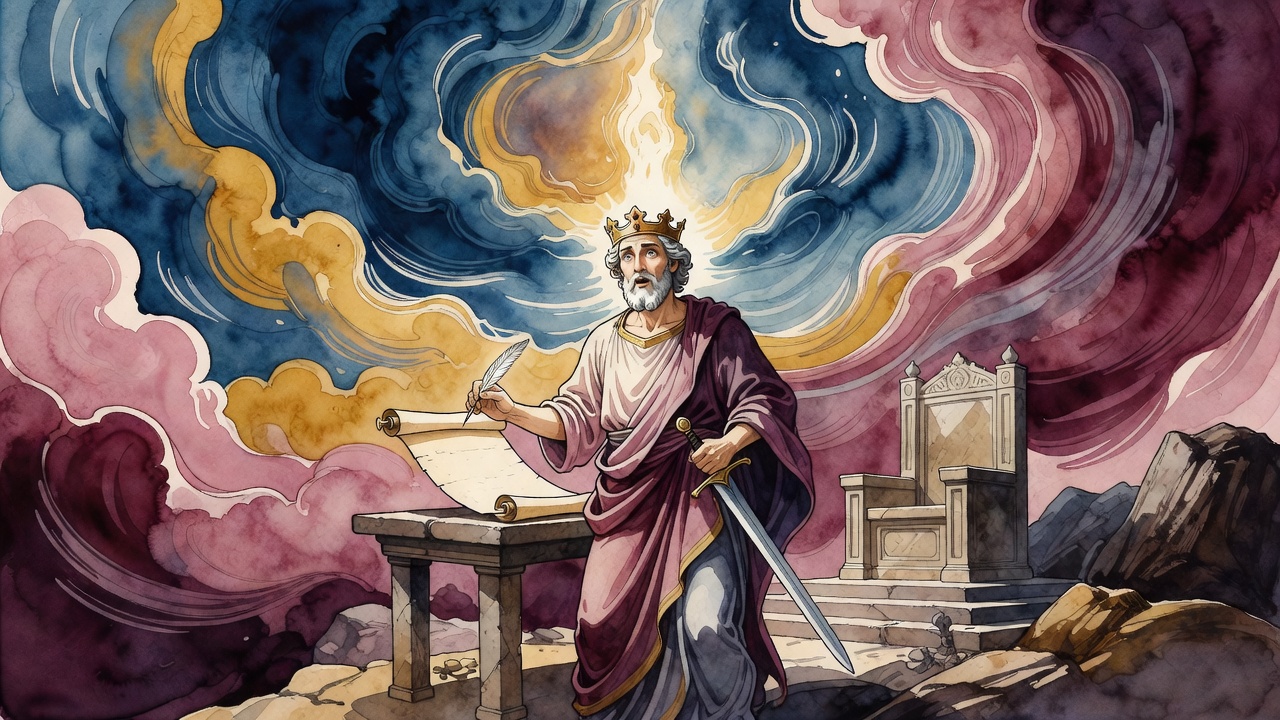
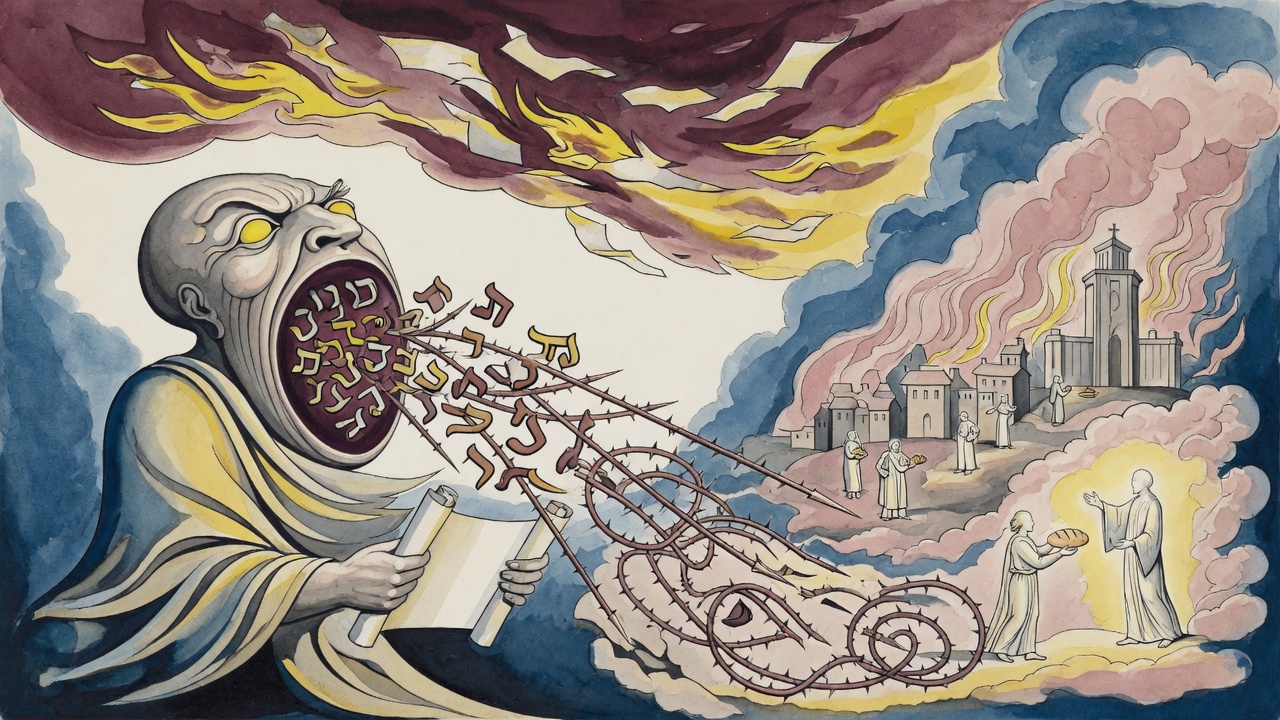
At midnight on Shavuot the heavens split for a breath. David set five books of song against five of Torah while his feet sought the study house.
Table of Contents
Candles burned low in the study house and no one dared sleep. Outside, the town held its breath toward midnight. Someone whispered that when the hour struck, the heavens themselves would split, and for a breath the glory would show. A student rubbed his eyes with a knuckle and turned another page of Zohar so he would still be awake if the sky moved.
 Click for full size
The Second Parting
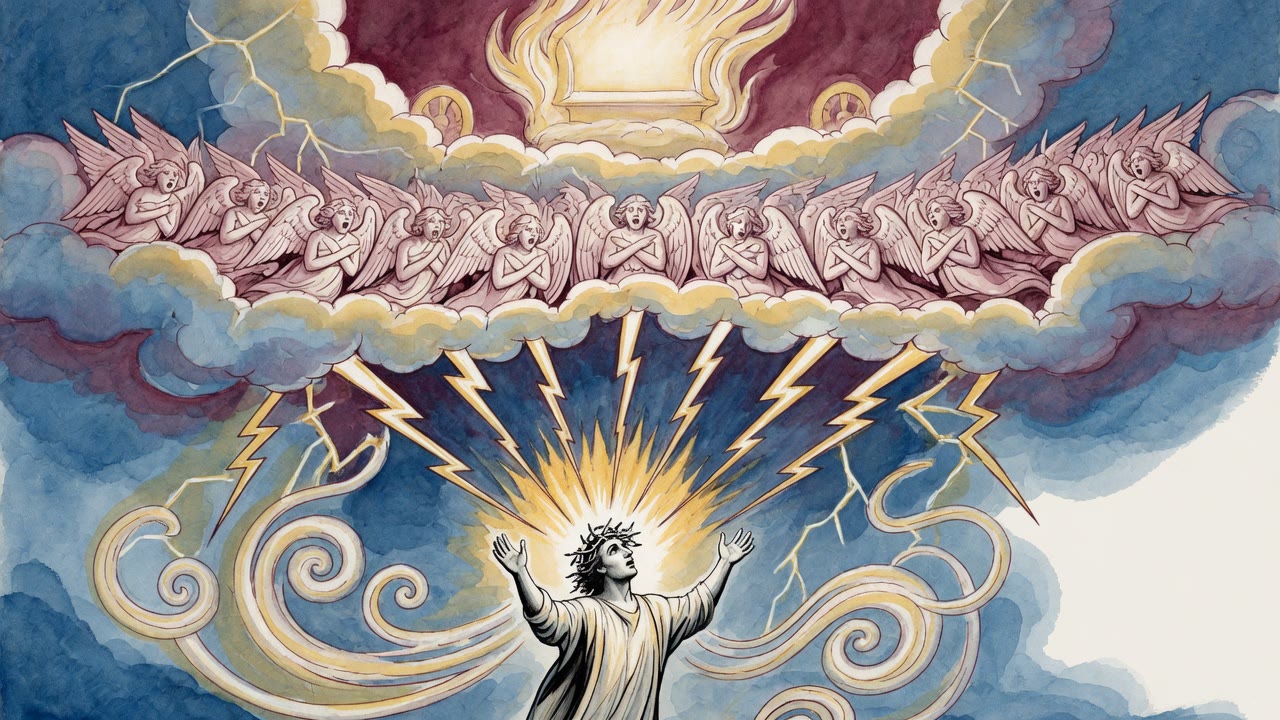
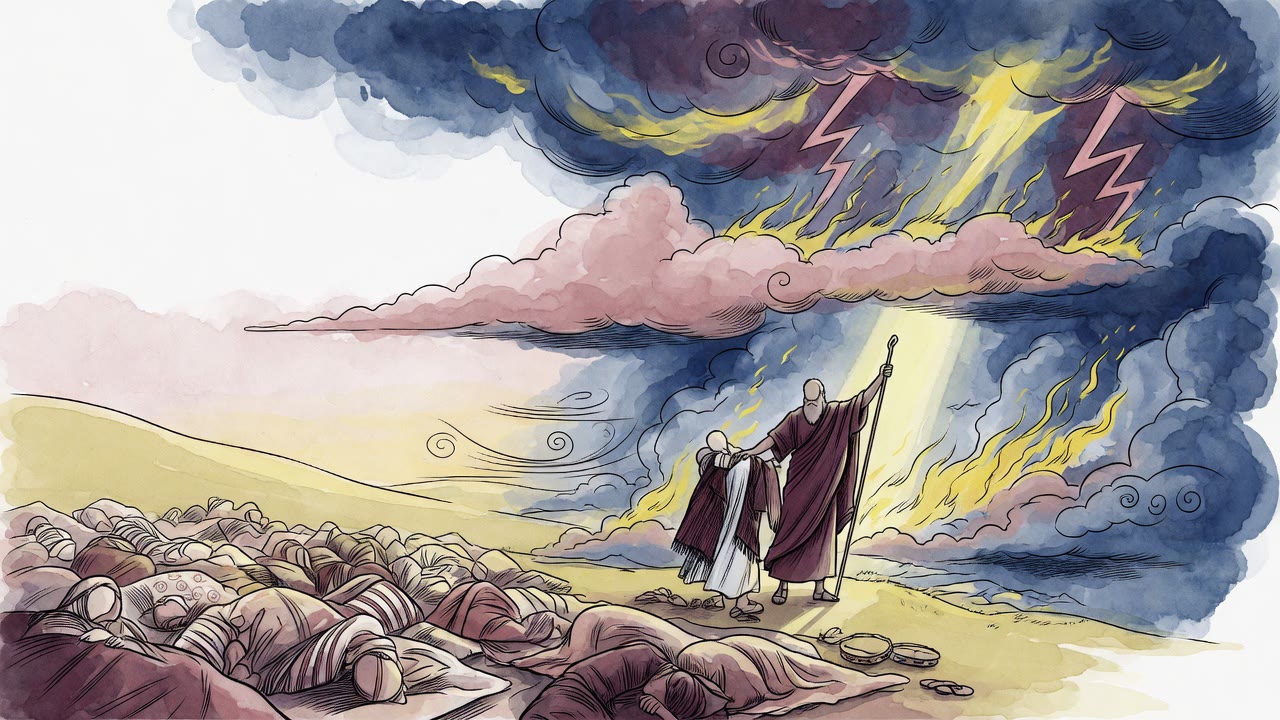
Passover remembers water torn for a people walking free. Shavuot remembers another parting. Folklore and kabbalistic custom say that at midnight on the festival of the Torah, the heavens open. A wish spoken in that crack, the tales claim, can land. The Shekhinah (שכינה), the indwelling Presence, shows for a fleeting second.
The custom of staying awake is not only fear of missing a miracle. All-night study is purification. Eyes open. Mind open. The night becomes a ceremony of readiness, not a magic trick. People read Zohar because secrets want company at the hour of opening. Israel Najara's Shavuot ketubah in the sixteenth century still hums with the marriage of people and Torah under that sky.
Five Books Answer Five Books
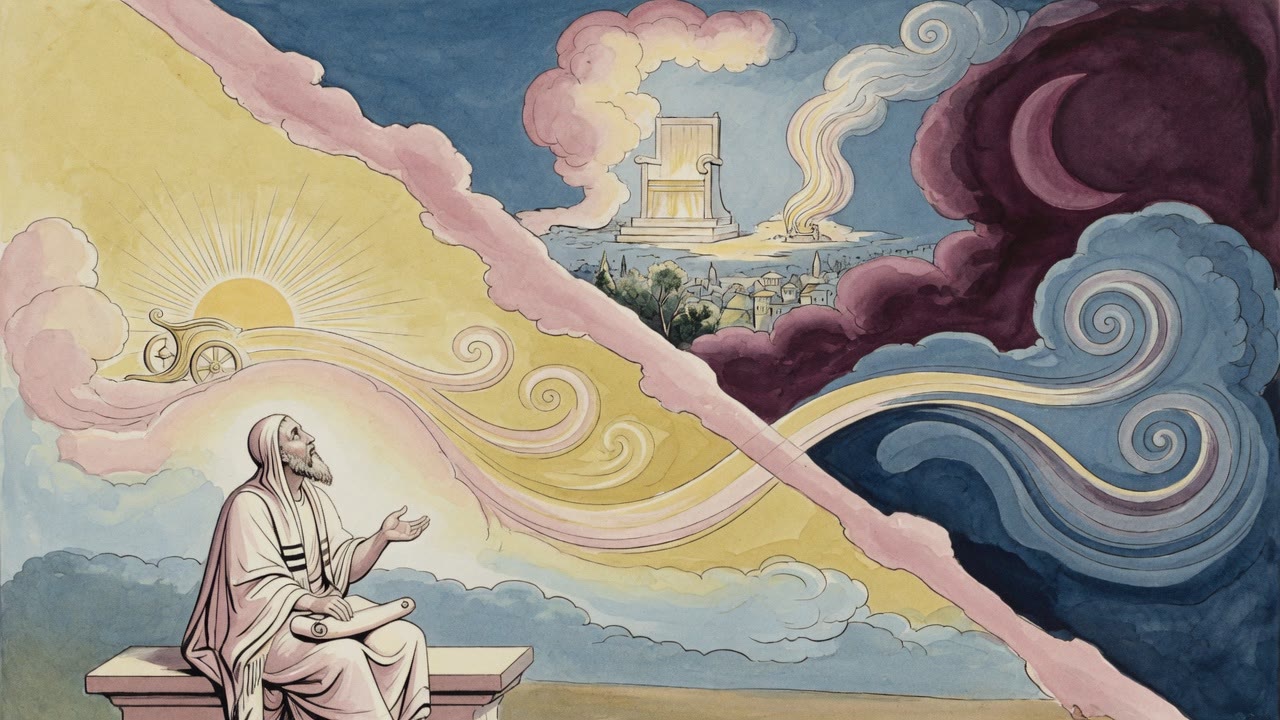
Shimush Tehillim counts the Psalms as another Torah. Five books of song face five books of Moses, as if David's arrangement were built to answer the Torah's own shape. Inside that structure, the source says, fearsome and wondrous secrets hide. The claim stops at the threshold. Psalms become a guarded house of song, not a manual of spells.
On a night when heavens may open, the doubled five feels less like catalog and more like architecture. Torah and Tehillim stand across from each other. The student who refuses sleep stands between them with a body that wants both law and cry.
David's Feet and the Lion at the Door
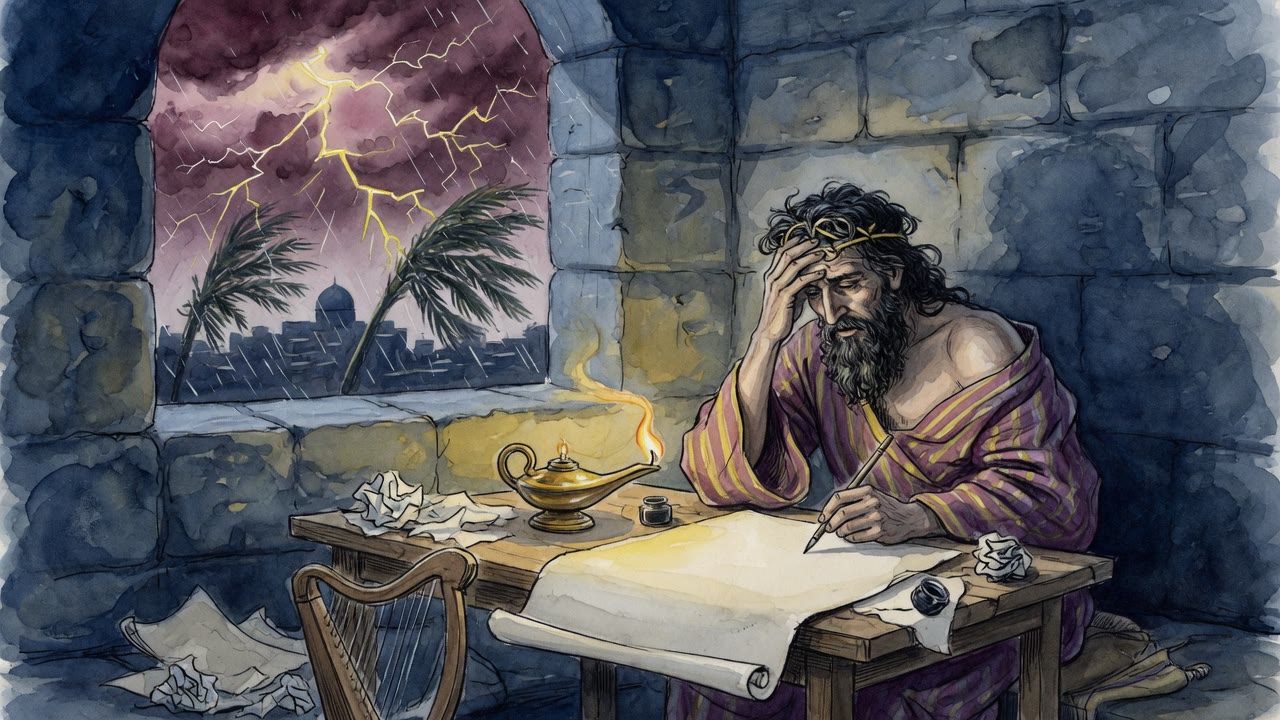
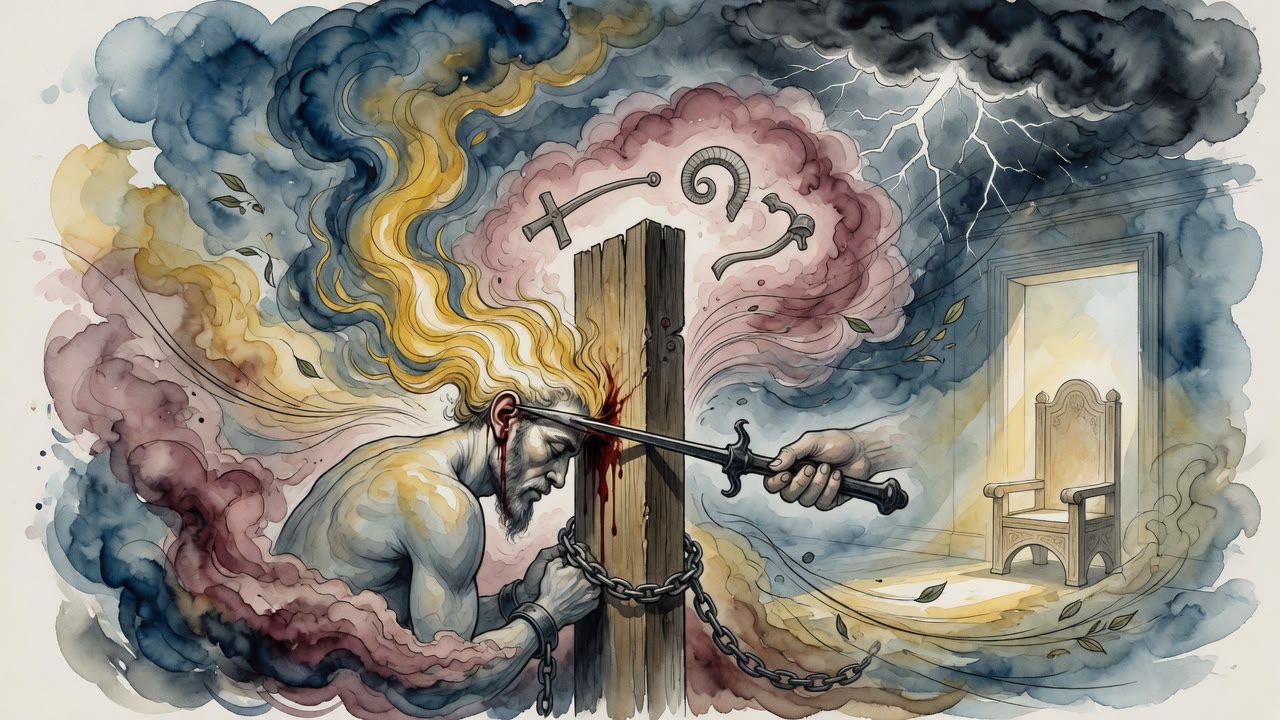
Midrash Tehillim puts words in David's mouth that fit a long night. Turn to me and be gracious to me, he prays, and the midrash hears God's answering turn in Leviticus: I will turn to you and make you fruitful. Establish my footsteps in Your word. David wants feet that do not slip into sin, feet that stay in the Beit Midrash all day because the yetzer hara (the inner urge toward evil) has no power over one immersed in Torah. Sin crouches at the door, as Genesis warned Cain. Study bars the door.
Redeem me from oppression of man. Not only chains. Any servitude that is not service of God. Make Your face shine upon Your servant, the priestly light turned personal. Streams of water run from my eyes for those who leave the path, for Doeg and Ahitophel, for a people Rachel weeps over when Torah is nullified.
A king who weeps for lost Torah is the right companion for a night when Torah is given again.
What the Open Sky Demands
If the heavens open and a person has only a small wish ready, the stories still smile. If the heavens open and a person has studied until the eyes burn, the opening is not only grant but recognition. Worthiness here is not perfection. It is attention paid when sleep would be easier.
The camp at Sinai once stayed awake in fear and awe. Later generations invent candles and coffee and page numbers to keep the same posture. The parting at midnight is less a weather report than a dare. Stay with the book. Let the sky do what it will.
Song Facing Law
When dawn finally thins the study house windows, the students stretch and the rumor of a split sky may or may not have been confirmed by any eye. The five books of Psalms still answer the five of Moses. David's prayer for unslipping feet still fits. The night has done its work if someone who nearly slept chose one more page instead.
Revelation, in this telling, is annual and fragile. It favors the ones who refuse the pillow.
Not every town told the midnight story the same way. Some said the opening lasted long enough for a full blessing. Some said it was a crack no wider than a breath. Some mothers told children that a pure wish is one you would still want if the whole street heard it. The folklore bends, but the posture holds: stay awake, stay with Torah, treat the hour as if revelation were not only ancient.
David's prayers fit because they are nocturnal in spirit even when spoken by day. Feet that want the study house. Eyes that stream for the lost. A face that wants God's face. The yetzer hara (the evil inclination) crouches; the book answers. On Shavuot the book is the holiday. Sleep becomes a kind of absence from the wedding.
When the five books of Psalms face the five of Torah, the student between them is not choosing song over law or law over song. He is learning that answer can mean harmony of shape, not replacement. Midnight may open. Dawn will close the rumor. The page that kept him upright remains either way, which may be the less glamorous miracle and the more reliable one.
← All myths