5 min read

Isaac and Ishmael at Their Father's Last Feast

Two half-brothers arrive at Abraham's final Shavuot feast and argue over who deserves the covenant, and who has proven more.

Curated by Arthur · Told by Maggid ·
Table of Contents
  1. Coming from the Well
  2. The Argument Over Inheritance
  3. Isaac's Answer
  4. What the Covenant Required
  5. The Line That Separated Them

Coming from the Well

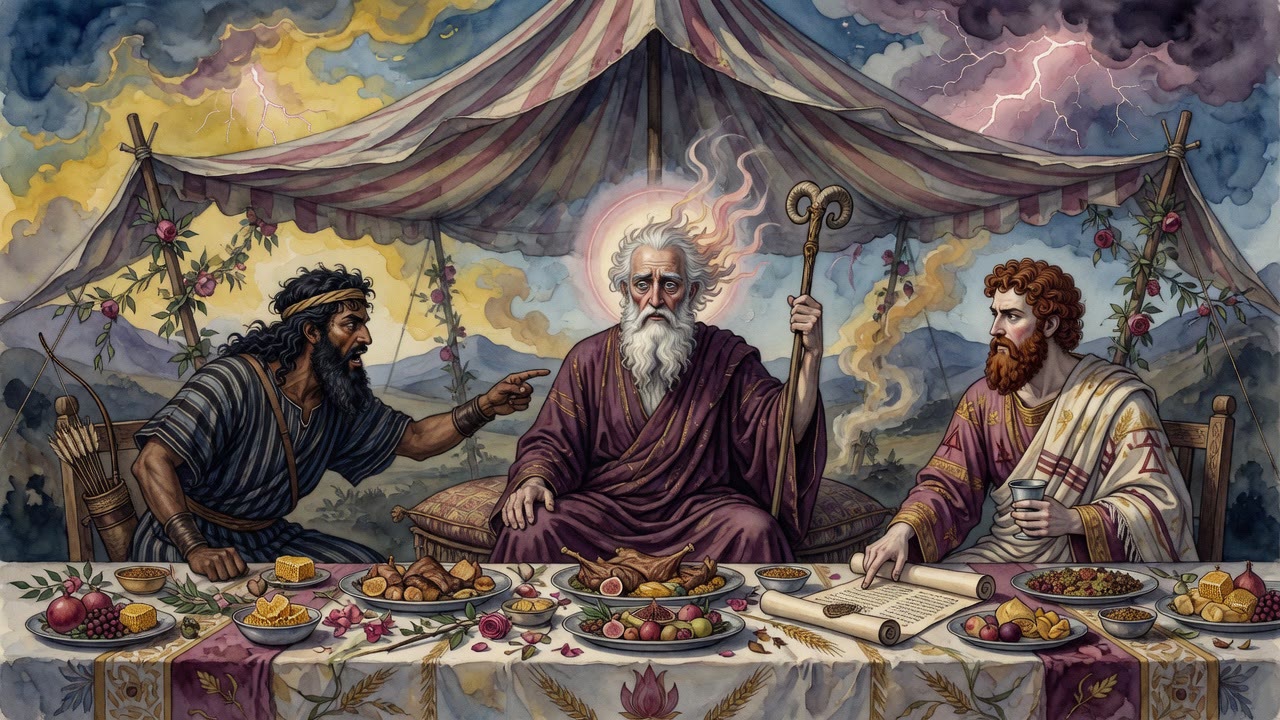
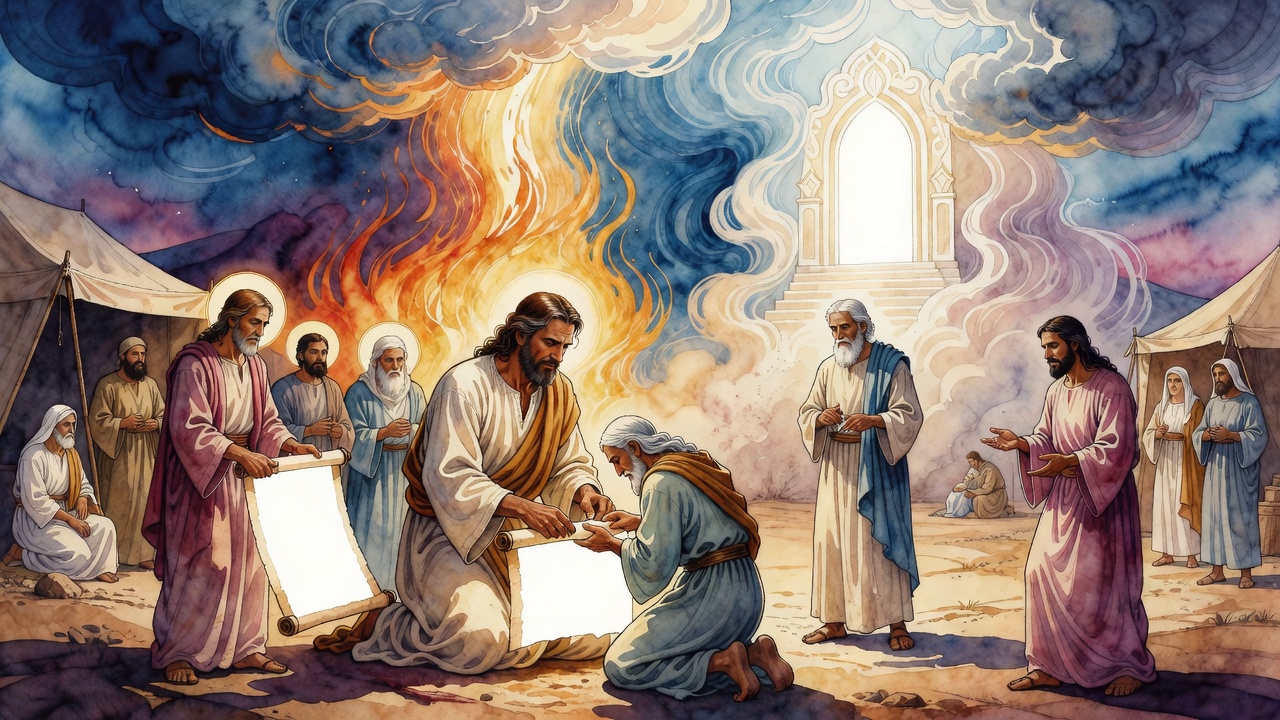
The year Abraham died, both his sons came to him for the Feast of Weeks. Isaac arrived from one direction, Ishmael from another, and they met at Beersheba, the well where their father had once sealed a covenant with a foreign king. The occasion was Shavuot, the festival of first fruits, and the last feast Abraham would live to see. Two grown men who had inherited the same memory and drawn different conclusions from it sat together at the old man's table.

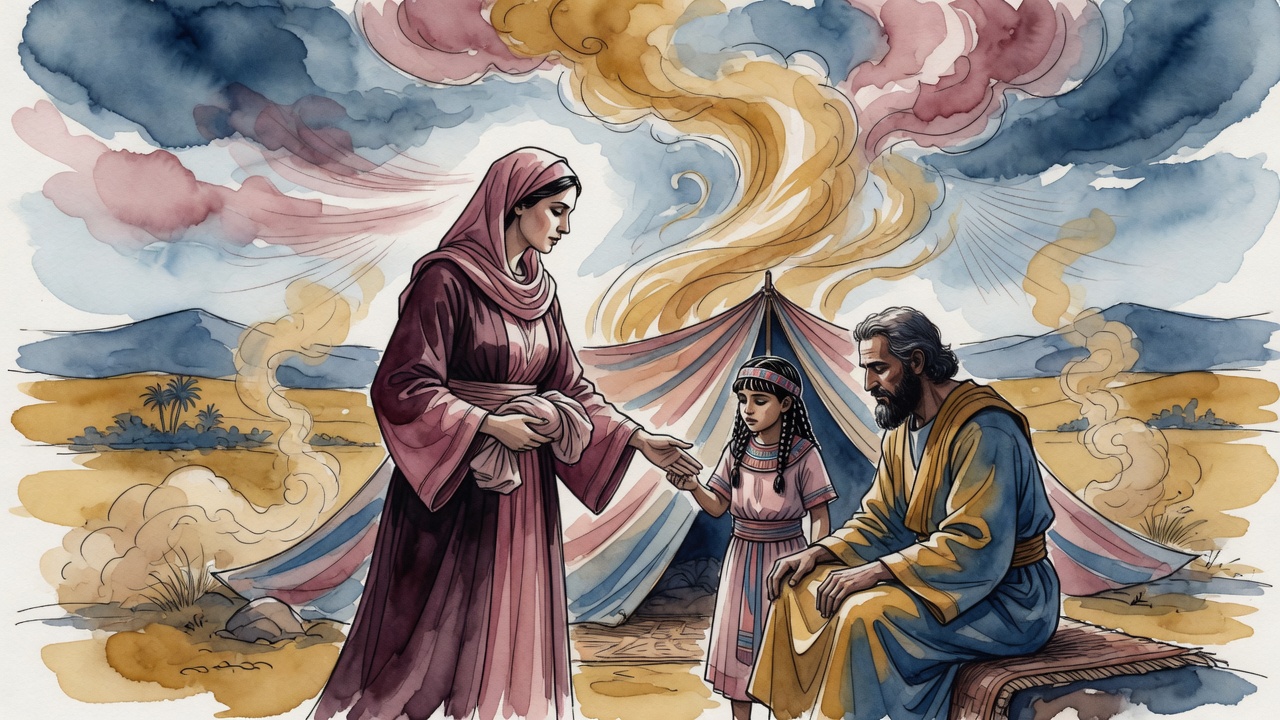
They were not easy company. The half-brothers had grown into their rivalry slowly and then all at once. As children, the tension had expressed itself in Ishmael's habit of aiming arrows in Isaac's direction and calling it sport. Sarah had seen it for what it was. The Feast of Weeks required them to sit together anyway, and so they did.

The Argument Over Inheritance

Before Abraham died, a question hung in the air between them: who would inherit, and how much. Ishmael, the elder, believed the firstborn's right entitled him to a double portion. Isaac would take one share. This was not an abstract grievance. It had practical weight, and both men knew it.

But the argument that mattered most to both of them was not about property. It was about the covenant itself. Ishmael had been circumcised at thirteen, old enough to understand and consent. He had not transgressed his father's command. He wore his circumcision as a proof of spiritual seriousness, and when he pressed Isaac on it, his voice carried genuine pride. "I was thirteen years old when the Lord spoke to my father to circumcise us, and I did not transgress His word."

Isaac's Answer

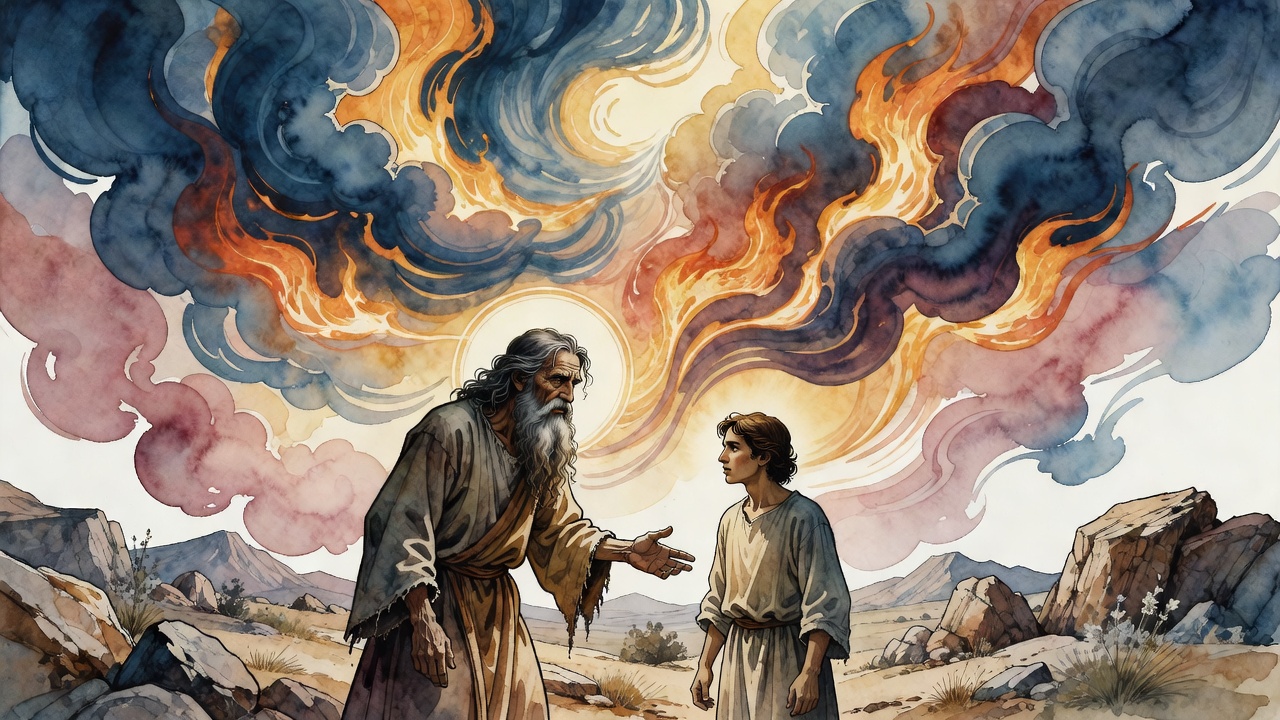
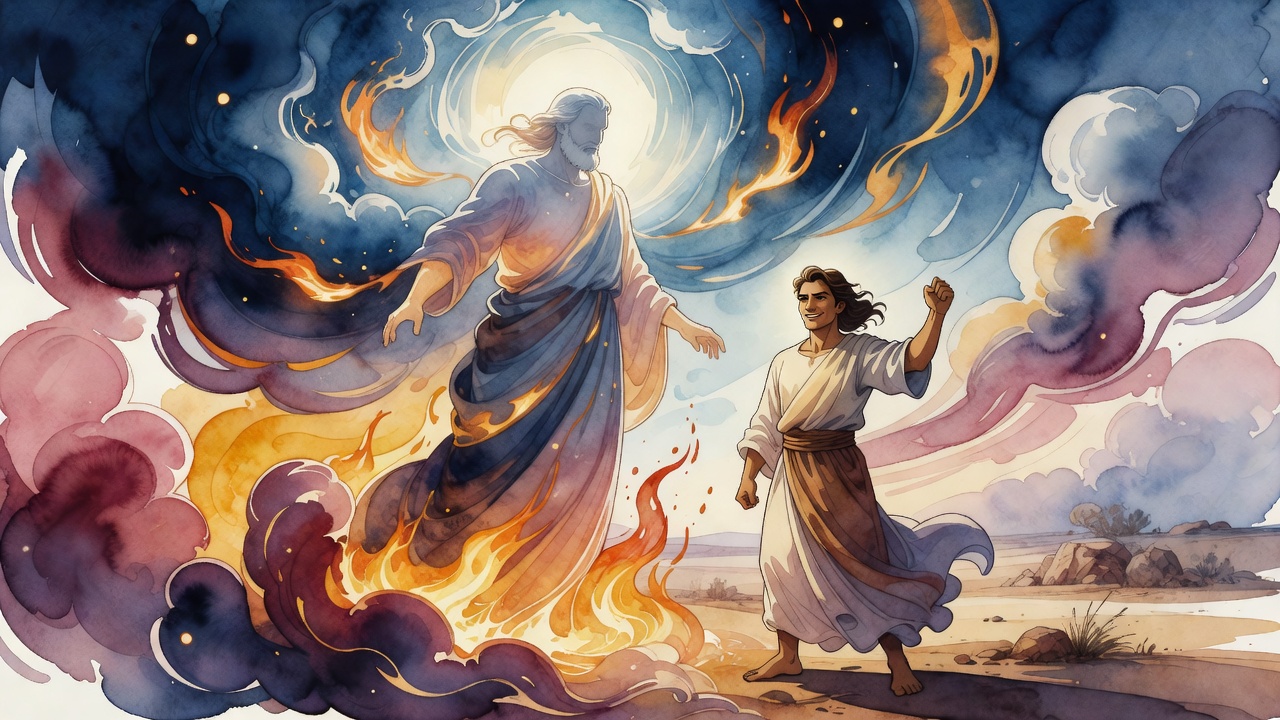
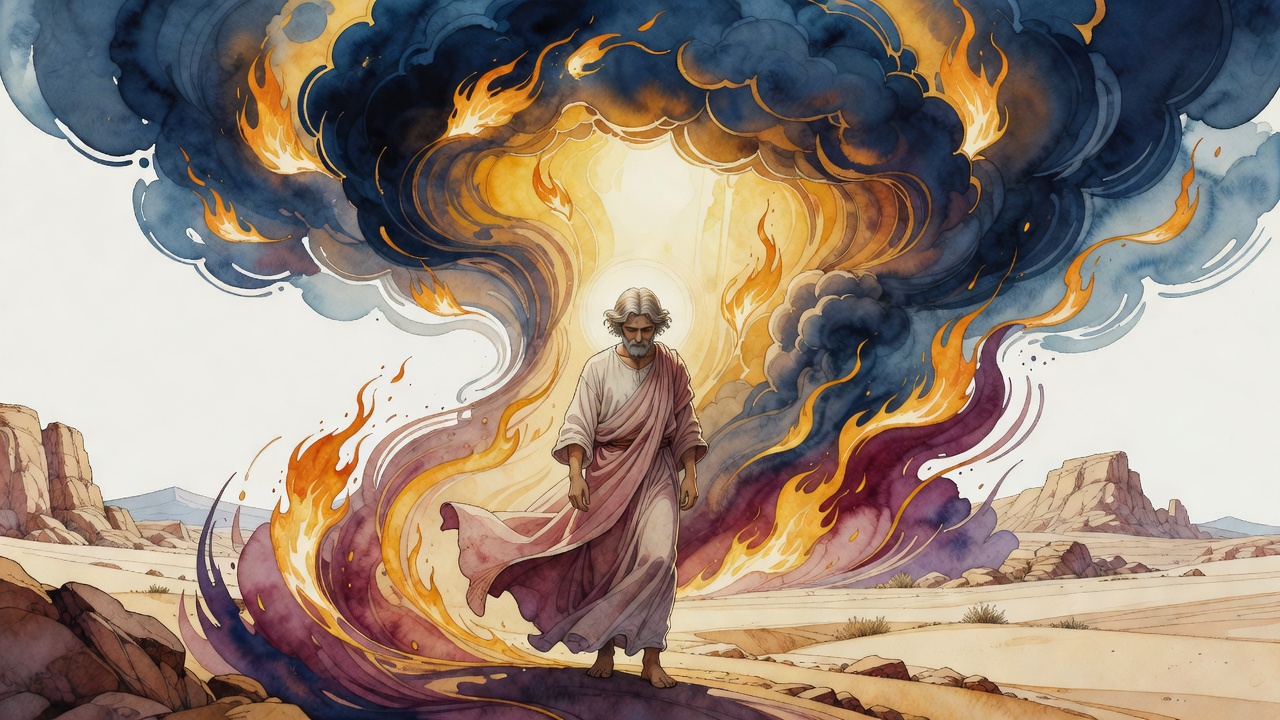
Isaac did not dispute it. He simply offered more. "What do you boast about, a little bit of flesh? As the Lord lives, the God of my father, if He were to ask me for all my limbs, I would not refuse." He was offering not the covenant's minimum but its totality: not a piece of skin but every bone, every organ, his entire body given over to God's demand without resistance.

This was not modesty. It was a direct counterargument. Ishmael had demonstrated obedience under pain. Isaac was saying that obedience under pain was only the beginning of what the covenant asked for. The binding on the mountain, where Abraham had raised the knife and Isaac had lain still, had already answered the question. Not in argument but in fact.

What the Covenant Required

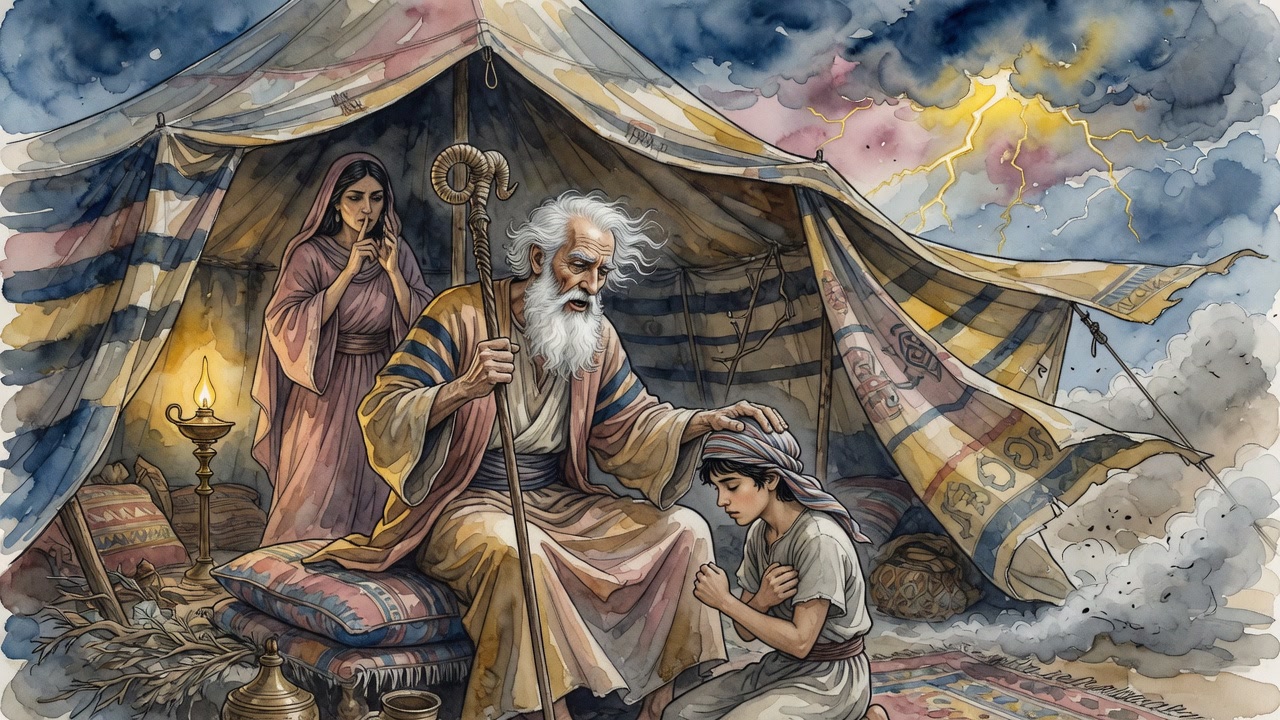
The Book of Jubilees was careful to track whose covenant it was. When God renewed the promise after Abraham's circumcision, He named Isaac explicitly and established Shavuot as the day of the covenant's renewal. Ishmael had received the sign but not the inheritance. God had said it plainly, and Abraham had obeyed. He circumcised every male in his household on that same day, Ishmael, all those born in the house, all those bought with silver, and the covenant passed through Isaac.

This distinction did not erase Ishmael from the story. He stood at their father's deathbed alongside Isaac. They buried Abraham together at the cave of Machpelah. The texts preserve a moment of genuine unity at that grave, two sons completing their father's burial without recorded argument. Whatever they had disputed at the feast, they both knew that Abraham had loved them both, and that they had come from the same source.

The Line That Separated Them

What separated them was not the flesh but the direction of the promise. The covenant that had begun with Abraham moved through Sarah's son, and it carried obligations that Ishmael's line would not bear in the same way. Ishmael would become a great nation, twelve princes, a bow's reach across the desert, but the covenant with its particular demands, its particular history, its recurring claim on every generation, ran through Isaac.

At the feast, both men understood this. The argument was real and neither of them was wrong about the facts. But one of them had been chosen, and the other had not, and they went home knowing it.


← All myths
From the tradition

Sources

4 sources

The texts this telling draws on, in full. Open a card to read inline, or expand it for a wider, quieter read.

Book of Jubilees 15:25Book of Jubilees

Book of Jubilees turns to The Covenant Sealed With Isaac Not Ishmael.

So what does Abraham do? Does he sit around and wait? Nope. He gets to work. "And Abraham did according as God had said unto him, and he took Ishmael his son, and all that were born in his house, and whom he had bought with his money, every male in his house, and circumcised the flesh of their foreskin." (Jubilees 15:4).

The Book of Jubilees emphasizes the immediate and comprehensive nature of Abraham's obedience. It wasn't just about him. It included his entire household, all the males. This act of brit milah (circumcision), becomes a physical manifestation of the covenant, a visible sign of belonging. And it wasn't just for those born into the household, but also "those, whom he had bought with money from the children of the stranger, were circumcised with him." (Jubilees 15:5).

What does this detail tell us? Perhaps it speaks to the inclusive nature of the covenant. It wasn't just about bloodlines; it was about commitment and belonging. It was about choosing to be part of something bigger than oneself.

The text concludes with a powerful image: "And on the selfsame day was Abraham circumcised, and all the men of his house, (and those born in the house)." (Jubilees 15:5). On the very same day. No delay. No hesitation. A complete and immediate act of faith and commitment.

This passage from Jubilees 15, while brief, is packed with meaning. It's about promise, obedience, and the power of ritual. It's about how a physical act can become a symbol of identity and belonging, a way of connecting to something ancient and profound. And it all started with a promise and a willingness to act. It makes you wonder, what promises are we holding onto, and what actions are we taking to bring them to life?

Full source
Book of Jubilees 22:1Book of Jubilees

More specifically, it's the year Abraham passed away. And where are his sons, Isaac and Ishmael? They’re making a journey.

The Book of Jubilees, a text considered canonical by the Ethiopian Orthodox Church, and an important historical source for understanding Second Temple Judaism, paints a vivid picture. It tells us that Isaac and Ishmael came "from the Well of the Oath" – that's Beersheba, a place loaded with history, where Abraham made a covenant with Abimelech. They came to celebrate the Feast of Weeks, also known as the Feast of First Fruits, or Shavuot in Hebrew.

Why this reunion, at this specific time?

The Book of Jubilees emphasizes the importance of calendar and ritual. This wasn’t just any visit; it was a pilgrimage for a sacred occasion, to be with their father, Abraham. Think of it: two brothers, with complicated pasts, coming together to honor their father and celebrate a harvest festival rooted in thanksgiving. What could have been going through their minds? How did they navigate their relationship in Abraham's presence, knowing his life was drawing to a close? This brief glimpse offers a poignant human moment amidst the grand sweep of biblical narrative.

Full source
Legends of the Jews 5:196Legends of the Jews

Before the terrible twos, before squabbles over toys… try inheritance disputes! The story of Isaac and Ishmael, sons of Abraham, gives us a glimpse into just that.

As Isaac matured, tensions flared between the two half-brothers. At the heart of it? Who would inherit what. Ishmael, the elder, believed he was entitled to a double portion after Abraham’s passing, leaving Isaac with only a single share.

It wasn't just about money, was it?

In Legends of the Jews, Ishmael, skilled with a bow and arrow since childhood, had a rather unsettling habit. He would aim his arrows toward Isaac, claiming it was all just a joke. A pretty dangerous joke, if you ask me.

Now, Sarah, Isaac’s mother, wasn’t having any of it. She saw the potential for conflict brewing, and she wasn't about to let it fester. She urged Abraham to transfer all his possessions to Isaac immediately. This way, there could be no arguments later on.

"For," she declared, "Ishmael is not worthy of being heir with my son… and certainly not with my son Isaac.” Ouch. Talk about a mother’s love!

But Sarah didn't stop there. To ensure a clean break and safeguard Isaac’s future, she insisted that Abraham sever ties with Hagar, Ishmael’s mother. She wanted Abraham to divorce her and send her and her son away. Her reasoning? So that they would have nothing in common with Isaac, not in this world, and not in the olam ha-ba (the world to come). A pretty extreme request. This story, found in Ginzberg’s retelling of ancient traditions, paints a vivid picture of family dynamics, inheritance anxieties, and a mother’s fierce protectiveness. It also raises some pretty big questions. What does it mean to be worthy of an inheritance? How far should we go to protect our loved ones? And what happens when family ties become… untied?

These questions linger, don't they? They remind us that even in the most ancient of stories, we can find reflections of our own human struggles and choices. And maybe, just maybe, a little bit of wisdom, too.

Full source
Legends of the Jews 5:212Legends of the Jews

You might imagine sibling rivalry, but perhaps you haven't imagined this level of one-upmanship.

The story goes that Ishmael, brimming with pride, decided to brag to Isaac. According to Ginzberg’s retelling in Legends of the Jews, Ishmael boasts, "I was thirteen years old when the Lord spoke to my father to circumcise us, and I did not transgress His word, which He commanded my father.” Circumcision, the brit milah, a sacred act, a physical manifestation of the covenant with God. For Ishmael, it was a badge of honor, a evidence of his obedience.

Isaac? Oh, he was ready with a retort.

"What dost thou boast to me about this," Isaac shot back, "about a little bit of thy flesh which thou didst take from thy body, concerning which the Lord commanded thee? As the Lord liveth, the God of my father Abraham, if the Lord should say unto my father, Take now thy son Isaac and bring him up as an offering before Me, I would not refrain, but I would joyfully accede to it."

Wow. Just…wow.

Isaac essentially says, "You’re proud of that? That was nothing! If God asked my father to sacrifice me, I’d be all for it!"

It's a chilling foreshadowing, isn't it? This wasn't just idle talk. It sets the stage for the Akedah, the Binding of Isaac, the ultimate test of faith for both Abraham and Isaac.

This little exchange, preserved in Legends of the Jews, really illuminates something profound about faith and devotion. It’s not just about following commands, but about a willingness to offer everything – even the most precious thing – to God. It makes you wonder: What would we be willing to sacrifice? What does true devotion really mean?

Full source