4 min read

Isaac Sowed and Gerar Multiplied a Hundredfold

Wherever the patriarchs walked, harvests and houses bloated with blessing. Isaac's hundredfold in Gerar and Laban's confession prove the spill of the righteous.

Curated by Arthur · Told by Maggid ·
Table of Contents
  1. Wherever They Walked, Rooms Got Full
  2. Peace as the Vessel That Holds It
  3. No Gap Between the Holy and the Next Act
  4. What the Envious Neighbor Learns

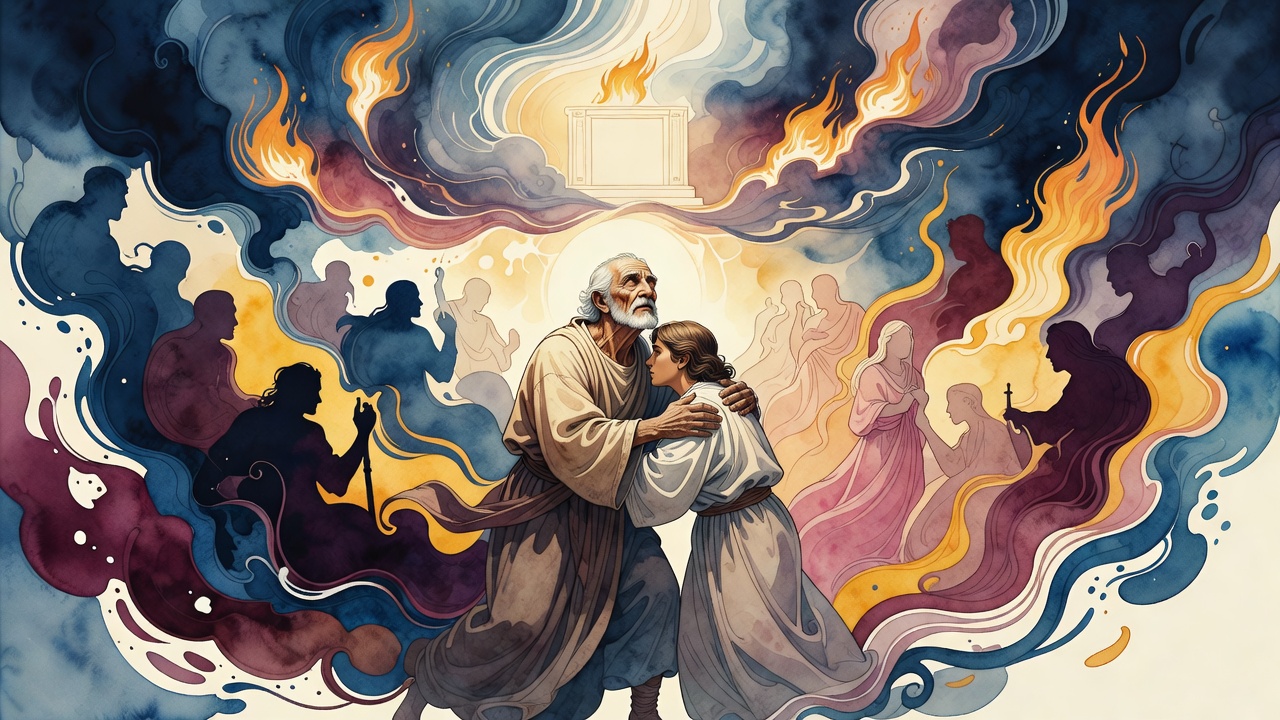
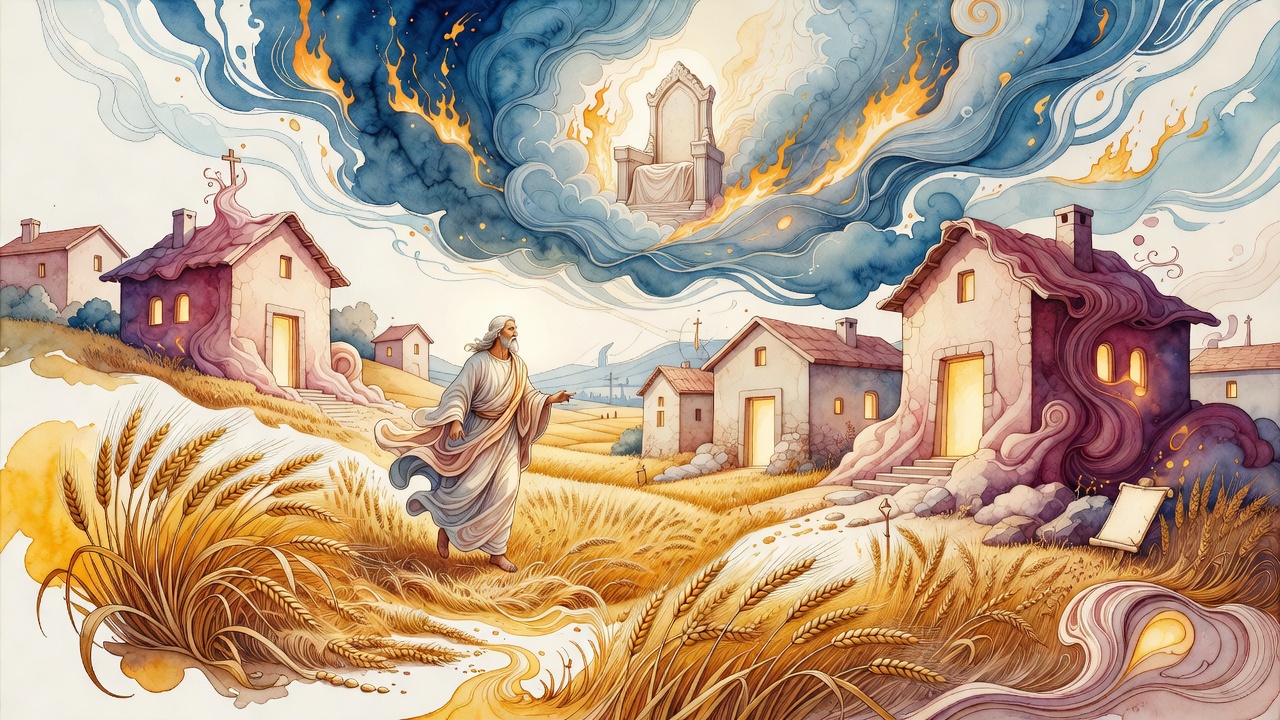
Isaac put seed into the ground of Gerar and the year answered like a shouted yes. A hundredfold. The Philistine fields swelled as if the soil had been waiting for a righteous foot to name it and finally been heard.
Isaac Sowed and Gerar Multiplied a Hundredfold Click for full size

The neighbors watched the increase and felt the old envy rise. Blessing is hard to hide when the stalks stand taller than the fence. Isaac did not bargain with the dirt. He sowed, and the Lord blessed him in that same year (Genesis 26:12).

Wherever They Walked, Rooms Got Full

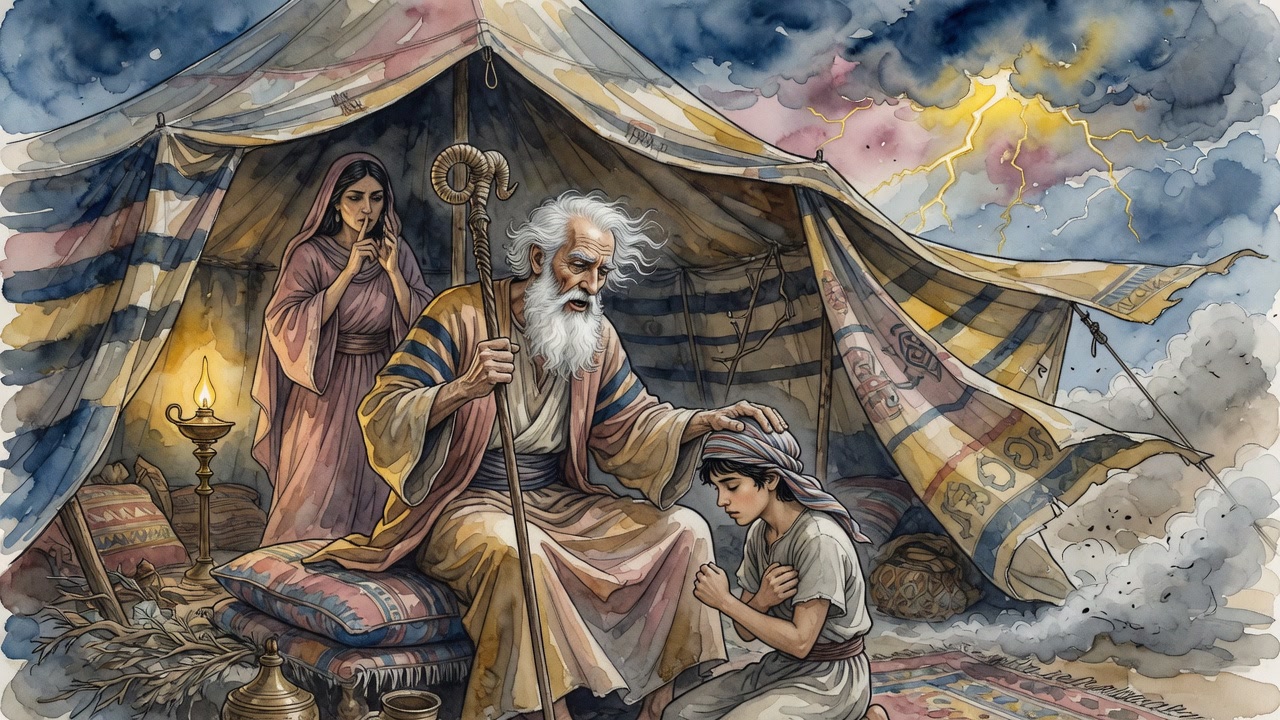
The pattern did not begin with Gerar. Wherever the fathers went, prosperity leaned toward them and then spilled onto whoever stood nearby. Jacob served Laban, and Laban himself confessed the math. "I have found through divination that the Lord has blessed me for your sake" (Genesis 30:27). A grasping uncle admitted that his ledgers fattened because a righteous nephew slept under his roof.

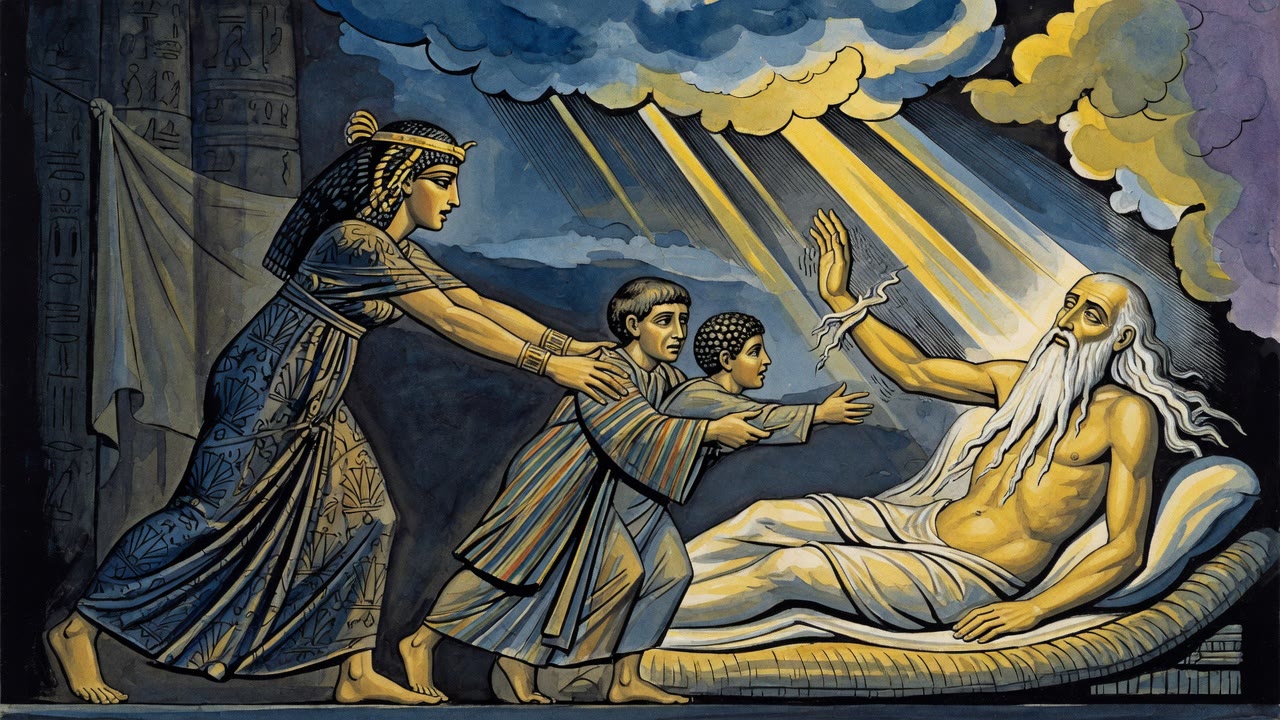
Joseph in Potiphar's house turned an Egyptian estate into a map of increase. The Lord blessed the house of the Egyptian for Joseph's sake (Genesis 39:5). Chains did not cancel the overflow. When Jacob stood before Pharaoh and blessed him, years of famine were held back while Jacob lived. When Jacob died, the famine's teeth returned, and Joseph had to feed his brothers again under a harsher sky. The scene held long enough for the detail to lodge, and then the next pressure arrived without waiting for applause.

Peace as the Vessel That Holds It

Blessing without a vessel leaks. The midrash calls peace, shalom, the hidden place where gifts can be kept. A house can receive increase and still shatter if quarrel sits at the table every night. Peace is not a soft word. It is the bowl. Without it, grain pours out as fast as it pours in.

The blessing stretches past one man. "May God give you" reaches a father, a brother, a web of names. Aid arrives when it is needed, not as a blank treasury. Samson, blinded and bound, cried for strength and, in one reading, called up the blessing his father had placed on him (Judges 16:28). Dew of the heavens and fat of the land become manna, well water, offerings, grain, wine, Zion itself. A full barn is a theology you can touch. The scene held long enough for the detail to lodge, and then the next pressure arrived without waiting for applause.

No Gap Between the Holy and the Next Act

Rav taught that certain acts must press against each other with no delay. Redemption's blessing into the standing prayer. Hands on an offering into its slaughter. Washing into the bread-blessing, and the last washing into grace after meals. Holiness hates a drafty gap where forgetfulness can walk in and cool what was meant to stay hot.

Abaye added his own pairing. Nearness to a Torah scholar brings immediate blessing into the work of one's hands. His proof was Laban's confession and Joseph's Egyptian house. Presence spills. Immediately. Isaac's hundredfold was that spill in seed form. Jacob in Laban's tents was that spill in wool and flock. Joseph in Potiphar's books was that spill in ledgers. The scene held long enough for the detail to lodge, and then the next pressure arrived without waiting for applause.

What the Envious Neighbor Learns

Gerar tried to push Isaac away after the wells and the increase. Envy is a kind of worship of someone else's luck. The story answers with stubborn continuity. The same God who fattened Gerar for Isaac's sake could thin it when Isaac left. Blessing is not a local god you trap in a jar. It walks with the person.

Still the land remembers. A hundredfold year becomes a story told at other tables, a proof that righteousness is public weather. Isaac walked the rows and felt the stalks knock his wrists. Gerar had never been so loud with growth. Somewhere Laban was still counting. Somewhere Joseph was still managing keys. The chain of overflow held until the last father died and the famine remembered how to bite. The scene held long enough for the detail to lodge, and then the next pressure arrived without waiting for applause.


← All myths
From the tradition

Sources

3 sources

The texts behind this telling. Some cards carry a translation of the source; others are our own retelling of it, and each card says which. Every card links out to the original.

Sifrei Devarim 38:8Sifrei Devarim

Retold in our words. Read the original at the link below.Sifrei by Rabbi Shraga Silverstein · CC-BY

It's almost as if they're walking magnets for blessings. Well, Jewish tradition actually speaks to this phenomenon directly, suggesting that the presence of the righteous is a catalyst for divine favor.

The Sifrei Devarim, a collection of legal midrashim (rabbinic interpretive commentary) on the Book of Deuteronomy, highlights this very idea. It points out a recurring pattern in the lives of our ancestors: wherever they went, blessing followed. The idea that righteousness isn't just a personal virtue, but something that radiates outward, benefiting entire communities. When Israel (another name for Jacob) went to Gerar, what happened? (Genesis 26:12) tells us, "And Isaac sowed in that land, and found in the same year a hundredfold; and the L-rd blessed him." Blessing came to Gerar because of his presence.

What about Jacob's time with Lavan? Lavan himself recognized the blessing Jacob brought! As we read in (Genesis 30:27), Lavan says, "I have found through divination that the L-rd has blessed me for your sake." He saw the tangible benefits of having Jacob around.

Then there's Joseph in Potiphar's house. (Genesis 39:5) states explicitly, "and the L-rd blessed the house of the Egyptian for Joseph's sake." Even in a foreign land, under difficult circumstances, Joseph's righteousness brought blessing to those around him.

Perhaps the most striking example is Jacob's encounter with Pharaoh. The Sifrei Devarim explains that when Jacob blessed Pharaoh (Genesis 47:10), he did so by withholding years of famine from Egypt. That's a powerful image!

But what happened when Jacob died? According to R. Yossi, the famine returned. Joseph reassured his brothers (Genesis 50:21), "And now, do not fear, I (Joseph) will feed you and your little ones," echoing his earlier promise in (Genesis 45:11). R. Yossi argues that the "feeding" Joseph provided after Jacob's death was specifically related to the famine that had been held back during Jacob's life.

So, what does this all mean? It suggests a profound connection between righteousness and blessing, a dynamic where the presence of certain individuals can literally alter the course of events, bringing prosperity and protection to those around them. How can we embody those same qualities that made our ancestors such powerful forces for good? Maybe that's the real question we should be asking ourselves.

Full source
Bereshit Rabbah 66:3Bereshit Rabbah

Retold in our words. Read the original at the link below.The Sefaria Midrash Rabbah, 2022 · CC-BY

Bereshit Rabbah turns to The Blessing That Keeps on Giving Again and Again.

The text suggests blessings, yes, but also "a hidden place." A place, as the commentary puts it, "where you can retain the blessings." And what is that vessel, that container for divine gifts? Peace, shalom. As the Mishna Okatzin (3:12) tells us, peace is the vessel that holds blessing. It's not enough to receive; we need the inner peace to truly hold onto the good things.

The blessings extend beyond the individual. "May [God] give you" – yours, and "may [God] give you" – your father’s. "May [God] give you" – yours, and "may [God] give you" – your brother’s. It's a web of interconnectedness, a reminder that blessings ripple outwards, affecting generations and communities.

Rabbi Aḥa adds another dimension: "May [God] give, 'and may God give you' divine aid." But there’s a condition, a timing involved. When will this aid arrive? "When you need it." It's not a blank check, but a promise of support in times of genuine struggle.

This reminds me of Samson Remember his plea in (Judges 16:28)? "My Lord God, please remember me and please strengthen me." Rabbi Aḥa suggests that Samson was invoking the blessing he received from his father, asking God to remember that promise of divine aid in his moment of greatest need.

But the blessings don't stop there. The passage then unpacks the specific gifts promised "from the dew of the heavens" and "from the fat of the land."

"From the dew of the heavens" is linked to the manna, the miraculous food provided in the desert (Exodus 16:4). "And from the fat of the land" is connected to the miraculous well that provided the Israelites with exceptionally fat fish. It also represents the offerings brought in the Temple (Psalms 66:15).

"And an abundance of grain" is associated with young men, while "wine" represents the maidens, referencing (Zechariah 9:17). It's a beautiful image of prosperity and vitality.

But, as is so often the case in Jewish thought, there's another layer. "From the dew of the heavens" can also represent Zion, the dwelling place of God (Psalms 133:3). "And from the fat of the land" can symbolize the offerings brought in the Temple. "Grain" becomes the first fruits, and "wine" the libations poured out in sacred service.

And then…yet another layer! Alternatively, the text says, “from the dew of the heavens” – this is the Bible; “and from the fat of the land” – this is Mishna, the oral law; “grain” – this is Talmud; “wine” – this is aggada, the stories and parables that enrich our understanding. It becomes a metaphor for the whole of Jewish learning.

So, what do we take away from all this? It’s more than just a blessing. It's a multi-layered promise of provision, peace, and divine aid, extending from the individual to the community, from the physical to the spiritual. And that, perhaps, is the greatest blessing of all.

Full source
Yalkut Shimoni on Torah 130:6Yalkut Shimoni on Torah

Translation of the source text.Torat Emet (Yalkut Shimoni) · CC-BY-NC

(Genesis 30:27) Rav Huna said in the name of Rav: There are three pairings that must follow immediately one upon the other. Immediately after redemption, prayer. Immediately after laying hands on the offering, the slaughtering. Immediately after washing the hands, the blessing. Immediately after the final washing of the hands, the grace after meals. Abaye said: Also, immediately upon being near a Torah scholar comes blessing in the work of one's hands, as it is said, "I have observed by divination that the LORD has blessed me [for your sake]" and so forth. If you prefer, derive it from here: "and the LORD blessed the Egyptian's house for Joseph's sake" (Genesis 39:5).

Full source