Parshat Toldot5 min read

Isaac's Face Silenced the Gossip About Abraham

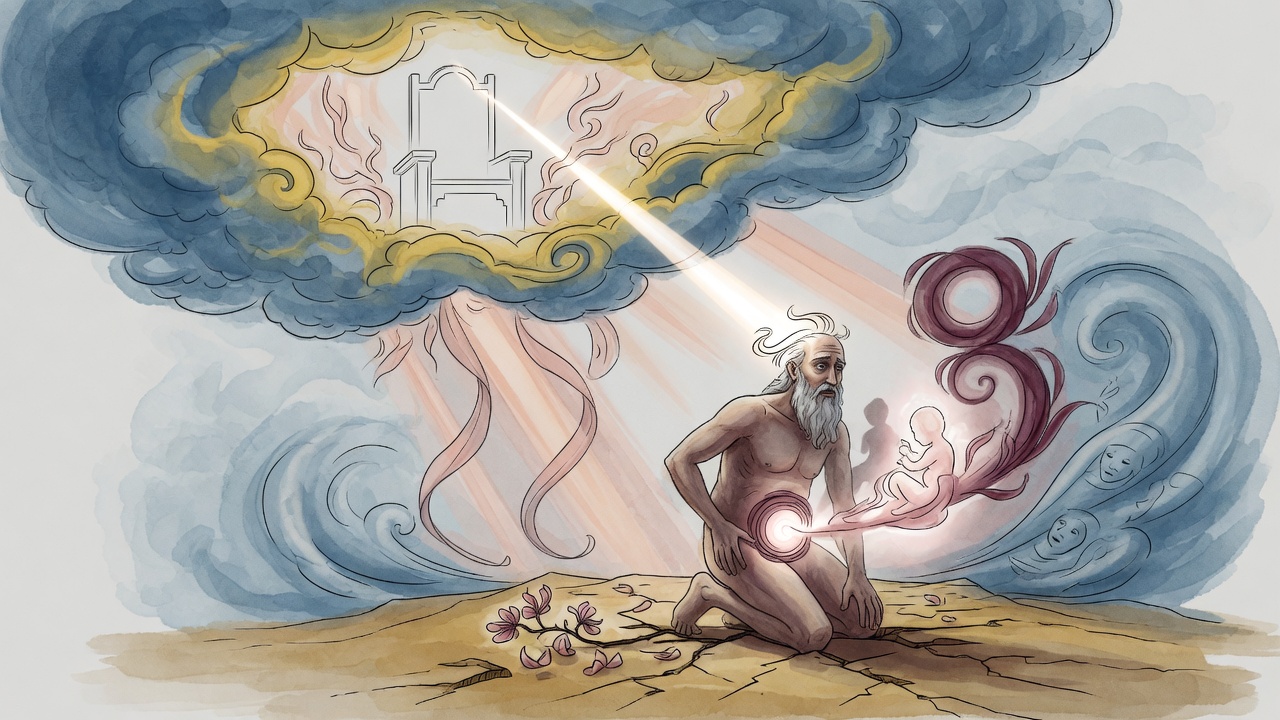
Villagers whispered that Abraham could not be the true father until Isaac's face grew into his mirror and the market fell quiet.

Curated by Arthur · Told by Maggid ·
Table of Contents
  1. Whispers Along the Hebron Road
  2. Where the Boy Was Formed
  3. Forty Years Before a Wife
  4. The Mirror and the School
  5. What the Neighbors Finally Admitted
  6. Study as Inheritance
Isaac's Face Silenced the Gossip About Abraham Click for full size

Whispers Along the Hebron Road

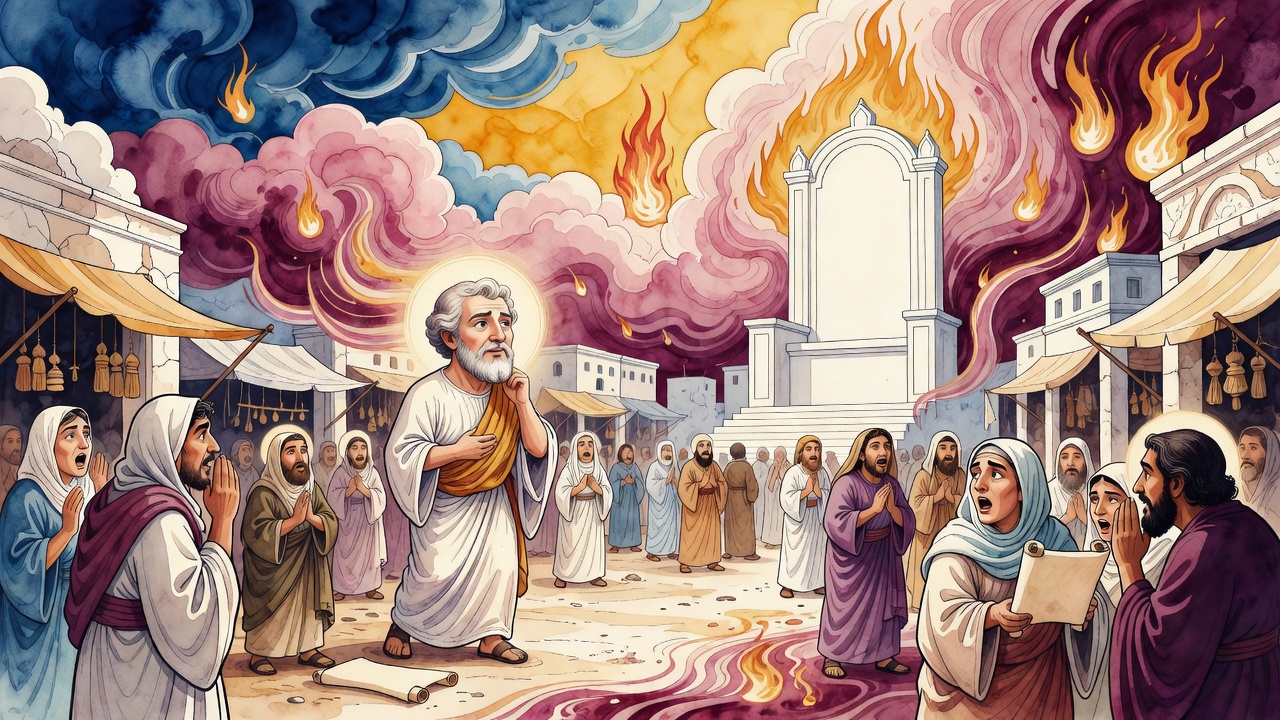
The market loved a cruel story. Sarah had been barren for decades. Abraham was a hundred years old when the boy was born. So the sons of men put their heads together over water jars and said what small minds say when a miracle embarrasses them. The child must belong to some other bed. Perhaps the Philistine king. Perhaps a servant. Anything but the plain claim that Heaven had opened a dead womb.

Then the boy grew, and his face began to answer. These are the generations of Isaac bar Abraham. And because the appearance of Isaac resembled the appearance of Abraham, the sons of men said, In truth Abraham begat Isaac. No sermon. No trial. Only bone and eye and jawline doing the work of a public verdict. Gossip died the way weeds die when the sun finally stands over them.

Where the Boy Was Formed

Isaac did not spend every season at the family wells. When the Torah later finds him coming from Beer-lahai-roi, the Aramaic fills the road with a classroom. He was coming from the school of the Rabba Shem, by the way of the fountain where the Living and Eternal One had been revealed, the One who sees and is not seen. While camels ran north for a bride, Isaac sat before Shem the Great, son of Noah, learning how a man carries the knowledge of God through years that look empty to outsiders.

The face that silenced the market was not only flesh copying flesh. It was a face trained to look like belonging: belonging to Abraham's house, belonging to Shem's discipline, belonging to a well where the unseen One is known by being seen through.

Forty Years Before a Wife

Isaac was the son of forty years when he took Rebekah, daughter of Bethuel the Aramean of Padan Aram, sister of Laban, for a wife. Forty is the Torah's long patience. It is the count before a phase turns. Moses will later carry forty in Egypt and forty in Midian. Scouts will walk forty days. A people will walk forty years. Isaac's forty sit almost invisible between the binding and the marriage, a quiet stretch in which a man becomes ready without making noise.

He did not rush the gossip away with speeches. He outgrew it. He studied. He waited until the right woman came from the north with a jar on her shoulder and a will strong enough to match a household that had already survived fire and famine and foreign kings.

The Mirror and the School

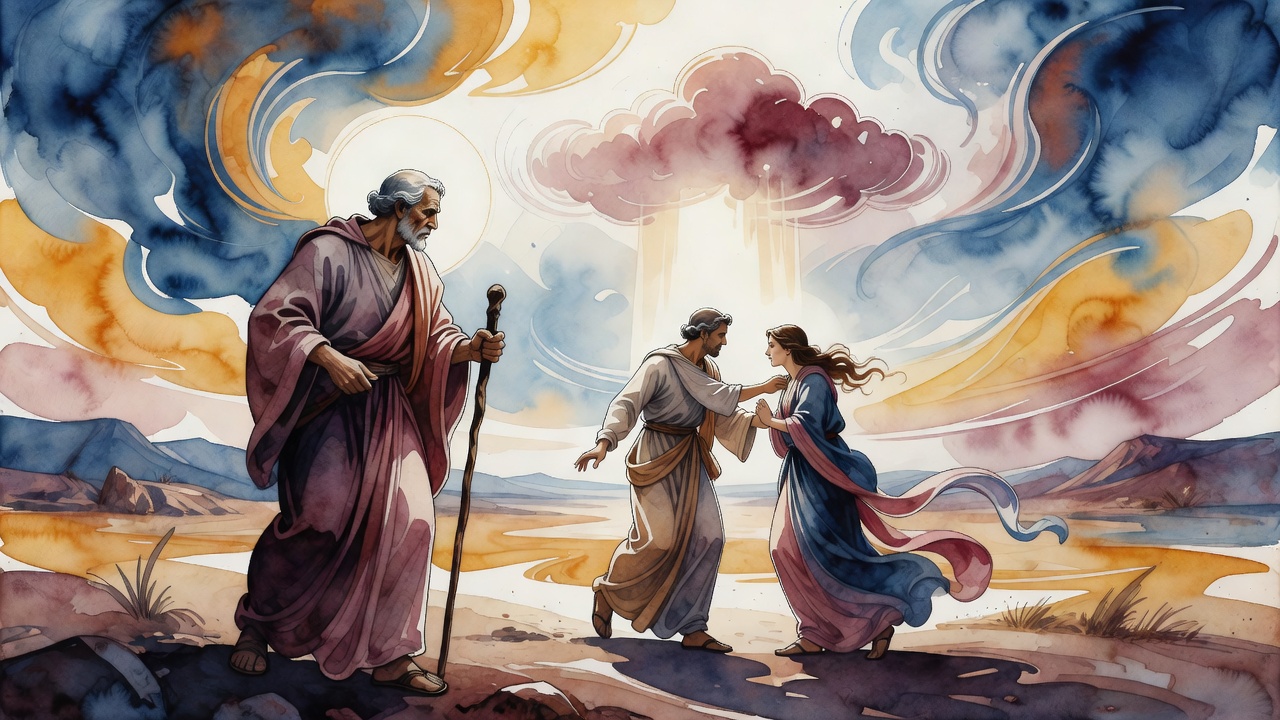
When Rebekah first saw him in the field, she saw a man whose face could have been carved from Abraham's evening profile. The villages that had once smirked now had to swallow their own words. The school of Shem had sent back not a rumor but a person. Abraham's generations were written on skin where anyone could read them.

Isaac brought her into the tent of his mother Sarah, and comfort entered a house that still remembered silence after death. The same God who shapes faces also shapes waiting. The boy who had been called a fraud became the man whose likeness made fraud impossible.

What the Neighbors Finally Admitted

In truth Abraham begat Isaac. That sentence, once forced from hostile mouths, became the hinge of every later blessing. Esau and Jacob would fight inside Rebekah. Nations would argue over which son carried the promise. None of those fights could reopen the old Hebron whisper that Isaac was not Abraham's. Heaven had closed that file with a face.

Isaac walked the southern land with the memory of Shem's house behind him and the features of his father before every stranger. Genealogy had become visible. The covenant no longer needed to shout its first proof. It only needed to stand in the light and let people look.

Study as Inheritance

Shem's house did not polish faces for markets. It polished memory for floods and towers and the long patience of the righteous. Isaac sat there as a son of promise who still needed to become a man of practice. Beer-lahai-roi marked the road, the fountain of the Living One who sees and is not seen. A student who walks home from such a place carries more than scrolls. He carries a way of looking that refuses cheap explanations.

That is why the gossip died when his face matured into Abraham's shape. The market had wanted a scandal because scandals are easier than miracles. A hundred-year-old father and a once-barren mother make theology too concrete for mockers. So they invented a second father until the boy's bones voted otherwise. Heaven answered not with a thunderclap but with resemblance you could not argue off a cheekbone.

Forty years later, when Rebekah rode in from Padan Aram, she married a man whose features and formation already told a single story. Abraham begat Isaac. Shem taught Isaac. Isaac would father twins who tore a womb with rivalry. The first proof, though, remained simple enough for enemies to say aloud against their will: the son looked like the father, and the generations held.


← All myths
From the tradition

Sources

3 sources

The texts behind this telling. Some cards carry a translation of the source; others are our own retelling of it, and each card says which. Every card links out to the original.

Targum Pseudo-Jonathan on Genesis 25:19Targum Pseudo-Jonathan on Genesis

Retold in our words. Read the original at the link below.The Targum of Jonathan ben Uzziel, trans. J. W. Etheridge, London, 1862 · Public Domain

This is one of the Targum's most humane glosses, tucked into a genealogy verse no one usually stops for. Targum Pseudo-Jonathan on (Genesis 25:19) says: "These are the generations of Isaac bar Abraham. And because the appearance of Isaac resembled the appearance of Abraham, the sons of men said, In truth Abraham begat Isaac."

Stop and imagine the scene. Sarah had been barren for decades. Abraham was a hundred years old when Isaac was born. The gossip in the villages around Hebron was predictable and mean. Isaac, the whisperers said, must really be the son of Abimelech or someone else, some hidden father, some secret arrangement.

So God, in the Targum's reading, did a small miracle in the boy's face. Isaac grew up looking exactly like his father. Same eyes, same brow, same bearing. When people saw the two of them walking together, the rumor died in their mouths. "In truth Abraham begat Isaac", the resemblance was proof.

The tradition from Bava Metzia 87a makes this explicit. Before Isaac, children did not always look strikingly like their fathers. When Isaac was born, God stamped him with Abraham's likeness specifically to silence the slanderers.

The Maggid's lesson is quiet and kind. God cares about the reputation of the righteous. Not vainly, truly. Abraham and Sarah had endured twenty-five years of shame as they waited for the promised child. When the child finally came, God made sure no one could rob the victory with a sneer.

Sometimes the miracle is a healing. Sometimes the miracle is a family resemblance that ends a rumor. Both count.

Full source
Targum Pseudo-Jonathan on Genesis 24:62Targum Pseudo-Jonathan on Genesis

Retold in our words. Read the original at the link below.The Targum of Jonathan ben Uzziel, trans. J. W. Etheridge, London, 1862 · Public Domain

Where was Isaac during all this? The Torah says he was "coming from Beer-lahai-roi." Targum Pseudo-Jonathan on (Genesis 24:62) tells us something far more specific. He was coming from the beit midrash, the house of study, of Shem Rabba, Shem the Great, son of Noah.

Pause on that image. While Eliezer was riding north with ten camels, Isaac was sitting in a classroom. And not just any classroom. Shem was the teacher the Rabbis imagined as the first yeshiva head of the covenantal lineage, the righteous son of Noah who carried the knowledge of God forward through the generations before Abraham.

The Targum names the specific well where Isaac had been formed: the fountain "where had been revealed to him the Living and Eternal One, who seeth and is not seen." This is Beer-lahai-roi, the well where Hagar had also met the angel (Genesis 16:13-14). Isaac has been living near the place where the God who sees meets those who cannot see Him back.

The symmetry is gorgeous. The father's servant brings a bride up the road from the north. The son comes up the road from the south, from the well of God's presence. They will meet in the middle, and a new generation will begin at the exact point where study and providence collide.

The Maggid's lesson is simple. If you want a holy marriage, spend the waiting season in the house of study. Isaac was not idle. He was not anxious. He was learning Torah at Shem's feet, while somewhere to the north, the road was leaping toward him.

Full source
Targum Pseudo-Jonathan on Genesis 25:20Targum Pseudo-Jonathan on Genesis

Retold in our words. Read the original at the link below.The Targum of Jonathan ben Uzziel, trans. J. W. Etheridge, London, 1862 · Public Domain

Here is a verse that looks like an accounting entry until you notice what the numbers are doing. Targum Pseudo-Jonathan on (Genesis 25:20) records that Isaac was forty years old when he took Rebekah, the daughter of Bethuel the Aramean, of Padan Aram, the sister of Laban the Aramean, as his wife.

Forty. The Torah's number of patient waiting. Moses was forty in Egypt before fleeing. The scouts searched the land for forty days. The wilderness wandering lasted forty years. Forty is the Torah's signature for the period before a new phase begins.

Isaac's forty years of waiting are almost invisible in the narrative. We skip from the binding on Moriah (Genesis 22) to Sarah's funeral (Genesis 23) to the bride-hunt (Genesis 24) and suddenly he is forty, standing under a wedding canopy. The Torah compresses his waiting into four chapters. The Targum wants us to feel the weight of that compression. Forty is a lot of years to live in your father's house after you have already been laid on an altar.

Notice how carefully the Targum preserves Rebekah's pedigree. The daughter of Bethuel the Aramean. The sister of Laban the Aramean. The word Aramean is repeated. The Haggadah we read on Passover will later begin, "An Aramean sought to destroy my father" (Deuteronomy 26:5), referring to Laban, this very brother. The Targum is setting up, without commentary, the network of relationships that will shape the rest of Genesis.

A marriage is not only a union of two people. It is an entanglement of two lineages. Isaac, at forty, was marrying into the same family his father once fled. The covenant was not made in a vacuum. It was made through a thicket of cousins.

Full source