3 min read

Israel Sang at the Sea Then Quarreled for Water

At the shore they trusted and the Spirit broke into song, then in the desert they demanded proof that God was still among them.

Curated by Arthur · Told by Maggid ·
Table of Contents
  1. Faith as a Ladder
  2. Fear Not, and Keep Fear
  3. Merivah, the Quarrel
  4. From Shore to Rock

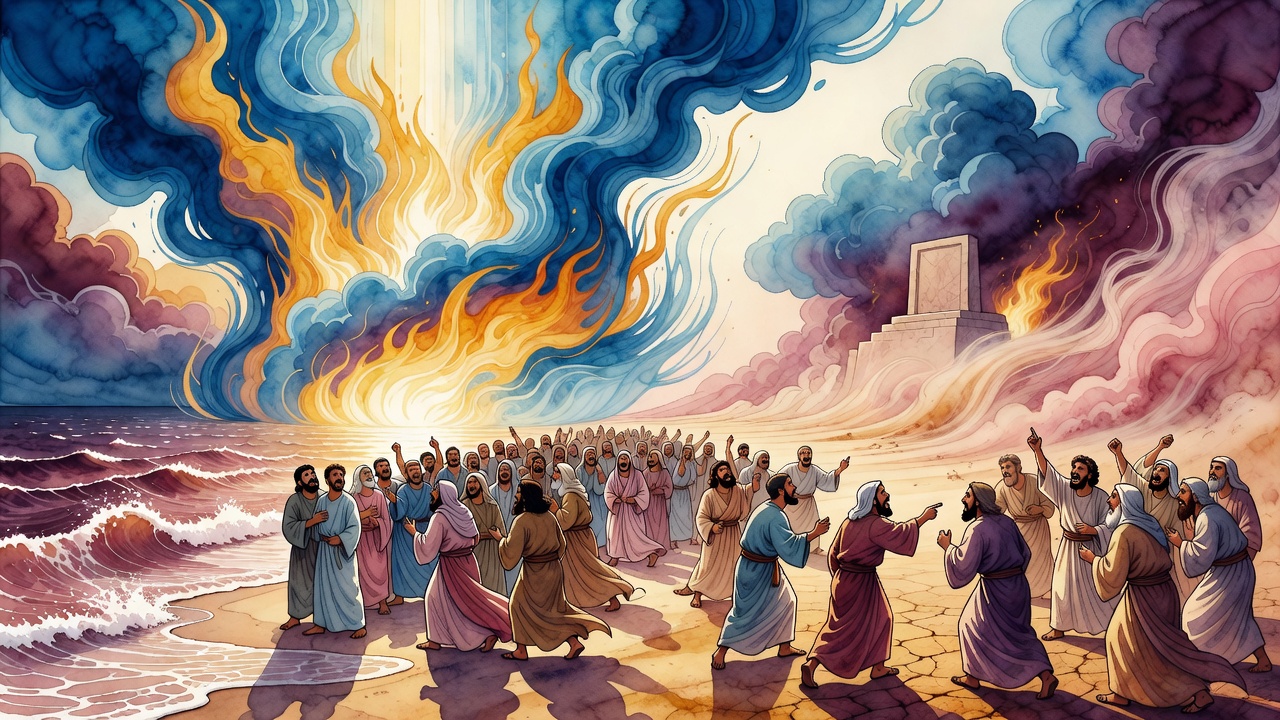
Israel stood among corpses on the shore and chose song over silence.
Israel Sang at the Sea Then Quarreled for Water Click for full size

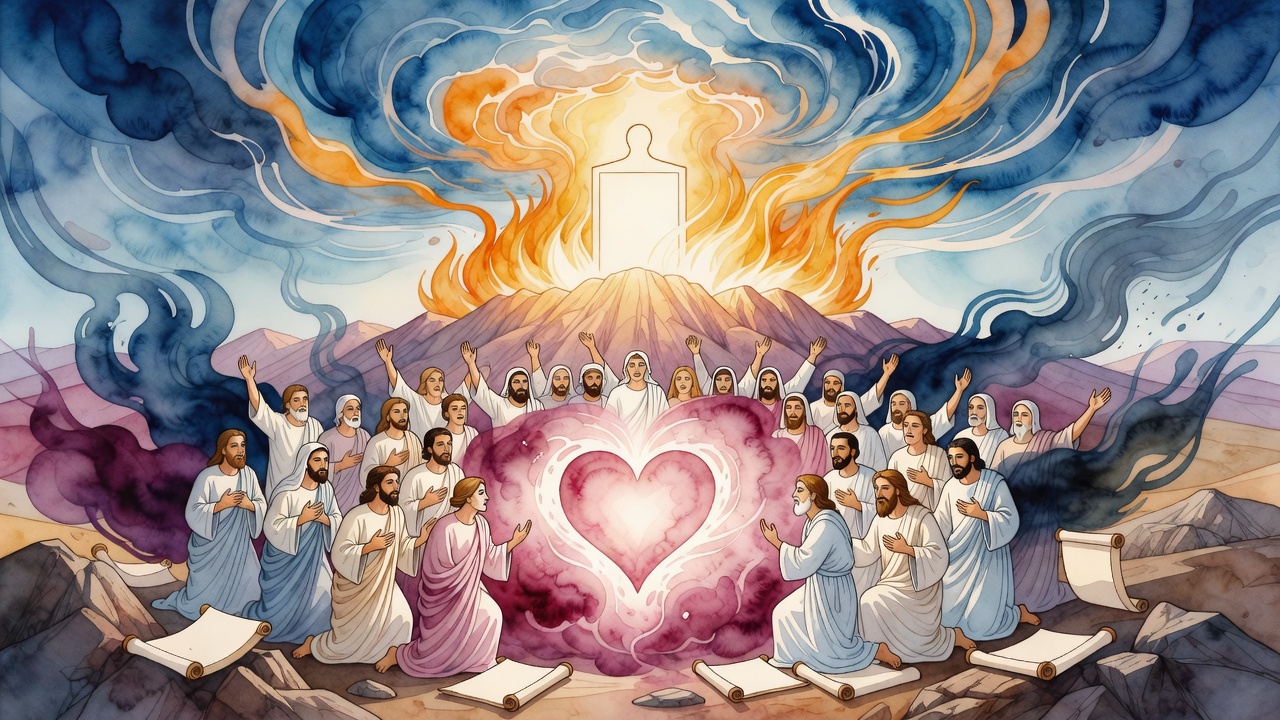
They had trusted, and the Holy Spirit settled on them and broke open into music at the sea (Exodus 15:1).

The midrash also places a bitter image there: each Israelite with a dog at a drowned Egyptian's neck, answering centuries of cruelty before gratitude rises into praise.

Faith as a Ladder

Israel stood among corpses on the shore and chose song over silence. They had trusted, and the Holy Spirit settled on them and broke open into music at the sea (Exodus 15:1). The midrash also places a bitter image there: each Israelite with a dog at a drowned Egyptian's neck, answering centuries of cruelty before gratitude rises into praise. Rabbi Nehemiah turns the word believed into a ladder. One commandment taken in faith makes a vessel for Presence.

The sources fix the moment with a name, a number, a place, or a law that will not bend for convenience or for fear.

Fear Not, and Keep Fear

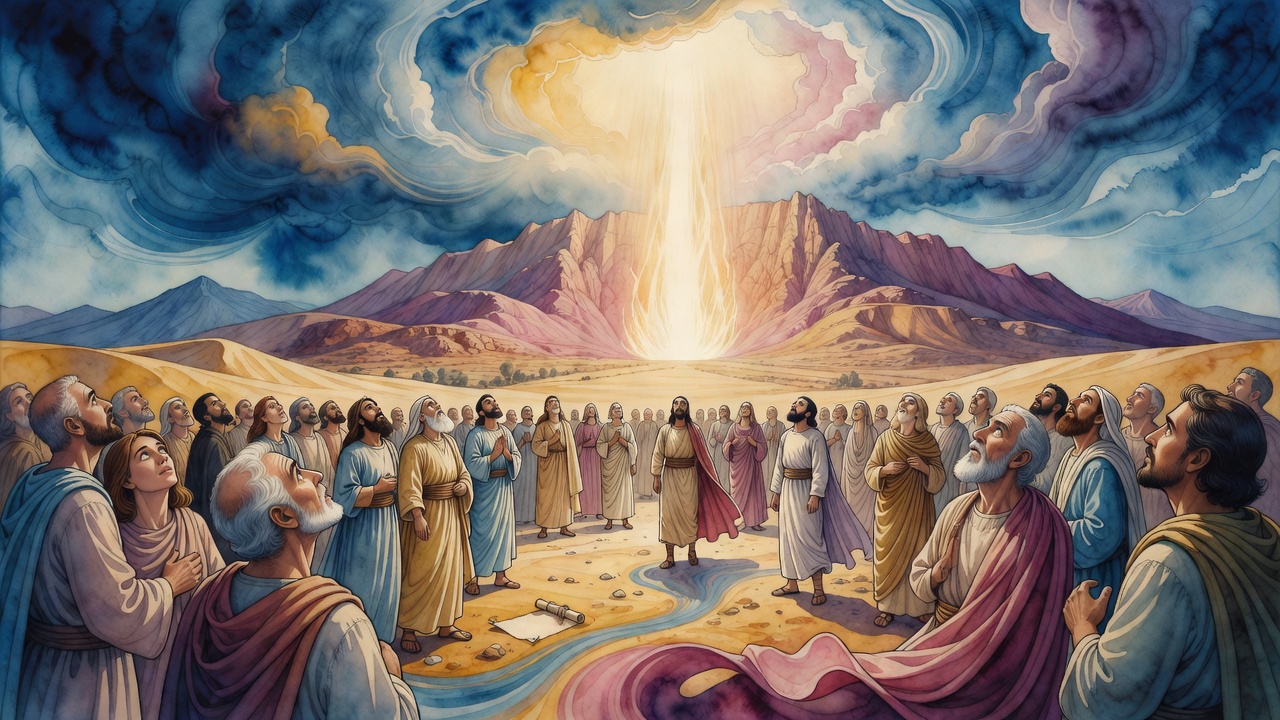
Abraham inherited worlds on the line and he believed in the LORD (Genesis 15:6). Later, after thunder and a twelve-mile retreat at Sinai, the people beg Moses to speak instead of God. Moses answers: fear not, for the glory is revealed to try you, whether His fear is before your faces that you may not sin (Exodus 20:17 as the Targum frames it). Pachad is the crush of terror. Yirah is awe that prevents sin without forbidding approach.

Merivah, the Quarrel

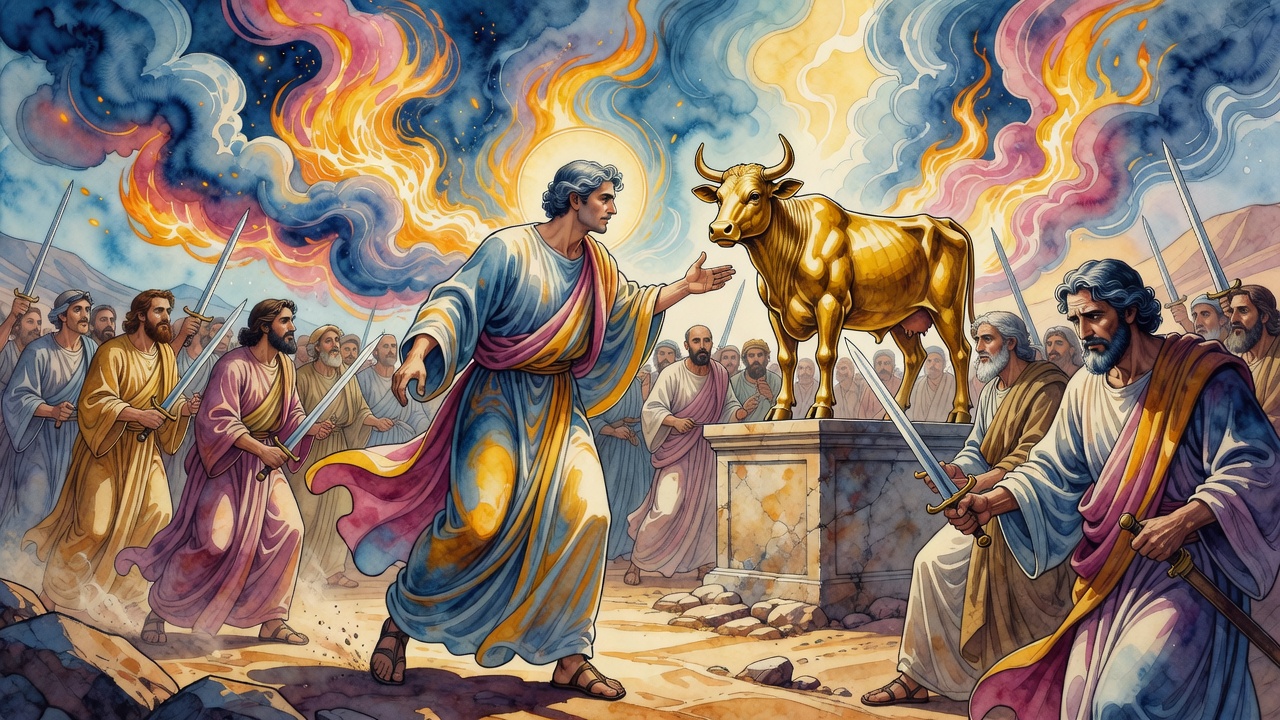
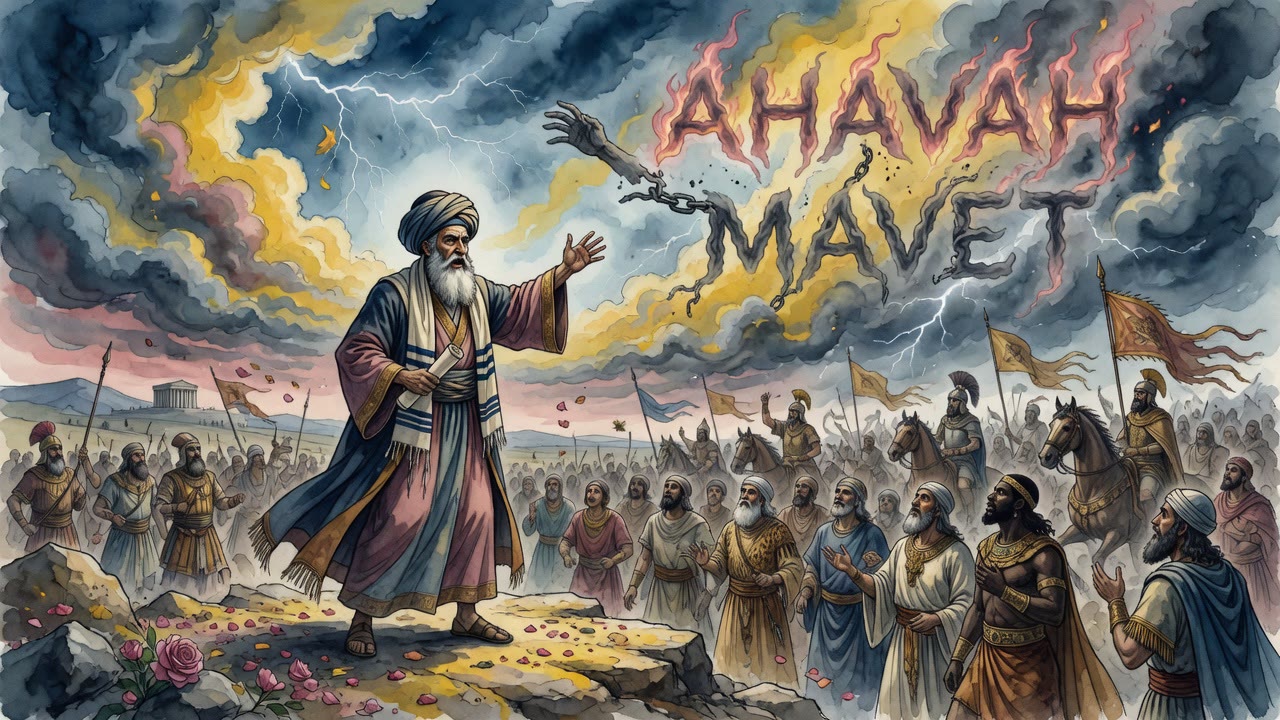
At Merivah the name means quarrel. Rabbi Yehoshua says they tested sovereignty: if He is Master of all acts, we will acknowledge Him. Rabbi Eliezer says they made a bargain: feed us and we serve; leave us thirsty and we will not. Massah and Merivah name both rebellions (Exodus 17:7). Song is real.

From Shore to Rock

Quarrel is real. The glory that tests is real. The same mouths that sang also demanded proof.


← All myths
From the tradition

Sources

3 sources

The texts behind this telling. Some cards carry a translation of the source; others are our own retelling of it, and each card says which. Every card links out to the original.

Yalkut Shimoni on Torah 240:2Yalkut Shimoni on Torah

Translation of the source text.Torat Emet (Yalkut Shimoni) · CC-BY-NC

"And they believed in the LORD" - as the reward for the faith with which they believed, the Holy Spirit rested upon them and they sang the song: "Then Moses and the children of Israel sang" (Exodus 15:1).

Rabbi Nehemiah says: From where do you say that whoever takes upon himself a single commandment in faith is worthy that the Holy Spirit rest upon him? For so we find with our fathers, that as a reward for the faith with which they believed, and so forth. You find that our father Abraham inherited this world and the world to come only by the merit of the faith with which he believed, as it is said, "And he believed in the LORD" (Genesis 15:6). And so you find that our fathers were redeemed from Egypt only by the merit of the faith with which they believed, as it is said, "and the people believed" (Exodus 4:31). And so it says, "The LORD preserves the faithful" (Psalms 31:24).

"And Israel saw the Egyptians dead." What were they doing? Each and every one of Israel would take his dog and go and set his foot on the neck of an Egyptian, and he would say to his dog, "Eat from this hand that enslaved me, eat from these arms that had no pity on me." Know that it is so, for so it is written, "that your foot may be dipped in blood, that the tongue of your dogs may have its portion from the enemies" (Psalms 68:24).

Israel said: You have done all these miracles for us; we too will not be ingrates. And what is there for us to say? Songs and praises, and so forth - "Then Moses sang." They recall the faith of the fathers: "and Aaron and Hur held up his hands" (Exodus 17:12); "This is the gate of the LORD; the righteous shall enter it" (Psalms 118:20). Of the masters of faith, what does it say? "Open the gates, that a righteous nation that keeps faith may enter" (Isaiah 26:2). Through this gate all the masters of faith enter. And so it says, "It is good to give thanks to the LORD" (Psalms 92:2). What caused them to come to this joy? Only the reward of the faith with which their fathers believed in this world, which is all nights; therefore it says, "to declare Your kindness in the morning." And so Jehoshaphat says to the people, "Believe in the LORD your God, and you shall be established; believe His prophets, and you shall prosper" (2 Chronicles 20:20). And it is written, "Are not Your eyes upon faithfulness?" (Jeremiah 5:3); "and the righteous shall live by his faith" (Habakkuk 2:4); "they are new every morning; great is Your faithfulness" (Lamentations 3:23). And so you find that the exiles will be gathered in only as the reward of faith, as it is said, "With Me from Lebanon, my bride" (Song of Songs 4:8); "And I will betroth you to Me forever, and I will betroth you to Me in faithfulness" (Hosea 2:21-22). Behold, how great is the faith before the One who spoke and the world came into being, that as the reward of the faith with which they believed, the Holy Spirit rested upon them and they sang the song, as it is said, "and they believed in the LORD and in Moses His servant; then Moses sang." And so it says, "Then they believed His words; they sang His praise" (Psalms 106:12).

Full source
Targum Pseudo-Jonathan on Exodus 20:17Targum Pseudo-Jonathan on Exodus

Retold in our words. Read the original at the link below.The Targum of Jonathan ben Uzziel, trans. J. W. Etheridge, London, 1862 · Public Domain

After the thunder and the twelve-mile retreat, the people beg Moses to speak to them instead of God. And Moses answers with a line that still echoes. "Fear not; for the glory of the Lord is revealed to try you, whether His fear is before your faces, that ye may not sin" (Exodus 20:17, Targum Pseudo-Jonathan).

The Targum Pseudo-Jonathan sharpens a paradox that the Hebrew already carries. Moses says fear not. And then gives the reason: so that you may have His fear before your faces. How can fear not be fear?

The distinction is the entire Jewish theology of yirah. There are two kinds of fear. One is pachad, terror, the animal flinching of a creature expecting to be crushed. The other is yirah, awe, the trembling of a soul that knows it stands in the presence of the Infinite. Moses tells Israel: do not feel pachad. Feel yirah. The difference is everything.

Notice what the Targum says the revelation was for: to try you. The thunder, the fire, the twelve-mile distance, all of it was a test. Not a test of courage. A test of whether Israel could absorb the experience and come away changed, carrying a fear that prevents future sin instead of a terror that prevents future encounter.

The takeaway: the right kind of fear is the beginning of freedom, because it keeps you from doing the things that would truly be worth being afraid of.

Full source
Mekhilta Tractate Vayassa 7:19Mekhilta DeRabbi Yishmael

Retold in our words. Read the original at the link below.Mechilta, translated by Rabbi Shraga Silverstein · CC-BY

The name "Merivah" comes from the Hebrew root "riv," meaning quarrel or dispute. But what exactly was Israel disputing? The Mekhilta presents two interpretations, and both are audacious.

Rabbi Yehoshua says Israel was testing God's sovereignty. They played on the word "riv" and its similarity to "ribbon," meaning master or lord. Israel declared: "If He is truly the master of all acts, as He claims to be our Master, we will acknowledge it. And if not, we will not." They were demanding proof of God's universal authority before they would submit to His rule.

Rabbi Eliezer offers a blunter version. Israel said: "If He satisfies our needs, we will serve Him. If not, we will not serve Him." No philosophical subtlety here, just a transactional ultimatum. Feed us and we worship You. Let us go thirsty and the deal is off.

Both readings explain the full verse: "Because of the quarrel of the children of Israel, and because of their testing the Lord, saying: Is the Lord in our midst or not?" (Exodus 17:7). The double name. Massah (testing) and Merivah (quarreling), captures both dimensions of their rebellion. They quarreled about whether God was truly sovereign, and they tested whether He would meet their conditions. The Mekhilta lays bare the raw, uncomfortable honesty of Israel's faith in the wilderness, a faith that was always one unanswered prayer away from collapse.

Full source