6 min read

Israel Walked Into Exile to Finish the Repair That Heaven Began

A people bent under foreign dust keeps walking while Heaven waits for human hands to finish the repair that no decree alone will seal.

Curated by Arthur · Told by Maggid ·
Table of Contents
  1. Dust That Does Not Ask Permission
  2. Why Heaven Will Not Finish Alone
  3. From the Head of Light to the Last Dust
  4. How Lower Brokenness Touches the High
  5. The End That Waiting Hands Must Seal
Israel Walked Into Exile to Finish the Repair That Heaven Began Click for full size

Dust That Does Not Ask Permission

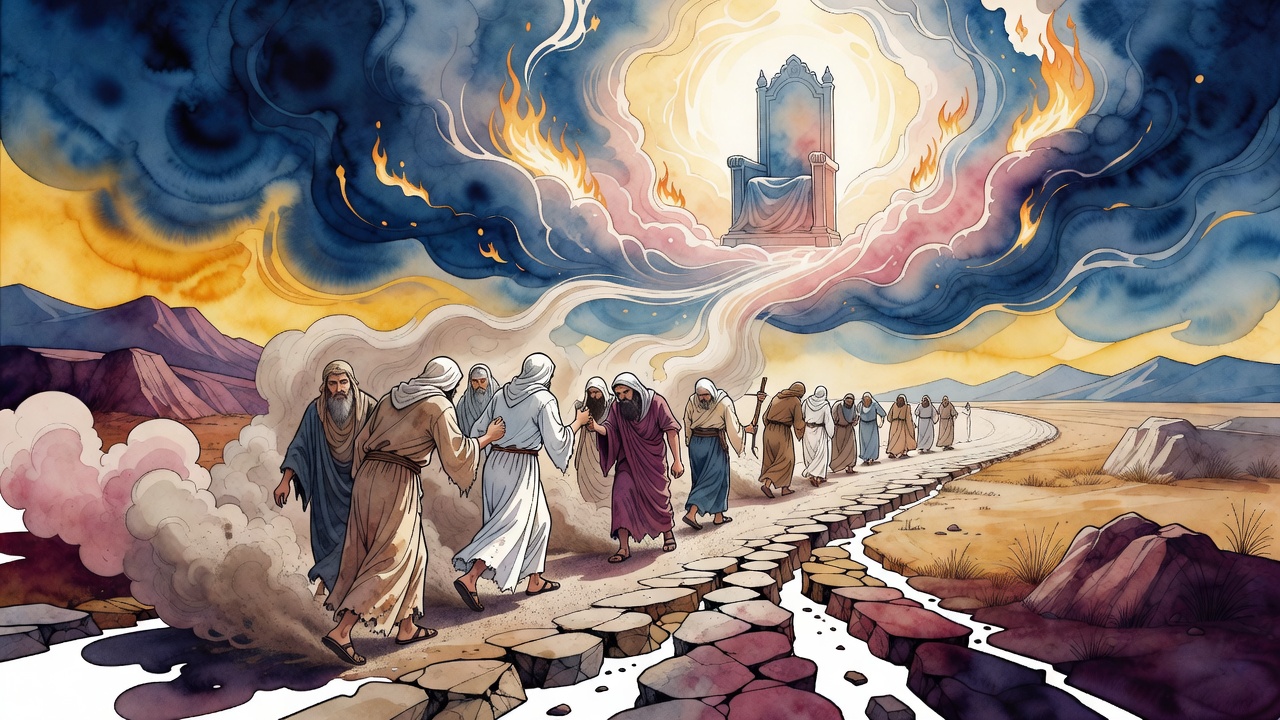
Israel bent under a foreign sun and kept walking. Sand filled the sandals until each step sounded like paper tearing. A child coughed against a mother's hip and the mother did not stop, because stopping on that road meant counting losses you could not afford to name out loud. Behind them a gate had burned. Ahead of them a language waited that would mispronounce their names on purpose.

They carried what a back could bear: a scroll case wrapped in cloth, a clay lamp blackened at the spout, a knife for bread, a memory of water that once came from a rock. Someone in the middle of the line asked the question that always rises when the body is cheaper than the promise. If the Holy One can begin a repair from above, why leave the last turn to feet that bleed?

No angel answered from the heat. The caravan only tightened its rope and moved. Exile has a way of making theology walk or die. A man shifted the strap on his shoulder and tasted grit. A woman counted the remaining cakes of dried fruit and did not share the number.

Why Heaven Will Not Finish Alone

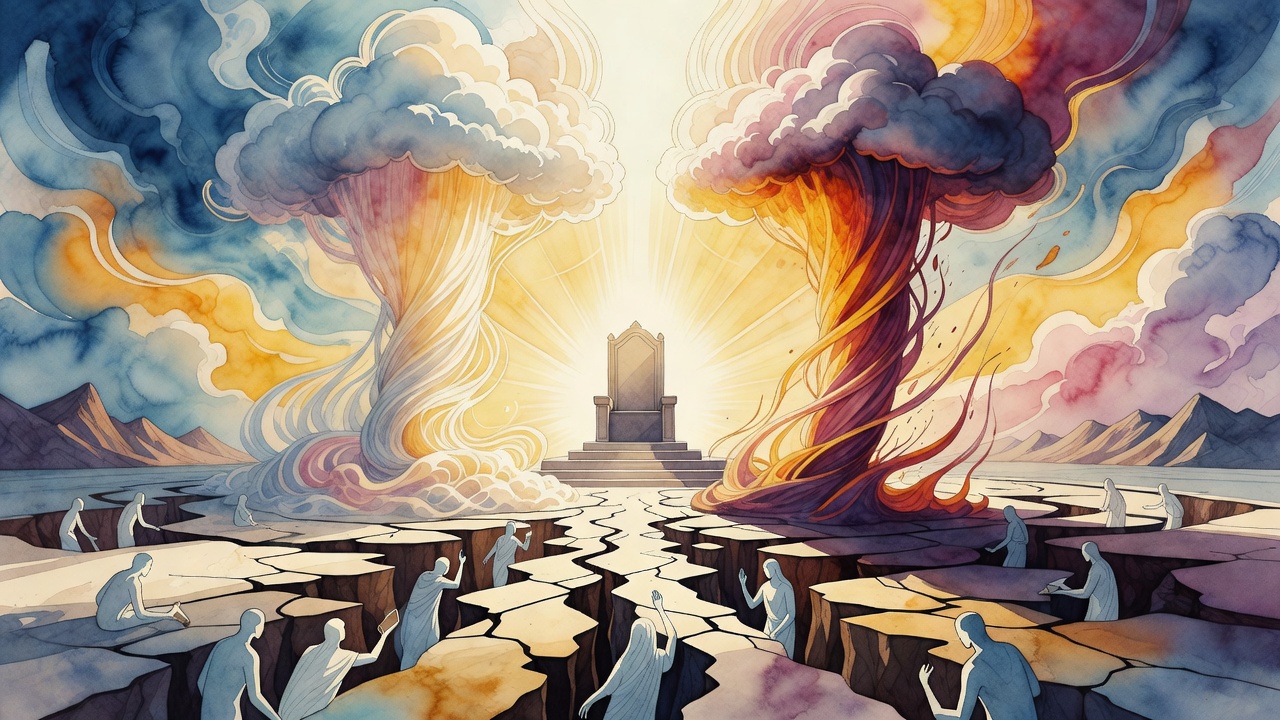
Above the dust the teaching runs harder than comfort. The goal is a complete tikkun, a repair so thorough that further breakage becomes impossible. A world without damage. A world where the crack does not reopen under the next soft lie. That end is not meant to drop as a decree onto sleeping heads. The Supreme Will starts the process. Human beings must complete it.

Why hand such work to the flawed? Because true repair comes from inside the cracked thing. A conscious choice to mend. A deliberate pressure of will against the easy fracture. When that work is done, the end arrives, not as erasure of existence, but as the sealing of a story that required free hands. Exile is not only punishment recorded in ledgers. It is the workshop where those hands learn the weight of a hammer.

Picture the alternative: a finished world lowered like a gift onto people who never chose the stitch. The garment would fit and mean nothing. The Supreme Will refuses that emptiness. So Israel walks, and every small refusal to become the husk that owns them is counted as labor toward the seal.

From the Head of Light to the Last Dust

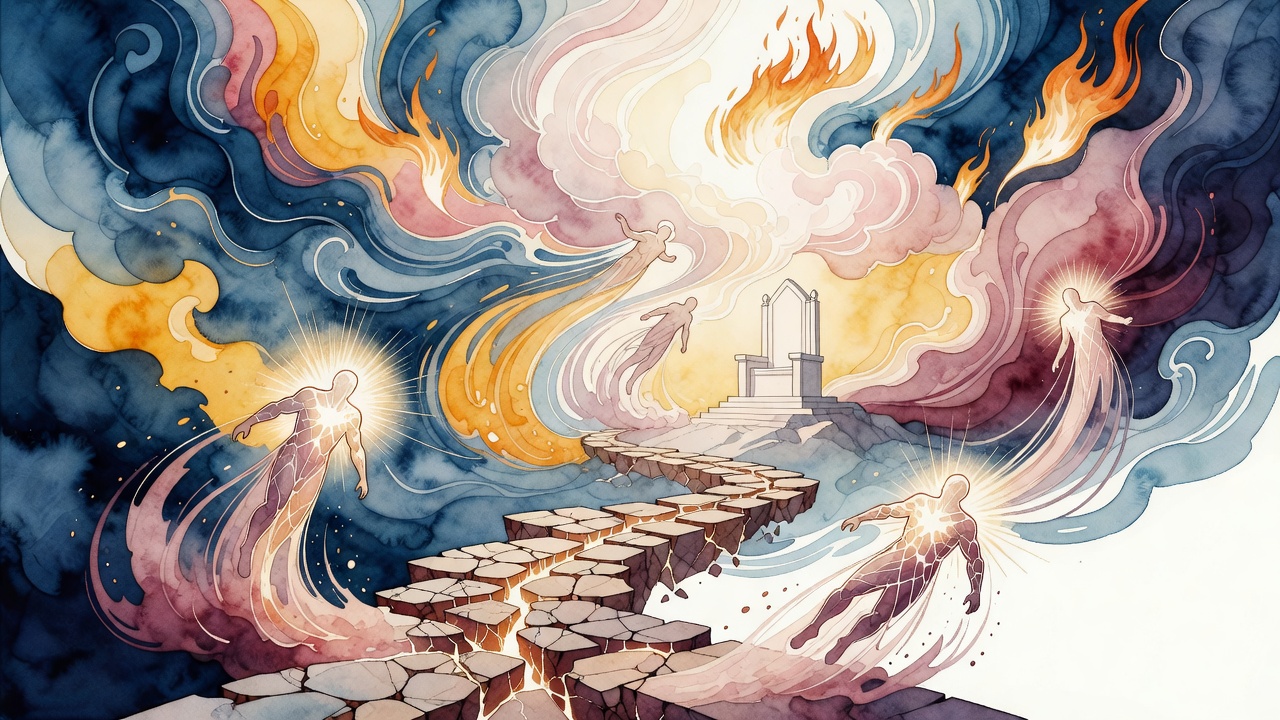
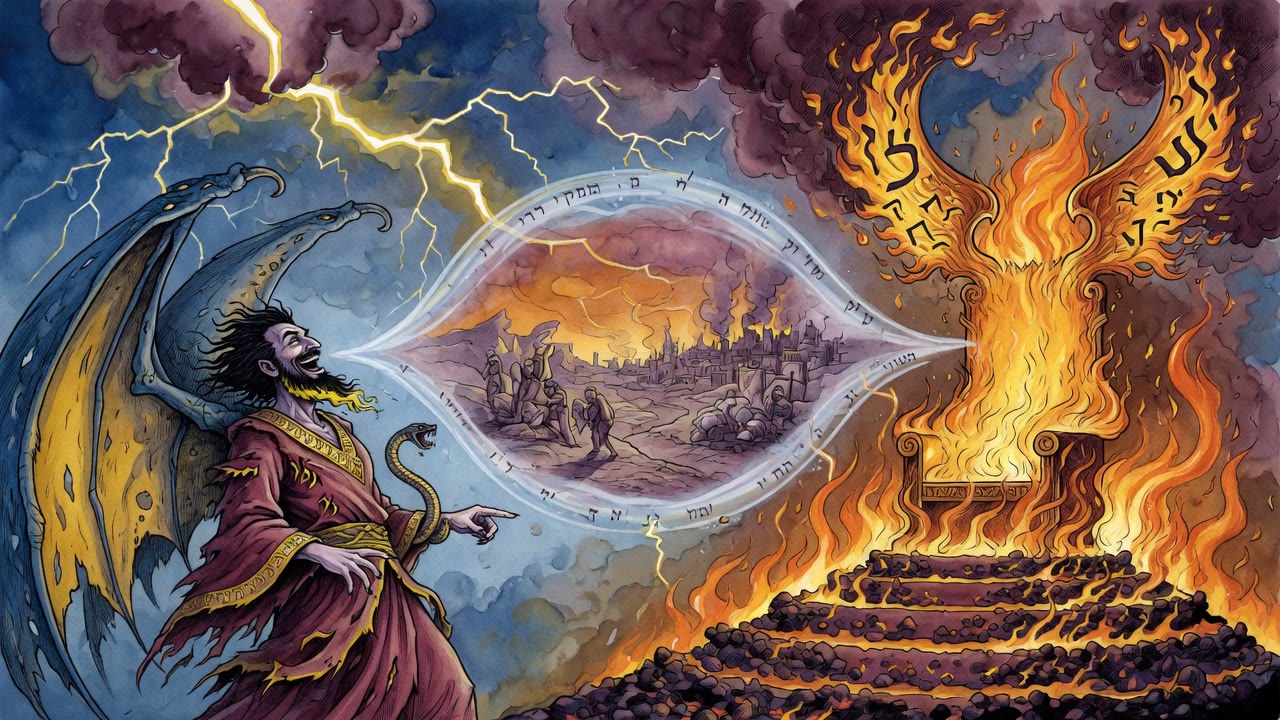
For evil to turn fully into good, nothing may sit out. Everything from the head of Atzilut, the world of pure emanation, down to the end of Asiyah, the world of action, must take part. The highest Sefirah (one of the ten channels of divine power) and the lowliest grain on a roadside share one assignment. Separate creations in the lower worlds and the lights of the upper do not split the labor into two unrelated wars. Both are required.

So a merchant's honesty in a strange market matters. So does a whispered psalm at midnight when guard dogs bark at a Jewish accent. So does the cup of water given when revenge would taste cleaner. The chain is one system. If any link refuses the turn from bad to good, the whole repair stays unfinished. Glory is not reserved for thrones and pure fire. It is asked of the speck that chooses not to join the lie.

In Asiyah the choice is heavy because the body is heavy. Hunger argues. Fear invents partners for God. Still the map does not excuse the low from the high. From Atzilut (the world of emanation)'s crown to the dust under a sandal, the same reversion is demanded: evil must not remain what it pretends to be.

How Lower Brokenness Touches the High

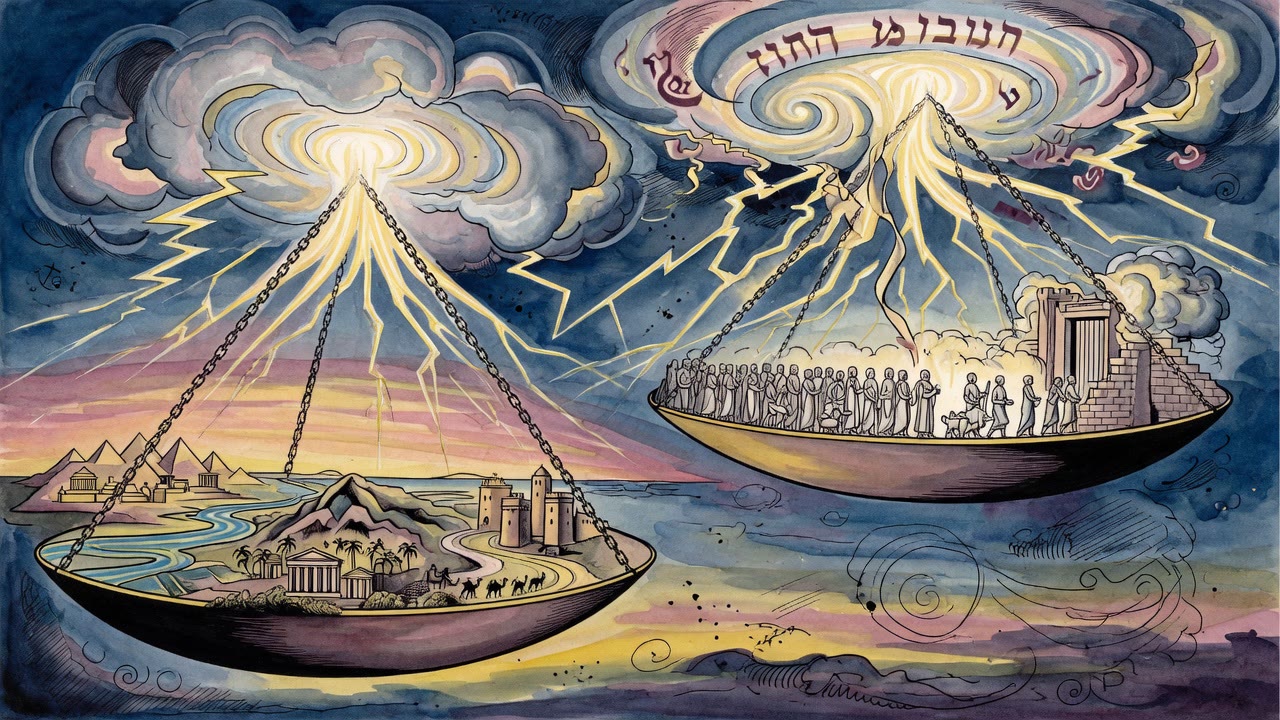
Evil seems to bloom only below, in Beriyah, Yetzirah, and Asiyah (the world of action). The lower worlds look like the only places husks can grow thick. Still they are not cut free from Atzilut. They are garments and extensions of it. They clothe and complete the highest realm.

If they were truly independent, Atzilut would hang like a sun that never felt the ants. Because they serve and complete the upper light, what rises as evil in the lower still has repercussion above. A cruelty in the street is not a private accident sealed under local law. It pulls on the garment that wraps the pure world. That is why exile cannot be shrugged off as politics alone. The lower road is wired into the highest house.

A man who humiliates a stranger in a foreign court is not only making a local enemy. He is tugging a thread that runs up through the worlds. A woman who guards her tongue when mockery would be easy is not only keeping peace in a kitchen. She is loosening a knot that had begun to tighten around Atzilut's clothing.

The End That Waiting Hands Must Seal

The caravan halted at dusk. Lamps came out one by one, small suns that did not pretend to be the first light. Someone recited a verse of return while a stranger's language rolled past the tent wall like water that would not be theirs. Children slept with dust in their hair. Elders sat with eyes open toward a horizon that kept moving.

No angel swept in to close the age. The Supreme Will had already begun the long repair. The last seal waited for a people who would choose, in foreign dust, not to become the husk that owns them. Walk. Mend what is near. Refuse the easy fracture. Teach the child the name that the empire mispronounces. Pay the wage before nightfall. Keep the scroll case dry when the river rises.

When every level from Atzilut's crown to Asiyah's dirt has turned its share of evil toward good, the world without further breakage will not need to be argued into being. It will stand because hands that suffered finished what Heaven would not finish alone. Until then the road remains the altar, and the dust remains the offering.


← All myths
From the tradition

Sources

3 sources

The texts behind this telling. Some cards carry a translation of the source; others are our own retelling of it, and each card says which. Every card links out to the original.

Kalach Pitchei Chokhmah 38:1Kalach Pitchei Chokhmah

Retold in our words. Read the original at the link below.138 Openings of Wisdom, trans. Rabbi Avraham Greenbaum, Azamra Institute (2005) · CC-BY

This ancient text hints at a profound truth: that the ultimate goal is a complete tikkun, a repair, of everything. A restoration so thorough, so complete, that no further damage, no further breaking, is even possible. A world without breakage. A world without damage. What would that even look like?

The really fascinating thing is, the Kalach Pitchei Chokhmah (Wisdom) suggests that this repair wasn't meant to be a top-down, divine decree. It wasn't meant to be handed to us on a silver platter. No, the "Supreme Will," as it calls it, wanted to start the process, to set the wheels in motion. But the completion? That was left for us, for humanity.

Why? Why leave such a monumental task to us, flawed and imperfect as we are?

Perhaps because true repair, true tikkun olam (repairing the world), can only come from within. It can only come from a conscious effort, a deliberate choice to heal and mend the broken pieces.

And when we finally complete that work, when we finally bring about this state of ultimate repair... that, the text says, will be the true end. Not an end of existence, but an end of the work. A final, lasting state of wholeness.

Now, the Kalach Pitchei Chokhmah also touches on the connection between different realms, different levels of existence. It speaks of Beriyah (Creation), Yetzirah (Formation), and Asiyah (Action) – three of the four worlds in Kabbalistic thought – and their relationship to Atzilut (Emanation), the realm closest to the Divine.

Think of it as a cascading flow of energy and intention. Atzilut, the source, emanates into Beriyah, the world of creation, where things begin to take shape. From there, it flows into Yetzirah, the world of formation, where those shapes become more defined. And finally, it reaches Asiyah, the world of action, the physical world where we live and breathe and make our choices.

So, what does this all mean for us, right here, right now?

It means that every action, every intention, every choice we make has a ripple effect, reaching all the way back to the source. It means that we are not just passive observers in this grand cosmic drama. We are active participants, co-creators of reality.

And it means that the work of tikkun olam, the repair of the world, is not some abstract, far-off goal. It's a daily practice, a moment-by-moment choice to heal, to mend, to create wholeness wherever we can.

It's a reminder that even the smallest act of kindness, the simplest gesture of compassion, contributes to the ultimate repair. And that, my friends, is a truly empowering thought.

Full source
Kalach Pitchei Chokhmah 39:6Kalach Pitchei Chokhmah

Retold in our words. Read the original at the link below.138 Openings of Wisdom, trans. Rabbi Avraham Greenbaum, Azamra Institute (2005) · CC-BY

Kalach Pitchei Chokhmah, a foundational text of Kabbalistic thought, gives us a fascinating perspective. It suggests that for evil to truly revert to good, it requires… well, everything. Literally everything that exists, "from the head of Atzilut (the World of Emanation) to the end of Asiyah (the World of Action)." Now, those are some big words, so

In Kabbalistic cosmology, Atzilut is the highest world, the realm of emanation, closest to the Divine. Asiyah, on the other hand, is the lowest, the world of action, our physical reality. So, from the highest spiritual plane to the most mundane aspects of our existence, everything is involved in this process of transforming evil.

Nor is it just the separate creations – the beings and things of the lower worlds – doing their own thing. Both are absolutely essential to complete this grand cosmic purpose.

And here's the kicker: In this context, there's no real difference between the highest Sefirah (a divine emanation) and the lowliest creation. Everything, from the most elevated spiritual force to the tiniest speck of dust, exists for one reason: to reveal the unity of Eyn Sof, the Infinite. Blessed be He and blessed be His Name forever and to all eternity. A profound equality underlies all of creation. Each element, no matter how seemingly insignificant, plays a vital role in revealing the Divine.

This idea, Kalach Pitchei Chokhmah tells us, is reflected in the verse, "God has made everything for His own purpose" (Proverbs 16:4). Everything has a role to play. Everything is part of the divine plan.

According to this text, this understanding was the very first thing revealed in the "lights of the Eyes," a reference to the primordial realm from which the Nekudim, a crucial concept in Kabbalistic cosmology, emerged. Within that realm, the "Supreme Mind" designed all the supreme laws of government – the Sefirot of Atzilut – and all the separate creations of Beriyah (creation), Yetzirah (formation), and Asiyah around this single, unifying principle: that they exist to reveal the supreme unity through bringing evil back to good.

Maybe it means recognizing the inherent value in everything around us. Maybe it means seeking out the good, even in the face of adversity. Or perhaps it simply means acknowledging that we are all part of something bigger, something infinitely grand and unified, and that our actions, no matter how small, have the potential to contribute to the ultimate cosmic purpose of turning evil into good.

Full source
Kalach Pitchei Chokhmah 43:8Kalach Pitchei Chokhmah

Retold in our words. Read the original at the link below.138 Openings of Wisdom, trans. Rabbi Avraham Greenbaum, Azamra Institute (2005) · CC-BY

In the text Kalach Pitchei Chokhmah, a profound idea is explored: even though evil seems to originate in the lower realms of existence – Beriyah (Creation), Yetzirah (Formation), and Asiyah (Action) – it's still, in a way, connected to the highest realm, Atzilut (Emanation).

Think of it like this: Atzilut is the realm of pure divine light, the closest we can get to understanding God's essence. But it doesn't exist in a vacuum. The other realms, Beriyah, Yetzirah, and Asiyah, are like garments, or perhaps extensions, of Atzilut. They clothe and complete it.

If these lower worlds were completely separate, independent entities, Atzilut would be so far above them that it wouldn't be affected by anything happening down here. It would be like saying the actions of ants have no bearing on the sun.

The key is that they aren't independent. They're subservient to Atzilut. They exist to serve and complete it. And because of this intimate connection, the emergence of evil in these lower realms… well, it's considered to have some sort of relationship, some sort of repercussion, even within Atzilut itself.

Even if the garment itself is beautiful and pristine, the stain still mars its overall appearance. The stain didn't originate with the cloth itself, but because the stain is on the cloth, they are linked.

This isn’t to say that God causes evil. Far from it. But the interconnectedness of all things means that even the highest realms aren't entirely insulated from the consequences of actions in the lower ones.

It's a complex and challenging idea, one that invites us to consider the intricate web of relationships that connect everything in existence. What does it mean for our actions? If even the realm of divine light is touched by the shadows we cast, what responsibility do we have to act with kindness, compassion, and justice in the world?

Full source