Israel Watched Dogs Eat at the King's Feast
Seated by the kennel at a king's feast, Israel watches nations chew the world's peace, then learns joy from the dogs' portion and waits for Messiah's sun.
Table of Contents
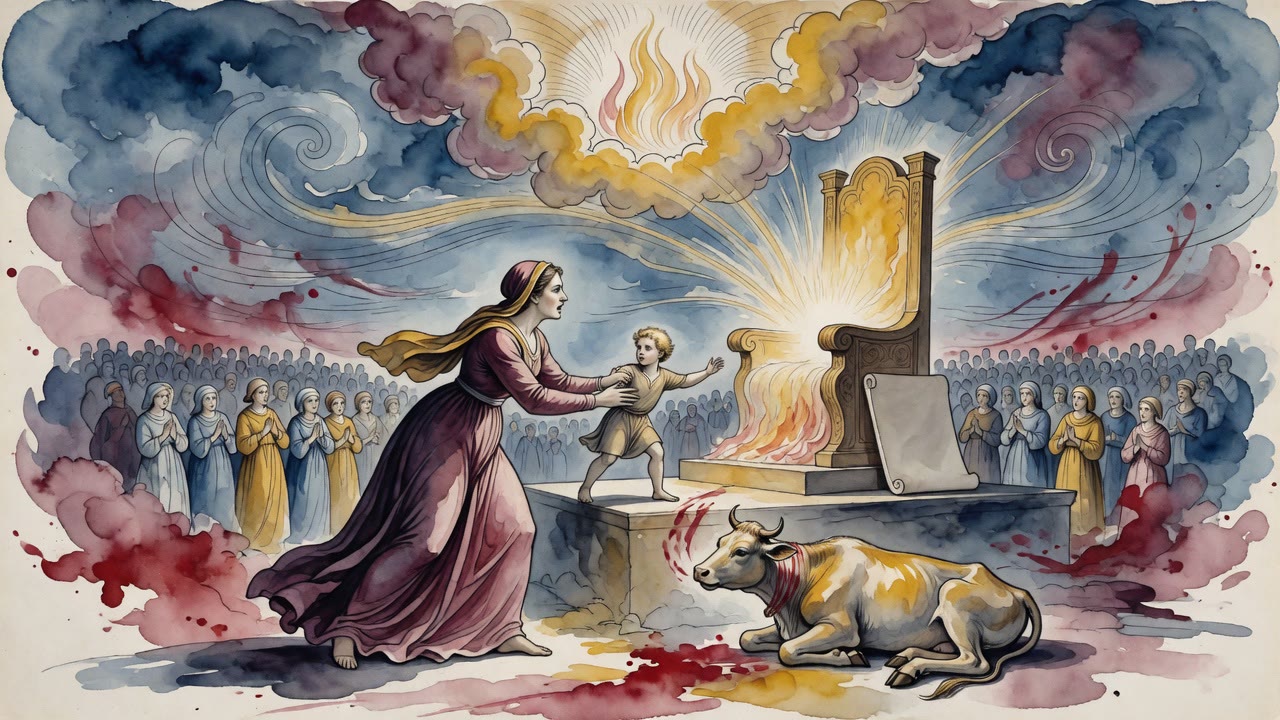
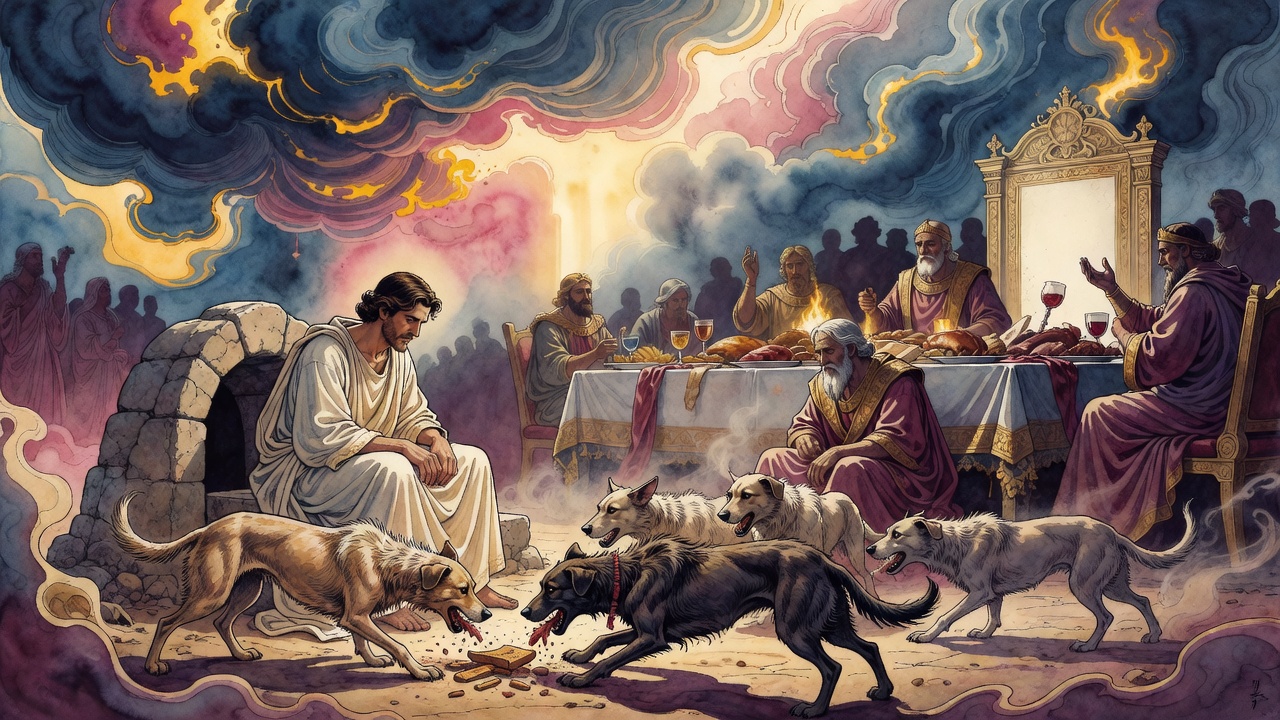
The king set a feast and did not seat his honored guests at the head table. He placed them near the mouth of a kennel, close enough to smell wet fur and hear the scrape of bone on stone. From that bad angle they watched dogs come out chewing what looked like better food than the guests had been handed: muzzles, hooves, heads of calves, greasy gifts that made the honored mouths go dry.
 Click for full size
"What kind of feast are these dogs enjoying," the guests muttered, "that they seem treated better than we are?" Heat rose in their faces. A man clenched a cup until his knuckles whitened. Another turned his head so he would not have to see a dog shake a scrap and look satisfied. A third pushed his plate away and then pulled it back, ashamed of the hunger and the envy at once.
Rabbi Yehoshua ben Levi told the parable without polish and let the guests stay in their bad seats. The nations who keep the seven Noahide laws take peace in this world and hold reward for the world to come. Israel carries six hundred thirteen commandments and often sits nearer the kennel than the dais. The dogs, Isaiah already called greedy (Isaiah 56:11). If they eat well now, how much more will the guests eat when the true courses arrive.
Joy That Had to Be Forced Open
"You have given joy to my heart," the psalm says (Psalm 4:8), and the line will not let envy dress itself as piety. Joy comes when Israel sees the nations at relative peace and refuses to let the sight curdle. If seven laws buy them quiet and a future portion, the heavier yoke buys a heavier share when the books close. The kennel view becomes a proof, not a humiliation, once the math of the covenant is allowed to finish.
A guest released his cup. Grease still shone on a dog's muzzle ten cubits away. The smell did not improve. The meaning did. He did not move closer to the bone. He sat in the place the king had given him and let the psalm do the work his stomach could not. He drank water. He blessed the Name under his breath. He watched a dog drag a hoof into shadow and did not stand to follow.
Peace on a neighbor's table stopped looking like theft. It looked like a down payment that proved the treasury was real.
Fear Where There Was Fear, and Where There Was None
Psalm 14 doubles the word until it almost breaks: there they feared with fear, there was no fear (Psalm 14:5). History splits the line. The ten tribes carried fear into exile, a cold that never quite left the bones. Judah and Benjamin, left in the south, held a stretch where the same verse could say there was no fear, not because danger had retired, but because the remnant still sat nearer the promise.
Another reading turns the pair inward. The righteous fear God in this world, yirat Hashem worked into the hands and the calendar, and because of that fear there is no fear that they will fail to fear Him in the world to come. The wicked skip reverence now and meet terror later, when Isaiah's sinners in Zion are afraid (Isaiah 33:14). Jeremiah named the engine: your own wickedness will correct you, and you did not fear Me (Jeremiah 2:19).
Judah waits for the Messiah with both kinds of knowledge in the blood: the exile-fear of the north, and the disciplined fear that keeps a remnant from mistaking comfort for arrival.
A watchman on a southern wall climbed the steps, scanned the dark, and did not pretend the dark was friendly. He also did not abandon the wall for a rumor. Waiting had a posture. Spine straight. Eyes open. Hands empty of false dates. He struck the butt of his spear once on stone to stay awake and then stood still again.
When the Messiah's Sun Rises
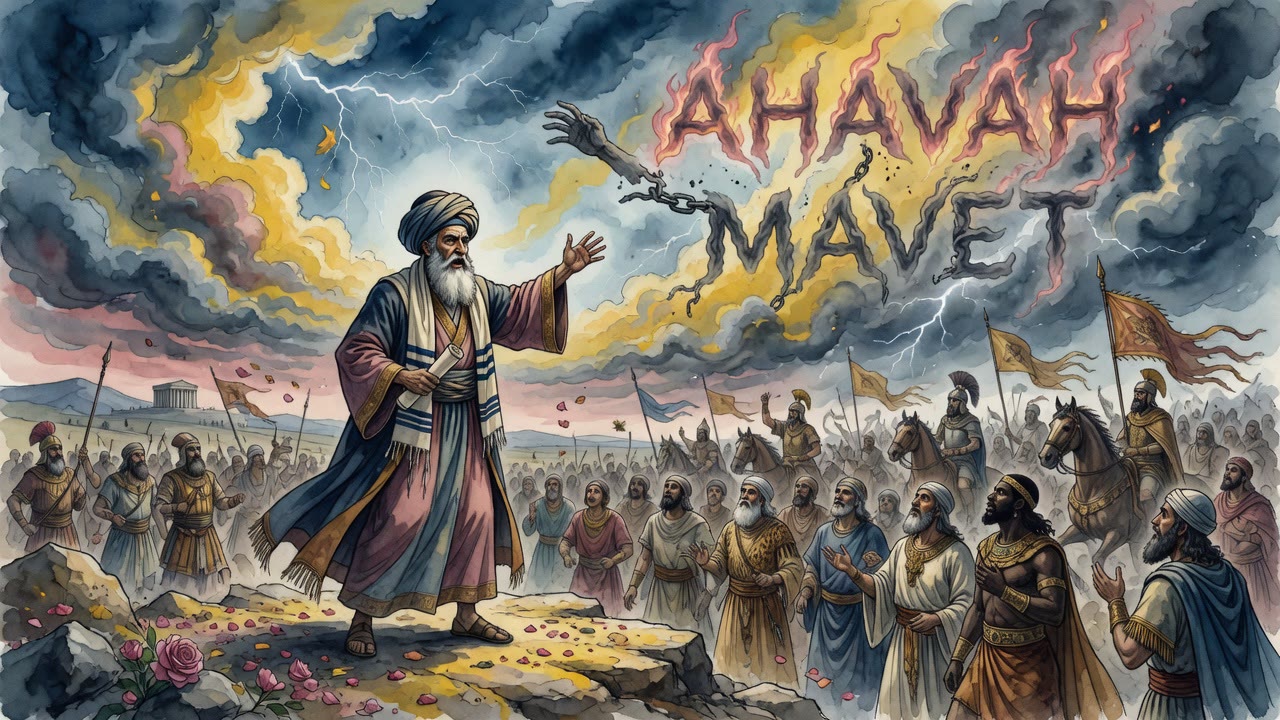
Rabbi Shila of Kefar Tamarta in the name of Rabbi Yochanan tied the calendar to light: the months for the moon begin to count when the sun sets. Night is not a void. It is the signal that a new count can start. Then heretics roar to prey upon Israel, nations that deny the Holy One and come for the flock the way a predator comes for a fold left unwatched.
"When the sun shines they will be gathered in." Not any sun. The sun of the Messiah. Under that light the roar loses its street. The nations that fed on denial are gathered toward Gehenna, the place named without flinching. Israel receives its task from the Holy One and must go out and do the work until evening, not as empty labor but as service that finishes what it starts (Ezekiel 34:22).
The field needs light. The laborer needs the same light. Messiah's rising is not only punishment for the roar. It is the hour when Israel's assigned work can be seen cleanly and carried to the edge of evening without apology. Workers leave at dusk only when the row is finished. So too the remnant that works for His service until evening.
Until that hour the dogs still chew. The guests still sit near the kennel. The remnant still chooses which fear to keep and which to refuse. A child cried once in a southern alley and a mother carried him inside and barred the door. The roar did not own every house.
The Table That Has Not Yet Been Set
No guest at the parable's feast mistook the kennel for the head table after the teaching landed. They wiped their mouths. They watched a dog drag a hoof into shadow. They let joy rise the hard way, through covenant math instead of through envy. Judah kept watch without inventing a false dawn. The roar of those who deny still traveled the roads. The sun of the son of David had not yet cleared the ridge.
When it does, the count will change with the light, the prey will stop being prey, and the guests will leave the kennel mouth for the courses that were always theirs. Until then a man can still hear bone scrape on stone and refuse to call that sound the end of the story.
He set his cup down. He kept his seat. He waited for a sun that does not belong to this world's noon. Far off, dogs still ate. Nearer, a guest finally laughed once, short and sharp, because the king had not forgotten who the feast was for even when the seating chart looked cruel.
← All myths