5 min read

Jacob Asked to Sicken Before His Soul Could Leave

Before Jacob, a sneeze emptied a soul on the spot. He begged for time to charge his house, and sickness entered the world as a warning.

Curated by Arthur · Told by Maggid ·
Table of Contents
  1. Death Came Through the Nose
  2. Jacob Counted His Sons
  3. Heat Under the Skin
  4. The Borrowed Hours
  5. The Affliction of the Road
  6. Life
Jacob Asked to Sicken Before His Soul Could Leave Click for full size

Death Came Through the Nose

A man stands in the market arguing about the price of a basket of dates. He draws a breath, and it catches at the back of his nose, and he sneezes, and his soul goes out of him through the nostrils on the way the breath went. The dates go over in the dust. Nobody in the row of stalls is astonished, because that is how the world ended for a person then, with no fever and no bed and no time to say a word to anybody. Nobody had ever been ill. There was nothing between a man walking and a man on the ground.

Jacob Counted His Sons

Jacob was old in Egypt with twelve sons around him and a nation still soft in the bones, and every word he owed them was still inside his mouth. He had held on to an angel until the sky went gray and limped away with a blessing and a ruined hip. He had walked out to meet Esau with four hundred men coming the other way. None of that was any use against a death with no doorway in it, because a man cannot brace for a sneeze, and there is no wrestling something that takes you between one word and the next.

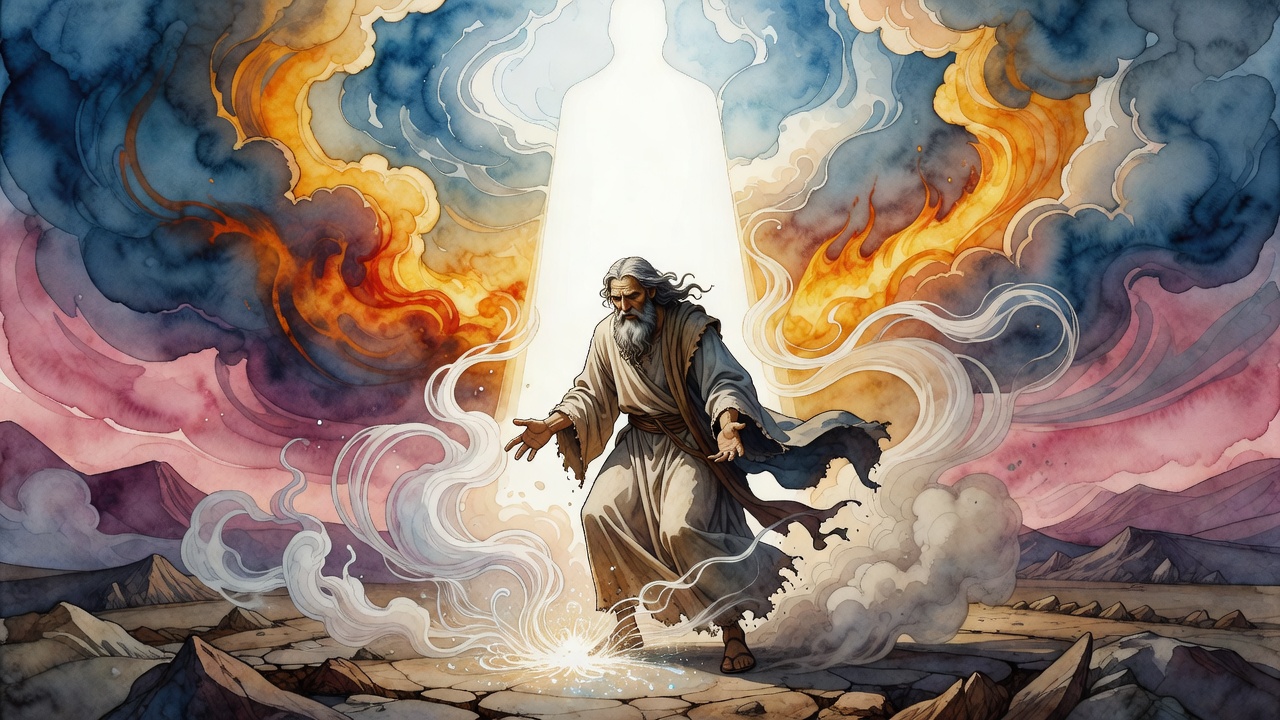
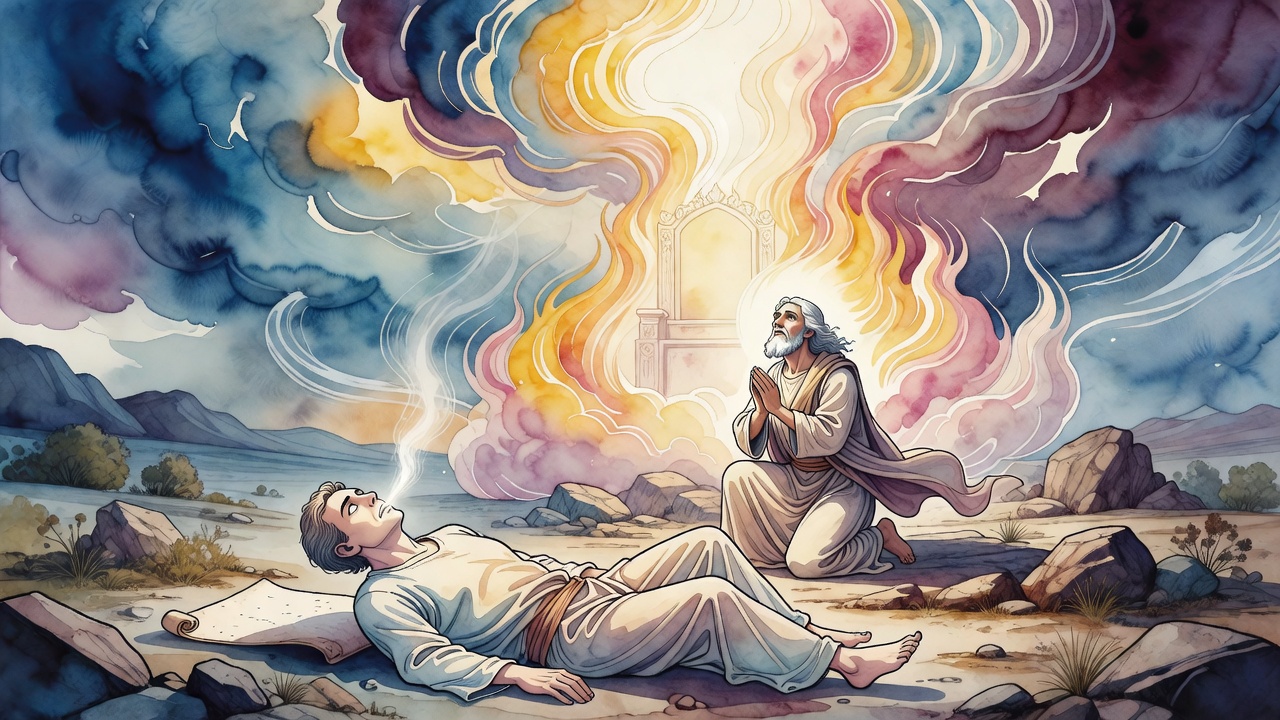
What he wanted was permission to sicken. He wanted a warning shot in the body, some days of being unwell, so that his soul could not leave him in the middle of a sentence with twelve blessings still unspoken. So he asked for it plainly. "Sovereign of all the worlds, do not take my soul from me until I have charged my sons and my household."

Heat Under the Skin

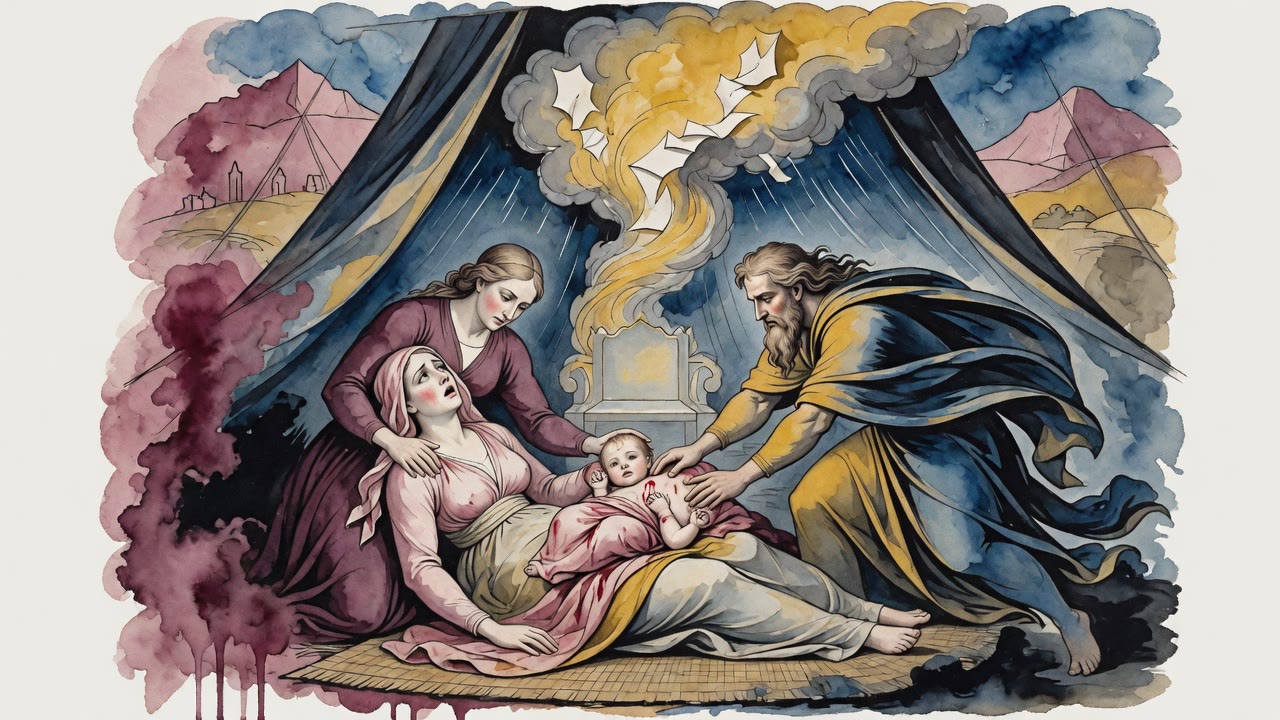
What came back was not thunder. It was weakness in the legs, and heat under the skin, and a bed that suddenly mattered. Jacob lay down and felt his own body doing something no body had done since the first man, and he understood in that moment that the request had been granted and that this was the shape of the granting: not a reprieve, an illness. He had asked for hours and God had made a way for a man to be slow. The price was written into the answer.

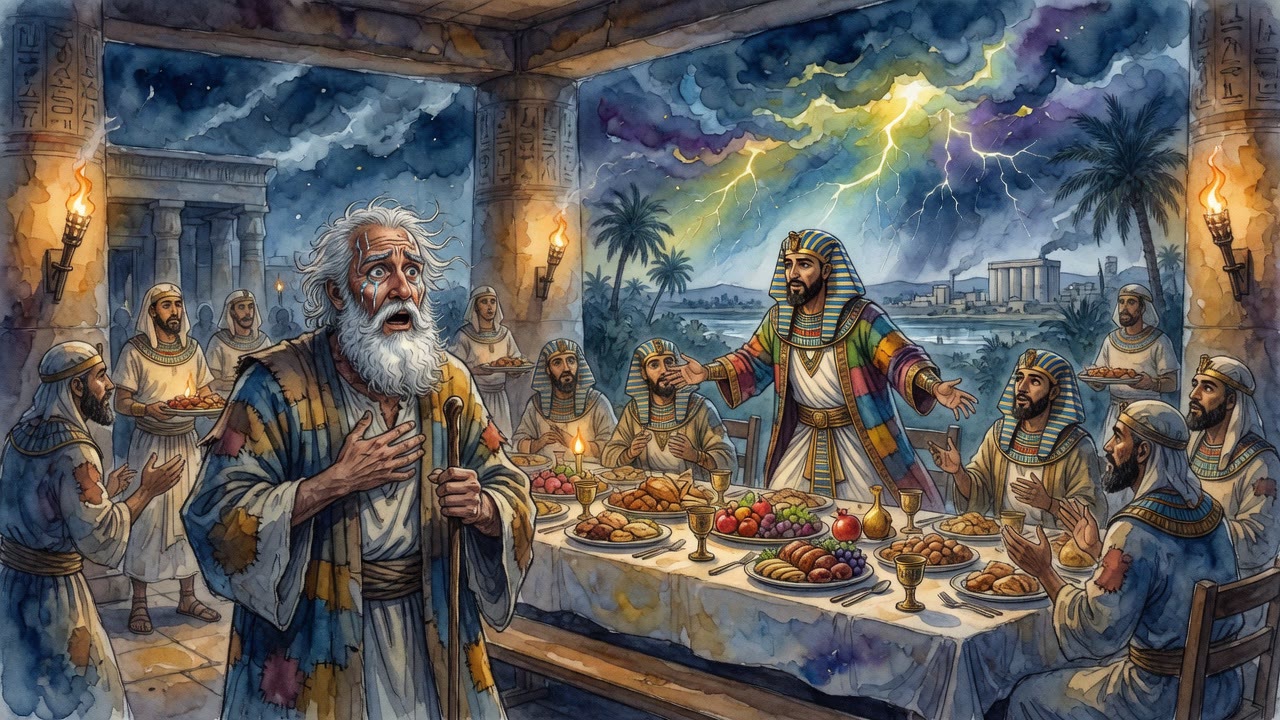
Word went out to Joseph in a sentence no runner had ever carried before. Behold, thy father is sick (Genesis 48:1). Kings of the earth heard the report and could not get it to make sense. A man dying by degrees? Lying down and staying alive and then not? They had only ever known the empty chair at the table and the basket spilled in the dust.

The Borrowed Hours

Joseph left the granaries and the court and rode for the house with his two boys with him, because the message meant there was still something to get to. He found his father sitting up on the bed with the strength gathered for it.

Jacob spent every hour he had begged for. He made Joseph swear about the cave and the field and where the bones were to go. He crossed his hands over the heads of two Egyptian-born grandsons and would not straighten them when Joseph tried to move them. He called all twelve in and went down the line and told each one what he was, some of it hard enough that a father who had a quick death coming would never have said it out loud. Every sentence cost him some of the time, and he kept talking anyway.

The Affliction of the Road

What Jacob had asked for was what a road never gives, which is time for a body to be slow. His descendants found that out in the wilderness. A camp that can be ordered to move at any hour cannot afford a household full of men healing from a knife, so for forty years in the dust between Egypt and the land they did not circumcise their sons, and the sign of the covenant went off their bodies because of the affliction of the way. He weakened my strength in the way, says the psalm, and it means exactly that. Only when the walking finally stopped at the far side of the Jordan did Joshua take the whole generation and circumcise them at once.

Life

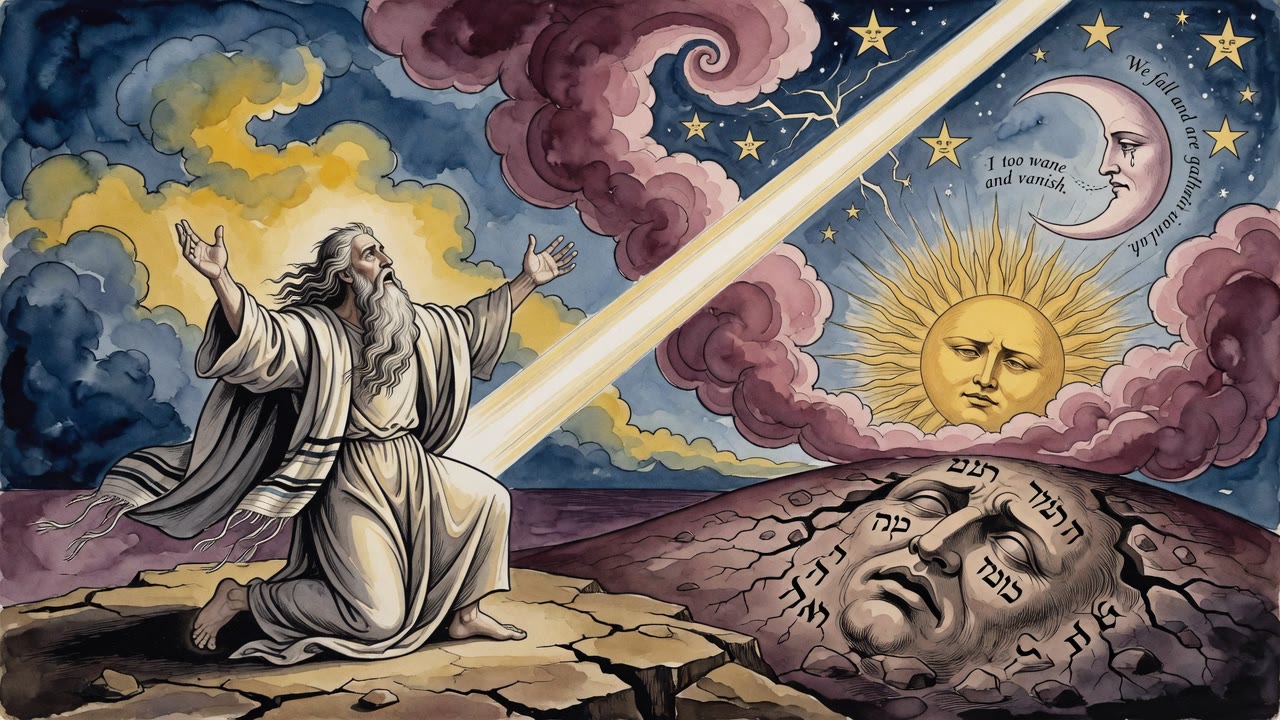
After Jacob a sneeze stopped being a sentence. It stayed frightening, because the body still does that thing where it seizes and the eyes shut and for a fraction of a second the man is not steering anything. But the soul stays in. So a man who hears his neighbor catch that breath owes him a word out loud, and the word is Life, spoken into the gap where death used to walk in without knocking. His neesings flash forth light, the verse says of the great creature of the deep (Job 41:18), and the light is what is left in the place where the old rule stood.

The neighbor wipes his face on his sleeve and goes back to arguing about the price of the dates.


← All myths
From the tradition

Sources

2 sources

The texts behind this telling. Some cards carry a translation of the source; others are our own retelling of it, and each card says which. Every card links out to the original.

Pirkei DeRabbi Eliezer 52:6Pirkei DeRabbi Eliezer

Retold in our words. Read the original at the link below.Pirke de Rabbi Eliezer, trans. Rabbi Gerald Friedlander, London (1916) · CC-BY

It's a whisper echoing from a very, very old story. A story about Jacob, and a world without sickness as we know it.

In Pirkei DeRabbi Eliezer, a fascinating text filled with legends and interpretations, there was a time, way back at the dawn of creation, when death was… different. Imagine a world where no one got sick. Sounds pretty great. But here’s the catch: whenever someone sneezed, that was it. Soul gone, right through the nostrils. No warning, no goodbyes. Just… poof. for a second. You're walking through the marketplace, haggling over some dates, and suddenly, someone next to you sneezes and… well, you get the picture. A bit unsettling, to say the least!

This carried on, apparently, until our father Jacob came along. Jacob, wrestling with angels and building a nation, was also wrestling with mortality. He had a big family, a legacy to secure. He needed time. So, he prayed. He pleaded with the Holy One, blessed be He: "Sovereign of all the worlds! Do not take my soul from me until I have charged my sons and my household!"

His prayer was answered. The verse reads, "And He was entreated of him, as it is said, 'And it came to pass after these things, that one said to Joseph, Behold, thy father is sick' (Genesis 48:1)." Suddenly, there was sickness. For the first time, someone wasn’t just instantly gone. There was a period of illness, a chance to prepare, to say goodbye.

The news of Jacob's illness spread. The kings of the earth, we are told, were astonished. They'd never heard of such a thing! Sickness? A drawn-out process of dying? It was unheard of.

So, what does this have to do with "Bless you"? Pirkei DeRabbi Eliezer concludes with a powerful lesson. "Therefore a man is in duty bound to say to his fellow: Life! when the latter sneezes, for the death of the world was changed into light, as it is said, 'His neesings flash forth light' (Job 41:18)."

The sneeze, once a harbinger of instant death, became something… else. Something connected to life. By saying "Life!" – or "Bless you," which is how we interpret it today – we acknowledge the fragility of existence, and we offer a blessing, a wish for continued life in a world where death isn't always sudden.

It’s a beautiful reminder that even the simplest customs can carry deep meaning, echoing ancient stories and profound shifts in how we understand life and death. The next time you say "Bless you," remember Jacob, remember that world without sickness, and remember the power of a simple blessing.

Full source
Pirkei DeRabbi Eliezer 29:13Pirkei DeRabbi Eliezer

Retold in our words. Read the original at the link below.Pirke de Rabbi Eliezer, trans. Rabbi Gerald Friedlander, London (1916) · CC-BY

Jewish tradition actually recognizes this, identifying three specific kinds of "afflictions" that test us: the affliction of the fast, the affliction of the prison, and the affliction of the road.

Where do these ideas come from? Well, the Pirkei DeRabbi Eliezer, an early medieval collection of Biblical stories and interpretations, spells it out for us.

We know about this one because King David himself says in the Psalms (35:13), "I afflicted my soul with fasting." It's about the deliberate act of denying ourselves, of pushing past physical comfort for a higher spiritual purpose. It's a conscious choice to endure discomfort.

Then there’s the affliction of the prison. This isn't just about physical imprisonment; it's about feeling trapped, restricted, held back. The Pirkei DeRabbi Eliezer points to (Psalm 105:18), "They hurt his feet with fetters." It evokes the image of being bound, unable to move freely towards your goals. It's a feeling many of us can relate to, even if we've never seen the inside of a jail cell.

But what about the affliction of the road? This one is perhaps the most relatable. Think about those times you’ve been traveling, maybe on a long journey, and everything just seems to go wrong. Delays, discomfort, unexpected challenges… The Pirkei DeRabbi Eliezer finds this concept in (Psalm 102:23), "He weakened my strength in the way." It’s about the wear and tear that a long, arduous journey takes on us, both physically and emotionally.

Now, here's where it gets interesting. The Pirkei DeRabbi Eliezer connects the affliction of the road to a very specific historical moment: the Exodus from Egypt. Remember, the Israelites spent forty years wandering in the desert. And because of the "affliction of the road," they didn't circumcise their sons during that time. Brit Milah, circumcision, is a fundamental covenantal act. It's a physical sign of the bond between God and the Jewish people. They were constantly on the move, facing dangers, and struggling to survive. Circumcision, with its recovery period, would have been an added risk and burden.

So, what happened when they finally entered the Promised Land? (Joshua 5:5) tells us, "For all the people that came out were circumcised." After enduring the affliction of the road, they finally reached a place of stability, a place where they could reaffirm their commitment to the covenant. The entire generation circumcised their sons. It was a powerful act of renewal, a declaration that despite the hardships they had faced, their faith remained strong.

The Pirkei DeRabbi Eliezer offers a profound insight: life will inevitably bring its share of afflictions. We will experience periods of self-denial, feeling trapped, and facing challenges that wear us down. But it also reminds us that these afflictions don't have to define us. They can be opportunities for growth, for reaffirming our values, and for emerging stronger on the other side. Maybe, just maybe, those difficult times are the very things that prepare us for the next chapter of our journey.

Full source