5 min read

Jacob's Face Was Engraved on the Divine Throne

The rabbis said Jacob's face was carved into the throne of God. Not Abraham's face, not Isaac's. The most flawed patriarch was given this honor.

Curated by Arthur · Told by Maggid ·
Table of Contents
  1. The Stone Pillow at Bethel
  2. The Worst Choice for the Honor
  3. The Dream That Showed Him Everything
  4. The Image Cast Down at the Temple's Fall

The Stone Pillow at Bethel

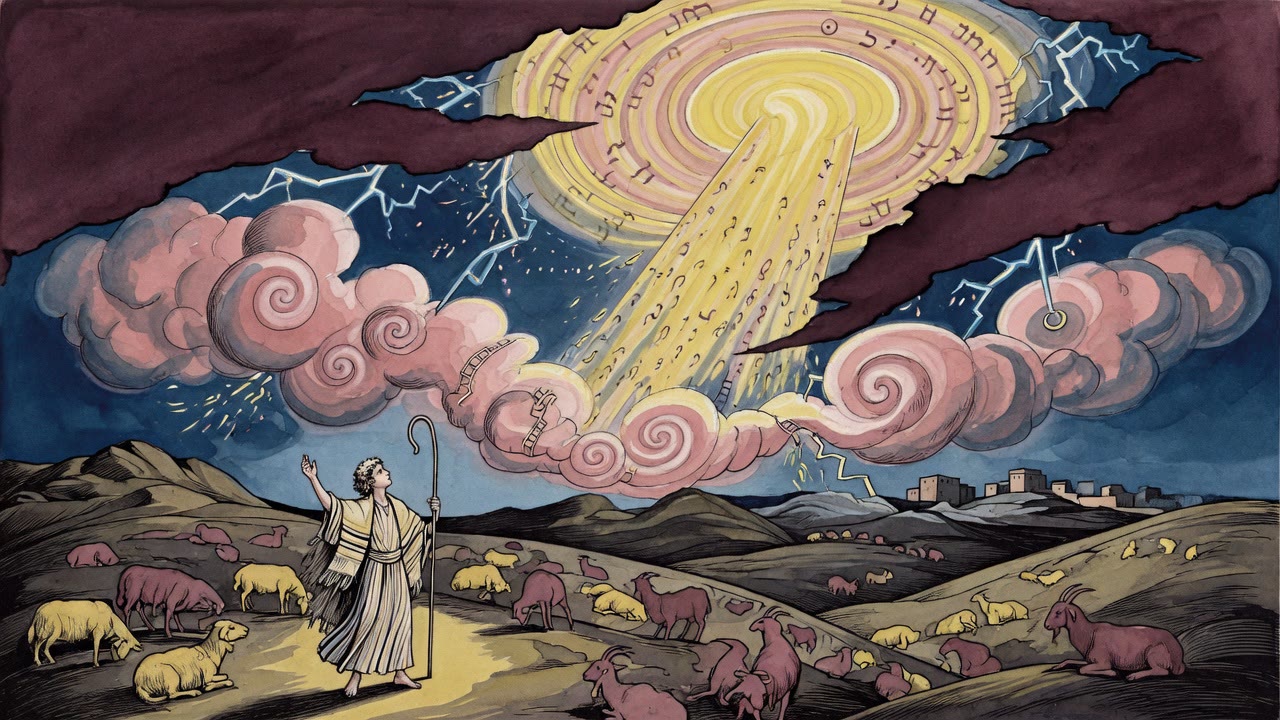
Jacob was alone on the road between his father's house and his uncle's country, fleeing Esau, sleeping on the ground with a stone under his head. The sun had gone down. He had nothing to show for the blessing he had stolen except the blessing itself and a brother who wanted to kill him for it. He slept.

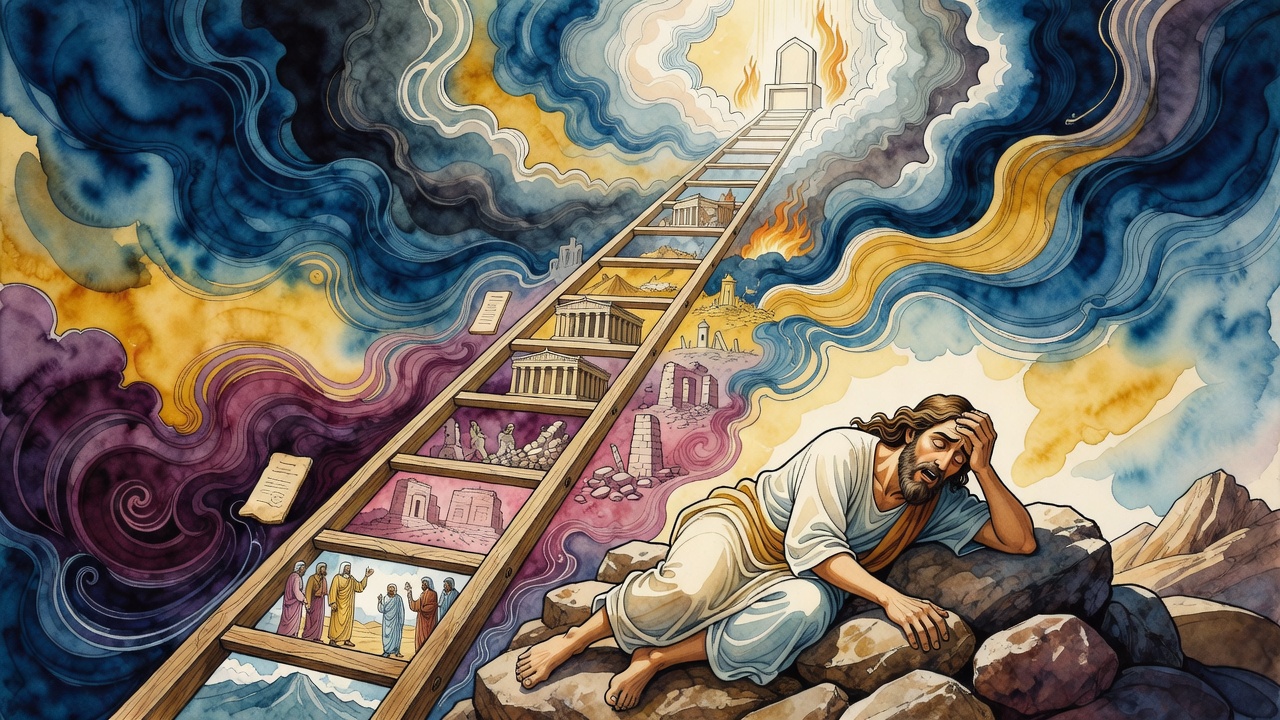
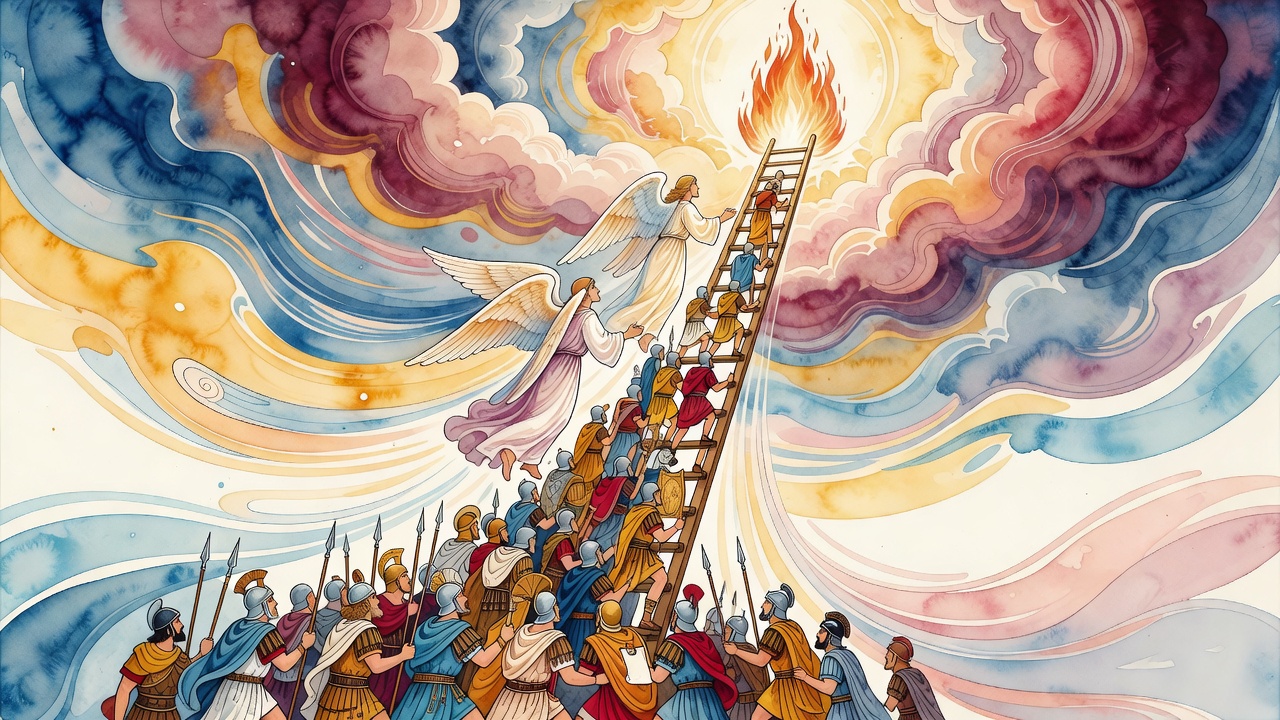
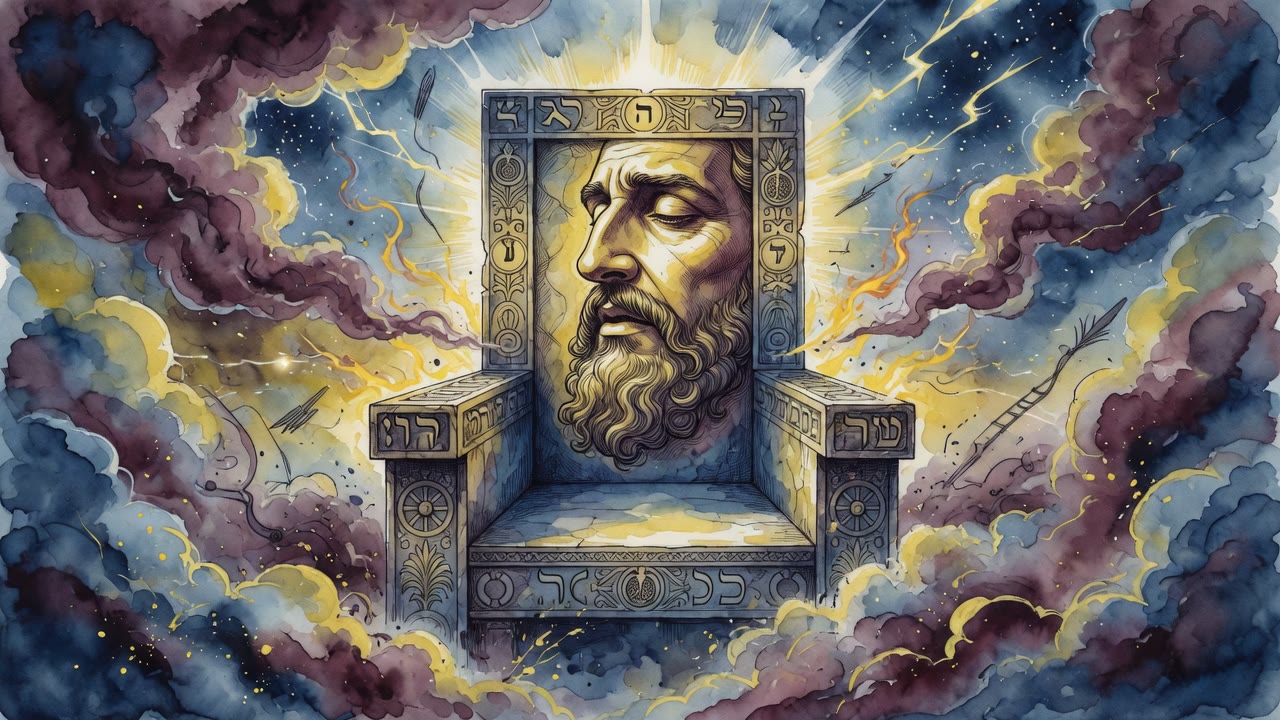
In the dream, a ladder reached from the earth to heaven, and angels were on it, going up and going down, and God stood at the top and spoke to him. When Jacob woke, the tradition says he woke in terror. Not awe, not wonder: terror. He had dreamed of angels and of God speaking directly to him, and his first response when he opened his eyes was fear. What Pirkei DeRabbi Eliezer preserved about that terror was specific: Jacob looked into the ladder dream and saw his own image carved at the top, engraved into the throne of glory itself, and he was afraid of what it meant.

The Worst Choice for the Honor

Of all the patriarchs, Jacob was the complicated one. Abraham had walked out of his homeland on God's word without asking questions. Isaac had lain down on the altar and waited to be killed, and had not flinched. Jacob had deceived his blind father, stolen a blessing that belonged to his brother, fled like a fugitive, spent twenty years in a foreign household acquiring wealth by methods that required sustained cleverness, and wrestled with a being at the Jabbok until he was wounded and the sun had nearly risen. He was not the obvious candidate for a permanent honor in the upper realms.

The Midrash Rabbah tradition nonetheless preserved the teaching plainly: God gazes upon Jacob's face whenever the people of Israel suffer oppression, and that gaze softens the divine response to their sin. It is not Abraham's face in that position, though Abraham had no rival for faithfulness. It is not Isaac's face, though Isaac had submitted to the altar. It is Jacob's, the one who strived and stumbled, whose very name was changed because striving was his essential mode.

The Dream That Showed Him Everything

The Book of Jubilees preserved the Bethel dream with additions that the Genesis account does not contain. The angels on the ladder, Jubilees says, were angels of nations, going up to report what was happening in the nations they governed, coming down to carry out their instructions. Jacob was shown in the dream that God ruled not through the nations' angels but directly over the people of Israel. The ladder was the administrative structure of the world, and the dream showed Jacob that his descendants occupied a different category than everyone else in that structure. They were not governed through angelic intermediaries. Their address was at the top of the ladder.

When Jacob woke he wept from the weight of what he had been shown, poured oil on the stone that had been his pillow, and named the place Bethel, the house of God. He made a vow: if God keeps me safe and brings me back to my father's house, this stone will become a house of God. It was not an act of great faith. It was a bargain made by a man who was not sure he would survive the journey ahead. But the face of this man, who bargained with God, who wrestled with the angel, who wept at the top of a ladder and made conditional promises, was the face God chose to keep engraved on the throne.

The Image Cast Down at the Temple's Fall

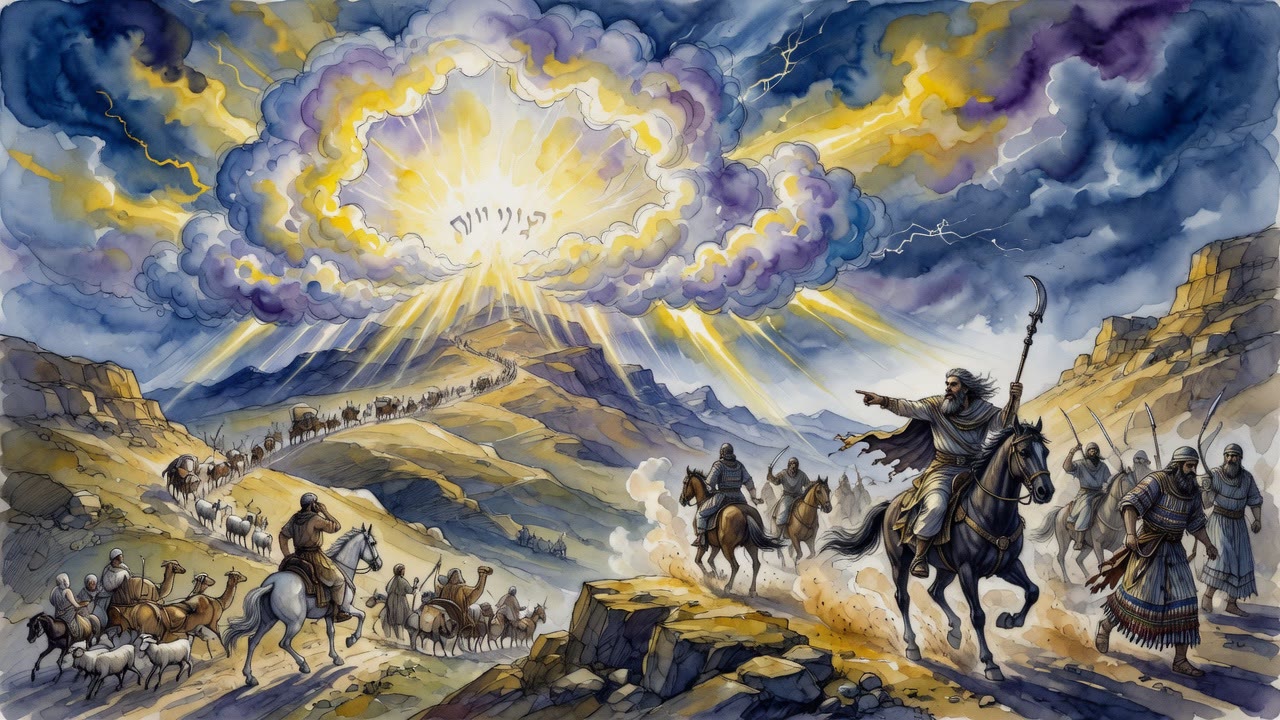
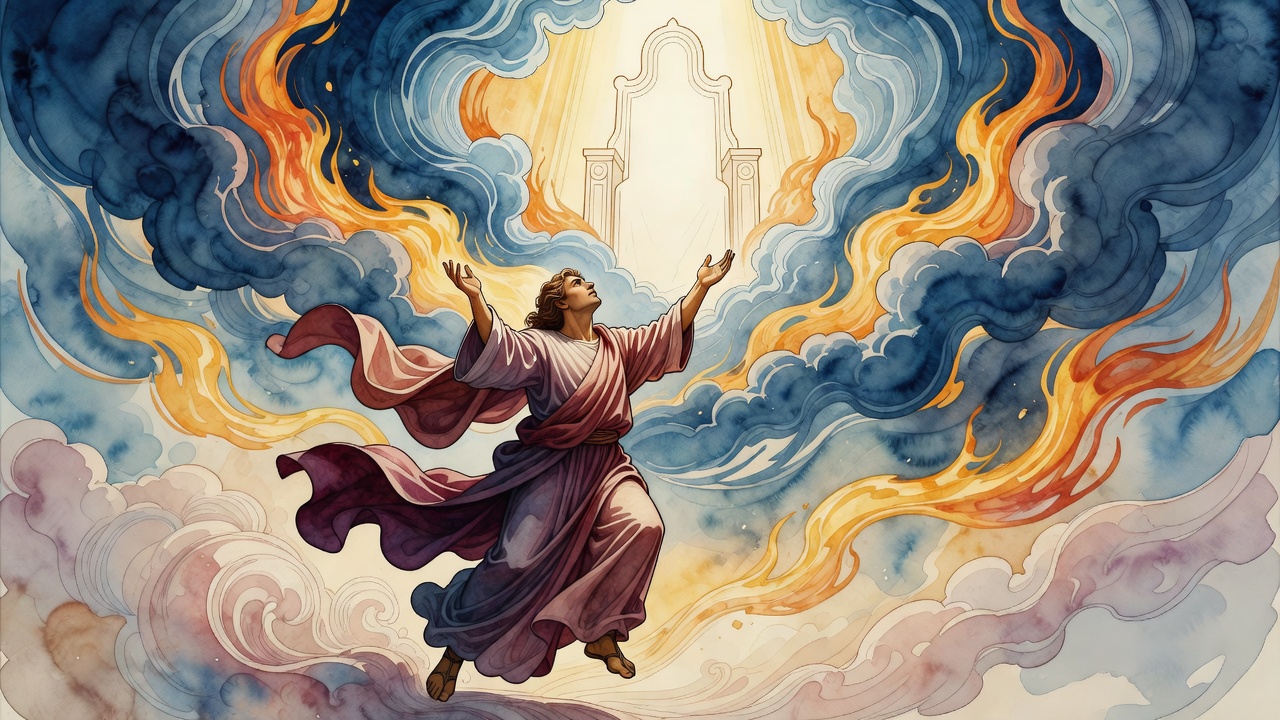
The Babylonian Talmud's tractate Chagigah preserved a harder image. In the days before the Temple's destruction, when the people of Israel had accumulated enough departure from God's way that the Temple could no longer stand, the divine throne was diminished, and Jacob's image was cast down from its place. The tradition did not mean this as abandonment. It meant it as cause and consequence: the engraving of Jacob's face on the throne was a living connection between the people and the divine, and when the people severed the connection from their side, the image on the throne was displaced. Not erased. Cast down. The honor was not permanent regardless of what Israel did. It was permanent as long as Israel and God remained in contact.


← All myths

From the tradition

Sources

9 sources

The texts this telling draws on, in full. Open a card to read inline, or expand it for a wider, quieter read.

Book of Jubilees 27:26Book of Jubilees

Book of Jubilees turns to Jacob Dreams of the Heavenly Ladder in Jubilees.

Here’s the scene: Jacob, all alone on a journey. The sun is setting, and he’s far from home. He finds a stone, uses it as a pillow – not exactly a Tempur-Pedic. – and drifts off to sleep under a tree. Can you imagine the weariness he must have felt?

Then, the dream.

The Book of Jubilees, a Jewish text from around the 2nd century BCE, tells us that in this dream, Jacob sees a ladder. Not just any ladder, but one that’s planted firmly on the earth, yet stretches all the way up to heaven. And on it, the angels of the Lord – the malakhim Adonai – are ascending and descending. image for a moment. A connection, a bridge, between the earthly and the divine. It's powerful, isn't it?

But the dream doesn’t end there. The text continues: "and behold, the Lord stood upon it." God Himself is at the top of the ladder. And He speaks to Jacob.

What does God say? He identifies Himself: "I am the Lord God of Abraham, thy father, and the God of Isaac…" A powerful lineage, a promise echoing through generations. And then comes the promise to Jacob himself. “The land whereon thou art sleeping, to thee shall I give it, and to thy seed after thee.”

Wow.

Think about the weight of those words. Jacob, alone and vulnerable, receives this incredible promise. He’s not just some wanderer anymore. He’s part of something bigger, something eternal. The land he’s resting on, the very ground beneath him, is destined for him and his descendants.

The Book of Jubilees doesn’t explicitly mention Jacob building an altar there and naming the place Beit El – House of God – as is described in the Book of Genesis. But still, the feeling of divine encounter is palpable.

I find myself wondering: what "ladder" is available to us today? What connects us to the divine in our own lives? Maybe it's prayer, maybe it's acts of kindness, maybe it's simply being present in nature. Maybe it’s finding those connections in the ancient stories themselves. Whatever it is, the story of Jacob’s dream reminds us that even in our loneliest moments, we are never truly alone. There is always a path, a connection, a ladder reaching towards something greater. And, perhaps, a promise waiting to be claimed.

Full source
Pirkei DeRabbi Eliezer 35:7Pirkei DeRabbi Eliezer

Jacob certainly did.

We find him waking up, not with a stretch and a yawn, but in sheer terror. Why? Because of a dream, of course. A dream of a ladder stretching to the heavens, angels ascending and descending (Genesis 28:12). And God, right there at the top.

Pirkei DeRabbi Eliezer, a fascinating early medieval Midrash (rabbinic interpretive commentary), picks up the story. It tells us that Jacob, jolted awake, cries out: "The house of the Holy One, blessed be He, is in this place!" He recognizes, with a dawning sense of awe, that he's standing on holy ground. “How dreadful is this place! This is none other but the house of God” (Genesis 28:17).

"Dreadful" here doesn't mean bad, of course. It means awe-inspiring, filled with a sense of the Divine presence so powerful it's almost overwhelming. Imagine the feeling!

And here's where it gets really interesting. The text goes on to say that praying in Jerusalem is like praying before the Throne of Glory itself. Why? Because, it explains, that very spot, Jerusalem, is the gate of heaven. Sha’ar ha-shamayim, the place where heaven and earth meet. Every time you offer a prayer in Jerusalem, it's as if the gates are wide open, your words ascending directly to the Divine. Pirkei DeRabbi Eliezer emphasizes, "it is open to hear the prayers of Israel, as it is said, 'And this is the gate of heaven' (ibid.).”

It's a powerful image, isn't it? One that connects a single man's dream in the desert to the enduring holiness of a city, and the profound potential of prayer. So, the next time you pray, wherever you are, remember Jacob, remember the ladder, and remember that the gates of heaven are always open.

Full source
Chagigah 13bTalmud Bavli, Chagigah

It refers to speaking animals of fire. Electrum [ḥashmal] is an acrostic of this phrase [ḥayyot esh memallelot]. It was taught in a baraita: At times they are silent; at times they speak. When the divine speech emerges from the mouth of the Holy One, Blessed be He, they are silent; and when the divine speech does not emerge from the mouth of the Holy One, Blessed be He, they speak.

§ The verse states: “And the divine creatures ran and returned like the appearance of a flash of lightning [bazak]” (Ezekiel 1:14). What is the meaning of “ran and returned”? Rav Yehuda said: Like fire that is emitted from a furnace, whose flame is continuously bursting out and withdrawing. What is the meaning of “like the appearance of a flash of lightning”? Rabbi Yosei bar Ḥanina said: Like the fire that is emitted from between pieces of earthenware used for refining gold, as an additional meaning ascribed to the word bazak is shards of earthenware.

The verse states: “And I looked and, behold, a stormy wind came out of the north, a great cloud, with a fire flashing up, so that a brightness was round about it; and out of its midst was like the color of electrum, out of the midst of the fire” (Ezekiel 1:4). The Gemara poses a question: Where did that wind go? Rav Yehuda said that Rav said: It went to conquer the entire world under the wicked Nebuchadnezzar. And why was all of this necessary? Why was it necessary that the entire world be subjected to his dominion? So that the nations of the world would not say: The Holy One, Blessed be He, delivered His children into the hands of a lowly nation. Since it was already decreed that the kingdom of Israel would fall into the hands of Nebuchadnezzar, God made him into a great conqueror, so that Israel would not be ashamed of being defeated by him. The Holy One, Blessed be He, said with regard to this: Who caused Me to be an attendant to worshippers of molten images, forcing Me to wage their wars? It was the sins of Israel that led Me to do so.

Another verse in the same chapter states: “Now as I beheld the divine creatures, behold, one wheel [ofan] was upon the earth near the divine creatures” (Ezekiel 1:15). Rabbi Elazar said: This wheel is a certain angel who stands on the earth and its head reaches the divine creatures. It was taught in a baraita: This angel is named Sandalfon, who is taller than his colleague by a distance of five hundred years, and he stands behind the Divine Chariot and weaves crowns for his Maker. The Gemara asks: Is that so? Can crowns be woven for God? But isn’t it written: “Blessed be the Lord’s glory from His place” (Ezekiel 3:12), which proves by inference that no one knows His place? Therefore, how can crowns be woven for Him? Rather, it can be done by saying a name for the crown, and then the crown goes and sits on God’s head of its own accord.

§ Rava said: All that Ezekiel saw, the prophet Isaiah saw as well, but the latter did not find it necessary to describe his vision in such detail. To what may Ezekiel be compared? To a villager who saw the king and is excited by all the extravagances of the king’s palace and everything it contains, as he is unaccustomed to them. And to what may Isaiah be compared? To a city dweller who saw the king. Such an individual focuses on the encounter with the king, and is oblivious to all the distractions. Reish Lakish said: What is the meaning of that which is written: “I will sing to the Lord, for He is highly exalted” (Exodus 15:1)? It is fitting to sing to He Who is exalted above the exalted. As the Master said: The king of the beasts is the lion, the king of the domestic animals is the ox, the king of the birds is the eagle, and man is exalted and lords over them, but the Holy One, Blessed be He, is exalted above all of them and above the entire world, as the creatures that appear in the Divine Chariot are the ox, the lion, the eagle, and man.

The Gemara poses a question with regard to the animals of the Divine Chariot: One verse states: “As for the likeness of their faces, they had the face of a man; and the four had the face of a lion on the right side; and the four had the face of an ox on the left side” (Ezekiel 1:10). And it is also written: “And each one had four faces: The first face was the face of the cherub, and the second face was the face of a man, and the third the face of a lion, and the fourth the face of an eagle” (Ezekiel 10:14), but it does not include the face of an ox in this second list. Reish Lakish said: Ezekiel requested mercy with regard to it, i.e., the face of the ox, and had it turned into a cherub. He said before Him as follows: Master of the Universe. Shall an accuser [kateigor] become a defender [saneigor]? As the face of an ox recalls Israel’s sin of the Golden Calf, it would be preferable for there to be a different face on the Divine Chariot.

The Gemara asks: What is the meaning of “cherub”? Rabbi Abbahu said: Like a baby [keravya], for in Babylonia they call a baby ravya. Rav Pappa said to Abaye: However, if that is so, what is the meaning of that which is written: “The first face was the face of the cherub, and the second face was the face of a man, and the third the face of a lion, and the fourth the face of an eagle”? The face of a cherub is the same as the face of a man; what is the difference between them? He replied: The difference is that the face of a man is referring to a large face, whereas the face of a cherub means the small face of a baby.

The Gemara asks another question: One verse states: “Each one had six wings; with two it covered its face and with two it covered its feet, and with two it flew” (Isaiah 6:2), and another verse states: “And every one had four faces, and every one of them had four wings” (Ezekiel 1:6). The Gemara answers: This is not difficult, as here, when the verse states they each had six wings, it is referring to the time when the Temple is standing, while there, where four wings are described, it is referring to the time when the Temple is not standing, for it is as if the number of the wings of the animals were diminished so that they now have only four.

The Gemara asks: Which of the wings were diminished? Rav Ḥananel said that Rav said: Those with which they recite song. The proof is that it is written here: “And with two it flew [yeofef]. And one called to the other and said” (Isaiah 6:2–3), and it is written: “Will you set [hata’if] your eyes upon it? It is gone” (Proverbs 23:5), implying that the flight of these wings had ceased.

And the Rabbis say that the wings they lost are those with which they cover their feet, for it is stated: “And their feet were straight feet” (Ezekiel 1:7). Now if these wings had not been diminished, how would he know what their feet looked like? Clearly their feet were no longer covered. The Gemara rejects this: This is no proof, for perhaps they were momentarily revealed, allowing him to see them. Because if you do not say so, that he saw them for a moment, then with regard to the verse: “And the likeness of their faces, they had the face of a man” (Ezekiel 1:10), so too will you say that these the wings covering their faces were diminished as well? Rather, it must be that they were revealed and he saw them. Here too, they were revealed and he saw them.

The Gemara refutes this: How can these cases be compared? Granted, it is logical that his face was revealed, as it is proper conduct for an angel to reveal his face before his Master, and therefore it is possible that they would have revealed their faces at certain times; but with regard to his feet, it is not proper conduct to reveal them before his Master. Therefore, they must have lacked wings to cover their feet.

§ The Gemara continues to address apparent contradictions between verses concerning similar matters: One verse states: “A thousand thousands ministered to Him, and ten thousand times ten thousand stood before him” (Daniel 7:10), and another verse states: “Is there a number to His troops?” (Job 25:3), implying that they are even more numerous than “ten thousand times ten thousand.” The Gemara answers: This is not difficult, for here, when they are without number, the verse is referring to the time when the Temple is standing; there, the other verse is referring to the time when the Temple is not standing, for it is as though the heavenly entourage [pamalya] were diminished.

It is taught in a baraita: Rabbi Yehuda HaNasi says in the name of Abba Yosei ben Dosai: “A thousand thousands ministered to Him” is referring to the number of angels in a single troop, but with regard to the number of his troops, it can be said: “And to his troops, there is no number”. And Rabbi Yirmeya bar Abba said: There is no contradiction, since with regard to the phrase “a thousand thousands ministered to Him,” the pronoun “Him” can be literally translated as: It, referring not to those who serve God Himself, but to those who administer to the River Dinur, as it is stated: “A fiery [dinur] river issued and came forth from before him; a thousand thousands ministered to it, and a myriad myriads stand before it” (Daniel 7:10). The ministers of God, however, are indeed too numerous to count.

The Gemara asks: From where does this river flow? The Gemara answers: From the perspiration of the divine creatures. And where does it flow to? Rav Zutra bar Toviya said that Rav said: Upon the heads of the wicked in Gehenna, as it is stated: “Behold, a storm of the Lord has gone forth in fury, a whirling storm; it shall whirl upon the head of the wicked” (Jeremiah 23:19). And Rav Aḥa bar Ya’akov said: The river flows over those who were snatched away, i.e., the generations that were never created, as it is stated: “Who were snatched away before their time, whose foundation was poured out as a stream” (Job 22:16), implying that the River Dinur flows over them. It is taught in a baraita: Rabbi Shimon HeḤasid said in explanation of this verse: These people “who were snatched away” are those nine hundred and seventy-four generations that were snatched away; they were to have been created

Full source
Bamidbar Rabbah 4:1Bamidbar Rabbah

A seemingly straightforward instruction: "The Lord said to Moses: Count every firstborn male of the children of Israel from one month old and above, and take the number of their names" (Numbers 3:40). But the rabbis, masters of interpretation, see so much more shimmering beneath the surface.

Why count them? What’s so special about these firstborn males? Bamidbar Rabbah connects this census to a verse in Isaiah (43:4): "Since you were precious in My eyes, you were honored…". In other words, the act of counting itself is an act of honoring.

The Holy One, blessed be He, tells Jacob, "You are exceedingly precious in My eyes." So precious, in fact, that, "I have affixed your visage to my Throne, and the angels laud Me in your Name and say: “Blessed is the Lord, God of Israel, from eternity to eternity” (Psalms 41:14)." Your face, etched on the very Throne of Glory. It’s a powerful image of divine love and recognition.

The text then offers another interpretation, even more evocative. The Holy One, blessed be He, accompanied by His ministering angels, emerged to greet Jacob not once, but twice, when he departed for Padan Aram and when he returned. We read in Genesis (28:10-13) of Jacob’s famous dream of the ladder reaching to heaven, with angels ascending and descending. Rabbi Hoshaya exclaims, "Happy is one born of a woman who saw this, the King and His entourage standing over him and protecting him!" And upon Jacob's return, (Genesis 32:2) tells us, "Jacob went on his way, [and the angels of God encountered him]." But where was the Divine Presence? (Genesis 35:9) reveals, "God appeared to Jacob again, upon his return [from Padan Aram]." It's as if the Divine couldn’t bear to be apart.

The final analogy is perhaps the most striking. The Holy One, blessed be He, says to Jacob, “You are precious in My eyes, as for all the nations of the world, I did not provide a census, but for you, I provided a census."

Imagine a king with many granaries, most of them filled with foul grain and blackened kernels. He wouldn't bother counting those, would he? But then he finds one granary filled with fine, choice grain. Of course, he'd want to know exactly how much it holds!

The world's other nations are like those foul granaries, while Israel is like the granary filled with precious grain. As it says in (Isaiah 21:10), "It is like My threshing floor, the product of my granary." And in (Jeremiah 2:3), "Israel is sacred to the Lord, the first of His crop." The "member of his household" tasked with counting, of course, is none other than Moses, the most faithful servant (Numbers 12:7). The Holy One, blessed be He, tells Moses that the idol worshippers are like "burnings of lime, cut thorns" (Isaiah 33:12), and so not worth counting. But Israel? "Your people, they are all righteous" (Isaiah 60:21). As (Song of Songs 4:7) proclaims, "All of you is fair, my love, and there is no blemish in you."

So, the counting is an act of love and recognition. It’s a way of saying, "I see you. You are precious. You are not just a number." Moses then proceeds to take the census, counting "the entire congregation" (Numbers 1:2), "its host and those counted" (Numbers 2:4), and "every…male."

What does this all mean for us today? Perhaps it's a reminder that even when we feel lost in the crowd, the Divine sees each of us, knows each of us, and cherishes each of us. We are all, in our own way, the precious grain in the King's granary. And that, my friends, is a comforting thought.

Full source
Bamidbar Rabbah 8:3Bamidbar Rabbah

"A man or woman.." It begins like that, doesn't it? So simple, yet so profound. It reminds us of the verse: "For I will honor those who honor Me, but those who scorn Me will be dishonored" (I (Samuel 2:3)0). This verse, seemingly straightforward, opens a window into the very heart of how we relate to the Divine.

Rabbi Yosei offers a teaching on this, a practical application: Anyone who honors the Torah, their body is honored by the people. Conversely, anyone who scorns the Torah, their body is scorned. It's a powerful idea: that our respect, or lack thereof, for the sacred affects how we are seen in the world.

The rabbis don't stop there. They delve deeper, exploring historical examples of this principle in action. Consider Pharaoh. Yes, that Pharaoh. According to this passage in Bamidbar Rabbah, Pharaoh actually showed honor to God. It seems a bit strange, doesn’t it? We think of him as the ultimate oppressor! But the text points to a specific moment: "And Pharaoh drew near" (Exodus 14:10). When Pharaoh went out before his entourage, his servants questioned him. Why was he, a king, leading the way? Pharaoh's response? He was going to greet the Shekhinah, the Divine Presence. He was, in his own way, honoring the "King of kings."

Because of this act of perceived honor, God Himself took retribution upon Pharaoh, as it is stated: “To My mare among Pharaoh’s chariots…” (Song of Songs 1:9). As Shir HaShirim Rabba 1:4 points out, this verse alludes to God's direct involvement in Pharaoh’s downfall.

Then there's Sennacherib, king of Assyria. A very different story. He blasphemed God, as it is stated: "By means of your messengers you blasphemed the Lord.." (II (Kings 19:2)3). And how was he punished? Not directly by God, but through an angel: "An angel of the Lord emerged and smote in the Assyrian camp.." (II (Kings 19:3)5). The text suggests that because Sennacherib scorned God, he was "dishonored" by having retribution exacted through an intermediary.

The passage continues, offering another perspective: “For I will honor those who honor Me” (I (Samuel 2:3)0) – this is speaking of the gerim, the proselytes. These are individuals who choose to embrace Judaism, leaving behind their former lives and seeking shelter "beneath the wings of the Divine Presence." They honor God by forsaking their previous ways, and in turn, God honors them.

It teaches us that anyone who makes their ways upright honors God. As we find in (Psalms 50:23), "One who sacrifices a thanks offering honors Me; [and I will show [vesam] one who sets his path]." The midrash (rabbinic interpretive commentary) cleverly interprets the word vesam as vesham, meaning to evaluate or measure, suggesting that God sees and values those who strive for righteousness. The passage also references (Jeremiah 13:16), urging us to "Give honor to the Lord your God before it grows dark [and before your feet stumble]."

And "those who scorn Me will be dishonored?" These are the wicked, those who stray from following God. Who are they in this context? The worshippers of the Golden Calf. Their punishment? They were afflicted with leprosy and zivut (a type of discharge), and sent out of the camp, as stated in (Numbers 5:2): "And they shall send out from the camp [every leper, and every zav]."

What's fascinating is what follows. Immediately after the portion dealing with sending out the impure, we find the portion concerning the prohibition against robbing proselytes. This juxtaposition is deliberate. The text is teaching us that while God distanced the sinners of Israel, He drew near to the proselytes who came in His name. Their legal status was made as stringent as that of Israelites, meaning that robbing a proselyte was akin to robbing an Israelite. This is the ultimate expression of "for I will honor those who honor Me."

So what does it all mean? It’s more than just a simple reward and punishment system. It's about the consequences of our actions, the ripple effect of our choices. Do we choose to honor the Divine, to seek righteousness, to welcome the stranger? Or do we choose to scorn, to stray, to turn away? The choice, ultimately, is ours. And the way we choose shapes not only our own destiny, but also the world around us.

Full source
Bamidbar Rabbah 9:7Bamidbar Rabbah

Bamidbar Rabbah turns to Inheriting the Land Depends on Covenantal Fidelity.

The Bamidbar Rabbah, a collection of Midrashic (rabbinic interpretive commentary) teachings on the Book of Numbers, dives deep into this very issue. Specifically, it connects the idea of inheriting the land of Israel with… sexual morality. Seems like a leap.

It starts with the verse, "Ish ish" – "each man" – from (Genesis 17:8): “I will give to you and to your descendants after you, the land of your residence.” The Midrash sees a connection between this promise to Abraham and the verse in (Deuteronomy 23:15): “As the Lord your God walks [in the midst of your camp].” What's the link? Well, Bamidbar Rabbah is telling us that God's presence, and therefore the fulfillment of His promise, is contingent on the holiness of the community.

Think of (Proverbs 5:7-10), which warns, "Now, children, listen to me.… Distance your way from her.… lest you give [your glory] to others.… lest strangers be sated with your strength.” Who are these "children?" The Midrash tells us this is addressed to all of Israel, whom (Deuteronomy 14:1) calls “children to the Lord your God.” The warning is about straying from the path of mitzvot, the commandments, and in this context, specifically about avoiding illicit relationships.

Why this focus on adultery? The text pulls no punches. It claims that the exile of the ten tribes, and later Judah and Benjamin, was a direct result of widespread sexual immorality. They "sullied their beds with semen that was not theirs," as (Amos 6:4) describes. They swapped wives! This wasn't just a personal failing; it was a societal breakdown. As we find in II (Kings 18:11-12), they were exiled because "they did not heed the voice of the Lord…and they did not heed and did not perform."

The consequences were dire. (Proverbs 5:9) warns, “Lest you give your glory [hodekha] to others.” Hodekha, the Midrash explains, refers to the kingdom itself! They lost their kingdom, their strength, their very land. Foreigners came in and "were sated with your strength,” as (Proverbs 5:10) puts it. This "strength," according to (Genesis 4:12), is the fertility and bounty of the land itself!

And it gets even more intense. The "toils" (vaatzavekha) mentioned in (Proverbs 5:10) are interpreted as children! As (Genesis 3:16) says, “In pain [be’etzev] you shall bear children.” Adultery leads to children of uncertain lineage, mamzerim, who are excluded from the community. (Micah 2:9) laments that these adulterous acts banish women from their homes and rob children of their true heritage. They are a "defiled inheritance," as (Micah 2:10) states, a "rope [ḥevel] nimratz" – a severed connection to the past.

The Midrash even uses a clever notarikon, an acronym, to define nimratz: noef (adulterer), mamzer (illegitimate child), rasha (wicked one), tzorer (oppressor). It’s a stark warning about the cascading consequences of sexual sin.

But why is lineage so crucial? Rabbi Shmuel bar Naḥman, quoting Rabbi Yonatan, points out that even in war, the purity of lineage matters! The descendants of Asher, mentioned in I (Chronicles 7:40), benefited from the "merit of their lineage" in battle. (Deuteronomy 23:2-4) forbids those with "crushed testicles" and mamzerim from entering the assembly, emphasizing the importance of purity within the community.

Moses, in (Deuteronomy 23:15), tells the Israelites that God only associates His name with them when their "camp shall be holy." This holiness, according to (Leviticus 20:7-8), is directly tied to observing God's statutes, specifically the laws against forbidden relationships.

The text even explores some seemingly strange juxtapositions in the Torah. Why is cursing one's parents mentioned between sanctification and adultery in Leviticus 20? The answer, the Midrash suggests, is that adultery can lead to children who don't know their true parents and therefore curse them.

The Bamidbar Rabbah is arguing that a society's moral fabric is inextricably linked to its destiny. God promised the land to Abraham and his descendants, but that promise is conditional. It depends on maintaining a society where lineage is clear, where families are strong, and where sexual morality is upheld.

It’s a challenging message, isn't it? It asks us to consider the long-term consequences of our choices, not just on ourselves, but on future generations. It forces us to confront uncomfortable truths about the relationship between personal behavior and collective destiny. Can a society truly thrive if its foundations are built on shaky moral ground? That's the question this ancient text leaves us to ponder.

Full source
Bamidbar Rabbah 21:16Bamidbar Rabbah

We offer things up, whether it's time, effort, or, as in the ancient Israelite tradition, animal offerings. But to whom are we offering? And why? The book of Numbers, in chapter 28 verse 2, gives us a clue, saying, "Command the children of Israel, and say to them: My offering, My food, for My fires, for a pleasing aroma to Me, you shall observe to present to Me at its appointed time." So, God calls the offerings “My food.” But… does God actually need our sacrifices?

That’s the question at the heart of a fascinating passage in Bamidbar Rabbah 21, a Midrash, a collection of rabbinic teachings and interpretations on the book of Numbers. It dives deep into this very paradox.

The text asks, point blank, “'My offering, My food, for My fires' – the Holy One blessed be He said to Moses: 'Say to Israel: It is not that I need your offerings; the entire world belongs to Me. The animal that you are sacrificing, I created it.'" It’s a pretty powerful statement. God, the creator of everything, certainly doesn't need a burnt offering. As (Psalm 50:12) puts it, "Were I hungry, I would not tell you, [for the world and all it contains is Mine]." The Midrash emphasizes that there is no "eating and drinking" before God. God doesn't have corporeal needs.

So, what's the point?

Rabbi Simon brings in another angle. He says, think about God’s mercy. The Torah tells us of God’s thirteen attributes of mercy. As it is stated, “The Lord passed before him and called: The Lord…” (Exodus 34:6). So, Rabbi Simon asks, "Is there a merciful one who entrusts his sustenance in the hands of a cruel one?" In other words, if God truly needed our sacrifices, wouldn’t that make God dependent on beings far less merciful and powerful? The very idea seems absurd. Again, "were I hungry, I would not tell you."

Rabbi Yehuda ben Rabbi Simon offers another perspective, focusing on accessibility. The Holy One says, "I have given you ten kosher animals; three are in your possession, and seven are not in your possession. But I did not impose upon you to circulate in the mountains to bring an offering from those that are not in your possession. I said to you only from those that are raised on your trough." God isn't demanding the impossible or the impractical. The focus is on what we can offer, what is readily available to us. Again, "were I hungry, I would not tell you."

Rabbi Yitzchak takes it a step further: "My offering, My food' – is there eating and drinking before Him?" If God doesn’t eat, why are sacrifices called “My food?" He suggests we learn from the ministering angels, who are described as “His servants are a flaming fire” (Psalms 104:4). Where do they get their sustenance? Rabbi Yudan, quoting Rabbi Yitzchak, says they are sustained by the radiance of the Divine Presence, as (Proverbs 16:15) states, “Life is in the light of the king’s countenance.” The offering, then, isn’t about filling a divine belly, but about drawing closer to the Divine Presence.

Rabbi Shimon ben Lakish drives the point home with the example of Moses. The Torah says that Moses stayed with God on Mount Sinai for forty days and forty nights, eating no bread and drinking no water (Exodus 34:28). If there were truly eating and drinking before God, wouldn't Moses have partaken? But he didn’t. Therefore, "were I hungry, I would not tell you."

So, if God doesn't need our offerings, what are they for? This passage from Bamidbar Rabbah hints that sacrifice is about connection, about drawing closer to the Divine, about recognizing God's abundance and our dependence on it. It's about offering what we can, not because God demands it, but because it allows us to express our gratitude and devotion. It's not about filling a divine need, but about fulfilling our own need to connect with something greater than ourselves.

The question of sacrifice isn’t about what God takes, but about what we give and what we receive in return. What do you think?

Full source
Midrash Tanchuma Buber, Bamidbar 22:2Midrash Tanchuma Buber, Bamidbar

Another interpretation (of Isaiah 43:4): "Because you are precious." The Holy One said: Jacob, you are precious in My eyes, for it is as though I and My angels were standing over you when you went out to Paddan-Aram and at your coming back, as it is said (Genesis 28:10, 11, 13): "And Jacob went out..., and he came upon a certain place..., and behold, the LORD stood over him...."

Rabbi Hosha'ya said: Happy is one born of woman who has seen the King and His retinue standing over him and ministering to him. And from where is it shown at his coming back? As it is said (Genesis 32:2): "And Jacob went on his way, and the angels of God met him." Here are the angels; from where the Divine Presence? "And God appeared to Jacob again..." (Genesis 35:9). Therefore it is said (Isaiah 43:4): "Because you are precious in My eyes."

Full source
Midrash Tanchuma Buber, Bamidbar 22:1Midrash Tanchuma Buber, Bamidbar

[Number every firstborn male (Numbers 3:40).] This is what Scripture says (Isaiah 43:4): "Since you are precious in My eyes, you are honored, and I love you." The Holy One, blessed be He, said to Jacob: Jacob, you are exceedingly precious in My eyes. Why? Because, as it were, I have fixed your image upon the throne of My glory, and in your name the angels praise Me and say (Psalms 41:14): "Blessed be the Lord, the God of Israel." Thus, "Since you are precious in My eyes, you are honored."

Full source