6 min read

Rome Climbed Jacob's Ladder and Would Not Stop

Two exiled angels used Jacob's dream ladder to return to heaven, but four empires climbed after them, and Rome would not stop.

Curated by Arthur · Told by Maggid ·
Table of Contents
  1. The Cry Heard in Heaven
  2. Four Princes, Four Empires, Four Counts of Rungs
  3. God Speaks From the Top
  4. Waking on the Ground That Was Already Spoken For
  5. The Anointed Stone and the Conditional Vow

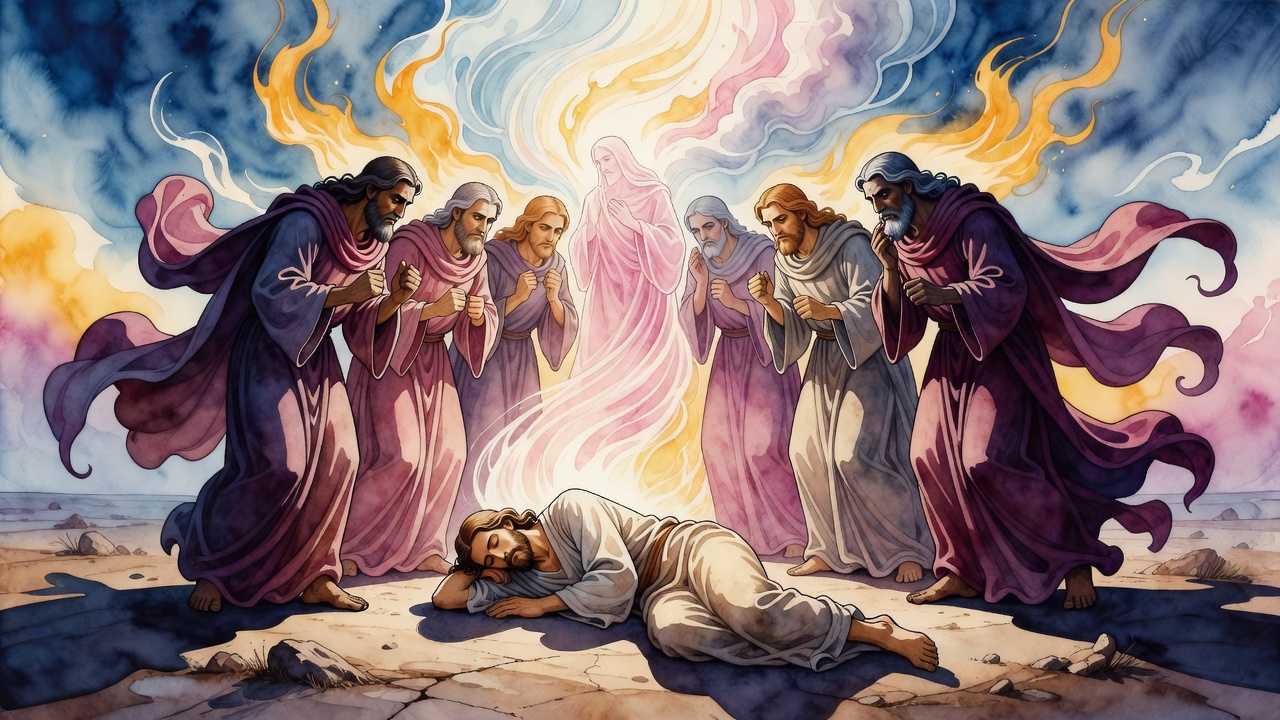
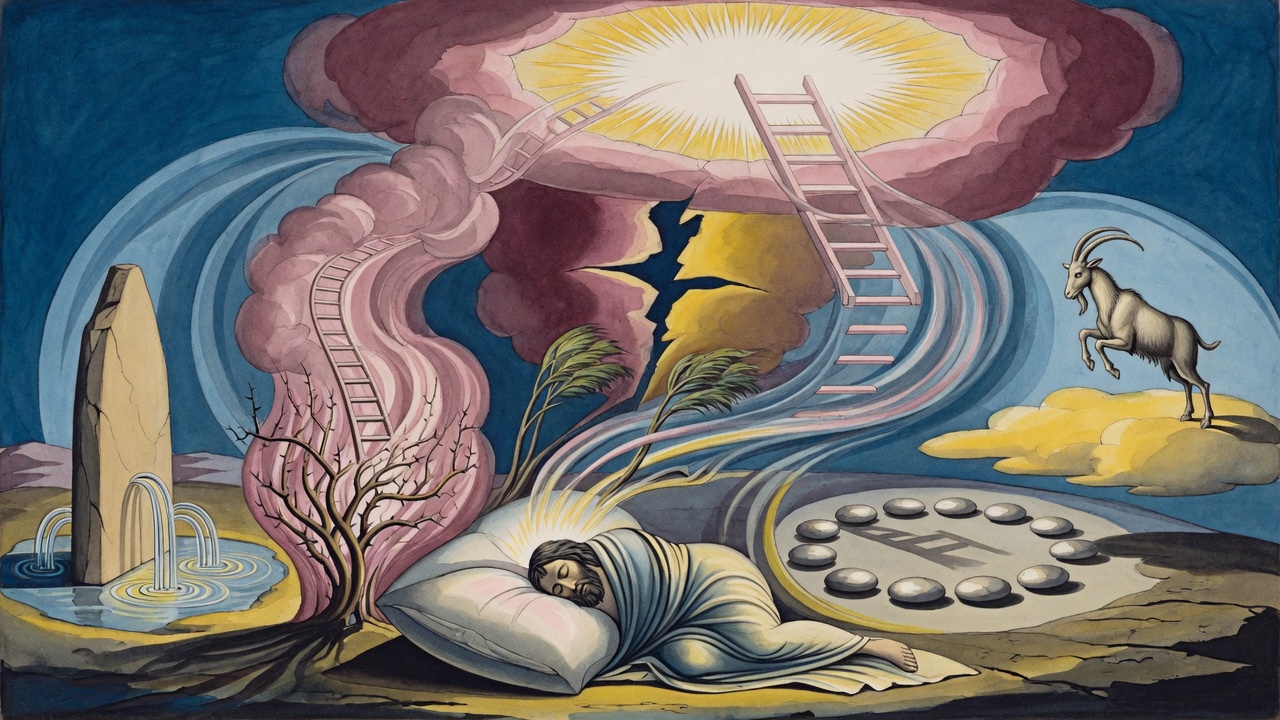
He was asleep on a stone. Jacob had put it under his head when the sun went down, somewhere in the open hill country between Beersheba and Haran, fleeing his brother Esau's murderous rage, carrying nothing (Genesis 28:11). He had no idea what was about to climb past him in the dark.
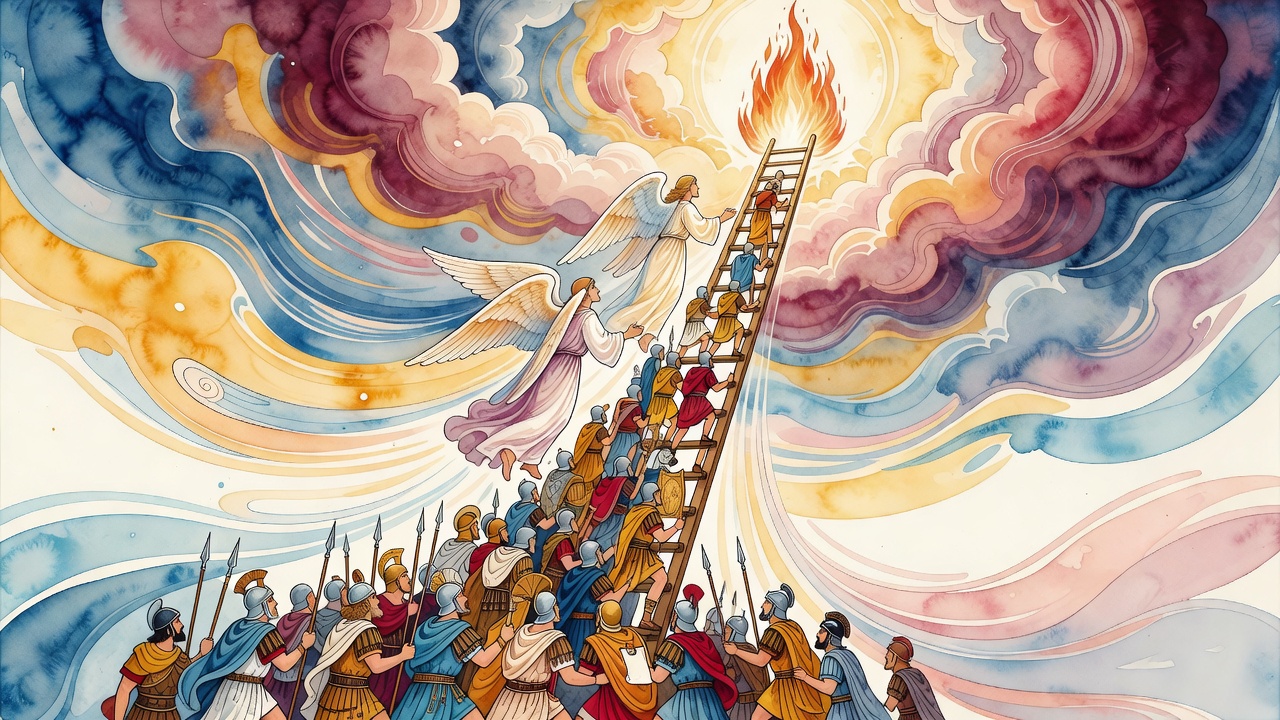
Two angels had been walking beside him since he left his father's house. He did not know this either. They were the same two angels who had gone down to Sodom to warn Lot, the ones who sat at the gate and were dragged inside and struck the crowd with blindness. That mission had gone wrong in a particular way: they had revealed divine secrets they were commissioned to keep. The penalty for that was exile from heaven, and the exile had lasted one hundred and thirty-eight years. They had spent those years at Jacob's side, invisible companions on a road he thought he traveled alone.

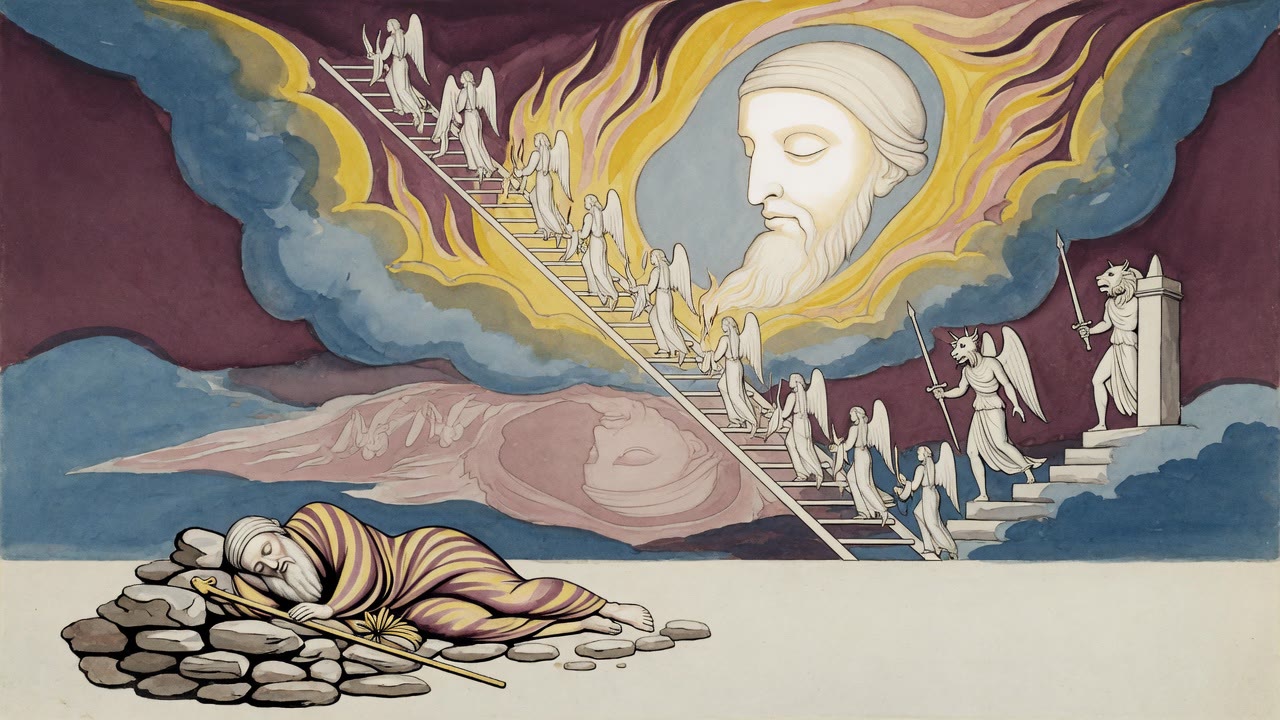
Now, with Jacob sleeping, a ladder appeared, its base touching the earth and its top disappearing into heaven (Genesis 28:12). The two exiled angels began to climb.

The Cry Heard in Heaven

When they reached the top, they called out to the angels who had never left.

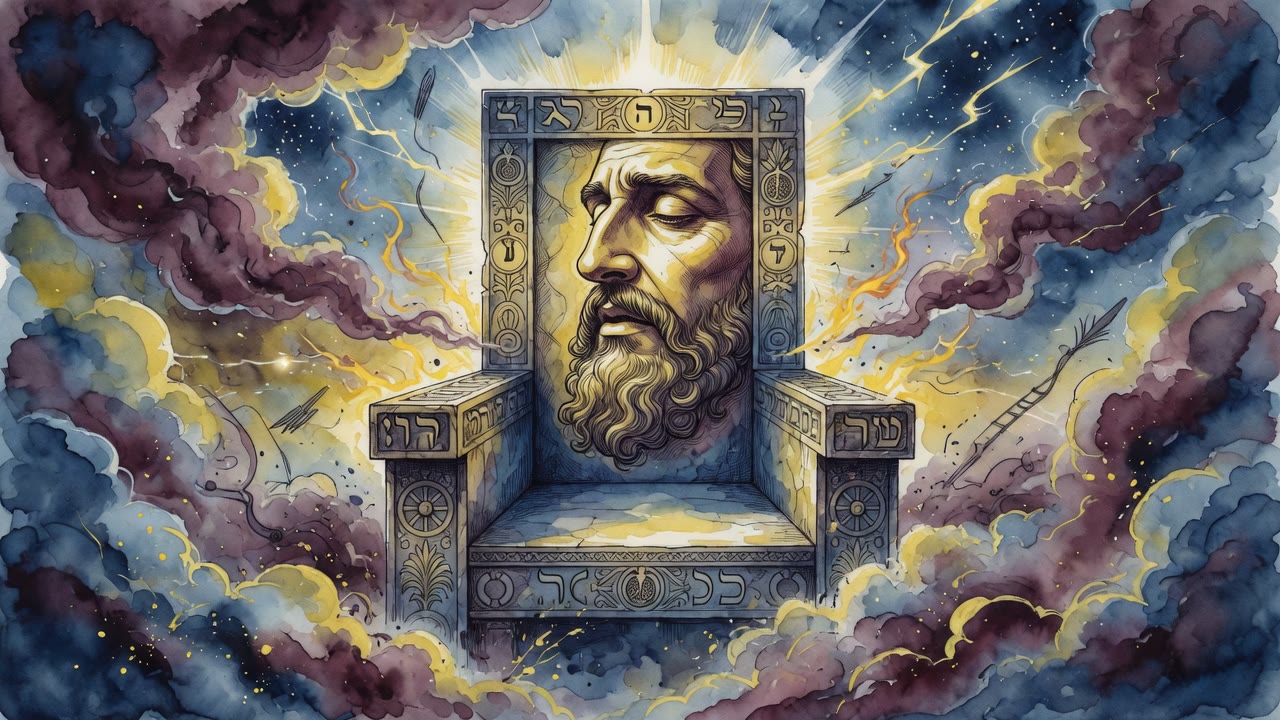
"Come and see the countenance of the pious Jacob. Come and see the man whose likeness appears on the Divine throne. You have yearned to see this face. It is lying asleep on a stone below."

The angels of heaven descended. They came down the ladder, passed Jacob where he lay, studied his face, and climbed back up. There was an urgency to this. Jacob had that effect on the celestial order without knowing it. His face was already inscribed on God's throne, tzelem (צֶלֶם), image, likeness, engraved there before he had done a single thing to deserve it. The angels had been waiting one hundred and thirty-eight years to see whether the sleeping man matched the image.

He matched.

Four Princes, Four Empires, Four Counts of Rungs

Then the angelic princes of the four world kingdoms began their climb.

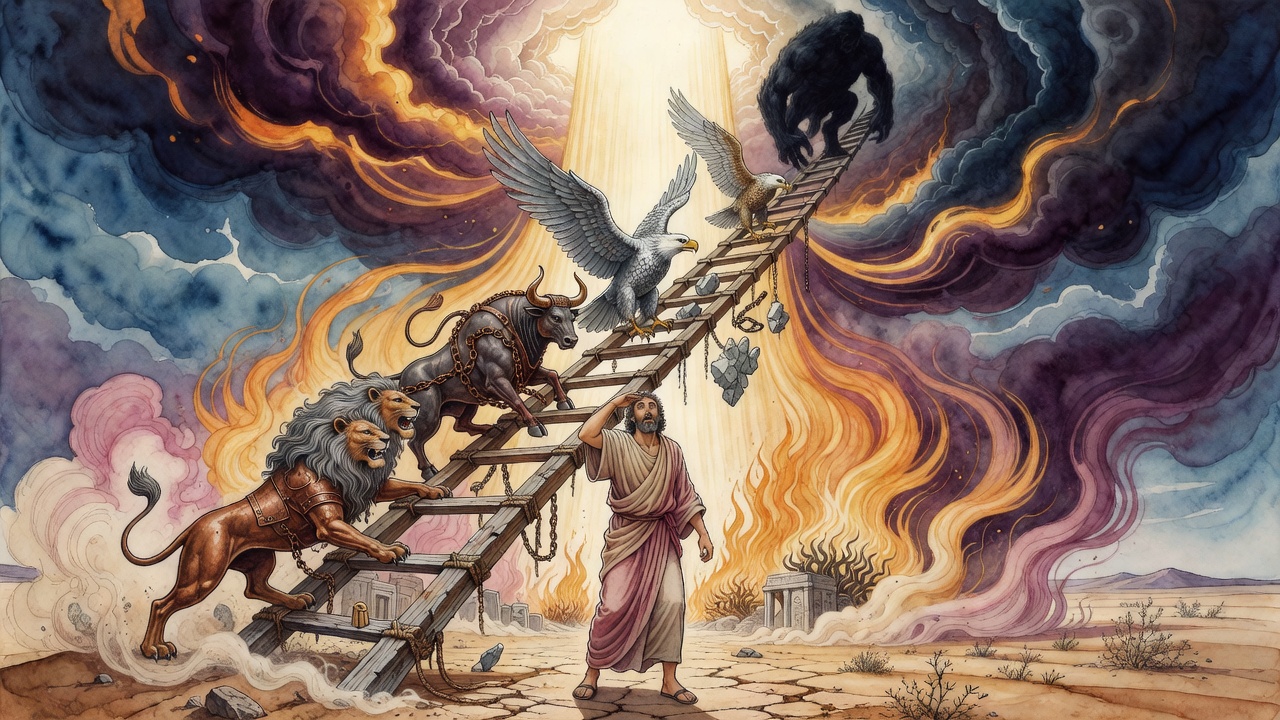
Jacob watched the prince of Babylon mount seventy rungs, then descend. He watched the prince of Media climb fifty-two rungs, then descend. He watched the prince of Greece ascend one hundred and eighty rungs, then descend. Each descent was a controlled one. Each empire, whatever its height, came back down.

Then Rome climbed Jacob's ladder and would not stop.

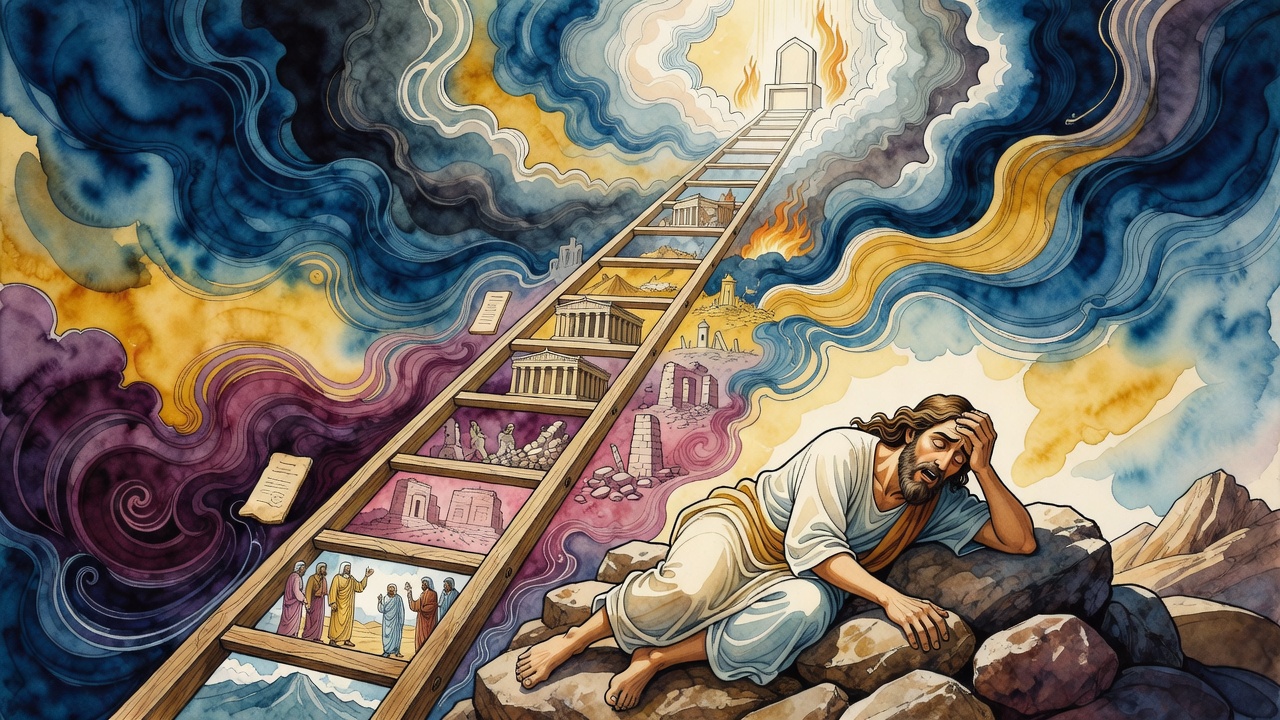
The prince of Edom, which is Rome, began ascending past the heights of Babylon, past Media, past Greece. He climbed and quoted as he climbed: I will ascend above the heights of the clouds, I will be like the Most High (Isaiah 14:14). The rungs kept passing beneath him and Jacob stood in the dream watching an empire that would not reach its limit, that measured itself against heaven itself and kept going.

Jacob grew frightened. Not at the first three. At the fourth. At the one whose ascent had no visible end.

God Speaks From the Top

A voice came from above the ladder.

Though thou mount on high as the eagle, and though thy nest be set among the stars, I will bring thee down from thence. (Obadiah 1:4)

God spoke directly to Rome's prince, cutting off the ascent with a sentence. The empire could climb as high as it wanted. The answer was already waiting at the top.

Then God spoke to Jacob: do not be afraid. Even if this one climbs to be with Me, I will bring him down. Jacob heard this while standing inside his own dream, watching an empire's overreach meet its limit. The promise was not that Rome would stop climbing. It was that climbing would not save Rome.

Waking on the Ground That Was Already Spoken For

He woke up. Stone under his head, sky above, night still dark enough that Beersheba was behind him and Haran was not yet real.

The land he was lying on had its own history long before he lay down on it. The twelve tribes had not yet been born, but the territory had already been provisionally assigned to twelve Canaanite nations as caretakers, held in trust until the rightful heirs arrived. When unclean spirits overran the provisional tenants and began tormenting them, the angel Raphael was sent to banish nine-tenths of the harmful forces from the earth. The ground Jacob slept on had been contested in registers he could not see. The stone under his head had already changed hands cosmically.

He said, How awesome is this place (Genesis 28:17). He said, This is none other than the house of God, and this is the gate of heaven.

The Anointed Stone and the Conditional Vow

In the morning, he took the stone he had slept on, stood it upright, and poured oil over it. He named the place Beit-El (בֵּית-אֵל), house of God. Then he made a vow: if God would be with him on the road, give him bread and clothing, and bring him back to his father's house in peace, then God would be his God (Genesis 28:20-21).

The vow troubled readers later. The man whose face was on the Divine throne was bargaining? The condition is not doubt. It is the grammar of covenant spoken by someone who has just watched empires set against heaven and been told they would fall. Jacob had seen what happens when a power reaches for the absolute without a relationship to anchor it. His vow was the opposite of Rome's ascent: not I will rise, but if You are with me, I am Yours.

The two angels who had waited one hundred and thirty-eight years in exile reached heaven because Jacob slept beneath them. He went east the next morning toward a life he had not yet lived. The ladder was gone. The stone stood where he had left it, glistening with oil in the early light, marking a place where heaven had touched the ground and left no visible mark on the stone at all.


← All myths
From the tradition

Sources

2 sources

The texts this telling draws on, in full. Open a card to read inline, or expand it for a wider, quieter read.

Legends of the Jews 6:100Legends of the Jews

The Torah tells us of Jacob's famous dream, but the Legends of the Jews fills in fascinating details. It wasn't just any ladder, you see. It was a ladder connecting earth and heaven, a visual representation of the connection between the mortal and divine realms. And who did Jacob see on this ladder? The very angels who had once visited Sodom!

In Ginzberg's retelling, these weren't just any angels. They’d been banished from heaven for 138 years after betraying their mission to Lot. Imagine carrying that burden for over a century! They’d been with Jacob since he left his father's house and were finally returning to their rightful place. Can you picture the scene? As they ascended, they called out to the other angels, beckoning them to witness the piety of Jacob, whose very likeness, they proclaimed, adorned the Divine throne. "Come ye and see the countenance of the pious Jacob, whose likeness appears on the Divine throne, ye who yearned long to see it," they cried. A powerful moment of validation and recognition.

The dream didn’t stop there. Jacob also saw the angels representing the four kingdoms ascending the same ladder. These weren't just messengers; they were symbolic representations of empires – Babylon, Media, Greece, and Edom (often interpreted as Rome). Each climbed a certain number of rungs, signifying their time and influence in the world. The angel of Babylon climbed 70 rungs, Media 52, and Greece a staggering 180.

Then came Edom. This angel ascended higher than all the others, boasting, "I will ascend above the heights of the clouds, I will be like the Most High!" This is where things get intense. the verse says, Jacob heard a divine voice immediately rebuking Edom’s hubris: "Yet thou shalt be brought down to hell, to the uttermost parts of the pit." It's a stark reminder of the dangers of unchecked ambition and the ultimate triumph of humility over arrogance.

God Himself then intervenes, echoing the sentiment: "Though thou mount on high as the eagle, and though thy nest be set among the stars, I will bring thee down from thence" (Obadiah 1:4). These powerful words emphasize the futility of seeking to usurp divine authority. No matter how high one climbs, or how seemingly secure one's position, ultimate judgment rests with the divine.

What are we to make of this dream? It seems to be a prophetic vision, a glimpse into the rise and fall of empires and the enduring power of faith. It highlights the importance of humility and warns against the dangers of unchecked ambition. Jacob’s ladder dream wasn't just a personal experience; it was a cosmic revelation, a evidence of the enduring struggle between good and evil and the ultimate triumph of divine justice. It leaves us pondering the forces that shape history, and the enduring importance of staying grounded, even as we reach for the heavens.

Full source
Legends of the Jews 4:89Legends of the Jews

The land wasn't exactly empty when Jacob's sons were destined to inherit it. No, no. It was provisionally granted to a whole host of Canaanite nations: the Canaanites themselves, the Zidonians, Hittites, Jebusites, Amorites, Girgashites, Hivites, Arkites, Sinites, Arvadites, Zemarites, and the Hamathites. Quite the roster! Think of them, essentially, as caretakers, holding the fort until the "rightful owners" showed up.

The story doesn't stop there. Almost as soon as Noah's descendants settled into their allotted territories, things started going awry. Sounds rough. So, what could be done? Noah, in his distress, pleaded with God. And God, in His mercy, sent the angel Raphael to set things right. Raphael, as the story goes, banished nine-tenths of these nasty spirits from the earth, leaving only one-tenth for Mastema to use in punishing sinners. A cosmic cleanup, if you will.

That’s not all! Raphael, with the help of the chief of the unclean spirits (quite the collaboration!), revealed to Noah all the medicinal properties hidden within plants. Noah diligently recorded this knowledge in a book, which he then passed down to his son Shem. According to the Legends of the Jews, this very book is the source of all medical knowledge, the wellspring from which the wise men of India, Aram, Macedonia, and Egypt drew their expertise.

Ginzberg's retelling in Legends of the Jews continues, describing how the sages of India specialized in curative trees and spices, while the Arameans focused on grains and seeds, even translating the ancient medical texts into their own language. The Macedonians were pioneers in practical medicine, while the Egyptians, well, they leaned into magic and astrology, studying the Midrash (rabbinic interpretive commentary) of the Chaldees composed by Kangar, the son of Ur, the son of Kesed.

Medical knowledge kept spreading, evolving until the time of Aesculapius. This Macedonian sage, accompanied by a group of forty magicians, traveled far and wide, eventually reaching a land beyond India, near Paradise itself. Their quest? To find wood from the elusive Tree of Life, hoping to spread their fame throughout the world. A noble goal, perhaps, but…

… their hope was dashed. They found the healing trees and the wood they sought, but as they reached out to take what they desired, a bolt of lightning from the ever-turning sword struck them down, burning them to a crisp! Ouch. And with them, seemingly, went all that precious medical knowledge.

But don't worry, it's not the end of the story! This knowledge did eventually revive, according to the legend, in the time of the first Artaxerxes, thanks to figures like Hippocrates, Dioscorides, Galen, and the Hebrew Asaph.

So, what does it all mean? This story, pieced together from various sources like The Zohar and Midrash Rabbah, isn't just a historical account. It's a reminder of the constant struggle between good and evil, health and sickness, knowledge and ignorance. It speaks to the enduring human quest for healing, wisdom, and even immortality. And it suggests that sometimes, the most profound knowledge is both a gift and a responsibility, one that must be approached with humility and respect.

Full source