Jacob Finished the Sukkah With a Standing Stone
Years after he poured oil on the rock he had slept on, Jacob crossed back with flocks, children, and a limp. He built booths for the cattle too.
Table of Contents
 Click for full size
Stone Under a Hard Pillow
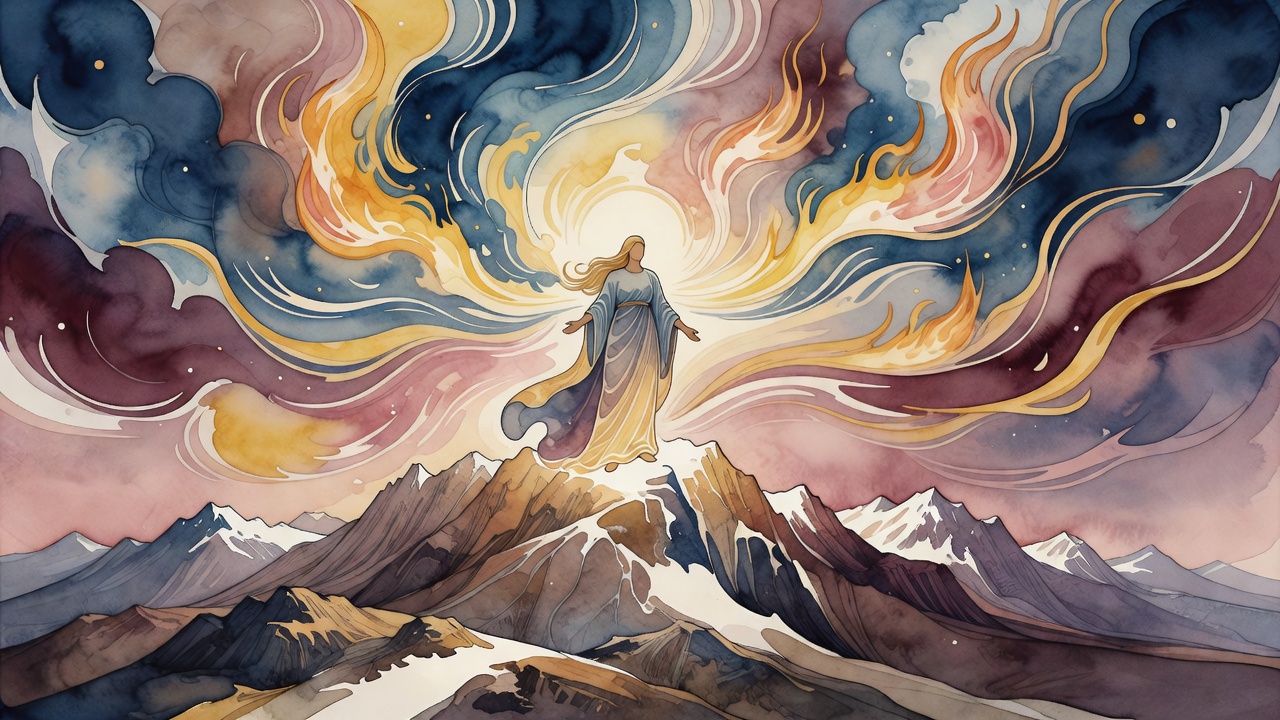
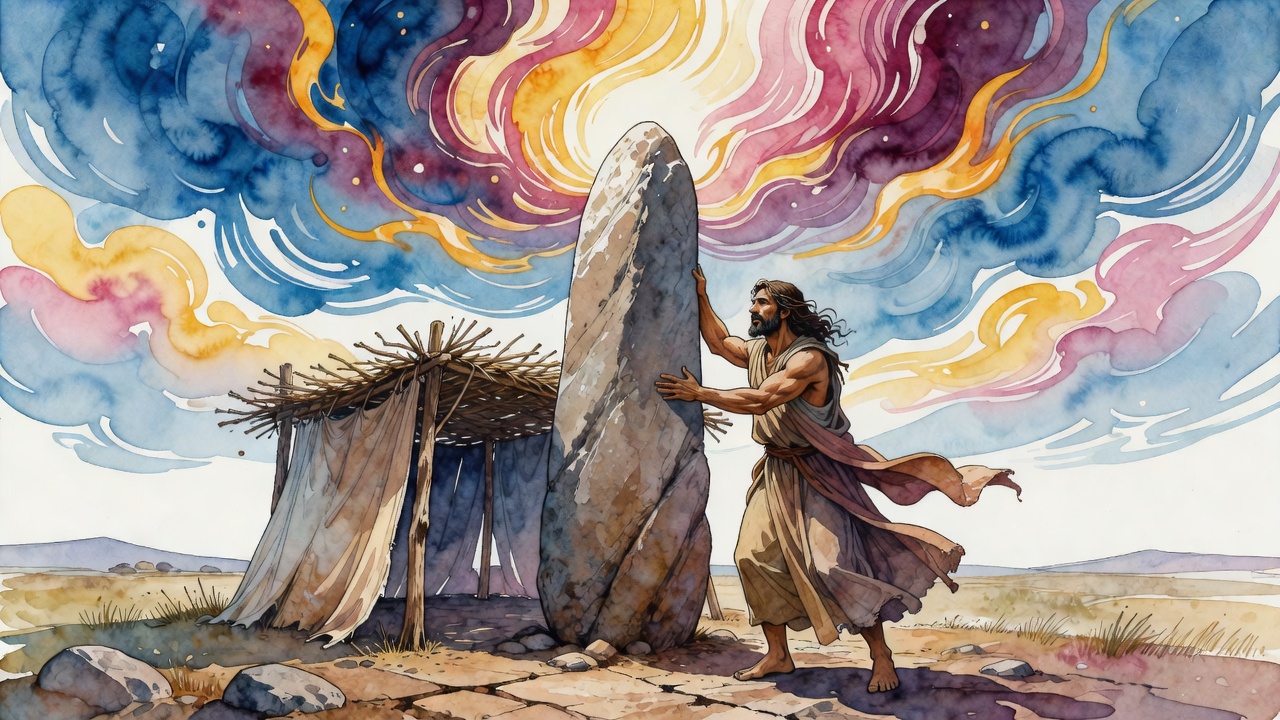
Jacob laid his head on rock because the road had stolen softer rest. Esau's anger was a weather system behind him. Laban's country was only a rumor of wages ahead. Angels climbed and descended on a ladder that used his sleep as ground. When he woke he did not shrug the dream off as travel-fever. He took the stone that had held his skull, stood it upright, and poured oil until the rock shone like a brow anointed for a role it had not asked for.
"This is none other than the house of God," he said into empty air that was no longer empty. "This is the gate of heaven." The pillar was a vow in mineral form: if he returned in peace, this stone would be a house. Not metaphor only. A marker that heaven had touched a particular dust and expected to be remembered by a man who had bargained with his voice still shaking.
He named the place. Names are how fugitives pin the world so it does not slide. Then he walked toward the east with oil still on his fingers and a promise heavier than the pack on his back.
Arriving Complete
Years of Laban's wages later, Jacob crossed toward the land with flocks, children, and a limp earned from a night of wrestling by a river that refused to let him pass unchanged. The texts say he arrived shalem, complete, at Sukkot, the booths. Completeness here is not comfort. It is the moment when He joins with Her, when the temporary dwelling becomes whole because the divine masculine and feminine energies meet inside a fragile roof open to stars and wind.
A sukkah looks weak on purpose. Jacob's life looked weak on purpose: fleeing, serving, limping, bowing seven times toward a brother who might still kill him. Completeness arrived anyway, not as a palace with guards, but as a booth that could hold Presence without pretending to be fortress or dynasty yet.
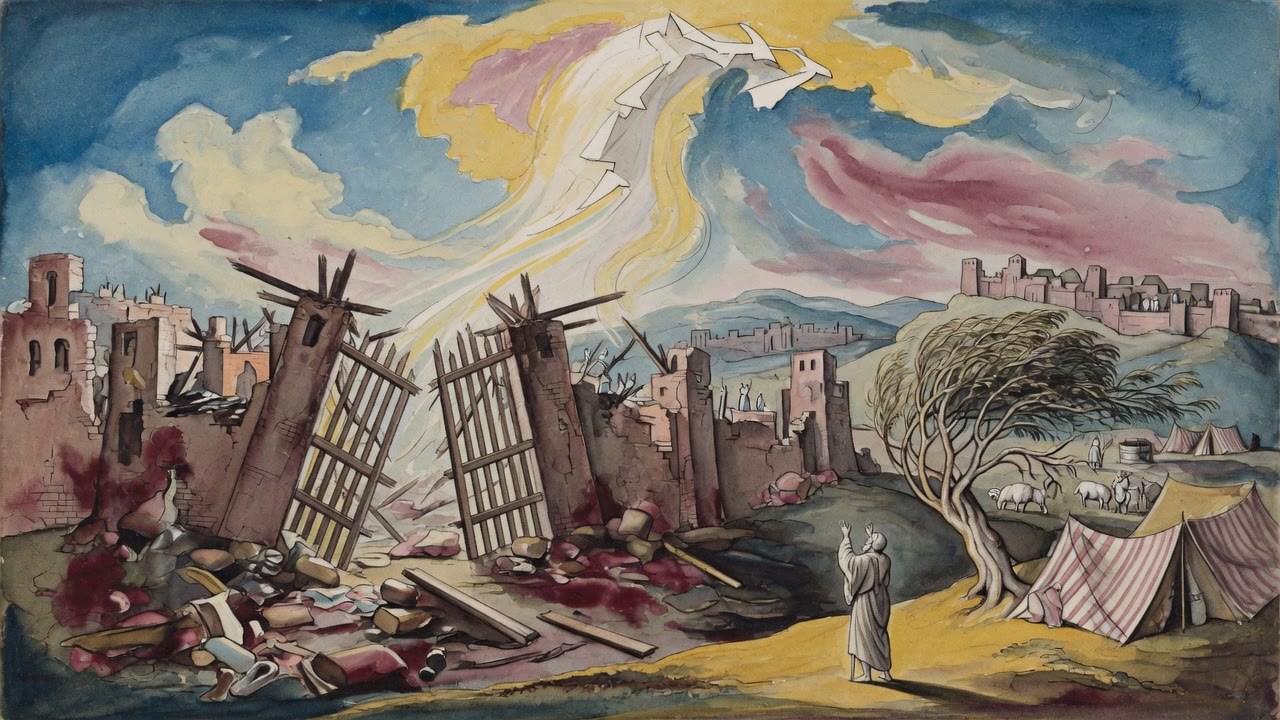
He built booths for the cattle too. Even animals got a share of the arrival's architecture. Completeness, in this telling, is not a private mystical glow. It is logistics that include the herd under a roof of cut branches while the man who limps checks the sky for weather and for the face of Esau on the road.
The Join That Finishes the Tabernacle
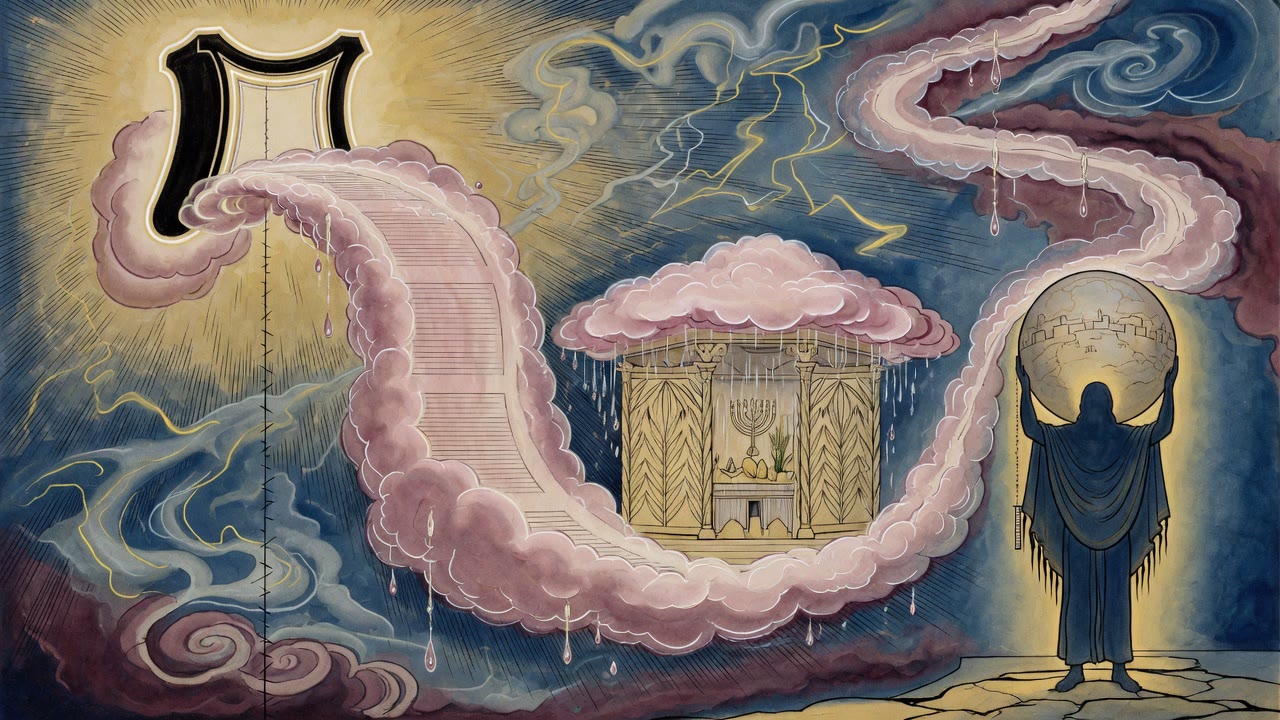
When He is joined with Her, the tabernacle is complete. Jacob's body had learned both sides of that sentence: the fear of Esau, the love of Rachel, the deceit he gave and the deceit he received, the night the angel touched his hip and left him marked. The pillar at Bethel waited through all of it like a tooth of the earth holding a promise against rain and forgetfulness. The booths at Sukkot answered that promise with a roof that could be taken down and still count as real shelter for a week of truth.
Coded letters and divine names the mystics count as twenty-six and sixty-five sit inside that join in the repair books. Jacob did not recite the cipher around a fire. He lived the join: stone and oil, limp and dawn, booth and sky, wives and children arranged in a camp that looked like vulnerability and was also a map of love under threat.
Rabbi El'azar, in the circle that studies these things, asks his father questions about completeness that sound like geometry and land like family. Jacob's answer is older than the question: arrive whole enough to build a weak house for a strong Presence.
Presence That Travels
The Shekhinah (the divine Presence that travels with Israel) that rests on Jacob's line does not only sit in one shrine. She moves with the camp, with the dream-ladder, with the man who refuses to let the angel go without a blessing even when his hip is on fire. Divine presence of Jacob is not a title for a stained-glass window. It is a pressure that follows the heel-grabber until the heel is renamed Israel and still walks with a limp so the new name never forgets its cost.
Esau's four hundred men still rode somewhere on the road. Completeness did not cancel danger. It meant Jacob could face danger without the old hollow of the lonely pillow-stone, the hollow of a man who had only a rock and a bargain. The house had begun, even if the walls were still years of children, famine, and Egypt away.
He sent gifts ahead. He divided the camp. He prayed like a man who knows both his unworthiness and his vow. The Presence did not remove the need for tactics. It made the tactics part of a story larger than survival.
Oil on Rock, Stars on Branches
He left the pillar behind and carried its meaning forward. Every later altar, every booth his children would build in wilderness and in land, would echo that first upright stone and that first arrival whole. The house of God started as a rock under a fugitive's ear. The sukkah finished what the oil began: a place weak enough for glory to enter without being mistaken for human strength or for a permanent fortress that forgets how to travel.
Years on, when Bethel called him back to settle accounts with the old vow, the stone would still be waiting in the story. For now the booths at Sukkot held enough: cattle lowing, children sleeping under stars, a limp cooling, a join holding between heaven's He and earth's Her long enough for a man to believe return was possible.
← All myths