Parshat Vayishlach5 min read

Jacob Gave Esau the Tithe and Called Him Lord

Jacob sent sacred tithes to Esau and named himself servant. Heaven rebuked the profaned gift, then Eliphaz refused to fight his teacher Jacob.

Curated by Arthur · Told by Maggid ·
Table of Contents
  1. The Elder Shall Serve, Said the Womb
  2. Enough, Said Esau, and Honor Answered Honor
  3. Eliphaz Would Not Raise a Sword Against His Teacher
  4. Seir Delayed Until the End of Days

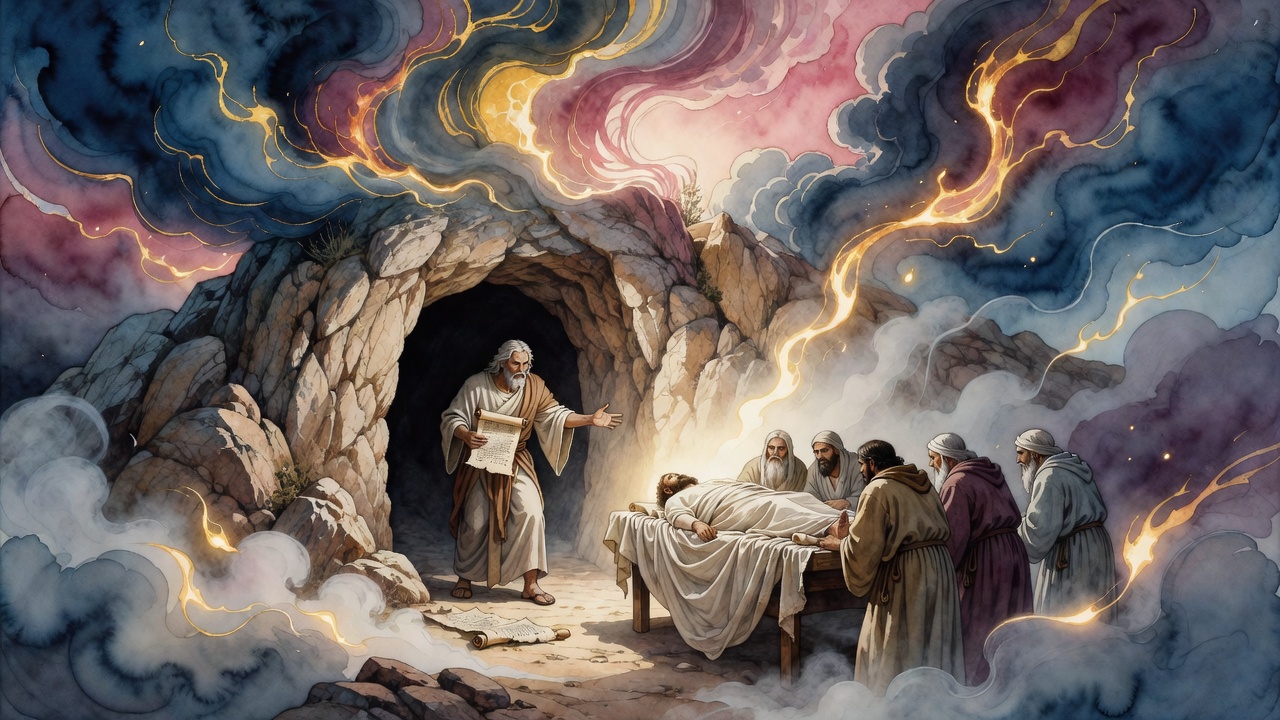
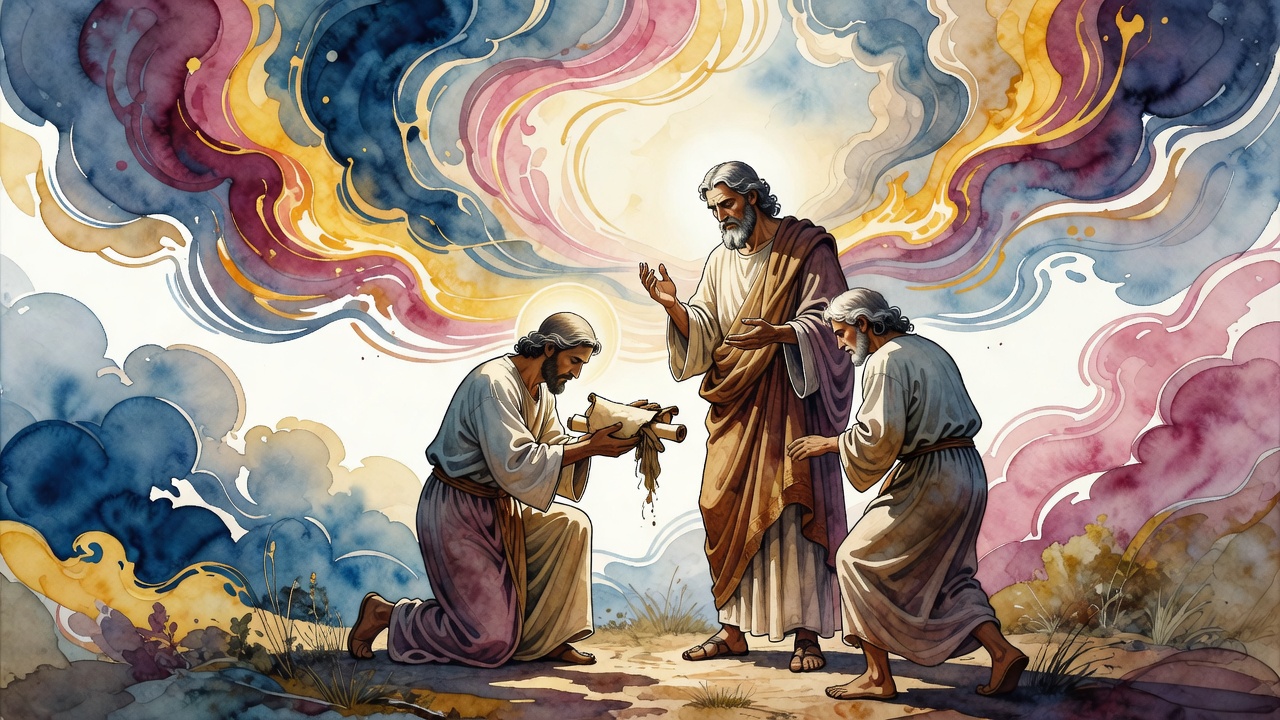
Jacob sent the gifts ahead before he could see Esau's face. Not ordinary flocks alone. He sent the tithe of his possessions, the portion marked for holy use, and he ordered the servants to say, "Thus saith thy servant Jacob" (Genesis 32:4). Fear of the sword turned sacred share into tribute. Peace, he hoped, could be bought with what belonged on the altar's side of the ledger.
Jacob Gave Esau the Tithe and Called Him Lord Click for full size

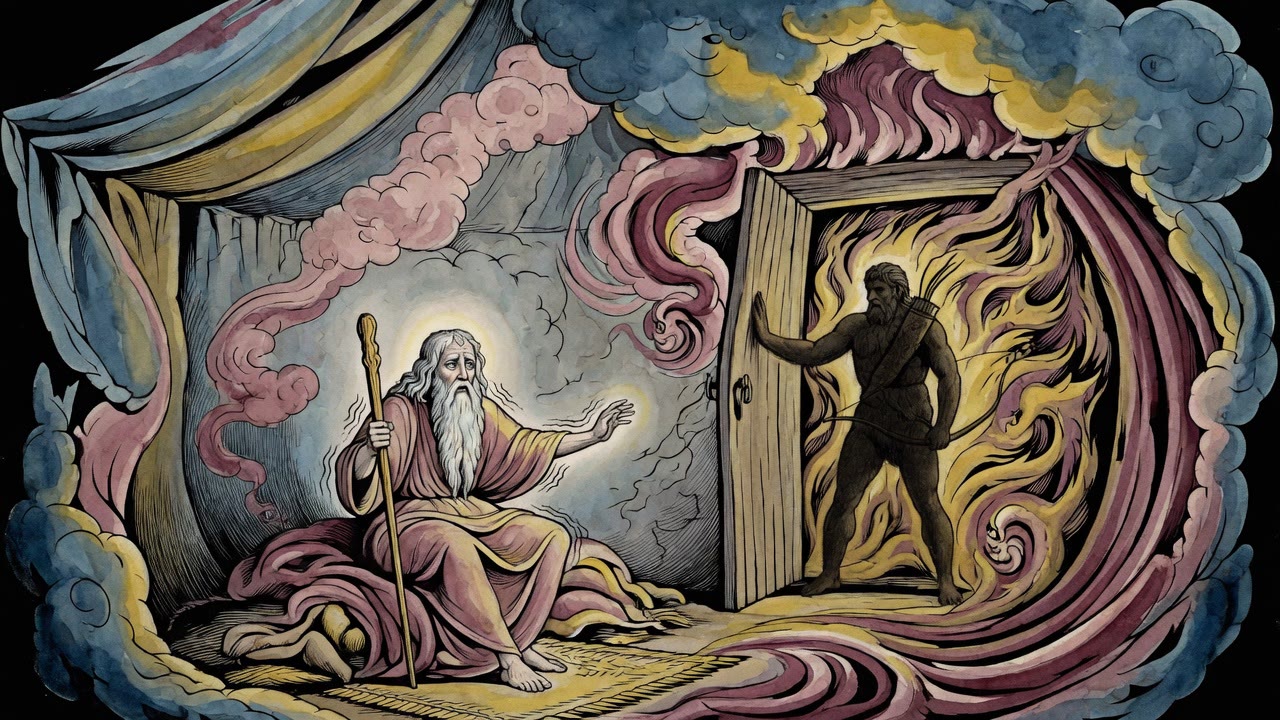
The Holy One confronted him. "Jacob! That which was holy hast thou made profane?" The rebuke did not ask for clever defense. Jacob answered with the naked reason of a man who still felt Esau's old vow of murder. He had flattered the wicked to avoid being killed. From that hour the sages drew a hard permission. One may flatter the wicked in this world for the ways of peace.

The Elder Shall Serve, Said the Womb

Heaven was not finished. The prophecy had run, "the elder shall serve the younger" (Genesis 25:23). Jacob had called himself servant and had invited Esau to pass before him toward Seir. The consequence was spoken plain. Esau's line would rule Jacob's in this world, though Jacob's line would stand in the world to come. Words of self-lowering had weight. They rearranged the centuries.

Jacob was willing, in the legends, to leave Esau the crown and the wealth until a messianic hour. "You can have your dominion until the Messiah arises from my line and takes the rule from you." The meeting was never only about goats and gold. It was about which brother would carry history's scepter and for how long.

Enough, Said Esau, and Honor Answered Honor

"O my brother, I have enough," Esau said (Genesis 33:9). Because he gave honor in that moment, Jacob's descendants later showed honor to Esau's line on the road of the wilderness. Courtesy answered courtesy across generations. The flattered enemy and the restrained brother left a trail of mutual restraint that law would one day cite.

Still the end was not soft. Tradition holds that the sons of Esau will not fall until a remnant from Jacob cuts off their standing from Mount Seir, and that no remnant will remain to Esau's house when the decree is complete. The peace of the road was real. It was not the last word.

Eliphaz Would Not Raise a Sword Against His Teacher

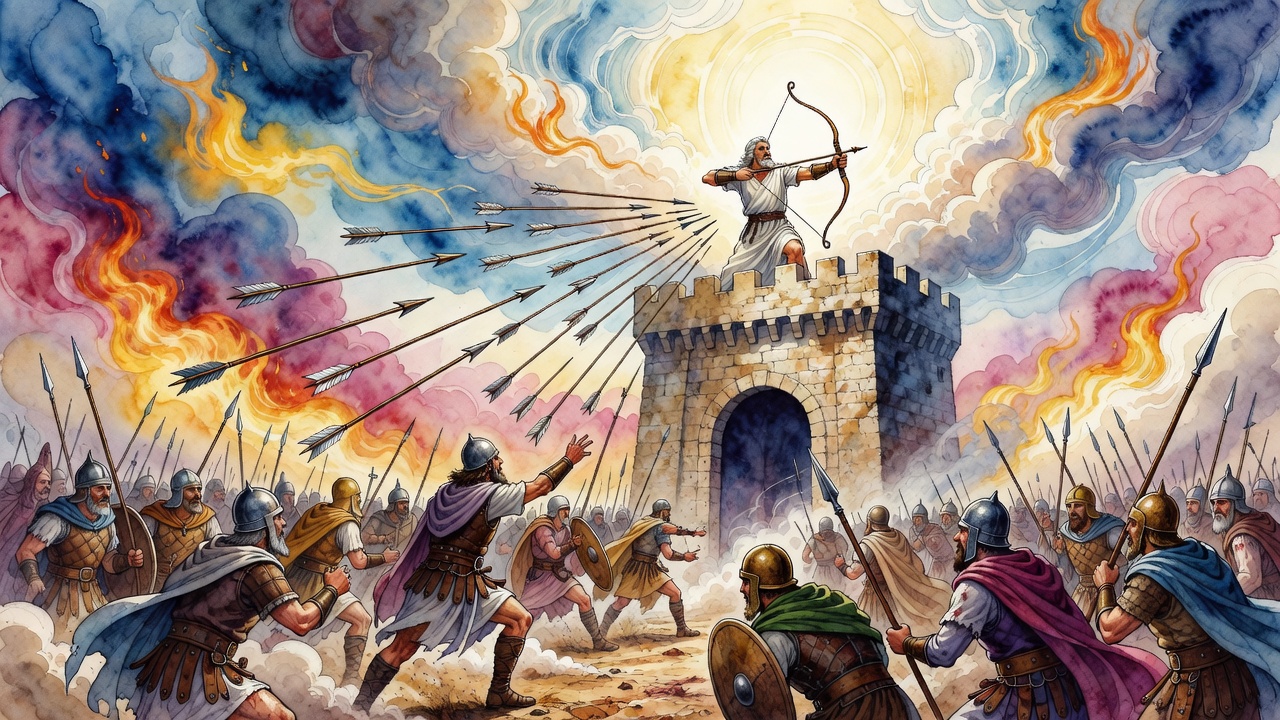
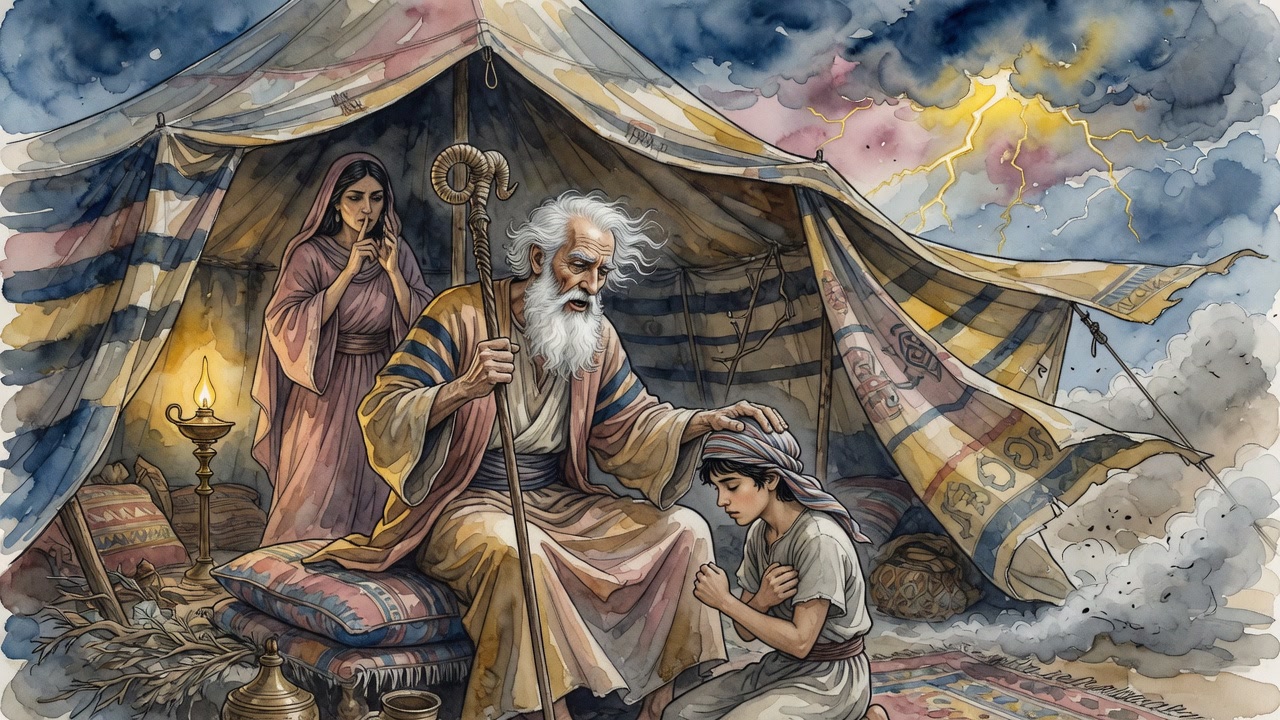
Later, when peace broke and Esau brought an army against Jacob's citadel, four hundred fell and six hundred fled, among them Esau's sons. Wind struck the attackers' faces. Jacob's sons held the walls by companies. One figure refused the war. Eliphaz, Esau's eldest, had been Jacob's disciple. He would not bear arms against the man who had taught him. Blood called for battle. Learning held his hand.

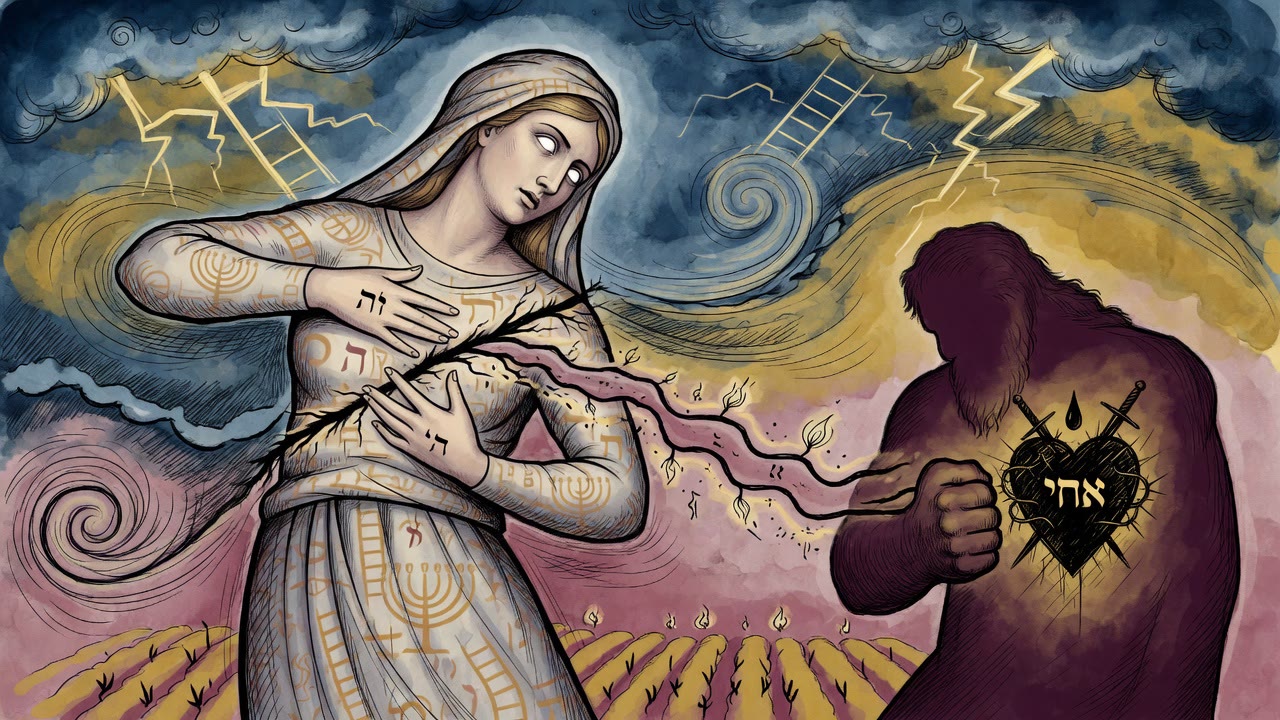
The siege showed what the tithe episode had already hinted. The brothers' story would keep producing both compromise and collision, students and soldiers, flattery for peace and swords for old hate. Eliphaz stood as a strange mercy inside Esau's camp, a son of the enemy bound by a teacher's claim.

Seir Delayed Until the End of Days

Jacob said he would come to his lord at Seir and never arrived in ordinary time. The legends read the sentence as a postponement until the messianic march, when Israel would finally take what the polite itinerary had deferred. Nations would chip at Edom's power until Bet-Gubrin, and then the reckoning would open. The angel of Edom would flee to Bozrah and find no shelter from the Avenger.

On the night of the gifts, Jacob only knew that sacred tithe had left his hand toward a brother who might kill him, and that Heaven had named the act a profanation bought for survival. The later wars and the loyal pupil Eliphaz would prove that no single embassy could finish the story begun in Rebecca's womb.

He slept that season as a man who had purchased a dawn with holy portions and servant speech. The purchase worked. Esau kissed and wept and went his way. The bill, Heaven had already said, would be collected in the rule of empires and in the patience of a people that still carried the younger son's promise.

The servants walking ahead with the tithe did not know they carried a theological argument on the hoof. They only knew the master's face had gone tight. Esau's four hundred men were a moving wall. Against that wall Jacob threw sacred portion and servant speech, then divided his camp and spent a night alone that would leave him limping. The gifts were the daylight plan. The wrestle was the night's.

When Esau ran and embraced him, the flattery seemed to work. The divine ledger, though, had already recorded the cost. Rule in this world tilted toward the elder's line because the younger had bowed too low with holy goods in his hand. Peace today, empire tomorrow, final reversal only at the end of the long story. Jacob accepted a dawn and mortgaged centuries.

Eliphaz's later refusal to fight sits like a footnote that rewrites the margin. Even inside Esau's seed, a disciple's bond could outvote a father's war. The family quarrel never stayed simple. It produced killers, pupils, flattered kings of the field, and prophets of Seir deferred. The tithe on the road was one knot in a rope that still had many coils left.


← All myths
From the tradition

Sources

3 sources

The texts behind this telling. Some cards carry a translation of the source; others are our own retelling of it, and each card says which. Every card links out to the original.

Pirkei DeRabbi Eliezer 37:9Pirkei DeRabbi Eliezer

Retold in our words. Read the original at the link below.Pirke de Rabbi Eliezer, trans. Rabbi Gerald Friedlander, London (1916) · CC-BY

The story picks up as Jacob, returning to the land of Canaan, sends gifts ahead to his brother Esau, whom he fears. But these aren't just any gifts. Jacob sends "all the tithe of his possessions" – a portion traditionally reserved for sacred purposes – essentially as a tribute. He instructs his servants to address Esau with the words, "Thus saith thy servant Jacob" (Gen. 32:4). It’s an act of appeasement, meant to soften Esau's potential anger.

The Holy One, blessed be He, confronts Jacob. "Jacob! That which was holy hast thou made profane?" In other words, by giving the tithe to Esau, Jacob has taken something sacred and used it for a worldly, even potentially dishonorable, purpose.

Jacob's response? He admits to flattering the wicked, explaining he did it to avoid being killed. He was prioritizing his own safety, justifying his actions as necessary for survival. The text then immediately states, "Hence the (wise men) say, we may flatter the wicked in this world for the sake of the ways of peace." It introduces a complex ethical question: is it ever permissible to compromise our values for the sake of peace?

Esau's reaction is also noteworthy. He responds, "O my brother, I have enough" (Gen. 33:9). And because Esau gave honor to Jacob in this moment, the text continues, Jacob's descendants later showed honor to Esau's descendants, saying "Ye have compassed this mountain long enough" (Deut. 2:8).

But the Divine rebuke isn't over. God reminds Jacob of the prophecy, "And the elder shall serve the younger" (Gen. 25:23) – a promise that Esau (the elder) would serve Jacob. Yet, Jacob had called himself Esau's servant. The consequence, God declares, is that Esau's descendants will rule over Jacob's in this world, though Jacob's descendants will ultimately prevail in the world to come. Jacob even acknowledges Esau's perceived superiority, saying, "Let my lord, I pray thee, pass over before his servant" (Gen. 33:14).

The passage concludes with a prophecy of ultimate justice: the sons of Esau will not fall until a remnant from Jacob comes to cut off the feet of Esau’s children from Mount Seir. And then, "there shall not be any remaining to the house of Esau; for the Lord hath spoken it" (Obad. 18). This speaks to a future reckoning, where the imbalance created by Jacob's actions will be corrected.

So, what are we to make of this? This passage from Pirkei DeRabbi Eliezer isn't just a historical anecdote; it's a timeless exploration of power, compromise, and the long-term consequences of our choices. It forces us to ask ourselves: what are we willing to sacrifice for peace? And what price will we ultimately pay for those sacrifices?

Full source
Legends of the Jews 6:208Legends of the Jews

Retold in our words. Read the original at the link below.The Legends of the Jews by Louis Ginzberg (1909) · Public Domain

I'm talking about Jacob and Esau. We know their story. The birthright, the blessing… but there’s so much more simmering beneath the surface.

A reader can look at Jacob and see him as this ambitious, even grasping character. But according to the Legends of the Jews, Jacob wasn't driven by a lust for wealth. He was actually willing to let Esau have it all – the worldly possessions, the power, everything. Why? Because Jacob foresaw the future. He understood the long, painful road his descendants would walk, the suffering they would endure at the hands of Esau's lineage.

He tells Esau, "You can have your dominion, your crown, until the Messiah arises from my line and takes the rule from you." Powerful words. It's almost a prophecy baked right into their tense encounter.

This idea, this vision of the future, shapes Jacob's actions. It's not just about who gets the bigger inheritance; it's about the fate of nations.

And this prophecy, according to tradition, will play out in spectacular fashion. There will come a time when the nations of the world rise against Edom – a name often associated with Rome and, later, with certain aspects of Western civilization. They'll chip away at its power, city by city, realm by realm, until they reach Bet-Gubrin. And then… then the Messiah will appear and claim his rightful kingship.

But what happens to the power of Edom? What happens to its protector? The angel of Edom, representing that earthly power, will flee to Bozrah, a city of refuge. But even there, he won't be safe. God himself will appear, acting as the ultimate avenger. Imagine this scene: God seizes the angel by the hair, and Elijah, that fiery prophet, slaughters him, the blood staining God’s garments. A graphic image, yes, but one that conveys the absolute, final defeat of that power.

Jacob's words to Esau, “Let my lord, I pray thee, pass over before his servant, until I come unto my lord unto Seir," take on a whole new meaning in this light. Jacob himself never actually went to Seir, the land associated with Esau. So what was he really saying? He was referring to this Messianic time, when Israel would finally go to Seir and take possession of it.

Taking a seemingly simple interaction between two brothers and expanding it into a cosmic drama, a prophecy that spans generations. Could they, too, be echoing with a significance we can't even begin to grasp?

Full source
Legends of the Jews 6:276Legends of the Jews

Retold in our words. Read the original at the link below.The Legends of the Jews by Louis Ginzberg (1909) · Public Domain

The familiar story centers on Jacob, later named Israel, and his brother Esau. Their relationship? Let’s call it “fraught.” But according to the Legends of the Jews, peace didn't last. It turns out, Esau harbored a serious grudge.

So, here's the scene: Jacob and his sons are chilling, probably reminiscing about that whole "stairway to heaven" dream Jacob had, and BAM! Esau decides it's payback time. He gathers his army and attacks. It's not just a skirmish; it's a full-blown siege against Jacob's citadel.

Jacob's sons are no slouches. They divide their forces, defending the east, north, and west with three companies each, while taking on the south themselves. The din of battle, the clash of swords.

Here's where it gets interesting. The Legends of the Jews tells us that on each side of the battle, the wind was blowing directly into the faces of Esau's men. Jacob's sons, fueled by… well, maybe a little divine assistance (wink, wink), completely wipe out the enemy.

Four hundred of Esau's soldiers are killed outright, and six hundred flee for their lives. Among those running for the hills are Esau's own sons: Reuel, Jeush, Lotan, and Korah. Having to explain that loss to daddy?

But hold on, there's a twist! Esau had five sons. What about the eldest, Eliphaz?

Well, Eliphaz is a fascinating case. According to the Legends, he was actually a disciple of Jacob! He studied with his uncle! And because of this connection, because of the bond they shared, Eliphaz refused to raise a hand against Jacob. He wouldn't bear arms against his teacher. Now that's loyalty. Or maybe just really awkward family dynamics.

So, what does this little-known battle tell us? Perhaps that family feuds can escalate quickly, even after apparent reconciliation. Or maybe it's evidence of the power of education and personal connection – that even in the heat of battle, some bonds are too strong to break.

Full source